The remarkable economics of Musk's most overlooked success
By Polymath Investor
Published: 2026-10-24
URL: https://www.polymathinvestor.com/p/starlink-by-the-numbers
“And for the first time, John and Paul knew that George had risen to their level.” -Geoff Emerick
Open your favorite streaming app and look up Abbey Road. You’ll find 17 tracks on the standard album. Fourteen are credited to Lennon-McCartney. One belongs to Ringo Starr. And the remaining two were written by none other than George Harrison.
Those two songs? Something and Here Comes the Sun. The former would become one of the most covered songs in the Beatles’ catalog. The latter became, in 2023, the first Beatles song to surpass one billion streams on Spotify.
Much like Beatlemania at its peak, the past month has been particularly loud for Mr. Musk. A “flying” Roadster leapt over a row of parked Teslas, SpaceX launched its first batch of V3 satellites1, and SpaceXSI is racing to bring over w gigawatts of data-center capacity online by the end of the year.
By any measure, each of those achievements would be extraordinary on its own. 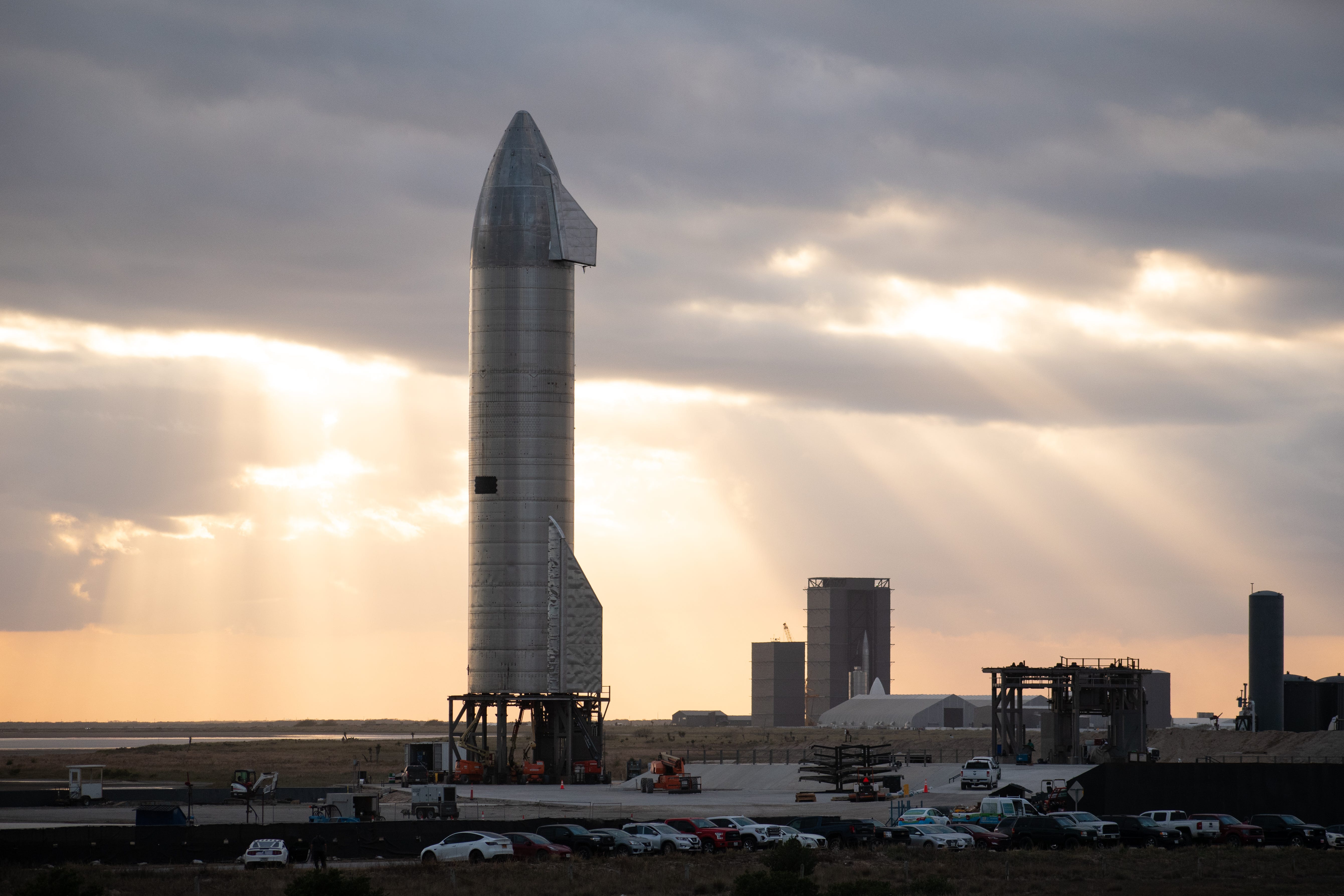 Orbital FedEx | Starship SN9 at SpaceX’s Starbase, January 2021. Photo: Jared Krahn / CC BY-SA 4.0

What has received far less attention is Starlink’s economics.
On October 20, SpaceX reported $14.6 billion in third-quarter revenue. Starlink accounted for 36% of it2. More remarkably, it generated 85% of the entire group’s operating income.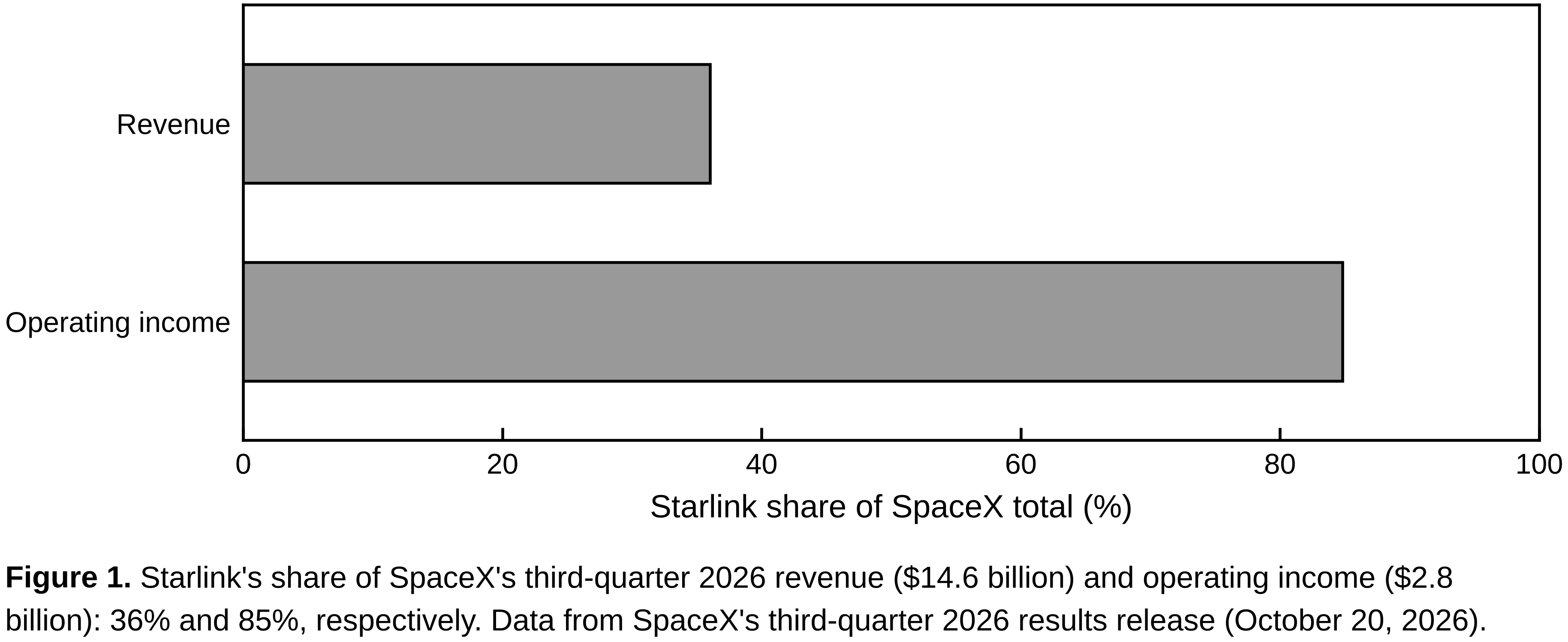
Starlink is SpaceX’s George Harrison: the unassuming member of the band, overshadowed by its more celebrated stars, yet perfectly capable of producing hits of its own.
The connectivity company is already a highly profitable infrastructure business, helping finance SpaceX’s grander ambitions while giving Musk considerable geopolitical muscle. But that power cuts both ways. As we’ll see, the very advantages that make Starlink so difficult to compete with are also becoming its greatest political vulnerability.
Let’s dig into it.
Here Comes the Cash
Starlink ended September with 13.6 million consumer lines, adding 1.6 million in just three months. Quarterly revenue climbed 69% year over year to $5.25 billion, generating $2.37 billion in operating income. That’s a remarkable 45% operating margin for a business whose most important assets, the satellites themselves, need replacing roughly every five years.
Surprisingly, that growth was achieved without a trace of heavy promotion. On the contrary, Starlink raised list prices in the US, UK, and Australia in June and still added 1.6 million consumer lines during the quarter.
Enterprise and government3 revenue nearly doubled year over year to $2.1 billion. And according to the SpaceX’s IPO prospectus, not a single enterprise customer spending more than $750,000 annually has voluntarily left since 2023.
Ticket to Ride
Fast growth. Recurring revenue. Pricing power. Exceptional margins. So where’s the catch? Did someone say free launches?
Well, not exactly free, but close enough to deserve a closer look.
Starlink gets something its competitors don’t: access to SpaceX’s rockets at cost. Rather than paying market prices, Starlink capitalizes SpaceX’s internal launch costs into the satellites’ book value, which is then depreciated over their estimated five-year lifespan.
At the consolidated level, charging Starlink more wouldn’t change SpaceX’s economics. After all, you can’t make money by billing yourself. But to judge Starlink on its own merits, we need to ask what those launches would cost in the open market.
So we did the arithmetic.
We assigned each Falcon flight a market price of $60 million to $74 million, rather than our estimate of SpaceX’s internal cost of $20 million to $36 million, and spread the difference over five years.
Starlink’s reported 45% operating margin in Q3 2026 falls to 42% after removing a one-off tariff refund, and to roughly 28% when launches are priced at market, with a range of 22% to 33% depending on the assumed cost difference.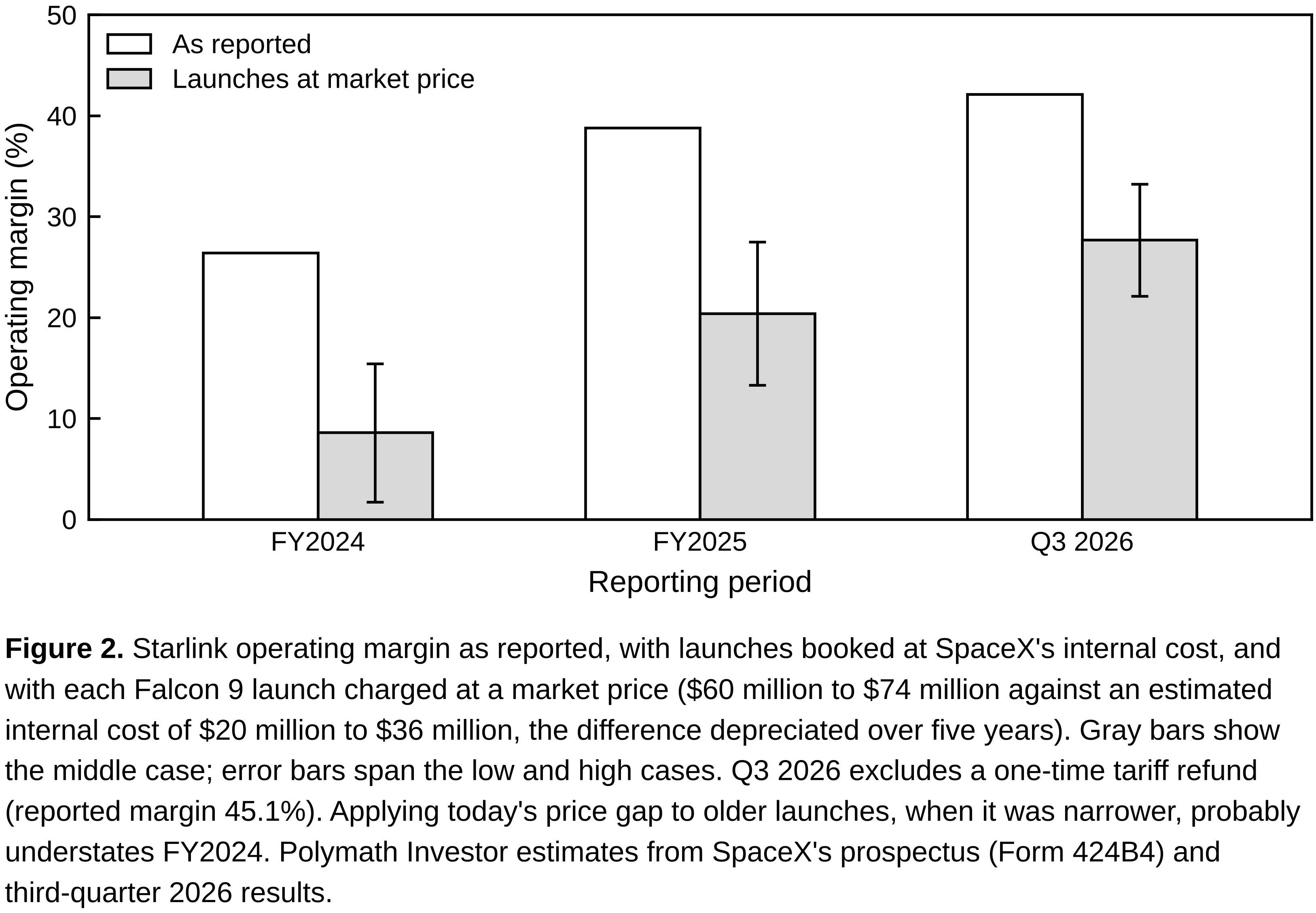
Does that make Starlink a bad business? Quite the opposite.
Even at market launch prices, its estimated operating margin has climbed from about 9% in 2024 (a figure our methodology probably understates) to 20% in 2025 and roughly 28% last quarter, all while revenue grew 69% year over year.
I would go even further, that discount isn’t a weakness in Starlink’s competitive moat. It’s part of the moat itself.
Competitors have to pay market prices to get their satellites into orbit. Sometimes, they even have to pay SpaceX.
Starlink, meanwhile, gets to fly at cost.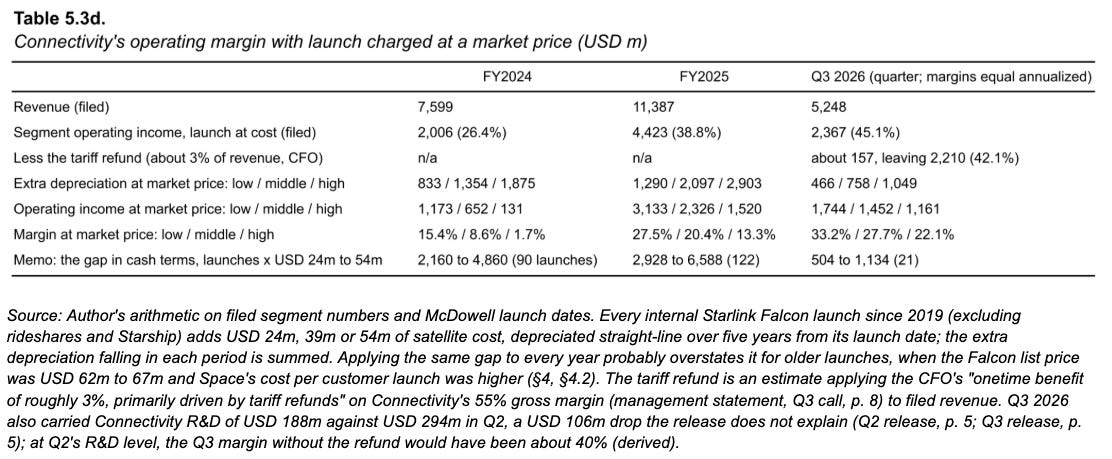
All You Need Is Scale
It’s one thing to pay market prices to launch your satellites. It’s another to pay the very company you’re trying to compete against.
Amazon has already purchased launches from SpaceX for its own satellite constellation. Musk told investors in August that SpaceX sells launches to competitors “at fair prices, the same price we charge everyone.”
The difference is already visible in orbit.
As of October 15, astronomer Jonathan McDowell counted 11,154 Starlink satellites in orbit, compared with just 654 for Eutelsat’s OneWeb, 392 for Amazon, and 258 and 256 for China’s two state-backed constellations.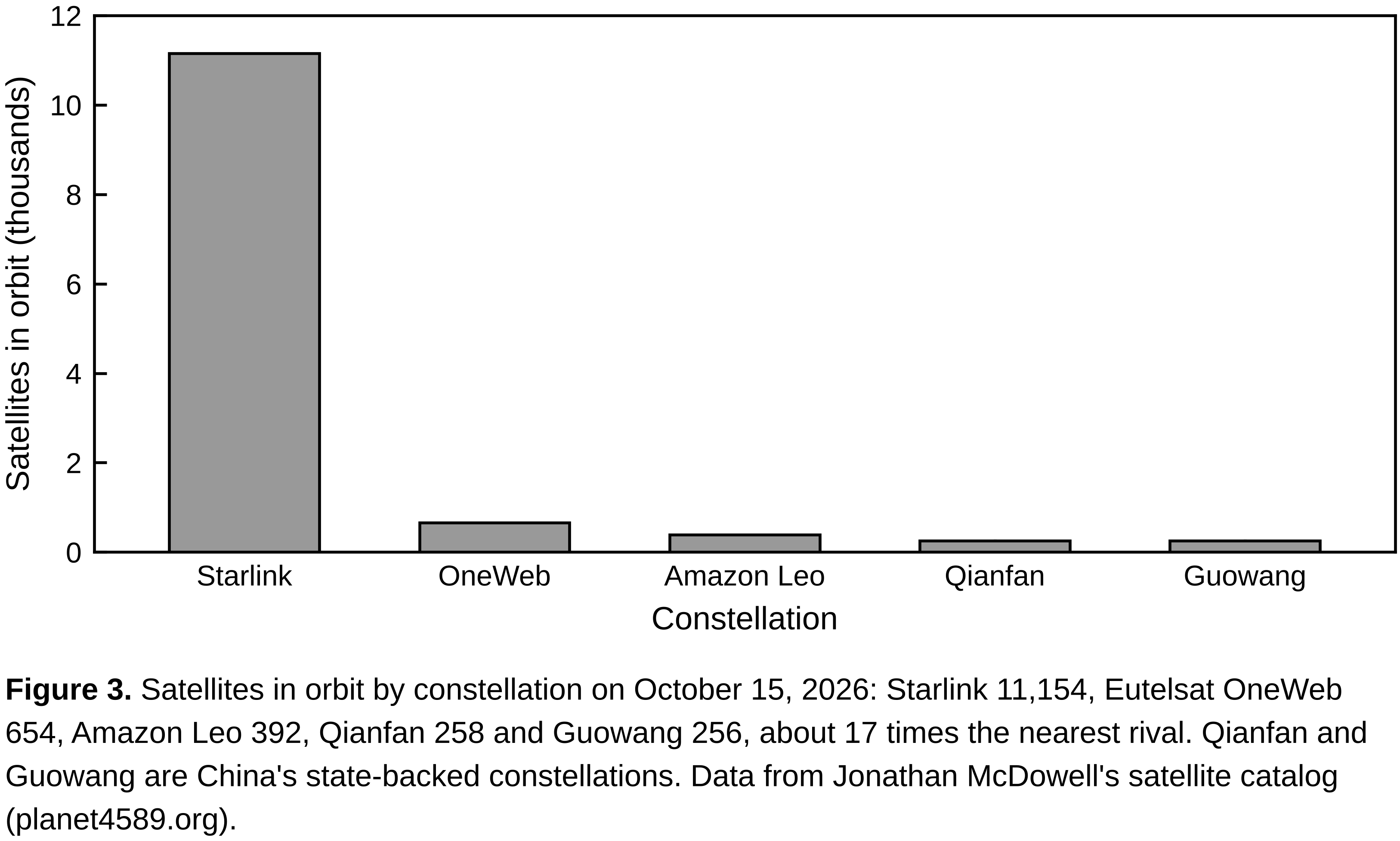
We don’t confuse this with a traditional network effect, where every new customer makes the service more valuable to existing ones. Starlink’s advantage comes from something arguably harder to replicate: economies of scale reinforced by vertical integration.
SpaceX builds the satellites, builds the rockets, launches them at cost, and replaces the fleet on a roughly five-year cycle. Each part of the operation reinforces the economics of the others.