10 public NotebookLM notebooks built from Harvard's happiness study, Anthropic's job data and the CIA's analyst manual. 171 sources. Steal all 10 links.
By Gencay
Published: 2026-11-01
URL: https://www.learnwithmeai.com/p/notebooklm-notebooks-harvard-anthropic-cia
I’ve trained 363 NotebookLM’s, but I find some of them make a real difference.
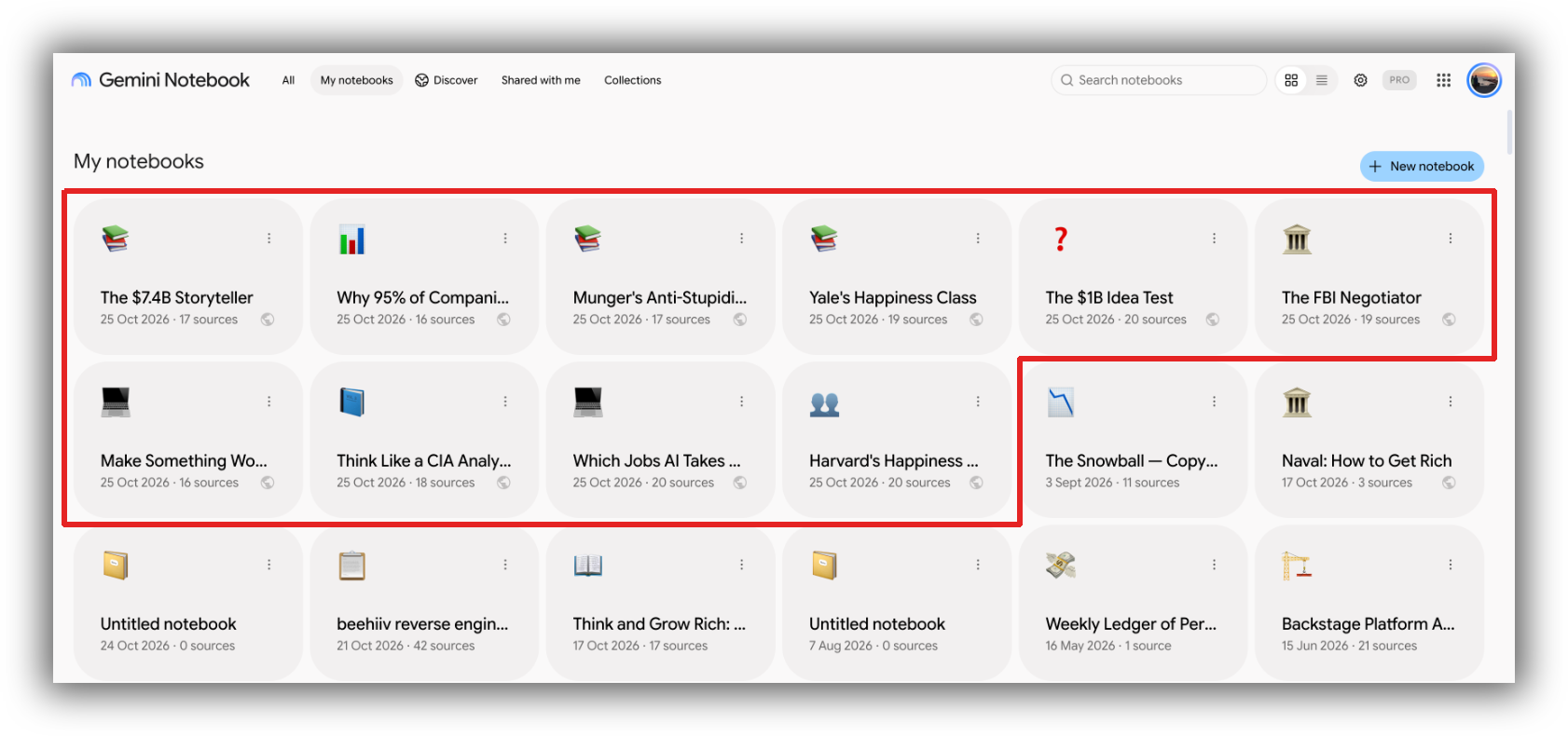
\My NotebookLM home, with the 10 new notebooks at the top.\
In this article, I’ll give you 10 NotebookLM notebooks that can make your work easier, save you time, and even change the way you think.
Let’s start.
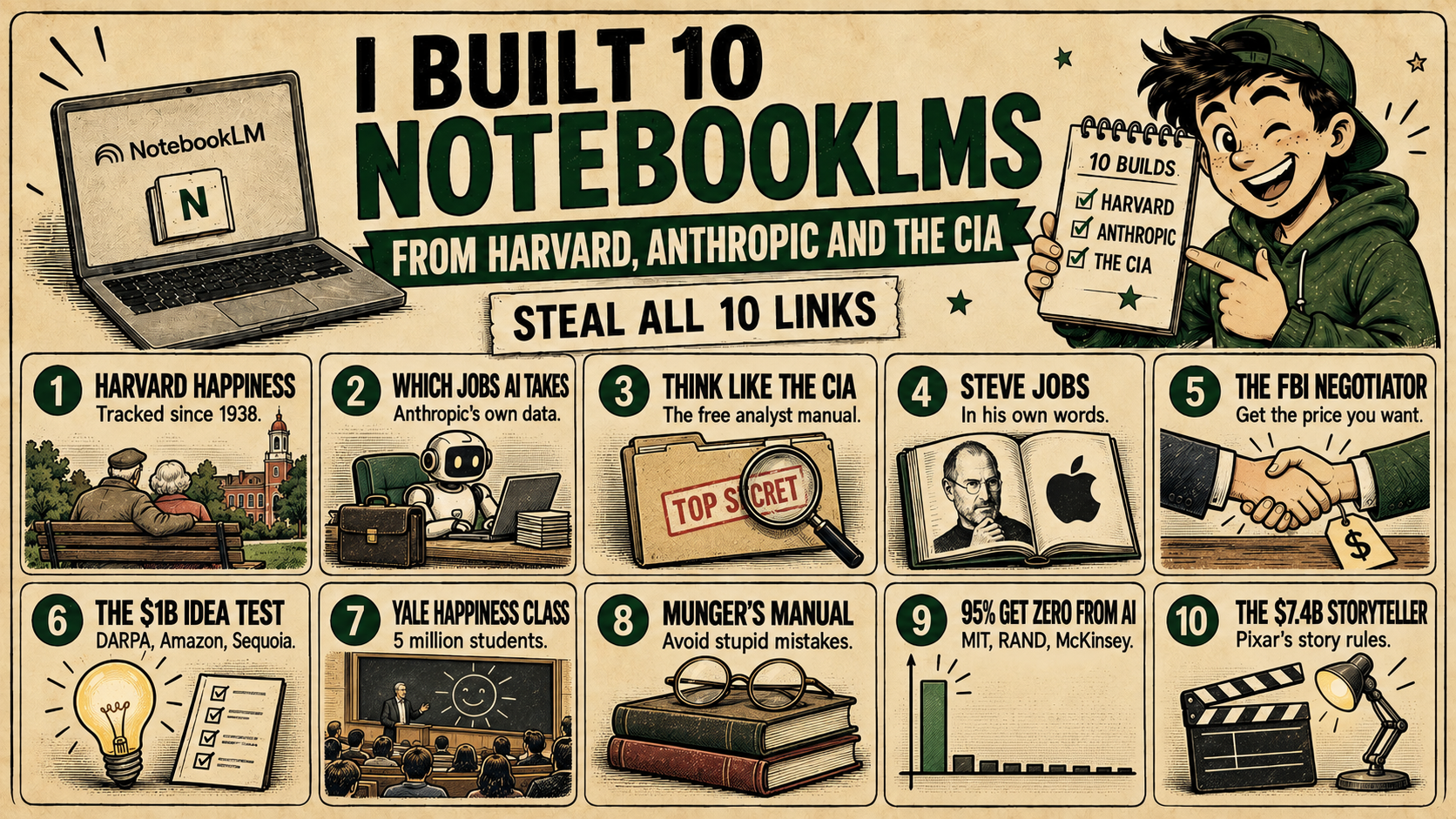
\The full lineup, with Harvard, Anthropic, and the CIA up front.\
1. Harvard's Happiness Study in One NotebookLM
In 1938, Harvard started following 724 young men.
268 were Harvard sophomores, and 456 were young men from Boston.
The study is in its 88th year now, and it has grown to 2,500 people, including their wives and descendants.
Robert Waldinger runs it today. His summary of the data is one sentence.
"Good relationships keep us happier and healthier."
I added his TED talks, the study's own site, 4 Harvard Gazette articles, Harvard Medicine Magazine, and Harvard Health.
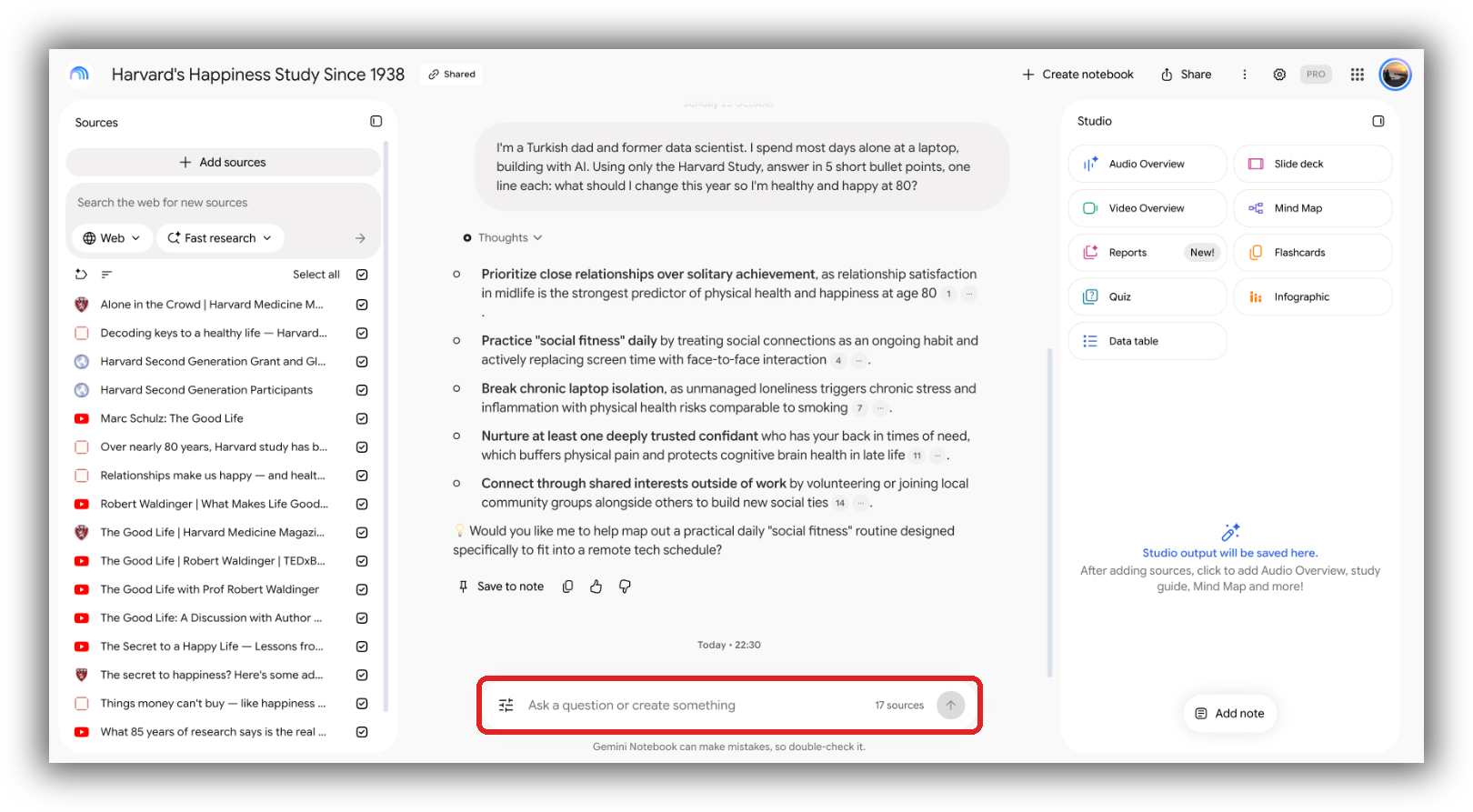
\Waldinger's talks, the Gazette and the study's own site.\
I spend most of my day alone at a laptop, so I asked for myself.
I'm a Turkish dad and former data scientist. I spend most days alone at a laptop, building with AI. Using only the Harvard Study, answer in 5 short bullet points, one line each: what should I change this year so I'm healthy and happy at 80?
Here is the answer.
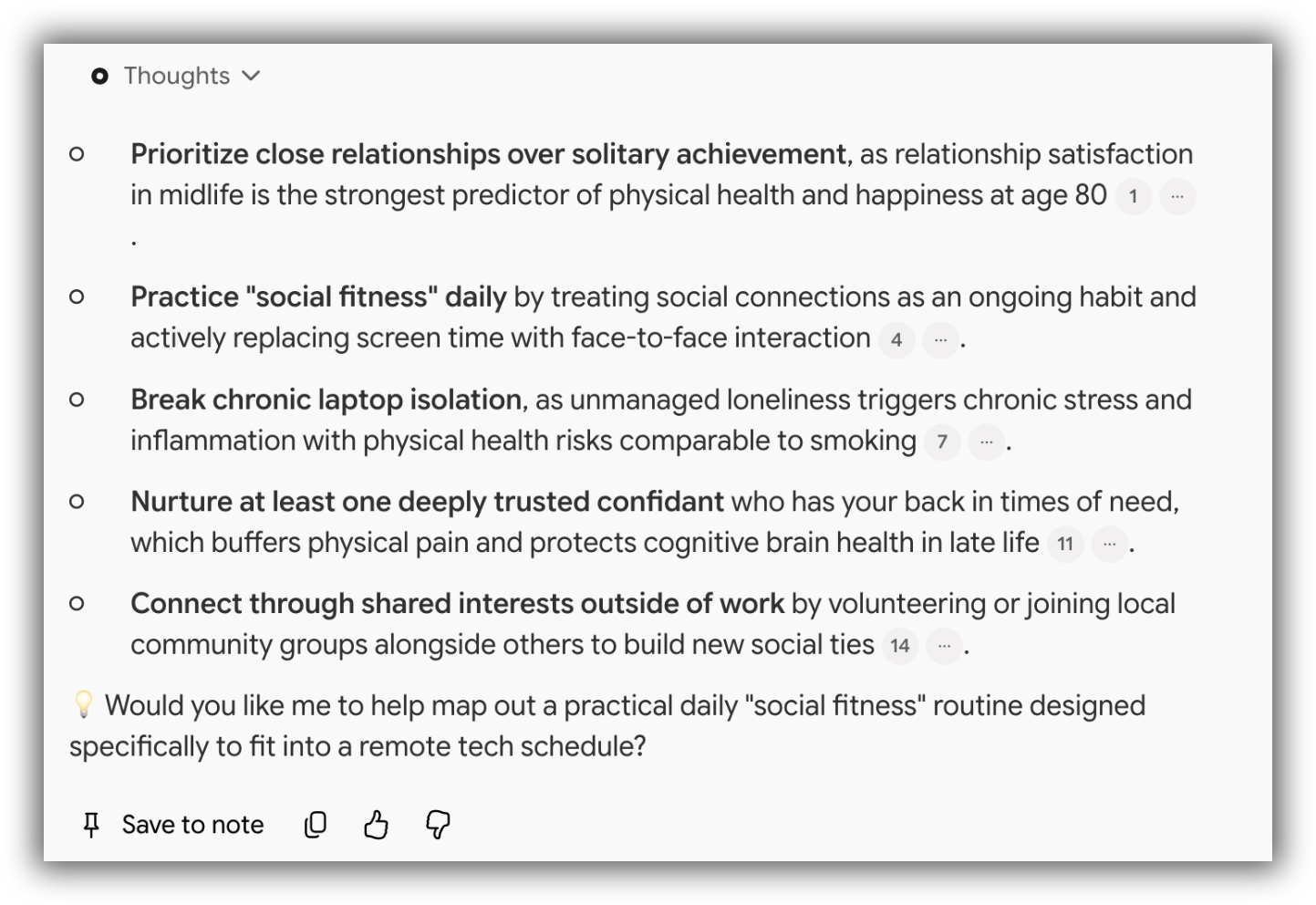
\Relationships come first, and long days alone at a laptop are the risk.\
My first data project in this newsletter asked a close question.
Two years later, I asked;
This notebook answers both with 87 years of data.
Here is the link to this NotebookLM.
<https://notebook.google.com/notebook/ecc9f1e7-1d23-47cb-945e-47f663f114bd>
2. Which Jobs AI Takes First
Every week, someone on the internet predicts which jobs AI will take next, with a chart and no data behind it.
Anthropic counts them.
Its Economic Index maps millions of Claude conversations to real jobs.
The first report found that 37.2% of Claude queries were software work.
Anthropic's labor market study puts computer programmers at the top, with 75%
I added Anthropic's economic research from February 2025 to October 2026, the paper behind the Index, and 2 talks from Anthropic's YouTube channel.
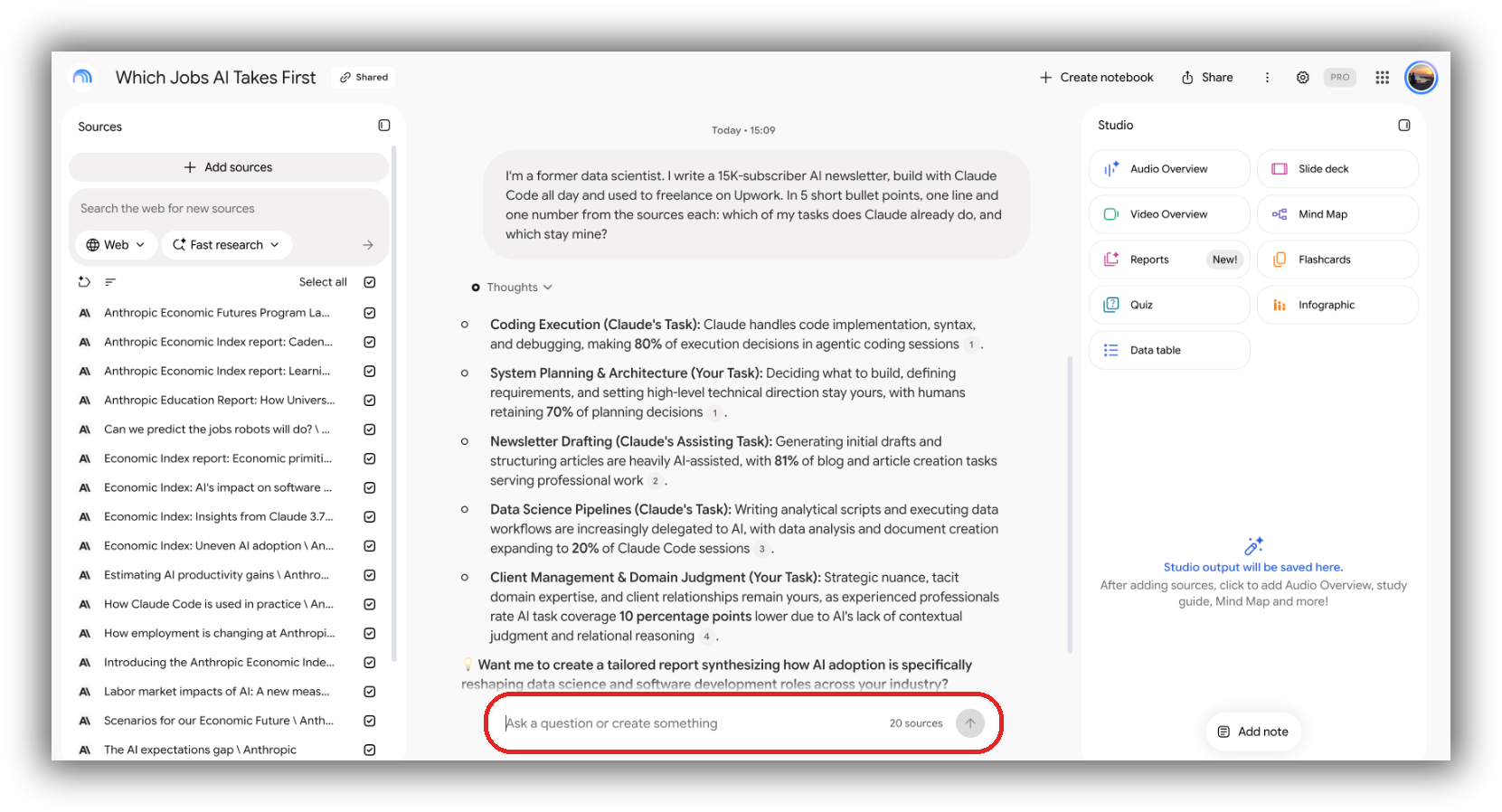
\Every source in this notebook is Anthropic's own research.\
I used to freelance on Upwork. (7000+ hours)
Now I write and build with Claude Code all day.
I wanted to know which half of my week is already Claude's.
I'm a former data scientist.
I write a 18K-subscriber AI newsletter, build with Claude Code all day and used to freelance on Upwork.
In 5 short bullet points, one line and one number from the sources each: which of my tasks does Claude already do, and which stay mine?
Here is the answer.
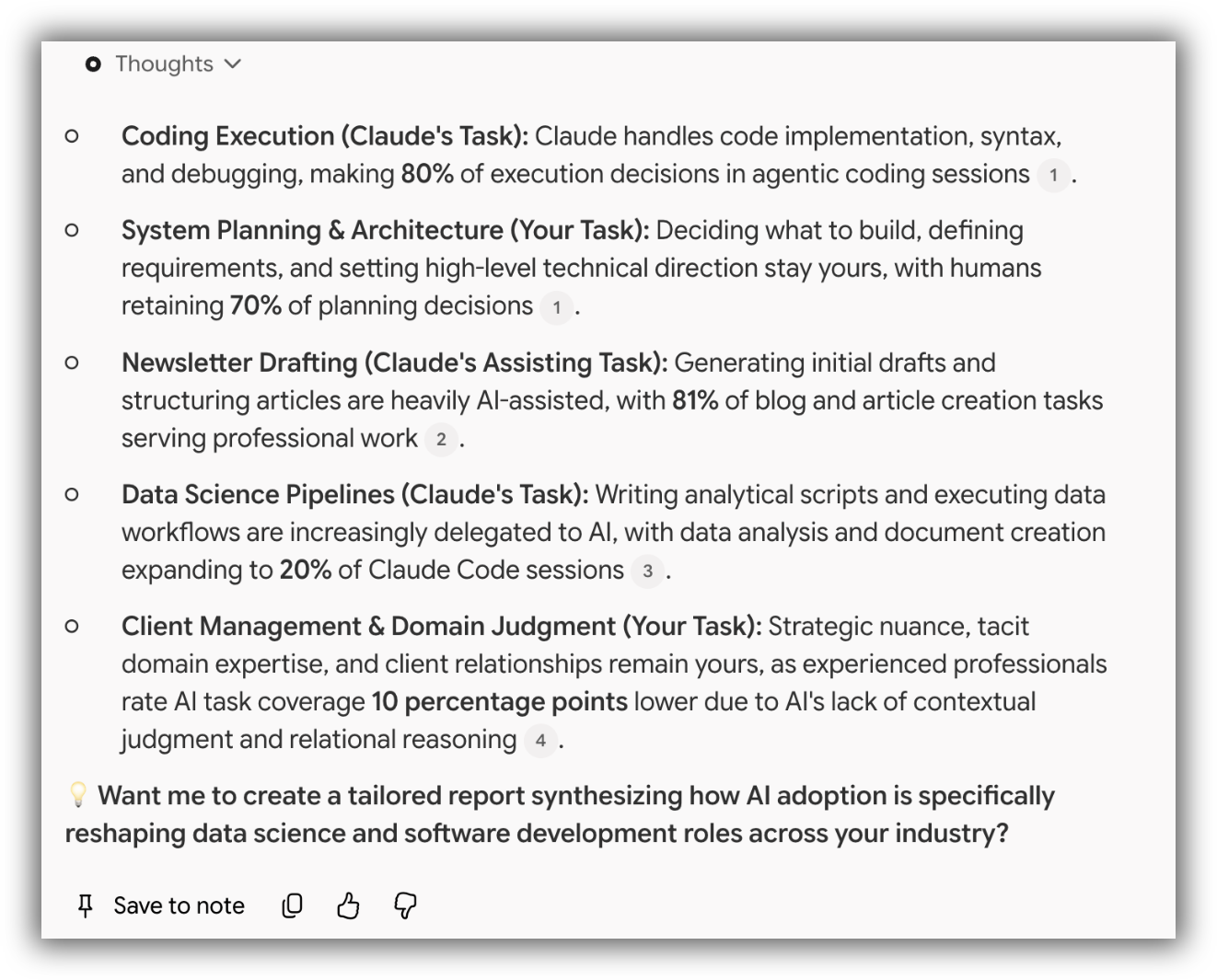
\Claude takes the execution, and planning and clients stay with me.\
Planning and clients are the job Anthropic pays $300K for in a forward deployed engineer. I built the training as a Claude Skill.
When you want the next contract, my Claude job hunter found an $85K one.
Here is the link to this NotebookLM.
<https://notebook.google.com/notebook/e71d912d-9963-42be-a860-eeb20ff67ef6>
3. Think Like a CIA Analyst With NotebookLM
The CIA has a free book on how not to fool yourself.
It was written for its own analysts.
Richards Heuer's Psychology of Intelligence Analysis came out in 1999. cia.gov still gives the full 214 pages away as a PDF.
I added the book, the CIA's Tradecraft Primer, Sherman Kent's Words of Estimative Probability, the intelligence community's analytic standards, and talks from former analysts.
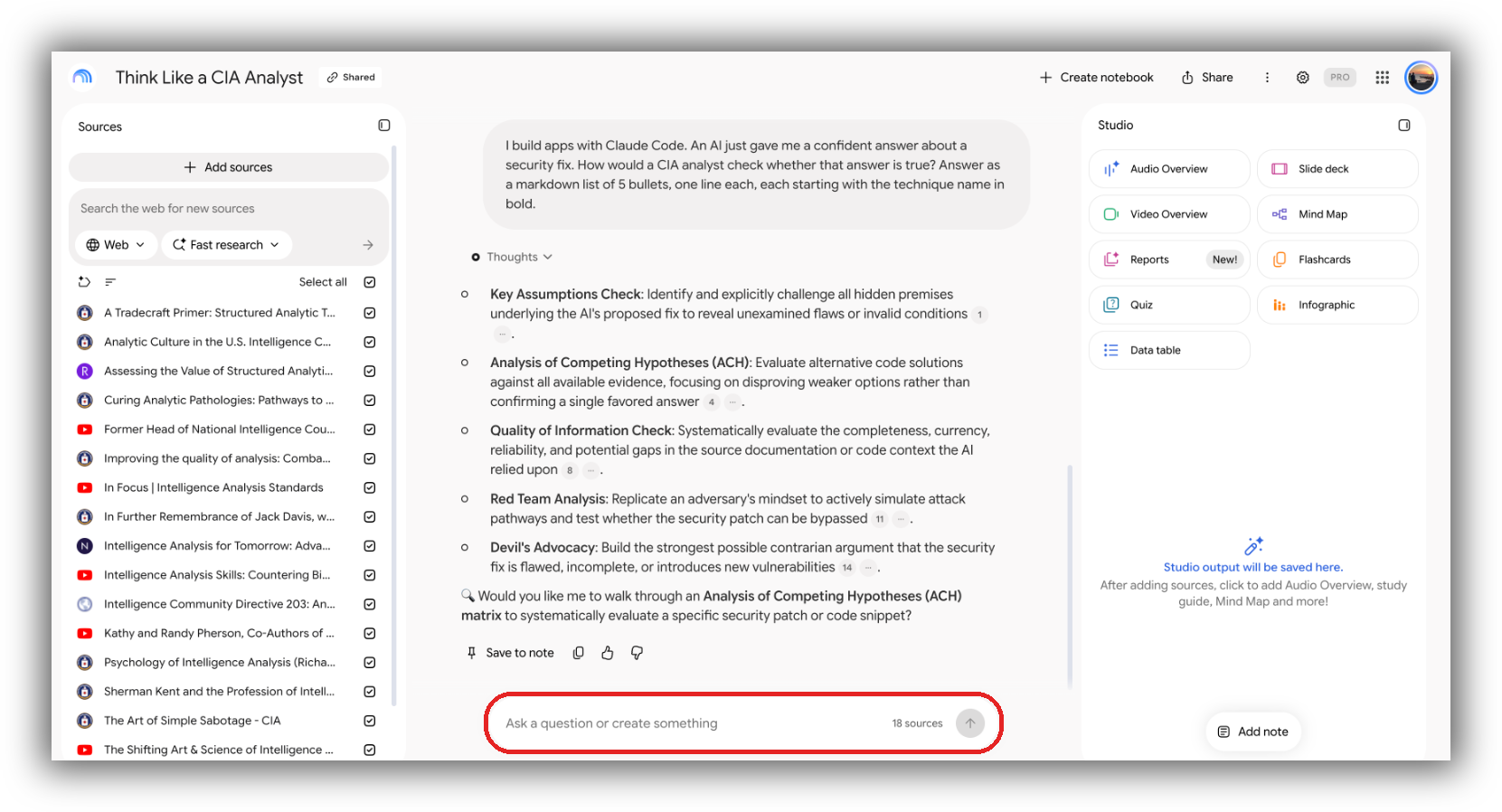
\Heuer's book, the Tradecraft Primer and the CIA's own journal.\
AI answers sound sure even when they are wrong.
So I asked how an analyst would check one.
I build apps with Claude Code.
An AI just gave me a confident answer about a security fix.
How would a CIA analyst check whether that answer is true?
Answer as a markdown list of 5 bullets, one line each, each starting with the technique name in bold.
Here is the answer.
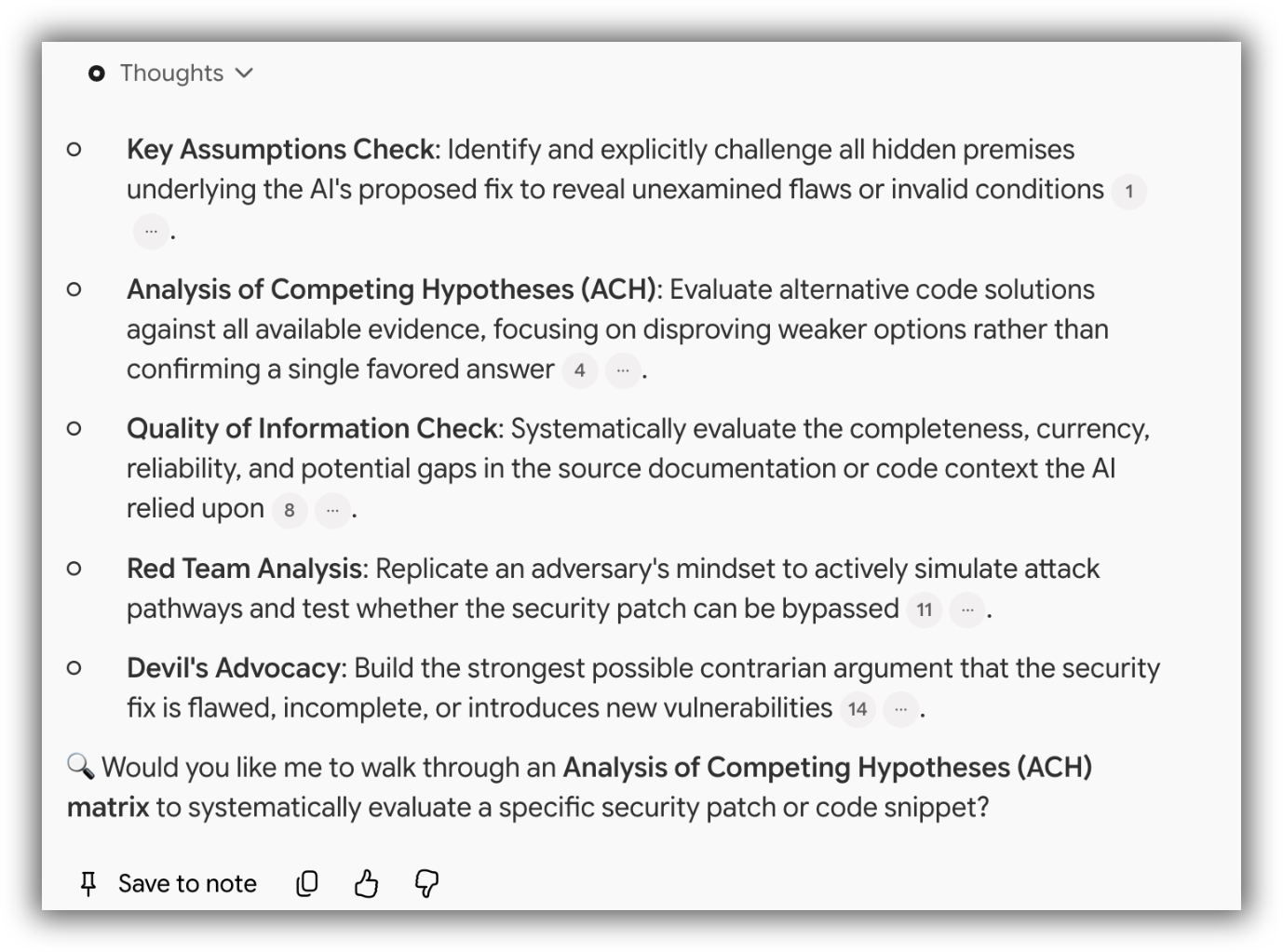
\Check the assumptions first, then try to break the answer like an attacker would.\
In January, I wrote 5 methods that cut AI hallucinations.
This notebook adds the analyst's side.
The Red Team idea works on a business too.
Deloitte charges $200K for this, and my Claude skill found 17 flaws free.
Here is the link to this NotebookLM.
<https://notebook.google.com/notebook/7fdece72-02cd-44e4-99f7-5e597200436a>
4. Make Something Wonderful
In 2023, the Steve Jobs Archive published a book of Steve Jobs in his own words.
It is free to read.
Laurene Powell Jobs wrote the introduction, and Leslie Berlin edited it.
The title is: Make Something Wonderful.
I added the book, the Archive's stories, his 2005 Stanford speech, his 1983 design conference talk at 28, an early Pixar interview and his NeXT years.
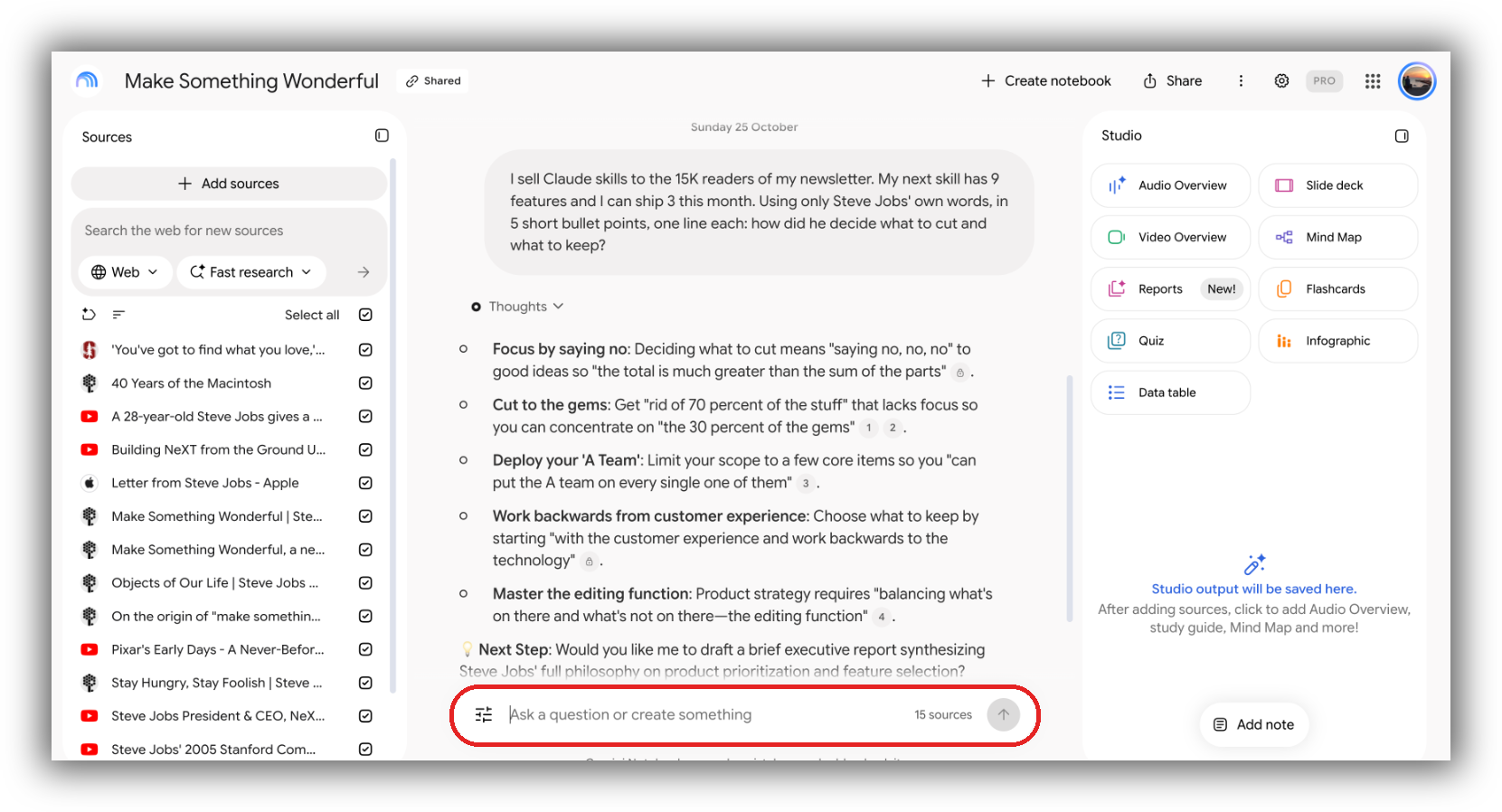
\Steve Jobs in his own words, from the Archive and Stanford.\
I sell Claude skills to readers.
So I asked how he cut features, in his own words.
I sell Claude skills to the 18K readers of my newsletter.
My next skill has 9 features and I can ship 3 this month.
Using only Steve Jobs' own words, in 5 short bullet points, one line each: how did he decide what to cut and what to keep?
Here is the answer.
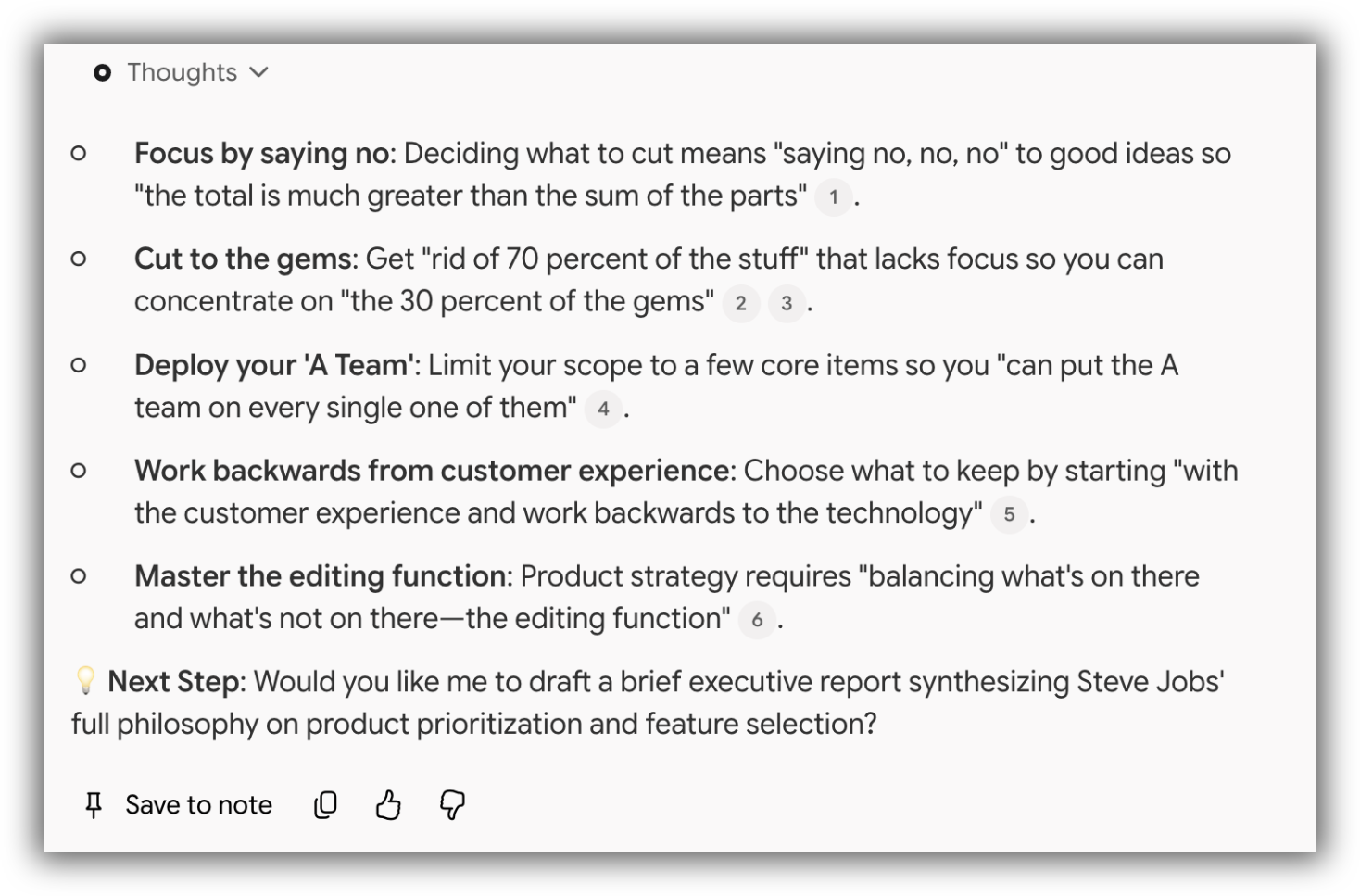
\Cut 70 percent of the stuff and put the A team on the gems.\
I have built 48 Claude Skills so far.
Run your next idea through this notebook before you build it.
Here is the link to this NotebookLM.
<https://notebook.google.com/notebook/7fd5e0e6-4180-48de-90b5-29492a446646>
5. The FBI Negotiator
Chris Voss wrote Never Split the Difference. Before 2008, he was the FBI’s lead international kidnapping negotiator.
The method in his book came from the FBI. In 1990, the Bureau changed its hostage negotiation program to focus on active listening.
Gary Noesner built the FBI’s Behavioral Change Stairway Model. He put it in one line.
Listening is the cheapest, yet most effective concession we can make.
This notebook goes back to that source. I added the FBI Law Enforcement Bulletin articles, Voss’s talks, his company’s guides on price and salary, and 3 Harvard negotiation articles.
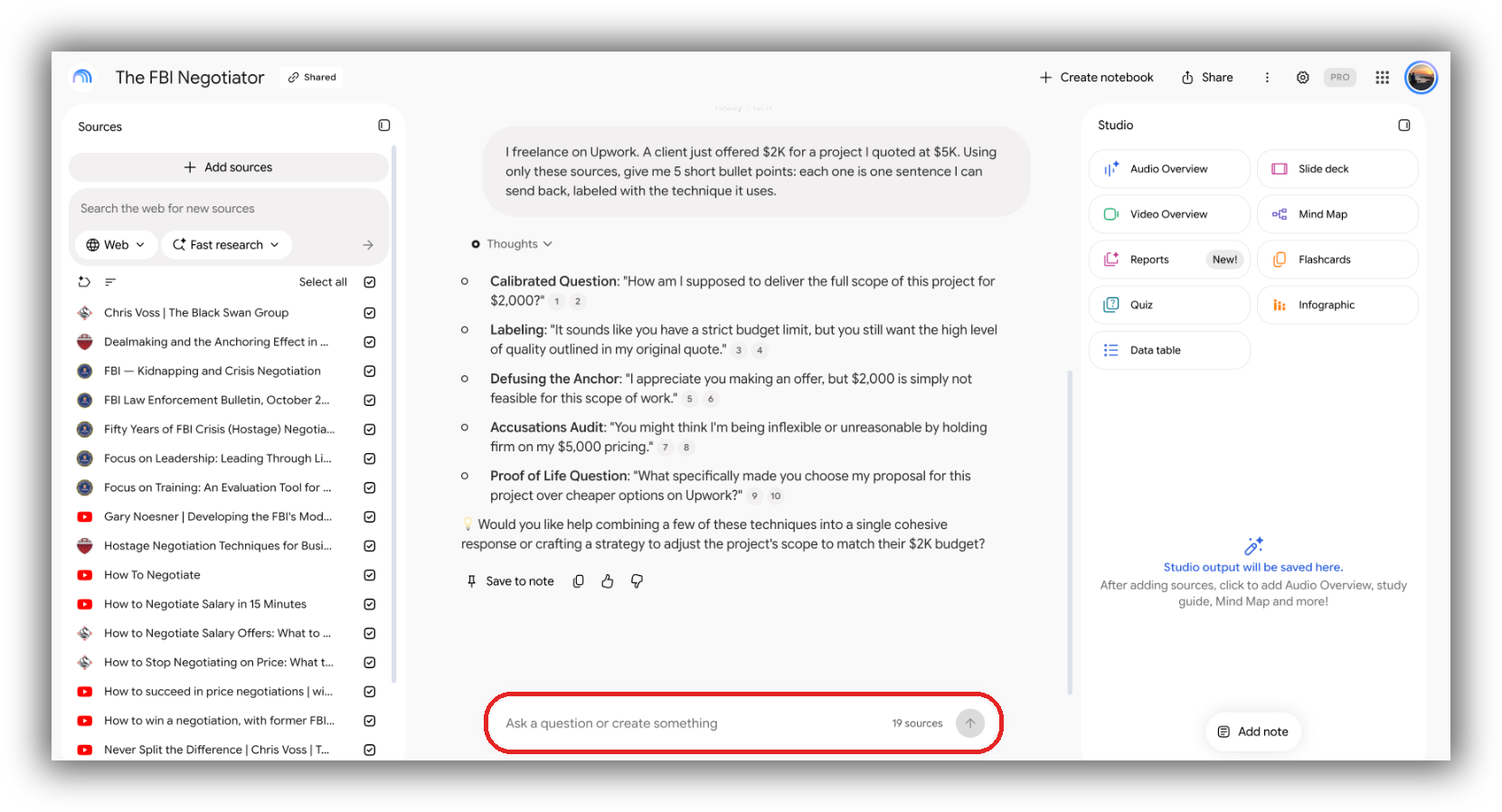
\FBI bulletins, Chris Voss and Harvard's negotiation program.\
I freelanced on Upwork for years, and every freelancer gets this message one day.
I freelance on Upwork. A client just offered $2K for a project I quoted at $5K. Using only these sources, give me 5 short bullet points: each one is one sentence I can send back, labeled with the technique it uses.
Here is the answer.
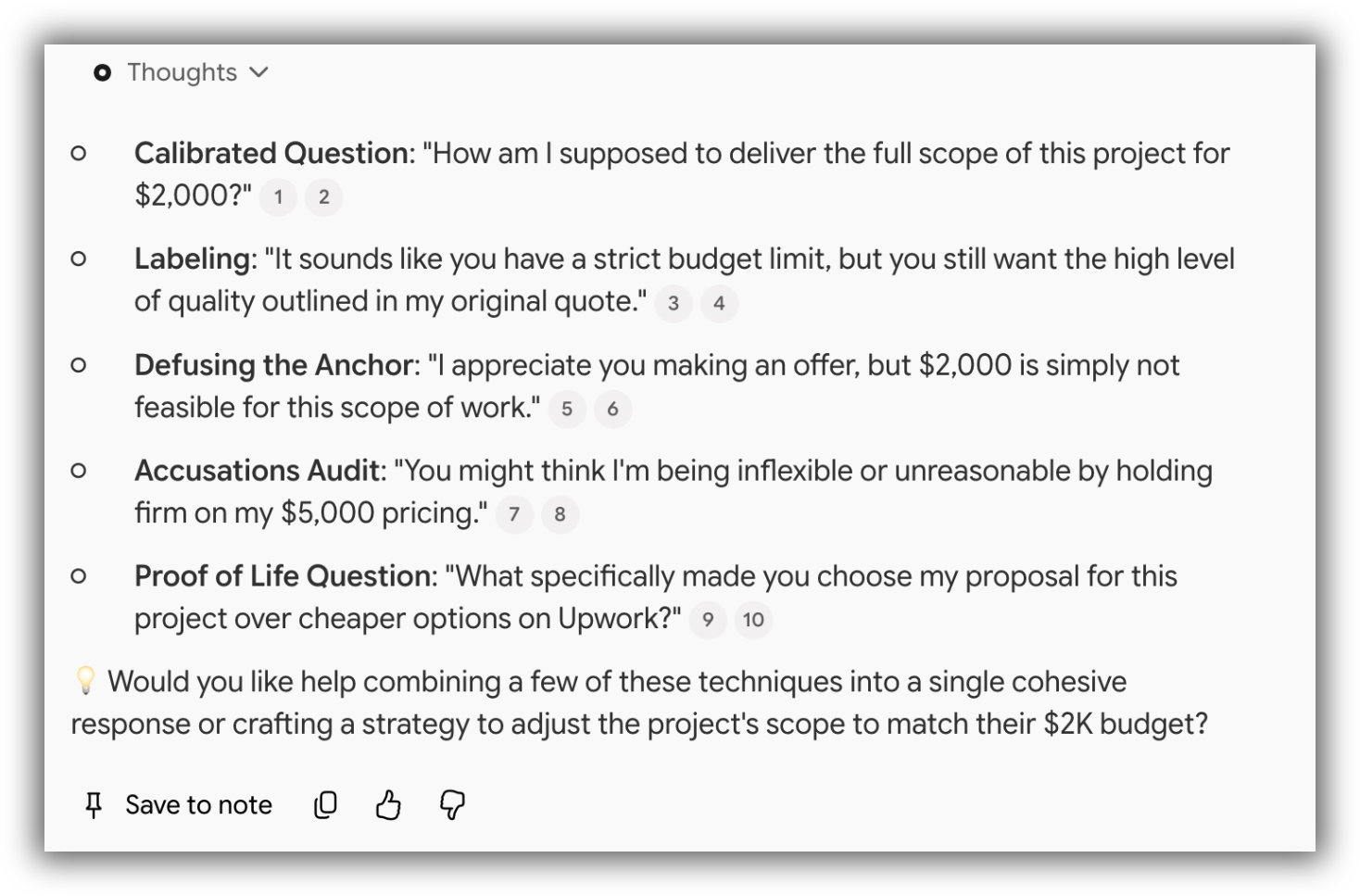
\Five replies I can send back, and none of them say yes to $2K.\
I went from zero jobs to Top Talent on Upwork the slow way.
Ask this notebook before your next reply.
When you want better-paid clients, start with my Claude job hunter.
Here is the link to this NotebookLM.
<https://notebook.google.com/notebook/58babc03-1bb0-4e92-9aeb-601b9dd1e4b3>
6. The $1B Idea Test
DARPA runs every proposed program through 8 questions.
George Heilemann wrote them when he ran the agency, from 1975 to 1977.
The first question is short.
What are you trying to do? Articulate your objectives using absolutely no jargon.
Amazon has its own version.
Before it asks for a budget, the team writes the press release for the finished product.
I added DARPA's catechism, Heilmeier's oral history, Amazon's Working Backwards material, Sequoia's business plan guide, and product-market fit frameworks from Sequoia and a16z.
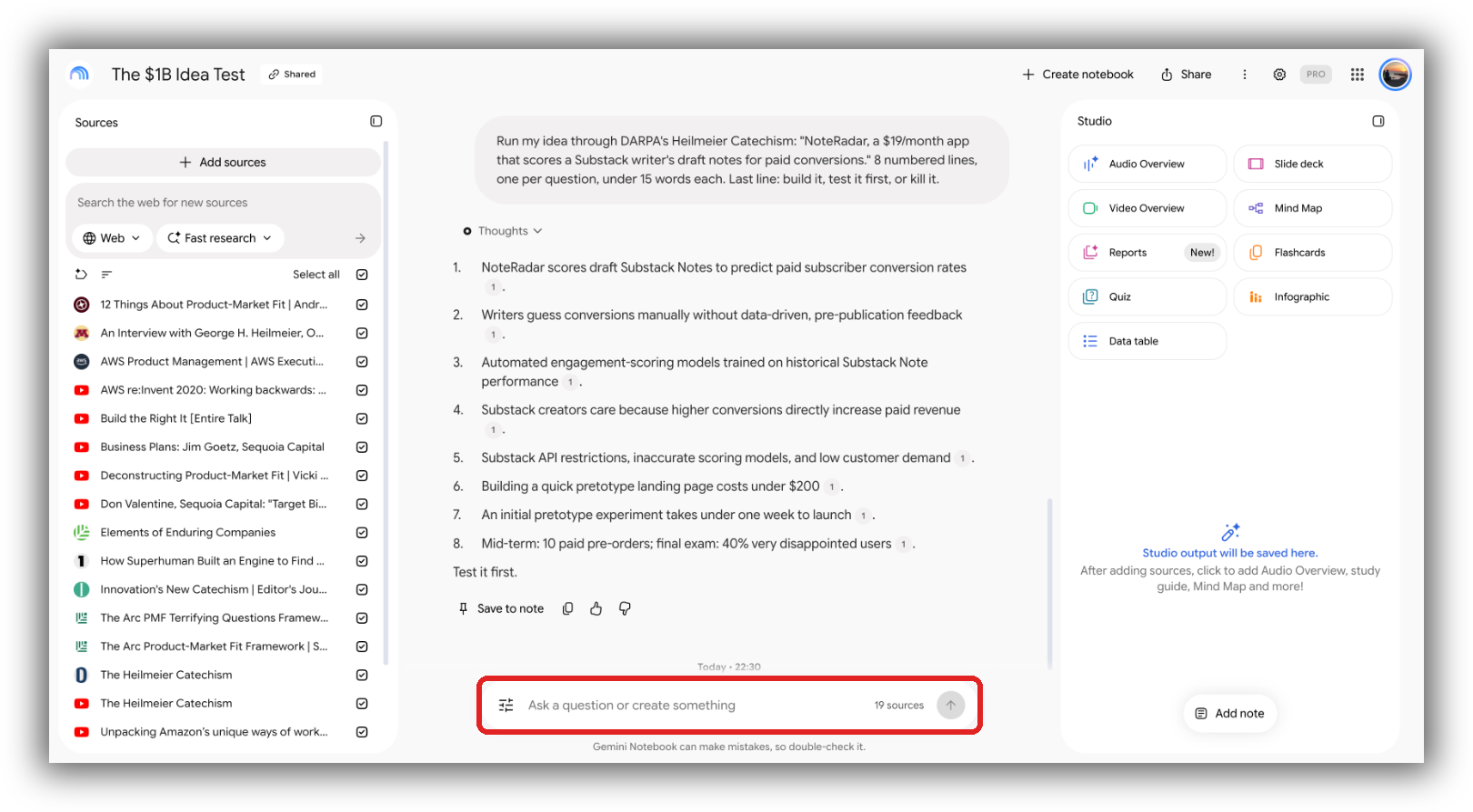
\DARPA, Amazon and Sequoia on how to judge an idea.\
I ran a small app idea through it.
NoteRadar, a $19/month tool that scores Substack notes for paid conversions.
Run my idea through DARPA's Heilmeier Catechism: "NoteRadar, a $19/month app that scores a Substack writer's draft notes for paid conversions."
8 numbered lines, one per question, under 15 words each.
Last line: build it, test it first, or kill it.
Here is the answer.
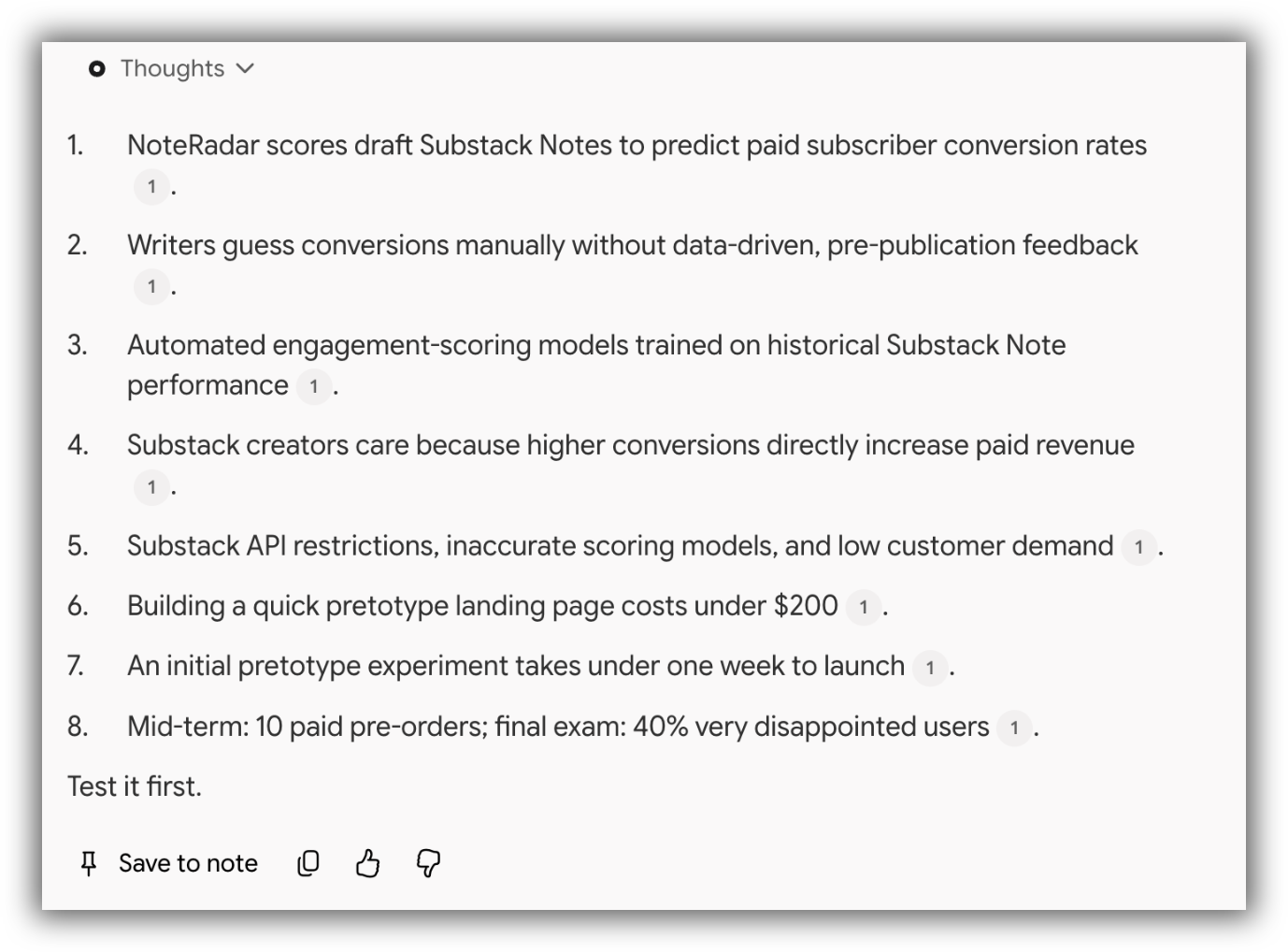
\Eight answers and a verdict, and the verdict is to test it first.\
One idea made me $2,700, and I built a Claude skill that finds more.
This notebook is the filter that comes after it.
Here is the link to this NotebookLM.
<https://notebook.google.com/notebook/57329e22-94ec-46ac-8669-f2104f4997d0>
7. Yale's Happiness Class
Laurie Santos teaches the most popular class in Yale history.
Nearly a quarter of all Yale undergraduates took it in their first year.
The free version on Coursera shows more than 5 million people enrolled.
Harvard tells you what matters over 80 years. Santos tells you what to do this week.
I added 10 lectures from her course, a Yale talk, Big Think, a Happiness Lab episode, and the Yale News coverage.
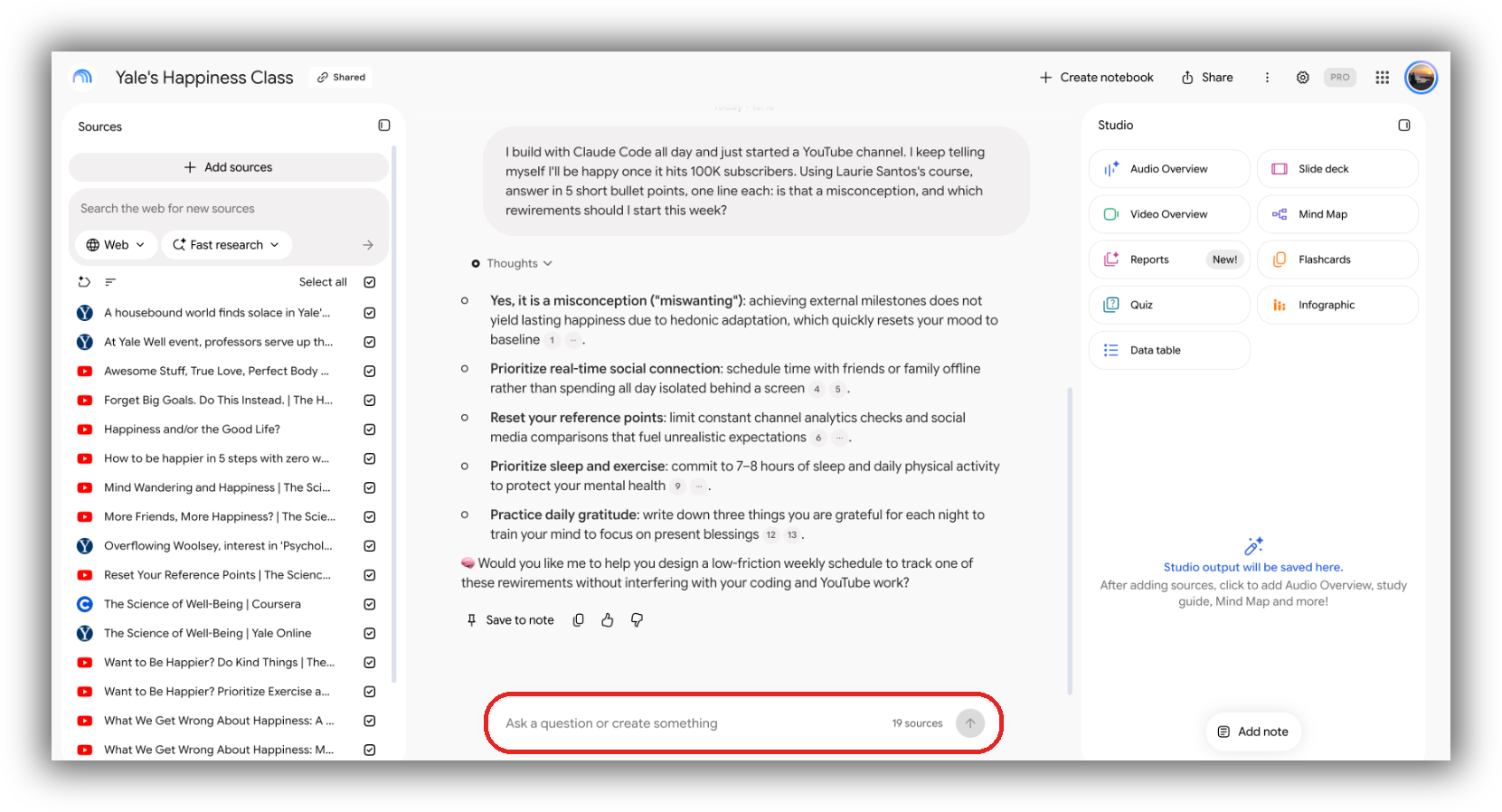
\Santos's lectures and the class that filled Yale's biggest hall.\
I started a YouTube channel in September, so I asked about the number every new channel chases.
I build with Claude Code all day and just started a YouTube channel. I keep telling myself I'll be happy once it hits 100K subscribers. Using Laurie Santos's course, answer in 5 short bullet points, one line each: is that a misconception, and which rewirements should I start this week?
Here is the answer.
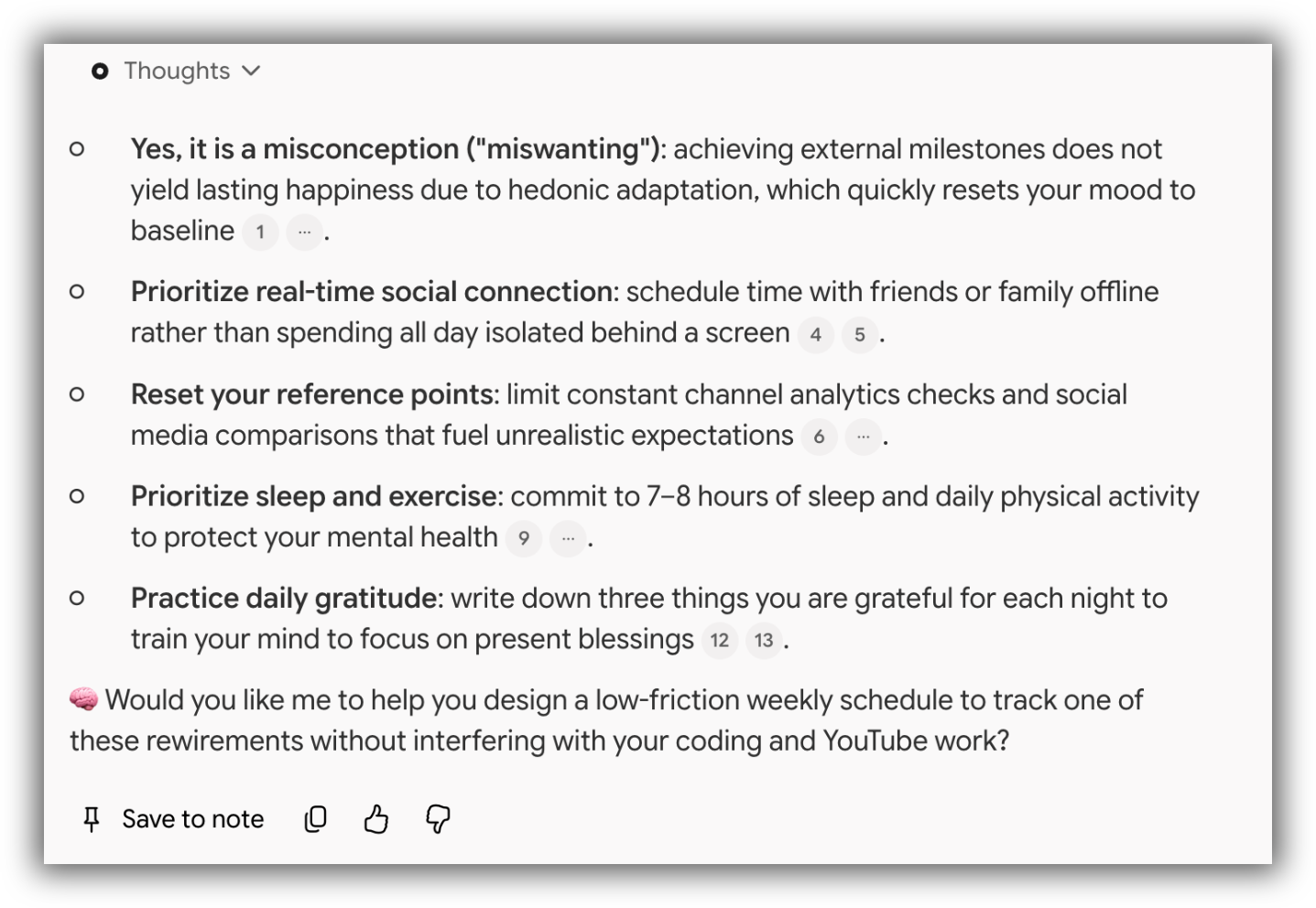
\The milestone resets to baseline, so the daily habits do the work.\
Some days, my brain stops at 2 PM. Sleep and exercise are on this list for a reason.
Here is the link to this NotebookLM.
<https://notebook.google.com/notebook/9548afbc-5419-4bb8-a6f3-ab7ab2fee5f8>
8. Munger's Anti-Stupidity Manual
Charlie Munger solved problems backwards.
Ask what would guarantee failure, then avoid it.
In his words,
"Many hard problems are best solved when they are addressed backward."
Stripe Press, the publisher of Poor Charlie’s Almanack, puts the whole book online for free.
His talk on the psychology of human misjudgment is in it.
I added 9 chapters of the Almanack, his USC Law speech among them, his Acquired interview, his last interview with CNBC, and his talks at Caltech, Michigan, and Stanford.
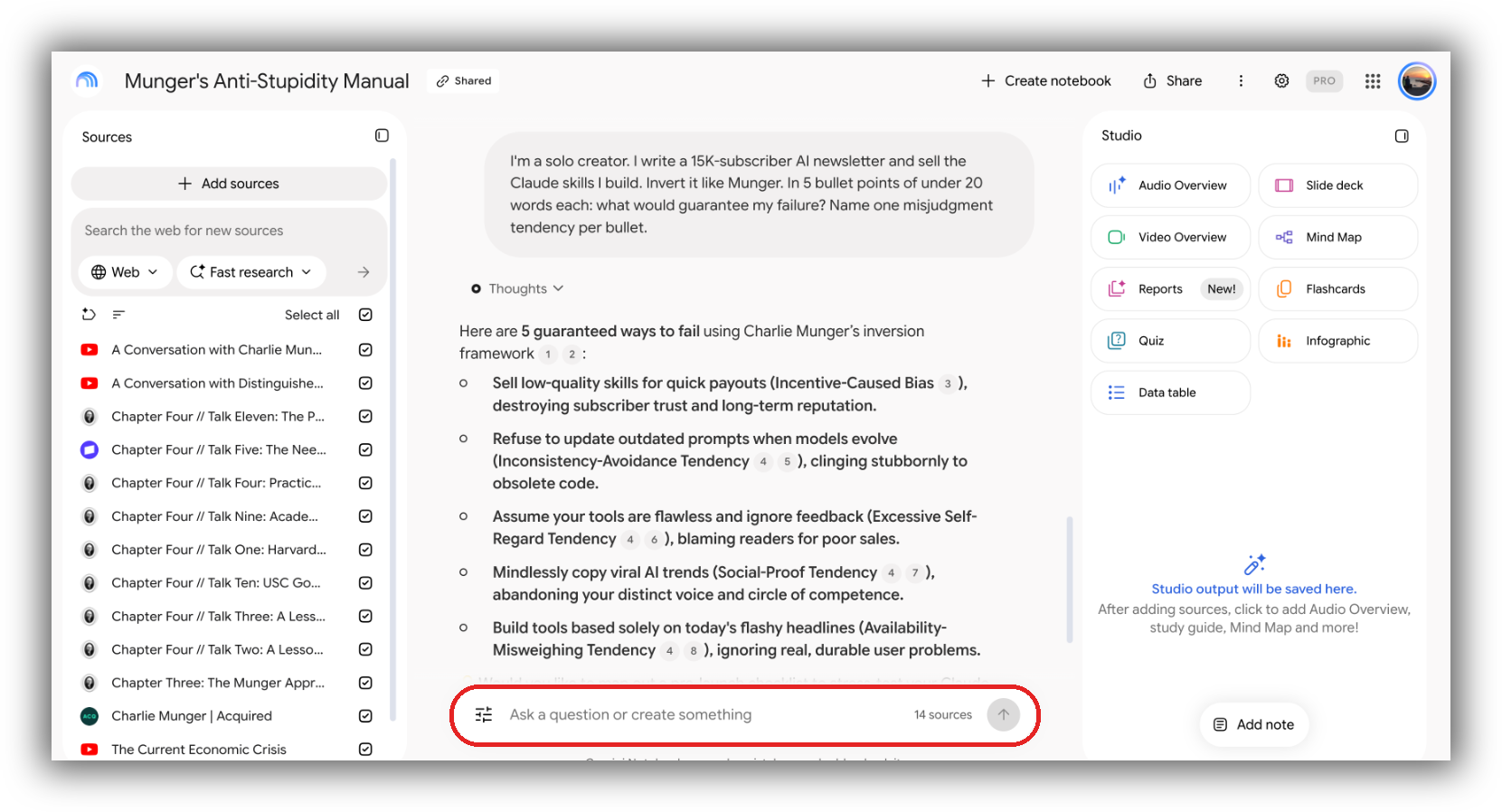
\The Almanack, talk by talk, next to his interviews.\
I asked it to invert my own business.
I'm a solo creator. I write a 15K-subscriber AI newsletter and sell the Claude skills I build. Invert it like Munger. In 5 bullet points of under 20 words each: what would guarantee my failure? Name one misjudgment tendency per bullet.
Here is the answer.
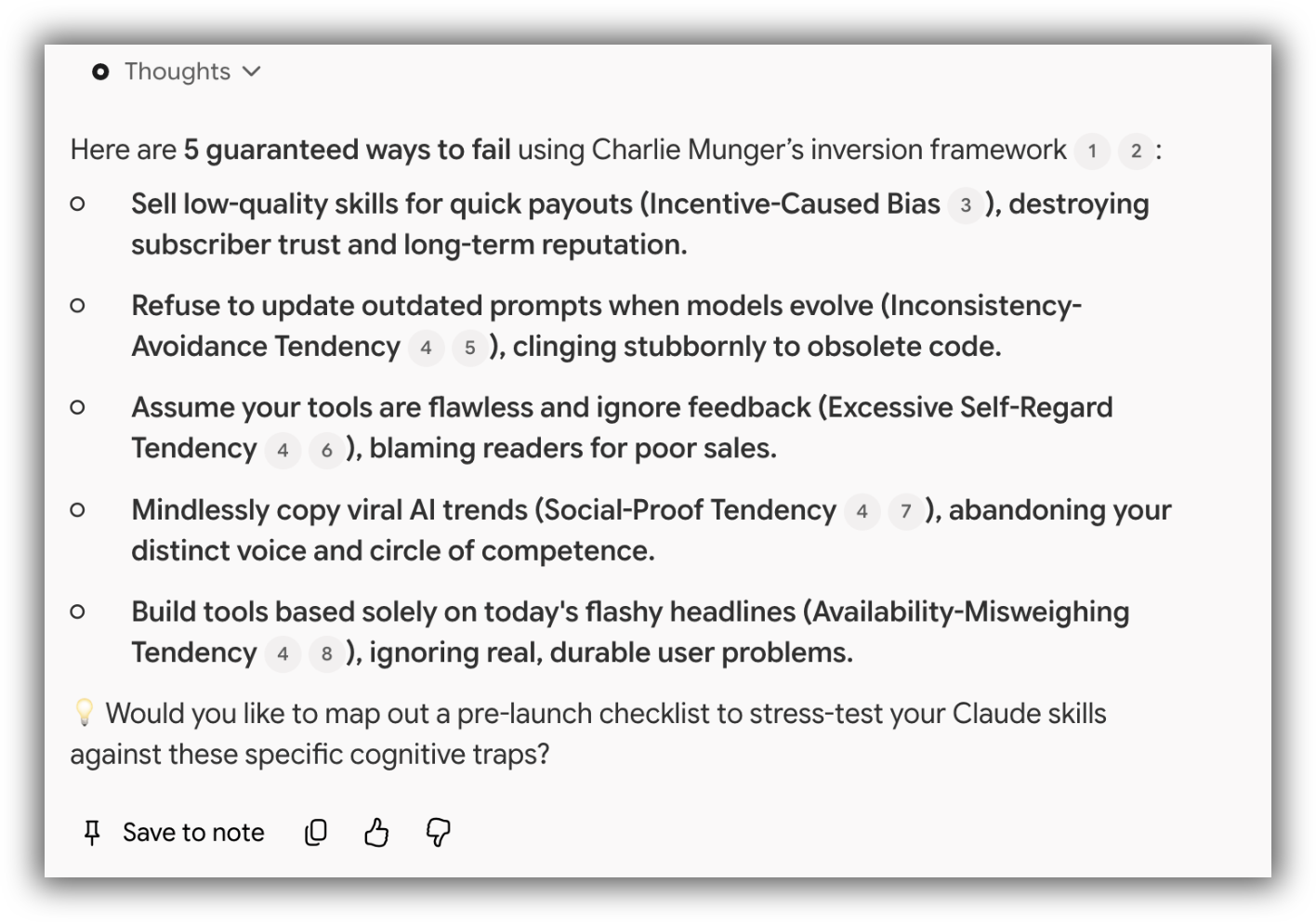
\Five ways to fail, and incentive-caused bias comes first.\
In May, I built a Warren Buffett tutor with NotebookLM and Claude.
If you want Munger to answer in his own voice, this is how I cloned Buffett's mind into NotebookLM.
Here is the link to this NotebookLM.
<https://notebook.google.com/notebook/814cfb08-d9ab-4470-b5a7-89ae1d1dd5a1>
9. Why 95% of Companies Get Zero From AI
MIT's NANDA team studied enterprise AI in 2025.
Companies put $30 to $40 billion into generative AI, and the report found 95% of organizations getting zero return.
RAND cites estimates that more than 80 percent of AI projects fail, twice the rate of IT projects without AI.
I added RAND's study, McKinsey's State of AI, the Stanford AI Index, BCG, Gartner, Deloitte, and IBM.
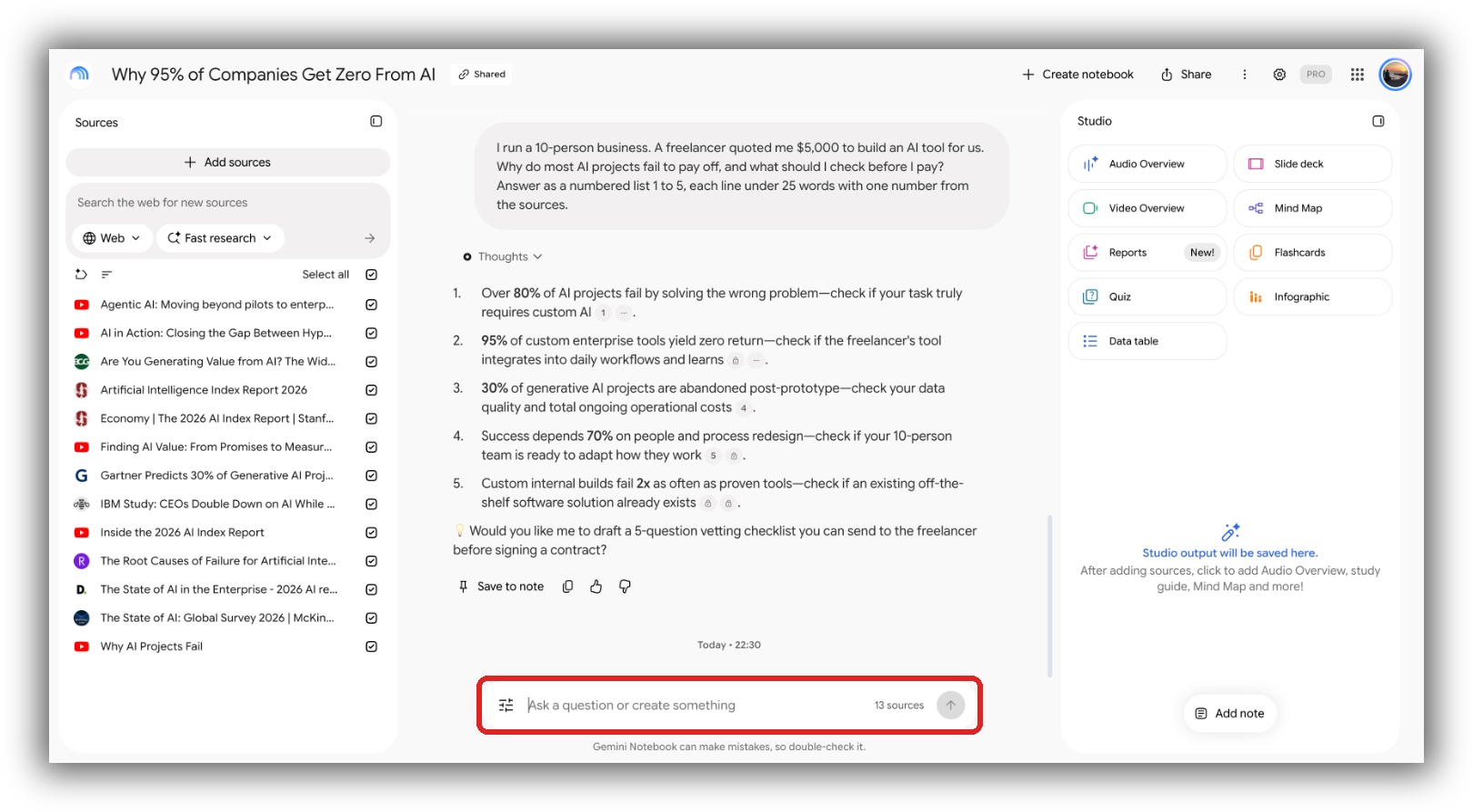
\RAND, McKinsey, BCG and Stanford in one notebook.\
I played a small business owner with a $5,000 quote on the table.
I run a 10-person business. A freelancer quoted me $5,000 to build an AI tool for us. Why do most AI projects fail to pay off, and what should I check before I pay? Answer as a numbered list 1 to 5, each line under 25 words with one number from the sources.
Here is the answer.
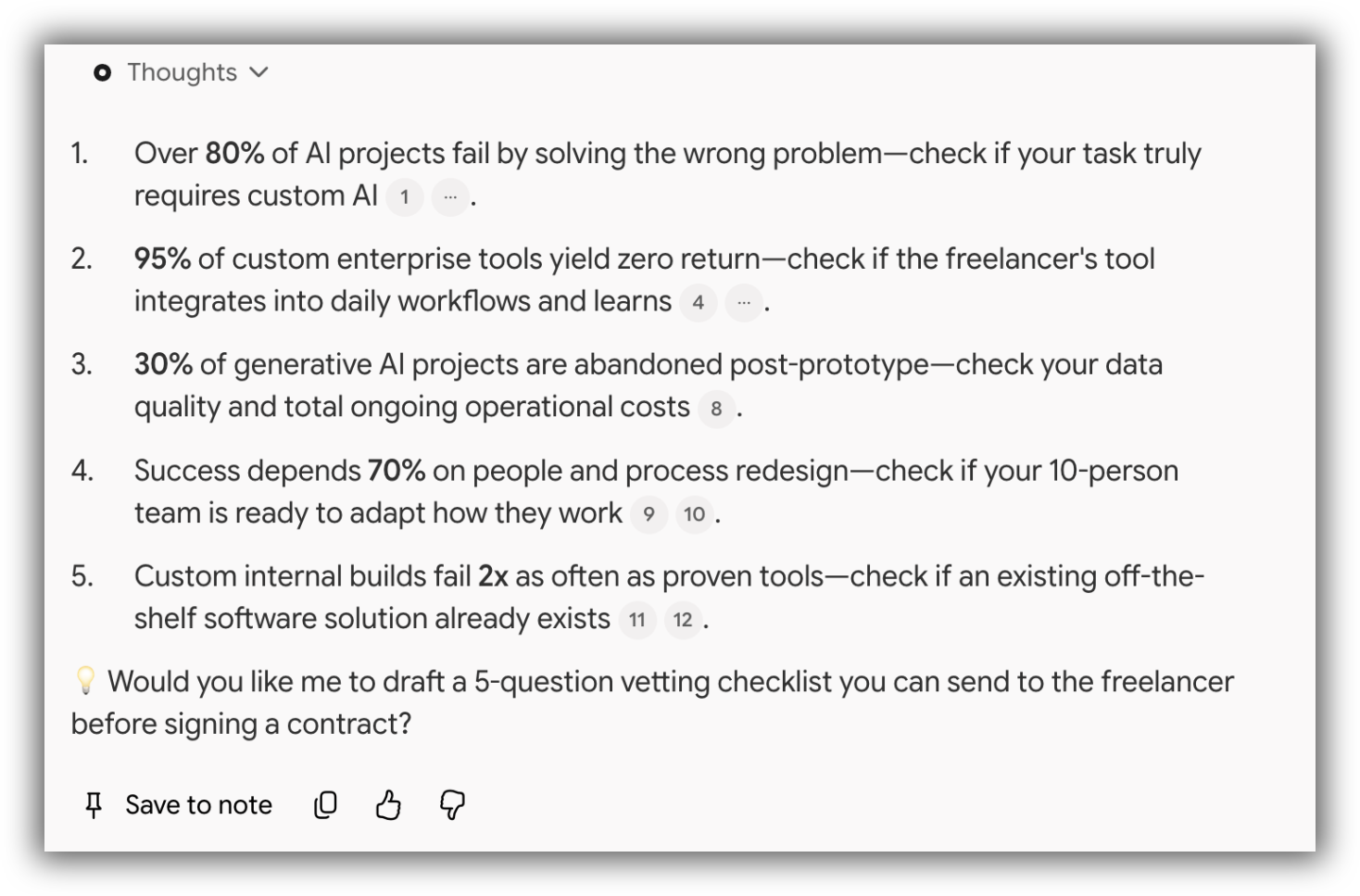
\Check the problem, the data and your team before you pay.\
If you sell AI work, read line 2 twice. The tool has to fit the workflow, or it joins the 95%.
If you run the business side, my Claude skill audits like a $300/hour consultant.
Here is the link to this NotebookLM.
<https://notebook.google.com/notebook/acdd069b-8747-4f2f-b3da-f081d6578dd2>
10. The $7.4B Storyteller
In 2006, Disney agreed to buy Pixar in a deal it valued at $7.4 billion. I
t is the same Pixar Steve Jobs talks about in notebook 4.
Pixar teaches its story rules for free.
Pixar in a Box on Khan Academy is a behind-the-scenes look at how Pixar artists do their jobs.
Andrew Stanton's TED talk has the best rule I know for a hook.
Don't give them four, give them two plus two.
I added Pixar in a Box, Stanton's TED talk, Ed Catmull's talks, Pete Docter, and Pixar's own story videos.
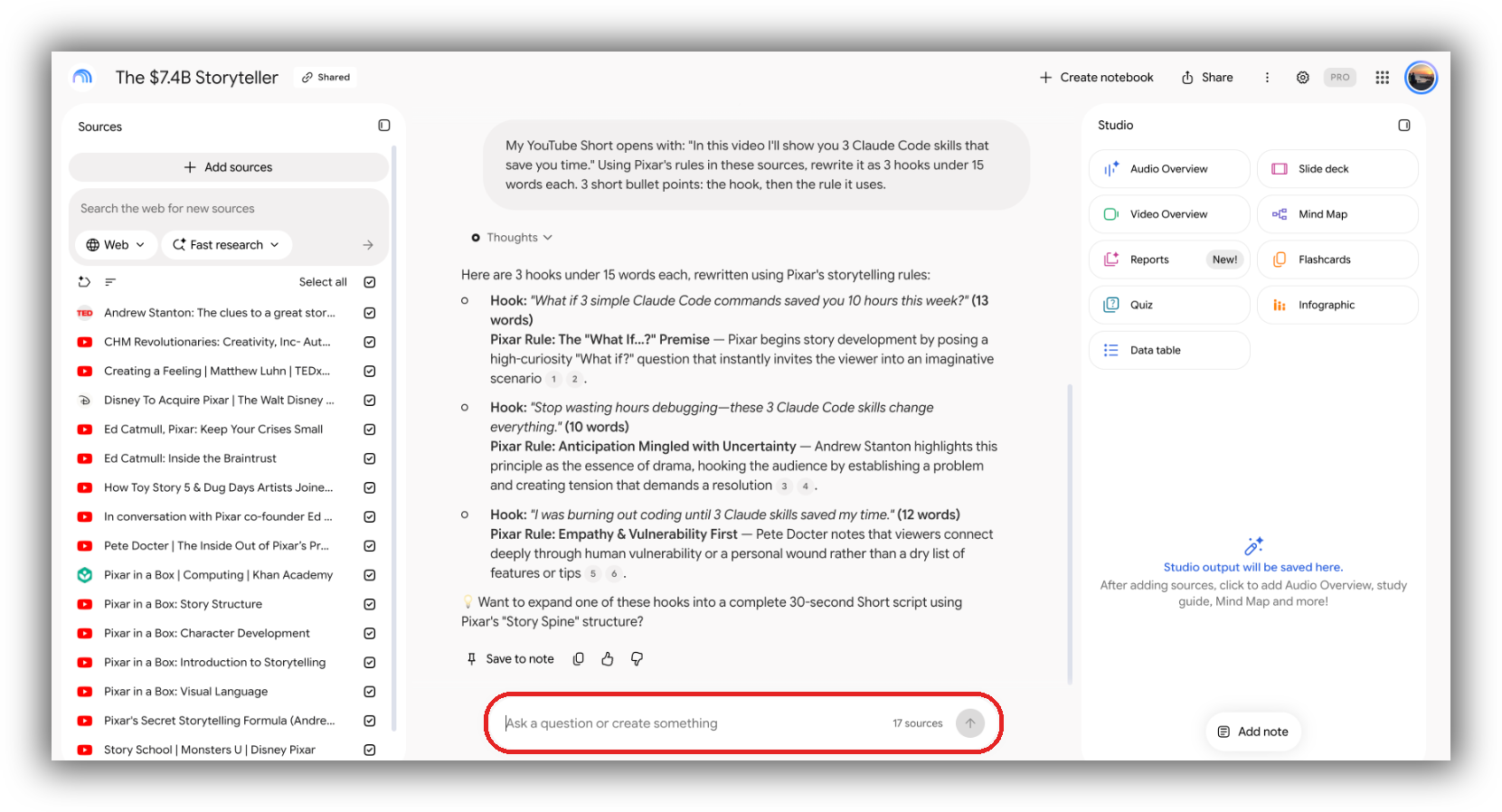
\Pixar in a Box, Stanton, Catmull and Docter in one notebook.\
My Shorts live or die in the first 2 seconds.
I gave it a hook that sounds like every other Short.
My YouTube Short opens with: "In this video I'll show you 3 Claude Code skills that save you time." Using Pixar's rules in these sources, rewrite it as 3 hooks under 15 words each. 3 short bullet points: the hook, then the rule it uses.
Here is the answer.
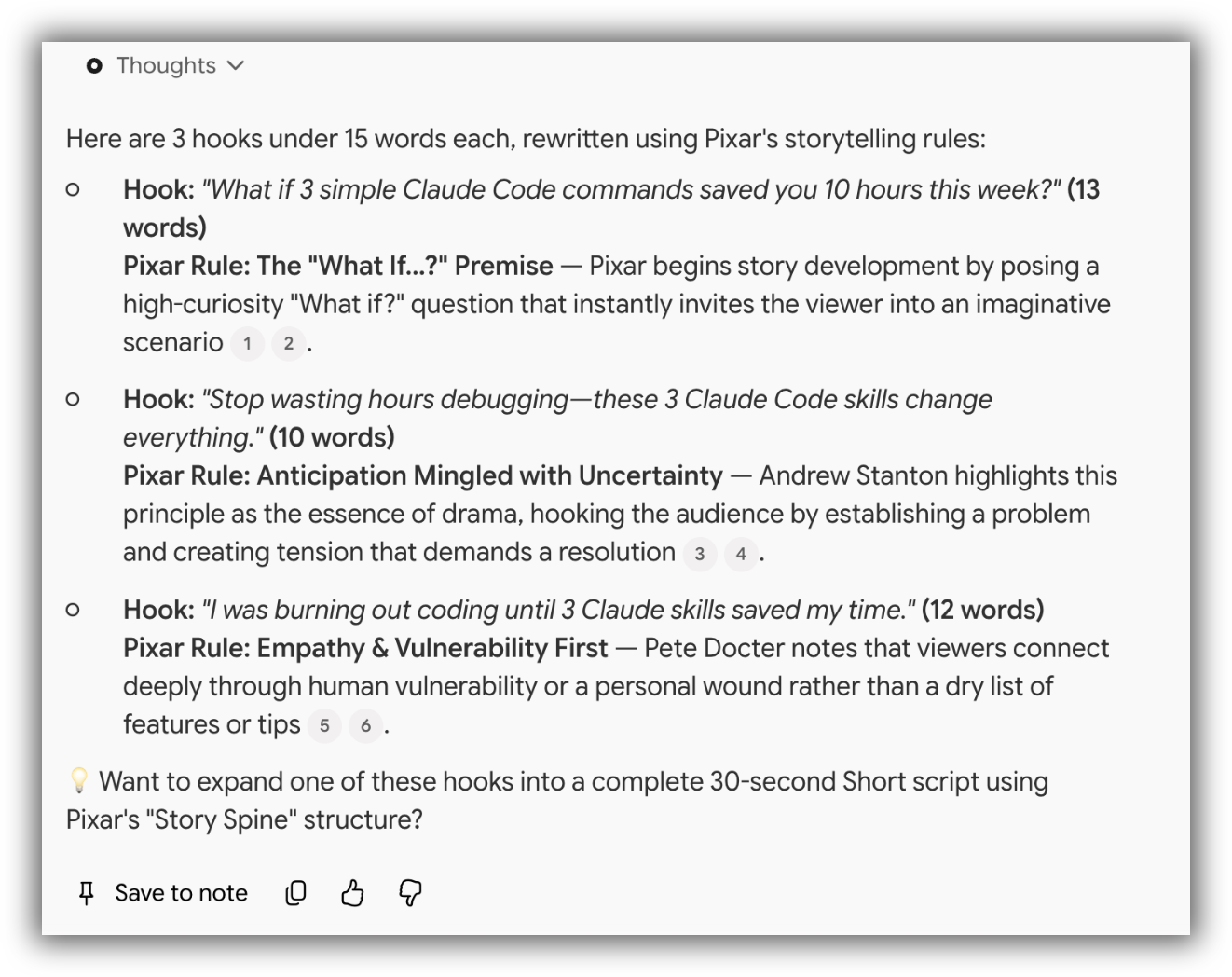
\Three hooks built on a question, a problem and a confession.\
I tried the animation side in I Built a One-Man Pixar With GPT-6 Astra and Blender. For motion, my Claude skill makes 10 viral motion styles for $0.
Here is the link to this NotebookLM.
<https://notebook.google.com/notebook/76a85408-0ef8-4fc3-bcd8-f6222234c4b0>
Build Your Own Copy
Each notebook opens in chat mode, so you can ask it anything right away.
If you want your own copy, I put a research prompt and every source link for each notebook in one file.
Paste the prompt into NotebookLM's research box, or add the links yourself, and you get your own version built from the official pages.
Here is how one prompt becomes a notebook. I used the FBI one.
Step 1. Open NotebookLM and click New notebook.
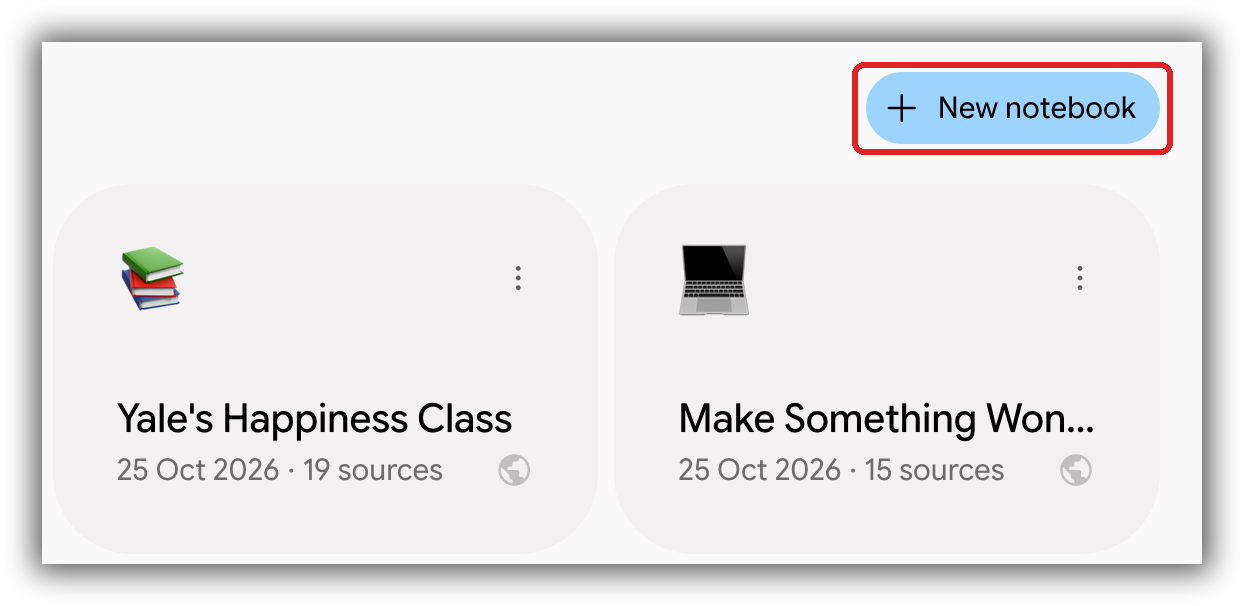
\Every copy starts as an empty notebook.\
Step 2. Paste the prompt into the research box. Keep Web and Fast research, then click the arrow.
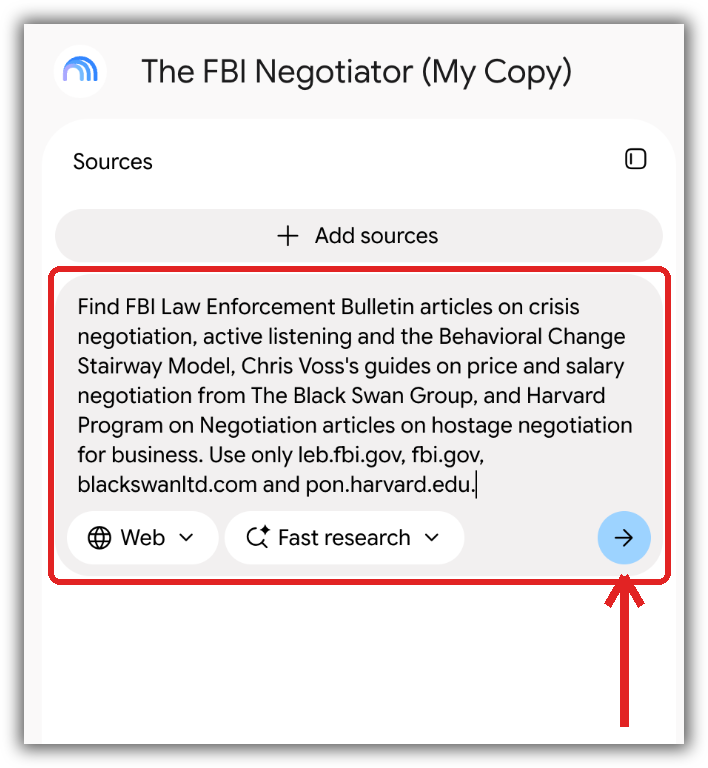
\The prompt names the official sites, so the search stays on them.\
Step 3. Check the sources it found and click Import.
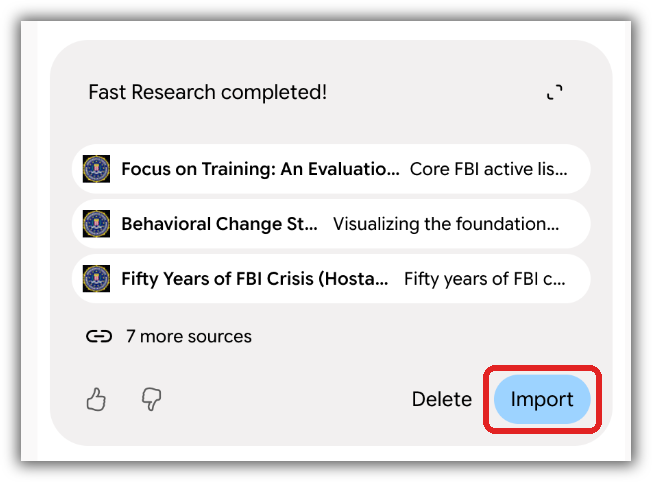
\Fast research found 10 sources, all from the FBI, The Black Swan Group and Harvard.\
Step 4. Ask your question.
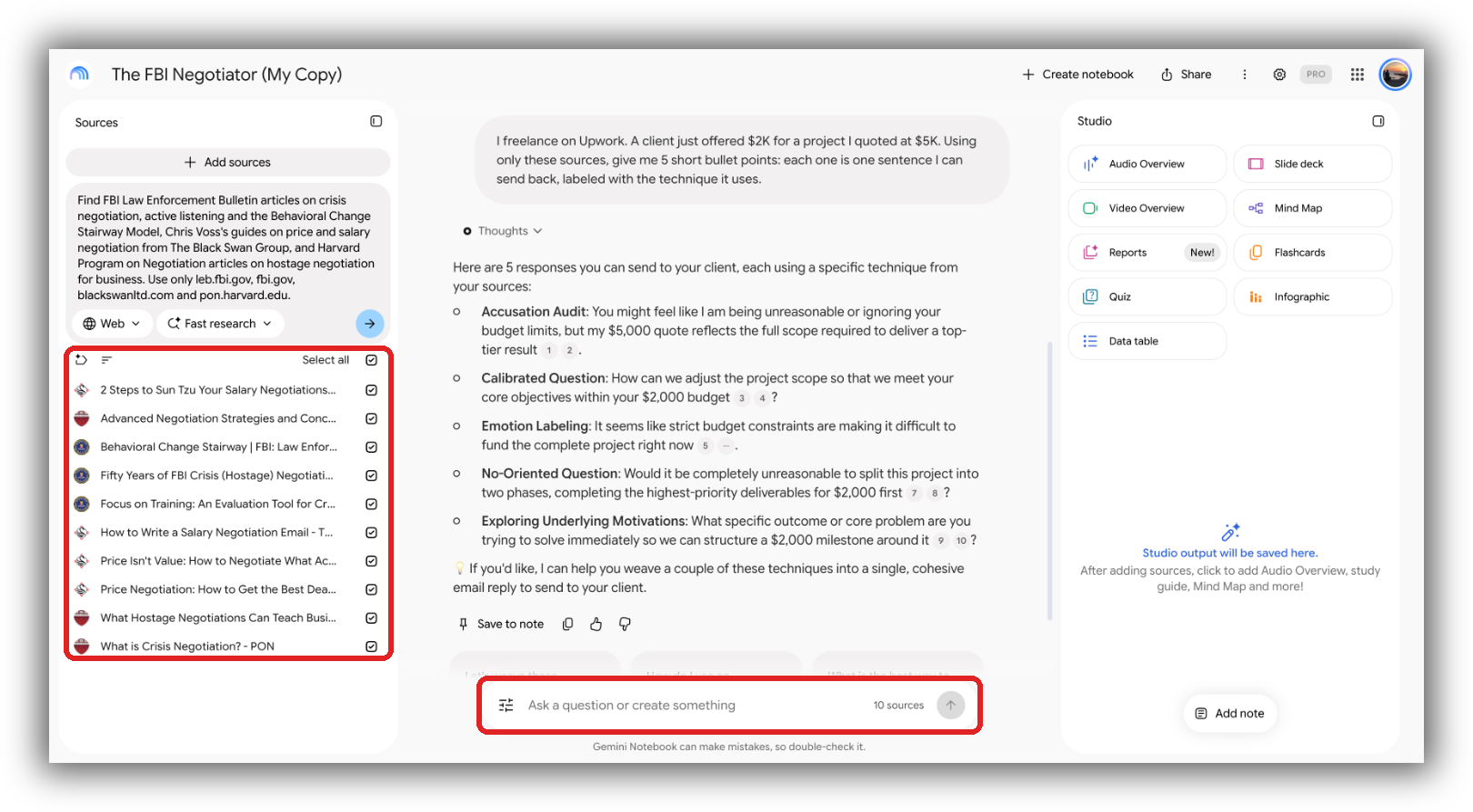
\Your own copy answers the same Upwork question from the official sources.\
Want my exact sources?
The file lists every link. Click Add sources and paste them in.
Get all 10 prompts and links here.
Next Steps
Thanks for reading.
If you want to build with AI instead of only reading about it, you are in the right place.
Early Black Friday Discount
Annual and Inner Circle subscribers also get access to the Vault, along with all my Substack content.
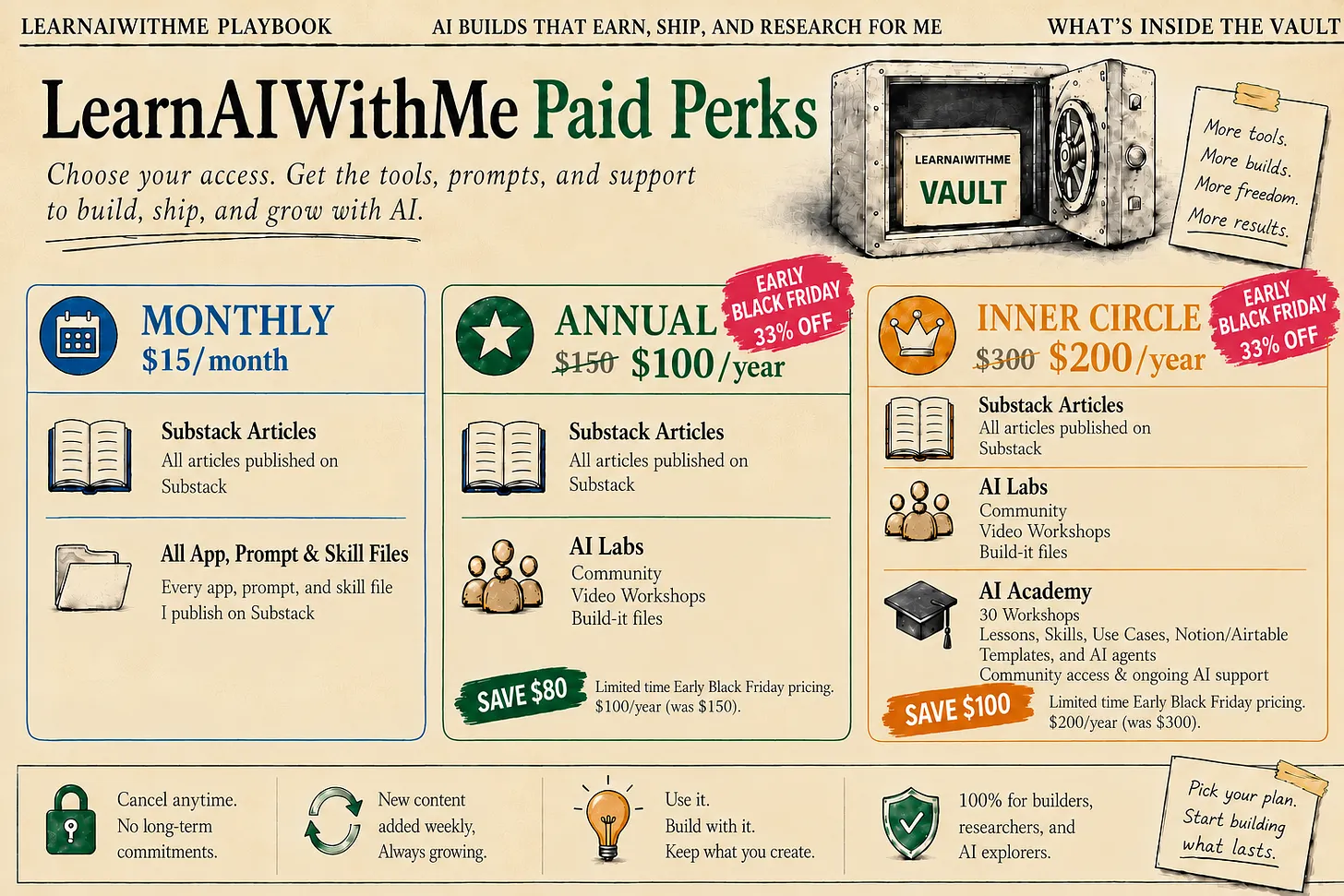
\Paid Perks\
- Inner Circle goes from $300 to $200 a year and adds the AI Academy.
- Annual plan goes from $150 to $100 a year and adds AI Labs with 1,000+ prompts.
The AI Academy has 2 new courses, MoneyTalks and Unfair Advantage.
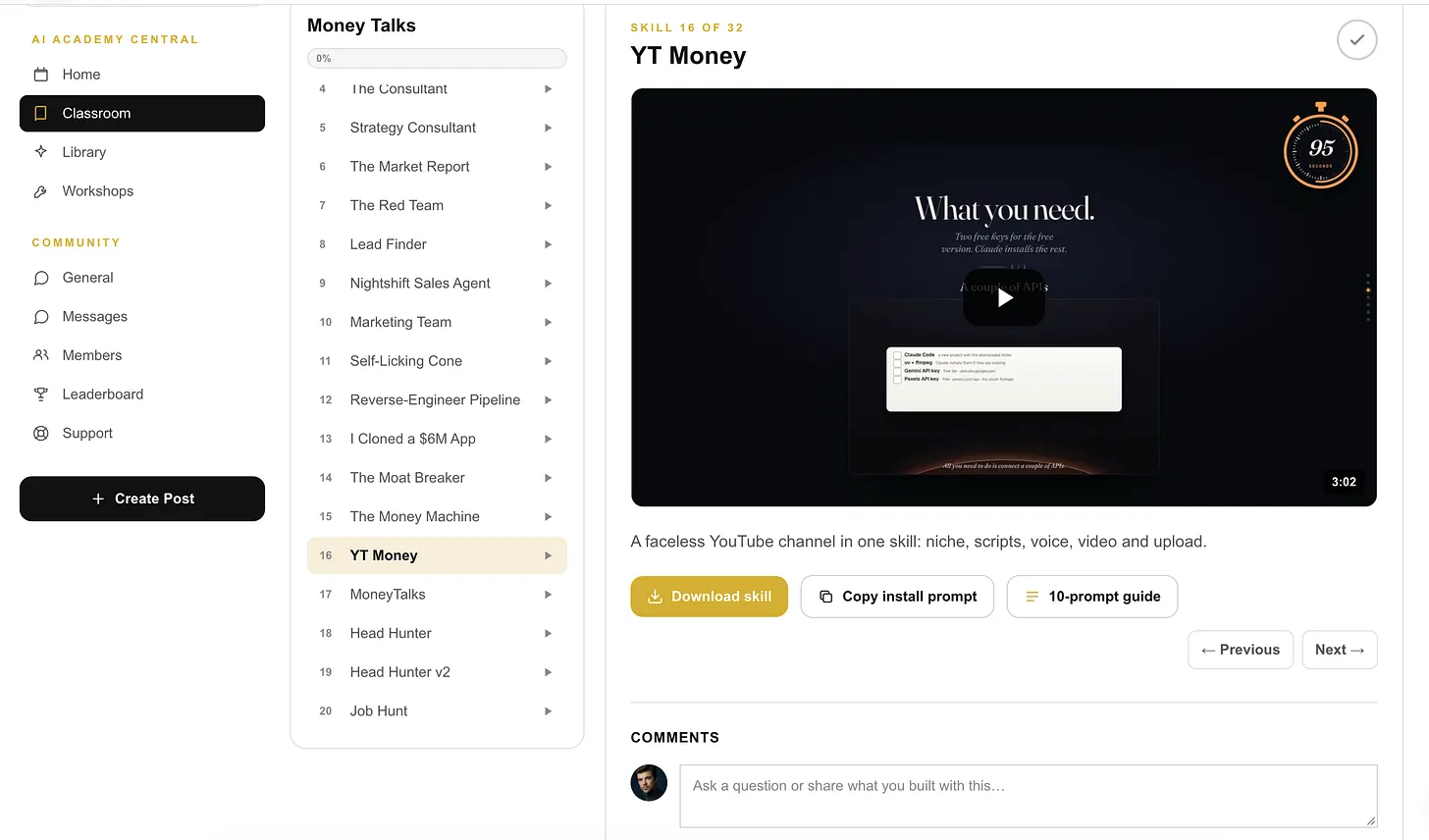
Every skill comes with a 180-second video and a copy-and-install prompt, so you can understand it, install it, and run it in 3 minutes.
See you on the other side.