AI hallucination cost a lawyer his case. Researchers at Google, Meta, and DeepMind solved it. Here are 5 copy-paste prompts that reduce AI errors by up to 90%.
By Gencay
Published: 2026-01-15
URL: https://www.learnwithmeai.com/p/5-hallucination-killer-methods-academically

A lawyer used ChatGPT for legal research. The AI cited six court cases. None of them existed. He was sanctioned by the court.
This is what AI hallucination looks like in real life. Confident. Convincing. Completely wrong.
But here’s what most people don’t know: researchers at Google, Meta, Cambridge, and DeepMind have already solved this problem. They published methods that reduce hallucinations by up to 90%.
The problem? These papers are buried in academic journals.
Nobody reads them.
I did. And I turned them into prompts you can copy and paste today.
1. What Is AI Hallucination?
AI hallucination is when a language model generates information that sounds correct but is completely fabricated.
The AI doesn’t “lie” intentionally.
It predicts the most likely next word based on patterns. When it doesn’t have real information, it fills the gap with plausible-sounding fiction(hallucination).
Common hallucinations:
- Fake citations: Papers, court cases, or studies that don’t exist
- Wrong facts: Incorrect dates, numbers, or names stated with confidence
- Invented details: Fabricated quotes, events, or relationships
- Mixed information:Combining real facts into false conclusions
2. Why Do AI Models Hallucinate?
Three core reasons:
a. Training to predict, not verify.
LLMs are trained to predict the next most probable word. They optimize for fluency, not accuracy.
A confident wrong answer scores higher than an uncertain correct one.
b. Knowledge gaps
The model encounters questions outside its training data.
Instead of saying “I don’t know,” it generates plausible-sounding text to fill the gap.
c. Pattern over-matching
The model sees patterns and extends them incorrectly.
If it knows “Einstein won the Nobel Prize,” it might hallucinate that “Einstein won the Nobel Prize for relativity” (he didn’t, it was for the photoelectric effect).
3. How can you reduce AI hallucinations With Simple Prompts?
Before we get to the advanced methods, here are basic techniques anyone can use:
Ask the AI to cite sources:
Answer my question and cite your sources. If you’re not sure, say “I’m not certain.
Give permission to say “I don’t know
If you don’t have accurate information, say “I don’t know” instead of guessing.
Request confidence levels:
Answer this question and rate your confidence (high/medium/low) for each claim.
Use specific, narrow questions:
Instead of “Tell me about World War 2,” ask “What date did D-Day occur?”
4. What tools to prevent AI hallucination?
Some AI tools are designed to be hallucination-resistant because they only answer from verified sources:
a. NotebookLM (Google)
NotebookLM only answers from documents you upload. It doesn’t use external knowledge. If the answer isn’t in your sources, it says so.
It is more than Learning tool by the way, I wrote an article about it where I’ve built entire products using it.
b. Custom GPTs (OpenAI)

\After becoming a paid sub on Substack with inner circle subscription type, sign-up tovaultwith the same email address and reach the content.\
In vault store, we’ve 10+ customGPT’s. Create a GPT with your own knowledge base. It answers primarily from your uploaded files.
I’ve created customGPT, named Jarvis to helps us chasing academic papers faster, in this one.
c. Gemini Gems (Google)
Similar to Custom GPTs. Create a Gem with specific instructions and documents. I’ve created Gems in this one to make my AI honest.
d. Perplexity AI
Searches the web in real-time and cites every claim with a source link.
e. Claude with Projects (Anthropic)
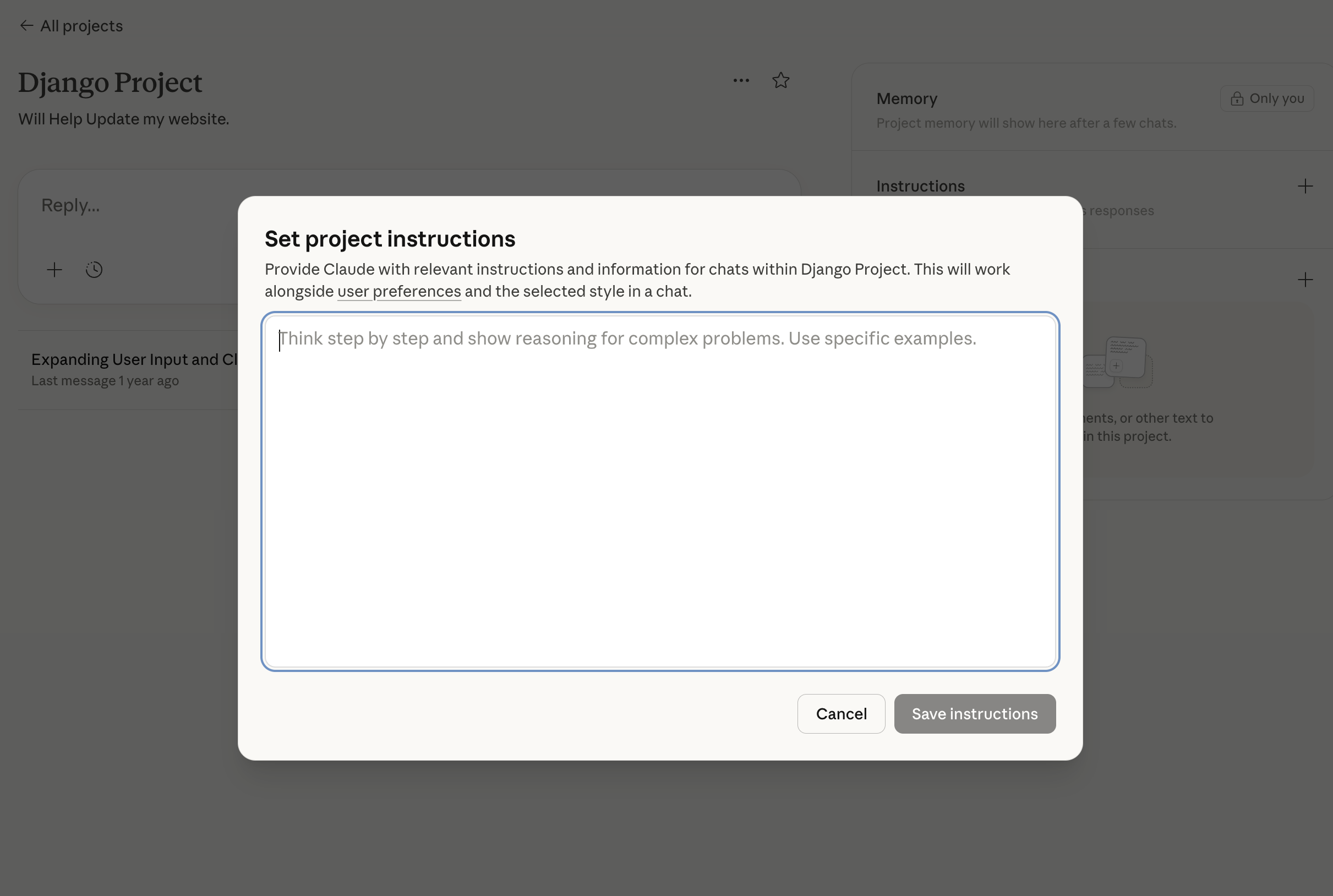
Upload documents to a Project. Claude prioritizes that content when answering.
You can adjust the instructions of the project to make it less prone to hallucination.
5. The Vault Prompt: What Is the Reality Filter Prompt?
In vault, there are 600+ prompts waiting for you to customize/test or open in ChatGPT.
Let’s try finding a prompt about hallucination.
After becoming a paid sub on Substack with the inner circle subscription type, sign-up to vault with the same email address and reach the content.
This is from our Vault, a system prompt that forces AI to label anything it can’t verify.
Use this as a system prompt or paste it before any question where accuracy matters.
6. The Science: 5 Methods From Top AI Labs
The techniques above are good. But researchers at Meta, Google, DeepMind, Princeton, and Cambridge developed methods that are scientifically proven to reduce hallucinations dramatically.
Each upcoming method includes:
- How it works (the science)
- Real examples from the original papers
- Copy-paste prompt templates
The prompts also will be added to the vault, which is a platform, available for paid subscribers on Substack.
Method 1: CoVe (Chain-of-Verification)
Source: Meta AI | Performance: F1 +23%
What is it?
AI generates verification questions about its own answer, then answers them independently to catch mistakes.
How does it solve hallucinations?
When the AI checks each claim separately (without seeing its original response), it catches its own errors.
Prompt Template
You are a verification assistant. Follow these steps:
STEP 1 - BASELINE RESPONSE:
Question: [YOUR QUESTION]
Provide your initial answer.
STEP 2 - VERIFICATION QUESTIONS:
Generate verification questions to check each specific claim in your answer.
STEP 3 - EXECUTE VERIFICATION:
Answer each verification question independently. Do not look at your original answer.
STEP 4 - FINAL VERIFIED RESPONSE:
Based on verification results, correct any errors and provide the final answer.
Mark any claims that failed verification as [REMOVED] and explain why.
When to Use?
- Lists of names, dates, or facts
- Research you’ll publish or cite
- Any question with multiple claims
Try It Now
You are a verification assistant. Follow these steps:
STEP 1 - BASELINE RESPONSE:
Question: Name 5 famous scientists who won Nobel Prizes and what they won it for.
Provide your initial answer.
STEP 2 - VERIFICATION QUESTIONS:
Generate verification questions to check each specific claim in your answer.
STEP 3 - EXECUTE VERIFICATION:
Answer each verification question independently. Do not look at your original answer.
STEP 4 - FINAL VERIFIED RESPONSE:
Based on verification results, correct any errors and provide the final answer.
Mark any claims that failed verification as [REMOVED] and explain why.
Let’s see.
Did you see the part that was removed? It almost felt like a hallucination before we used this structure.
Method 2: Self-Consistency
Source: Google/Stanford | Performance: Errors -90%
What is it?
Ask the same question 3 times with different reasoning paths, then pick the most common answer.
How does it solve hallucinations?
If the AI gives the same answer 3 different ways, it’s probably right. If it gives 3 different answers, it’s guessing.
Prompt Template
Solve this question using 3 different reasoning approaches. Show step-by-step work for each.
Question: [YOUR QUESTION]
APPROACH 1 - Direct Calculation:
[Solve step by step]
Answer 1:
APPROACH 2 - Alternative Method:
[Solve using a different technique]
Answer 2:
APPROACH 3 - Verification Approach:
[Solve from a third perspective or work backwards]
Answer 3:
CONSISTENCY CHECK:

- If all answers match: High confidence. State the answer.

- If answers differ: Flag the inconsistency. Analyze which approach is most reliable.
When to Use?
- Math and logic problems
- Questions with one correct answer
- When you need high confidence
Try It Now
Solve this question using 3 different reasoning approaches. Show step-by-step work for each.
Question: What percentage of Fortune 500 companies used AI in their operations in 2024?
APPROACH 1 - Direct Recall:
[State what you know directly]
Answer 1:
APPROACH 2 - Logical Estimation:
[Estimate based on AI adoption trends and enterprise tech patterns]
Answer 2:
APPROACH 3 - Cross-Reference:
[Consider from multiple data sources you might have seen]
Answer 3:
CONSISTENCY CHECK:

- If all answers match: High confidence. State the answer.

- If answers differ: Flag the inconsistency and mark as [NEEDS VERIFICATION].
Let’s see.
Method 3: Step-Back Prompting
Source: Google DeepMind | Performance: Accuracy +36%
What is it?
Force the AI to explain the underlying principles first, then apply them to answer the question.
How does it solve hallucinations?
Instead of pattern-matching to an answer, the AI reasons from first principles—reducing guesswork.
Prompt Template
Solve this using the Step-Back method:
ORIGINAL QUESTION: [YOUR QUESTION]
STEP 1 - STEP-BACK (Abstraction):
Before answering, first consider:
“What are the underlying concepts, principles, formulas, or frameworks related to this topic?”
STEP 2 - PRINCIPLE EXPLANATION:
[Explain the relevant principles in detail]
STEP 3 - APPLY REASONING:
Using the principles from Step 2, solve the original question step by step.
STEP 4 - VERIFICATION:
Does the answer align with the principles? If not, identify the error.
FINAL ANSWER:
When to Use
- Technical or scientific questions
- Domain-specific knowledge
- When direct answers seem too shallow
Try It Now
Solve this using the Step-Back method:
ORIGINAL QUESTION: When did OpenAI release GPT-3, and what was its parameter count?
STEP 1 - STEP-BACK (Abstraction):
Before answering, first consider:
"What do I know about OpenAI's GPT model release timeline and the progression of model sizes?"
STEP 2 - PRINCIPLE EXPLANATION:
[Explain the GPT model history: GPT-1, GPT-2, GPT-3, GPT-4 timeline and general parameter ranges]
STEP 3 - APPLY REASONING:
Using the timeline from Step 2, answer the specific question about GPT-3.
STEP 4 - VERIFICATION:
Does this fit logically with the overall timeline? If uncertain, mark as [VERIFY BEFORE PUBLISHING].
FINAL ANSWER:
Let’s see.
Method 4: ReAct (Reasoning + Acting)
Source: Google/Princeton | Performance: Success +34%
What is it?
The AI explicitly states what it knows, what it needs to find, and what it observes,step by step.
How does it solve hallucinations?
Every claim is traced to a source. You can verify exactly where the information came from.
Prompt Template
Solve this using the ReAct method. Use this format for each step:
Thought: [Reason about what you know and what you need to find out]
Action: [Search/Calculate/Lookup] [query]
Observation: [Result of the action]
Repeat until you can provide a confident answer.
QUESTION: [YOUR QUESTION]
Thought 1:
Action 1:
Observation 1:
Thought 2:
Action 2:
Observation 2:
[Continue as needed]
Final Answer:
When to Use?
- Multi-step research questions
- Questions requiring verification
- Complex queries with multiple parts
Try It Now
Solve this using the ReAct method. Use this format for each step:
Thought: [Reason about what you know and what you need to find out]
Action: [Search/Calculate/Lookup] [query]
Observation: [Result of the action]
Repeat until you can provide a confident answer.
QUESTION: Who wrote the original Transformer paper "Attention Is All You Need" and what institution were they from?
Thought 1:
Action 1:
Observation 1:
Thought 2:
Action 2:
Observation 2:
[Continue as needed]
Final Answer:
Let’s see.
Method 5: SelfCheckGPT
Source: Cambridge University | Performance: 92.5% detection accuracy
What is it?
Generate multiple responses to the same question, then compare for consistency.
How does it solve hallucinations?
Real knowledge produces consistent answers. Hallucinations produce contradictions.
Prompt Template
Answer this question 3 times independently. Use slightly different approaches each time.
QUESTION: [YOUR QUESTION]
ANSWER 1:
[Write your answer]
---
ANSWER 2 (approach fresh, as if you haven’t answered before):
[Answer again independently]
---
ANSWER 3 (one more time, independently):
[Answer a third time]
---
CONSISTENCY ANALYSIS:
Compare all factual claims across the three answers:
CONSISTENT CLAIMS (same in all 3):

- [List them - these are reliable]
INCONSISTENT CLAIMS (different across answers):

- [List them - these need verification]
FINAL VERIFIED ANSWER:
[Provide answer using only consistent claims. Remove or flag inconsistent information.]
When to Use?
- Unfamiliar names or topics
- Critical content before publishing
- When something feels “too detailed”
Try It Now
Answer this question 3 times independently. Use slightly different approaches each time.
QUESTION: Tell me about DataSync Pro, the enterprise data integration platform founded in 2019 that raised Series B funding from Sequoia.
ANSWER 1:
[Write your answer]
---
ANSWER 2 (approach fresh, as if you haven't answered before):
[Answer again independently]
---
ANSWER 3 (one more time, independently):
[Answer a third time]
---
CONSISTENCY ANALYSIS:
Compare all factual claims across the three answers:
CONSISTENT CLAIMS (same in all 3):

- [List them - these are reliable]
INCONSISTENT CLAIMS (different across answers):

- [List them - these need verification]
FINAL VERIFIED ANSWER:
[Provide answer using only consistent claims. Remove or flag inconsistent information.]
Let’s see.
Start Today
Pick one method based on your task:
- Fact-checking a list? → CoVe
- Solving a problem? → Self-Consistency
- Learning something technical? → Step-Back
- Researching a topic? → ReAct
- Not sure if it’s real? → SelfCheckGPT
AI hallucinations aren’t inevitable. They’re a prompting problem.
Now you have the solutions.
Sources
- CoVe: Dhuliawala et al., “Chain-of-Verification Reduces Hallucination in Large Language Models,” Meta AI, 2023
- Self-Consistency: Wang et al., “Self-Consistency Improves Chain of Thought Reasoning in Language Models,” Google/Stanford, 2022
- Step-Back: Zheng et al., “Take a Step Back: Evoking Reasoning via Abstraction in Large Language Models,” Google DeepMind, 2023
- ReAct: Yao et al., “ReAct: Synergizing Reasoning and Acting in Language Models,” Google/Princeton, 2022
- SelfCheckGPT: Manakul et al., “SelfCheckGPT: Zero-Resource Black-Box Hallucination Detection,” Cambridge University, 2023