Legibility, capability, and what systems overlook
By Jacob Carr
Published: 2026-01-14
URL: https://whatteachershavetosay.substack.com/p/our-schools-are-very-good-at
This is the first piece in a series exploring transferable skills and why they’ve become harder to see inside modern schooling. The question here isn’t whether schools are failing, but what kinds of learning our systems are designed to make visible, reward, and protect. From there, the series asks what happens to the rest.
Here’s what you can expect in this series. As they are published, I’ll link them below:
- Focus: What schooling is designed to make visible, and what it quietly misses.
- Focus: Why success inside school often fails to hold once cues disappear, and why that failure reflects system design rather than individual effort or motivation.
- Focus: Naming the transferable skills that systems overlook, grounded in McKinsey’s research on what allows people to thrive when conditions change. These skills are infrastructure, not enrichment—and educators already see them every day.
- Focus: Two simple moves that make capability visible without adding to your workload. How to design for transfer by naming what’s already happening and helping students carry it forward.
- [[Bonus Article!] How EduProtocols Build Transferable Skills](https://open.substack.com/pub/whatteachershavetosay/p/how-instructional-routines-build?utmcampaign=post-expanded-share&utmmedium=web)
- Focus: A concrete classroom walkthrough showing how instructional routines (EduProtocols) create the conditions for transferable thinking—moving students from recognizing structure to using it for interpretation, synthesis, and judgment across contexts without increasing planning load.
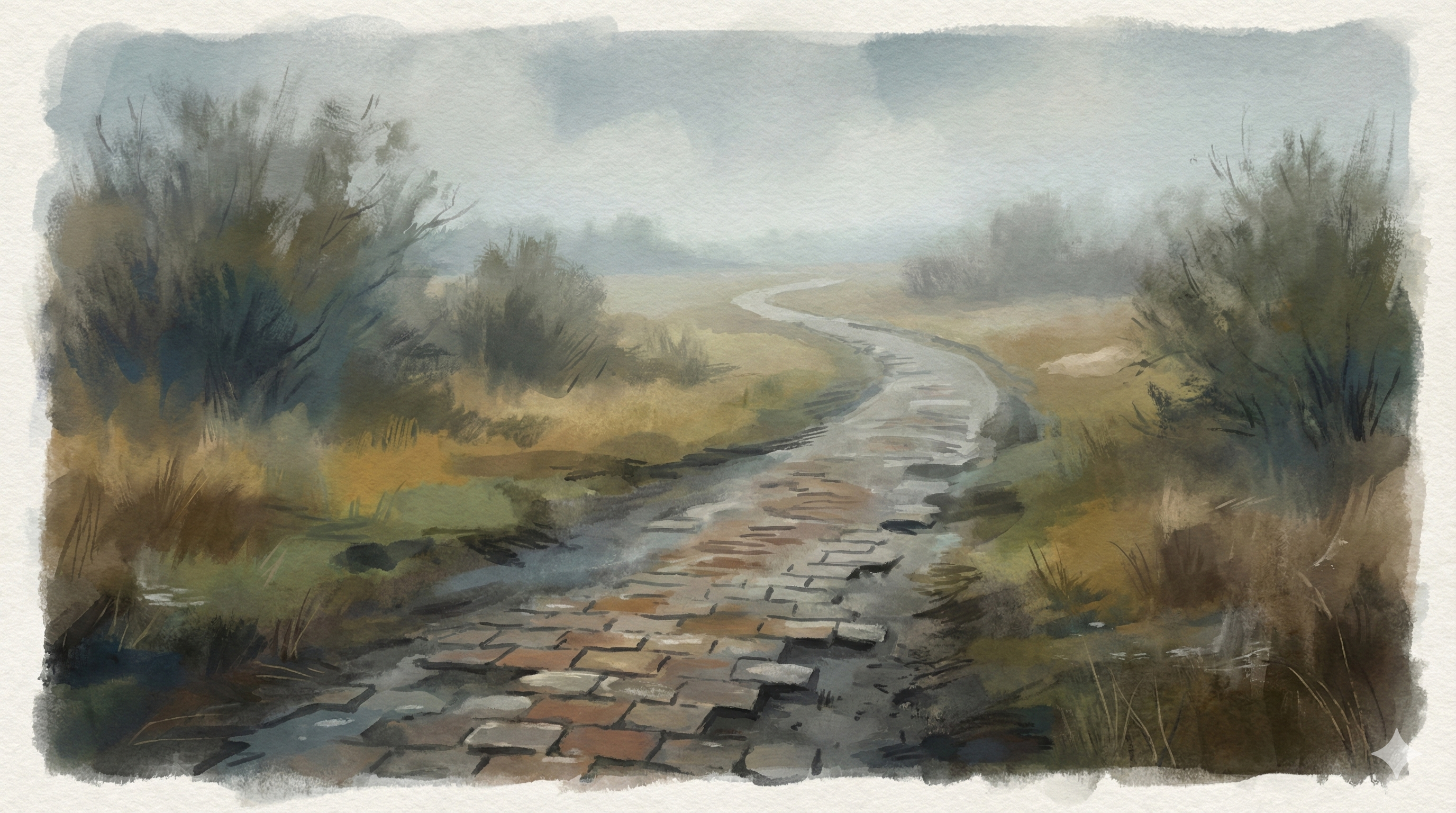 \Created by the author using Nano Banana Pro, October 26, 2023.\
My hands have felt dry all week.
Maybe it’s all the cooking with the kids home for the holidays, but probably it’s the extra washing because norovirus seems to target educators the minute we have a break (fingers crossed, this spectre has only hit one of us). Maybe it’s the weather, though winter here has been more fog than frost.
A few nights ago, a thunderstorm rolled through hard enough to flood streets, knock down power lines, batter the house, and torment the restless dogs. That kind of storm reminds you how thin the walls really are.
Weather has always done this to me, pulling a thread from the present and leading me backward before I realize where I’m headed. And I find myself kneeling on the couch, peering out into the night’s darkness like a child hoping the pine trees don’t come down on the house…again. Wind through the branches, rain on the glass, the rhythm of it all easing me backward, toward warmer years.
Before my world was education, before the keynotes and frameworks and conversations that circle endlessly around whether school is “working,” there was the Northern California summer heat of my childhood. Weeks over 100°F (38°C) weren’t enough to stop us from roaming like a band of red-faced BMX bandits through our mountain town, but it was still a heat that baked everything into dust and stored itself in brick and concrete long after the sun had set.
It was during some of these summers that my dad and I worked together. He had been a union ironworker, welding the skeletons of skyscrapers in cities that felt enormous and foreign to me. But when the recession hit and construction slowed in the early 90s, dad learned masonry to make ends meet. We spent long days in the wealthier parts of town laying brick entryways, planter beds, and fireplaces. My job was simple and endless: carry, stack, cut, scrape, stop dilly-dallying, repeat.
The bricks held heat like a battery and burned my palms if I forgot to cover them from the sun. The grout dried fast and demanded attention, especially when it was my job to chisel a brick to fit just right.
That was a skill learned quickly, or I did it twice, listening to a long explanation from my father about attention and wasted material. For us, time wasn’t money. Brick was. There was no rubric. No partial credit. No do-over.
The cut either fit or it didn’t. The line either held or it cracked.
Nobody called it transferable skills. We just called it getting by.
When you grow up deep inside an economic recession, you learn early that the world does not owe you stable rules. Markets shift. Work dries up. Plans evaporate. My dad pivoted trades. My mom bartered haircuts for dentistry and car repair.
When things got rough enough, we stood in line at a local church waiting for a semi-truck to unload huge cans of peanut butter and blocks of American cheese. That wasn’t symbolic, it was calories and protein. Survival depended less on what you knew in isolation and more on what you could carry from one situation into the next.
How fast you could learn. How calmly you could adjust. How well you could talk to people. How steadily you could keep going when the plan changed.
Growing up, school taught me plenty of useful things, and I was good at school. But life taught me something quieter and more durable. It taught me that some of the most important forms of success resist clean measurement, even when they shape everything that comes after.
In my experience, particularly within the school systems I’ve worked in and observed across the United States and abroad, much of the current unrest comes from this tension. Schools are often judged against hopes they were never designed to fulfill. Shaped in the late nineteenth and early twentieth centuries, and influenced by industrial needs and models that prioritized order, efficiency, and scale, schools were designed instead to produce consistency in the form of shared knowledge, standardized outcomes, and a workforce prepared for a compliant, stable economy.
But that’s not our economy anymore.
We now live in the space between what schools were built to do and what the world requires of them. Meanwhile, the system still rewards success as we previously defined it, even as the daily realities facing teachers, students, administrators, and families have shifted underneath it. Naming that gap matters, because it helps explain the tension felt by so many people asked to work inside constraints they did not choose and are not empowered to change.
And when we ignore it, we drift toward a kind of cruel optimism, the belief that effort alone can overcome limits that are structural, not personal.
Early in my teaching career, I worked in a district with a large Hmong population. One year, about eight middle school students arrived directly from refugee camps in Thailand. They neither spoke English nor understood the alphabet. They were wholly unfamiliar with the cultural landscape of an American middle school in ways that are hard to understand unless you have watched it up close, day after day. And yet, within weeks of arriving, they were required to take the state’s standardized tests.
I remember sitting beside one student while a translator tried to explain a reading section that referenced the cartoon characters Scooby-Doo and Shaggy. The test questions didn’t just name them, they required an understanding of their personalities, habits, and unspoken jokes of how they tend to act.
The student was being asked to reason inside a cultural script they had never been given. I remember the translator pausing. He was an elderly Hmong man who volunteered at the school, someone who had grown up in Laos, lived through the war and the camps, and understood exactly what these students were carrying with them. He had been in California long enough to speak good English as his second language, but likely also didn’t understand the ins and outs of Scooby and Shaggy. I’ll never forget the shiny white penny loafers he wore every day, catching the fluorescent light of the portable as he tried to explain who those characters were so the question might make sense.
The student looked at the paper, then back at us, polite and confused, as if we were asking her to solve a problem that belonged to a different world.
It didn’t make sense; of course it couldn’t. And still, the score was calculated and counted the same as the scores of students who had grown up in the neighborhood, watching Saturday morning cartoons, absorbing the references, learning the hidden grammar of school long before anyone showed it to them.
And later, an algorithm registered their results as failure and carried them downstream into a dashboard, stripped of the student themselves, emptied of context and personality, detached from the moment in which it occurred. If this is what our systems are required to showcase with such clarity, what does that requirement quietly urge us to overlook?
When we come to speak of “a student” through a score like this, what parts of learning fade from view, not because we doubt their value, but because what they learned falls outside of what funding, accountability, and institutional survival demand we attend to? But, what the scores did not register was intelligence or adaptability, or the immense cognitive load of arriving in a new country and being asked, almost immediately, to perform inside someone else’s script.
It did not log multilingualism, resilience, adaptability, playfulness, or the quiet brilliance of learning while everything else is still in motion.
I keep returning to this memory because it anchors a larger set of questions I want to explore over the coming weeks, about what schooling measures well and what it quietly misses. These are the same questions circulating through conversations, comment threads, and kitchen-table debates, as people try to name what feels off but never quite settles.
- Why don’t grades show real learning?
- Why doesn’t school prepare students for “real life”?
- Why do students forget so much of what they learn?
These questions are not just complaints, they are diagnostics. They are the public, often without the language for it, noticing a design mismatch in real time. They reflect a growing awareness that modern school systems are exceptionally good at producing stable evidence of participation and performance inside predictable conditions. Schools can tell you who showed up, who complied, who turned things in, who hit the standard at the time of assessment, and who missed it.
That work still matters, because a massive system has to rely on proxies, signals that can travel across classrooms, districts, state-lines, transcripts, and policies. But, the trouble begins when we confuse those proxies for the thing itself.
This essay is the first in a short series on transferable skills and what our systems are actually designed to make visible.
Looking back, what mattered in the work of my bricklaying was not whether my learning was legible, but whether it made me capable. That distinction turns out to matter far beyond a summer job.
Political scientist James C. Scott offers a useful warning here. In Seeing Like a State, he argues that large administrative systems necessarily simplify the world they govern. In order to function at scale, they compress complex human realities into categories that can be seen, tracked, and managed.
This simplification is not designed to be malicious; just structural. The danger, however, is not that these measurements exist, but that they capture only a partial truth and, over time, are asked to stand in for the whole.
In light of this distinction, legibility is a system’s ability to see you clearly. It is the student who can perform on cue. The teacher who can document accurately and on time. The school that can produce dashboards, binders, and data walls that look like order, especially when they print in color on the good paper for the board report. It’s what passes an audit. Legibility is our ability to observe and record whether or not a school is hitting its targets.
Capability, by contrast, is what remains when the map stops matching the terrain. It is what you can actually do when the work changes before the training does. When the job you trained for disappears, and the question becomes not how well you followed the plan, but whether you can learn a new plan in time.
When the problem you studied is not the problem in front of you, and the rules shift, and the resources change, and the instructions are incomplete. Capability reveals itself when learning has to happen in motion, with other people, under uncertainty, while the ground itself still continues to move.
That kind of capability is harder to measure, which makes it easier to sideline. In the liminality between what can be counted and what must be navigated, whole lives are reduced to partial truths and neatly labeled proxies.
What we teach begins to narrow in the same way. For example, instead of lingering inside Jane Austen’s careful dismantling of status, pride, and social performance in Pride and Prejudice, students are asked things like, “Which character is described as proud in Chapter One?” The answer is much easier to score than the understanding. Austen herself gestures toward that deeper work of understanding when the protagonist, Elizabeth, admits, “Till this moment, I never knew myself.” And when students step out of the classroom and into their own lives, which matters more in the long run, remembering the Jeopardy nugget of who was described as proud, or learning how to read the systems of status, power, and expectation Austen was exposing, and recognize those same forces shaping their own lives today?
When legibility became the currency, capability became invisible.
Those Hmong students offer a stark example. Many were fluent in navigating family obligations, translation responsibilities, and cultural expectations that shifted by context and by room. They negotiated adult conversations as children, moved daily between languages and worlds, and adapted constantly.
What school rarely registered was the depth of what that required. These were students from families shaped by the aftershocks of war and displacement, where survival depended on reading people quickly, adjusting to unstable rules, and learning without formal instruction.
That kind of capability was forged long before they ever entered an American classroom. But in our school, success depended on producing the right answer in the right format, on time, and in English. When legibility became the currency, the capabilities that had once kept families intact and alive were rendered all but invisible.
The high-achieving student who later struggles tells a related story. In school, they learned to read the system precisely: what would be tested, how closely to follow the rubric, how to calibrate effort for predictable returns.
That competence was rewarded. But, then as they aged out of school, conditions changed and the study guide disappeared. The path forward stopped being outlined. The skills that once earned praise became brittle under uncertainty. Nothing was wrong with the student.
The rules had changed, and the next system no longer rewarded what they had been trained to do.
Teachers experience this shift too. A veteran teacher can feel suddenly unmoored, not because they forgot how to teach, but because the definition of “good” keeps moving. What once counted as effectiveness no longer maps cleanly onto new expectations, new tools, or new metrics.
At the same time, a novice teacher may mistake a request for reflection as an invitation rather than a performance. They answer honestly, thoughtfully, even vulnerably, only to later discover that their sincerity was quietly translated into an evaluation score.
In that moment, the capacity for reflection is misread because it does not arrive dressed in the familiar language of compliance and conformity.
In systems built to prioritize what can be clearly seen and measured, capability is often overlooked when it doesn’t arrive in the familiar form of compliance. That oversight helps explain some of the low-grade unease that surrounds schooling. The public can sense it, even when they struggle to name it directly, as conversations drift toward frustration about grades, preparation, or relevance without quite landing on a cause.
Educators feel it even more viscerally than the general public, carrying it in their nervous systems, even on days when the lesson lands, the room feels steady, and everything appears, on the surface, to be working as it should. The effort is there. The care is there. The engagement is there. And yet the payoff doesn’t seem to match the intention. It’s in those quiet moments that an inner voice surfaces, not in anger but in confusion, and asks: What are we even doing here?
We built a system optimized for legibility, then began asking it to produce capability. That mismatch is growing louder, not because schools have suddenly grown worse or teachers have forgotten how to teach, but because the world beyond the classroom is changing faster than the measurement systems inside it can keep up.
The signals we rely on still travel cleanly upward and outward, but they increasingly struggle to reflect the kinds of judgment, flexibility, and sensemaking that life now demands. What once felt like a reasonable tradeoff is beginning is becoming harder to ignore. And, naming this mismatch does not make tomorrow’s pacing guide disappear, nor does it loosen the grip of evaluation cycles or accountability demands; it simply names the terrain educators are already navigating, often silently.
And it cannot be resolved by individual teachers compensating harder inside systems they do not control.
And then there’s artificial intelligence. It didn’t create this problem, but it’s doing a pretty solid job of exposing it.
When routine production becomes cheap, the old evidence of learning begins to wobble. When machines can draft, summarize, translate, and generate first-pass work almost instantly, the things that once stood in as proof of competence become easier to imitate.
This does not mean students are doomed or teachers are obsolete, but that the center of gravity is shifting. Scarcity is moving away from producing information toward deciding what to do with it. Judgment becomes even more valuable, alongside verification and sensemaking. Knowing what to trust, what to revise, what to question, and what to discard becomes the work. And, we must also recognize that these are not traits teachers can simply begin demanding of students at a mastery level; they develop only in systems that make room for uncertainty, iteration, and learning that unfolds over time.
But, beneath all of that sits something harder to name and harder still to measure. It’s not just knowing something now that matters, but the wisdom to apply that knowledge well, contextualized for a specific audience or application, with consequences and outcomes in mind.
Those are not future skills; they are now skills. They are recession skills, bricklaying skills, refugee skills. They are the skills of capability that surface whenever life stops being predictable. But capability alone cannot carry the weight we’ve placed on it unless the systems surrounding learners are willing to reward it rather than merely tolerate or witness when it happens to take root.
None of this is an argument against school or assessments; I value a shared language and understood desired outcomes. We need ways to notice who is being served and who is being left behind. The point is not to throw out measurement, but to stop confusing what is easy to count with what is necessary to grow.
A system can measure seat time, compliance and performance on known tasks under controlled conditions. Those signals are real. They always have been. In fact, they were the point. Modern mass schooling was never designed to capture the full complexity of human learning.
It emerged in the nineteenth century to solve a different problem altogether: how to train large populations efficiently, predictably, and at scale. Influenced by military organization and later by industrial production, early schooling systems prioritized standardization, punctuality, obedience, and uniform outcomes. It’s part of why students are batched, siloed, and follow bell schedules.
Those were features, not flaws. And, those features are upheld now by funding formulas, evaluation cycles, compliance audits, and reporting structures that privilege what can be cleanly displayed over what must be patiently cultivated. It’s hard to show rapid growth when the growth is meant to be slow and meaningful.
A recurring trouble is that these measures have come to stand in for success itself, rather than for the narrow slice of learning a large system can reliably, legibly, see. The moment that happens, we start training students to win a game that ends at graduation. We reward teachers for producing proof that an objective was momentarily reached rather than for building conditions where learning develops in ways that can survive contact with the real world over time. We optimize people to be legible instead of capable.
Then we act surprised when the world does not honor the transcript.
Back in those bricklaying summers, nobody asked me to prove I was learning. The evidence lived in the work itself. The walkway either held or it didn’t. The cut either fit or it didn’t. Feedback was immediate and unambiguous, delivered in the heat, with dust in the air and my hands already chapped raw from the bricks.
The formative assessment came when my dad paused, looked over my work, and told me what needed to change before the mortar set. The summative assessment arrived later, quietly, in whether or not we were hired again for the next job.
The conditions were imperfect, sometimes uncomfortable, occasionally punishing. But the task was real, and because it mattered beyond the moment, the learning transferred. Teaching rarely offers feedback that clean or immediate, but the absence of instant proof does not make the learning any less real or the transfer any less necessary. I also can’t ignore that it settled into my hands and judgment in ways no checklist ever could.
That is the conversation I want us to begin having, especially now, as the familiar markers of success feel increasingly thin against the realities students and educators are stepping into.
- Not whether school is broken, but what it has been designed to make visible.
- Not why students seem disengaged, but which forms of learning are allowed to count.
- Not how to raise the numbers, but what we want people to know how to do when the numbers no longer matter.
If this tension feels familiar in your own classroom, school, or family, you’re not alone. I’d be interested in where you’ve felt it most.
My hands are still dry, and with the passing of the winter solstice, the inclement weather is waning. The bricks will heat up again. But the conditions are changing regardless of if we acknowledge them or not, and they are changing faster than our systems are accustomed to admitting.
Survival has always favored those who can carry what they learn forward, who can adapt when the task shifts and the instructions fall away. The next step is not to discard schooling, but to ask a deeper design question: what would it mean to treat the capability of transferable skills not as add-ons, but as central constraints shaping the kinds of learning experiences that help people carry meaning, judgment, and skill across changing contexts?
It’s time our systems learned to recognize and support what survival has always required.
If you want to support this series, Like, Restack, or forward it to a colleague who’s been feeling this tension.