The Difference Between Waiting and Multitasking in Programming
By The Coding Gopher
Published: 2026-08-25
URL: https://thecodinggopher.substack.com/p/synchronous-vs-asynchronous-explained
How modern software systems handle the massive speed disparity between processors and networks.
At the hardware level, a single CPU core is remarkably limited: it can only execute one instruction at a time. The entire performance profile of a software application is dictated by how the programming runtime feeds those instructions to the processor.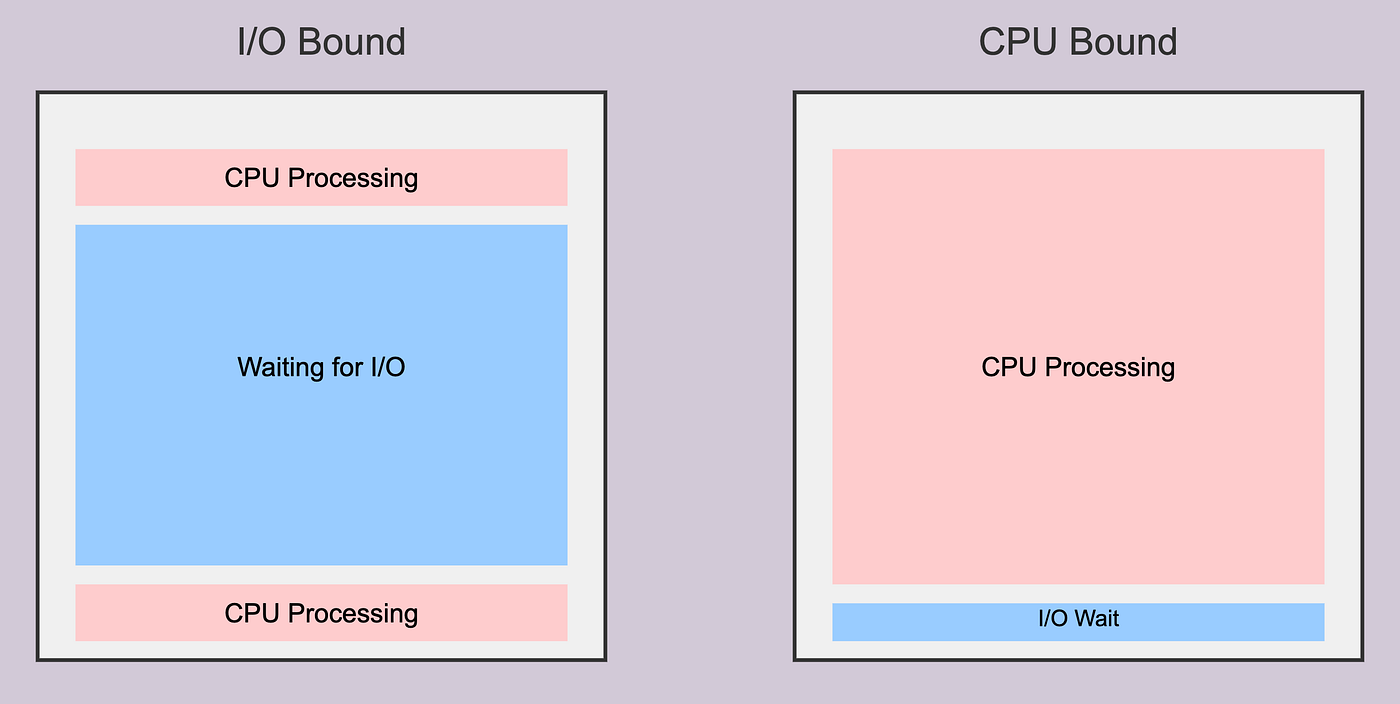
When building systems, engineers must explicitly design how the application handles operations that take time. Specifically, they have to manage the massive speed gap between the CPU (which executes operations in nanoseconds) and I/O tasks like querying a database or fetching an API (which take milliseconds or even full seconds).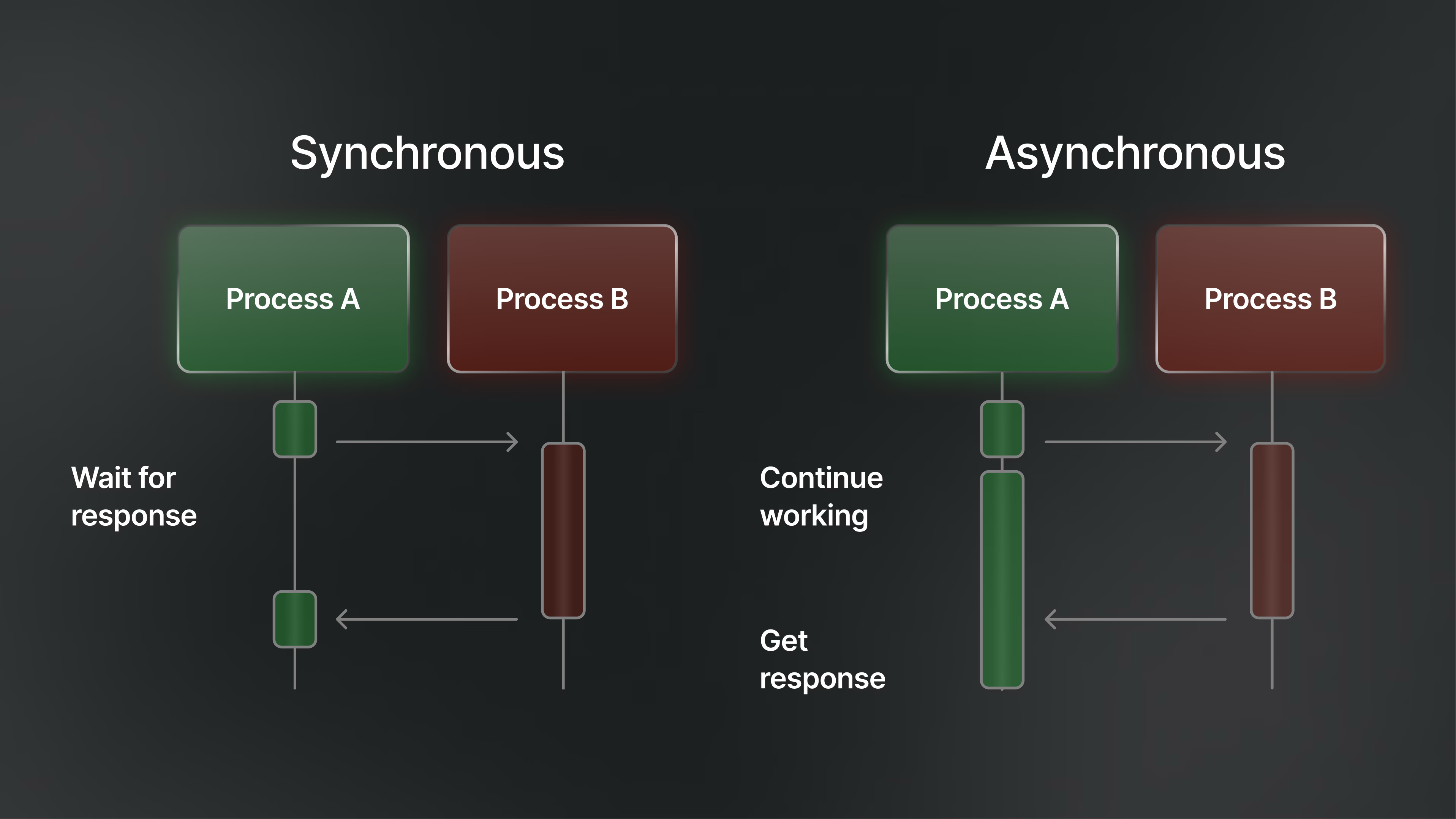
The strategy used to bridge this gap fundamentally alters how an application performs, scaling down to two distinct execution models: Synchronous and Asynchronous processing.
The Synchronous Paradigm: Sequential and Blocking
Synchronous programming is the traditional execution model for most languages, including standard Python, C++, and Ruby. It follows a strict, top-to-bottom flow where every single operation must finish completely before the system is allowed to move to the next line of code.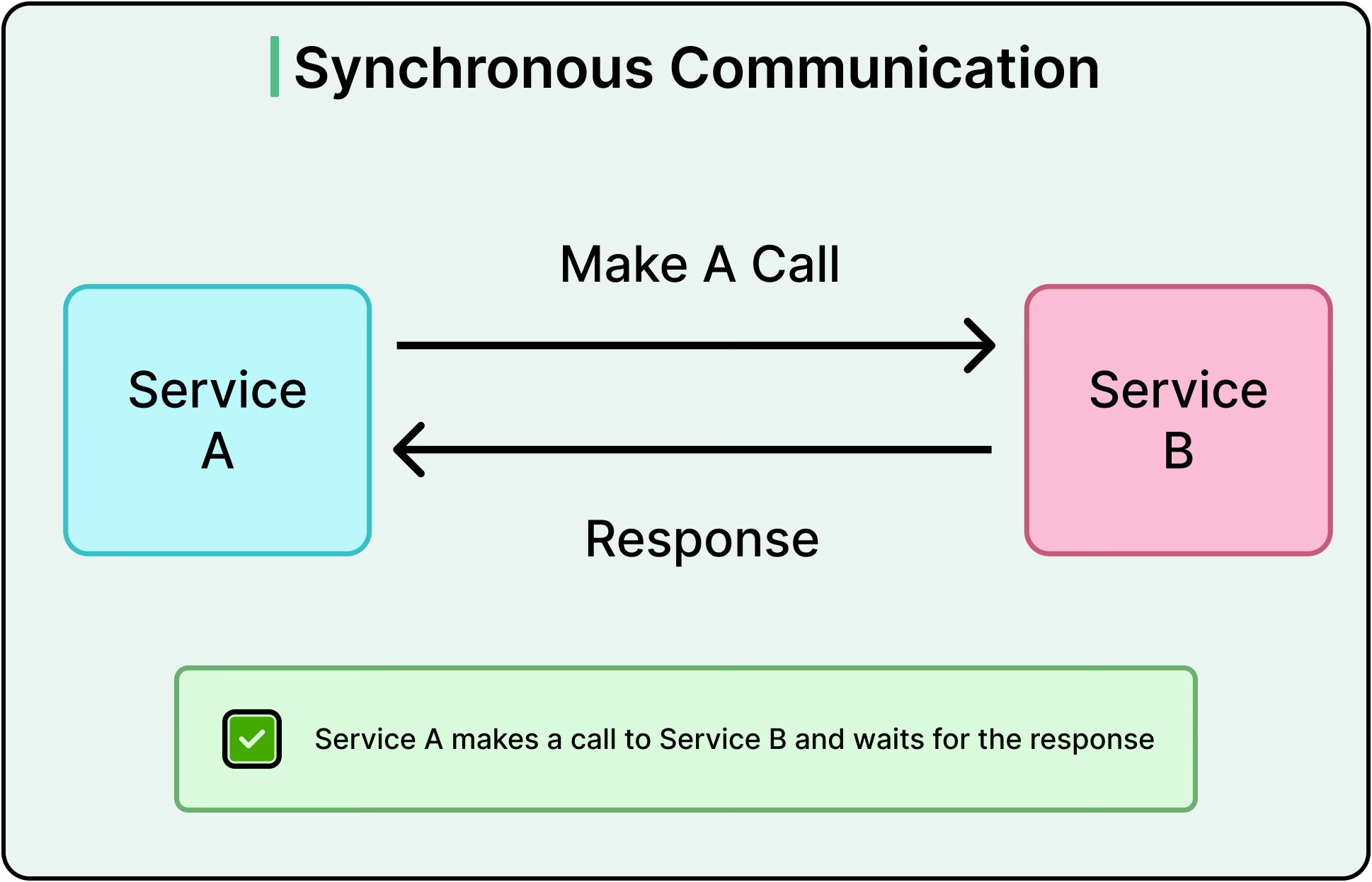
In a synchronous architecture, the execution thread is fiercely loyal to the current task. If an application reaches a line of code that requests a massive data payload from a remote server, the entire program halts. The execution thread is physically blocked. Because network operations are millions of times slower than processor operations, the CPU sits entirely idle, waiting for the network response. During this waiting period, the application is paralyzed—it cannot process new user inputs, redraw the user interface, or execute any background logic.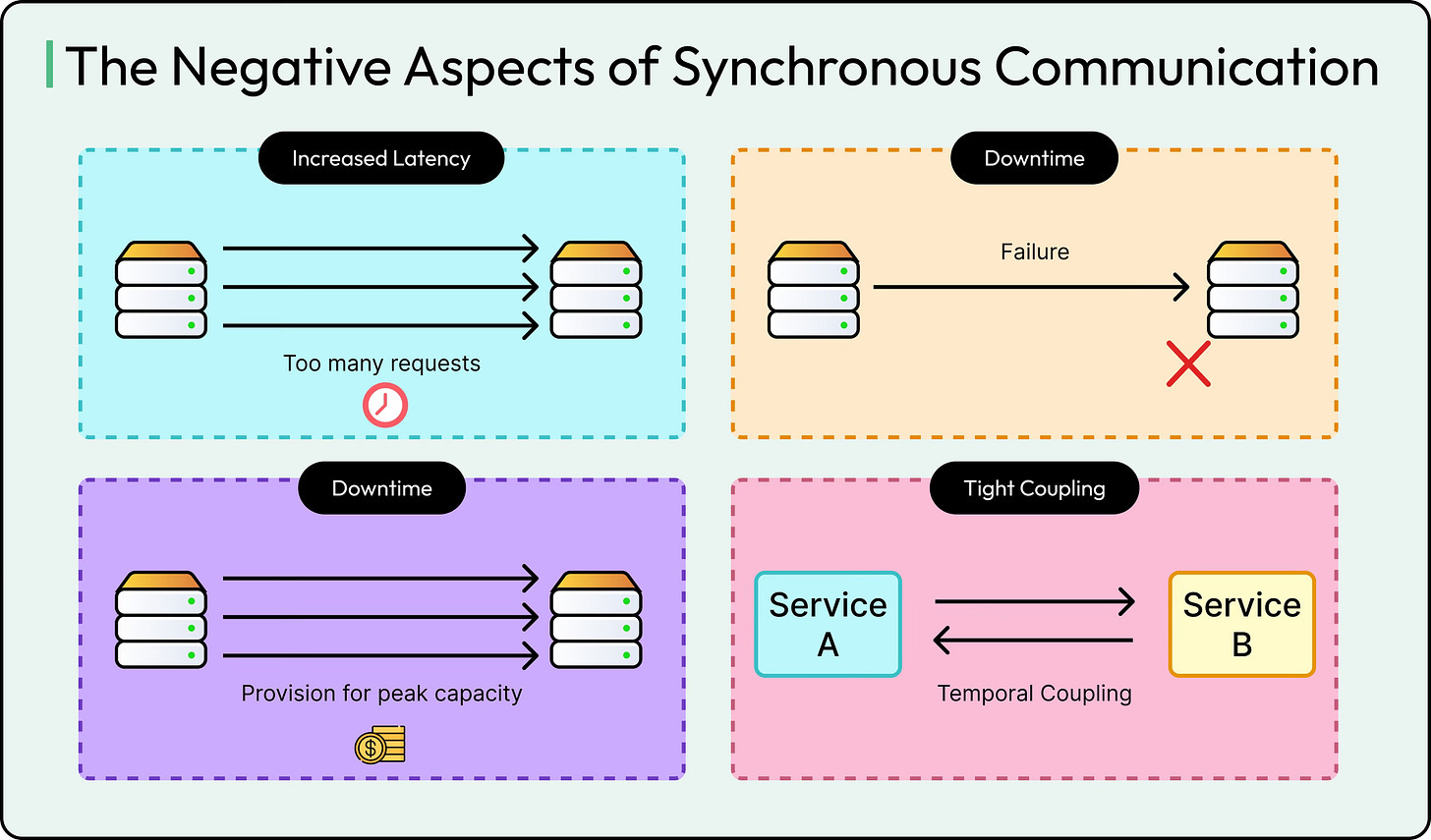
Despite this bottleneck, synchronous execution remains highly relevant. It is highly predictable and notoriously easy to debug because the stack trace perfectly mirrors the sequence of events. It is the optimal choice for strictly CPU-bound tasks—like heavy mathematical calculations, video encoding, or massive data sorting—where the processor is actively computing the entire time, and subsequent lines of code strictly depend on the mathematical result of the current line.
𝐋𝐞𝐚𝐫𝐧 𝐭𝐨 𝐛𝐮𝐢𝐥𝐝 𝐆𝐢𝐭, 𝐃𝐨𝐜𝐤𝐞𝐫, 𝐑𝐞𝐝𝐢𝐬, 𝐇𝐓𝐓𝐏 𝐬𝐞𝐫𝐯𝐞𝐫𝐬, 𝐚𝐧𝐝 𝐜𝐨𝐦𝐩𝐢𝐥𝐞𝐫𝐬, 𝐟𝐫𝐨𝐦 𝐬𝐜𝐫𝐚𝐭𝐜𝐡. Get 40% OFF CodeCrafters: https://app.codecrafters.io/join?via=the-coding-gopher
This Substack is reader-supported. To receive new posts and support my work, consider becoming a free or paid subscriber.
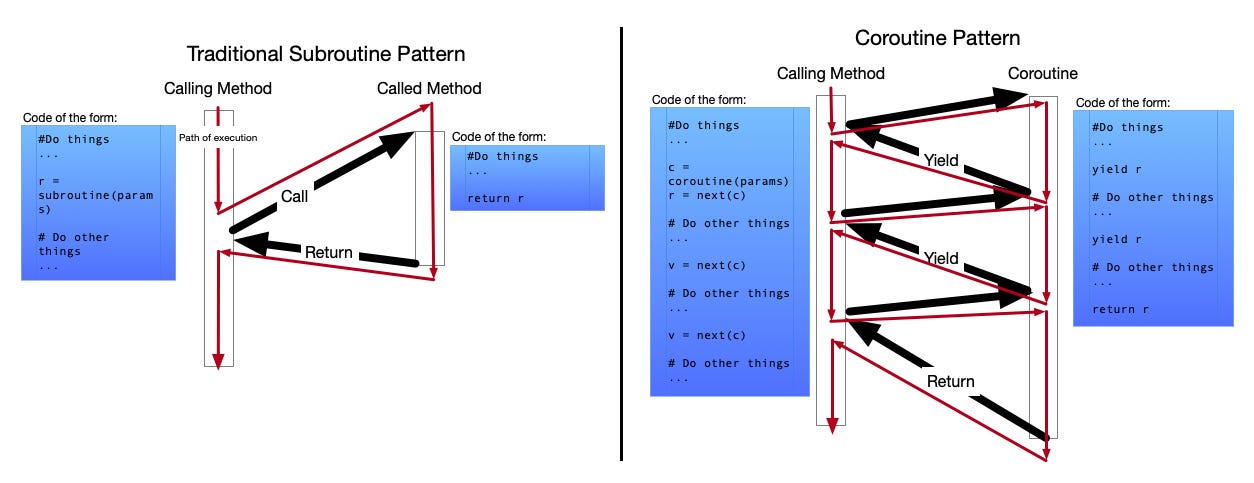
The Asynchronous Shift: Non-Blocking I/O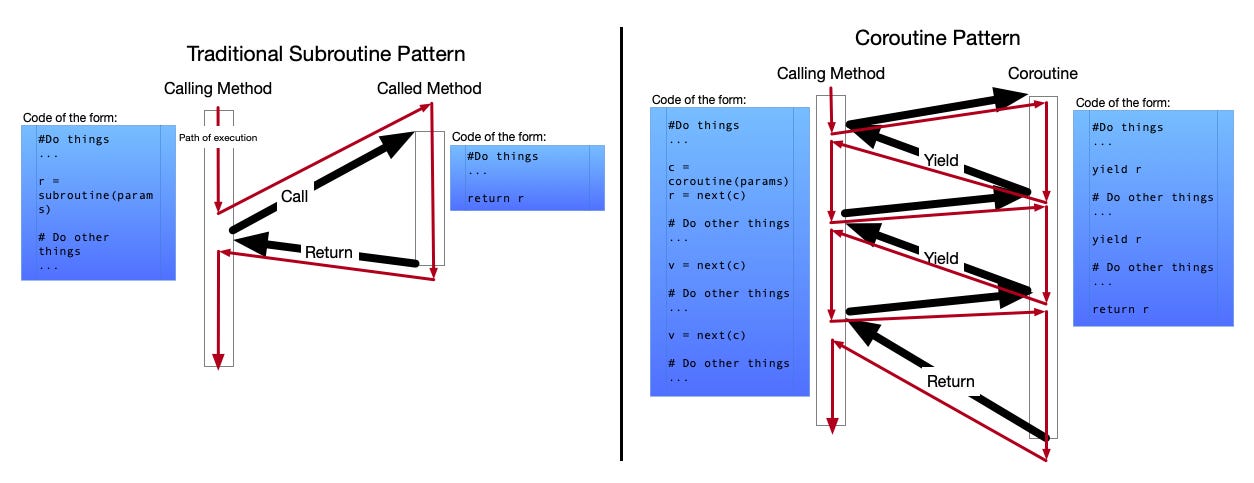 A subroutine is a standard function that runs from start to finish in a single call, handing control back only when it finishes. A coroutine is a generalized function that can pause its execution (suspend) and yield control back to the caller, only to be resumed exactly where it left off later.
Asynchronous programming—heavily utilized in JavaScript, Go, and Python via asyncio—was designed specifically to bypass the I/O bottleneck. It allows a system to initiate a time-consuming task, set it aside, and immediately continue executing the rest of the program.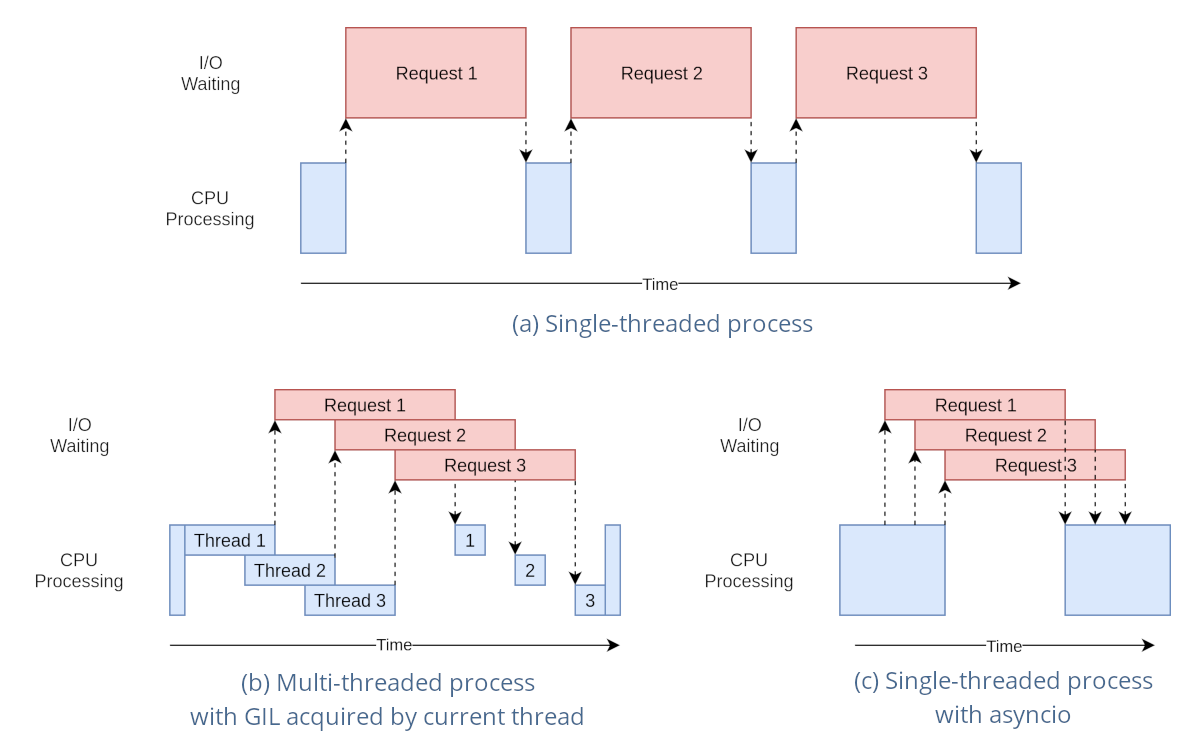 A multithreaded process with an acquired GIL (Global Interpreter Lock) executes one thread at a time in a single process, whereas a single-threaded process with asyncio relies on cooperative multitasking, manually yielding control during I/O waits to maximize efficiency on a single CPU core.
To achieve this non-blocking behavior without relying on thousands of heavy, memory-consuming operating system threads, asynchronous environments typically utilize an Event Loop.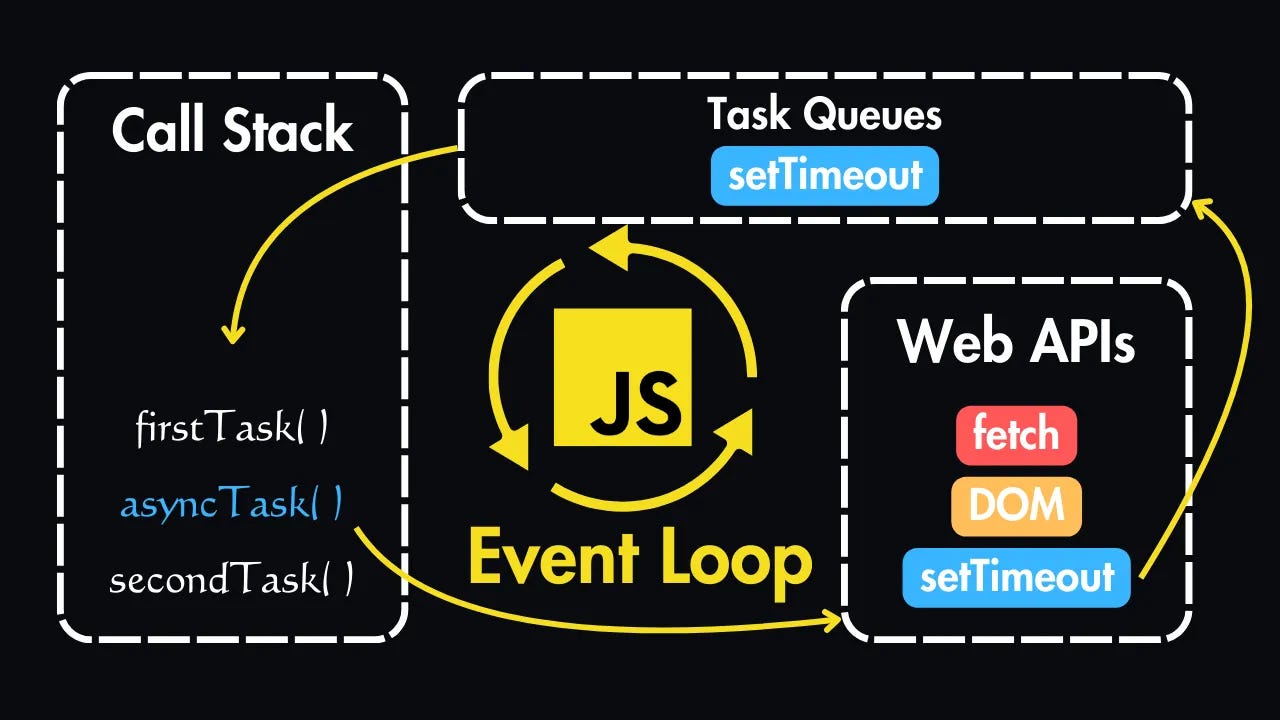 The JavaScript Event Loop is the core orchestrator that enables asynchronous, non-blocking programming despite JavaScript being a fundamentally single-threaded language. It acts like a traffic controller, continuously monitoring the execution environment to determine when to run code, handle events, and process incoming data streams.
When an asynchronous system encounters a slow database query, it does not wait. It registers a callback function and offloads the actual network request to the underlying operating system or background worker threads. Because the task is offloaded, the main execution thread immediately moves on to the next line of code, remaining highly responsive to user input.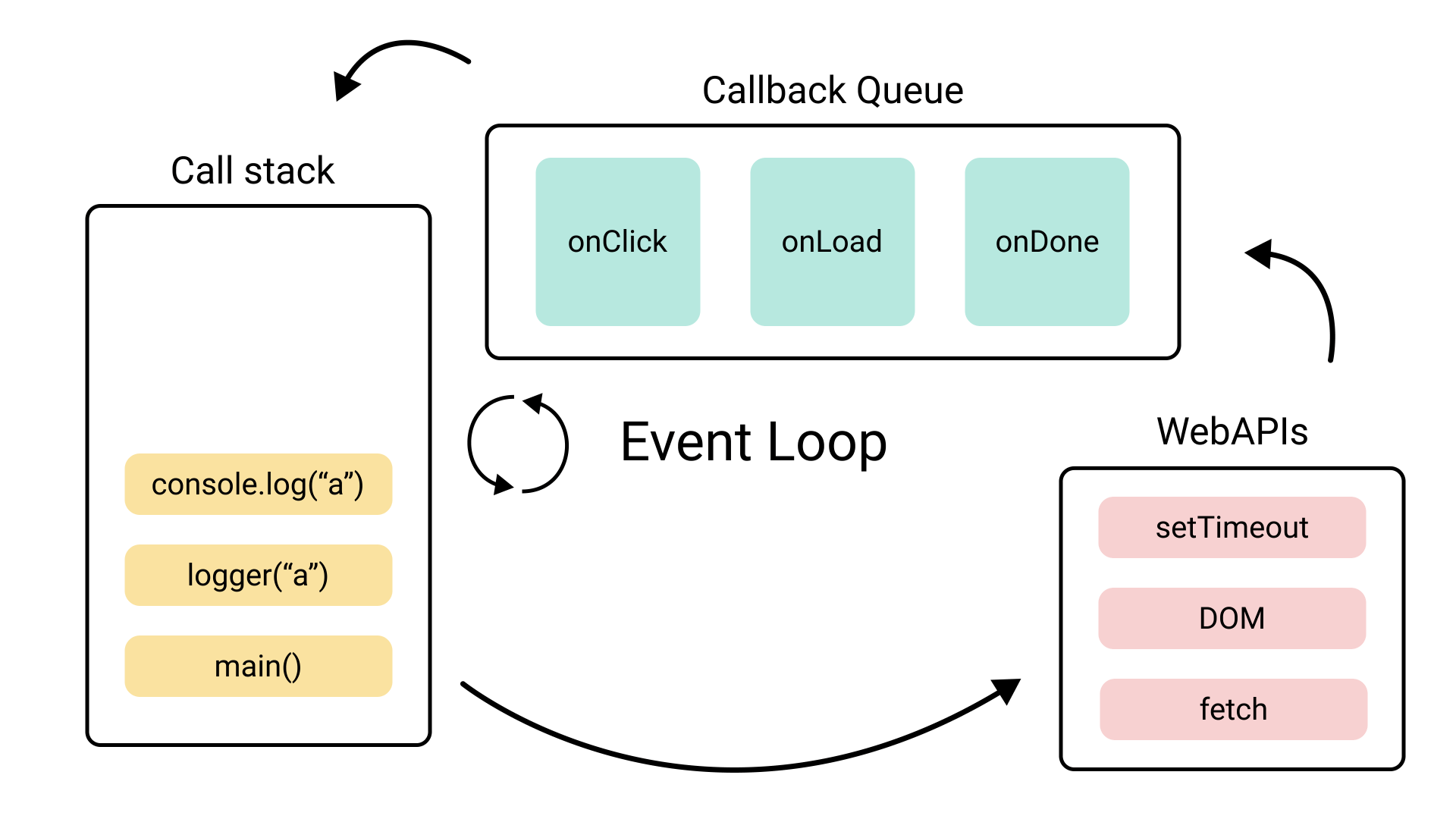 The event loop acts as a bridge between the Callback Queue and the Call Stack to manage asynchronous code execution. It continuously monitors both structures and pushes callbacks into the engine for execution only when the main thread is completely empty.
Once the remote database finally responds, the operating system pushes the result into a task queue. The Event Loop, which constantly monitors the main execution thread, waits for the exact millisecond the main thread is empty. It then pulls the callback from the queue and pushes it onto the main thread to finally process the returned data.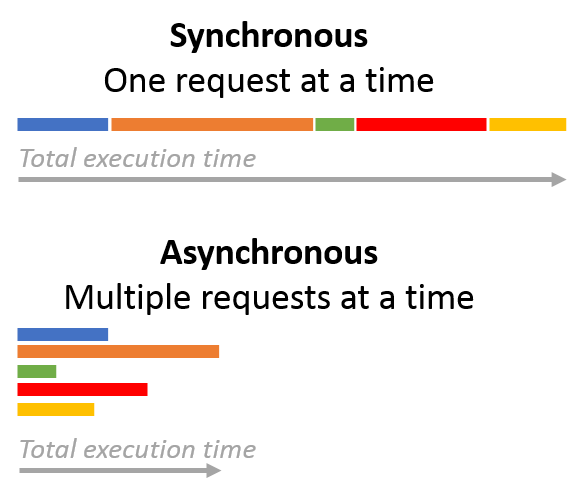
This architecture is mandatory for I/O-bound tasks. It allows a single-threaded server environment, like Node.js, to handle tens of thousands of concurrent database requests. It simply offloads them all to the OS and processes the responses as they arrive, avoiding the massive memory overhead required to spin up a dedicated server thread for every single user. It is also the reason modern mobile applications and web browsers can download heavy assets in the background while maintaining a perfectly smooth, 60-frames-per-second scrolling experience.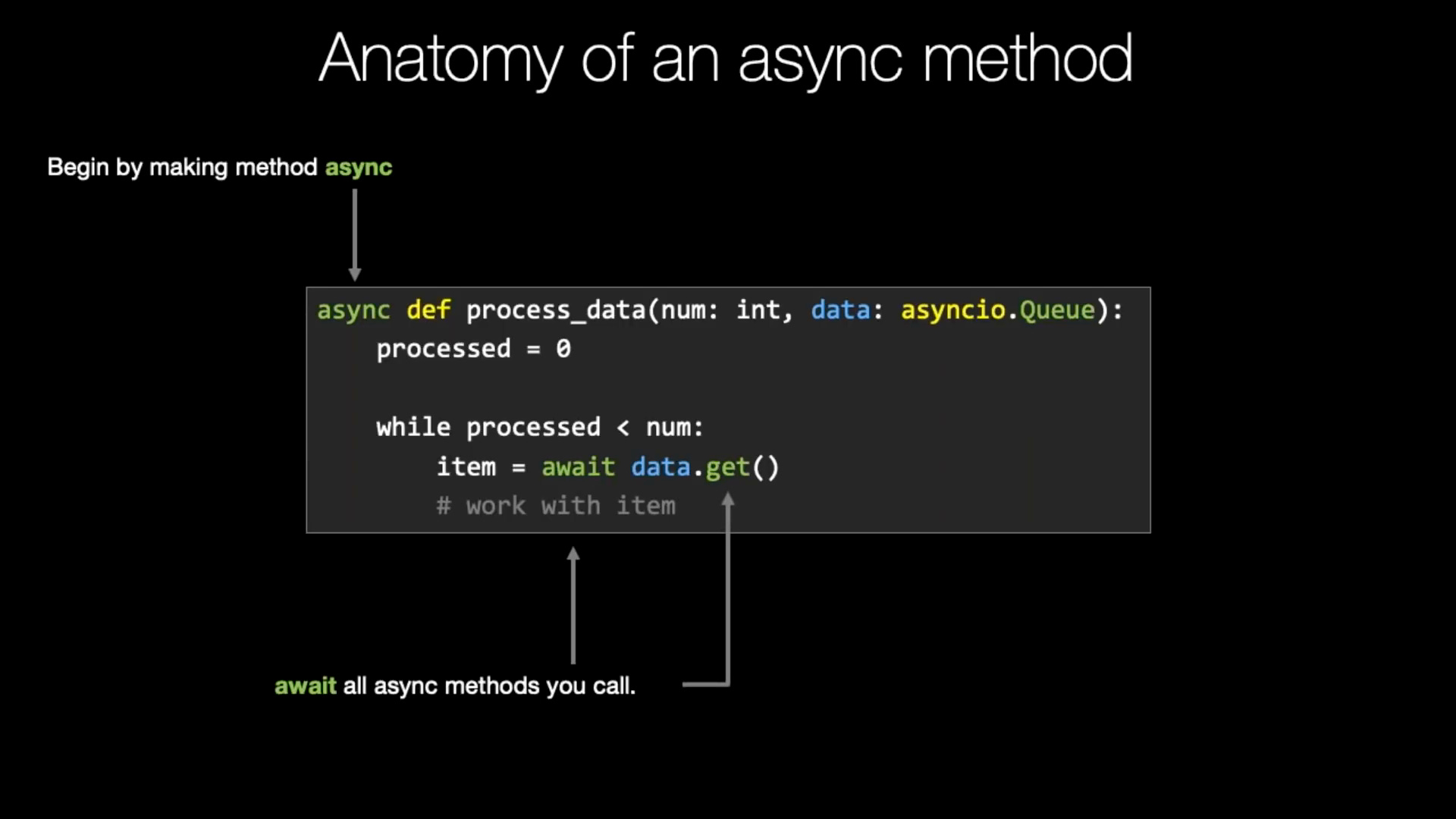 An asynchronous method in Python is defined using the
async def syntax and uses the await keyword to pause execution during I/O operations without blocking the entire program.
The Trade-offs of Concurrency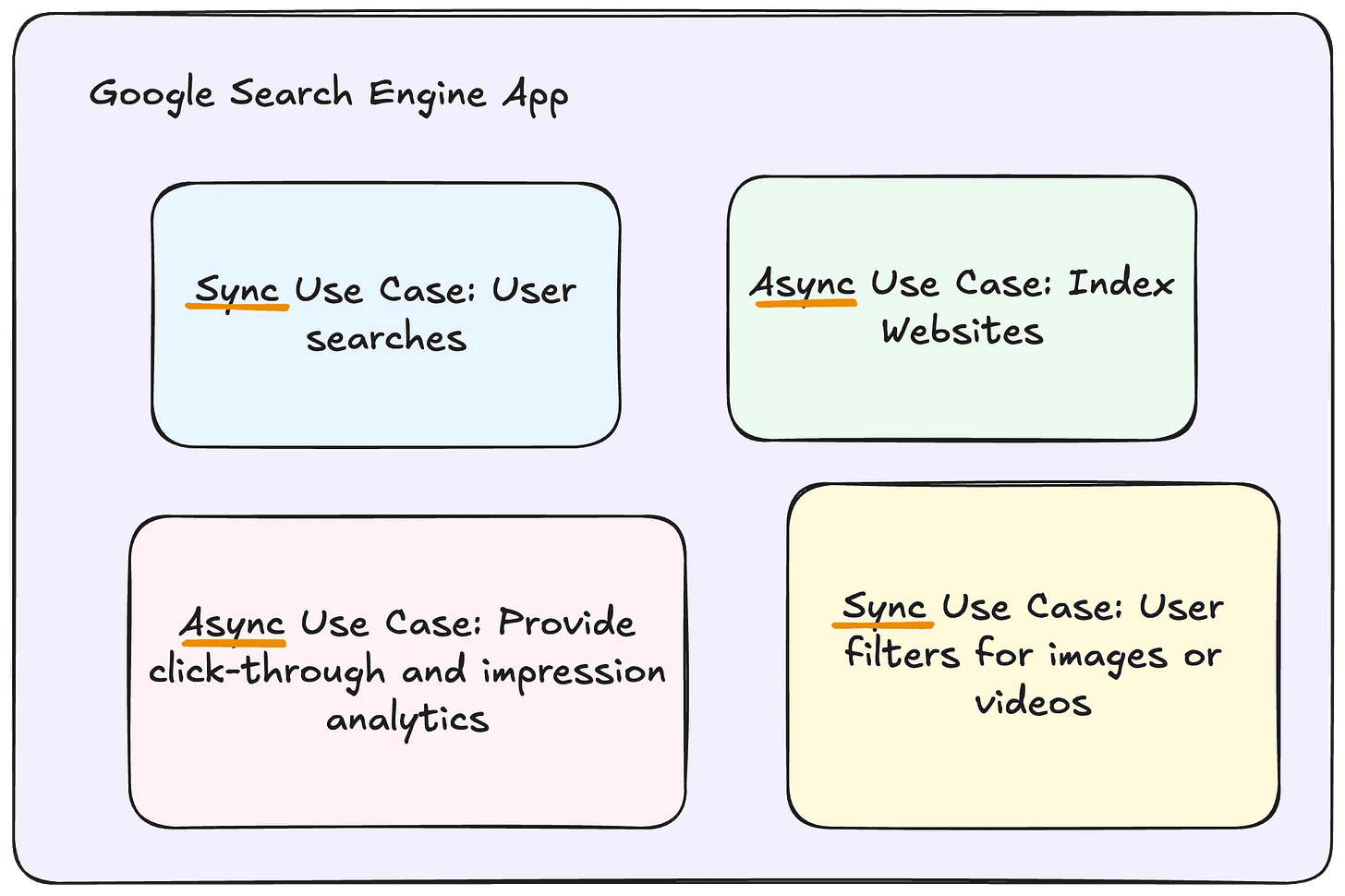
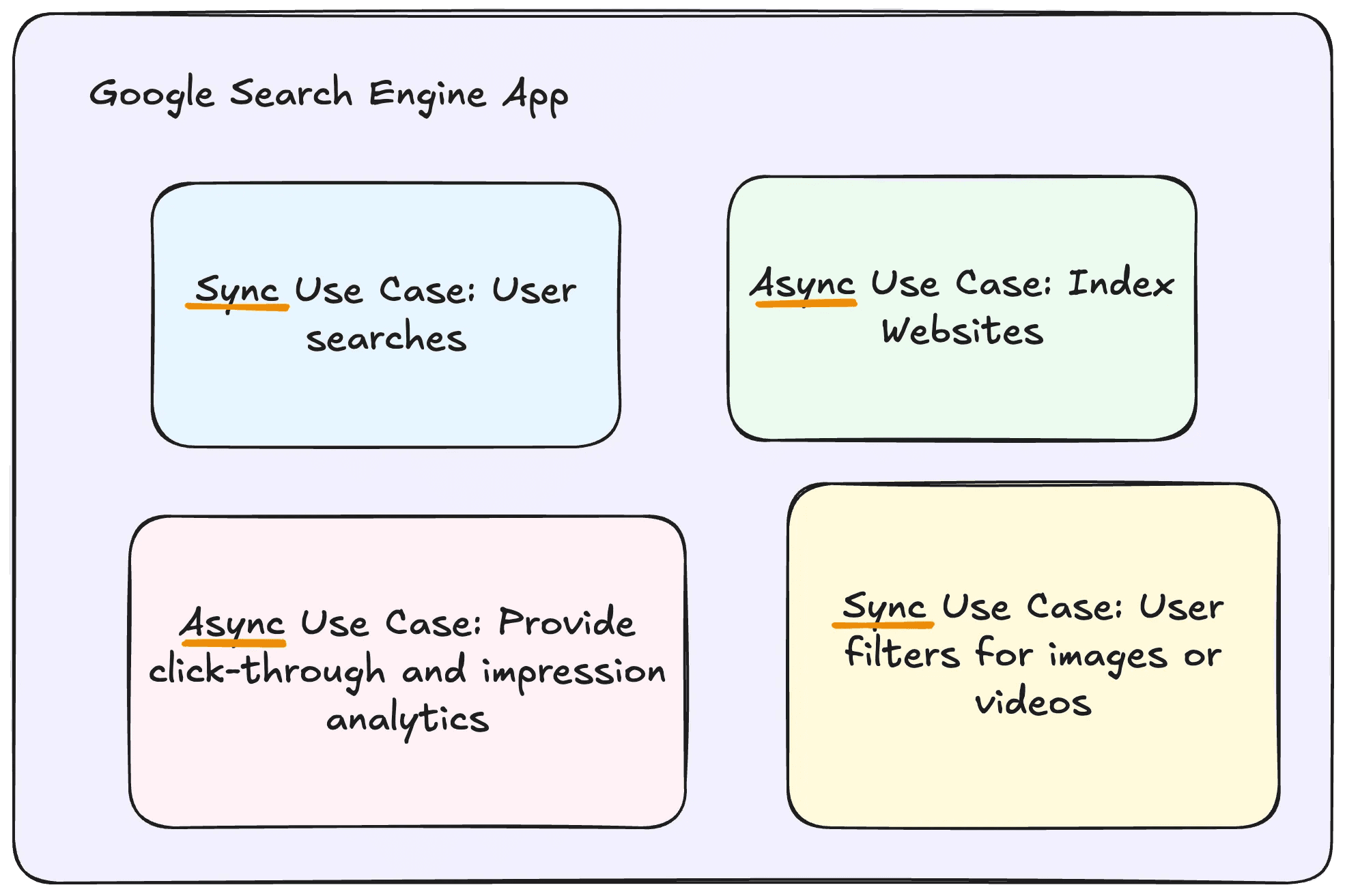
Choosing between these models involves balancing throughput against engineering complexity.
Historically, asynchronous code was difficult to read and maintain. Because code did not execute top-to-bottom, engineers had to heavily nest functions to handle the eventual data, leading to fragmented, difficult-to-trace logic. While modern syntax—like Promises and the async / await keywords—allows developers to write non-blocking code that reads linearly, the underlying complexity remains.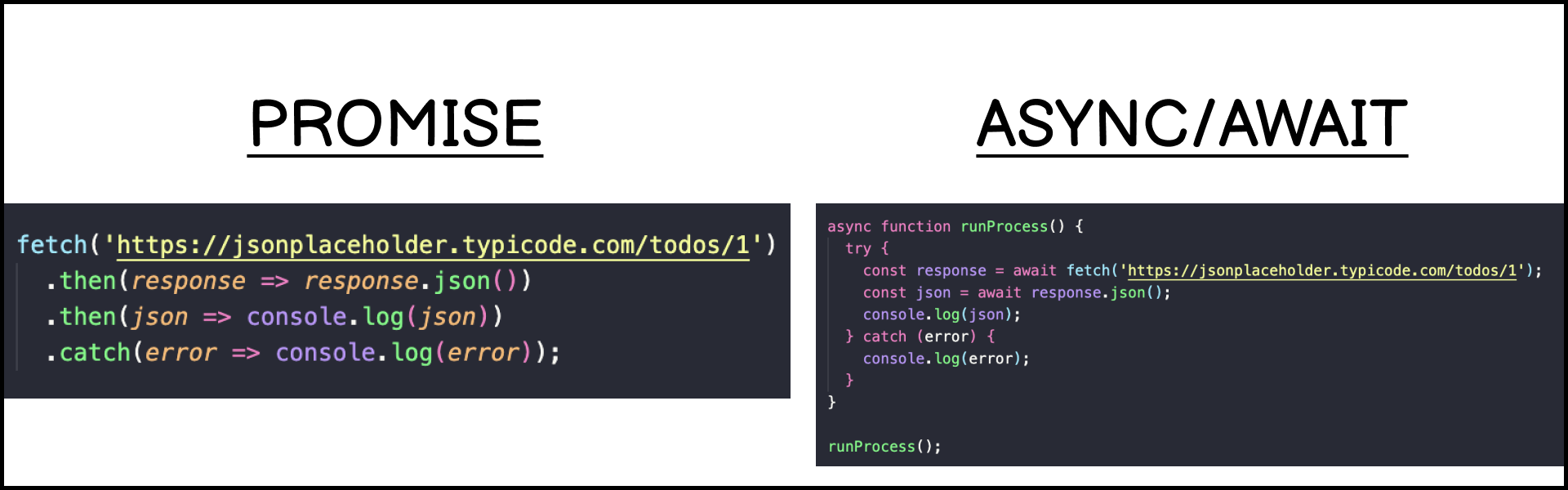 Async/await and Promises are both used for handling asynchronous operations in JavaScript, but
async/await is simply built on top of Promises. It acts as "syntactic sugar" to make asynchronous code look and behave more like synchronous code.
When an asynchronous program crashes, debugging is inherently difficult. The stack trace is often fragmented because the original calling function finished executing long before the error occurred. Furthermore, if multiple asynchronous operations attempt to read and mutate the same shared variable simultaneously without strict locking mechanisms, systems become highly vulnerable to race conditions and data corruption.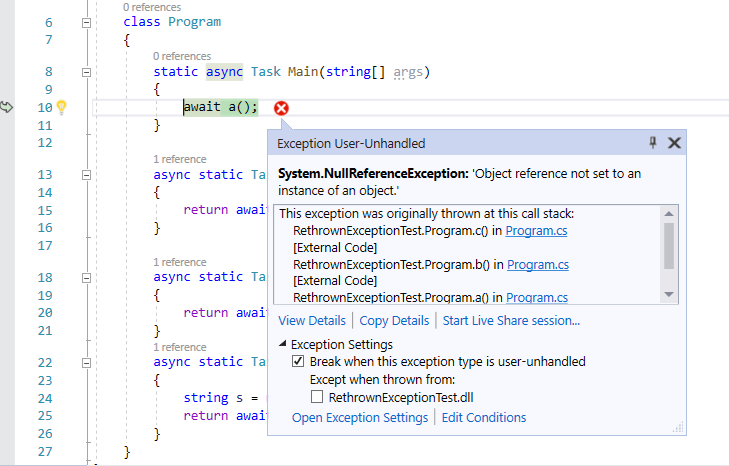
Visualize the Execution Thread
To see exactly why blocking the main thread is so dangerous for user interfaces, try interacting with the execution simulator below. Notice how the main thread behaves when you trigger a long-running network request in both modes.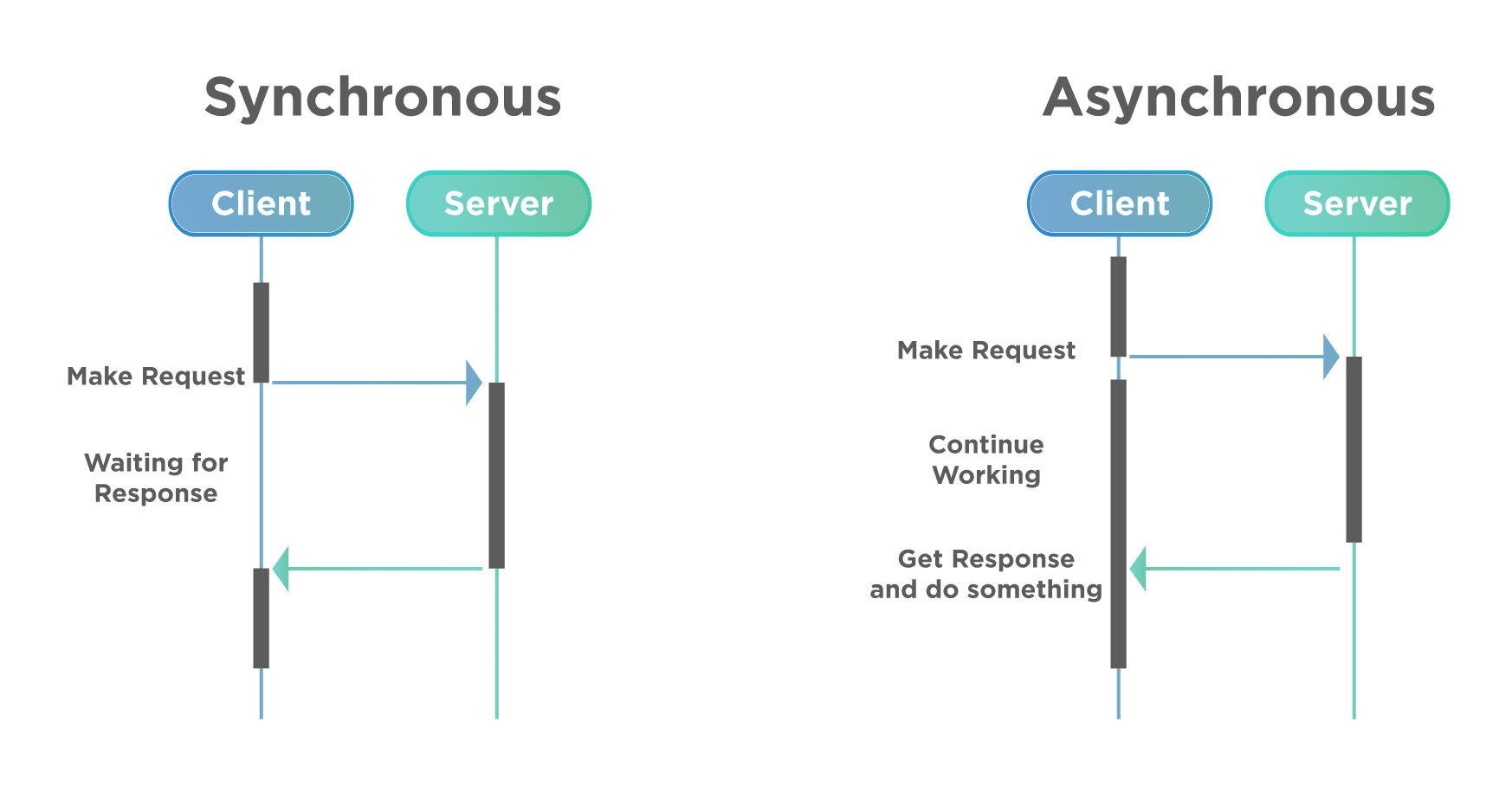
This Substack is reader-supported. To receive new posts and support my work, consider becoming a free or paid subscriber.
Thanks for reading! This post is public so feel free to share it.