The Origins and Uses of January 1, 1970
By The Coding Gopher
Published: 2026-08-22
URL: https://thecodinggopher.substack.com/p/what-is-a-unix-timestamp-understanding
How computers measure chronology, why time zones are an illusion, and the impending 2038 integer overflow.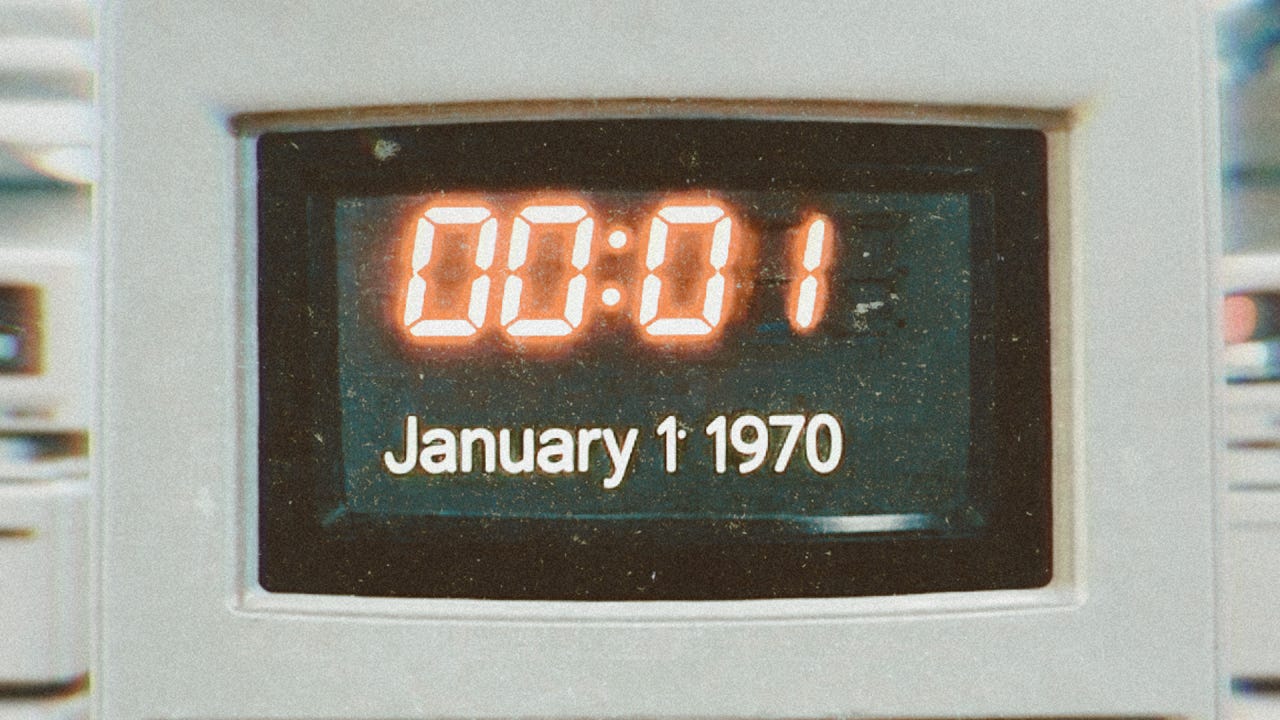 Measuring time is critical in computing because it acts as a universal reference point, allowing machines to sequence events, track performance, and coordinate safely with other systems. Unix systems accomplish this using Unix time (or Epoch time), which is a single, continuously incrementing number representing the seconds that have passed since January 1, 1970.
Time is a human construct filled with arbitrary rules: time zones, daylight saving time, leap years, and leap seconds. If a database attempts to store time using strings like “June 13, 2026, at 12:34 AM PDT”, calculating the exact duration between two events across the globe becomes an engineering nightmare.
To solve this, software architecture relies on a single, universal anchor point.
1. The Epoch Anchor
Unix time (often called POSIX time) abandons the calendar completely. It represents time as a single, monotonic integer: the exact number of seconds that have elapsed since January 1, 1970, at 00:00:00 UTC (Coordinated Universal Time). This specific, historical moment is known as the Unix Epoch.
Monotonic describes a progression or process that changes in one consistent direction—it only ever goes up or only ever goes down without reversing direction.

When a computer records a timestamp as 1781336043, it is simply stating that 1,781,336,043 seconds have passed since that Epoch anchor.
Unix time is a standardized system for computers to track chronology by counting the exact number of seconds that have passed since January 1, 1970, at midnight UTC. It eliminates the complexities of time zones and daylight saving time by reducing chronology to a single, sortable integer.
2. The Engineering Advantage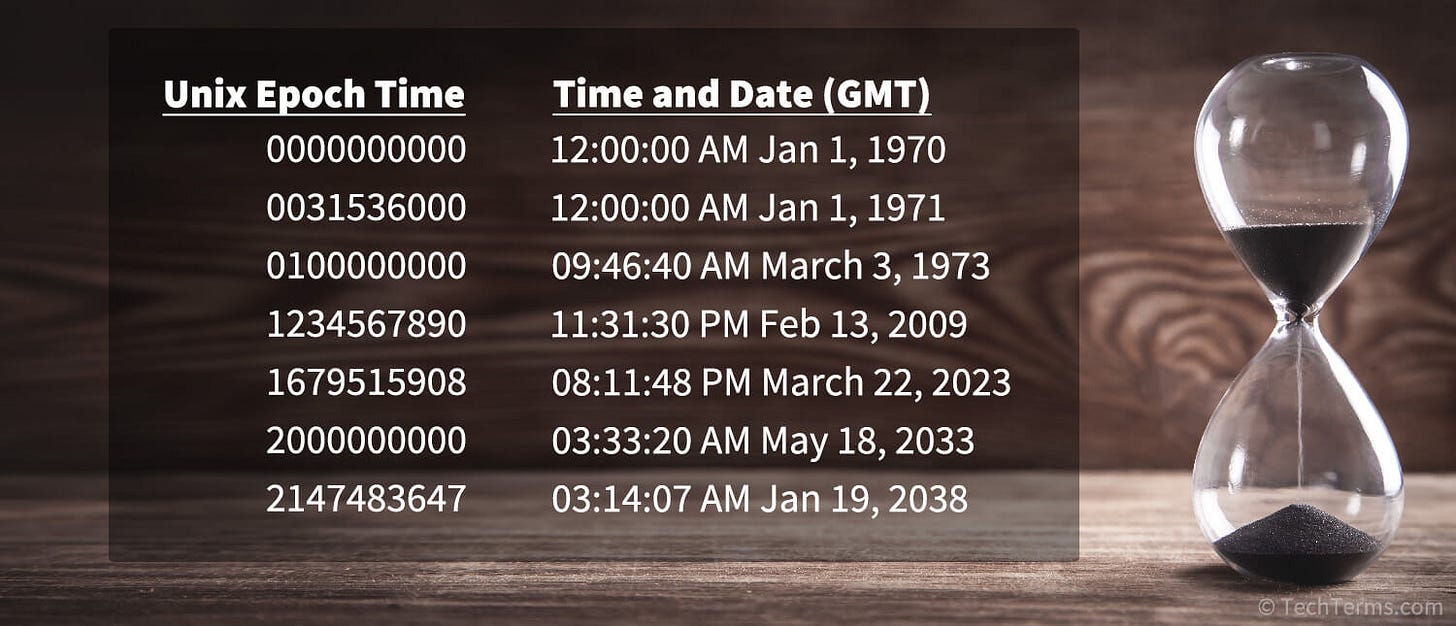
By reducing time to a single integer, engineers bypass several massive computational bottlenecks:
-
Absolute Objectivity. A Unix timestamp of 1781336043 represents the exact same moment in Seattle, Tokyo, and London. Time zones are entirely stripped from the data layer.
-
Computational Speed. Comparing two integers to determine which event happened first is computationally trivial for a CPU. Calculating the duration between a user logging in and logging out is basic mathematical subtraction, not complex string parsing.
-
Decoupling the Presentation Layer. Unix time is strictly for machines. The application’s frontend reads the integer, checks the local user’s operating system timezone settings, and translates that raw number into a formatted, human-readable string at the exact moment of rendering. The backend database never has to know where the user physically lives.
𝐋𝐞𝐚𝐫𝐧 𝐭𝐨 𝐛𝐮𝐢𝐥𝐝 𝐆𝐢𝐭, 𝐃𝐨𝐜𝐤𝐞𝐫, 𝐑𝐞𝐝𝐢𝐬, 𝐇𝐓𝐓𝐏 𝐬𝐞𝐫𝐯𝐞𝐫𝐬, 𝐚𝐧𝐝 𝐜𝐨𝐦𝐩𝐢𝐥𝐞𝐫𝐬, 𝐟𝐫𝐨𝐦 𝐬𝐜𝐫𝐚𝐭𝐜𝐡. Get 40% OFF CodeCrafters: https://app.codecrafters.io/join?via=the-coding-gopher
This Substack is reader-supported. To receive new posts and support my work, consider becoming a free or paid subscriber.
3. The Year 2038 Problem (Y2K38)
While counting seconds is incredibly efficient, the physical hardware storing that count has strict mathematical limits.
Historically, operating systems stored the Unix timestamp using a 32-bit signed integer. The maximum positive value a 32-bit signed integer can hold in memory is exactly 2,147,483,647. The "Year 2038 problem" (Y2038 or Epochalypse) is an integer overflow bug. On January 19, 2038, at exactly 03:14:07 UTC, computer systems storing time as a signed 32-bit integer will reach their maximum limit and roll over to 1901, potentially causing system crashes and data corruption.
A 32-bit signed integer is a foundational computer data type that uses 32 bits (1s and 0s) to represent whole numbers. It can store both positive and negative values, using one bit for the sign (positive/negative) and the remaining 31 bits for the actual number.
On January 19, 2038, the Unix clock will reach 2,147,483,647 seconds. One second later, the integer will mathematically overflow, flipping to its maximum negative value (-2147483648). If left unpatched, legacy computers will instantly believe the current date is December 13, 1901. This overflow will rapidly crash databases, falsely expire SSL certificates, and break authentication tokens globally.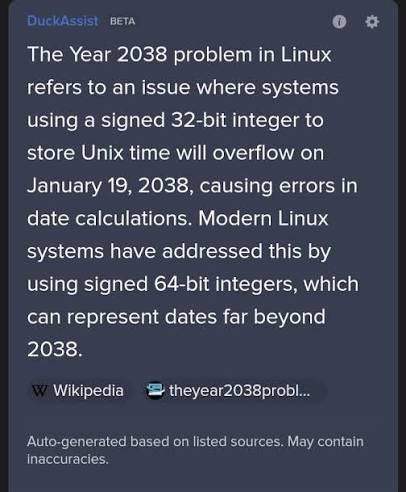
Modern infrastructure mitigates this by migrating database schemas and operating systems to use 64-bit integers. A 64-bit integer can hold enough seconds to measure time accurately for the next 292 billion years.
4. The Leap Second Edge Case
The Earth’s rotation is not perfectly consistent. Occasionally, scientists insert a “leap second” into the global calendar to keep clocks aligned with the sun.
How Unix Time Behaves During a Leap Second
When a positive leap second occurs, the UTC clock reaches 23:59:60 before advancing to 00:00:00. Because Unix time cannot represent a 61st second, operating systems handle it in one of two ways:
-
Clock Stepping (Hard Reset): The system clock steps backward by exactly one second at the end of the day. This means the exact same Unix timestamp is repeated twice (e.g., 1483228799 occurs for two consecutive physical seconds).
-
Leap Smearing: To avoid repeating timestamps, modern cloud providers (like Google, AWS, and Meta) use leap smearing via customized Network Time Protocol (NTP) servers. They slightly slow down system clocks over a window of several hours surrounding the leap second, distributing the extra 1,000 milliseconds smoothly so applications never see time stand still or jump backward.
This Substack is reader-supported. To receive new posts and support my work, consider becoming a free or paid subscriber.
Thanks for reading! This post is public so feel free to share it.