Decoupling Services and Scaling Asynchronously
By The Coding Gopher
Published: 2026-08-18
URL: https://thecodinggopher.substack.com/p/message-queues-in-distributed-systems
In software engineering, synchronous communication between microservices—where a service waits for a response before proceeding—can create severe bottlenecks. For example, if a web server must wait for a backend engine to process a large video file before returning a response, the user experiences significant latency. Under heavy concurrent load, this synchronous processing can overwhelm the backend and cause widespread application failure.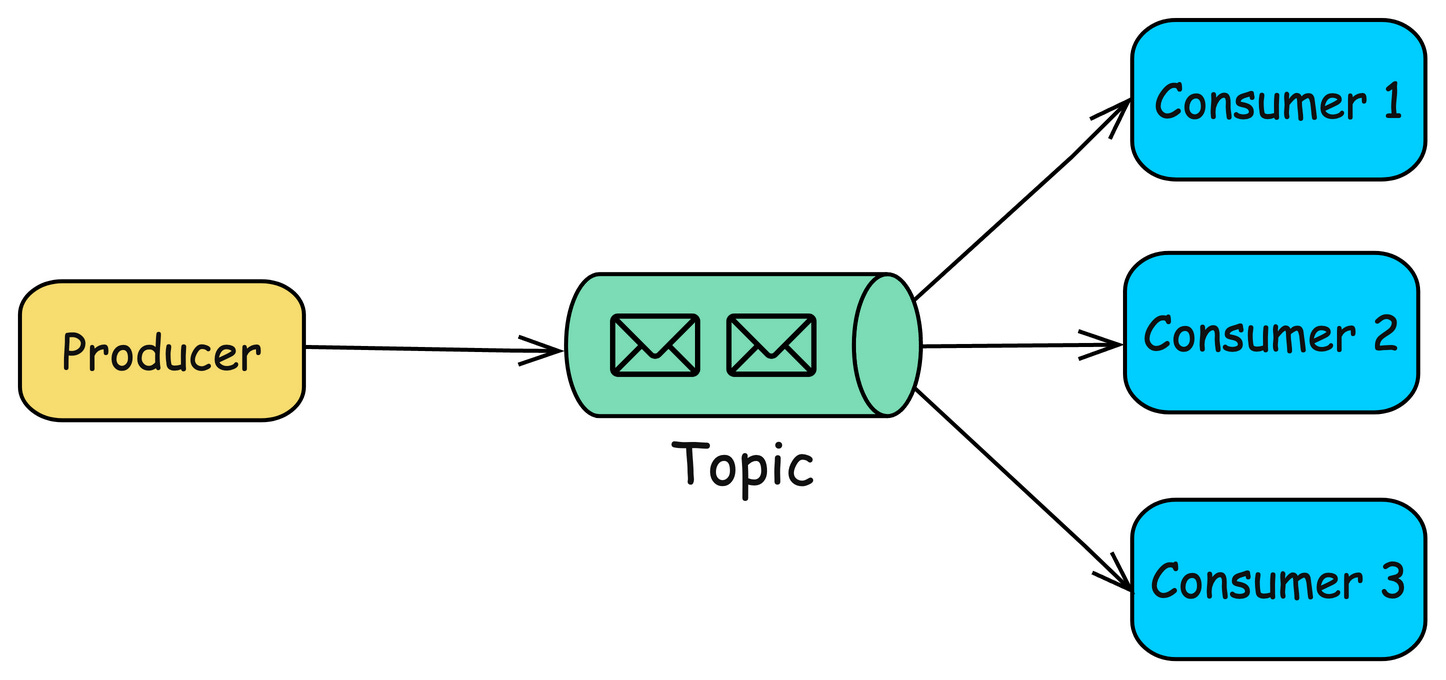 A message queue fixes synchronous blocking by decoupling the sender (producer) and receiver (consumer). Instead of forcing the sender to wait (block) for the receiver to process a task, the sender simply drops the task into a queue and immediately moves on.
Message queues solve this by shifting the architecture from synchronous to asynchronous communication, fundamentally changing how different parts of a system interact.
The Anatomy of a Queue
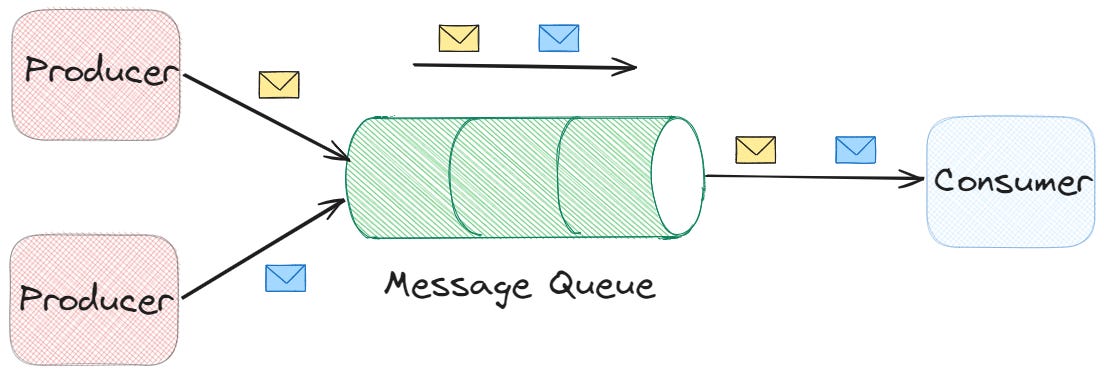
A message queue acts as an asynchronous middleware between different components of an application. 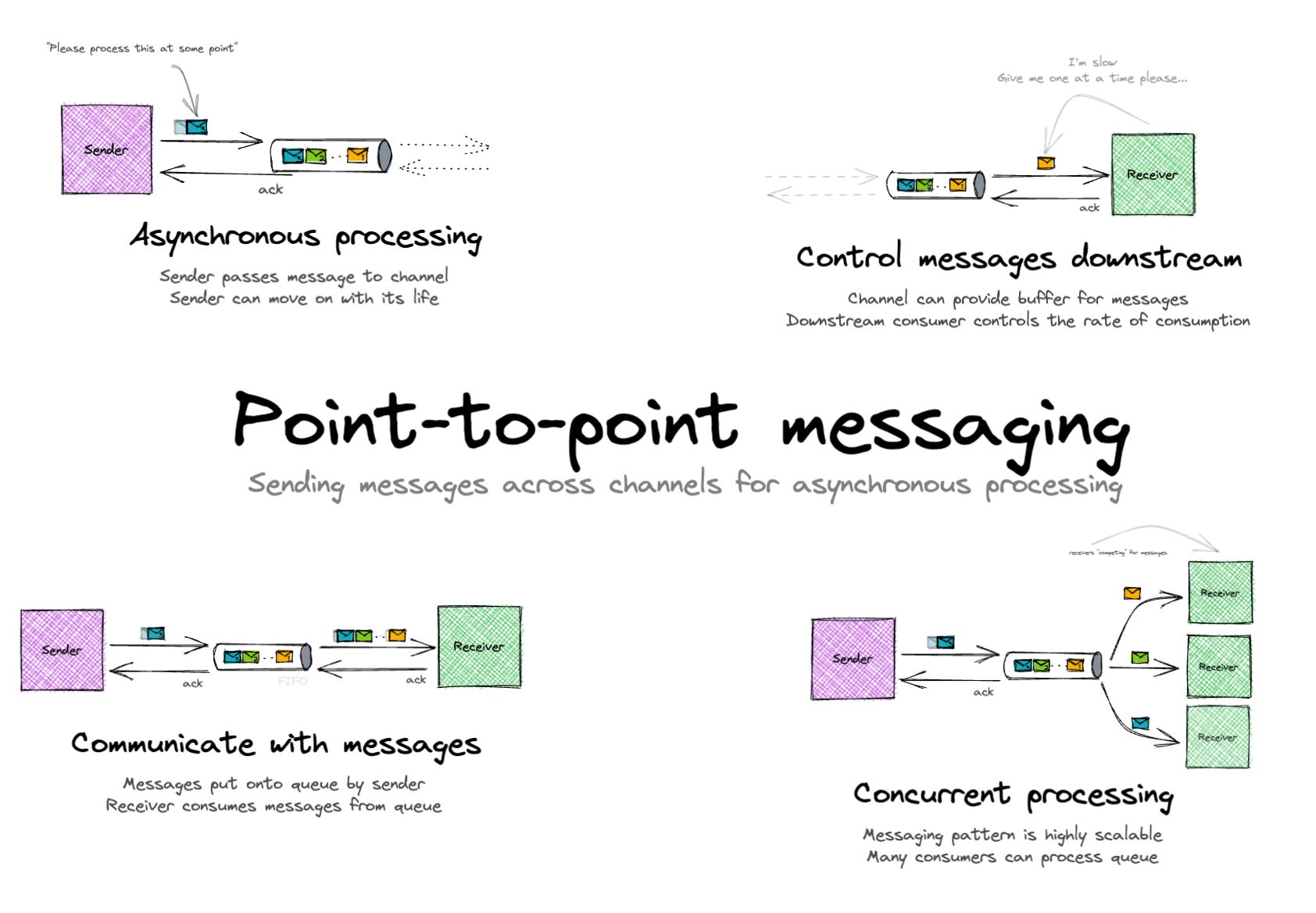
The architecture relies on three primary entities:
-
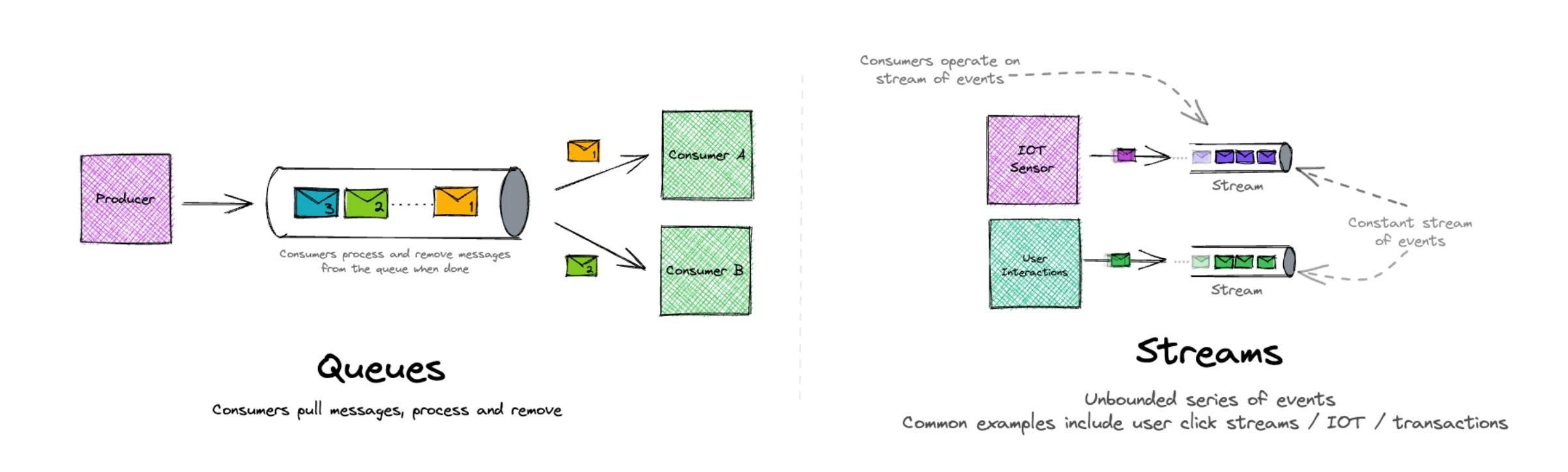
Producers: The services that generate data. Instead of calling another service directly, the producer wraps the data payload into a “message” and pushes it into the queue. It then immediately resumes its primary operations.
-
The Broker (The Queue): The infrastructure hosting the messages. It stores them safely in memory or on persistent disk, typically in the exact order they were received (First-In, First-Out).
-
Consumers: The background services that connect to the broker, pull messages from the queue at their own processing capacity, and execute the required tasks.
 A Dead-Letter Queue (DLQ) is a specialized destination in message-queuing systems that temporarily stores messages which cannot be successfully processed or delivered. Instead of discarding failed messages or causing infinite retries, the system routes them to a DLQ to prevent blocking the processing pipeline.
Core Architectural Advantages
Introducing a message broker (such as RabbitMQ, AWS SQS, or Apache Kafka) into your architecture provides three structural benefits: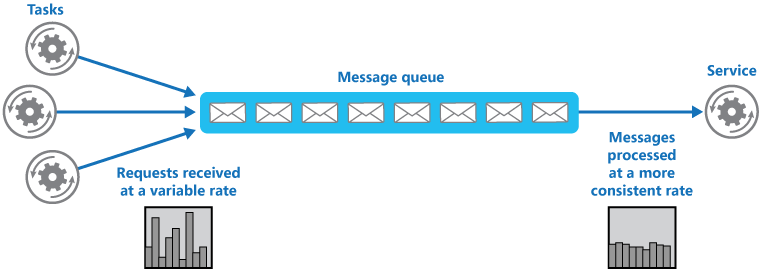
-
Load Leveling: System traffic rarely scales linearly; it arrives in spikes. If a sudden surge of traffic hits an application, the web servers (producers) can rapidly enqueue the resulting tasks. The backend database or processing services (consumers) do not crash under the load; they continuously pull and process messages from the queue at their maximum safe threshold until the backlog is cleared.
-
Decoupling: In a tightly coupled system, the failure of one downstream service can cascade and take down upstream services. With a queue, services operate independently. If a dedicated email service goes offline, the user-registration service does not fail; it simply drops a message into the broker and moves on. The messages queue up safely and are processed once the email service is restored.
-
Independent Scalability: Because producers and consumers operate independently, they can be scaled asynchronously. If the queue depth is growing too fast, engineers can spin up additional consumer instances to drain the queue faster, without needing to provision more web servers.
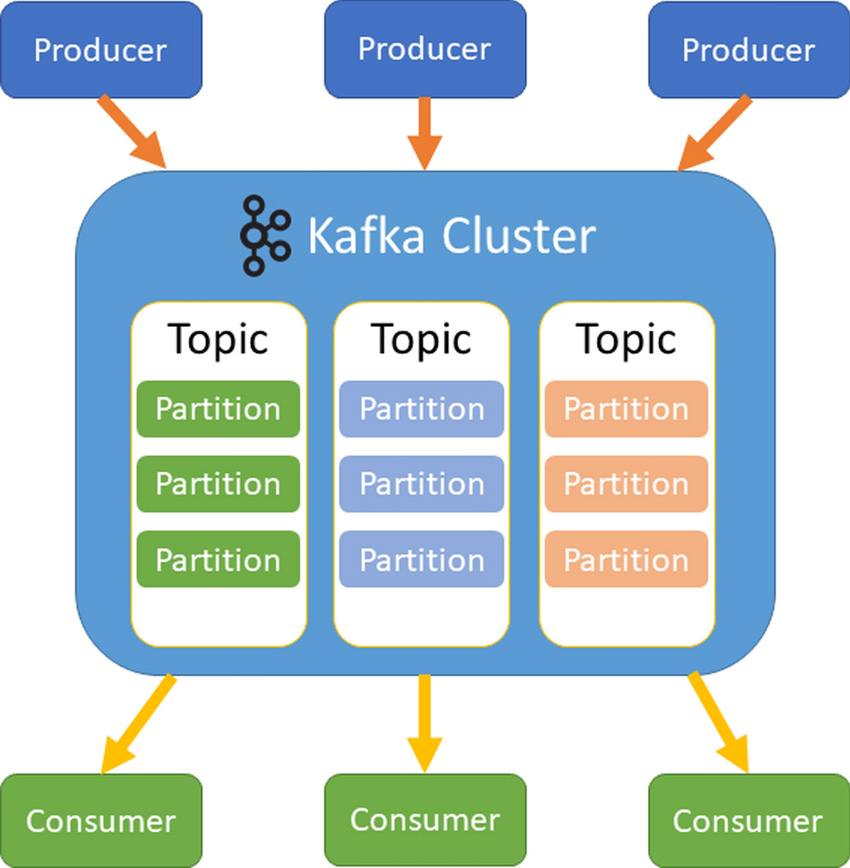 Apache Kafka provides a highly scalable, fault-tolerant message queue that decouples data producers and consumers, allowing for real-time, high-throughput streaming and reliable asynchronous communication across distributed systems.
𝐋𝐞𝐚𝐫𝐧 𝐭𝐨 𝐛𝐮𝐢𝐥𝐝 𝐆𝐢𝐭, 𝐃𝐨𝐜𝐤𝐞𝐫, 𝐑𝐞𝐝𝐢𝐬, 𝐇𝐓𝐓𝐏 𝐬𝐞𝐫𝐯𝐞𝐫𝐬, 𝐚𝐧𝐝 𝐜𝐨𝐦𝐩𝐢𝐥𝐞𝐫𝐬, 𝐟𝐫𝐨𝐦 𝐬𝐜𝐫𝐚𝐭𝐜𝐡. Get 40% OFF CodeCrafters: https://app.codecrafters.io/join?via=the-coding-gopher
This Substack is reader-supported. To receive new posts and support my work, consider becoming a free or paid subscriber.
Common Routing Patterns
Message brokers generally support different routing strategies depending on the use case:
-
Point-to-Point (Work Queues): A producer sends a message, and it is processed by exactly one consumer. If there is a pool of worker nodes pulling from the queue, the broker ensures no two workers process the exact same message.
-
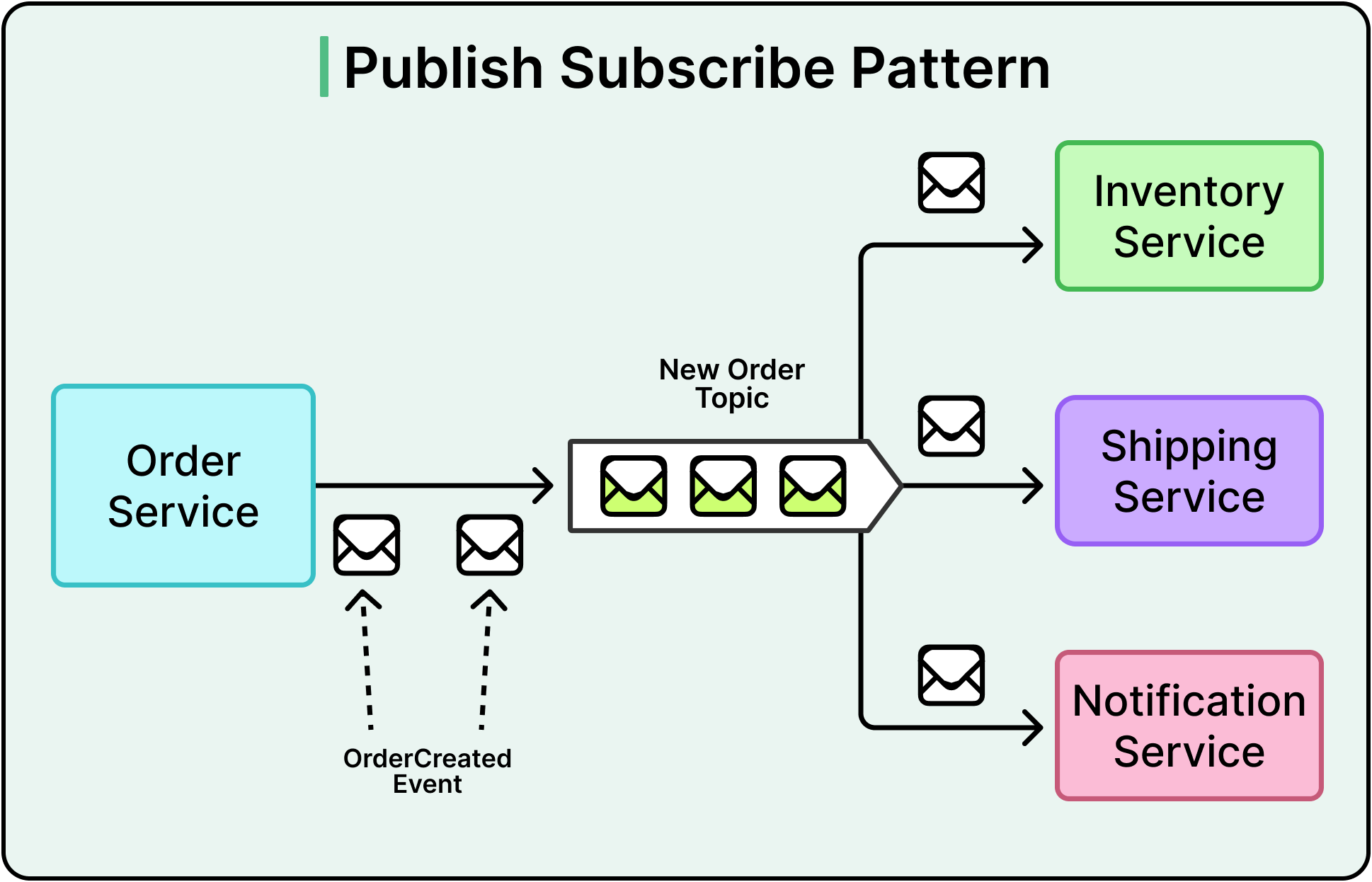
Publish/Subscribe (Pub/Sub): A producer “publishes” a single event (e.g., UserPurchasedItem). Multiple different consumers “subscribe” to that event type. The broker duplicates the message so that various distinct services—such as Invoicing, Shipping, and Analytics—all receive a copy and process it simultaneously.
Architectural Trade-offs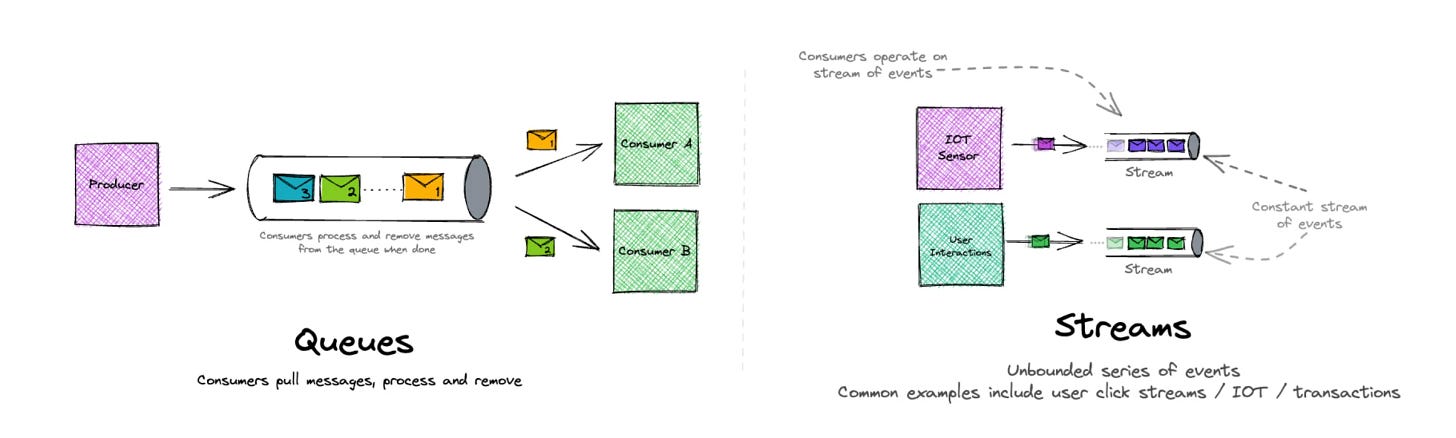
Like any distributed systems concept, message queues introduce new complexities that engineering teams must manage:
-
Eventual Consistency: Because processing occurs asynchronously in the background, databases are not instantly updated. A user might submit a form and receive a success response, but immediately refreshing their client might display stale data if the consumer has not yet processed the queued message.
-
Operational Complexity: A message broker represents a highly critical piece of infrastructure. If the broker runs out of memory or storage space, the entire asynchronous architecture fails. It requires rigorous monitoring and maintenance.
-
Idempotency: Network delivery is not perfectly reliable. Occasionally, a broker might fail to receive an acknowledgement that a message was successfully processed, causing it to redeliver the same message to a consumer. Consumers must be designed to be idempotent—meaning they can safely process the exact same message multiple times without incorrectly altering the final system state (e.g., preventing a user’s credit card from being charged twice).
When to Use Them
Message queues should be utilized whenever a task does not strictly require synchronous execution during a user’s initial request. By offloading heavy processing, external API calls, and background jobs to a queue, you protect core infrastructure from traffic spikes and significantly improve application response times.
This Substack is reader-supported. To receive new posts and support my work, consider becoming a free or paid subscriber.
Thanks for reading! This post is public so feel free to share it.