A Strategic Guide to Structuring Your Modern Data Stack
By The Coding Gopher
Published: 2026-07-30
URL: https://thecodinggopher.substack.com/p/data-lakes-vs-data-warehouses
Deconstructing the infrastructure behind modern analytics, data pipelines, and the engineering trade-offs of big data.
The modern data ecosystem relies on two primary storage architectures to handle massive, continuous influxes of information: Data Lakes and Data Warehouses. While both act as centralized repositories for an organization’s intelligence, they serve entirely different purposes, process fundamentally different types of data, and are utilized by different engineering teams.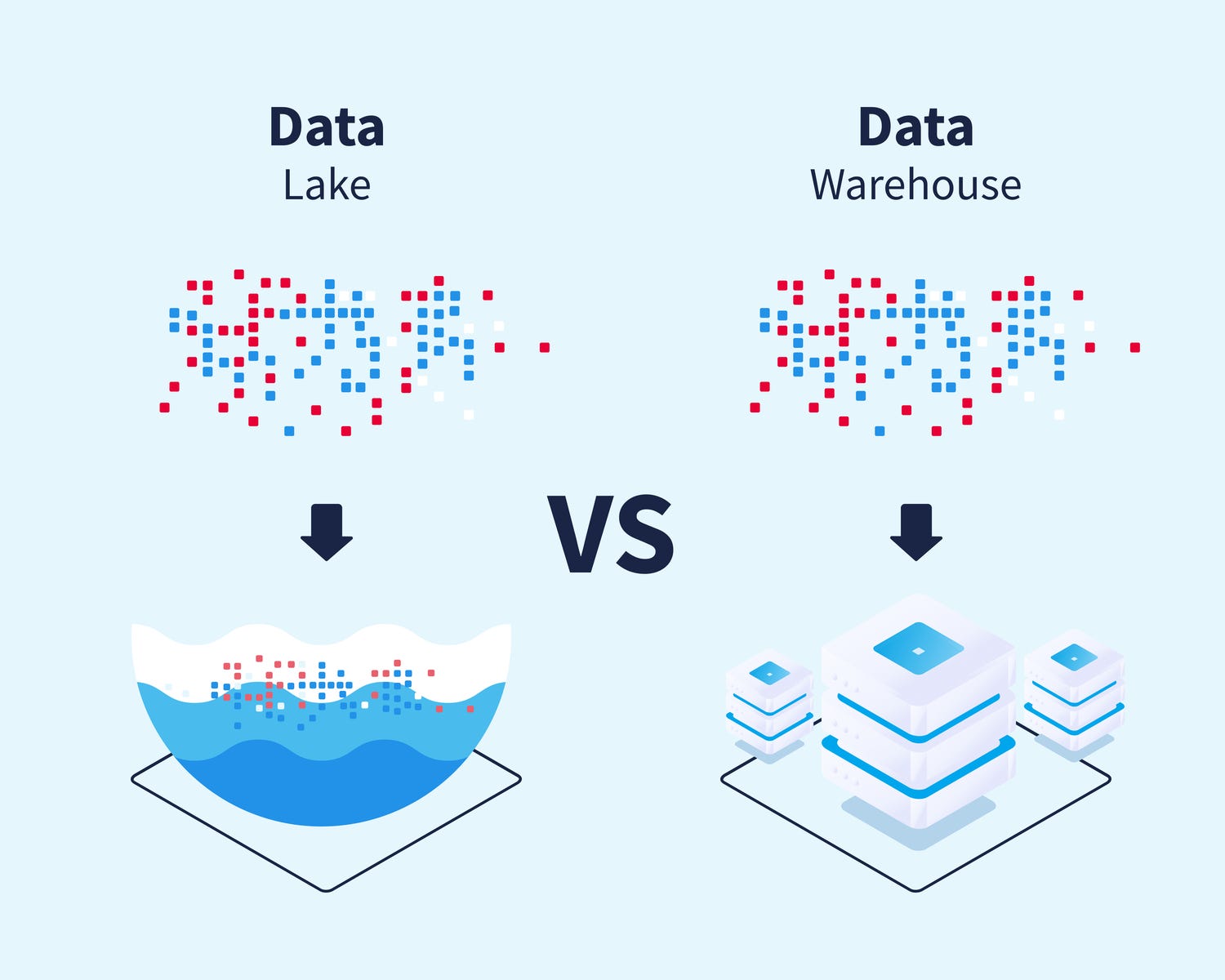 The main difference is data structure and purpose: a data lake stores raw, unprocessed data in its native format for flexible AI/machine learning exploration, while a data warehouse stores structured, cleansed data optimized for fast business intelligence (BI) and reporting.
To build a scalable data pipeline, engineers must understand the architectural realities of how these two systems operate.
1. The Data Warehouse: Structured Relational Storage
A Data Warehouse is a centralized repository designed exclusively for structured, filtered data that has already been processed for a specific purpose. It enforces strict data integrity and consistency across the entire system before any information is permanently stored.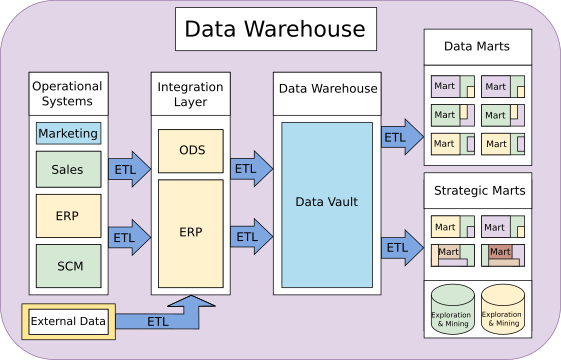 A data warehouse structure is typically designed using a multi-tiered architecture that governs how data flows from source systems to end-user analytics. It relies on a central repository fed by an ETL/ELT process, and is often subdivided into department-specific data marts for consumption.
-
Data Type: Warehouses strictly accept structured data. This means relational data organized neatly into rows and columns, typically originating from internal CRM, ERP, or transactional databases.
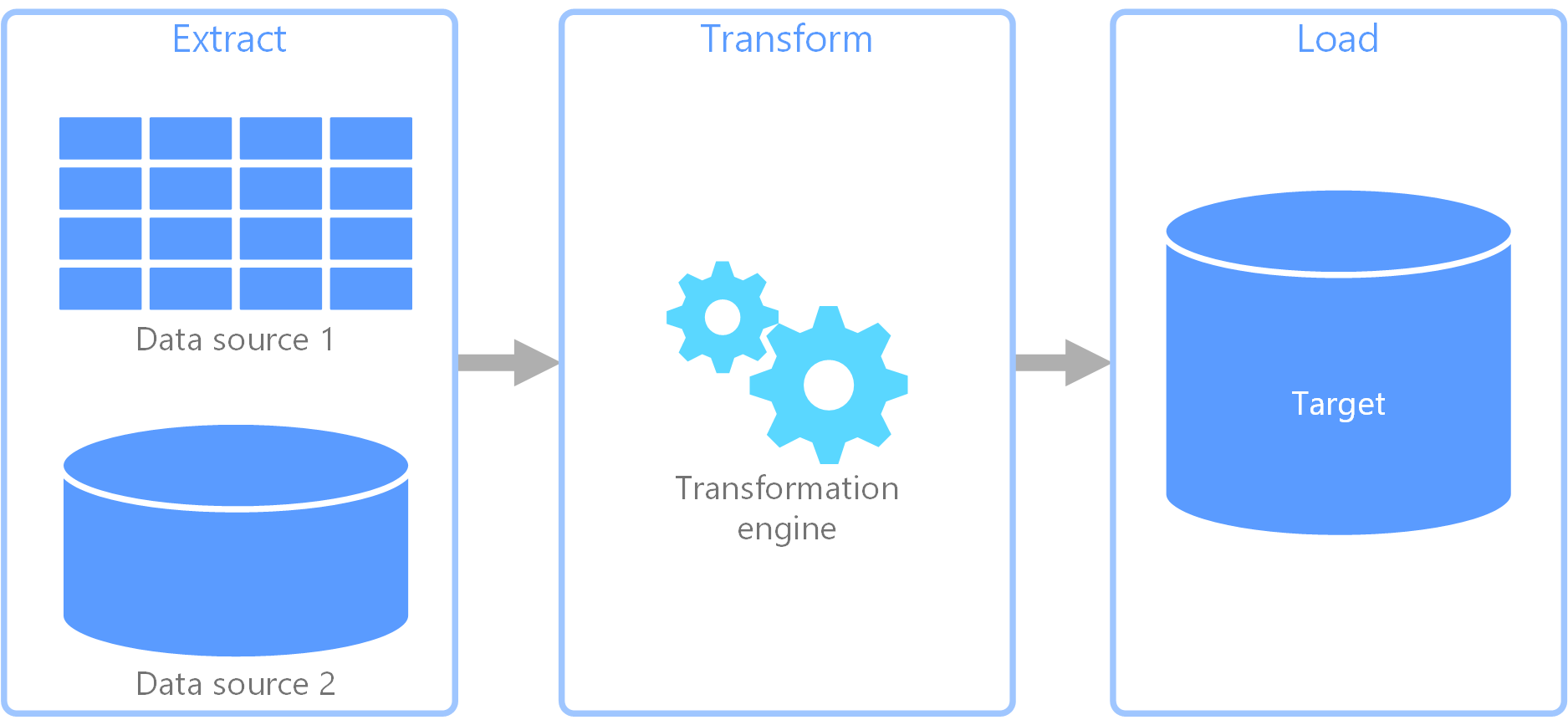 ETL (Extract, Transform, Load) is the foundational data pipeline process used to gather raw data from multiple sources, clean and standardize it, and load it into a centralized Data Warehouse. It transforms fragmented information into reliable, query-ready data for business intelligence (BI) and analytics.
-
Pipeline Logic (ETL): Warehouses utilize an Extract, Transform, Load (ETL) pipeline. Data is extracted from a source, heavily transformed and cleaned by intermediate processing servers to fit a strict format, and then loaded into the warehouse.
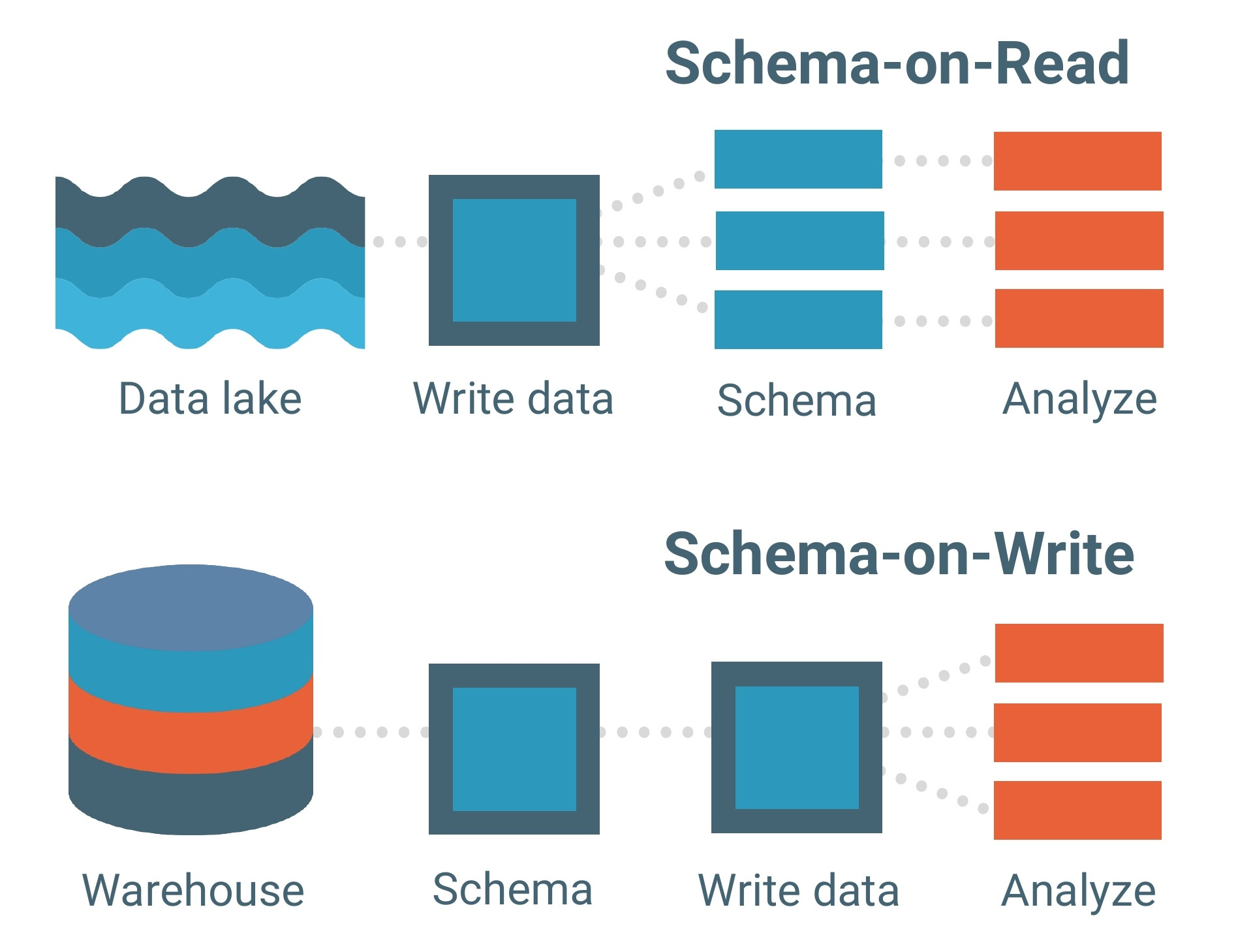 Schema-on-Write means data must conform to a predefined structure before it is saved, while Schema-on-Read allows raw data to be stored immediately and structured only when queried.
-
Schema-on-Write: The database structure—the tables, columns, and required data types—must be rigidly defined by data engineers before any data can be written into the system. If a new column is needed, the entire schema must be safely migrated.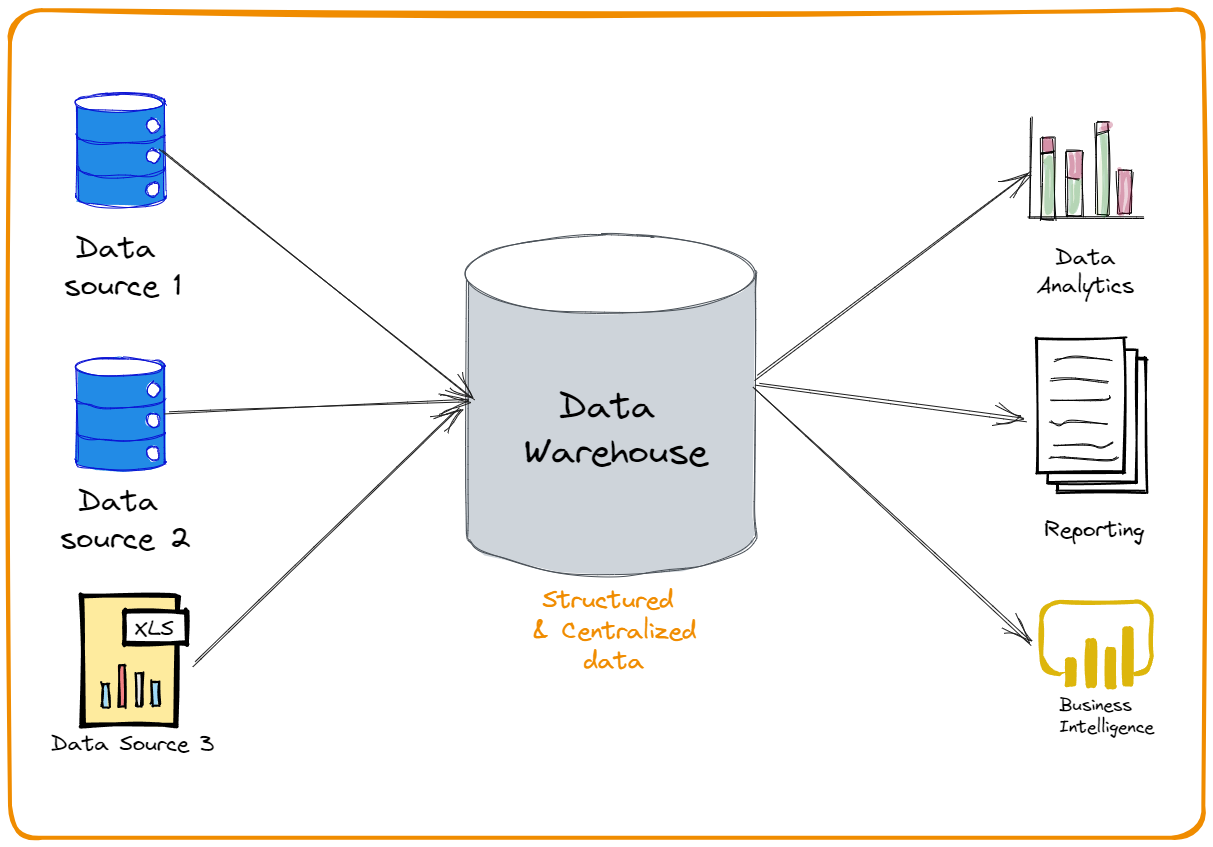 A data warehouse centralizes and standardizes data from disparate systems into a single source of truth. It transforms raw information into actionable business intelligence, empowering organizations to make faster, data-driven decisions while keeping operations fast and secure.
-
The Target User: Business Analysts and Executives. Because the structure is so rigid and clean, the warehouse is optimized for lightning-fast SQL queries. It is the engine that powers Business Intelligence (BI) dashboards and historical financial reporting.
𝐋𝐞𝐚𝐫𝐧 𝐭𝐨 𝐛𝐮𝐢𝐥𝐝 𝐆𝐢𝐭, 𝐃𝐨𝐜𝐤𝐞𝐫, 𝐑𝐞𝐝𝐢𝐬, 𝐇𝐓𝐓𝐏 𝐬𝐞𝐫𝐯𝐞𝐫𝐬, 𝐚𝐧𝐝 𝐜𝐨𝐦𝐩𝐢𝐥𝐞𝐫𝐬, 𝐟𝐫𝐨𝐦 𝐬𝐜𝐫𝐚𝐭𝐜𝐡. Get 40% OFF CodeCrafters: https://app.codecrafters.io/join?via=the-coding-gopher
This Substack is reader-supported. To receive new posts and support my work, consider becoming a free or paid subscriber.
2. The Data Lake: Raw Object Storage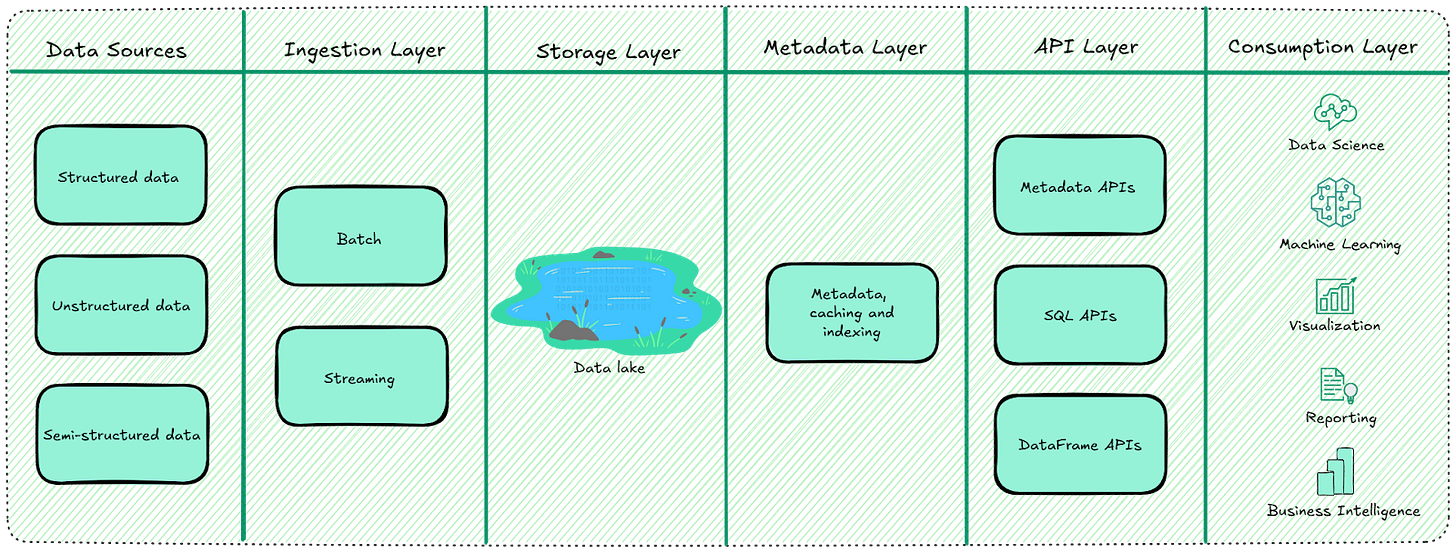
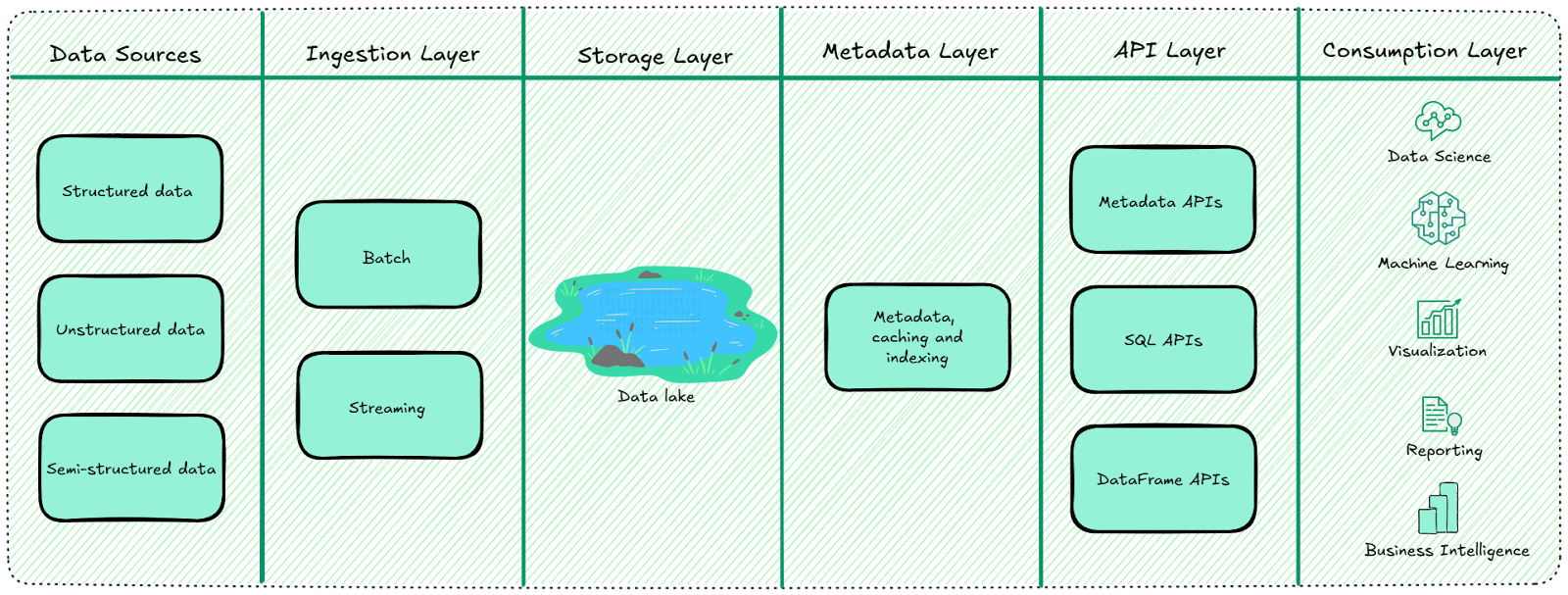
A Data Lake is a centralized repository that allows you to store all your structured, semi-structured, and unstructured data at any scale. Data is ingested and held in its native format without assuming what the eventual use case will be.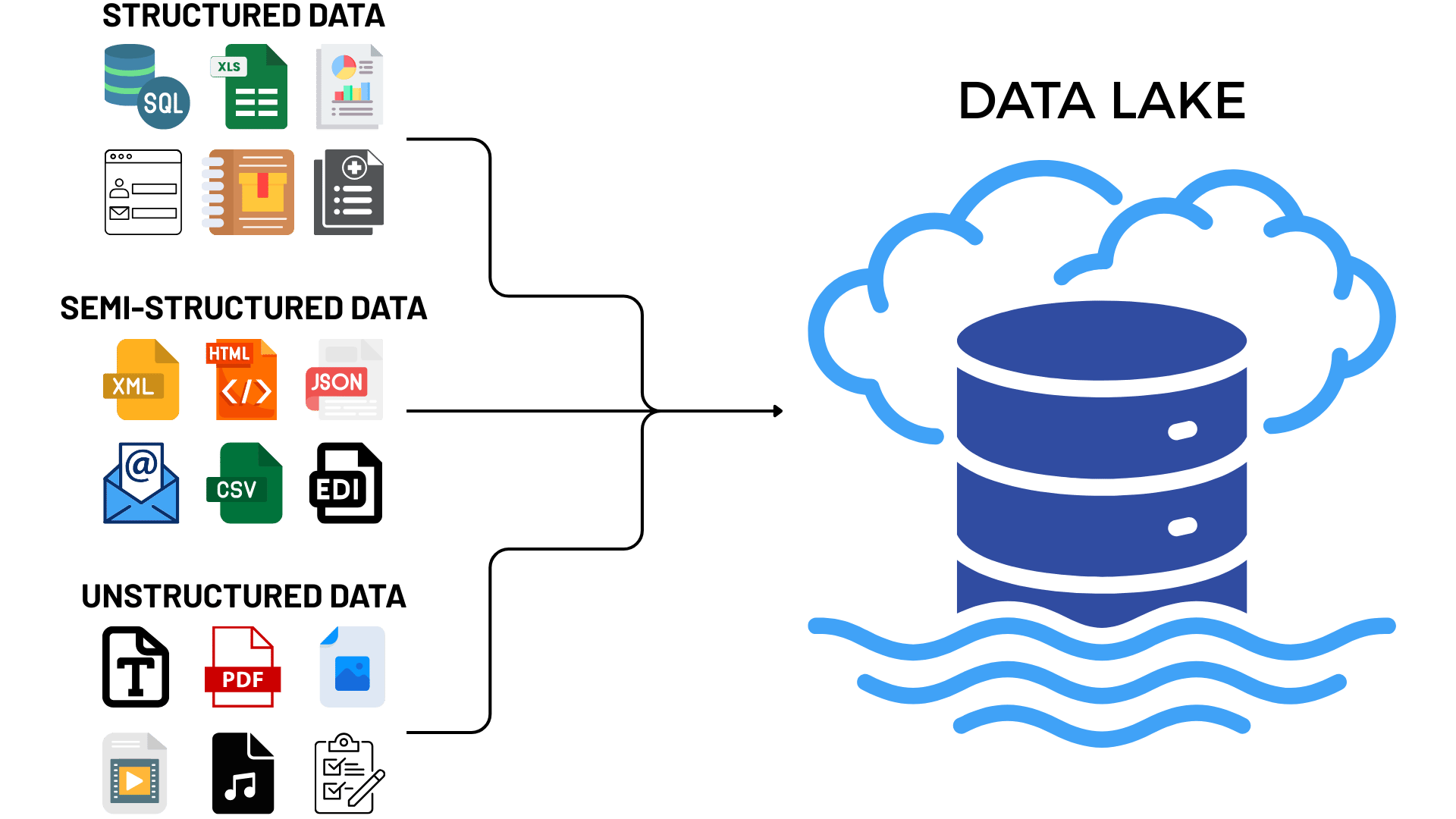
-
Data Type: Lakes accept absolutely everything. They hold structured data, semi-structured data (like JSON files and raw server logs), and completely unstructured data (such as raw images, audio files, video streams, and PDFs).
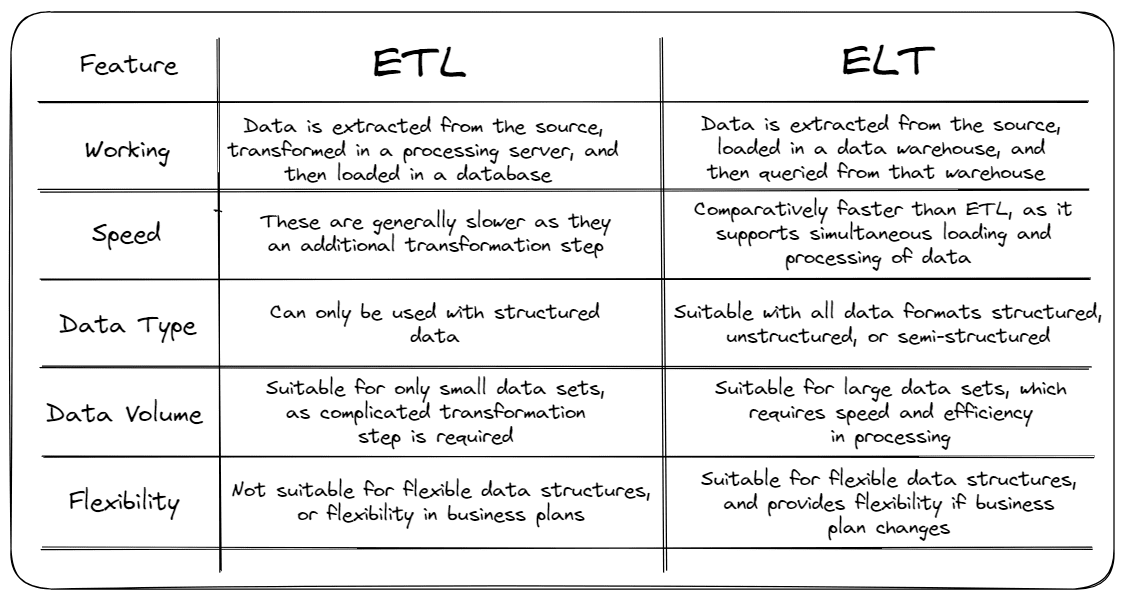 ETL (Extract, Transform, Load) and ELT (Extract, Load, Transform) are data integration processes. The core difference is when and where the data is transformed. ETL: Transforms data before loading it into the target destination. ELT: Loads raw data directly into the destination and transforms it
-
Pipeline Logic (ELT): Lakes utilize an Extract, Load, Transform (ELT) pipeline. Data is extracted and immediately dumped into the lake as-is. It is only transformed later, exactly when a user decides they need to analyze a specific subset of it.
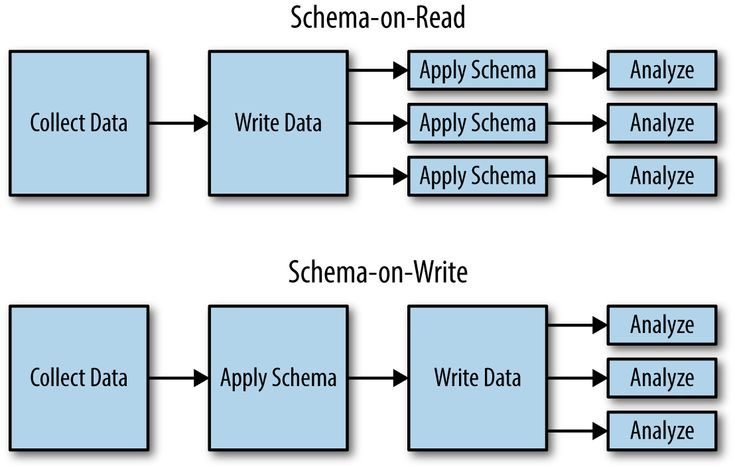 A data lake is a centralized, highly scalable repository that stores vast amounts of raw data in its native format. Unlike traditional databases, it employs a “schema-on-read” approach, meaning data remains unprocessed until it is actually needed for analysis, machine learning, or artificial intelligence.
-
Schema-on-Read: There are no upfront rules. The structure of the data is only applied and interpreted at the exact moment a script or query attempts to read it.
-
The Target User: Data Scientists and Machine Learning Engineers. The lake provides the vast, unfiltered foundation necessary for exploratory analysis, big data processing frameworks (like Apache Spark), and training deep learning models.
3. The Architectural Trade-offs
Choosing between a Lake and a Warehouse—or deciding how to bridge them—requires balancing agility against performance.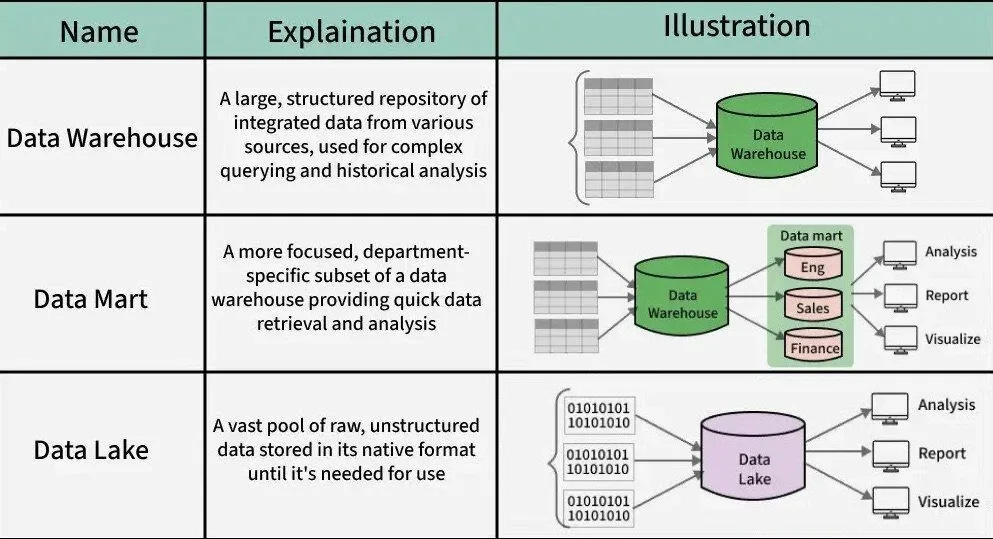
Storage Costs and Agility
Data Lakes are inherently cheap and highly agile. Because they often rely on cloud object storage (like AWS S3 or Google Cloud Storage), you can store petabytes of raw data for a fraction of the cost of a traditional database. Furthermore, if a new data source emerges (like a new JSON event stream from a mobile app), you can instantly route it into the storage bucket without coordinating a massive schema update.
Data Warehouses are expensive and rigid. They run on highly optimized, specialized compute clusters (like Snowflake or Amazon Redshift) designed to execute complex JOIN queries across billions of rows in milliseconds. This performance comes at a premium price, and the rigid schema means adapting to new data formats is a slow, deliberate engineering process.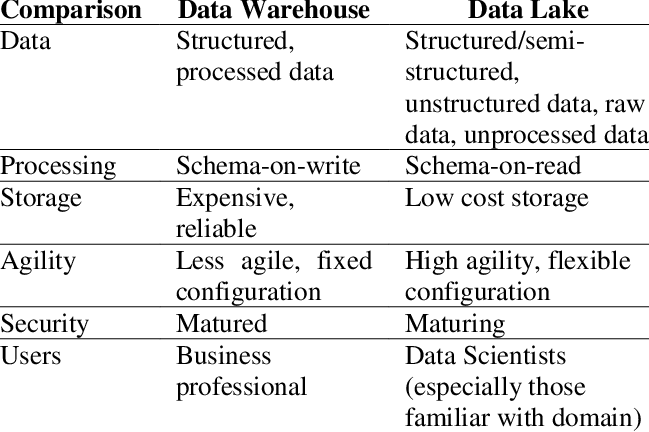
The Modern Convergence: The Data Lakehouse
Historically, organizations built both: a Data Lake to hold the raw files, and a Data Warehouse to hold the clean, structured subsets. Today, the industry is rapidly moving toward the Data Lakehouse architecture. By layering advanced metadata frameworks (like Apache Iceberg or Databricks Delta Lake) on top of cheap object storage, engineers can now execute fast, warehouse-style SQL queries directly against the raw files sitting in the Data Lake, attempting to get the best of both worlds.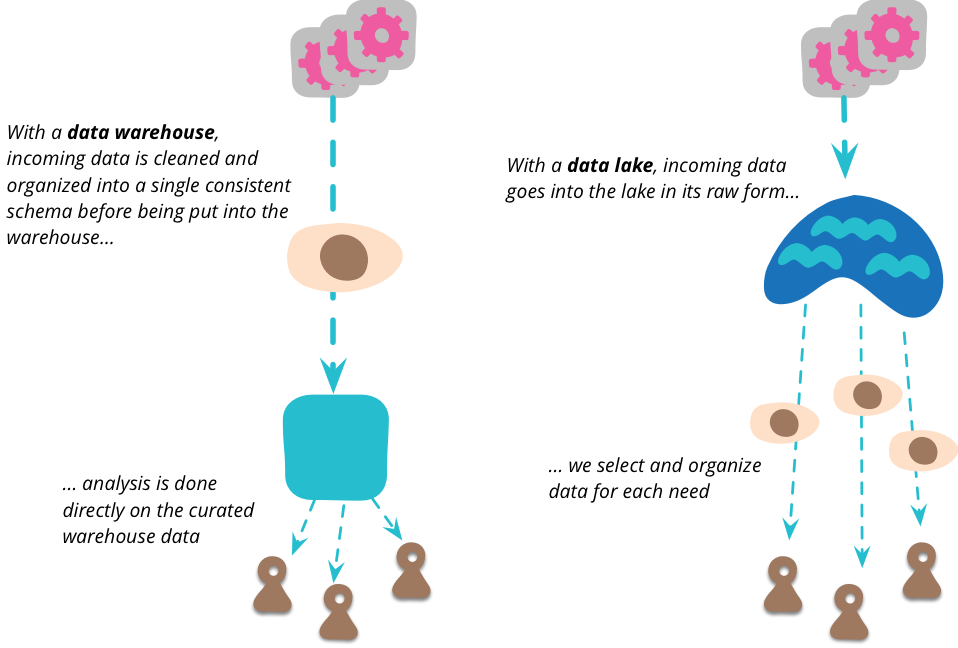
This Substack is reader-supported. To receive new posts and support my work, consider becoming a free or paid subscriber.
Thanks for reading! This post is public so feel free to share it.