How to Choose and Implement the Right Caching Layer for Your Stack
By The Coding Gopher
Published: 2026-07-30
URL: https://thecodinggopher.substack.com/p/database-caching-strategies
Database caching is one of the most effective ways to supercharge your application’s performance. By storing frequently accessed data in a temporary, high-speed storage layer—like Redis or Memcached—your application can retrieve information in milliseconds rather than waiting for complex database queries to execute.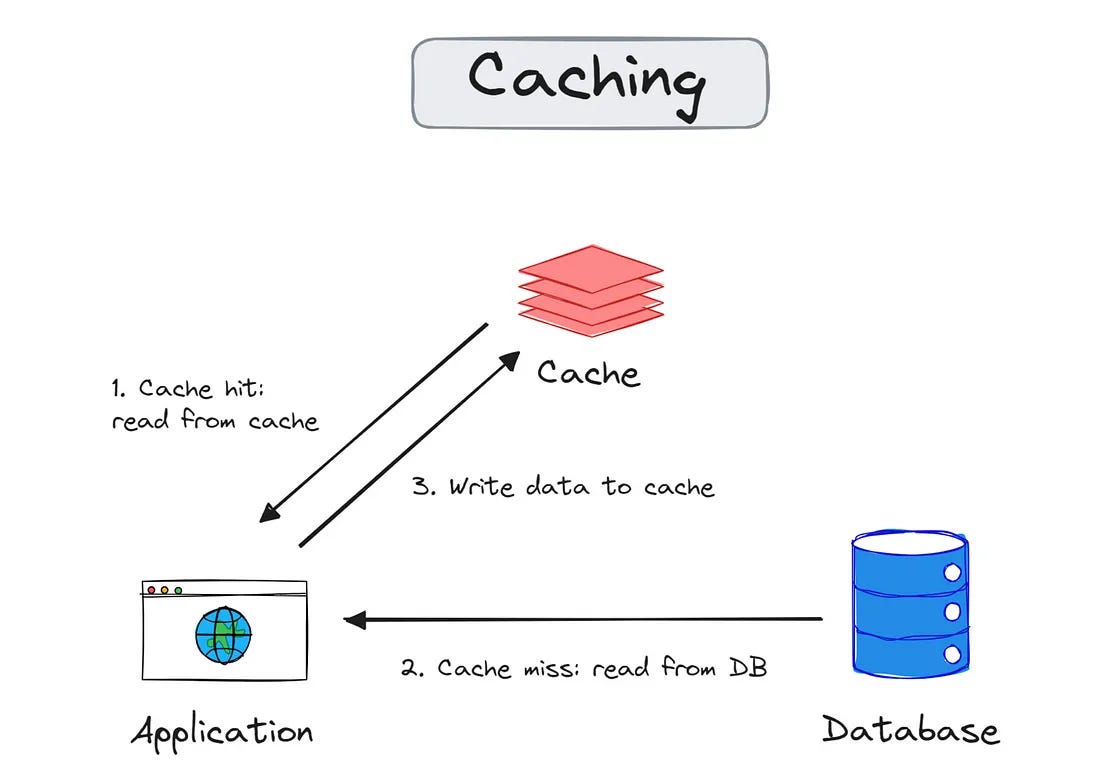 Database caching is the process of storing frequently accessed data in a temporary, high-speed memory layer (RAM). By serving requests from this ultra-fast cache instead of querying the primary database on disk, applications drastically reduce latency, decrease server load, and scale better under heavy traffic.
However, implementing a cache isn’t as simple as just turning it on. The real challenge lies in deciding how and when to populate or update that cache. If your cache and your primary database get out of sync, your users will be served stale data.
Database cache syncing ensures that the temporary, high-speed data in your cache matches the ground-truth data in your primary database. To achieve consistency, you must determine whether to write to the database and cache simultaneously, or update them sequentially using various background strategies.
To prevent this, developers rely on several proven caching strategies. Here is a breakdown of how they work and when to use them.
The Read Strategies: Fetching Data Efficiently
When your application needs to display information to a user, it has to decide where to look first. These strategies dictate how data moves from the database to the cache during read operations.
Cache-Aside (Lazy Loading)
This is the most common caching strategy in modern application development. In this model, the cache sits to the side of the database, and your application code acts as the orchestrator between the two.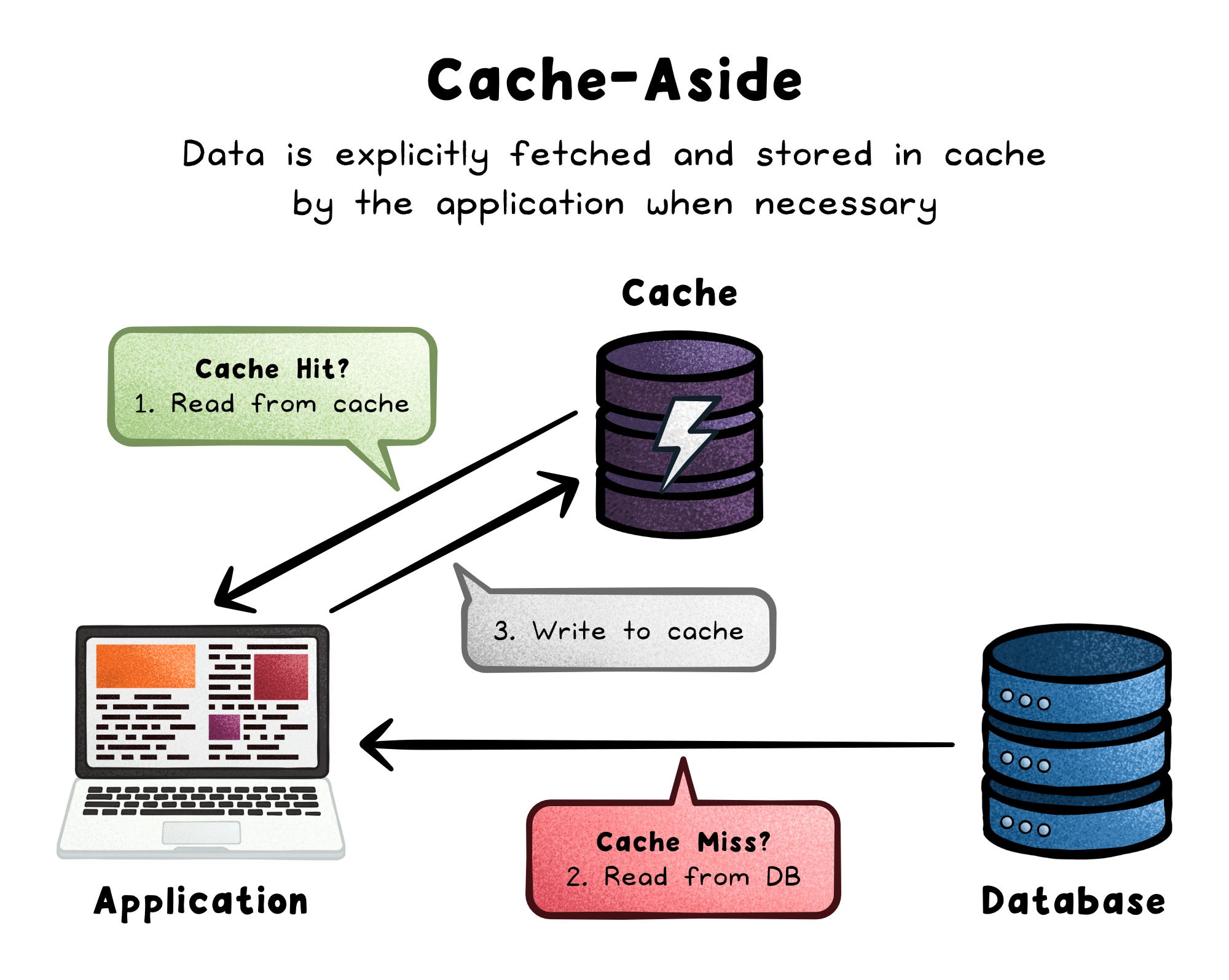 The cache-aside strategy (also known as lazy loading) is a caching pattern where your application code manages the interaction between the cache and the primary database. The cache acts as a sidecar; data is only loaded into the cache when requested by the application, preventing unnecessary memory usage.
When the application needs data, it checks the cache first. If the data is there (a cache hit), it returns it to the user immediately. If the data is missing (a cache miss), the application takes on the responsibility of querying the primary database, returning the data to the user, and then saving a copy of that data in the cache for next time.
The Verdict: Cache-aside is excellent for general-purpose, read-heavy workloads. It saves memory because only explicitly requested data is cached. Furthermore, if the cache goes offline, the system simply falls back to querying the database directly. The main downside is that cache misses cause a noticeable delay, as the system must perform three separate steps before finishing the request.
Read-Through
Unlike Cache-Aside, a Read-Through cache sits directly in line between your application and the database. The application interacts only with the cache.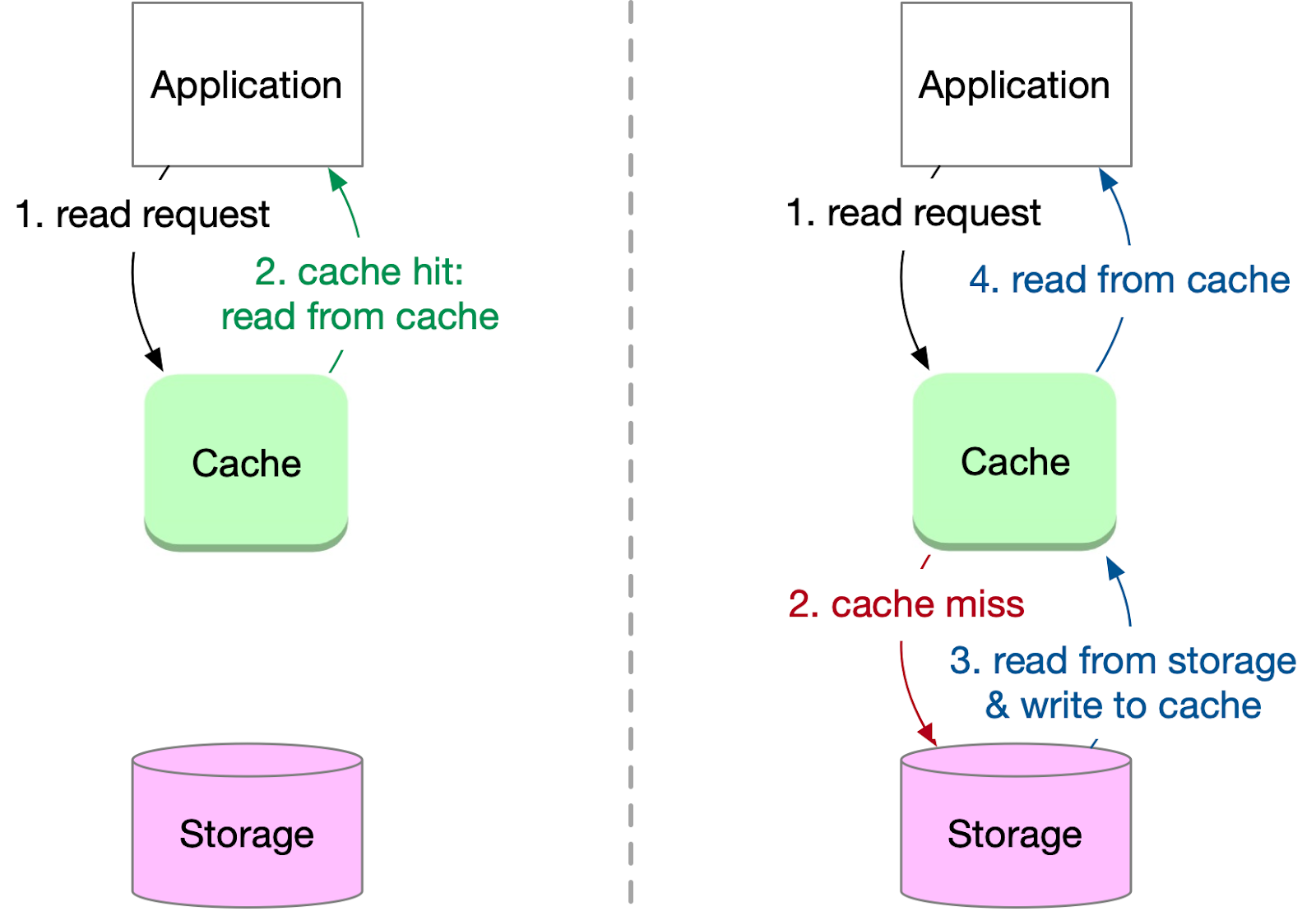 A read-through cache is a caching pattern where the application delegates data-fetching responsibility entirely to the cache system. Instead of the application checking for a miss and manually querying the database, the cache transparently intercepts the read, retrieves the data from the underlying data store, and stores it.
If the application asks the cache for data and it’s a miss, the cache itself is responsible for reaching out to the database, updating its own records, and returning the data to the application.
The Verdict: This strategy greatly simplifies your application code, as the app no longer has to manage the fallback logic. It is perfect for read-heavy workloads where the same data is requested repeatedly. However, just like Cache-Aside, there is still a performance penalty the very first time a piece of data is requested.
The Write Strategies: Keeping Data Fresh
Reading data is only half the battle. When a user updates their profile, posts a comment, or completes a purchase, your system needs a strategy for keeping the cache and the database perfectly synchronized.
Write-Through
With a Write-Through strategy, the cache sits inline between the application and the database. When the application writes new data, it writes it directly to the cache. The cache then synchronously writes that data to the primary database before confirming to the application that the operation is complete.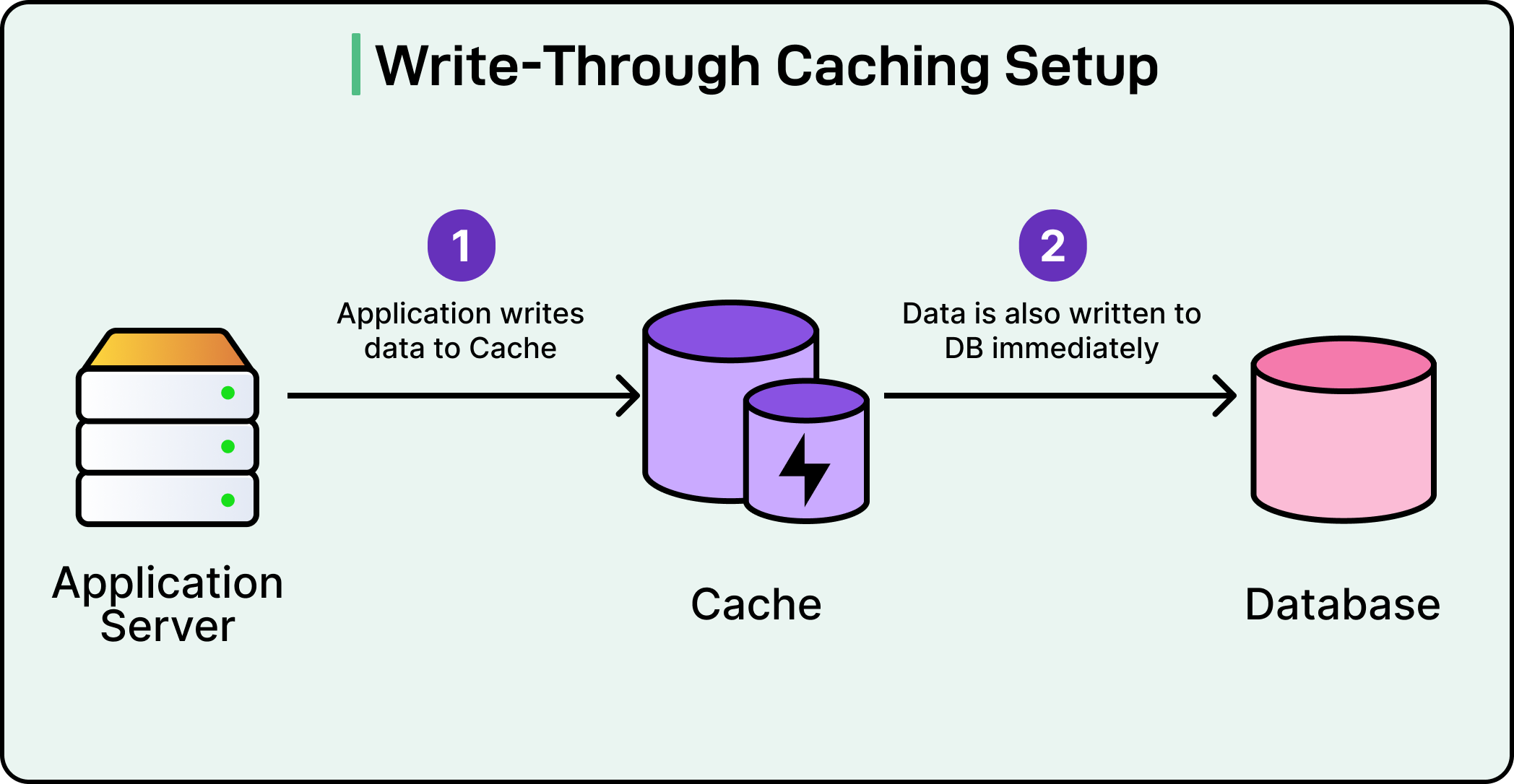 A write-through cache is a caching strategy where data is written to both the cache and the underlying storage (like a database) simultaneously. A write is only acknowledged as complete once the data has been successfully saved to both layers, ensuring strong consistency and high data integrity.
The Verdict: The biggest advantage here is absolute consistency. Your data is never stale, and the cache and database are always in perfect sync. The trade-off is speed. Every single write operation has to wait for two network calls to complete (one to the cache, one to the database) before the application can move on.
𝐋𝐞𝐚𝐫𝐧 𝐭𝐨 𝐛𝐮𝐢𝐥𝐝 𝐆𝐢𝐭, 𝐃𝐨𝐜𝐤𝐞𝐫, 𝐑𝐞𝐝𝐢𝐬, 𝐇𝐓𝐓𝐏 𝐬𝐞𝐫𝐯𝐞𝐫𝐬, 𝐚𝐧𝐝 𝐜𝐨𝐦𝐩𝐢𝐥𝐞𝐫𝐬, 𝐟𝐫𝐨𝐦 𝐬𝐜𝐫𝐚𝐭𝐜𝐡. Get 40% OFF CodeCrafters: https://app.codecrafters.io/join?via=the-coding-gopher
This Substack is reader-supported. To receive new posts and support my work, consider becoming a free or paid subscriber.
Write-Behind (Write-Back)
Write-Behind is similar to Write-Through, but it prioritizes raw speed over immediate consistency.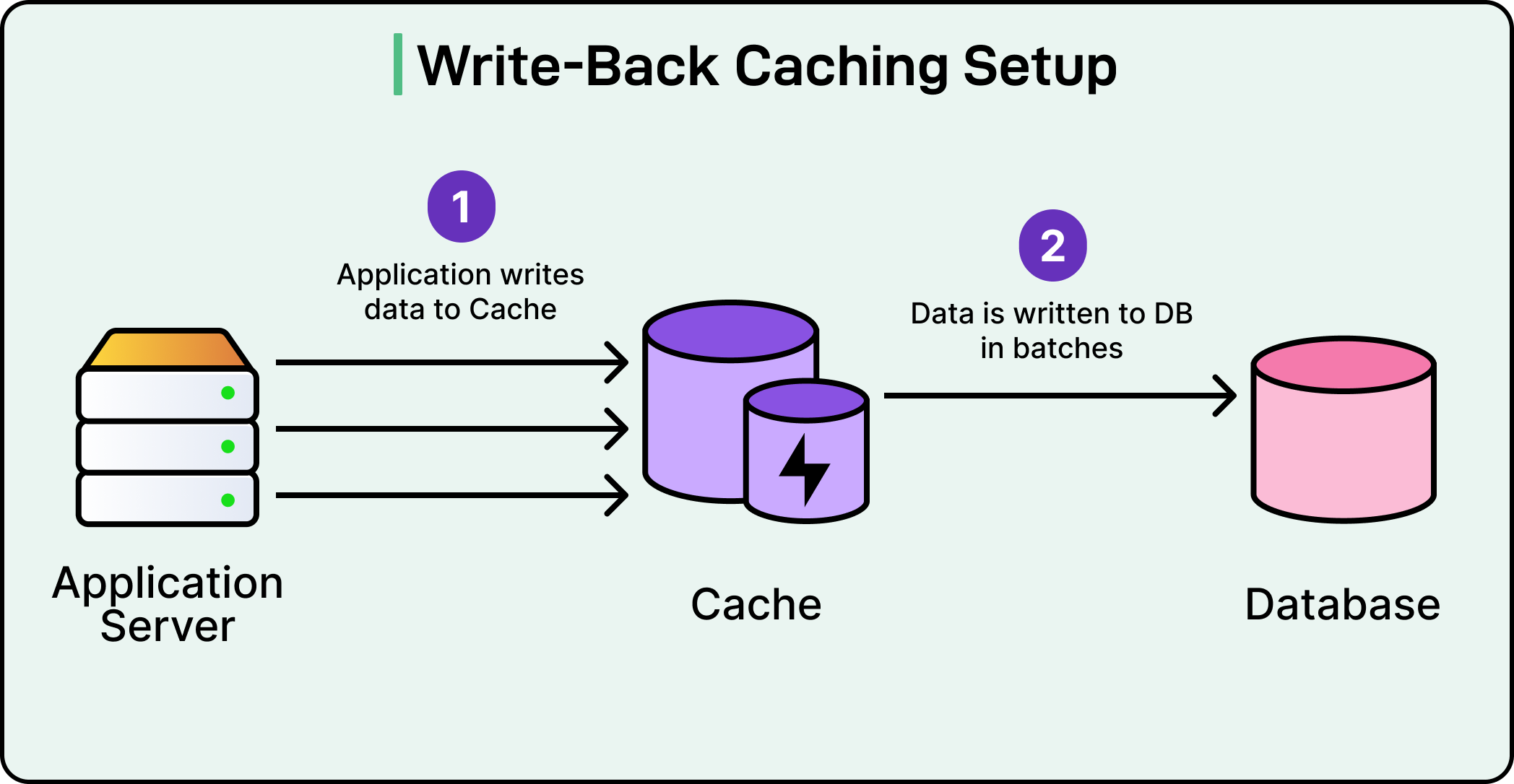 A write-behind cache (also called write-back caching) is a system design pattern where an application writes data directly to a cache, receives an immediate success response, and relies on an asynchronous background process to persist the changes to a primary database later.
When the application writes data to the cache, the cache immediately acknowledges the write as successful, allowing the user to move on instantly. Then, asynchronously in the background, the cache takes that data and updates the primary database.
The Verdict: This offers blazing fast write performance and is ideal for write-heavy applications, such as capturing high-volume analytics or game state updates. However, it carries a severe risk: if the cache server crashes before it has a chance to sync with the database, that recently written data is permanently lost.
Write-Around
Write-Around is a specialized tactic often paired with Cache-Aside or Read-Through to optimize exactly what gets saved in memory.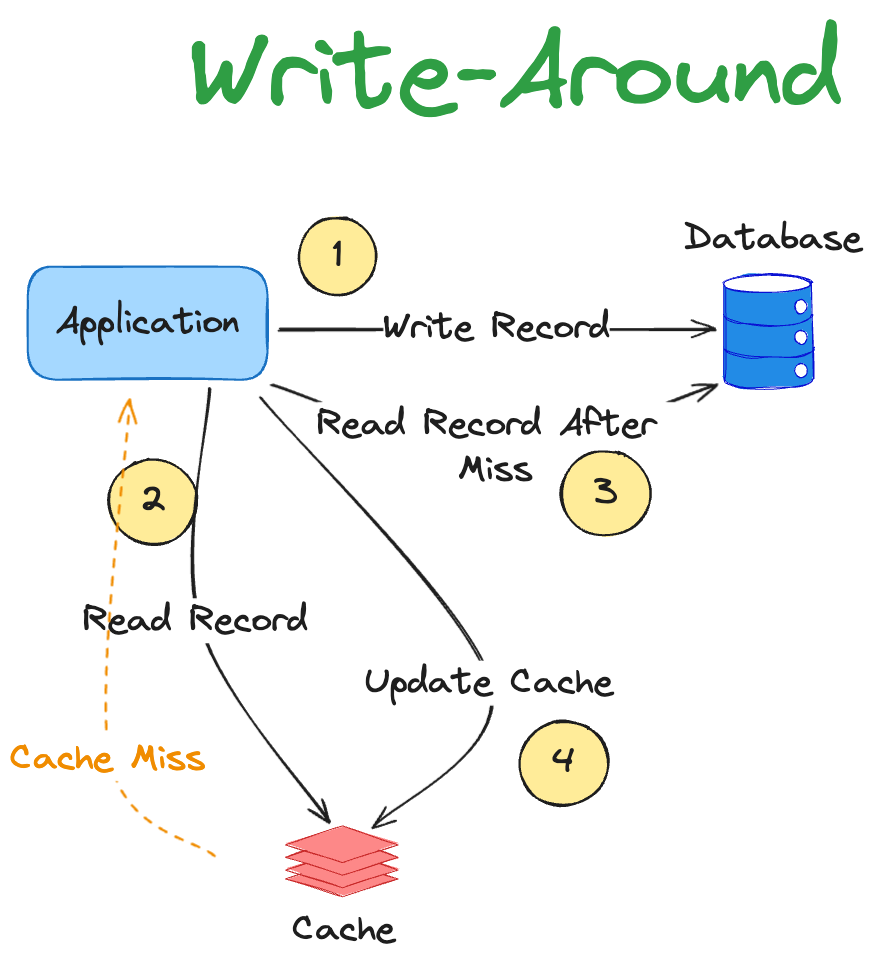 A write-around cache is a caching strategy where write operations are written directly to the primary database or permanent storage, completely bypassing the cache. The cache is only updated later when the newly written data is subsequently read.
Instead of writing new data to the cache, the application writes it directly to the primary database, completely bypassing the cache layer.
The Verdict: This strategy prevents your high-speed memory from being clogged up with data that is written once but rarely read again—a problem known as “cache pollution.” The downside is that if a user writes some data and then immediately tries to view it, it will trigger a cache miss and force a slower database read.
Finding the Right Balance
There is no single “correct” way to cache data. The best architecture usually involves mixing and matching these patterns based on the specific needs of your system. For example, you might use Write-Around combined with Cache-Aside for user profiles that are rarely updated, while employing a Write-Behind strategy to handle massive streams of incoming application logs.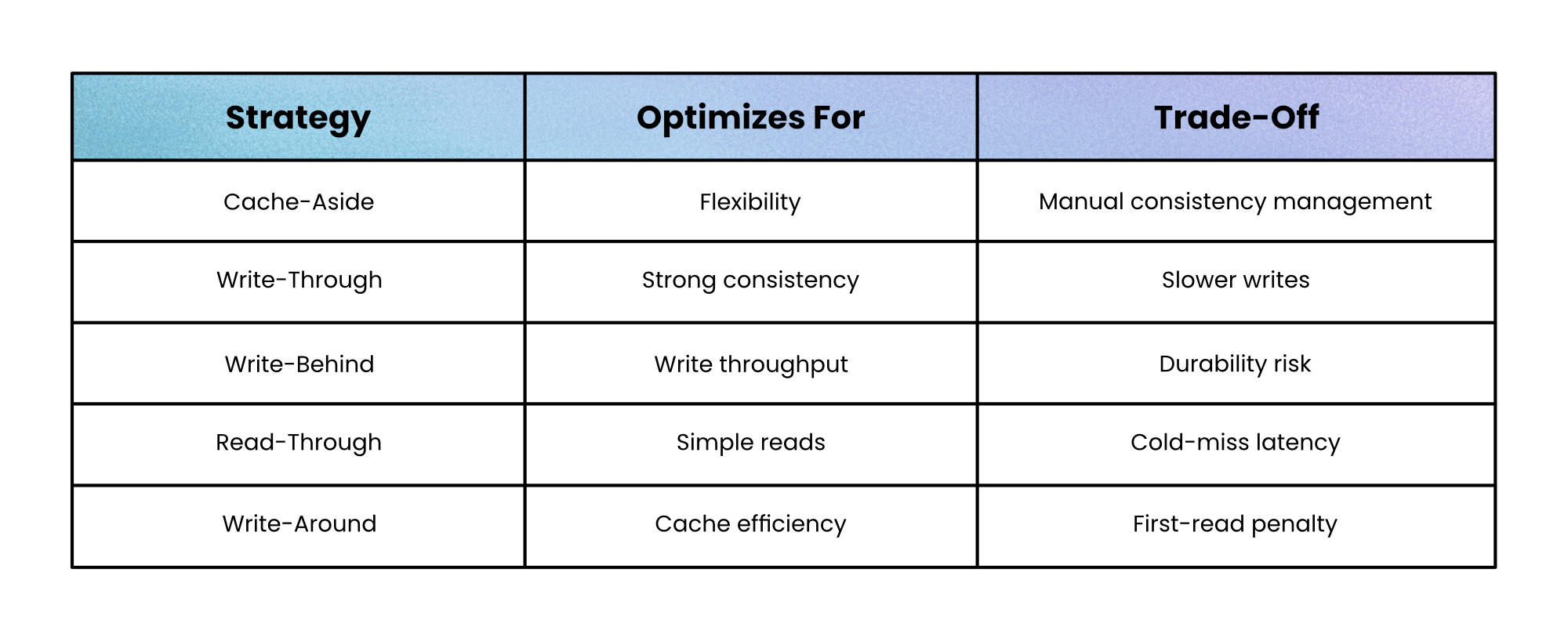
By understanding the strengths and trade-offs of each approach, you can design a system that is both incredibly fast and highly reliable.
This Substack is reader-supported. To receive new posts and support my work, consider becoming a free or paid subscriber.
Thanks for reading! This post is public so feel free to share it.