The best code you'll ever ship might not be written by a human. That's a good thing.
By Nate
Published: 2026-05-08
URL: https://natesnewsletter.substack.com/p/ai-code-trust-verification-shift
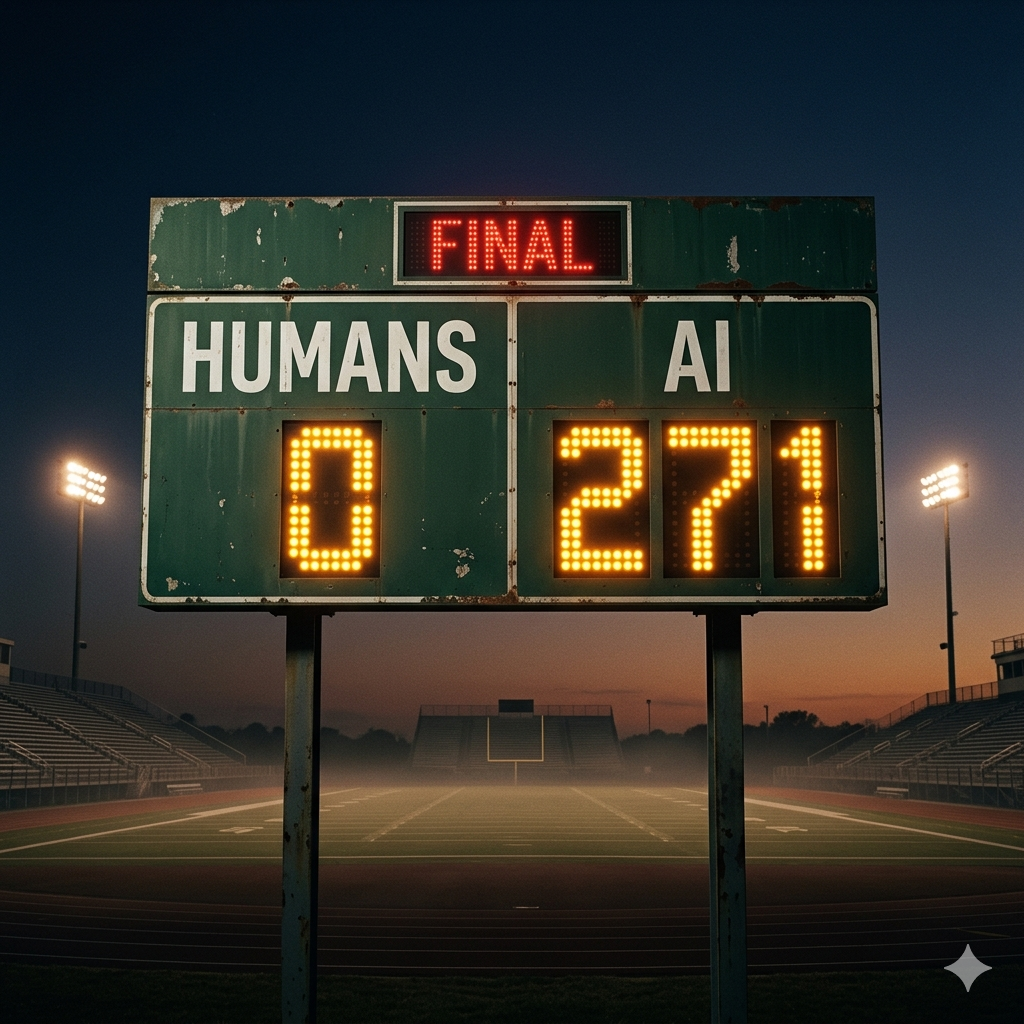
Mozilla’s Mythos experiment reads, at first, like a cybersecurity story. Anthropic built Mythos for vulnerability research. Mozilla pointed it at Firefox. The previous AI scan, run with a general-purpose model, surfaced 22 security-sensitive bugs. One release cycle later, with the purpose-built model, the number was 271. The Firefox security team — a group that has spent two decades being skeptical about new tools — published the result with the kind of careful enthusiasm that means something has actually changed.
The 271 is striking. The story underneath it is bigger, and it is not really about cybersecurity at all. Software has always rested on a quiet assumption that human-written code is the trust anchor and machines are there to check it. Mythos is the first serious sign that the assumption is about to flip. Serious software in the next era may be generated, attacked, repaired, and verified by machines, while humans hold a different role entirely: defining what the system is allowed to mean.
If that flip is real, the standard of trust rises faster than most teams are ready for. Hand-written code without adversarial machine review starts to look incomplete. Codebases that were merely messy start to look structurally unsafe, because the tools that could make them safer cannot operate on a system nobody can read. There is a window to get ahead of this — short, uneven, and closing.
Here’s what’s inside:
- The inversion of authorship. Humans wrote, machines checked. Mythos starts to flip that. What it means when generated code becomes the more trusted version, not the less.
- When trust becomes scarce. Code is about to get cheap to produce and expensive to trust. The teams that win the next year are the ones that build for that gap on purpose.
- Comprehensibility as a security property. Why the next four to five months are a refactor window — and why teams that wait will discover their codebases are too tangled for the new tools to help.
- Where the timing lands. What this means if you are an individual contributor versus a team lead versus a CTO — and why the budget conversation is already late at the top of the org.
- Audit your readiness now. Two prompts that tell you whether your codebase is legible enough for the next generation of adversarial review tools, and whether your evals for AI-generated code are catching the right things.
Subscribers get all posts like these!
LINK: Grab the prompts
The two prompts in this kit do different jobs. The first is a Codebase Verification Readiness Audit. It interviews you about your system’s structure, test coverage, documentation, dependencies, and tribal knowledge risk, then produces a readiness score across six dimensions, a ranked list of structural blockers, a prioritized refactor plan for the next quarter, and a risk summary written for leadership. The output tells you whether your codebase is legible enough for Mythos-class adversarial review tools to actually help you, or whether your technical debt has quietly become security debt that blocks you from benefiting. The second is an Eval Quality Diagnostic. It looks at how you currently test AI-generated code and diagnoses the ratio between functional tests (does it work?) and code-quality tests (can the next system in the loop actually read and defend it?). Most teams are running roughly 80/20 functional-to-quality. The prompt finds your actual ratio, shows you what’s slipping through, and generates the specific code-quality evals you’re missing for your language and stack. Both prompts work in any thinking-capable model. Neither requires preparation. They ask you questions first, then deliver the artifact.
The inversion of authorship
The deeper implication is about authorship. For decades, the software industry has treated human-written code as the baseline of trust. We know humans make mistakes, so we surround their work with linters, tests, code review, fuzzers, static analyzers, type systems, memory-safe languages, sandboxes, incident response plans, and bug bounties. But underneath all of that tooling sits an assumption so basic that we rarely name it: serious software is something humans write, and machines help check. Mythos points toward a possible inversion. It suggests a future in which serious software is something machines write, attack, repair, and verify, while humans define the meaning, constraints, architecture, and acceptable failure modes.
That future is not here today. It is important to say this plainly because the overclaim is tempting and wrong. Current AI-generated code is often sloppy. It can invent APIs, miss edge cases, produce insecure defaults, misunderstand the intent of the system, and create the sort of plausible implementation that passes a shallow test while hiding a serious design error. A good human engineer remains vastly better than a model at understanding organizational context, product tradeoffs, user intent, long-term maintainability, and the strange unstated constraints that make software real. Today, if you are building security-critical infrastructure, you do not replace your senior engineers with a model and assume the result is safer.
How AI finds code vulnerabilities at scale
But “not true today” is different from “not directionally important.” Mythos matters because it shows that models are beginning to enter the loop that used to make human authorship defensible. The reason we trusted human code was never that humans were perfect. It was that the only way to produce and understand software at the required level of abstraction was to use human judgment. The human engineer wrote the implementation, imagined the edge cases, reasoned about the invariants, reviewed the diff, and carried the system in their head. Tools could assist, but the core act of implementation was a human craft. If models become better than humans at exhaustively searching the consequences of code, human authorship stops being the obvious trust anchor. It starts becoming one more source of unverified risk.
The more provocative reading of Mozilla’s “the defects are finite” thesis starts here. The important claim is not only that AI can find a backlog of vulnerabilities in a mature codebase. The important claim is that vulnerability discovery may become an industrial process rather than an artisanal one. A specialized model can read code, form hypotheses, use tools, generate test cases, reproduce crashes, inspect execution paths, and produce findings at a scale that no human security team can match. If that pattern holds, then the old relationship between writing and checking changes. The person who writes the code may become less important than the system that can enumerate what the code actually does.
A familiar transition
Software has gone through versions of this transition before. There was a time when writing directly against machine constraints was the programmer’s job. Then assemblers, compilers, managed runtimes, garbage collectors, type systems, package managers, cloud platforms, and deployment systems each took pieces of execution away from human hands. We did not conclude that humans were no longer involved in computing. We concluded that the human role had moved. We stopped asking most programmers to hand-place bytes in memory, not because nobody could do it, but because the lower-level craft became too error-prone, too slow, and too hard to validate at scale. The responsible human role moved upward into algorithm, architecture, data model, interface, intent, and system behavior.
Security accelerated that movement. We stopped trusting ordinary developers to casually write cryptography. We stopped trusting manual memory management for large classes of software when memory-safe alternatives became practical. We stopped trusting hand-configured production systems without infrastructure as code, automated rollbacks, observability, and policy controls. We stopped trusting individual operators to remember every step in a release process. A line I picked up at Amazon captures the pattern: good intent does not scale, only mechanisms do. Each of these transitions was the industry agreeing, in retrospect, that human intent was not a substitute for a mechanism that could be checked. The history of software engineering is full of domains where human skill did not disappear, but human execution lost its presumption of safety.
Code itself may be next. Not all code, not immediately, and not in the theatrical sense that programmers vanish. But the raw act of hand-authoring implementation becomes less trusted in precisely the places where correctness matters most. A human may still decide what the system should mean. A human may still design the boundary between components, choose which invariants matter, decide how much latency is acceptable, and define what failure is allowed to look like. But the exact implementation of those constraints may increasingly be generated, attacked, repaired, regenerated, and checked by machine systems operating in a loop.
Why code meaning matters more than implementation
That distinction between meaning and implementation is the deeper shift. Code has always been both at once. It is a machine-executable artifact, but it is also a human language for describing intent. We use code to tell the machine what to do, but we also use it to tell other humans what we meant. The function name, the module boundary, the type signature, the test, the comment, the error message, the folder structure, and the abstraction are all part of a shared semantic environment. They carry meaning. They explain what the system is supposed to be.
The problem is that executable meaning is unforgiving. A human can know what they intended and still produce a buffer overflow, race condition, injection vulnerability, authorization bypass, unsafe deserialization path, cryptographic misuse, or confused-deputy problem. The code can be locally reasonable and globally dangerous. It can pass review because the reviewer sees the intended meaning rather than the full consequence space. It can pass tests because the tests encode the cases humans remembered to imagine. It can sit in production for years because nobody has yet forced the system into the one state where its hidden assumption collapses.
Vulnerability researchers live in that gap between intended meaning and actual behavior. They ask what the code permits, not what the author meant. They look for the input the designer did not imagine, the state transition that should not be possible, the parser inconsistency, the missing permission check, the untrusted boundary disguised as an internal call, the cleanup path that frees something twice, the asynchronous callback that observes the world after an assumption expired. Security work is, in this sense, a form of adversarial interpretation. It reads code against its own declared meaning.
How AI adversarial testing changes security
Mythos is interesting because it automates pieces of that adversarial interpretation. It does not merely lint for known patterns. It appears to participate in the research loop: read, hypothesize, test, reproduce, refine, and explain. Google’s Project Naptime and Big Sleep have been moving in a similar direction, framing the model not as a scanner but as an agent that can use the tools of a human vulnerability researcher. OpenAI’s Codex Security points toward the product version of the same pattern: systems that inspect a codebase, reason about threats, validate issues in a sandbox, and propose remediations. DARPA’s AI Cyber Challenge explored a public-sector version of the loop: autonomous systems finding and patching vulnerabilities across large codebases. The details differ, but the direction is consistent. The model is not just writing code. It is learning to interrogate code.
Once models can interrogate code better than humans can, human-written implementation becomes a strange object. It is not automatically bad. In many cases it will be elegant, concise, and deeply informed by taste. But in security-sensitive contexts, the question becomes less “did a good engineer write this?” and more “has this implementation survived adversarial machine-scale scrutiny?” A hand-written patch that has not been exhaustively attacked may be less trustworthy than a generated patch that has been synthesized from a formal constraint, tested across thousands of cases, fuzzed, symbolically explored where possible, and checked against known vulnerability classes.
Architects of meaning
“Humans as architects of meaning” needs to mean something specific. It should not mean that humans write vague prompts and hope the machine handles the rest. That is just negligence in a futuristic costume. It means humans become responsible for specifying the structure within which implementation can be produced and verified. They define the durable concepts, the invariants, the threat model, the authority model, the data lifecycle, the user promises, the recovery behavior, and the social purpose of the system. They decide what must never happen. They decide which tradeoffs are acceptable. They decide where ambiguity is allowed and where the system must be narrow, deterministic, and boring.
In that world, the most important programming artifacts start to look less like today’s implementation files and more like a mixture of specifications, tests, policies, schemas, protocols, proofs, examples, and executable constraints. The human’s job is to make meaning explicit enough that a machine can generate implementations and another machine can attack them. That is a higher bar than writing code in the current style. It requires more clarity, not less. A sloppy prompt is not architecture. A paragraph of product intent is not a security model. If humans move upward, they do not escape rigor. They inherit a different kind of rigor.
It’s closer to my own daily practice than I would have guessed two years ago. When someone sends me a piece of code now, I almost never start by reading it line by line. I drop it into Codex or Claude Code and ask what’s actually in the box — what the architecture is, what the abstractions are doing, where the seams are. The line-by-line reading happens later, if at all, and only in the places the tool has already flagged as interesting. The shift was not a decision. It was the slow recognition that the tool had become better at certain readings of the code than I was, and that the responsible thing was to let it do those readings while I held onto the parts I was still better at.
When trust becomes scarce
Most versions of the “AI will code for us” argument become unserious right around this point. They imagine coding as typing, so they imagine the future as fewer people typing. But typing was never the hard part. The hard part was knowing what should exist, what should not exist, and how to preserve that distinction as the system changes. The future suggested by Mythos is not one where software becomes effortless. It is one where implementation becomes abundant and trust becomes scarce. When code is cheap to generate, the expensive thing is confidence.
The strange consequence of this is that the same generated code we now treat with suspicion may, before long, be the version we trust most. The models will not have become magically reliable. What changes is that generated code can be paired with the kind of adversarial evidence that hand-written code rarely accumulates. A patch with a thousand attack runs behind it is not less trustworthy than a patch with a senior engineer’s initials on it. In the limit, it may be more so.
That confidence will have to come from layered verification. Some of it will be familiar: unit tests, integration tests, fuzzing, static analysis, sandboxing, code review, staged rollout, observability, and incident response. Some of it will become more formal: property-based tests, model checking, specification languages, proof-carrying components, capability systems, memory-safe rewrites, and narrow interfaces that make whole classes of mistakes unrepresentable. Some of it will be adversarial: dedicated models trying to break the output of other models, continuously, before attackers do. The software supply chain starts to include not just source code and dependencies, but evidence packets: what was generated, from what specification, under what constraints, attacked by which systems, patched how many times, and with what residual risks.
“Perfect defensive software” is both the wrong phrase and a useful provocation. Absolute perfection is not a serious near-term standard for living software. Systems change. Requirements change. Dependencies change. Hardware and compilers and protocols change. Human organizations misuse tools. Attackers compose weaknesses in ways that no local proof anticipated. But there is a meaningful weaker target: finite defensive software. A finite system is one whose relevant state space is constrained enough, whose architecture is legible enough, and whose verification loop is strong enough that defects can be found and burned down faster than they accumulate or get exploited.
That is the powerful part of Mozilla’s framing. “The defects are finite” is not a claim about magic. It is a claim about comprehensibility. If a codebase is modular, well-tested, and understandable, then AI may make its hidden flaws discoverable at a new rate. But if a codebase becomes a pile of generated implementation that nobody can reason about, the defect space expands as fast as the tools used to search it. The future is not automatically safer. AI can make software more secure only if it is embedded in a discipline that keeps software legible.
The fork in the road
The fork is here. One path leads to machine-verified implementation under human-defined meaning. The other leads to infinite sludge: enormous volumes of plausible code generated from vague intent, patched by other vague code, glued together with dependencies nobody understands, and shipped under pressure because the demo works. Both futures use AI. Both futures produce more code faster. Only one deserves trust.
Generated code will not be trusted because it came from a model. It will be trusted only if it came from a verified process. But once that process exists, the hand-written implementation becomes the odd case. It becomes the artisanal artifact that needs special justification.
What programming looks like after AI verification
This would not eliminate programmers. It would change what programming is. A programmer would be judged less by the ability to produce a clever implementation and more by the ability to define a system that can be safely implemented. The valuable engineer would know how to turn product intent into crisp invariants, how to decompose a system into verifiable boundaries, how to design APIs that minimize authority leakage, how to create harnesses that expose bad behavior, how to read machine-generated evidence, and how to decide when the model has solved the wrong problem. The best engineers would become architects of meaning in the most literal sense: people who shape the conceptual world in which implementation is allowed to occur.
In many ways it is closer to what senior engineering has always been. The more experienced an engineer becomes, the less their value comes from typing all the code themselves. They define abstractions. They notice hidden coupling. They understand why a seemingly small product choice creates a security problem three layers down. They know when a system is becoming illegible. They choose boring technology in the places where novelty would create risk. They draw boundaries around ambiguity. They preserve the meaning of the system under change. AI does not make that work disappear. It makes it more central.
The change is that junior and mid-level work gets reorganized around this new stack. Today, many engineers learn by implementing. They build features, make mistakes, debug them, receive review, and gradually internalize the relationship between intent and behavior. If implementation becomes increasingly automated, the industry has to find a new training path. You cannot become an architect of meaning without ever wrestling with implementation. You cannot define good invariants if you have never seen how they fail. The risk is that we create a generation of engineers who can prompt, assemble, and approve, but cannot reason. That would be catastrophic, because the human role moves upward only if humans remain capable of understanding what is beneath them.
Why readable code is now a security requirement
Comprehensibility remains non-negotiable even in an AI-generated future. Comprehensibility is not nostalgia. It is a security property. A system that humans cannot understand cannot be governed by humans. It can be tested, perhaps, and attacked by models, perhaps, but the organization will not know what promises it is actually making. The meaning layer collapses if the implementation layer becomes opaque. The goal is not to replace readable code with inscrutable machine output. The goal is to make implementation more mechanically reliable while preserving the semantic structure humans need to reason about the system.
There is a window here, and it is shorter than most teams realize. Roughly four to five months from now, models capable of the kind of adversarial review Mythos is doing today will be more widely available — through other vendors, through eventual open-source equivalents, through whatever comes next. The codebases that will benefit from that capability are the codebases that are legible enough for it to operate on. Refactoring a tangled system into a comprehensible one takes time, and that time has to come before the new tools arrive, not after. Teams that spend the next quarter making their systems readable will be the ones whose systems get safer when the capability lands. Teams that wait will discover that the tool cannot do much for them.
That means the future of software looks less like “natural language in, app out” and more like a richer engineering environment where natural language, diagrams, type systems, tests, policy files, examples, traces, proofs, and generated code all sit inside the same loop. Humans will describe intent at multiple levels of precision. Models will propose implementations. Other models will attack them. Tooling will produce evidence. Humans will inspect the evidence, revise the meaning, and decide whether the system is acceptable. The artifact that matters will not be a single codebase, but a living bundle of intent, implementation, and verification.
Where this lands first
Security-sensitive systems will likely get there first because the pain is obvious. Browsers, kernels, crypto libraries, databases, cloud control planes, identity systems, payment infrastructure, medical devices, autonomous systems, and critical open-source dependencies all have the same basic problem: small implementation mistakes can create disproportionate harm. These domains already use more process than ordinary application development. They already have fuzzers, formal methods in select areas, red teams, staged rollouts, and disclosure programs. Mythos-like systems slot naturally into that world because they amplify an existing need.
Consumer and enterprise software will follow more unevenly. A SaaS app with weak security culture may use AI to ship more features and quietly expand its attack surface. A serious platform company may use similar models to generate migration patches, enforce authorization invariants, eliminate entire bug classes, and continuously attack pre-release code. The divergence could be dramatic. AI will not make all software safer. It will make disciplined software organizations more powerful and undisciplined ones more dangerous.
Open source complicates the picture further. Many critical projects are maintained by small teams or unpaid volunteers. If AI vulnerability discovery becomes cheap, those maintainers may face a flood of reports they cannot process. A model that finds a real bug still creates work: reproduce it, assess severity, coordinate disclosure, design the fix, avoid regressions, communicate with downstream users, and ship the patch. Discovery without remediation capacity can become a denial-of-service attack on maintainers. The future of defensive software therefore depends not only on better models but on better institutions: funding, triage infrastructure, maintainer support, disclosure norms, and automated patch validation.
The timing question matters differently depending on where you sit. If you are an individual contributor, the window to start adjusting how you think about your own value as an engineer is narrower than it looks. The skills that move upward in the new stack — specification, threat modeling, evidence reading — are not skills you pick up in a sprint. If you lead a team, the planning needs to start now, because the pipeline architecture you build this quarter is the pipeline you will be swapping a Mythos-equivalent into next quarter. If you are a CTO, the budget conversation is already late. The systems that will absorb this shift cleanly are the ones whose owners are designing for the shift before it arrives, not after.
There is also an attacker-side reality that cannot be waved away. If defenders get better vulnerability researchers, attackers get them too. Mythos-like capability lowers the cost of finding bugs, chaining exploits, and adapting known techniques to new targets. That does not mean every discovered exploit turns into a real-world attack. Attackers still operate under incentives, target selection, operational security, infrastructure, access, monetization, and risk. But the capability floor rises. The old comfort that many bugs remain undiscovered because expert attention is scarce becomes less available. If both sides can search harder, the advantage goes to the side that can convert discovery into action faster. For defenders, action means patching and deployment. For attackers, action means exploitation. The race is not model versus model. It is organizational throughput versus organizational throughput.
That framing makes “zero-days are numbered” both more plausible and less comforting. Yes, the stock of unknown vulnerabilities in a given codebase may become more discoverable. But discovery is not the same as safety. A zero-day stops being a zero-day only when the vendor knows about it, understands it, fixes it, ships the fix, and users deploy it. The world is full of systems that remain vulnerable long after fixes exist. Edge devices, enterprise appliances, abandoned dependencies, long-lived Android forks, industrial systems, and internal corporate software do not magically heal because a model found the bug. In many places, the last mile of patching is still the real security boundary.
The story doesn’t end in utopia. The plausible future is messier. The best software starts to become radically more secure because AI turns latent vulnerability discovery into a continuous process. The worst software becomes more exposed because the same capability reveals defects that nobody has the capacity or incentive to fix. Human-written implementation loses status in high-assurance environments, but human architectural judgment becomes more important. Code volume explodes, but trusted code may become more constrained. The center of engineering moves from authorship to assurance.
Expression, execution, and evidence
The philosophical shift is substantial. Programming has long been one of the few creative acts where expression and execution are the same thing. A novelist writes words that a reader interprets. A designer creates plans that builders realize. A strategist defines intent that an organization executes. But a programmer writes text that becomes behavior directly. That fusion gave programming its power and its romance. The same artifact expressed the idea and executed the idea. AI threatens to split that fusion apart. Humans may remain responsible for the idea, but the executable realization increasingly belongs to a machine process.
That split will feel like loss to many programmers, and not without reason. There is real craft in implementation. There is beauty in a simple function that solves a hard problem cleanly. There is judgment in knowing which abstraction is too clever, which dependency is not worth it, which optimization will make the system brittle, and which awkward bit of code is awkward because the domain is awkward. We should not pretend that implementation is clerical. The danger of many AI coding narratives is that they trivialize the thing they claim to automate.
But we also should not confuse craft with trust. A hand-built bridge can be beautiful, but we still want engineering standards, materials testing, load calculations, inspections, and maintenance. A human-written crypto implementation can be elegant, but elegance is not a proof. A memory management routine can be clever, but cleverness is often the enemy of security. The fact that implementation contains craft does not mean human implementation should remain the default trusted substrate forever. The more consequential the system, the more we should care about evidence over authorship.
The most interesting way to read Mythos is as something other than a better bug hunter. It is a glimpse of an evidence-based software future. The model says, in effect: I can find the places where your code does not mean what you think it means. That is unsettling because it turns the human engineer from the unquestioned author into a participant in a larger verification loop. But it is also promising because software desperately needs that loop. We have built civilization on code that is too complex for any person to fully inspect, too interconnected for any team to fully model, and too important to keep trusting on the basis of ordinary review.
How software meaning becomes a discipline
The likely endpoint is not no-code. It is not programmers replaced by product managers with prompts. It is not autonomous agents spawning infinite applications while humans watch dashboards. The more serious endpoint is a new discipline of software meaning. Humans define the world the software is supposed to inhabit. Machines generate and test candidate realizations of that world. Other machines attack them. Formal tools prove narrow properties where proof is practical. Humans read the results, refine the intent, and decide whether the system deserves to exist in production. The code itself becomes less like a handwritten manuscript and more like a compiled artifact of a larger semantic process.
That may sound abstract, but the practical consequences are concrete. Engineering teams will need to write better specifications, because vague intent produces unsafe implementation. Test harnesses become essential, not optional, because models need executable feedback to improve. Authorization boundaries and data boundaries have to be explicit, not assumed, because hidden assumptions are exactly where security fails. Smaller modules beat monoliths for a new reason: large illegible systems are harder for both humans and machines to exhaust. Generated code stays untrusted until it passes adversarial review. Human readability stays non-negotiable, because governance depends on understanding. The metric changes too. The question stops being how much code was written and becomes how much confidence was earned.
One concrete change is worth naming because most teams are getting it wrong right now. The evals you write for an agentic pipeline should not be eighty percent functional tests with a thin layer of style checks on top. At least half should be about code quality itself — readability, hygiene, dependency discipline, expression-level conventions, the patterns your language has reason to distrust. Functional correctness tells you the code does what you asked. Quality tells you whether the next system in the loop, human or machine, can actually read the code well enough to defend it. Without the second half, the first half is brittle.
It also redefines what a “good codebase” means. In the old world, a good codebase was readable, maintainable, tested, and aligned with its product requirements. In the new world, those qualities still matter, but for a sharper reason: they make the system attackable by friendly machines. A clean architecture is not just easier for a human team to maintain. It is easier for an AI researcher to reason about, easier for a verifier to constrain, easier for a patch agent to modify safely, and easier for a reviewer to audit. Technical debt becomes security debt in a more direct way. Messy code is not merely unpleasant. It may be structurally resistant to the very tools that could make it safer.
The burden shifts
The final irony is that AI makes human taste more important, not less. If models can produce unlimited implementation, then the scarce resource becomes judgment about which implementations are worth having. Taste in this context is not aesthetic preference. It is the ability to recognize when a system’s concepts are clean, when a boundary is real, when an abstraction matches the domain, when a requirement is underspecified, when a patch fixes the symptom but preserves the hazard, and when the simplest design is the most secure because there is less room for hidden behavior. The human architect of meaning needs taste because meaning can be wrong even when code is correct.
So yes, Mythos suggests a future where human-written code is vulnerable in a new sense. Humans will not have become worse engineers. Models will not have become infallible. The standard of trust will simply have risen around both of them. Once machine-scale adversarial review is available, unreviewed human implementation looks incomplete. Once generated code can be paired with exhaustive tests, proofs, and adversarial evidence, hand-written code without that evidence looks like an assertion of competence rather than a demonstrated fact. The burden shifts. The question is no longer “who wrote this?” The question is “what process forced this code to become trustworthy?”
That is the future worth writing about. It is not the end of programming. It is the end of trusted human code as the default assumption. Humans will still be responsible for what software means. They may become more responsible than ever, because machines cannot decide what promises a system should make to the world. But the execution of those promises may increasingly belong to a loop that humans supervise rather than personally author. The programmer becomes less like a scribe of behavior and more like a constitutional designer for machines: defining powers, limits, rights, obligations, and tests of legitimacy.
Mozilla’s experiment is early. The tools are imperfect. The claims will need scrutiny. The economics and institutions are unresolved. But the direction is visible. AI is beginning to read code not as a helper, but as an adversary. Once machines can find the gap between what code says and what code does, the old romance of human authorship starts to look insufficient. The future of software will not be built on the belief that humans write safe code. It will be built on the ability of humans to define meaningful systems, and the ability of machines to prove that the implementation has not betrayed them.
I make this Substack thanks to readers like you! Learn about all my Substack tiers here