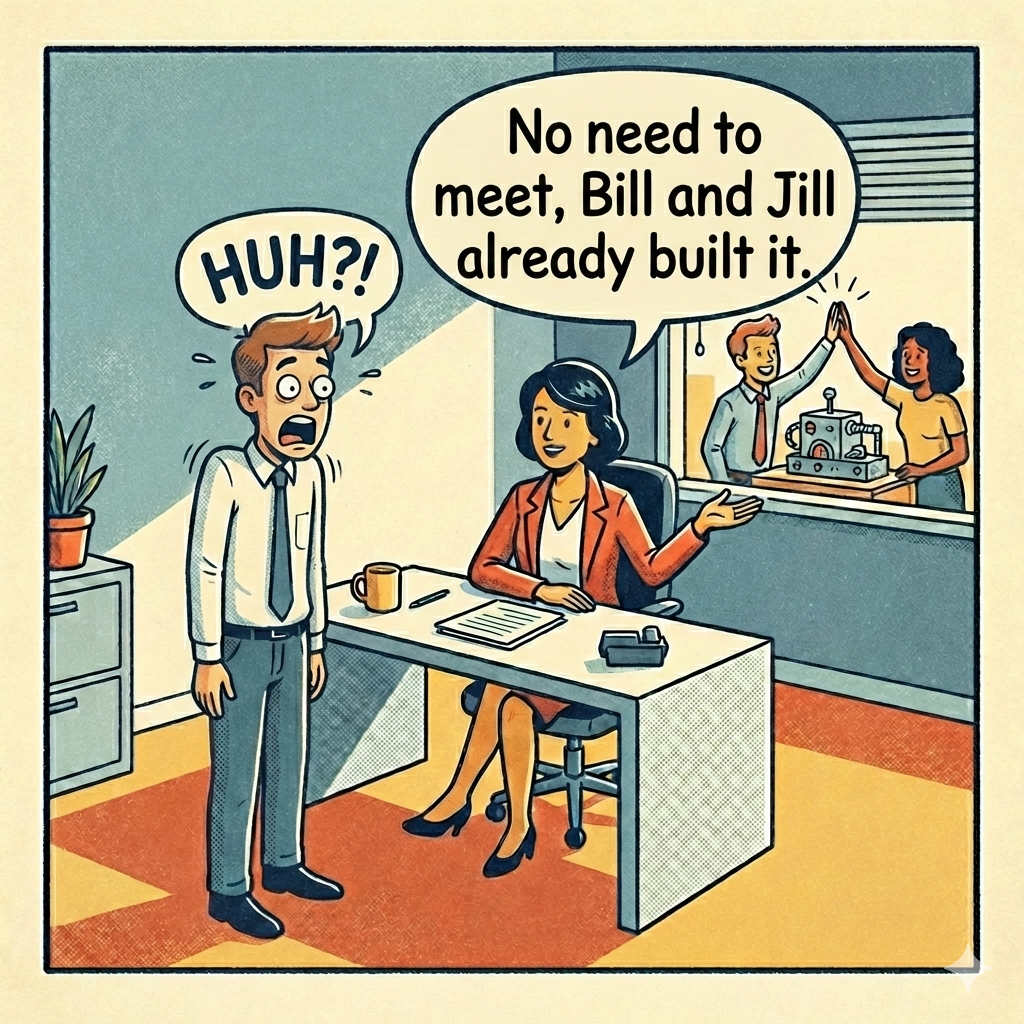
Simply executing faster using AI is not enough to call yourself truly "AI native"--it requires a fundamental shift in how we approach work itself.
By Nate
Published: 2026-01-15
URL: https://natesnewsletter.substack.com/p/8-habits-worth-unlearning-in-the
The one constant right now is chaos. I hear it over and over again from people trying to make sense of AI—the rate of change is so disorienting that it’s become difficult to tell what’s up and what’s down anymore. Tools that seemed essential six months ago are already being replaced. Strategies that worked last quarter feel obsolete. Everyone is busy, but nobody is confident they’re busy doing the right things.
I want to offer a simplifier. Not another framework, but an underlying explanation for why everything feels so destabilized.
Every organization, and every individual’s work habits, are built around an implicit answer to one question: what’s expensive here?
For most of our careers, the answer was execution. Building things required scarce hours from scarce people with scarce skills. So we evolved elaborate rituals to protect that capacity—planning processes, approval gates, PRDs, alignment meetings. This made sense when the meeting to discuss a feature took less time than building it—you hold the meeting. When writing a spec cost less than writing the code, you wrote the spec first. When rework was expensive, you planned carefully to avoid it.
Even Agile, which was supposed to make us more nimble, still assumed that engineering was expensive. It was a more intelligent way to manage expensive execution over time—shorter cycles, faster feedback, less wasted work—but the underlying assumption remained that the doing was costly and needed to be protected.
AI inverted this completely.
Cursor went from one million to five hundred million in annual revenue faster than any SaaS company in history. Michael Truell, their CEO, talks about “taste” becoming more valuable than technical ability—the capacity to know what’s worth making rather than just the capacity to make it. They’re not building a tool that helps engineers code faster; they’re building a tool that makes the act of coding less important than the judgment about what to build.
Now the meeting takes longer than building the prototype. The PRD takes longer than shipping a working version. The alignment process takes longer than trying three approaches and seeing which one users actually want.
Here’s what’s inside:
- What’s actually scarce now. Clarity, ambition, distribution, relationships—the four things that got expensive when execution got cheap. Most people are still protecting the wrong resource.
- The habits that don’t make sense anymore. Permission loops, polish as hiding, meetings as accountability theater—and the rest of the old rituals we’re still running.
- How to start without getting fired. Small, reversible experiments you can run this week to match your pace to the new economics.
The bottleneck didn’t disappear. It moved.
Subscribers get all posts like these!
Grab the prompts
Here’s the thing about working faster: speed without direction just gets you lost quicker. The distance between "this makes sense" and "I'm actually doing it" is where most good ideas go to collect dust. These prompts are designed to help close that gap.
This guide starts with a diagnostic that won’t let you lie to yourself—you have to name what’s actually stuck, not what sounds impressive to be stuck on. Then it routes you to a lane based on the answer, and each lane is built around the failure mode I see most often: circling on clarity when a 48-hour prototype would answer the question, waiting on permission that nobody would actually withhold, or adding features when the real problem is that nobody knows you exist.
Every prompt ends with a specific experiment, a kill signal so you know when to stop, and the actual message you send when it’s done. Not “reflect on your learnings.” Ship something, tell someone, see what happens.
Where the bottleneck went
There’s an old manufacturing principle that applies here. When you eliminate a bottleneck in a system, the bottleneck doesn’t vanish—it relocates downstream. The constraint shows up somewhere else in the process. Resistance is never destroyed, just moved to a different part of the system.
For decades, execution was the constraint in knowledge work. Now execution is cheap, and the constraint has shifted to four other places.
Clarity. Do you actually know what’s worth building? You can build faster than you can think now, shipping something before you’ve fully understood whether it should exist. PRDs were always partly a substitute for that clarity—a forcing function when the doing was expensive. That forcing function is gone. You have to understand your customers deeply enough to know what they actually need, not just what they say they want. You have to distinguish between problems worth solving and problems that are merely annoying. None of this got easier because building got cheaper. If anything, it got harder.
Ambition. When shipping required a quarter of engineering time, small bets made sense because you only got three or four shots per year. But what if you can ship every week? Suddenly timidity becomes the risk. The danger isn’t building the wrong thing when you have fifty swings available—the danger is playing small when the constraints have lifted. We’re going to see a lot of products that are horseless carriages, incrementally better versions of what existed before, missing the transformative opportunity because nobody had the nerve to imagine something genuinely different.
Distribution. When everyone can build, product stops being the moat. Cognition, the company behind the AI coding agent Devin, didn’t try to build their own distribution—they partnered with Infosys, deploying through 320,000 people and decades of enterprise relationships. The technology is easier now; reaching customers is what’s difficult. The history of technology is littered with superior products that lost to inferior ones with better distribution. Now that building is cheap, this imbalance will become more pronounced.
Relationships. When everything shifts this fast, the durable thing is trust. You can’t vibe-code a reputation. Being known as someone reliable to work with becomes a moat that compounds over time—and it’s the one thing that can’t be disrupted by someone with better prompting skills. You can build a prototype in an afternoon, but you can’t build trust in an afternoon.
What compression feels like
I want to describe what this shift actually feels like, because the concepts are easier than the lived experience.
I’ve started calling it compression. Time compression means that timelines which used to feel normal now feel absurdly padded—when ten days is possible, five months feels like a story we’re telling ourselves. Process compression means not building the thing because the tool already exists, or killing a project mid-planning because a release made it redundant. Decision compression means just stopping something that isn’t working instead of building a system to manage it.
The feeling is not efficiency. It’s closer to vertigo.
You wake up and check what shipped overnight, because a release from Anthropic or OpenAI or a dozen other companies might have just made something you planned obsolete. You start a planning conversation and catch yourself wondering whether the planning will take longer than building the thing directly. You’re halfway through scoping a feature and a tool drops that does eighty percent of what you were going to build, and you have to decide in the moment whether to pivot or keep going.
I’ve killed projects I’d been planning for days because a release made them unnecessary. I’ve shut things off entirely—contact forms, integrations, processes—rather than building systems to manage them, because the management would cost more than the value. I’ve caught myself drafting a message asking for permission and realized I could just do the thing in the time it would take to get a response.
Some days this feels exhilarating. You move faster than you thought possible. Ideas go from concept to reality in hours instead of weeks. The feedback loop between thinking and doing compresses until they’re almost the same activity.
Other days it feels destabilizing. The plan you made yesterday is already outdated. The skill you spent years developing is now a commodity. The process that used to make you feel professional now feels like it’s slowing you down. You’re not sure whether you’re being smart or just impatient, whether you’re cutting fat or cutting muscle.
The old ways had their comforts. The plan was a way of de-risking and establishing control over an uncertain future. The meeting was a way to make sure everyone had a say in decisions that could take months to unfold. The polish felt like a chance to put your best foot forward when it took a quarter to ship something. What’s happening now doesn’t feel like control at all. It feels like exposure, like betting on your own judgment again and again, faster than you’re used to, without the usual safety nets.
But when I look at what the most effective teams are doing—shipping constantly, treating the prototype as the spec, iterating in public—they’re not doing it because it’s comfortable. They’re doing it because the alternative is falling behind.
The habits that don’t make sense anymore
Most of us are still running habits designed for the old economics. I want to walk through some of these in detail, not as prescriptions but as patterns worth examining in your own work.
The permission loop
You have an idea for how to solve a problem. You draft a message to your manager asking if you should pursue it. You wait for a response. Maybe you have a meeting to discuss it. By the time you get the green light, a week has passed—and you could have built a rough version in an afternoon.
I’ve watched people spend three days getting approval for something they could have built in four hours. And the approval process didn’t even reduce risk—a working prototype would have answered the question better than any meeting did.
Here’s the thing: permission distributes accountability. If you ask and it fails, the failure is shared with everyone who approved it. If you just do it and it fails, that’s on you. The permission loop feels responsible, but often it’s just risk transfer disguised as diligence.
When doing was expensive, checking first made sense. You didn’t want to waste a quarter of engineering time on the wrong thing. But the economics flipped. The email thread to get approval now takes longer than building a rough prototype. The Slack conversation to confirm direction takes longer than trying both directions and seeing which works.
Default to doing. If you can finish something in a day, don’t ask—build it and see what happens. Show people the result instead of asking whether you should create it. You’ll find that most of what you were asking permission for didn’t actually need permission; you’d just been trained to ask.
Polish as procrastination
I learned to polish at Amazon. You had one meeting with the executive, and the PRFAQ had to be good because that was your only shot. You went through multiple review cycles. You workshopped the framing. You anticipated objections and addressed them preemptively. Quality really mattered.
That instinct is killing people now.
I watch folks spend eighty percent of their time on the last twenty percent of quality. The formatting nobody notices. The transitions nobody reads. The deck that exists so someone can say “we documented this.” The marginal value of all that polish is often zero, but it feels like work, and it’s safer than shipping.
There’s an ego dimension that doesn’t get discussed. Unfinished work is vulnerable—it can be judged, and you can be found lacking. As long as you’re still polishing, you’re not done. If you’re not done, you can’t fail. Polish feels like diligence and care, but often it’s a sophisticated form of hiding.
Ship ugly. The rough version that exists beats the polished version that doesn’t. Notebook LM shipped rough and has been polishing ever since—that’s the pattern now. Iterate after you learn whether anyone cares, not before.
Meetings as default
An hour of six people’s time is six hours of work. That’s often enough to build a rough version and show it. But meetings still feel responsible, don’t they? They distribute accountability. If the meeting decided something and it was wrong, at least the meeting decided. Nobody gets blamed.
Here’s what I’ve noticed: meetings about what to build rarely resolve what to build. They surface opinions. They create action items. They generate follow-ups and sub-meetings. They almost never answer the question as cleanly as a prototype would, because a prototype is concrete and a meeting is abstract. People argue about abstractions in ways they don’t argue about working software.
Cursor’s founders spent their first year avoiding networking, speaking events, even hiring—just building. Their philosophy is that code gets your ideas in contact with reality. Not meetings. Not decks. Working software that people can actually use and react to.
Before scheduling a meeting, ask what would happen if you built a rough version and showed people instead. Let the prototype start the conversation rather than letting the conversation delay the prototype.
Structured waiting
So much of work in larger organizations is just waiting. Waiting for approval. Waiting for feedback. Waiting for the next meeting. Waiting for someone else to finish their part before you can start yours. We’ve outsourced our momentum to other people’s calendars, sitting idle while our requests work their way through someone else’s priority queue.
This used to be fine. Waiting an hour in 2020 was just waiting an hour.
Waiting an hour now is waiting a prototype.
That hour you spent blocked could have been an hour of building, testing, learning. The cost calculation changed completely, but the habits didn’t.
Make provisional decisions instead of waiting for official ones. “I went ahead with X—let me know if you’d rather Y.” Do the next thing while you wait for feedback on the first thing. Assume the answer is yes unless you hear otherwise. Most people are relieved someone made the call rather than leaving it hanging.
The planning-doing inversion
Measure twice, cut once. I had this drilled into me coming up in product. You don’t want to waste expensive engineering time on the wrong thing, so you plan carefully, gather requirements, write specs, get alignment.
I’ve watched people spend weeks—sometimes months—on plans that were obsolete before they started building. The plan becomes a hedge against the risk of building the wrong thing, and then the hedge itself costs more than the thing it’s hedging. Eight weeks of planning to save a hypothetical month of rework, except the plan turns out to be wrong anyway because plans rarely survive contact with reality.
Planning also feels productive in a way that’s dangerous. You’re making progress—you have documents, you have alignment, you have a roadmap. But you haven’t learned anything yet. You’ve just elaborated your assumptions in increasing detail. The learning only happens when you build something and see how people react.
Ask yourself honestly: could you cut your planning by ninety percent? I’m not being hyperbolic. If you haven’t built something in the last couple weeks, you’re probably over-planning. Let reality inform the plan instead of trying to predict reality with the plan.
The deck instead of the demo
The deck represents the thing. The demo is the thing.
That’s the whole difference. A deck describes what a feature might do; a prototype shows what it actually does. Hypothetical objections versus real ones. And people argue differently about something they can touch—the abstraction melts away when there’s working software in front of them.
I’ve killed projects I’d been scoping for days because a release made them redundant—something shipped that did eighty percent of what we were planning to build. You have to be willing to abandon the plan mid-flight when the ground moves.
Next time you’re about to make a deck, build a rough working version instead. Show the thing, not a picture of the thing.
Consensus before action
Organizations have been trying to fix this for decades. Amazon had two-pizza teams. Other companies had various autonomy frameworks. Everyone agreed that consensus-seeking was slow and often fake—people agree in the meeting and then undermine the decision later, or agree to something they don’t really believe because they’re tired of arguing.
But even those frameworks assumed you needed some consensus before major action. Get the right people in the room. Align on the goal. Then act.
The cost of that alignment has exploded. The meetings, the emails, the side conversations, the lobbying—all of that now exceeds the cost of just trying something and seeing what happens.
Real alignment comes from results, not agreements. Try something. If it works, people rally around the success. If it fails, they rally around the learning. Either way, you’re grounded in reality rather than speculation.
“I tried X and here’s what happened” is more persuasive than “let’s agree to try X.” People align around data in ways they never align around proposals.
Hoarding until ready
I was told, coming up: don’t submit this until it’s ready. Don’t show your manager half-baked work. Finish it properly first.
So you sit on ideas and drafts and prototypes until they feel “ready,” which means you’re getting feedback late—after you’ve invested significant time in a direction that might be wrong. Early feedback on rough work is more valuable than late feedback on polished work, because early is when you can still change course cheaply.
There’s an ego thing here too. Showing unfinished work feels vulnerable. What if people think it’s bad? What if the idea is wrong? You might look foolish. But those reactions are exactly what you need, and you need them before you’ve committed, not after.
I want to be clear about something: half-finished work that’s thoughtless AI slop will hurt you. It creates downstream work for colleagues and makes you look careless. But half-finished work where you’ve actually thought about the direction—where you have a thesis and you want to test it—that’s different. That’s putting real thinking in contact with reality early.
“This is early, but I want to gut-check the direction.” One of the most valuable phrases in work now. The earlier you get feedback, the cheaper it is to change course.
This isn’t “move fast and break things”
I want to be clear about something: this isn’t “move fast and break things.”
That motto was often an excuse for recklessness—grabbing the benefits of speed while leaving others to deal with what broke. Facebook itself quietly retired it years ago, replacing it with “move fast with stable infrastructure,” because the original version was speed without accountability and the costs became too visible to ignore.
What I’m describing requires more judgment, not less. When you skip the planning process, you need to be clearer about what you’re actually trying to do because nobody else defined it for you. When you skip the permission loop, you take personal responsibility for outcomes that would otherwise have been distributed across the people who approved it. When you ship rough, you have to have actually thought about whether the direction makes sense, because the roughness will reveal your thinking or lack of it.
The old rituals partly offloaded judgment. The plan made the decisions. The meeting distributed accountability. The polish delayed evaluation. Without those rituals, the judgment falls on you, constantly, in real time, with less buffer between your thinking and its consequences.
This is harder, not easier. Anthropic’s internal research found that their engineers can fully delegate maybe twenty percent of their work to AI—the rest requires active supervision and human judgment. The humans aren’t being replaced; they’re being asked to exercise judgment more frequently and more quickly than before, which is exhausting in a different way than the old work was exhausting.
Where to start
I know some of you work in domains where quality matters in ways that can’t be shortcut—medicine, law, critical infrastructure—where the consequences of being wrong aren’t symmetric with the consequences of being slow. And some of you have bosses who expect plans, cultures that expect polish, processes that expect permission. Changing how you work inside a system that still runs the old playbook is genuinely difficult, and I’m not pretending otherwise.
But here’s what I’d ask. How much of the process you’re following is actually required versus just how things have always been done? How much of the permission you’re asking would anyone actually object to if you just did the thing? How much of the polish is anyone noticing or valuing?
Most people, when they’re honest with themselves, realize they have more latitude than they’re using. The habits feel mandatory but they’re often just defaults that nobody has questioned in years. The risk of breaking them feels high, but when you actually break one, usually nothing bad happens.
If you want to start somewhere, here are some low-risk ways to begin.
For the permission loop: pick something small you were about to ask approval for and just do it instead. Send the email after you’ve built the thing rather than before. Notice whether anyone objects or even notices.
For polish: send one piece of writing without your usual final editing pass. Ship the version that’s 80% there. See if the remaining 20% would have mattered to anyone but you.
For meetings: the next time you’re about to schedule a brainstorm or alignment session, try building a rough prototype first and sending a two-minute video walkthrough instead. “Here’s what I’m thinking—reactions?” You might find the async version is faster and produces better feedback.
For waiting: identify one decision you’re currently blocked on and make it provisionally. Send the message: “I’m going ahead with X unless I hear otherwise by end of day.” Most of the time nobody will object, and you’ll have saved days.
For planning: set a two-hour timer and build something shippable before it goes off. Not perfect, not complete, just real enough to show someone. You’ll learn more from their reaction than from another hour of planning.
For decks: the next time you need to get buy-in from a stakeholder, build a working version of what you’re proposing instead of slides describing it. Even if it’s ugly, it answers questions that slides can only wave at.
For consensus: try something small without getting agreement first, then report what happened. “I tested X and here’s what I learned” lands differently than “I propose we test X”—people align around results more easily than proposals.
For hoarding: share something you’re working on before it feels ready. Send it to one trusted person with the note “this is rough, but does the direction make sense?” You’ll get the feedback you need at the point when it’s cheapest to act on it.
None of these require organizational change or permission from above. They’re experiments you can run this week to discover how much of what you’re doing is actually required versus just how you’ve always worked.
The goal isn’t to break every rule or to abandon all process. It’s to discover which rules are actually rules and which are just accumulated habits that nobody examined when the underlying economics changed.
Here’s what I keep coming back to
The chaos everyone is feeling isn’t random. It’s the gap between where the bottleneck moved and where our habits still are. We’re protecting execution capacity that isn’t scarce anymore while ignoring the things that have become genuinely scarce—clarity about what’s worth building, ambition to swing for something transformative, distribution to actually reach people, relationships that compound over time.
When you close that gap, the chaos starts making sense. You understand why old timelines feel like fiction everyone is politely maintaining. You understand why meetings feel like they’re getting in the way rather than helping. You understand why, when someone ships a product in a week, it’s not just showing off—it’s someone who recognized they needed to get their ideas into contact with reality quickly and was willing to feel exposed while doing it.
The people who figure this out are going to work at a pace that seems impossible from the outside. Not because they have better tools—everyone is getting the tools now—but because they stopped doing the things that aren’t worth doing anymore. They’ll ship while others plan. They’ll learn while others polish. They’ll act while others align.
So here’s my challenge, if you’re open to it.
Notice, this week, how much of your time goes to protecting execution capacity that isn’t scarce anymore. The planning rituals. The permission loops. The polish. The meetings. The waiting.
And notice what happens when you skip one of them. When you build the thing instead of meeting about whether to build the thing. When you make the decision instead of waiting for someone else to make it for you. When you ship rough and see what happens.
You might discover that a lot of what you were doing because you thought you had to was just what you’d always done. And that the path to working at the speed of the technology isn’t learning new tools—it’s unlearning old habits that made sense when execution was expensive and don’t make sense now that it’s cheap.
The bottleneck moved. The question is whether we’ll move with it.
I make this Substack thanks to readers like you! Learn about all my Substack tiers here and grab my prompt tool here