I spent 40 minutes talking through the first 142 slides of Mary's massive 340 slide AI deck. What I discovered changes how we should think about AI in 2025—and for the next 5 years.
By Nate
Published: 2025-06-04
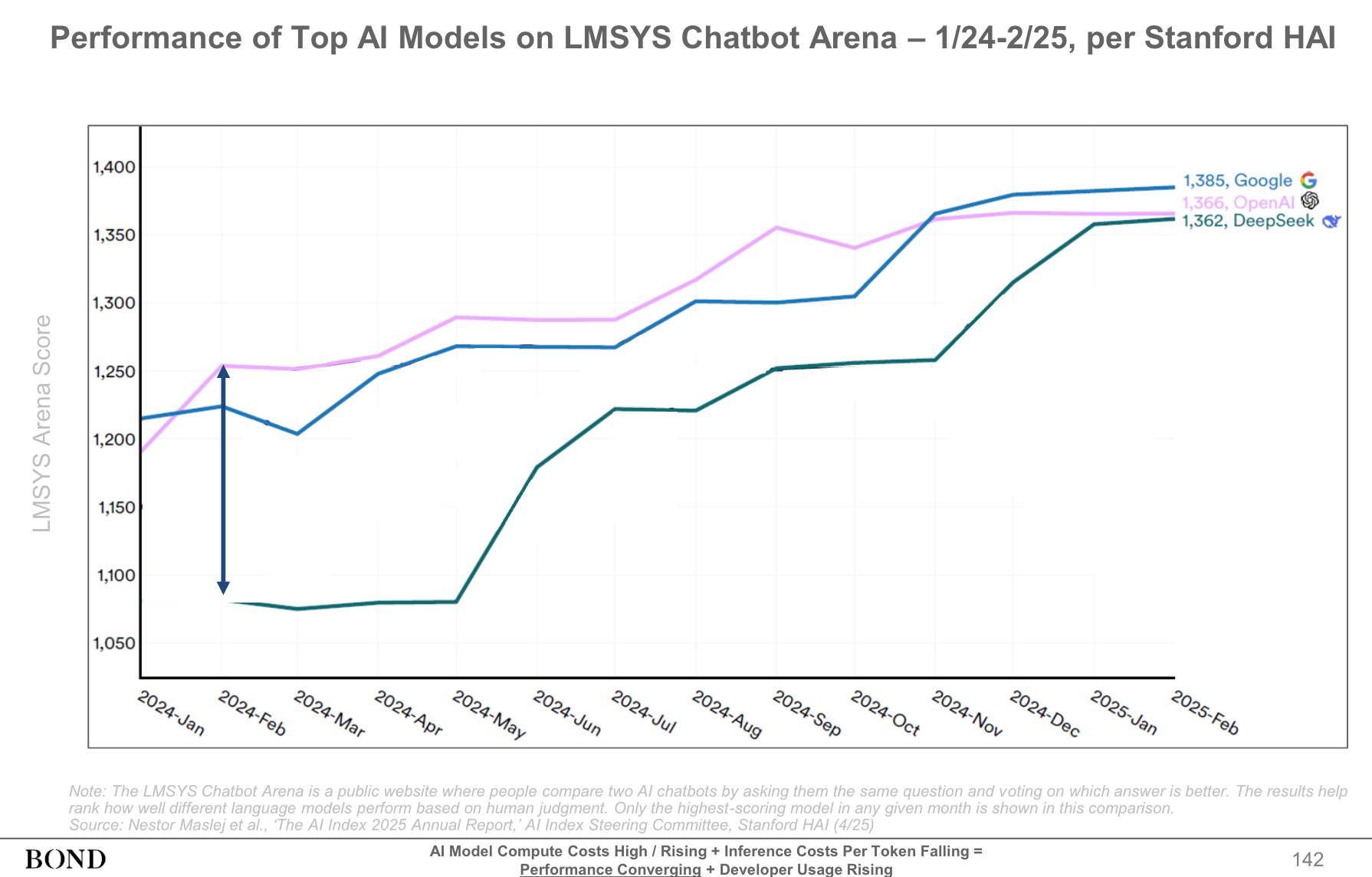
URL: https://natesnewsletter.substack.com/p/mary-meeker-ai-trends-2025-deep-dive
The discipline of talking out loud is very underrated. We say do it for interviews to practice. Do it for powerpoint presentations you don’t want to mess up. That’s all true. (It’s still hard to make yourself do it.)
But it turns out it’s good for learning too (shocker I know). I’m beginning to think we need to start to practice talking aloud through any material in order to really internalize anything we deeply want to learn.
I had digested this deck for my piece on Meeker from earlier this week.
But it was different going through slide by slide and forcing myself to talk out loud to camera about what I saw. I saw stuff Mary didn’t talk about. I got insights around the roots of the AI revolution, how we are actually getting such rapid adoption that I hadn’t fully grasped before.
And I put them all down here. You can grab them in the video or get them in digested and crystallized form below as well. Just as a teaser trailer: did you know how important the chipset Volta was in catalyzing the AI revolution? Do you know what breakthroughs are missing for AGI? I get into both of those a bit below. It sounds geeky, but this stuff explains a ton about our current world, so I thought it was worth the deep dive.
Enjoy!
Subscribers get all these pieces!
Ok we’re gonna get right to it. What are the top seven takeaways from digging through the first 142 pages of Mary’s deck and forcing myself to talk about everything I’m learning and seeing out loud?
1. 2019 Was the Hidden Inflection Point—When Machine Learning Quietly Became AI
Most people point to ChatGPT as the beginning of the AI boom. Especially after staring at this deck, I don’t buy that. I think the real turning point happened in 2019—and almost nobody talks about it.
Here’s what I saw: AI startup funding jumped from $18B in 2017 to $26B in 2019. That’s not just a money story—it’s a mindset shift. Around the same time, OpenAI pulled off something wild: they trained a robot hand, Dactyl, entirely in simulation and it managed to solve a Rubik’s Cube in the real world. That was a leap in transfer learning. Meanwhile, DeepMind was reinventing reinforcement learning with Temporal Value Transport, a method for passing lessons from the future back to earlier decision points.
At the same time, big companies figured out that AI was going to be a thing. And Mary captures this in her deck. Look at 2019!
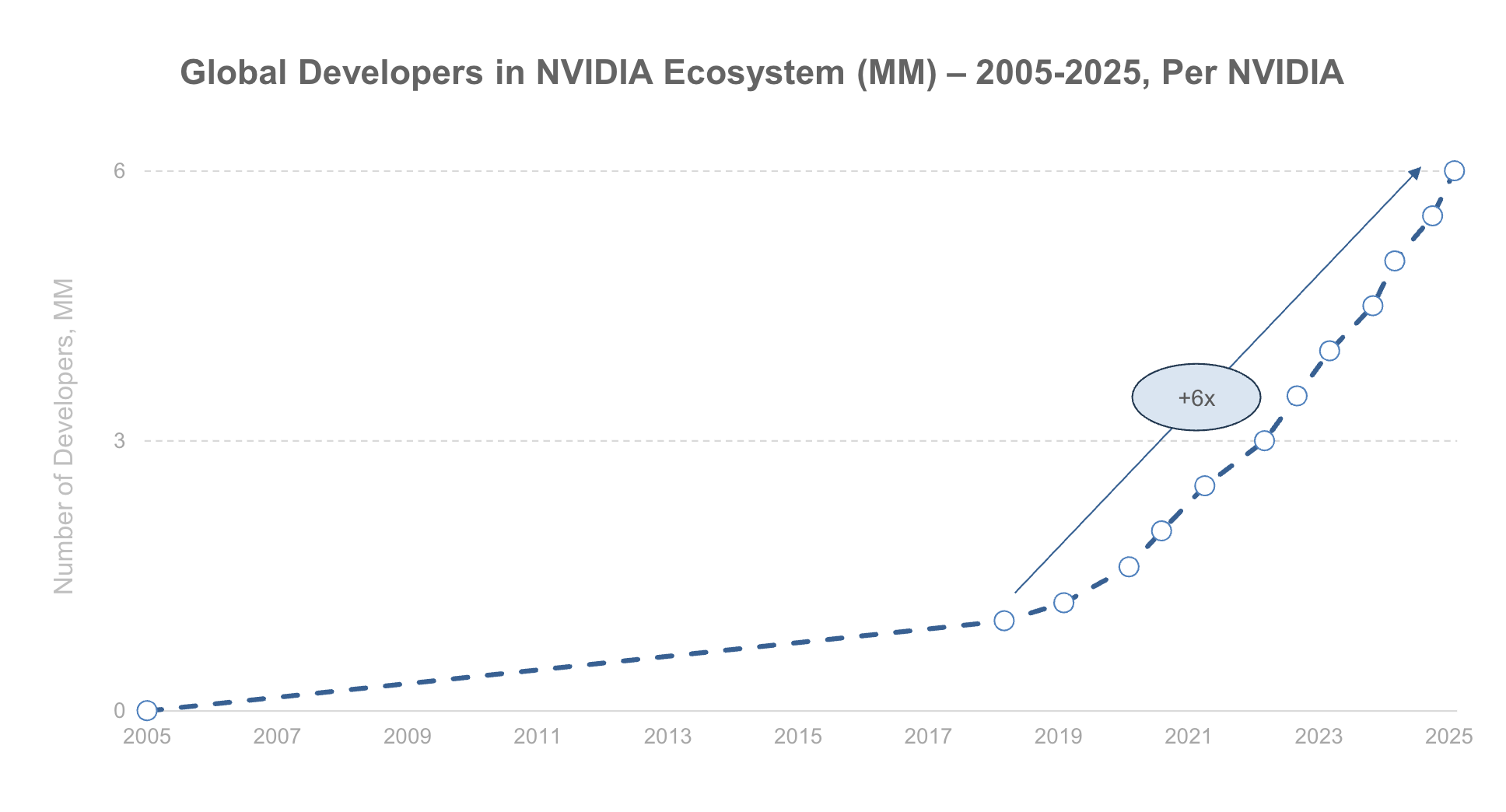
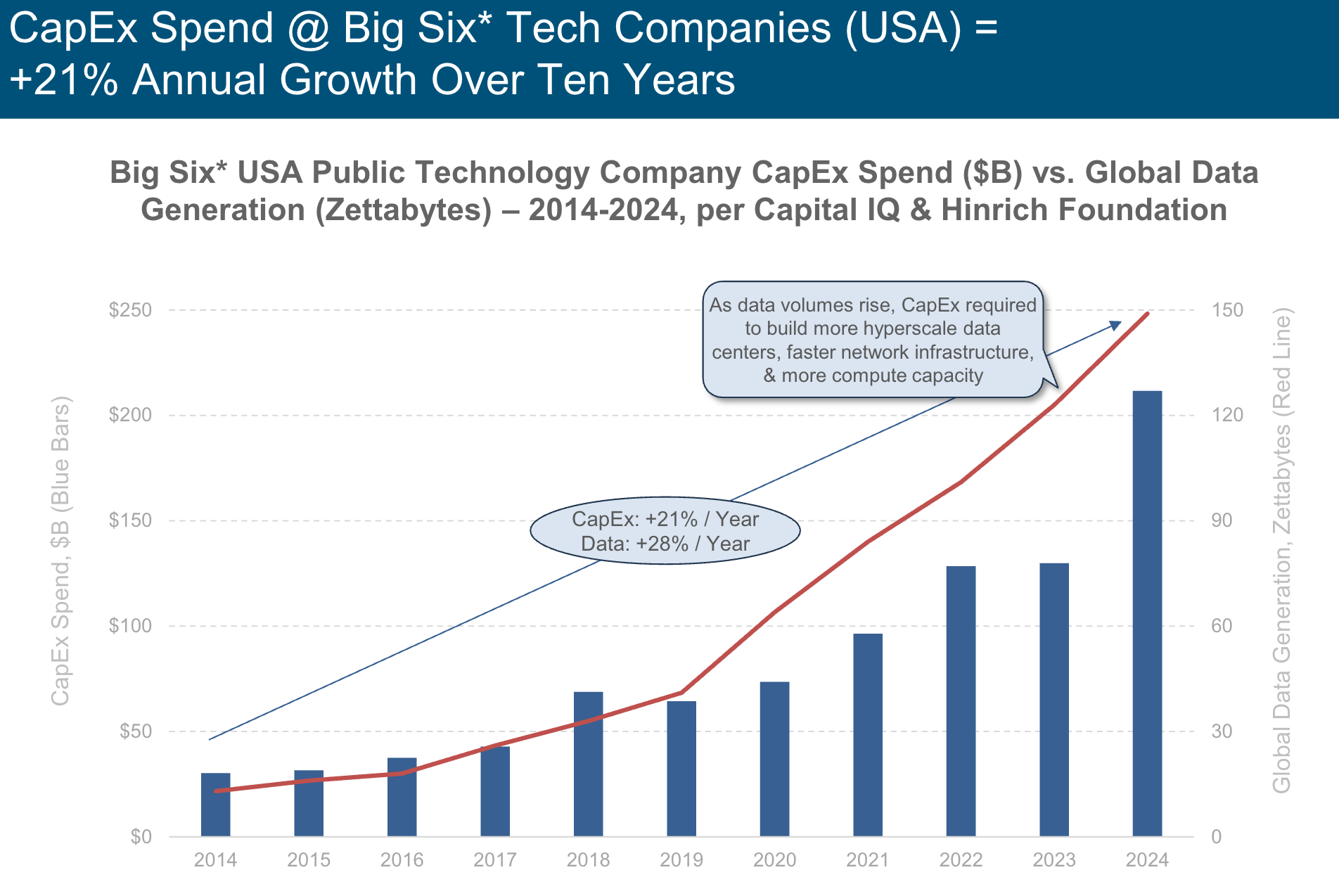
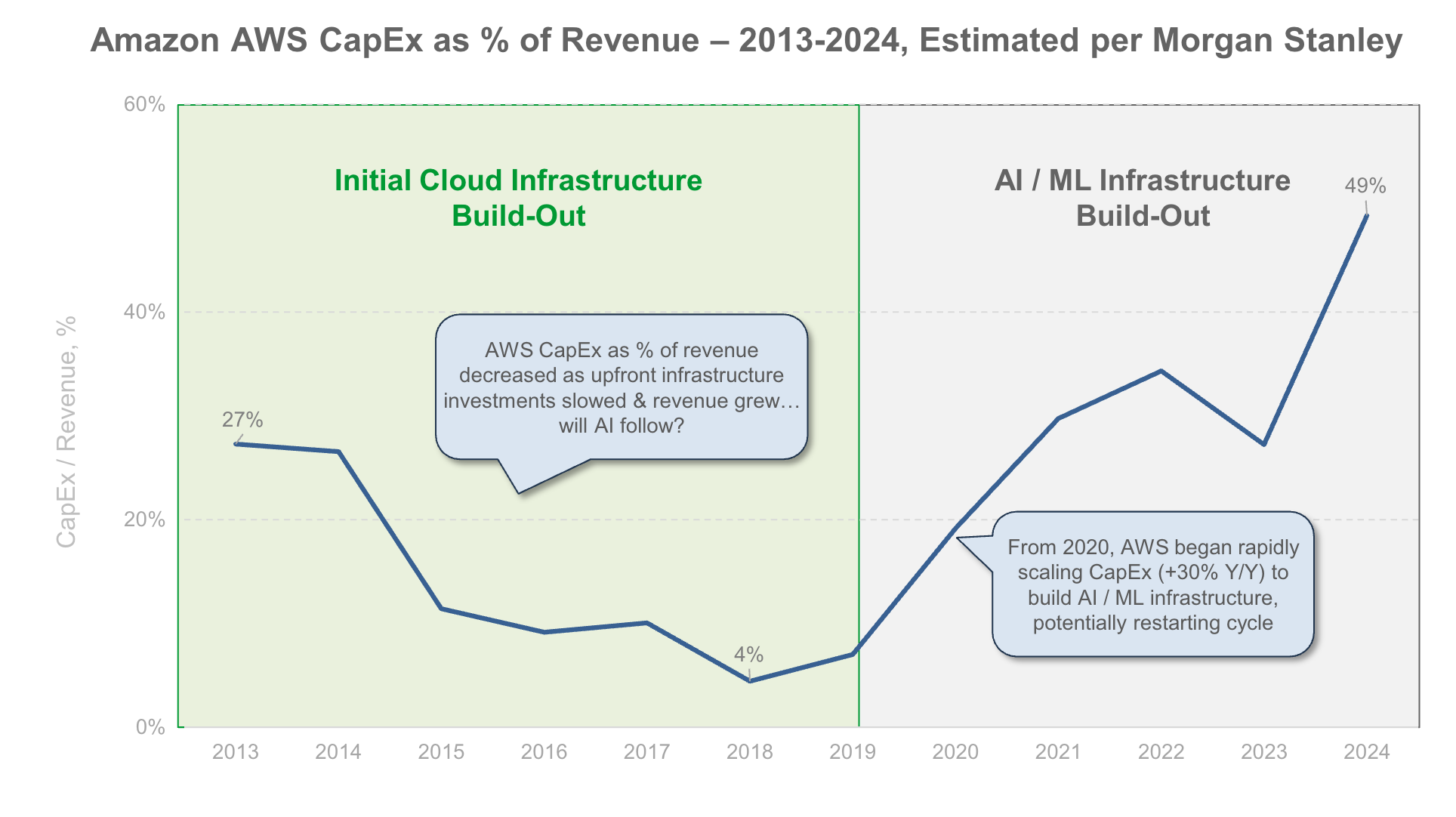
You get the idea.
This was also when Nvidia’s Volta architecture started showing what was possible. With over 125 TFLOPs per chip and a 5x improvement over Pascal, suddenly experiments that used to take weeks could be run over a weekend. The hardware showed up. The breakthroughs started stacking. And capital followed.
So when people say “ChatGPT changed everything”—I get it. But in my view, the real AI arms race began in 2019. By the time ChatGPT hit, it was the consumer explosion built on years of building the AI rails.
And I think I hadn’t realized quite how key that infrastructure was until I stared at it in this deck and talked out loud for 40 minutes—and I worked at Amazon in 2019 for crying out loud. Sometimes you’re too close to the forest to really see the trees lol.
2. Volta Was the Real Catalyst—Not the Transformer Paper
When I look at the history of this field, one chip stands out more than any paper: Nvidia’s Volta GPU. Yes even that paper.
Volta didn’t just deliver 125 TFLOPs of performance—it changed the unit economics of AI. It fused CUDA and Tensor Cores to crank out 12x the throughput of the prior generation. That was a structural leap, not a marginal gain.
Our world would not be possible without the Volta breakthough.
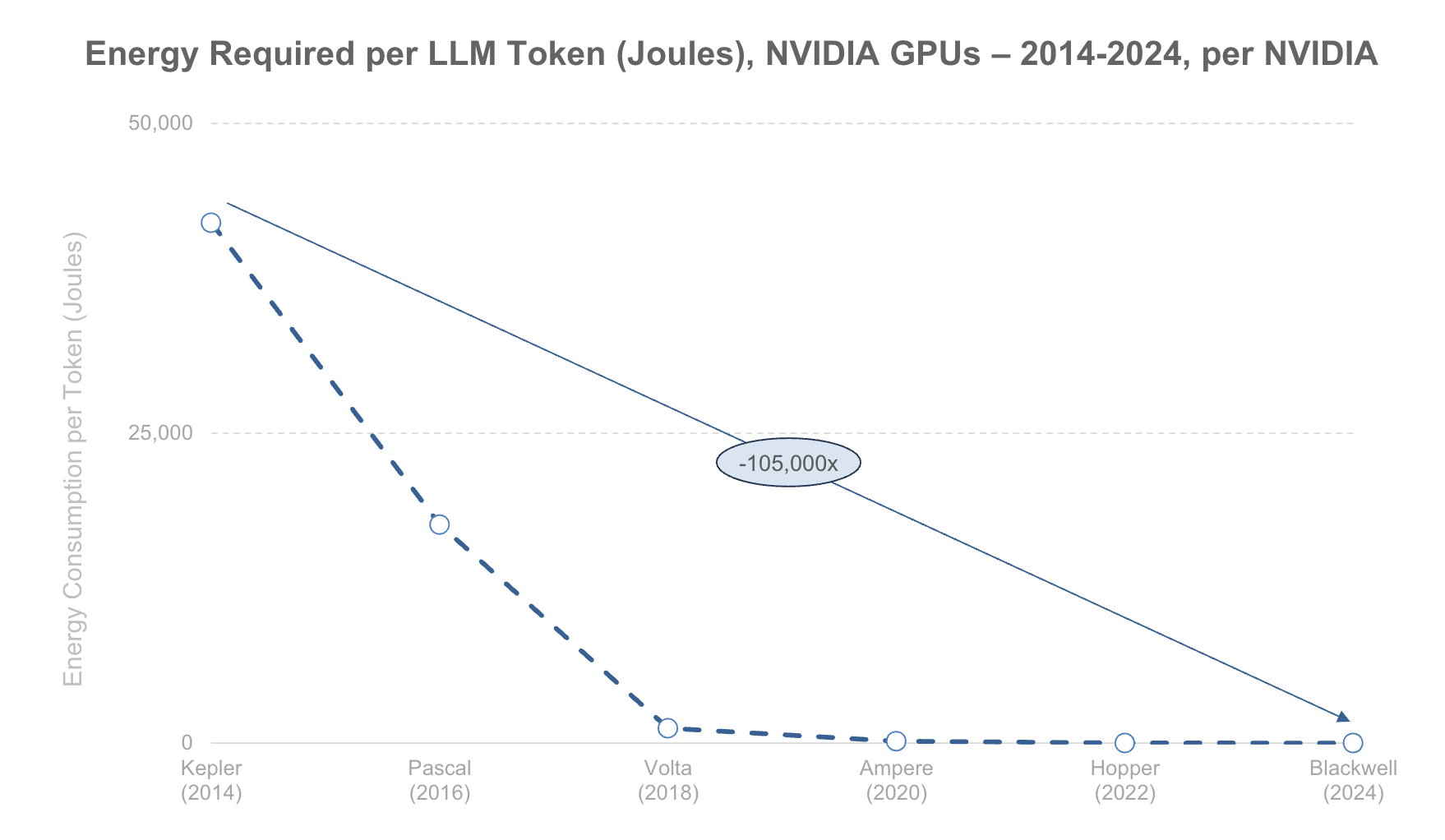
To put it in concrete terms: training the image recognition model ResNet-50 used to cost ~$1,000. By 2019, it cost $10. That 100x drop flipped the economic table. Suddenly, every startup and research lab could afford to run serious experiments. One V100 could train ResNet-50 at 1,075 images/sec—4x faster than Pascal.
Papers like Attention is All You Need were critical to lay the theoretical groundwork for the AI revolution we’re living through. But none of it would have actually happened if we hadn’t had technical breakthroughs at the silicon level like Volta.
People focus on software breakthroughs, but I’ll say it flat-out: I think Volta mattered more to get to the world we live in today, and I hadn’t realized that so profoundly until I walked this deck out loud.
Without the Volta cost collapse, the transformer revolution wouldn’t have had the fuel. I think we underestimate just how much progress since 2018 rode on the back of this one architecture. We had the steam engine for a long time before trains.
Technological leaps require multiple converging breakthroughs, and it’s good to have a tiny bit of perspective on what made these massive breakthroughs possible in the last half decade.
3. AI is Proliferating, not Centralizing
Mary frames this as a “global AI leadership race.” I see it differently and I see echoes of a different take in her own deck too as I walk it.
I think we’re watching a full-scale proliferation. Walking the deck reinforced how differently we’re thinking, and I think this feels like a disagreement between operators (who see multiple models on leaderboards daily) and policymakers comfortable in DC, who frame things in national security terms a lot.
How can you secure a model when sys prompts leak within 48 hours verbatim? When no one has a good answer to the problem of just asking an LLM nicely for its system prompt? These are different technologies, and Cold War assumptions about application hardening aren’t valid here.
Since 2019, countries around the world—through Nvidia’s AI Nations initiative and beyond—have been building sovereign AI infrastructure. Not to beat Silicon Valley. Just to not be dependent on it. And they’ve put serious capital behind it. Nvidia projects tens of billions in revenue from governments going forward.
Everywhere I look, I see this pattern: Denmark funding supercomputers with Ozempic profits. Southeast Asia building models to represent regional dialects. The African Union calling out the risk of importing AI that ignores their values. This isn’t a leadership race. It’s a diversification wave.
Mary notes in the deck that we see 27,000+ AI startups globally. That’s probably low. And walking the deck out loud showed me that there’s a disconnect between claiming a vibrant global ecosystem of AI startups and also claiming in the same breath that it it’s possible to win an AI dominance race.
Do best practices matter globally? Absolutely. I do not put my data on cloud-hosted DeepSeek for a reason. Their Terms of Service are really worrying. But there’s a difference between pushing for excellence and framing AI growth reductively in terms of just China vs. US.
I don’t think we’re headed toward one dominant AI anymore. We already live in a world of hundreds of capable systems—each shaped by different priorities, languages, and power structures. That’s not a race. That’s a pluralist ecosystem.
Something Mary herself notes in the deck.
4. We’re Living Through a Cost vs. Usage Paradox
Here’s one thing I think Mary glossed over as I talked it out loud, and I didn’t see it quite so clearly until this second time through: the economics of AI right now are unstable. I am calling this the Two-Track Problem.
Track 1: Costs Collapse. GPT-4-level compute has gotten 240x cheaper in the last 18 months—dropping from $180 per million tokens to less than $1. Image classification? Down multiple orders of magnitude as well. Everything in AI has a log scale lol.
Track 2: Usage Explodes. OpenAI was rumored to spend ~$4B partial year for 2024 just running inference on Microsoft’s infrastructure. That might be something like ~290,000 servers at near full load. And inference isn’t a one-time cost—it’s forever. Every chatbot ping, every user prompt, every API call adds up.
The training gets all the press, but inference is the real economic weight. It accounts for 80–90% of lifetime cost in many orgs. Meanwhile, the amortized cost of training these huge models keeps going up—2.4x per year since 2016.
So we’re stuck in a paradox: costs per token are falling, usage is soaring, but margins are razor thin. That’s why, despite 800 million users, OpenAI reportedly lost $5B in 2024. That math doesn’t work unless something changes.
And saying it out loud as I walked through Mary’s deck makes me want to do a deep dive on that piece alone. Because that is a massive problem for the industry. And I do not think an all-or-nothing bet on AGI is a rational approach to fixing it.
5. AGI Is Missing More Than One Piece
Let me be blunt. After staring at this deck a fair bit, I have higher conviction that the path from where we are to AGI isn’t just scale of pretraining data. It’s not just better. I expect both to keep getting better for a bit. But that is now the the easiest stuff we’ve already done.
The big leaps Mary outlines correctly—in particular pretraining, inference, and GPU unit economics—got us to this plateau. But the next frontier? It’s even harder.
I found myself looking for these in Mary’s deck, and I didn’t see them. And now I think I want to write a piece on AGI and what’s in the way.
- Continuous learning still isn’t real. Our models don’t improve over time in a persistent way. They don’t retain internal state between tasks. No matter how many conversations you have with an LLM, it forgets. That’s a brick wall.
- Memory and context remain shallow. Even with long-context models, we’re still dealing with very short-term memory. There’s no concept of true longterm memory. There’s also no ability to wide-screen context and bring all that fuzzy context to a problem as the context itself evolves. Humans do that.
- Real-world adaptability? These models aren’t evolving and adapting in the wild, and right now it’s not clear anybody wants them to if we could build them that way. There are alignment problems there.
I am fully aware that there are Nobel prize winners (looking at you Demis) on the other side of this bet. These may indeed be solvable in the next 3-5 years. If money can solve it, we will solve it. But I think the question I have is: what if all the money gives us really really IQ smart tools powered by inference and pretrain without enough of these three core qualities to be true AGI? What then? Meeker’s deck doesn’t really lay out the counterfactuals here, and I realized how much I missed that walking the deck again.
6. AI Didn’t Build Its Own Rails—It Rode the Mobile Wave
Most people think AI needed new infrastructure to grow. I see it differently: it piggybacked on what mobile already built. And that popped for me as I went through some of the explosive adoption slides in this deck.
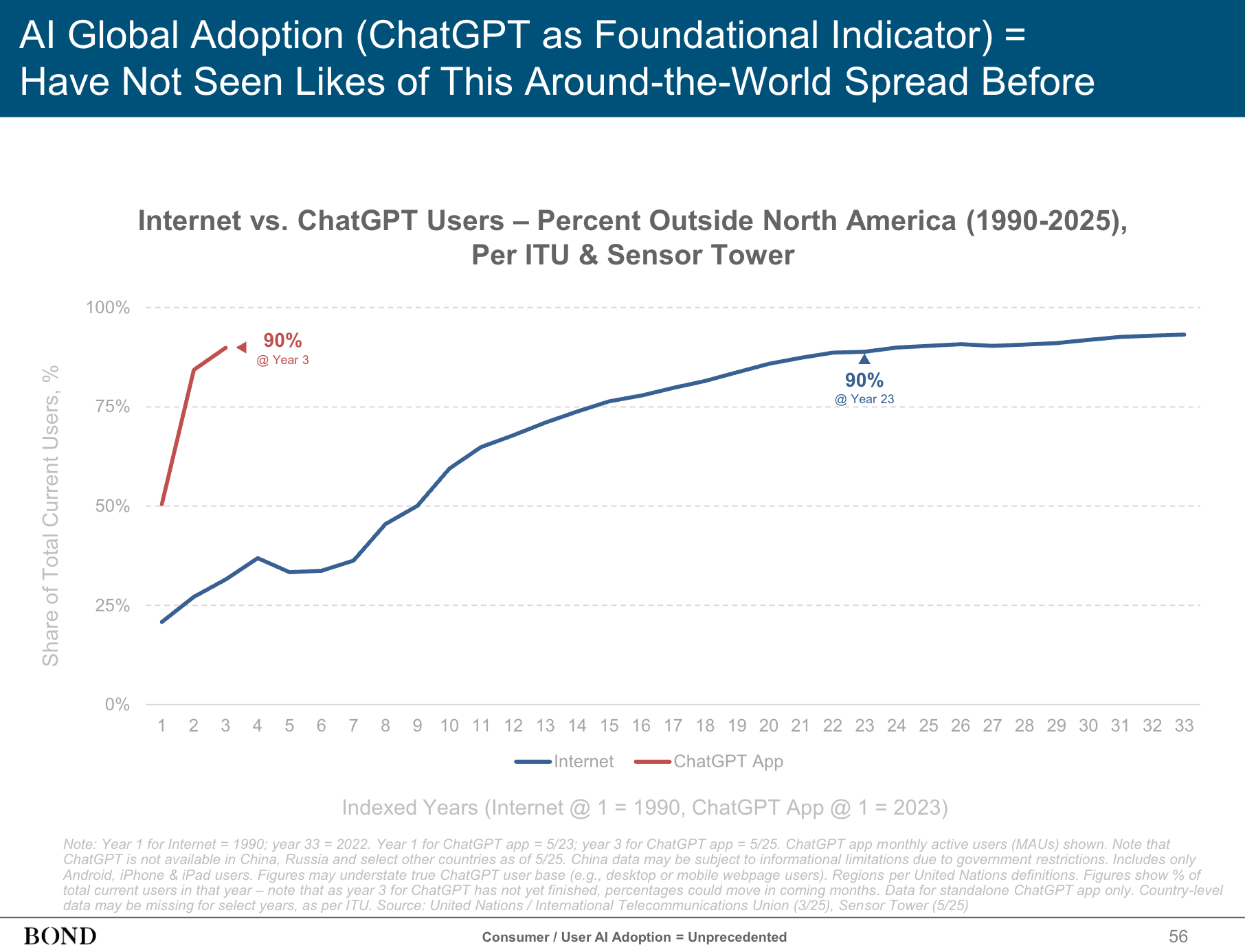
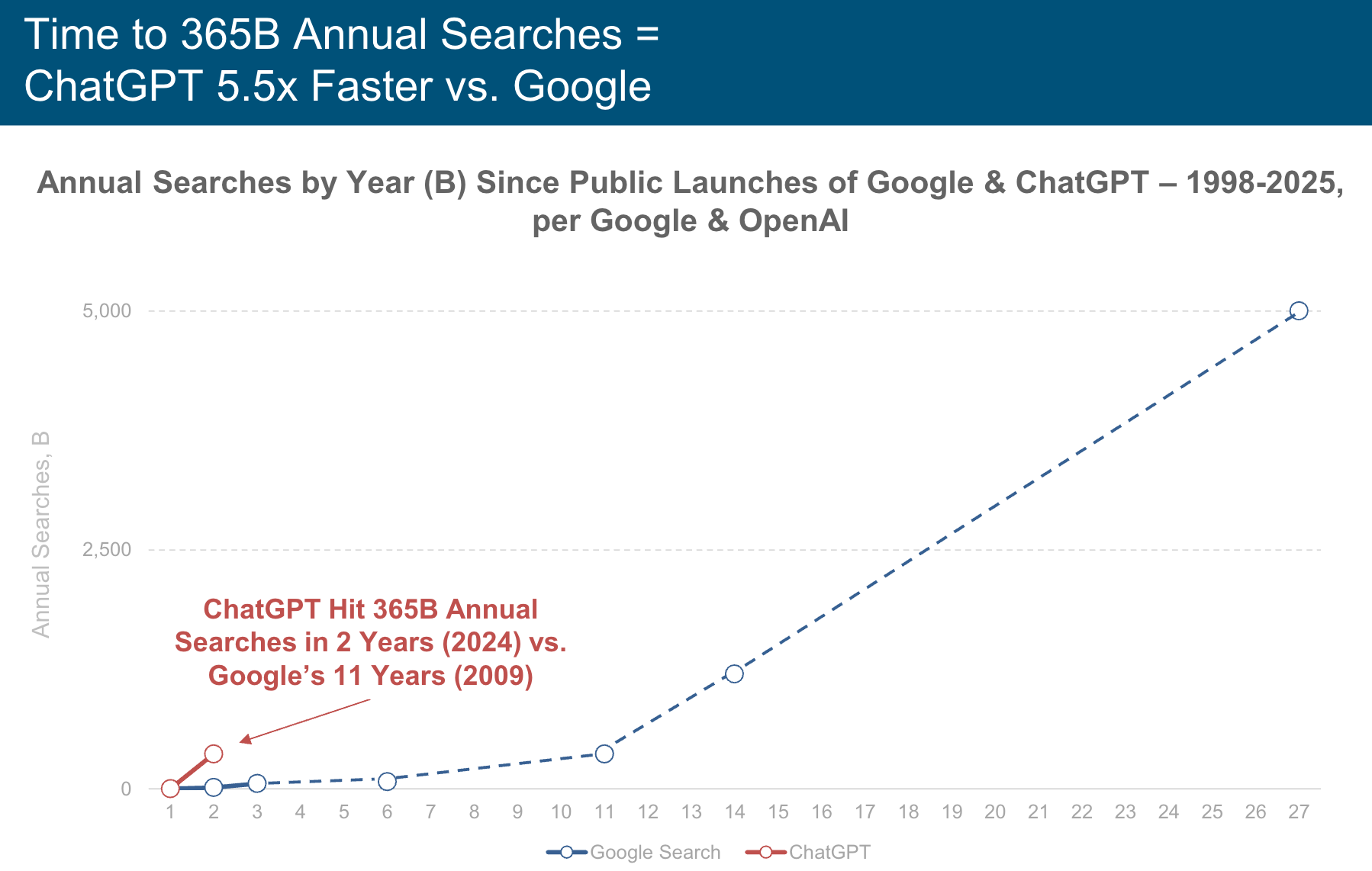
You wanna know how those numbers are popping like that? They build on decades of investment in mobile internet across the globe.
Global internet penetration is now 66%. Nearly everyone goes online via mobile—95.9% of users. In many regions, mobile is the internet. And that’s what made ChatGPT’s explosive growth possible.
Take India: In 2016, Jio offered 4GB of free data per day. Internet subscriptions exploded 58% in a year. Fast forward, and 20% of the global internet user base is Indian—despite low PC usage. Why? Phones. And that shows up in ChatGPT usage numbers! You know who the #2 country is for ChatGPT after the US? India!
Anyway, by 2023, 5G was everywhere. 1.5 billion global subscriptions, delivering fast, low-latency connectivity. That’s what ChatGPT tapped into. It wasn’t just a good chatbot. It was a text-based, mobile-first service. It ran on the infrastructure already in everyone’s pocket.
This is one of the biggest reasons AI scaled fast. It didn’t wait for new networks. It rode the one we’d already built. I hadn’t realized that clearly until I forced myself to walk out loud through the full global story in the Meeker deck.
7. Enterprises Talk Revenue, But Act on Cost
There’s a huge mismatch between what companies say about AI and what they actually do.
Publicly, it’s all about new revenue. But in the trenches, it’s automation, efficiency, and cost-cutting.
45% of leaders say AI helps with cost transformation. 9 out of 10 service workers using generative AI say it helps them serve customers faster. That’s efficiency.
Support chatbots? 31% adoption. Dev and IT ops? Top use cases. This is where the real traction is. The creative, revenue-generating stuff—like sales and marketing—has been easy to launch a startup about, but hard to prove value for.
Look I’m not saying we don’t have a loads of sales AI solutions. It’s enough for clickbait now! Ditto marketing.

But measuring top line impact is tougher without clear cost-cutting goals. And I notice even in sales and marketing tools, the AI tools that are launched usually attack cost centers because the measurability is easier.
Why? Because messy data and fuzzy objectives on the top line make that terrain much harder. Humans have always been not so good at explaining how complex and fuzzy logic shapes something as critical as making money. And that human ambiguity is not something AI is great at. AI does better in places where the rewards are clear, and a lot of the challenge with marketing and sales is that rewards are interrelated and ambiguous, and these rewards often take months to appear with unclear causal relationships. This makes it hard for humans, let alone AI!
This is probably why 75% of mid-size businesses say AI might boost revenue—but as I’ve reported elsewhere most enterprise AI projects fail to produce ROI. If wishes were fishes.
Walking the deck out loud made me realize that I want to dig much more deeply into the disconnect between what businesses say they want to do (make money with AI) and what they choose to focus on (cut costs).
Final Thought: Talking It Out Was the Real Breakthrough
I didn’t expect this. I thought I was just going to walk through Mary Meeker’s deck, call out a few big trends, and maybe synthesize some insights for the newsletter.
But forcing myself to talk it all out loud—every chart, every stat, every implied assumption—completely changed what I saw.
This wasn’t just a summary. It became a lens. The act of explaining forced me to confront where my intuitions were fuzzy, where my mental models needed updating, and where the industry narrative felt incomplete. I started seeing second-order effects, unstated tradeoffs, missing counterfactuals. It gave me clarity.
I realized that Volta might matter more than transformers. That proliferation, not dominance, is the real shape of AI in 2025. That cost and usage are locked in a tension no one knows how to resolve. That AGI isn’t just a question of scale—it’s a question of missing architecture. That mobile infrastructure—not new chips—was the quiet hero of AI distribution. And that most enterprises still talk a revenue game while betting on cost reduction.
None of that came from just reading slides.
It came from doing the work of saying it out loud. I learned more by walking through this deck in real time than I have from months of industry analysis.
So if there’s a meta-lesson here, it’s this: when the story feels too smooth, too pre-packaged, say it out loud. See what breaks. What sharpens. What surprises you.
That’s how insight actually happens.
For more on AI, subscribe and share!
\tbh not a bad o3 portrait here\