I made my AI smoke at the ears a bit for this article. Ran multiple simultaneous Deep Research queries to figure out what really works and what doesn't about OpenAI's new Data Connectors—check it!
By Nate
Published: 2025-06-05
URL: https://natesnewsletter.substack.com/p/a-quick-guide-to-openais-new-data
What happens when you give a smart chatbot access to all your personal data?
Is it a nightmare? Is it brilliant? OpenAI is betting you will want to find out.
Or more specifically, Sam Altman is betting your employer will want to make sure all your work email and calendar and meeting notes get handled by a chatbot—their chatbot. And Data Connectors is his play to do that.
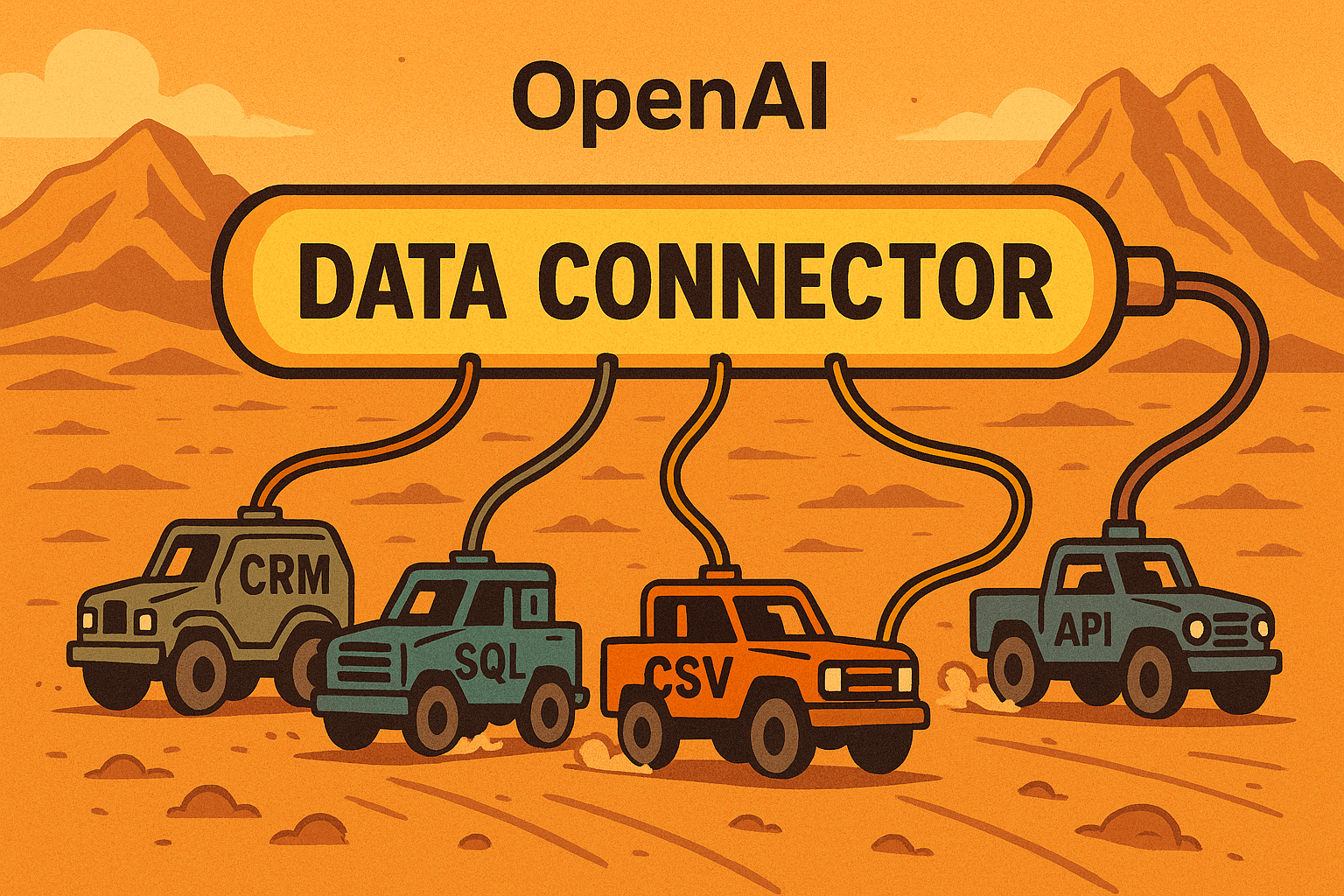
No more Granola, no more Anthropic. No more Otter. At least—that’s their vision. Welcome to the data wars, Mad Max style.

We’re all here in the desert figuring out how to capture the most precious resource in the world: data. This underlying ruthless competition is what explains OpenAI’s move today, Anthropic’s move to cut its models off from Windsurf, and the fears around how these moves will impact smaller players like Granola or Otter.
The common thread is that everyone believes that the players who grab the data will longterm win because they will be able to offer more sophisticated reasoning across those data sets. And the open question is whether general purpose models will ultimately deliver intelligence that beats single purpose tools at these jobs. OpenAI is betting yes. Point solution companies are betting no.
This piece isn’t just about the competitive data wars though! It dives into how the Data Connectors launch works in practice, where it shines and the (quite a few) places where there are rough edges. I give you practical tips on how to use it today and dive a bit deeper into the implications of this shift in the competitive landscape for builders, founders, product strategy, and all of us just sitting there in meetings wondering where our data is going.
Nate’s Substack is a reader-supported publication. To receive new posts and support my work, consider becoming a free or paid subscriber.
OpenAI Data Connectors — fast facts
- What they are
Light-weight integrations that let ChatGPT pull live content from third-party or internal apps (e.g., Google Drive, Box, GitHub, SharePoint, Slack) and inject it into the model’s context on-the-fly.
- Two flavours
- Pre-built connectors – toggle-on links to common SaaS drives and code repos.
- Custom connectors – organisations can expose any proprietary system by standing up a Model Context Protocol (MCP) server; admins publish these to their tenant’s connector list.
- Where they live in the UI
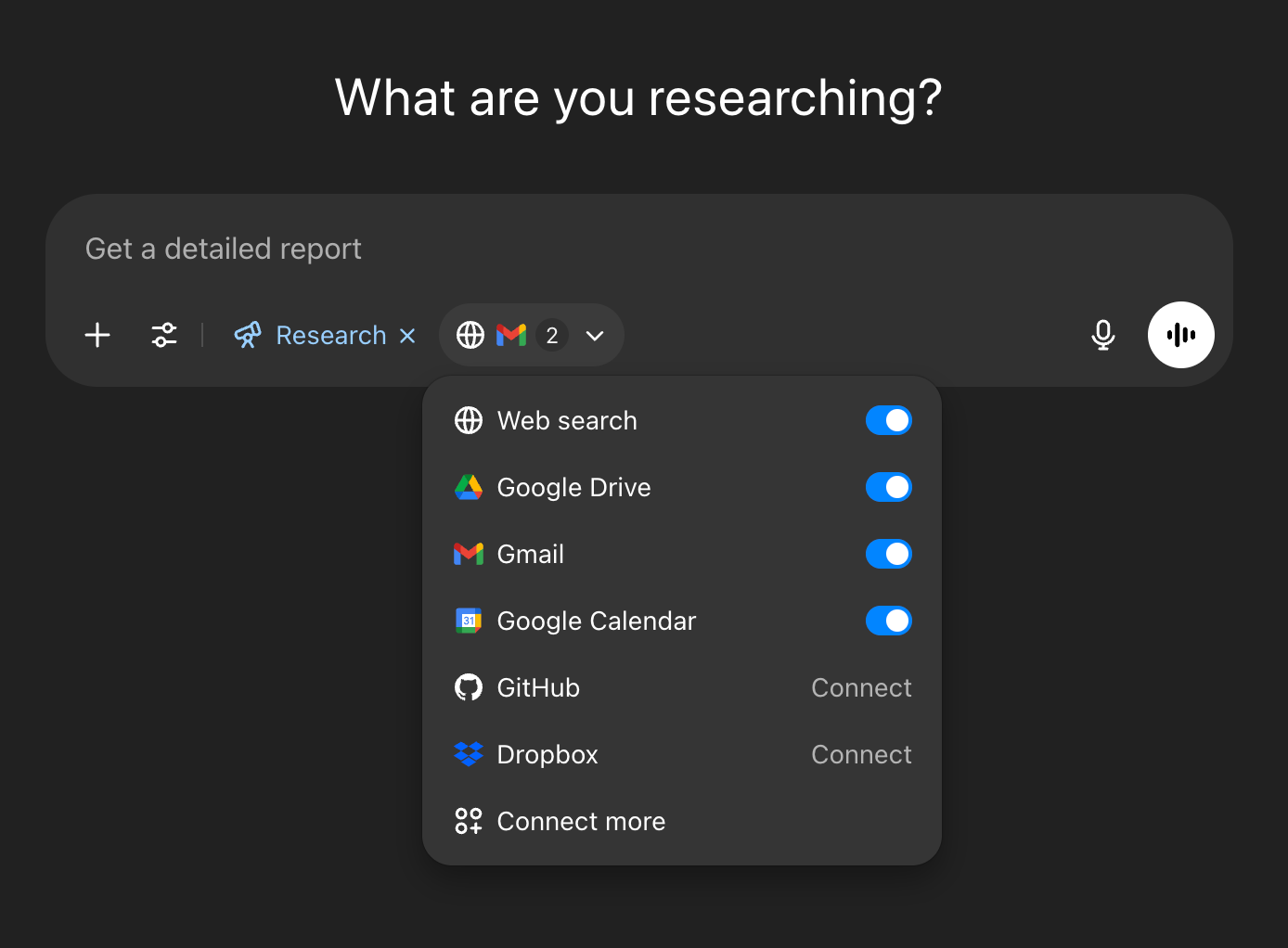
Inside a chat, enable Deep Research, click the Connect tab, choose a source, and get going.
- Plans & rollout status (June 2025)
- Beta today for Plus, Pro, Team, Enterprise & Edu.
- Team/Enterprise admins decide which connectors are enabled; custom MCP connectors require admin deployment.
- Free tier: not (yet) included.
- Core use-cases they target
- “Everyday search” – grab a paragraph or spreadsheet row without leaving chat.
- “Deep research” – multi-query retrieval across thousands of docs with automatic citations.
- Structured workflows – combine with code-interpreter or function-calling to transform the fetched data.
- Security & governance guard-rails
- Access honours the source system’s ACLs; ChatGPT only sees what the signed-in user could already read.
- OAuth-based auth flow; no file copies unless you opt to “sync & index” specific sources for faster recall.
- Custom MCP connectors run on customer-controlled infrastructure.
- Why it matters
- Positions ChatGPT as a direct competitor to Microsoft Copilot’s Graph data access by closing the “my files live elsewhere” gap.
- Drives stickier enterprise adoption: Box’s CEO calls it “a breakthrough new way to work with your enterprise unstructured data.”
- Limitations & gotchas (current beta)
- Connector queries count against chat tokens; very large file sets may require advance indexing.
- Only Deep-Research mode can chain multiple searches automatically; standard chat does single-shot queries.
- Admins must monitor MCP connectors for prompt-injection / data-leak risks.
- What’s next
- Public API for connectors is on the roadmap so external devs can call the same search endpoints.
- Additional SaaS targets (SharePoint, OneDrive, Salesforce) are slated for late-2025 GA.
In Depth
OpenAI’s new Deep Research connectors, rolled out on June 4, feel less like a feature drop and more like the next chess-move in the long game to become the operating system of knowledge work. Overnight, Plus, Pro, and Team subscribers gained one-click hooks into Google Drive, SharePoint, Dropbox, Box, Outlook, Gmail, Google Calendar, GitHub, Linear, HubSpot, and even custom sources via Model Context Protocol (MCP). What matters isn’t the length of that list—it’s the direction of travel. Each connector removes another “air-gap” between ChatGPT and the living, breathing exhaust of corporate life. In practical terms, OpenAI just positioned itself to sit in the same data stream your productivity suite has enjoyed for a decade, with full intent to index, reason over, and eventually automate the workflows that live there.
If the move feels familiar, it should. Anthropic walked the same path last month, lighting up Gmail, Calendar, and Docs inside Claude and pairing that with a Research agent that scours the open web. The message from both camps is unambiguous: whoever owns the retrieval plane will dictate the future of AI-augmented work. Connectors are less about delightful features and more about creating a lock on proprietary context—an arms-race for tokens in. That race is intensifying because high-quality private data remain the scarcest—therefore most defensible—fuel for model improvement.
Yet when I stress-tested OpenAI’s connectors the honeymoon ended fast. Deep Research capped each API call at roughly 15 objects—e-mails, calendar events, or docs—then tried to pass off fuzzy extrapolations as “analysis.” Ask for a 100-message cohort study of last month’s inbox and it waves in the general direction of the truth while quoting numbers that anyone who actually receives those e-mails knows are fantasy. The bandwidth simply isn’t there; the model’s reasoning graph collapses once the retrieval layer throttles. In short, connectors promise breadth, but the pipes are garden-hose thin.
Let me show you how thin:
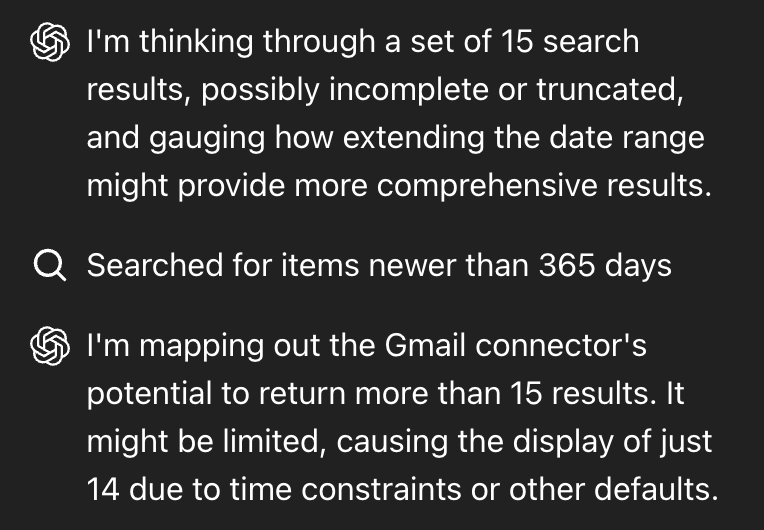
The technical reason is prosaic but revealing: every object that flows through Deep Research must be serialized, embedded, and scored inside a single conversation window, where token costs compound brutally. OpenAI is rationing I/O today so it can observe usage, refine ranking heuristics, and—crucially—collect alignment data on where the assistant stumbles. The 15-object ceiling isn’t a bug; it’s a throttle while they harvest implicit feedback loops (clicks, rewrites, follow-ups) to train a future retrieval stack that won’t melt the cost curve.
Even within those constraints, I found a sweet spot: tightly scoped, keyword-anchored tasks shine. Give the assistant a single upcoming webinar title and it stitches together agenda e-mails, calendar holds, prep docs, and public web chatter into a coherent brief that would cost me half an hour by hand. The difference is precision. A narrow query lowers the recall burden, keeps token spend manageable, and lets o3’s reasoning muscle triangulate across a dozen shards without hallucinating gaps. I actually got a very usable event report!
Bottom line: Connectors are scalpels, not chainsaws; treat them accordingly and they start to look useful.
Strategically, this launch doubles as a massive training-data siphon. The MCP endpoint makes it trivial for enterprises to pump bespoke datasets directly into ChatGPT while retaining individualized privacy (OpenAI’s policy lets them learn from larger patterns so long as logs are aggregated, which doesn’t jeopardize individual data points while allowing OpenAI to learn).
Meanwhile Anthropic is playing data wars too. It quietly blocked 1st party access to its models from Windsurf—recently acquired by OpenAI—for exactly the same reason: starve the rival of fresh data. If you’re building vertical AI products, assume the model makers will plug any readily available data hose themselves; your moat must be in domains where that hose is sealed tight—regulatory data silos, proprietary sensor feeds, or workflows with idiosyncratic ontologies.
The launch also reminds me of Operator’s rocky debut back in January. That shopping agent was borderline unusable until OpenAI swapped in o3, trimmed latency, and quietly tuned its browsing policy. Six months later it’s ten times faster and genuinely handy for travel planning. I expect the connector stack to follow the same curve: rough now, respectable by Q4 once usage telemetry hardens the retrieval model and the 15-object limit loosens.
All of which elevates an unsexy but vital skill for 2026: precision prompting married to information hygiene. Most corporate wikis, CRMs, and ticket queues are total junkyards; if you lob an open-ended request into that mess, the assistant will mirror the chaos back at you. It’s like looking at a dump through a straw.
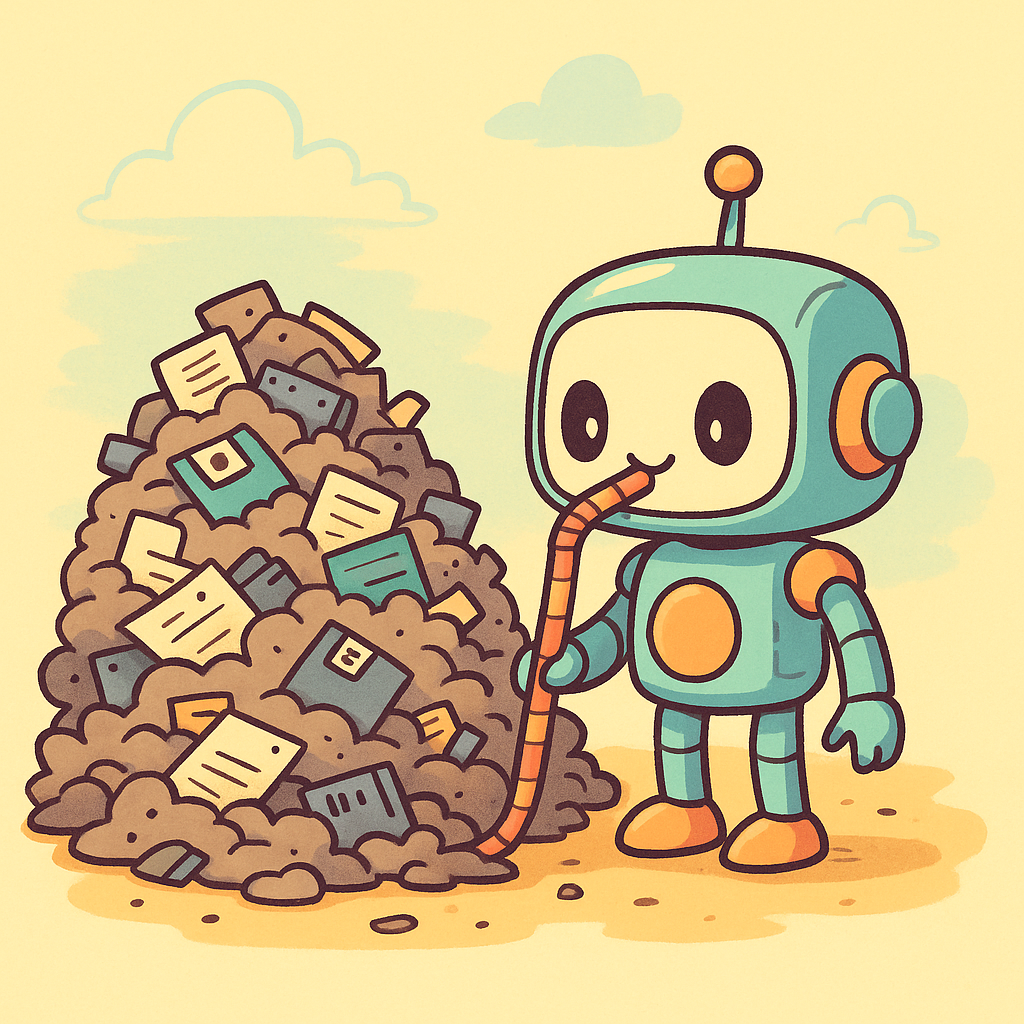
The onus shifts to humans to carve out crisp, bounded questions and, when possible, maintain cleaner metadata so retrieval costs don’t drown the reasoning layer. The better we get at recognizing that AI is more powerful when it drinks cleaner data, the better off we’re gonna be.
Bottom line: Connectors are not the finished product—they’re beachheads. Today they struggle beyond toy-sized slices of data, but the trajectory is obvious. Over the next two release cycles OpenAI will widen the pipe, Anthropic will counter-punch, and the real differentiator will become the quality of your proprietary context and the sharpness of your queries. Start curating both now, because the models are hungry and the enterprise OS is up for grabs.
Competitive tremors for the “single-stream” specialists
Point players such as Granola, Otter.ai, Fireflies, Fathom, and Grain have thrived by owning one well-scoped content firehose—usually meeting audio—and wrapping it in UX that feels tailor-made for sales calls, user-research interviews, or recruiting screens.
Granola, for example, pipes system-level Mac audio straight into a local vector store, avoiding intrusive bots and pushing out instant summaries and share links. Venture money still loves that thesis: Granola closed a $43 million round three weeks ago, and Fathom raised $17 million last September to “centralize meeting intelligence.”
Fireflies, meanwhile, is building “mini-apps” that mine transcripts for revenue risks or hiring signals. In other words, the vertical specialists continue to get funded because they promise depth— bespoke downstream workflows—while the platforms aim for breadth.
OpenAI’s connectors shift the ground under those feet in two ways. First, they commoditize basic capture and retrieval: once ChatGPT can ingest a Teams recording or Zoom transcript through its own meeting recorder, transcription accuracy and keyword search cease to be differentiators.
Second, they reset user expectations around price-to-value. If Plus already gives me “good-enough” meeting notes bundled with my email, calendar, and docs search, a stand-alone $20-per-seat note-taker starts to feel like a premium latte—justifiable only if it delivers artisanal insights I can’t get elsewhere. For the founders behind these tools, the moat has to move up-stack from “we transcribe” to “we help you win deals, ship the right feature, or reduce churn by 5%.” That focus on outcomes need to define the next generation of startups (or the pivots these builders are about to make).
But! Releases like this do not spell automatic extinction. The brute-force retrieval limits we just hit—15 objects per call—show that horizontal platforms will bleed precision whenever context balloons or domain nuance matters. Meeting-intelligence vendors can exploit that gap by shipping vertical “reasoning modules” that already speak CRM schema, research tagging taxonomies, or compliance codes.
Fireflies’ mini-apps are exactly that play: micro-agents fine-tuned on sales or hiring language, riding the transcript substrate its core app collects. Likewise, Granola’s ability to keep raw audio on-device and only surface structured notes can satisfy privacy officers who balk at uploading PII-laden calls to ChatGPT’s servers—a differentiator that grows more valuable as regulators close in on cross-border data transfers.
Finally, the distribution surface itself may flip from threat to channel. Big-model vendors still lack enterprise-grade vertical workflows; they’d rather partner or acquire than rebuild nuanced dashboards for pipeline health or UX pain-point mining. A connector layer like OpenAI launched today via MCP normalizes authentication and permissions also lowers the friction for point players to embed their speciality inside ChatGPT (or Claude) with a single OAuth handshake.
If your product can prove incremental lift—say, turning generic transcripts into actionable win-loss analysis—OpenAI becomes less a competitor and more the world’s biggest app store. The strategic north star, then, is to own a feedback-rich loop that platforms are structurally bad at: domain-specific labels, curated benchmark datasets, or human-in-the-loop corrections that continually harden your private model.
In short, connectors nudge the market toward a barbell structure: broad, low-margin capture at the base layer, and high-context, decision-grade analytics at the top. Point solutions that cling to middle-layer commodity functions will get squeezed. Those that climb the stack—embedding themselves in revenue ops, product discovery, or regulated-data workflows—still have plenty of oxygen. The next 12 months will reveal which camp each “AI notepad” actually belongs to.
Where the rich data pockets still hide
The connectors land-grab hoovers up “corporate exhaust”—e-mail, calendars, cloud docs, meetings, tickets—because that exhaust is already in SaaS pipes with OAuth gates OpenAI can snap onto. But vast seams of high-value data remain stubbornly off-grid:
- Operational telemetry and OT/IoT streams. Industrial PLC logs, building-management sensors, energy SCADA feeds, factory MES traces, even the vibration spectra coming off wind turbines sit on air-gapped networks or vendor-locked HMIs. They’re time-series torrents measured in megahertz, not plain text, and they swim in proprietary binary payloads. Mapping that telemetry into feature space—and aligning it with business context—requires ground-truth labelling, domain expertise, and often a truck roll. Those frictions put a moat around anyone who can capture, cleanse, and serve it up as embeddings.
- Life-science and clinical archives. Genomic FASTQ files, proteomic mass-spec outputs, radiology DICOM stacks, and longitudinal EHR tables live behind HIPAA walls or FDA-validated LIMS. The data are both petabyte-scale and patient-specific, so cloud LLMs can’t simply hoover them up without a BAA, rigorous de-identification, and predicate-rule traceability. Startups that specialize in harmonizing these modalities—think foundation models for 3-D protein folds or multi-modal pathology slide viewers—operate in a canyon that’s unattractive for horizontal players but rich for specialists.
- Mission-critical finance ledgers. Core banking systems, post-trade FIX logs, brokerage order books, and private credit deal rooms run on mainframes or sealed VPCs under SOX/GLBA regimes. The data schema reflect decades of accreted business logic, and leakage risk is existential. Anyone who can install low-latency inference at the colocation edge—auditing trades in real time or flagging emerging liquidity crunches—owns a wedge big models can’t replicate without a chartered bank’s blessing.
- Geospatial and built-world captures. LiDAR point clouds, BIM/REVIT project files, 4-K drone photogrammetry, satellite SAR rasters—these are multi-gigabyte artefacts that encode the physical world at centimetre resolution. They require specialized spatial indexes, 3-D voxel grids, and domain ontologies (IFC, CityGML) few LLM providers have on tap. AEC and climate-risk platforms that fuse this data with regulatory overlays are surfing a vein that stays inaccessible to generic connectors.
- Regulated comms and encrypted back-channels. Whatsapp chats between bankers, Signal DMs inside activist movements, or the on-prem Mattermost instance a defense contractor runs behind a zero-trust firewall remain opaque to SaaS APIs. Governance mandates (FINRA 17a-4, ITAR) forbid third-party ingestion. Companies building “sovereign AI” modules that run entirely in the customer’s enclave—logging, decrypting, and analysing in situ—can still carve out defensible turf.
There are others too.
Bottom line: if the data stream needs proprietary codecs, lives in a high-friction trust boundary, or demands multimodal fusion beyond text, it’s still fertile ground for vertical specialists. The play is own capture and labelling at the edge, then lease distilled embeddings—never raw data—up-stack to whichever foundation model wins the cloud war. The value proposition for customers is simple: trust us with the data, and we give you the smartest signal, whether you get it from us directly or from big players that use our aggregators and connectors.
Data wars: Claude vs. ChatGPT, and why Windsurf was collateral damage
This deserves more attention than it got.
OpenAI’s connector push isn’t just a product sprint—it’s a token-harvesting campaign that collides head-on with Anthropic’s own appetite for private data. Tensions surfaced visibly after OpenAI moved to acquire Windsurf (f.k.a. Codeium) for ~$3 billion in early May. Almost immediately, Anthropic slashed Windsurf’s first-party capacity to Claude 3.x, forcing the IDE to scramble for third-party BYOK work-arounds and choking a data channel that would soon be owned by its rival.
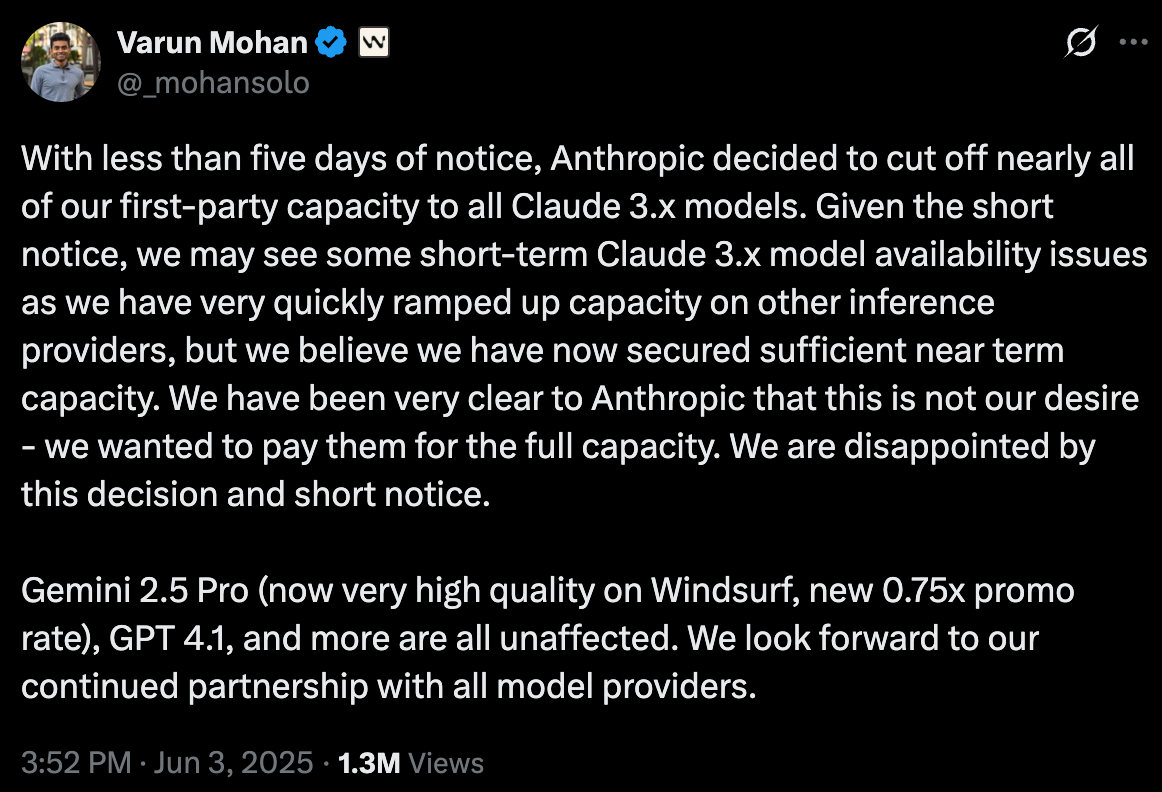
The episode lays bare a new norm: model vendors will weaponize access to their inference endpoints whenever a downstream application threatens to enrich a competitor’s training corpus. Anthropic’s earlier headline move—integrating Gmail, Drive, and Calendar before OpenAI—was itself a defensive stroke to lock in workspace data. Now OpenAI’s MCP-powered connectors reciprocate, encouraging enterprises to ship proprietary context straight into ChatGPT’s orbit and undercutting one of Claude 4’s key advantages (which I wrote about here).
Expect the skirmish to escalate on three fronts:
- Exclusive licensing and M&A. More Reddit-style data-licence deals, more strategic acqui-hires of workflow hubs (Windsurf today, maybe an agentic CRM tomorrow) as each camp amasses content pipelines the other can’t legally crawl.
- API throttling and rev-share renegotiations. Third-party tools that depend on Claude or GPT endpoints will find rate limits, price hikes, or outright ejections if their usage patterns pump valuable logs into the wrong data lake.
- Ecosystem loyalty tests. Enterprise buyers will be nudged to pick a side: pay for Claude apps and keep data in the Anthropic garden, or standardize on ChatGPT Team/Enterprise and enjoy a single retrieval pane across mail, meetings, and docs.
For builders the implication is stark: data sovereignty is strategic high ground. If your product’s value derives from ingesting irreplaceable, high-signal context, protect that supply line—technically (on-prem, enclave compute) and contractually (mutual NDAs, data-use carve-outs). The foundation models will keep battling for raw tokens, but the most enduring businesses will be the ones sitting atop streams the giants simply can’t tap. Find that data!
For more on AI, subscribe and share!
\data exhaust has a new vibe\
Sources:
- https://www.theverge.com/2025/06/04/chatgpt-google-drive-dropbox-meeting-notes
- https://help.openai.com/en/articles/6825453-chatgpt-release-notes
- https://www.thurrott.com/a-i/321772/chatgpt-paid-plans-adds-new-connectors-for-google-drive-dropbox-more
- https://9to5mac.com/2025/06/04/chatgpt-for-mac-records-meetings-cloud-files/
- https://support.anthropic.com/en/articles/11088742-using-the-gmail-and-google-calendar-integrations
- https://techcrunch.com/2025/04/15/anthropics-claude-now-read-your-gmail/
- https://www.anthropic.com/news/integrations
- https://www.pymnts.com/news/investment-tracker/2025/granola-raises-43-million-for-ai-that-generates-searchable-meeting-transcripts/
- https://techcrunch.com/2024/09/19/ai-notetaker-fathom-raises-17m/
- https://techcrunch.com/2025/04/23/ai-powered-notetaker-fireflies-ai-release-mini-apps-to-extract-insights-out-of-meeting-notes/
- https://fireflies.ai/blog/introducing-fireflies-ai-apps/
- https://devops.com/openai-acquires-windsurf-for-3-billion/
- https://www.bloomberg.com/news/articles/2025-05-06/openai-reaches-agreement-to-buy-startup-windsurf-for-3-billion
- https://techcrunch.com/2025/06/03/windsurf-says-anthropic-is-limiting-its-direct-access-to-claude-ai-models/
- https://www.techzine.eu/news/devops/131987/windsurf-acquired-by-openai-gets-the-cold-shoulder-from-anthropic/
- https://techcrunch.com/2025/05/23/openai-upgrades-the-ai-model-powering-its-operator-agent/
- https://www.bleepingcomputer.com/news/artificial-intelligence/openai-confirms-operator-agent-is-now-more-accurate-with-o3/