A Brutally Honest Deep Dive into the Hidden Dimensions of AI—from OpenAI’s o3 (still unreleased, sort of) and Google’s Gemini 2.5 to Anthropic’s Claude 3.7, xAI’s Grok 3, and DeepSeek‑R1.
By Nate
Published: 2025-04-01
URL: https://natesnewsletter.substack.com/p/beyond-black-boxes-mapping-the-multidimensional
I feel like I should cue up the classic TNG Star Trek music for this one. AI is super complicated, and while we’ve never understood Large Language Models better than we do now, we’re just at the very beginning of the effort to break open the infamous Black Box of AI. The release of Anthropic’s new history of a thought paper is a tipping point in that regard—it’s the first time we’ve been able to really look inside what goes on in a state of the art language model.
I think we’re going to see real gains in transparency in the next few years, but for now we live in a world of twilight: we see darkly what’s going on inside these crucial systems that are shaping our world, but we miss a lot, and most of us have LOTS of misconceptions about how AI actually works. So that’s why I wrote this piece! Read it if you want to actually be informed about how AI actually works across nine different dimensions, and if you want to be sure you’re not jumping into one of half a dozen misconceptions about AI.
Subscribers get all these posts!
Large Language Models (LLMs) have catapulted themselves from research curiosities to ubiquitous instruments of intelligence in industries spanning software development, finance, customer service, and beyond. Their ability to generate coherent, seemingly thoughtful text has fed a global fascination with the possibilities—and pitfalls—of artificial intelligence.
Yet with this surge in attention, many persistent myths have taken root, casting LLMs as either flawless oracles that can deliver perfect factuality and reasoning on demand, or as glorified “hallucination machines” that spew out nonsense wrapped in persuasive language.
The real story is far more nuanced. Recent advancements in both the size and sophistication of LLMs—exemplified by models such as OpenAI’s o3 (December 2024 release, sort of, only via Deep Research), Google’s Gemini 2.5 (just scored at 130 IQ!), Anthropic’s Claude 3.7, xAI’s Grok 3, and DeepSeek‑R1—demonstrate that these systems occupy multiple overlapping continuums of performance.
By exploring these models’ behavior along at least nine pivotal axes—factuality, reasoning, transparency, agency, prompt sensitivity, domain specialization, computational efficiency, robustness, and ethical bias mitigation—we can develop a more complete picture of how they truly operate.
In many recent public discussions and papers, LLMs are still portrayed in binary terms: they are either said to be “always right if you know how to prompt them” or irredeemably flawed, hallucinating half-truths at every turn. Neither depiction does justice to the complex internal mechanisms driving these models.
Researchers at Anthropic, OpenAI, Google, xAI, DeepSeek, and various academic institutions have unveiled compelling evidence that the ways in which LLMs produce their outputs are intricate and highly sensitive to a variety of factors. These factors include prompt design, training data distributions, underlying network architectures, reinforcement learning feedback loops, and specialized domain fine-tuning procedures, among others. The TLDR is that describing LLMs in simple black-and-white terms is not just reductive but also misleading, especially when these models are being rapidly integrated into critical applications such as medical diagnostics, legal research, and financial decision-making.
My focus here is on presenting a thorough, deeply technical perspective on the state of modern LLMs by examining the full range of their strengths and weaknesses. Rather than treating a particular capability as a monolithic block, I delve into each continuum in detail.
Along the way, I highlight new research findings published after November 2024—works that have significantly reshaped our understanding of how LLMs can be audited, improved, and directed toward more reliable performance. I also draw on older papers as well, and all of those articles are cited at the end of the article for simplicity. By articulating the actual capabilites of these LLMs in a step-by-step manner, my goal is to bridge the gap between hype and reality, painting a brutally honest portrait of what LLMs actually are, how they function, and why they are neither omniscient geniuses nor pathological liars. No hype here! Just hard technical realities, hopefully explained pretty clearly (lol).
How We Got Here: A New Era of Expanding Capabilities in LLMs after 2022
Before exploring the nine capability continuums I’ve been teasing at up top, it is important to situate modern LLMs in a historical and developmental context. Only a few years ago, most language models were limited to a few billion parameters and trained on relatively static datasets.
Their architectures, often based on the original Transformer design, were adept at generating text but lacked consistent mechanisms for retrieval or extensive fine-tuning. By contrast, the LLMs that dominate today’s landscape are much larger, with many exceeding 1T parameters.
More importantly, they have adopted advanced training paradigms such as chain-of-thought prompting, reinforcement learning from human feedback (RLHF), retrieval-augmented generation (RAG), and self-consistency decoding methods that dramatically enhance their potential outputs.
One key driver of these advancements is the intensification of collaboration and competition among leading AI labs. With OpenAI, Google DeepMind, Anthropic, xAI, and newer entrants like DeepSeek all vying for breakthroughs, we have seen a swift progression in how these models handle complexity.
Google’s Gemini series, for instance, (especially Gemini 2.5) has pushed multi-step reasoning for coding tasks to near or above human-level performance, while Anthropic’s Claude 3.7 has continued pushing hard on coding execution and availability (e.g. via Cursor, which closed a round today) and also invests heavily in interpretability research that makes it easier to identify the internal layers and heads responsible for specific reasoning or biases.
Similarly, xAI’s Grok has pushed hard into code (the holy grail of a lot of these models) and also leveraged x.com for realtime awareness, while DeepSeek’s R1 release takes an MOE approach and uses real-time external databases to continuously ground its outputs in factual data. These emergent solution paths highlight that any attempt to reduce LLMs to monolithic, unchanging systems fails to capture how quickly they’re evolving—and that speed of evolution is part of why misconceptions persist!
So TLDR, misconceptions flourish because of AI development speed. Journalists and casual observers alike often perpetuate myths by highlighting sensational examples—such as an LLM spouting an obviously fabricated reference or passing a seemingly impossible test—without delving into the conditions that led to those outcomes.
Researchers now emphasize that these models exist along spectrums, with each dimension capturing a facet of performance that can vary greatly depending on context, training, and input conditions. The remainder of this article explores each of these continuums in depth, grounding our analysis in concrete studies and examples from leading-edge models.
I. Factuality: From Verified Knowledge to Hallucinated Output
One of the most polarizing misconceptions surrounding LLMs is that their outputs are either always accurate, provided the user “prompts them correctly,” or irredeemably filled with fabrications. In practice, factuality inhabits a wide-ranging continuum. Even top-tier LLMs can reliably produce correct, up-to-date information in certain contexts while succumbing to hallucinations in others.
Recent releases like OpenAI’s o3 (available in Deep Research) have demonstrated impressive gains in factual recall on subjects including science, mathematics, and contemporary news events—provided they receive well-structured prompts.
In side-by-side comparisons with earlier GPT-series models, o3 exhibits improved calibration of confidence scores (meaning that it is better at indicating how “sure” it is about an answer). In practical terms, this means that when o3 provides a high-confidence answer, it’s more likely that the reasoning process leading up to that answer was robust. Conversely, if the model is less certain, that uncertainty is more accurately reflected in its output. This improved calibration is what sets o3 apart from earlier GPT-series models, where the confidence scores might not have been as well aligned with actual correctness.
You can get weird outputs when you dig into the details around hallucination. DeepSeek‑R1, for instance, hallucinates more than DeepSeek‑V3 because its underlying retrieval mechanism is less effective at grounding its generated content in verifiable, up-to-date technical sources. Which is not expected!
In R1’s case, the system sometimes fails to accurately integrate the curated technical databases and current websites into its output. This results in a higher incidence of “hallucinated” or fabricated details in specialized fields such as astrophysics or quantum chemistry. In contrast, DeepSeek‑V3 was designed with improvements that better align the retrieved references with the model’s generation process, thereby significantly reducing these hallucinations.
And as I think I’ve just illustrated here, even these advanced models can falter. A seemingly simple request that lacks context or includes ambiguous language can send an LLM drifting into speculation, especially if the model’s training data includes partial or contradictory information.
Anthropic’s “Tracing Thoughts in Language Models” reveals that specific hidden activations are responsible for bridging factual content in the training corpus with the user query. Slight perturbations in these hidden states—caused by subtle prompt differences—can tip the model from grounded information into what we would call a “hallucination”.
The overall lesson is that factuality is not binary. Modern LLMs can occupy any point along this spectrum depending on the data available to them, the clarity of the query, and the degree to which their internal confidence aligns with real-world truths.
This has concrete ramifications for how LLMs should be used. If reliability is paramount—for instance, in medical diagnosis or legal document review—factual verification methods like properly constructed RAG, cross-referencing with known data sources, or using domain-specialized LLMs are critical.
As these systems continue to evolve, new calibration and alignment methods will likely push them closer to the “high factuality” end of the continuum. But absolute perfection remains elusive, and users must treat LLM outputs with measured scrutiny and a commitment to external fact-checking.
II. Reasoning: From Pattern Matching to Multi-Step Inference
Another persistent misconception is that LLMs either “understand” language like humans or that they are mindless statistical parrots with no reasoning capacity whatsoever. The reasoning continuum is a more accurate way to conceptualize their abilities. Modern LLMs have introduced techniques such as chain-of-thought prompting, tree-of-thought decoding, and self-consistency that allow these models to generate what looks like step-by-step reasoning. For example, one can instruct a model to “explain your reasoning before giving a final answer,” prompting it to lay out intermediate thoughts.
Evidence that chain-of-thought prompting enhances performance is now substantial. Google’s Gemini series, for instance, has made major strides in tasks like multi-step arithmetic and algorithmic coding challenges by systematically incorporating chain-of-thought. Anthropic has also been a key player in refining how these reasoning traces are revealed. In certain math competitions—like scaled-down versions of the International Mathematical Olympiad—Claude 3.7 and OpenAI’s o3 have each outperformed earlier GPT models by explicitly structuring their solutions into reasoned steps. This structured approach helps the model avoid abrupt leaps to incorrect conclusions, effectively simulating logical inference.
But it pays to be cautious. The presence of a chain-of-thought does not guarantee correctness or genuine “understanding.” Studies by Wei et al. (2022) have shown that while chain-of-thought can appear convincingly logical, it sometimes contains subtle errors. The model’s reasoning is still driven by patterns learned from its training data, not by an innate sense of mathematics or an analog to human cognition.
In other words, it is entirely possible for an LLM to present a well-formatted, plausible chain-of-thought that concludes with an incorrect answer. Similarly, these chain-of-thought prompts can somtimes be sensitive to small variations in wording or context—another sign that the “reasoning” is emergent from token prediction rather than from stable internal logic modules. Model-makers are putting heavy work into reducing the sensitivity here and improving robustness of reasoning, so watch this space!
The upshot is that modern LLMs do exhibit something akin to multi-step reasoning, but it resides on a spectrum between simple pattern completion and more structured problem-solving. Performance can swing dramatically based on the prompt format, the domain in question, and the presence or absence of external tools (like code interpreters or symbolic reasoning engines). Future research is likely to delve deeper into how we can refine chain-of-thought methods, using approaches like causal tracing to map precisely which internal layers orchestrate these emergent inference processes.
III. Transparency: Lifting the Veil on the Black Box
LLMs were once largely considered black boxes, generating outputs from hidden states that no one, not even the model’s creators, could interpret in detail. Today, this picture is changing. Researchers at Anthropic, (including the Transformer Circuits project), OpenAI, and other institutions are developing new ways to peer inside these models, unveiling the neural underpinnings of text generation. This new wave of research reveals that transparency also operates on a continuum.
Transformer Circuits’ recent paper on Circuit Tracing offers a striking example of how technical methods like integrated gradients, SHAP values, and causal interventions can map which neurons (or blocks of neurons) activate for particular linguistic functions. In other words, it’s possible to construct so-called “attribution graphs” that visualize the flow of information from input tokens through multiple attention heads and layers to the final output.
We are way in the technical weeds here, but by systematically ablating certain neurons—turning them off or modifying them—researchers can see precisely how the output changes. This work shines light on the once-hidden mechanics of LLMs, thereby reducing their “black box” nature.
Anthropic’s “Tracing Thoughts in Language Models” extends this further by focusing on causal tracing. Through this technique, researchers identify specific attention heads and feed-forward blocks that correlate with accurate factual recall or consistent logical reasoning. If you ablate these critical layers, the model’s factual or logical performance degrades, indicating that these layers are essential to maintaining coherent responses. By contrast, intervening in other layers might have little effect, suggesting that not all parts of the network contribute equally to a particular dimension of performance.
Despite these advancements, complete transparency remains elusive. Modern LLMs have hundreds of layers and billions of parameters, creating a vast, tangled web of dependencies. Methods like integrated gradients and SHAP are still approximate and can be computationally expensive to apply at scale.
Moreover, interpretability alone does not solve the entire reliability puzzle: knowing which neurons fire does not automatically give you an easy way to fix them. Nevertheless, each incremental improvement in transparency arms developers and researchers with better diagnostics, more robust debugging tools, and clearer pathways to mitigating biases.
The black box is becoming gray, but it’s a long way from a clear glass box!
IV. Agency and Intent: From Pure Token Prediction to Simulated Goal-Directedness
Perhaps no continuum is more philosophically charged than the one spanning from purely reactive, statistical token prediction to the outward appearance of goal-directed agency. LOTS of well-informed and less-informed skeptics often note that these systems have no consciousness or genuine desires; they merely produce the most statistically probable token in each position.
Optimists (or doom-scrollers, depending on their point of view), meanwhile, point to emergent behaviors—like multi-step planning, resource scheduling, or problem decomposition—that appear to reflect genuine intent or will.
Recent LLMs, such as OpenAI’s o3, Anthropic’s Claude 3.7, and xAI’s Grok 3, have become more adept at what might be described as “planning” or “strategizing” within a conversation. RLHF plays a substantial role in shaping these emergent behaviors, as human feedback loops guide the model to produce coherent, contextually aligned, and seemingly purposeful outputs.
For instance, if a user asks an LLM to propose a multi-phase project plan for building a mobile app, the model can lay out objectives, resources, potential roadblocks, and schedules in a structured manner. This output often gives the impression that the model is working with explicit goals in mind.
However, from a technical standpoint, these behaviors stem from patterns encoded in the training data and the optimization objective that shapes the model’s parameters. The resulting behavior is more accurately described as simulated agency—an emergent property that arises not from internal consciousness, but from the layering of massive amounts of human-like text patterns and reward-based fine-tuning. Researchers using causal tracing methods have shown that the path from user query to multi-step plan is still mediated by attention heads and feed-forward networks that are operating on token probabilities. Tokens matter!
And while this discussion may feel technical, it’s not boring. Or it shouldn’t be! Understanding this continuum is crucial for AI governance, safety, and ethical discussions. Models that simulate agency can mislead users into ascribing consciousness or moral responsibility to these systems.
While it may be convenient to talk about an LLM “wanting” to produce a certain answer, it’s more useful to remember that the model has no technical trade we can discover of underlying “desires.” Its entire operation is orchestrated and traceable by predicted next tokens shaped by a variety of internal and external training signals.
Next token prediction may sound boring, but understanding it is crucial to maintaining clarity about what is real agency versus emergent behavior is critical in domains like content moderation, legal liability, and even user experience design. I wrote more about transformer architecture and next token prediction here.
V. Prompt Sensitivity: The Surprising Impact of Small Input Variations
A frequently overlooked but vitally important dimension of LLM behavior is prompt sensitivity. Users often assume that minor wording changes in a query will not drastically affect the model’s output. In reality, these models are functionally probabilistic and can be surprisingly fragile to small perturbations in input. Slightly rephrasing a question, adding extra punctuation, or altering the system or developer instructions in the prompt can lead to significantly different answers—a phenomenon that has broad implications for reliability, user trust, and product design.
Studies of prompt sensitivity have emerged from research labs and the open-source community alike. Tools like FormatSpread and PromptEval systematically vary prompts to quantify how changes in structure, tone, or lexical choices impact the consistency of LLM outputs.
The results are often eye-opening. An LLM might produce a correct advanced math solution when prompted with “Let’s go step by step,” but fail on the same problem if the user says “Walk me through your reasoning carefully.” The difference might hinge on how certain internal attention heads interpret these subtle textual cues. Back to tokens again!
Modern LLMs like Claude 3.7 and OpenAI’s o3 have improved robustness a fair bit in this regard, particularly when the instructions either emphasize chain-of-thought or require chain-of-thought (if the tool assumes all inputs require thinking—as o3’s Deep Research does).
But prompt sensitivity remains a formidable challenge for production environments where developers need consistent answers. A straightforward way to mitigate some variability is to adopt robust, standardized prompt templates. In other words, prompt evals aren’t sexy, but they should be! Another approach is self-consistency decoding, which involves generating multiple possible outputs and then aggregating them to find the most common or consistent final answer. There are some rumors that something like that is what is going on with inference models—running many token streams at once to determine which answers arrive more commonly. Sort of like the world’s largest pinball machine.
Ultimately, prompt sensitivity underscores that LLM output is not purely determined by an authoritative “model knowledge base.” There is no perfection dictionary for prompting. Prompting in the real world is shaped by subtle linguistic signals in the input. This runs counter to the idea that LLMs are oracles offering uniform truths. It also highlights the importance of thorough testing and carefully designed user interfaces that can handle unstructured user queries without producing erratic or contradictory answers.
VI. Domain Specialization: Generalist Versus Expert Models
Another common misconception is that a single “giant” LLM can excel across every possible domain, whether it be medicine, law, astrophysics, or creative writing. While general-purpose models have indeed become more capable, particularly at tasks requiring broad knowledge, there is growing evidence that domain specialization can offer significant advantages in accuracy, reliability, and safety.
Consequently, we can understand domain specialization as a continuum: on one end lie broad generalist models like GPT-4o, while at the other end are highly specialized LLMs such as Google’s Med-PaLM (for medicine) or certain fine-tuned versions OpenAI’s LLMs.
The trade-offs are clear. General-purpose models offer flexibility and versatility. They can handle a wide range of queries, from coding help to historical trivia, without requiring additional fine-tuning. This is appealing for consumer-facing applications where queries are unpredictable.
However, when the stakes are high—such as a legal consultant LLM that must parse complex case law or a medical assistant that offers diagnostic suggestions—domain-tuned models often outperform general-purpose counterparts. By focusing on narrower, curated datasets and domain-specific alignment, these specialized systems typically produce more accurate, contextually relevant, and responsibly constrained outputs. This is why the most boring (but also interesting) release in OpenAI’s “12 days of OpenAI” event in December 2024 was around fine-tuning.
Deep Research by OpenAI is an interesting middle point on this continuum: it is smart enough that it can do many specialized tasks, but it is generalizable across the open web. I’ve used it to research property values, research candidates, reason across incorporation law, and a dozen other things in the last month. It’s not perfect, but it is vastly faster to check it than to write the reports myself. Critically, it’s very sensitive to input quality, and I think that highlights how there’s an implicit tradeoff between model fine-tuning and excelling prompting. The latter can make up (somewhat) for the former in many situations.
VII. Computational Efficiency vs. Performance: Scaling in a Sustainable World
While the recent explosion of LLM capabilities has captured public imagination, it also raises pressing questions about computational efficiency. Many of the top-tier models—like Google’s Gemini 2.5 and OpenAI’s GPT-4.5—are exceptionally large, requiring vast compute resources for training and deployment. This drives up costs and has drawn scrutiny from environmental researchers concerned about the carbon footprint of AI (which is, politely, BS). That being said, compute efficiency is a valid concern, and we often talk about an “efficiency continuum,” where model size and raw performance trade off against computational overhead, cost, and sustainability.
A robust body of research, including works on scaling laws (e.g., Kaplan et al., 2020) and Chinchilla scaling (Hoffmann et al., 2022), has shown that performance generally increases with the size of the model. And since late 2024, we’ve had at least two scaling laws operative simultaneously.
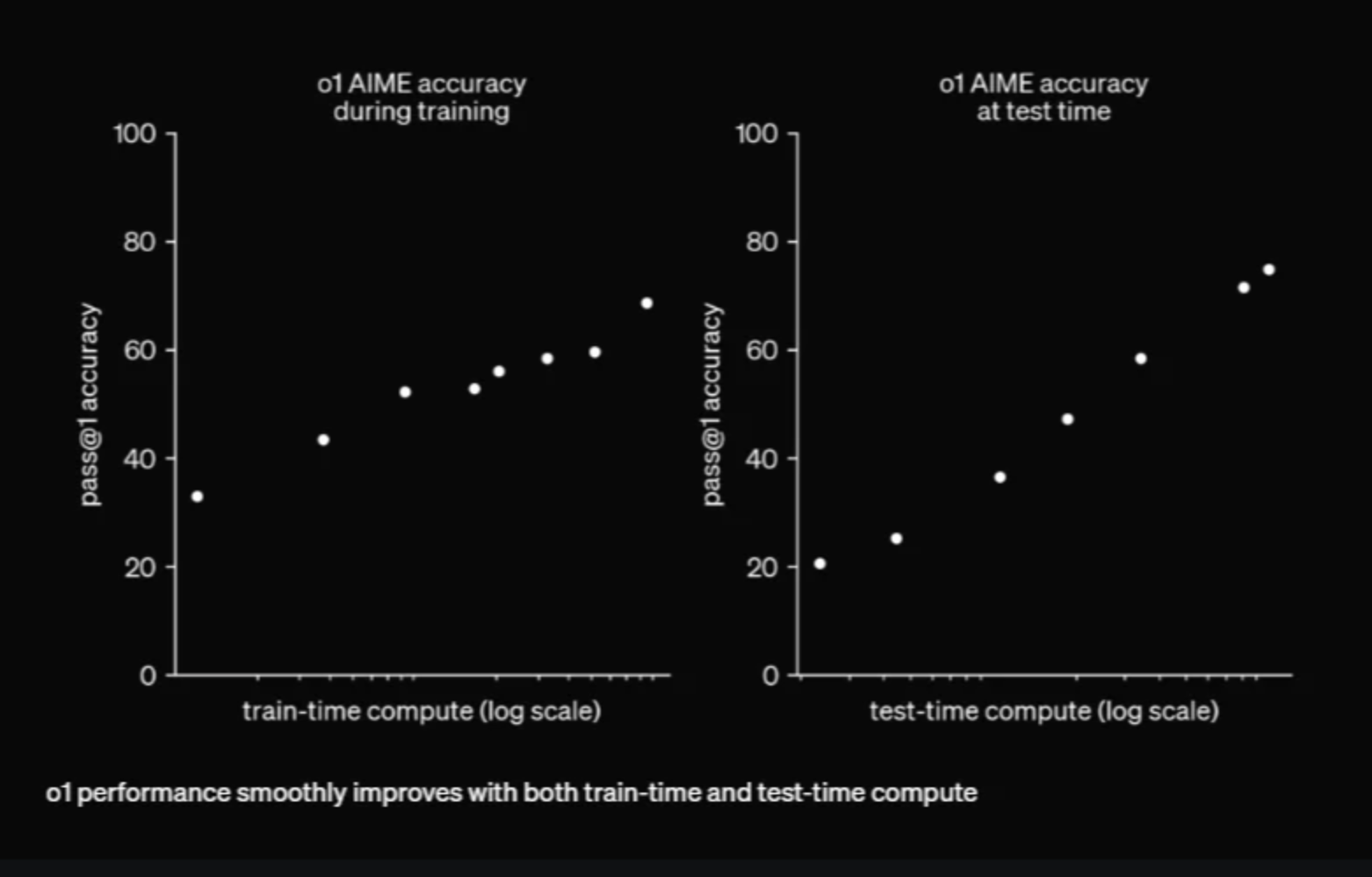
\The most important graph in the world right now—more about ithere\
Current lines of investigation aim to keep the scaling curves going. Techniques like Mixture-of-Experts (MoE), model distillation, and sparsity aim to keep as many parameters as needed for complex tasks while deactivating or compressing the parts of the network that are rarely used.
Google’s Gemini 1.5/2 stands out for its drive toward efficiency. While it is still large, its architecture reportedly incorporates fine-grained concurrency, advanced quantization, and other hardware-level optimizations that reduce computational waste. Meanwhile, OpenAI’s o3 has received praise for its improved training pipeline that adapts batch size and learning rates to reduce “idle GPU hours.” DeepSeek’s approach, focusing on domain specificity, also leads to efficiency gains because the model does not need to carry the knowledge burden of every domain under the sun. Developers and organizations must weigh the cost and resource demands of a “bigger is better” approach against the potential for more specialized or more carefully optimized solutions.
VIII. Robustness and Consistency: Reliability Under Pressure
Robustness captures a model’s stability when encountering adversarial prompts, ambiguous context, or subtle variations in input. A robust LLM is less likely to produce contradictory or bizarre outputs when faced with tricky questions. Recent research highlights the improvements made by advanced LLMs in this domain, but also underscores the persistent challenges that remain.
A variety of adversarial benchmarks exist to measure robustness, but research is ongoing here. Concepts like data poisoning have entered the lexicon and superceded work on earlier datasets like HellaSwag and TruthfulQA. The idea is to systematically challenge an LLM’s ability to avoid plausible-sounding misinformation or to maintain consistency across repeated queries that are semantically equivalent. While older GPT-series models often faltered on these tests, systems like Anthropic’s Claude 3.7 and OpenAI’s o3 and o1 models now show markedly better performance. One reason is their adoption of self-consistency decoding, in which the model generates multiple reasoning traces and converges on the most coherent final answer.
Despite these advances, perfect robustness remains a dream rather than a reality. Prompt hacking, adversarial rephrasing, or conflicting instructions can still trick LLMs into unreliable outputs. In real-world deployments such as healthcare triage systems or financial planning tools, even a small fraction of unstable answers can have huge negative repercussions.
Continual stress-testing, combined with a defensive approach to prompt engineering, is essential to ensure that the model maintains consistent performance in the face of deliberate or accidental attempts to confuse it. As with most of these continuums, better training data, more advanced fine-tuning, and ongoing research into interpretability are likely to further stabilize LLM behavior over time.
IX. Ethical Bias Mitigation: Reducing Harm While Preserving Utility
Ethical bias in LLM outputs is not a novel concern, but it remains one of the most important aspects of responsible AI development. Models trained on vast troves of internet data inevitably absorb societal biases, stereotypes, and outdated assumptions. These biases can manifest in harmful ways, whether by producing discriminatory language or by perpetuating stereotypes about gender, race, or political views. Efforts to address bias thus target different parts of the LLM lifecycle: from data curation (pre-model) to architectural changes and adversarial training (in-model) to output filtering and RLHF alignment (post-model).
Modern models all incorporate sophisticated debiasing strategies. The “Tracing Thoughts” methodology from Anthropic (cited earlier) reveals how certain attention heads and feed-forward blocks correlate with biased outputs. By identifying these “hotspots,” developers can apply more targeted interventions. Similarly, OpenAI uses carefully designed RLHF processes, employing diverse groups of human labelers to ensure that the model’s outputs align with widely held ethical standards while minimizing harmful or offensive language.
Nonetheless, it’s an elusive dream to eliminate bias entirely. The complexities of real-world data, combined with the difficulty of defining “fairness” for diverse audiences, mean that some residual biases are almost certainly going to remain. For this reason, many researchers advocate continuous monitoring, updated benchmarks and creating new frameworks that measure context-specific bias. Another area of innovation is applying domain specialization specifically for debiasing—fine-tuning a model on curated data that corrects or balances known historical and social biases. Yet, balancing that approach with the goal of preserving the raw creativity and knowledge within LLMs can be delicate, illustrating another tension on the continuum between total risk aversion and unconstrained expression.
X. Bridging Theory and Practice: Designing and Deploying Better LLMs
Given these nuanced continuums, how can developers, researchers, and policymakers move forward responsibly? First, the recognition that LLMs are not universally correct or universally flawed is essential. Each continuum suggests a distinct set of best practices that can be implemented to nudge a model toward more reliable performance.
One practical recommendation is the incorporation of transparency and interpretability techniques directly into the model development cycle. By applying integrated gradients, SHAP values, or causal tracing early in the training pipeline, engineers can detect emergent biases or factual weaknesses before deployment. This proactive approach can reduce the risk of large-scale failures and provide clear pathways for corrective measures.
Additionally, robust prompt engineering stands out as both an art and a science. Because so many of the above dimensions—reasoning, factuality, and consistency in particular—depend on the careful structuring of input queries, organizations that rely on LLMs must establish standardized guidelines for prompts. This might involve adopting chain-of-thought prompts for tasks requiring systematic reasoning, or thorough instructions that anchor the model’s answers to external data sources for better factual grounding. Tools like FormatSpread and PromptEval can assist by quantifying how different prompt formats affect the stability of outputs.
XI. Where We Are Today: Embracing the Complexity of Modern LLMs
Modern LLMs are neither infallible fountains of wisdom nor hopelessly flawed purveyors of nonsense. By exploring them along multiple overlapping continuums—encompassing factuality, reasoning, transparency, agency, prompt sensitivity, domain specialization, computational efficiency, robustness, and ethical bias mitigation—we gain a far richer and more accurate understanding of what these systems can and cannot do. Models like OpenAI’s o3, Google’s Gemini series, Anthropic’s Claude 3.7, xAI’s Grok 3, and DeepSeek each exemplify different strengths and vulnerabilities, and doing good work with AI involves understanding these models carefully for your use-case across these continuums. There is no shortcut here!
You can’t make blanket assumptions about models! Looking into techniques such as chain-of-thought prompting, causal tracing, retrieval-augmented generation, and self-consistency decoding reveals that LLM performance is highly dependent on context, data availability, and even subtle changes in prompt design. These methods also illuminate the reasons behind improved factual accuracy or emergent planning-like behaviors, clarifying why it is more productive to describe these systems as occupying specific positions on each continuum rather than labeling them outright as “trustworthy” or “unreliable.”
Crucially, understanding these gradients can inform how we use LLMs in practice. For high-stakes tasks, a blend of domain specialization and retrieval-anchored approaches is often advisable. Where interpretability matters—such as auditing for bias or verifying factual claims—techniques like attribution graphs and integrated gradients can provide partial insight into the “why” behind a model’s outputs. Policymakers and developers alike can harness these multidimensional insights to create guidelines, standard prompts, and deployment strategies that minimize risks and maximize benefits.
As these models advance in complexity, the gulf between simplistic myths and the reality of LLM function will only widen. When we view LLMs through a binary lens—believing them to be either magical or malevolent—we may be caught off guard by their nuanced behavior.
By contrast, those who appreciate the multi-dimensional nature of these systems will be better prepared to harness their capabilities responsibly and effectively. With continuing research into interpretability, robust training methods, ethical alignment, and domain adaptation, the potential to refine LLM performance across these key continuums remains enormous. In the meantime, acknowledging the intricate, “in-between” reality of LLM operation is the crucial first step toward truly understanding—and safely unleashing—the power of large language models in our rapidly evolving technological landscape.
Let’s celebrate recent efforts to pry open the black box of LLMs and use the knowledge we’re gaining to understand better these amazing tools we’re all using every day.
For more on AI, subscribe and share!
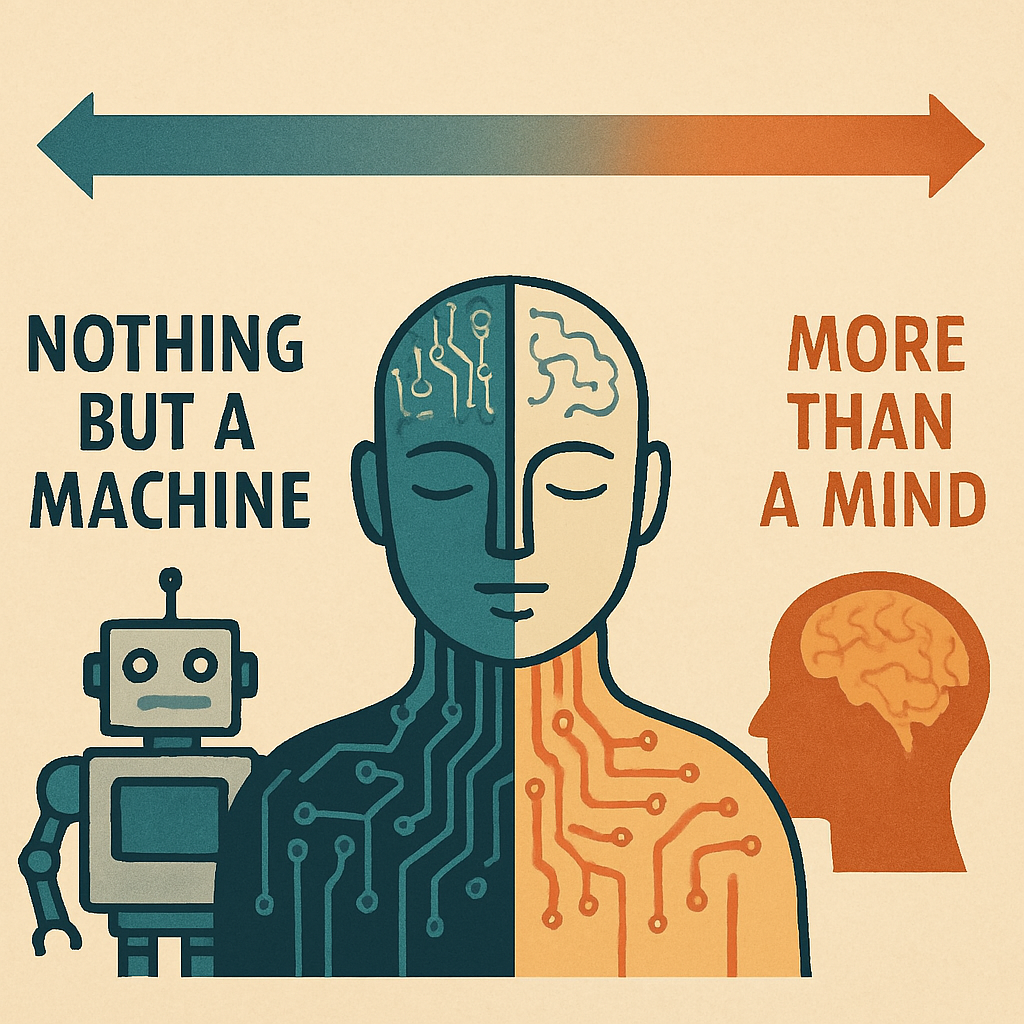
\I love that ChatGPT-4o can just make a self-referential image like this!\
References and Additional Reading
Anthropic. “Tracing Thoughts in Language Models.” Retrieved from
<https://www.anthropic.com/research/tracing-thoughts-language-model>
Transformer Circuits. “Attribution Graphs – On the Biology of a Large Language Model.” Retrieved from
<https://transformer-circuits.pub/2025/attribution-graphs/biology.html>
Wei, Jason, et al. “Chain-of-Thought Prompting Elicits Reasoning in Large Language Models.”
<https://arxiv.org/abs/2201.11903>
Ouyang, Long, et al. “Training Language Models to Follow Instructions with Human Feedback.”
<https://arxiv.org/abs/2203.02155>
Kaplan, Jared, et al. “Scaling Laws for Neural Language Models.”
<https://arxiv.org/abs/2001.08361>
Hoffmann, Jordan, et al. “Training Compute-Optimal Large Language Models.”