In all the chatter about 4o's new image mode, you might have missed Gemini 2.5 dropping plus 4o's new advanced voice mode—the unifying thread is multimodal, and it's a big deal!
By Nate
Published: 2025-03-27
URL: https://natesnewsletter.substack.com/p/the-parrot-can-talk-and-draw-multimodal
Breathe. A new day, several new AI updates to keep up with!
Today, I want to break down two major developments quickly: Google’s Gemini 2.5 and the newly improved voice mode in GPT-4o. Both are possible because of advancements in multimodal AI. I’m working on a much more in-depth piece for Gemini 2.5, but it’s a big enough deal I want to call it out here. Look at this note as the quick read on some stuff that’s strategically important that you might otherwise miss this week in the heap of AI news that constantly floods the channels.
First, what is multimodal?
Multimodal is what underlies the stories of the week here.
Multimodal AI is a transformative leap forward in technology—it’s about blending various data types, such as text, images, audio, and video, into one coherent system that understands and reacts to them simultaneously. Instead of operating in silos, these systems can, for instance, analyze a complex diagram, interpret accompanying data, and even pick up on tonal cues from an audio clip to offer a more complete picture of the scenario at hand. This integrated approach not only mirrors how we naturally process information but also empowers AI to provide richer, more contextually aware insights that can be applied across diverse tasks and industries.
Fundamentally, we are using transformer-based architectures to treat all tokens natively! That’s a big deal.
What makes multimodal so groundbreaking is the sheer expansion of possibilities it unlocks. Imagine a scenario where an AI reviews a live security feed while simultaneously processing text-based logs and sensor data from an industrial site, then delivers a comprehensive, real-time risk assessment. Or consider healthcare: a system could combine patient history, diagnostic images, and real-time vital sign monitoring to offer personalized treatment recommendations during a consultation. This convergence of data streams doesn’t just enhance individual capabilities—it creates an ecosystem where every piece of information interlocks, driving smarter decisions and more efficient workflows in ways that were once unimaginable.
Being native ultimately means being smarter here, even if we’re just at the beginning of figuring out how that all goes together.
Gemini 2.5: a Cognitive Leap
1. Google goes all-in on inference:
This is a thinking model. It uses chain-of-thought prompting, it now pauses to break down complex queries into logical, step-by-step processes before responding. Google is all in on reasoning, and they are using reasoning (like OpenAI) to highlight intelligence gains. In fact, this whole playbook looks a lot like o1 and o3’s rollout earlier. For example, when tasked with a multifaceted coding challenge, you’ll see it outline the problem, identify dependencies across modules, and then suggest a solution. Where have we seen that one before?
What’s the difference? Well on paper at least Gemini 2.5 looks potentially stronger than any model except o3, which kind of doesn’t count because it’s only out inside Deep Research. On benchmarks like LMArena, 2.5 is not only topping the charts but doing so with responses that clearly show its internal reasoning.
2. The Context Window:
One of the most impressive specs is its massive 1 million-token context window—which is set to expand to 2 million tokens soon. To put that in perspective, you can input an entire academic paper, a full-length novel, or a sprawling codebase, and Gemini 2.5 will maintain context throughout the discussion. I can load a 300-page technical specification into the model, and it doesn’t just recall details—it drew connections between different sections and flagged inconsistencies you might easily miss. It’s going to be a real help with complex document editing.
3. Multimodal:
Gemini 2.5 isn’t just about text. It natively processes images, audio, video, and even code. Picture this: you sketch a UI design on paper, snap a photo of it, and then ask Gemini 2.5 to generate corresponding code while suggesting accessibility improvements—all in one go. This seamless integration of multiple data types isn’t just cool; it’s practical and enables real acceleration of the product development cycle.
4. Coding Capabilities That Go Beyond Snippets:
On industry-standard benchmarks like SWE-Bench Verified, Gemini 2.5 is pushing the envelope. It’s not merely outputting code; I think it’s understanding (simple) system architecture and maintaining consistency across code files. I’ve seen examples where it generates a small application from a single prompt, debugs legacy code, and even translates code between languages with minimal errors. These strike me right now as incremental vs. exponential gains, but that doesn’t mean the model isn’t very good! It is, and I want to push it a bit more for my full write-up.
GPT-4o’s Voice Gets Natural
1. Interruption-Friendly Dialogue:
Voice interactions have long felt robotic and stilted, but GPT-4o’s latest update changes that dramatically. The new voice mode interrupts less and supports natural pauses, which means you can actually interject mid-sentence, rephrase your query, or ask follow-up questions without breaking the flow. This isn’t just about clarity—it’s about making the conversation feel genuinely human. If you’ve ever found traditional voice assistants frustrating, the improvements here might make you reconsider. You can see a demo here.
2. Enhanced Prosody and Context-Aware Responses:
What sets this update apart is its refined prosody modeling. Prosody is a fancy word for vocal patterns of rhythm. GPT-4o now better adjusts tone and pacing based on the context of your conversation. Whether you’re discussing complex research or just chatting about your day, the voice output adapts to deliver a response that’s not only clear but also emotionally and contextually appropriate. In my view it’s still not as good as Sesame here, but it’s definitely better than it was.
3. Integration with Multimodal Inputs:
Much like Gemini 2.5, GPT-4o’s voice mode isn’t isolated—it’s part of a broader multimodal system. Imagine asking your voice assistant to analyze a chart you just showed on your screen while you verbally outline a strategy. GPT-4o can merge these inputs, providing insights that factor in both visual data and spoken context. This convergence of modalities is paving the way for richer, more dynamic interactions. You can ask it to look at code and it will have a conversation with you about the code, help you with your prompting, etc.
The Quiet Ones Matter Too!
Look, neither of these made headlines. Google continues to struggle with product surface for its models. That’s not getting fixed today. Or next month. ChatGPT sort of stepped on its own voice team by dropping images at the same time, probably because ChatGPT needed to reclaim narrative after Gemini dropped an incredible image model just a couple weeks ago.
But don’t let the politics of the moment distract you from the capabilities of the models here. What we’re seeing overall is a continued pattern of relentless improvements week over week in what models are capable of—the fact that we are no longer surprised when a new incredible model drops is the news, because it means we’re starting to get used to exponential scaling pace. Expect that pace to continue.
The overall trend of model intelligence gain shows no signs of stopping, and in particular the progress on voice interfaces and coding capabilities continues to shine. Those are both key ingredients for agentic AI systems, and I expect much more movement there by end of year. In the meantime, I’ll be working on a much more detailed write up of Gemini 2.5—it deserves more attention than it’s getting!
For more on AI, subscribe and share!
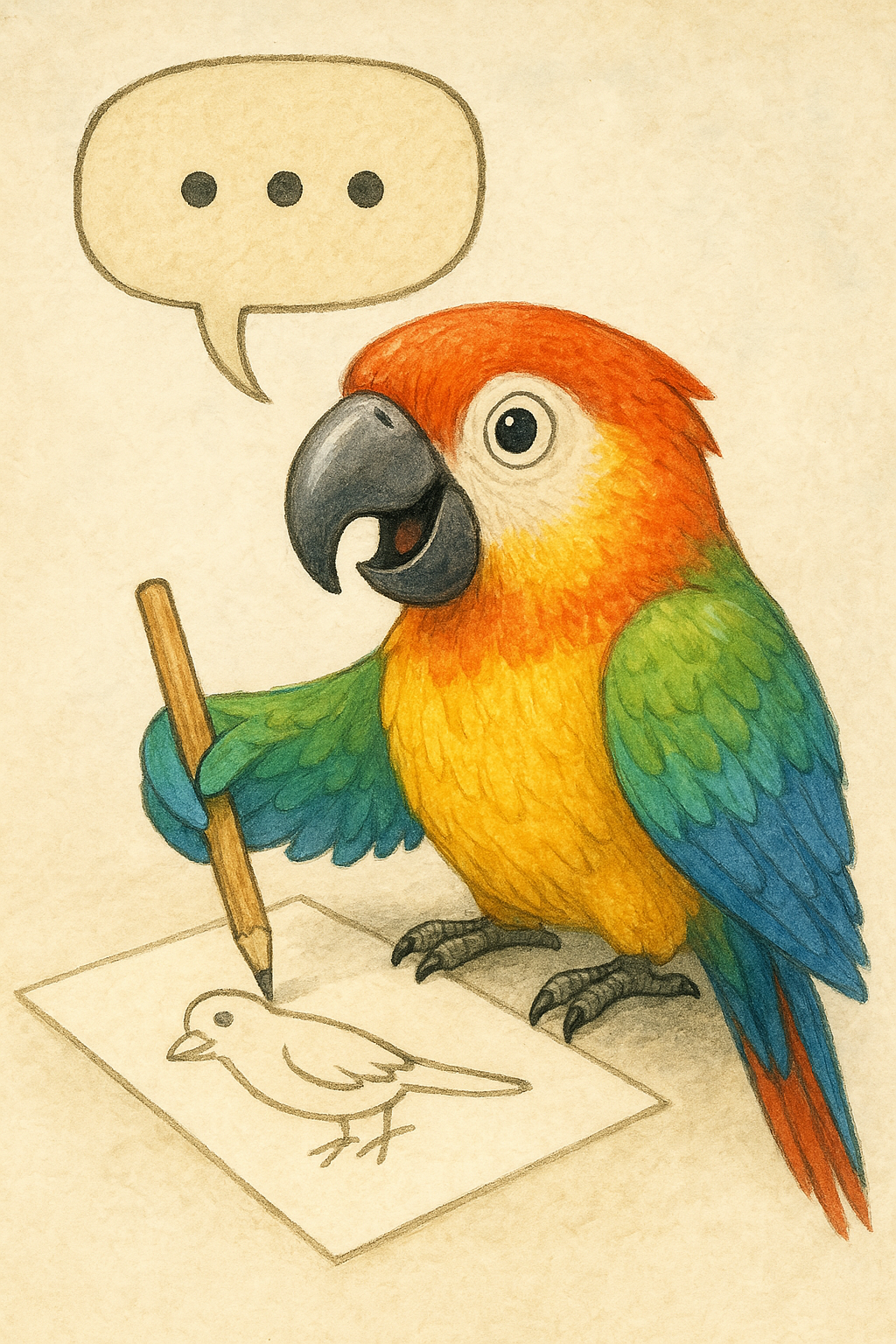
\The parrot has the little iPhone … and I think that’s cute lol\