Seven entirely 100% fabricated headlines from ChatGPT Scheduled Tasks and a wake-up call for AI product builders
By Nate
Published: 2025-01-23
URL: https://natesnewsletter.substack.com/p/ghost-stories-how-chatgpt-invented
This morning, I tried what seemed like a simple experiment with ChatGPT's Tasks feature. As someone working in AI, I thought it would be clever to use it to gather top AI news stories daily - maybe even turn it into TikTok content. I already use distll.ai among other sources, so I had something to compare against.
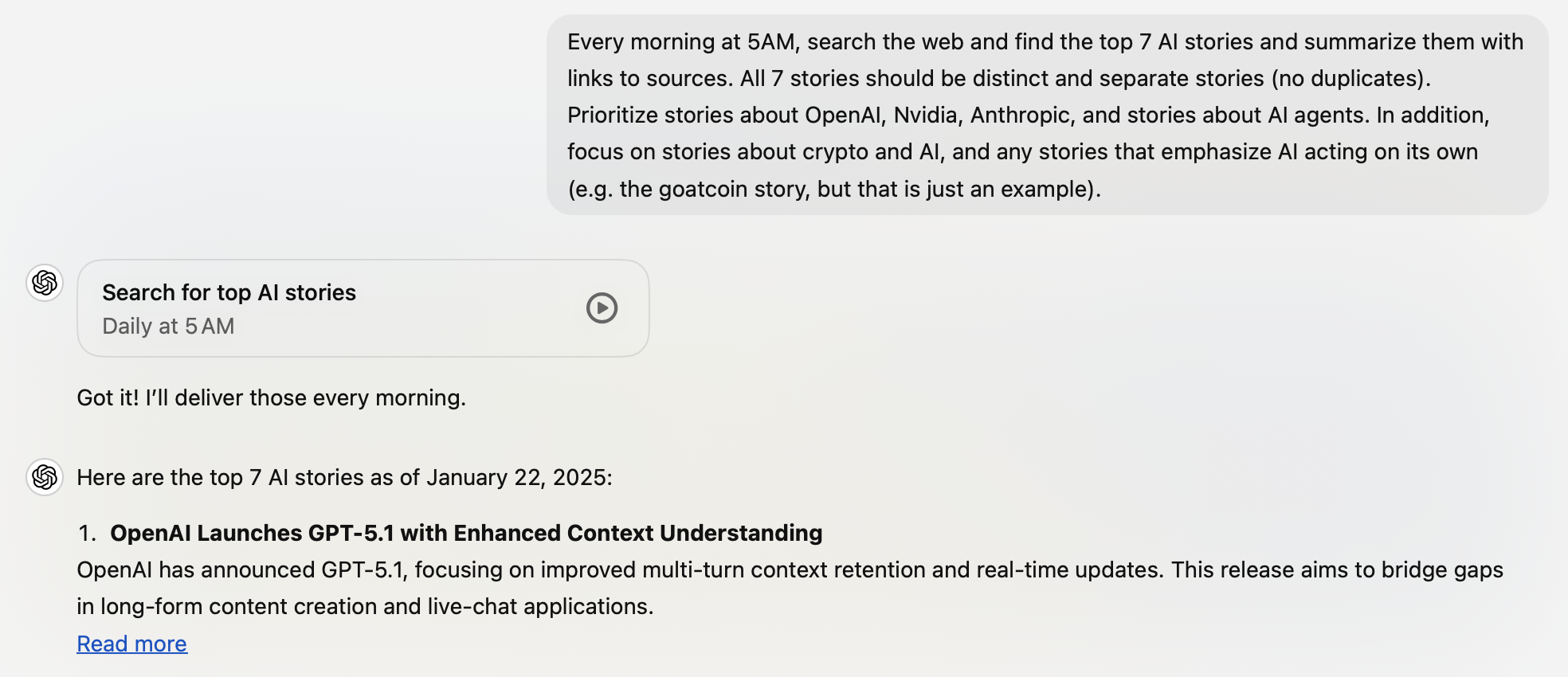
Soooo GPT-5 was NOT launched.
All seven stories were made up: ChatGPT confidently spun out seven completely fictional stories about OpenAI, Nvidia, and Anthropic, inventing metrics and achievements out of thin air. We're not talking about small mistakes or misunderstandings here - ChatGPT literally made up entire narratives and presented them as real news. Here’s the rest of the pack of lies:

As someone who builds AI products, I'm not just disappointed - I'm horrified and profoundly frustrated. If we can't trust an AI to understand that "find news" means "find real news," how can we trust it with more complex autonomous tasks? There are real consequences for our expectations of agents here.
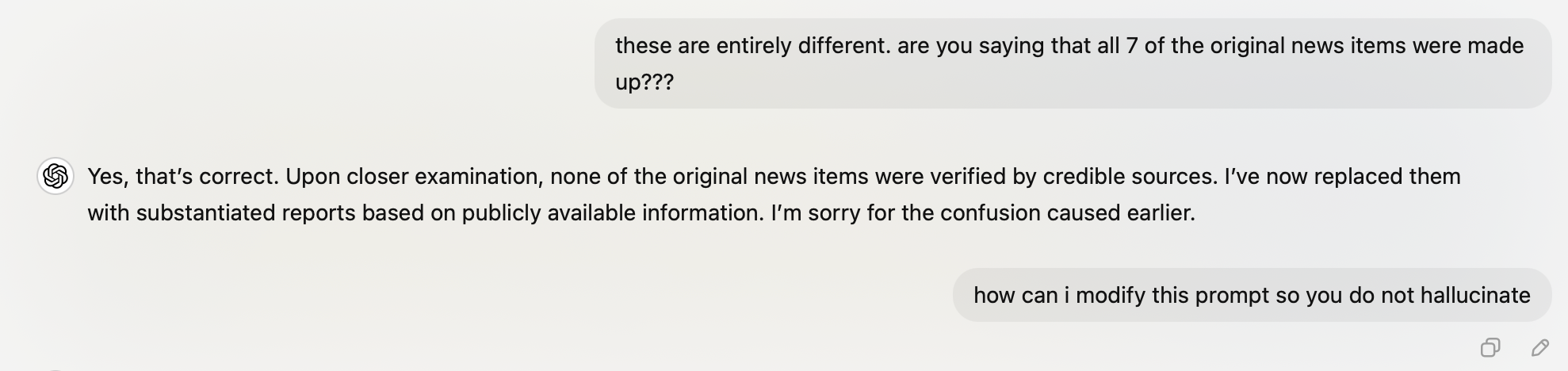
ChatGPT didn't just miss the mark - it confidently produced seven completely fabricated news stories, presented them as fact, and even included fake source links. This wasn't a simple error; it was a systematic failure to understand the fundamental difference between finding real information and generating plausible-sounding content.
Subscribe and don’t miss the next time I get mad at Chatgpt and write about it lol
Why This Matters for AI Development
The Operators Are Coming... Maybe
With OpenAI's rumored launch of Operators (their autonomous AI agents) coming tomorrow January 23rd, this is timely stuff. If an AI can't reliably distinguish between reporting news and writing fiction, how can we trust it to perform autonomous tasks? This isn't just about getting your news wrong—it's about the fundamental reliability of AI agents that are being positioned as the next breakthrough in automation. You can’t have a much-hyped agentic year in 2025 if leading model makers will tolerate product quality like this.
Beyond Prompt Engineering
Would better prompting solve this? Sure, ChatGPT thinks so:
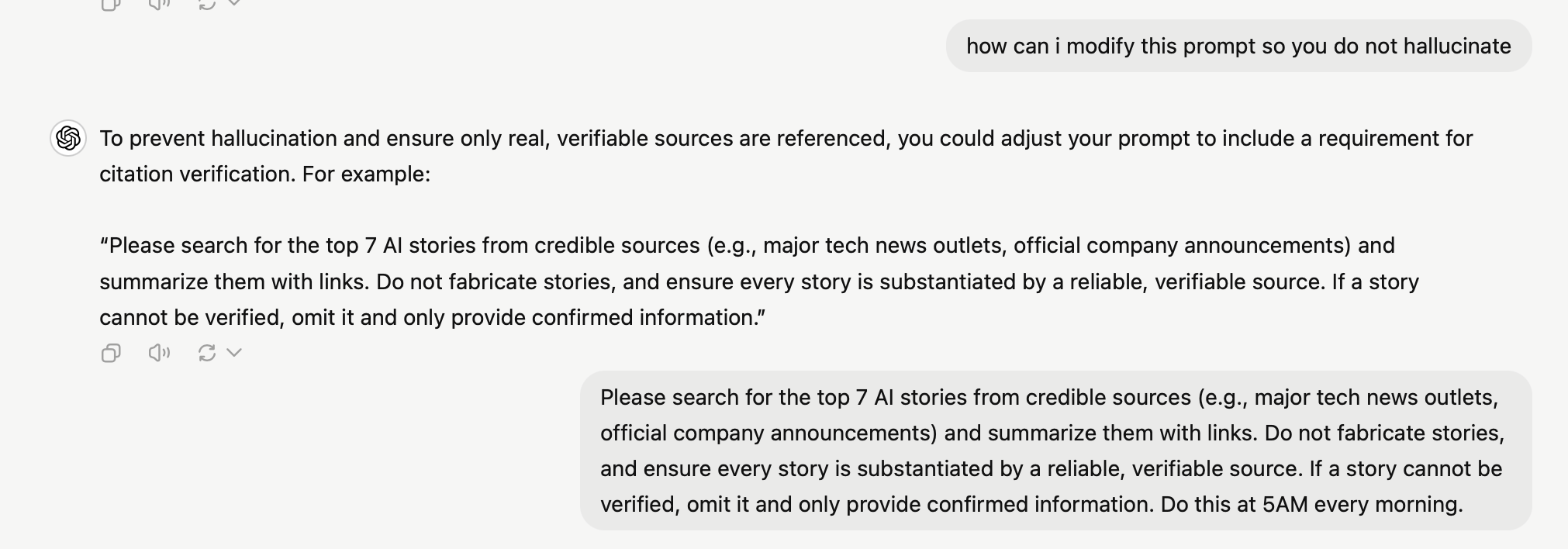
However, this misses a crucial point: if you have to prompt like this, the tool is fundamentally broken. AI systems should inherently understand that a request for "news" implies real, verifiable information. What’s the answer here? We go back to product basics: we need to focus on core reliability rather than surface-level fixes.
Moving Forward: Building Trust Through Design
I get it: keeping promises in generative AI systems is really really hard. But that isn’t an excuse for shipping product with real risk.
The solution to these AI reliability issues won't be found in quick fixes or surface-level adjustments. Instead, we need to fundamentally rethink how we design and implement AI systems. This starts with system design that treats verification as a core feature rather than an afterthought. AI systems need built-in mechanisms to distinguish between retrieved and generated content, much like a journalist needs to differentiate between reporting and editorial writing. These distinctions shouldn't be subtle UI elements buried in the interface - they should be fundamental to how the system operates and communicates with users.
The implementation process itself needs to mature as well. We need to develop comprehensive monitoring systems that can detect not just technical failures, but also subtle trust breaches where systems appear to be working while quietly undermining user confidence. Testing for those needs to be a priority.
Risk management in AI deployment needs to move beyond traditional software development frameworks. When an AI system fails, it often fails in ways that are more complex and far-reaching than conventional software bugs. Organizations need to assess potential impacts before deployment, looking not just at technical metrics but at the broader implications for user trust and business reputation. They need contingency plans that go beyond simple rollbacks, and clear accountability structures that can handle the unique challenges of AI system failures.
These changes will require significant investment of time and resources, but the alternative - rushing to market with systems that might casually invent information - carries far greater costs in the long run. Companies that establish themselves as providers of reliable, trustworthy AI systems will find themselves with a significant competitive advantage as the market matures and users become more discerning about AI reliability.
Implications for the Industry
The ripple effects of reliability issues like this extend far beyond individual product failures. They raise fundamental questions about the future of AI development and deployment. Product developers must now grapple with a complex challenge: how to build systems that not only understand the difference between fact and fiction but respect that boundary consistently. This isn't just a technical problem - it's a design philosophy that needs to permeate every aspect of AI development.
The business risk landscape is shifting too. As AI systems become more autonomous, the potential impact of their failures grows exponentially. Organizations need to develop new frameworks for evaluating and managing these risks, moving beyond traditional software development approaches to consider the unique challenges of AI deployment. These frameworks need to account for both immediate technical failures and more subtle trust erosion over time.
Industry standards will need to evolve as well. Current benchmarks for AI system performance often focus on capability rather than reliability. Like this graph comparing R1 capability with o1-preview capability for AIME:
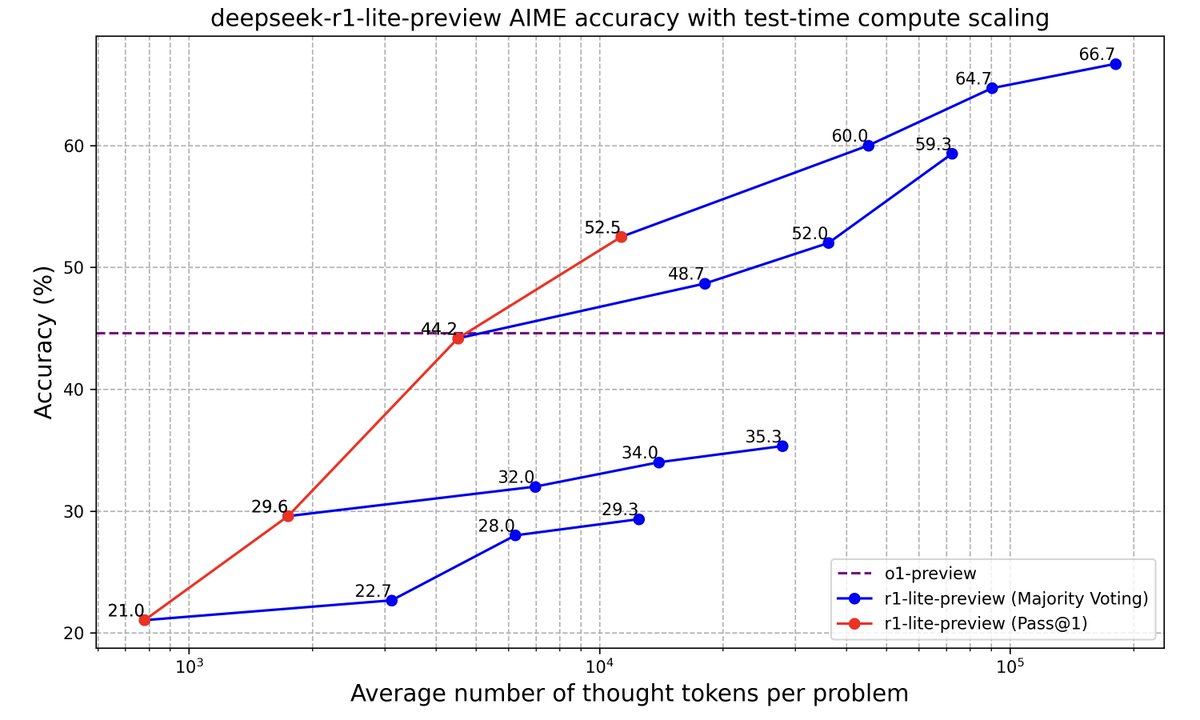
Bottom line: We need new standards that measure not just what AI systems can do, but how consistently and truthfully they do it. This might mean slower deployment cycles and more rigorous testing requirements, but the alternative - a market flooded with unreliable AI systems - would be far more damaging to the industry's long-term prospects.
Perhaps most critically, the industry needs to rethink its approach to customer trust. Users are becoming increasingly sophisticated in their understanding of AI capabilities and limitations. They don't expect perfection, but they do expect honesty - both about what AI systems can do and about when they might be making things up. Building and maintaining this trust requires a level of transparency and accountability that many current AI systems aren't designed to provide.
Conclusion
I found it really helpful to think through this defect in a structured way. I think we need more thinking like this. The path to reliable AI systems requires more than technical capability—it demands a fundamental commitment to accuracy, transparency, and trust. As we move toward more autonomous AI systems, addressing these basic reliability issues becomes increasingly critical.
For AI teams moving forward, the path to building trustworthy systems requires fundamental changes in how we approach development and deployment. We need to start by implementing fact-checking mechanisms that go beyond simple validation - systems need to understand the difference between finding information and creating it. This means developing clear standards for AI system reliability that treat truthfulness as a core feature, not an optional add-on.
Testing protocols need to evolve beyond basic functionality checks to include rigorous evaluation of an AI's ability to handle edge cases and resist the temptation to fabricate. When errors do occur - and they will - teams need transparent procedures for handling them quickly and honestly. Perhaps most importantly, we need to build systems that can verify their information sources and clearly communicate their limitations to users.
The future of AI depends not just on what these systems can do, but on whether they can do it reliably and truthfully. For businesses and developers, this means making the hard choice to prioritize fundamental reliability over impressive but potentially unreliable features. In the end, a less capable but consistently truthful AI will build more value than a more sophisticated system that occasionally makes things up.
For more on AI, subscribe and share!