The hard way to learn faster
By Polymath Investor
Published: 2026-08-20
URL: https://www.polymathinvestor.com/p/how-to-cement-knowledge-part-i
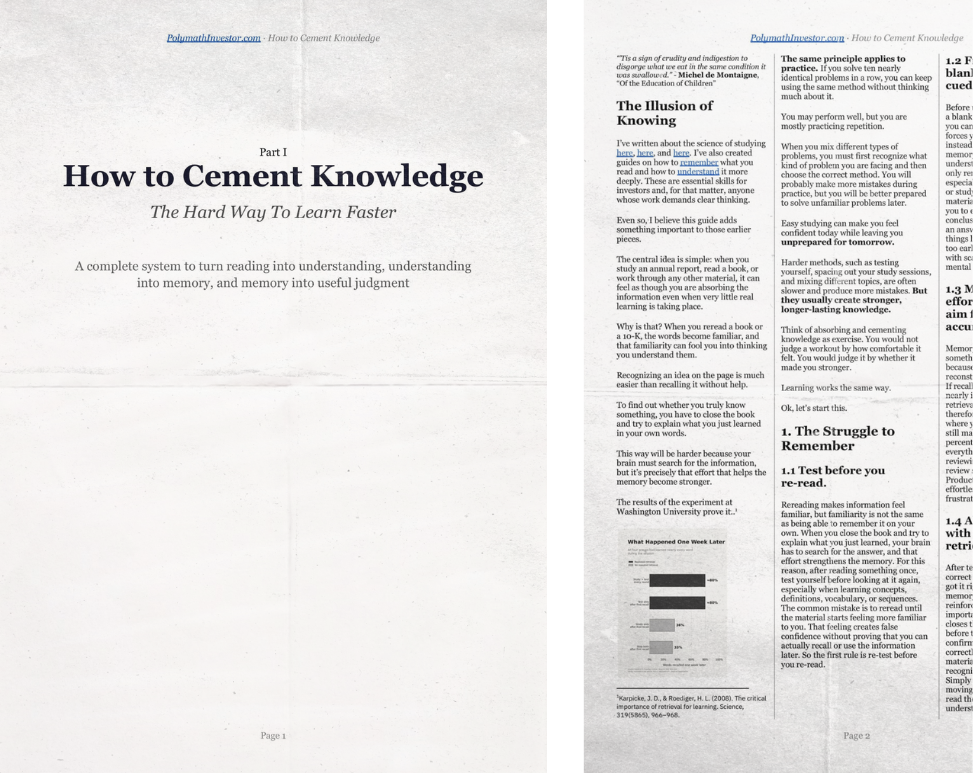 [Full Version printable PDF available at the end.]
“’Tis a sign of crudity and indigestion to disgorge what we eat in the same condition it was swallowed.” — Michel de Montaigne, “Of the Education of Children”
Let me tell you a story Charlie Munger used to share.1
It is 1919. Max Planck has just won the Nobel Prize for discovering that energy comes in packets, and every university in Germany wants to hear about it. So he takes the lecture around the country. City after city, the same lecture on the new physics, over and over again.
His chauffeur drives him to all of them. And he listens.
After weeks of this, the chauffeur makes an offer. “Professor, I have heard your lecture so many times I could give it myself. Why not rest for an evening? I will speak. You sit in the front row and wear my cap.”
Planck, amused, agrees.
That night, in Munich, the chauffeur walks to the lectern and delivers the lecture. Flawlessly. The pacing, the pauses, the little jokes. Nobody suspects a thing (!)
Then a professor in the audience stands up with a question. A real one, one that hasn’t been asked before.
The chauffeur does not blink. “I am surprised to receive such an elementary question in an advanced city like Munich. I will let my chauffeur answer it.”
Ok, so what’s the point Munger was trying to make here?
That there are two kinds of knowledge.
Planck knowledge is what you cement by doing the work. Chauffeur knowledge is what you get by hearing (or reading) the words enough times.
Did the story ever happen? I don’t know, and judging by what I read online, almost certainly not. Munger did not care, and neither do I. The story is interesting because everyone knows a chauffeur (and we usually think it's someone else).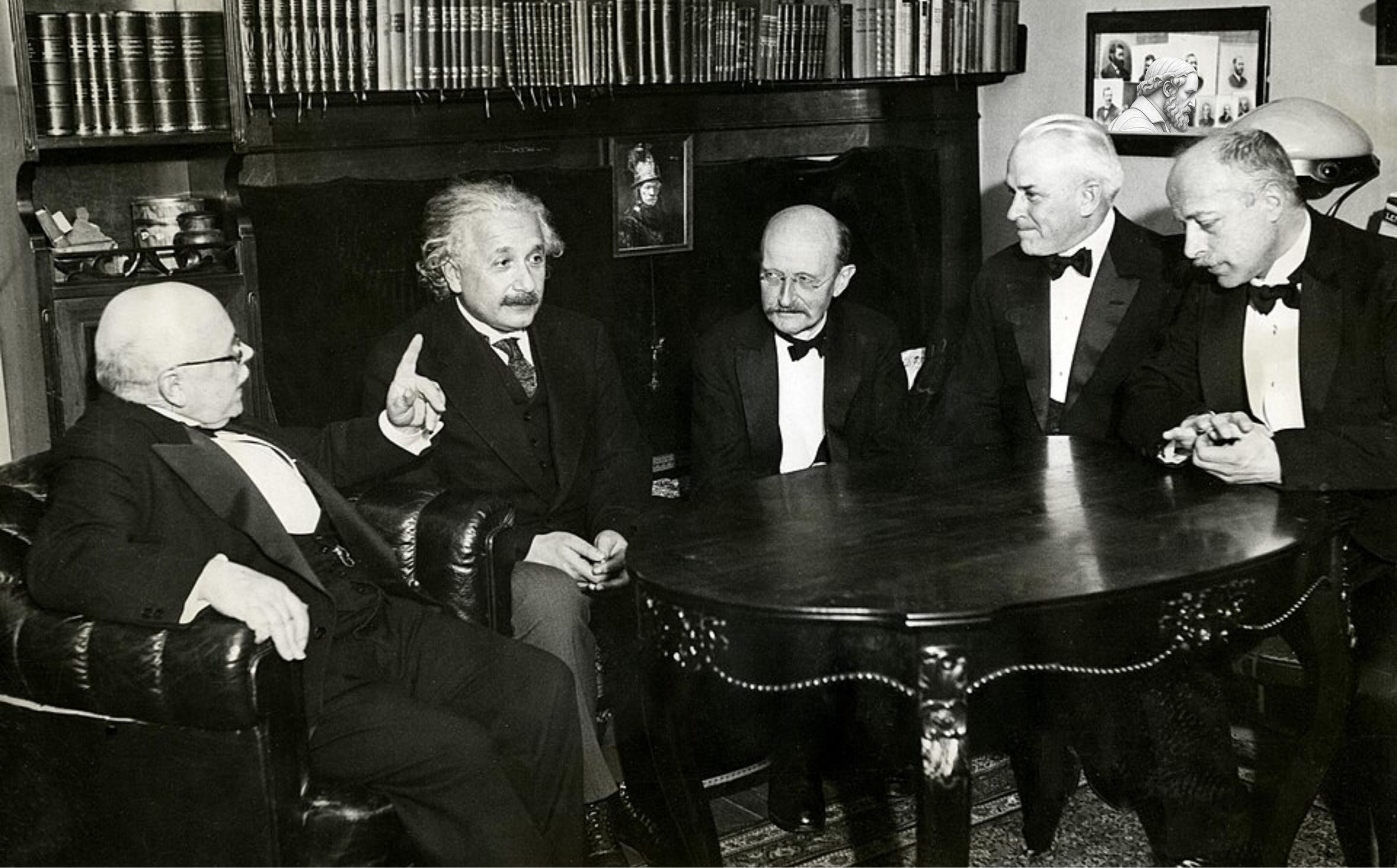 Who’s the chauffeur? | Walther Nernst, Albert Einstein, Max Planck, Robert A. Millikan and Max von Laue at a dinner given by von Laue in Berlin, 1931. Unknown photographer / Nationaal Archief, via Wikimedia Commons. Public domain.
But let’s get a little deeper and ask the question: how do you know which type of knowledge you actually have? You would think you could just tell. And I would have certainly thought I could.
Apparently, we cannot. And two psychologists proved it.
How, you may ask?
Our quest takes us to a lab at Washington University in St. Louis. You have college students sit at computer screens learning Swahili vocabulary.
Forty word pairs. Mashua means boat, for example.
Nobody walks in knowing Swahili, which is the exact reason why the researchers, Jeff Karpicke and Henry Roediger, picked it.
The way the study goes is: the students study a word, then get tested on it. Study, test, study, test. They complete four alternating rounds of studying and testing. So far, everyone is equal. Every student has “learned” every word once.
Then comes the division into groups.
Once a student gets a word right for the first time, the experiment splits into four paths. One group keeps seeing the complete pair, mashua, boat, but is never tested on it again. Another stops seeing the answer and must keep getting it from memory: mashua means... what? A third group continues both studying and testing every word. The last group drops a word entirely once it has been answered correctly. In simple terms, some students keep seeing the answer, while others have to keep producing it themselves.
More studying, or more retrieving. That is the whole experiment.
Before leaving, each student predicts their score on next week’s final test. The average guess is about fifty percent, in every group. Everybody walks out equally confident.
A week later, the students who kept restudying, meaning just reading and re-reading the word pairs, remember about 36% of the words. The students who kept retrieving remember about 80%.
Same material, same time in the lab, well over double the retention (!) 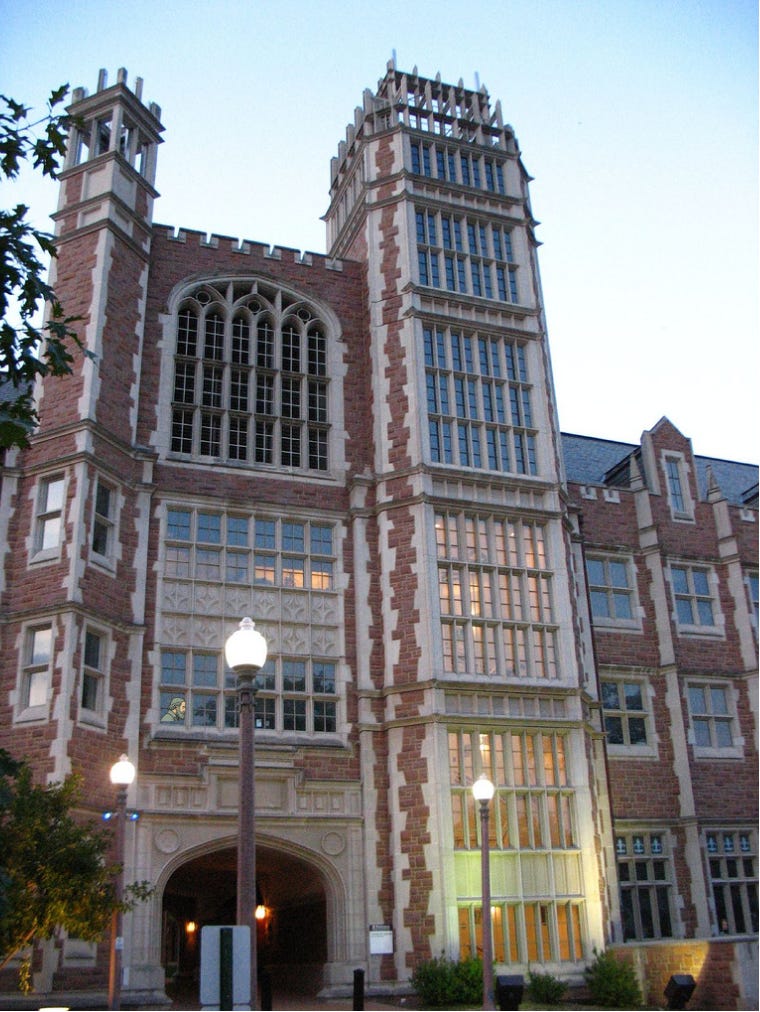 For the Swahili classes? | Baili Min, Psychology Building, Danforth Campus of Washington University in St. Louis, 2006, via Wikimedia Commons, CC BY 2.5
But what is interesting here is that the predictions each group made about its own performance were uncorrelated with the results.
What blows my mind is that the students that were to score more than twice the retention of the other group felt nothing special, nothing different at all.
I think that last part is why the study ended up being published in Science.2
So what do we learn from all this?
Every time you reread a chapter and you feel that familiarity, every time a highlighted PDF looks like something you already know, that familiarity may be just chauffeur knowledge forming.
That is what recognition feels like. It is not what knowing feels like, because, remember from the study, knowing does not have a feeling.
Hey there!
If you enjoy the Meta Skills series, join using the special-offer button below and get 60% off your first year as an annual member. The offer is available until August 31.
I will continue to publish some content for free, but a paid membership unlocks the full body of work:
-
The complete Meta Skills library: Every field manual published so far, available as a downloadable PDF, plus each new manual as soon as it is released.
-
12–14 high-conviction investment write-ups a year: Detailed, data-backed research on underfollowed companies with the potential for asymmetric upside.
-
The Trend Tracker: Emerging themes traced from early signals and industry data to the public companies best positioned to benefit, from AI infrastructure chokepoints to the defense upcycle.
-
The Investing Library: Forensic accounting toolkits, sector rulebooks, mental models, historical base rates, and practical frameworks to sharpen your investment process.
-
Every full post and the complete archive: Every deep dive, research report, and past edition, with nothing locked away.
Offer closes August 31.
Why does this matter more now?
The investor case is obvious. But most careers now work the same way. New sectors, new tools, new markets every few years, whether we plan it or not.
And because just reproducing text, chauffeur knowledge, is now, more than ever, cheap and available to all.
I think what’s left, what’s going to be valuable going forward is the professor’s action: asking deep questions. But deep questions only come from ideas you can produce, process, hold and make connections with. That’s what a good question is made of.
Which brings me back to the original idea of this essay. How to really cement knowledge in your brain.
I have spent the last few weeks putting together a field guide with heuristics across different areas. It is the system I wish someone had handed me twenty years ago.
Because the goal was never to deliver a lecture. The goal is to be the one who can answer the question.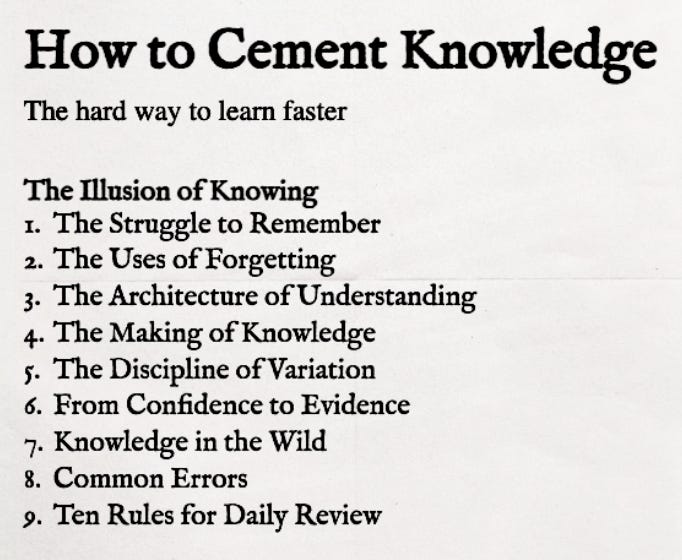
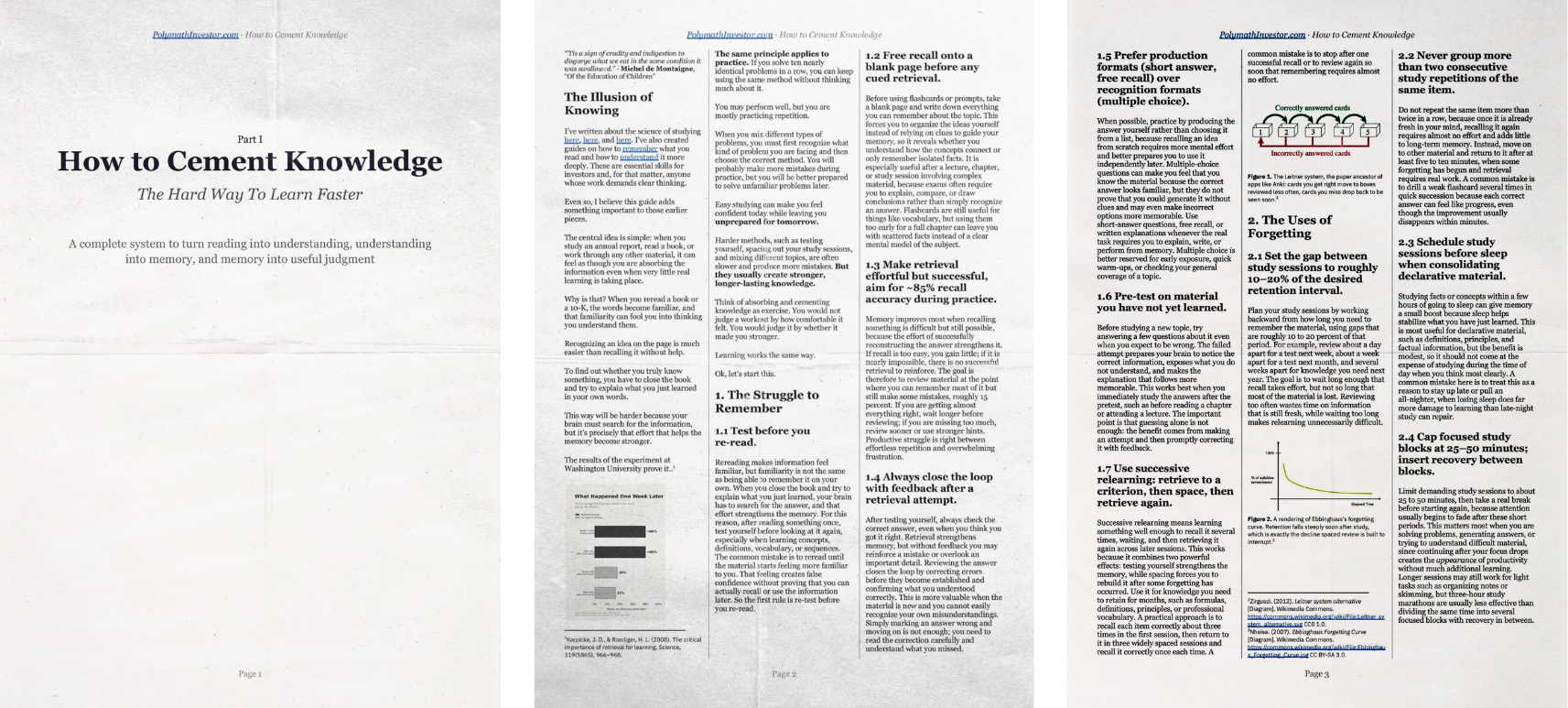
Download the PDF below: A complete system to turn reading into understanding, understanding into memory, and memory into useful knowledge.