I looked at China’s new memory champion and why it may matter far more for DRAM prices than its extraordinary valuation suggests
By Polymath Investor
Published: 2026-08-09
URL: https://www.polymathinvestor.com/p/466-in-one-day-what-cxmts-ipo-means
Note to readers: This piece is part of the Trend Tracker series, where I break down structural trends and analyze sector shifts. This time, I look at CXMT, China’s emerging DRAM champion, and what its rapid expansion could mean for the memory supercycle, global pricing, and incumbents such as Micron, Samsung, and SK hynix.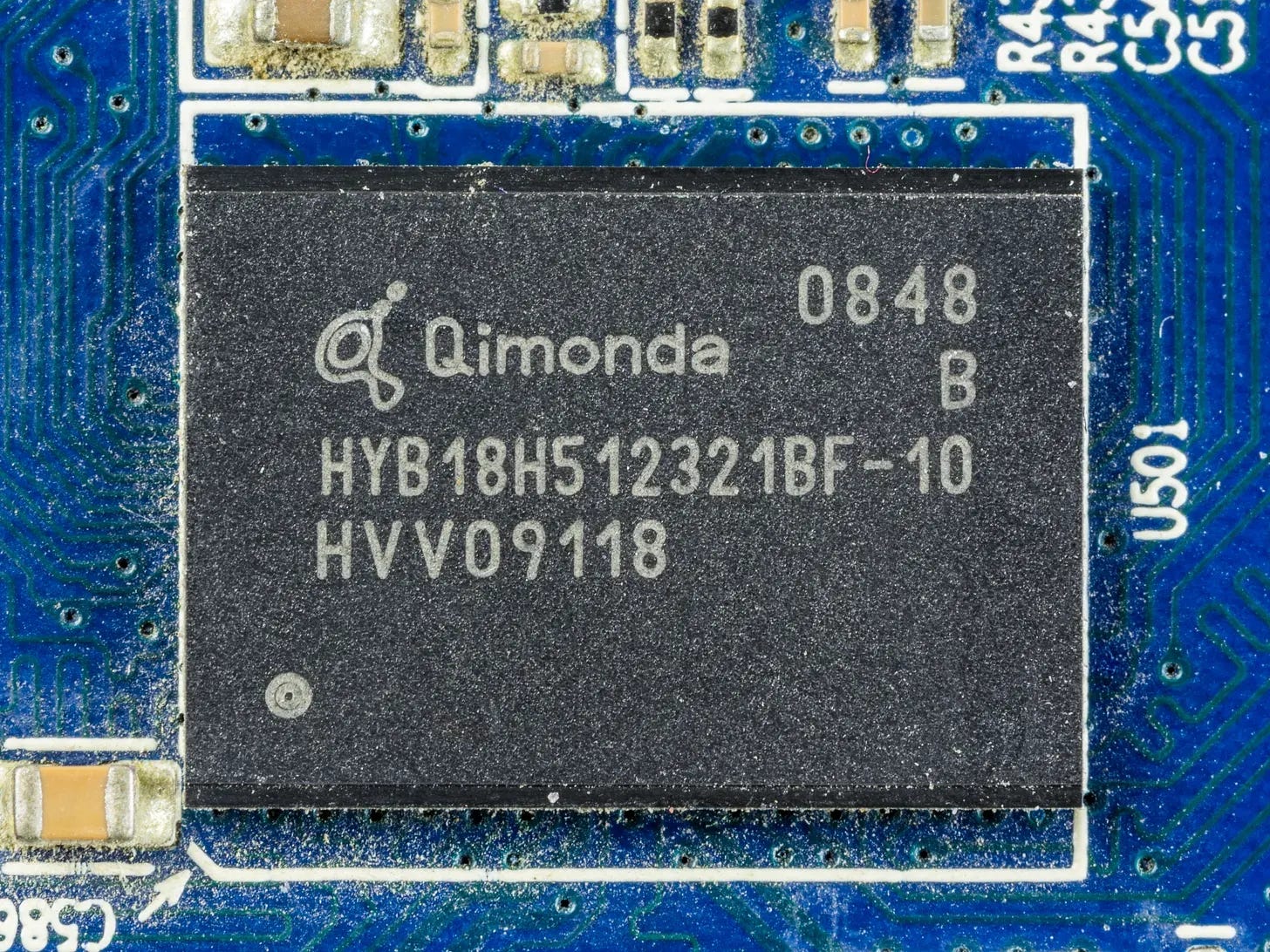 Week 48, 2008: The last of its kind | © Raimond Spekking / CC BY-SA 4.0 (via Wikimedia Commons)
Sometimes, when I start hearing about the same company from different sources, a podcast, an article here on Substack, or a post on X, I stop and pay attention.
Last week, that company was ChangXin Memory Technologies, or CXMT. Unless you follow China’s memory-chip industry, you, like most Western investors, had probably never heard the name before.
And yet, on July 27, 2026, CXMT briefly became the most valuable listed company in mainland China, overtaking the Industrial and Commercial Bank of China (ICBC).
CXMT priced its IPO on Shanghai’s STAR Market at CNY 8.66 per share. By the end of its first trading session, the stock had closed at CNY 49.00, a 466% gain in a single day.
After just a few days of trading, the company’s market capitalization was hovering around $520 billion.
So what does all this mean for the memory market? And what are the implications for Micron, Samsung, and SK hynix?
To answer all that, some perspective would come in handy. CXMT makes exactly one thing: DRAM1, the memory that works alongside the processor in your phone, your laptop, and some of the servers running AI models.
CXMT is the fourth company in the world that really matters in this industry, behind the three memory giants that together control about 92% of the market, while CXMT accounts for roughly 7–8% of global DRAM revenue.2
And yet, at around $520 billion, the market was valuing the company at more than 55 times its 2025 revenue. Keep in mind, no memory manufacturer in history has traded anywhere close to that.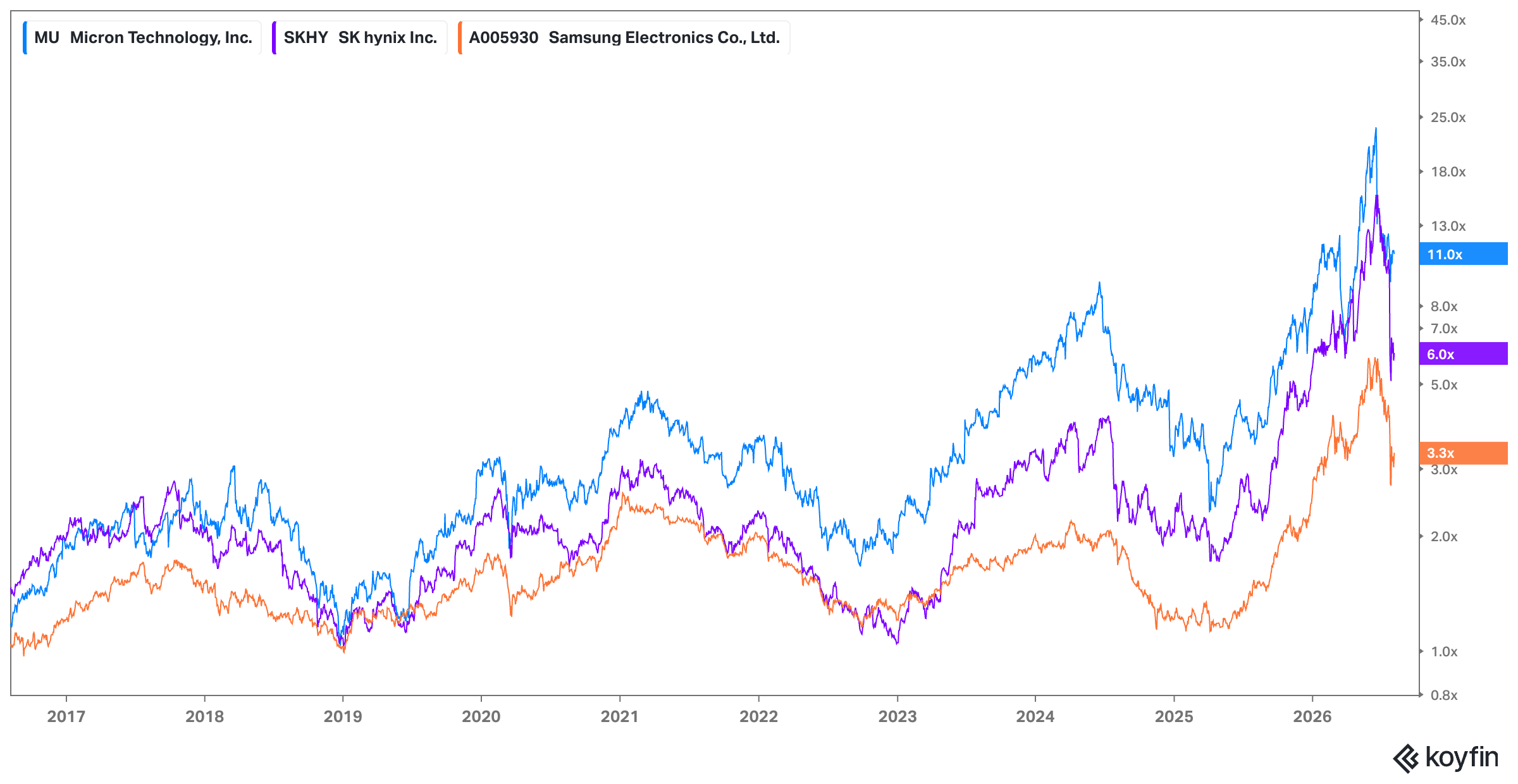 Forget about it | Koyfin
So why is CXMT so special? To understand that, let’s go back a decade.
Project 506
It is May 6, 2016, and a physicist is discussing his idea with city officials in Hefei, a provincial capital most of us have never heard of.
That physicist is Zhu Yiming.
Tsinghua at seventeen, then Stony Brook, then Silicon Valley, where he spends years designing memory chips. In 2005, he comes home and founds GigaDevice with money pooled from Tsinghua alumni. By 2016, that company is months away from its own Shanghai listing. He is, by any normal definition, done.
Instead, he’s in this room pitching one of the hardest projects in Chinese semiconductors: building DRAM from scratch in a business whose cycles are infamously violent and have threatened nearly every company that has ever tried.
So what is Zhu asking for? Funding for a project where the first phase alone needs CNY 18 billion, but the full endeavour requires CNY 150 billion, north of $30 billion in today’s money. Hefei doesn’t blink. Its investment arm puts up 80% of the capital and the deal gets a codename, reportedly, taken from the date on the calendar: Project 5063.
Now, what Hefei doesn’t have is a DRAM cell. You cannot simply buy your way in by building a fab, the fab is, relatively, the easy half. The hard half is the cell architecture4, and every commercially viable version of it is locked inside the patent estates of Samsung, SK hynix, and Micron.
So the technology has to come from outside the triad, and there is exactly one place left to look…
€30 Million For A Valuable Asset
Qimonda was Infineon’s DRAM arm, descended from Siemens and, at its peak, the largest memory maker in Europe.
In January 2009, the financial crisis and collapsing memory prices pushed the company to file for insolvency. It was dismantled over the following months.
What Qimonda left behind was probably the only deep DRAM patent base in the world developed entirely outside Korea and Idaho. And in 2015, most of it changed hands for just €30 million.
The buyer was not a chipmaker. On June 2, 2015, Polaris Innovations, a wholly owned subsidiary of Ottawa-based patent licensing firm WiLAN, acquired the vast majority of Qimonda’s portfolio: more than 7,000 patents and applications covering DRAM, flash memory, semiconductor processes, lithography, packaging, and memory interfaces, roughly 5,000 of them in the United States.
The seller was Infineon, which had taken back control of the patent estate in 2014. 7,000 patents from a company that had once been Europe’s largest memory maker, priced like a distressed asset because, in 2015, that is exactly what they were.
That patent estate would become part of CXMT’s foundation. They would build on Qimonda’s memory chip design ideas and spend the next decade pushing the same basic architecture toward the 10nm class5.
Some sources report that CXMT obtained roughly 2.8 terabytes of Qimonda’s technical documentation. The company also would recruit several hundred senior memory engineers from the US, Germany, Japan, Korea, Singapore and Taiwan to help interpret that material and build on it.
Trial production on a 19-nanometer process began in 2018, and in September 2019 the company announced mass production of an 8Gb DDR4 chip, the first DRAM designed in-house and manufactured at scale in mainland China.
Zero to one in about forty months.
So, did the gamble pay off? On July 27, 2026, Project 506 listed as CXMT. Hefei’s state capital system held roughly 37% of the company, worth more than CNY 1.2 trillion on paper at the debut.
Right from its origin story, we see the Chinese government’s decisive influence. CXMT was not built to maximise return on capital. Some would argue it was built to guarantee domestic supply. That difference will matter enormously when the cycle turns.
IPOed
It is hard to overstate how remarkable CXMT’s trajectory was. Going from essentially no domestic commercial DRAM production to an operational fab in roughly three years, and then scaling CXMT into one of the world’s largest DRAM producers, is an extraordinary technological and industrial achievement.
Extraordinary company. But +466% during the first day of the IPO?
We’ve discussed IPO dynamics before, but this seems like an even more extreme case.
So far, only 6.73% of CXMT’s shares can trade at all.
The other 93% is, under lock-up agreements, held by the state entities and funds that helped build the company. Besides that, for the first five sessions, there were no daily price limits.
So the setup was: a tiny sliver of shares, a retail buyer base with money and appetite, no speed bumps, and a national champion story being told everywhere in the media.
+466% is more a supply-demand imbalance from the initial days of trading than the true value of the company.
Look into the future, and the shares supply picture changes dramatically.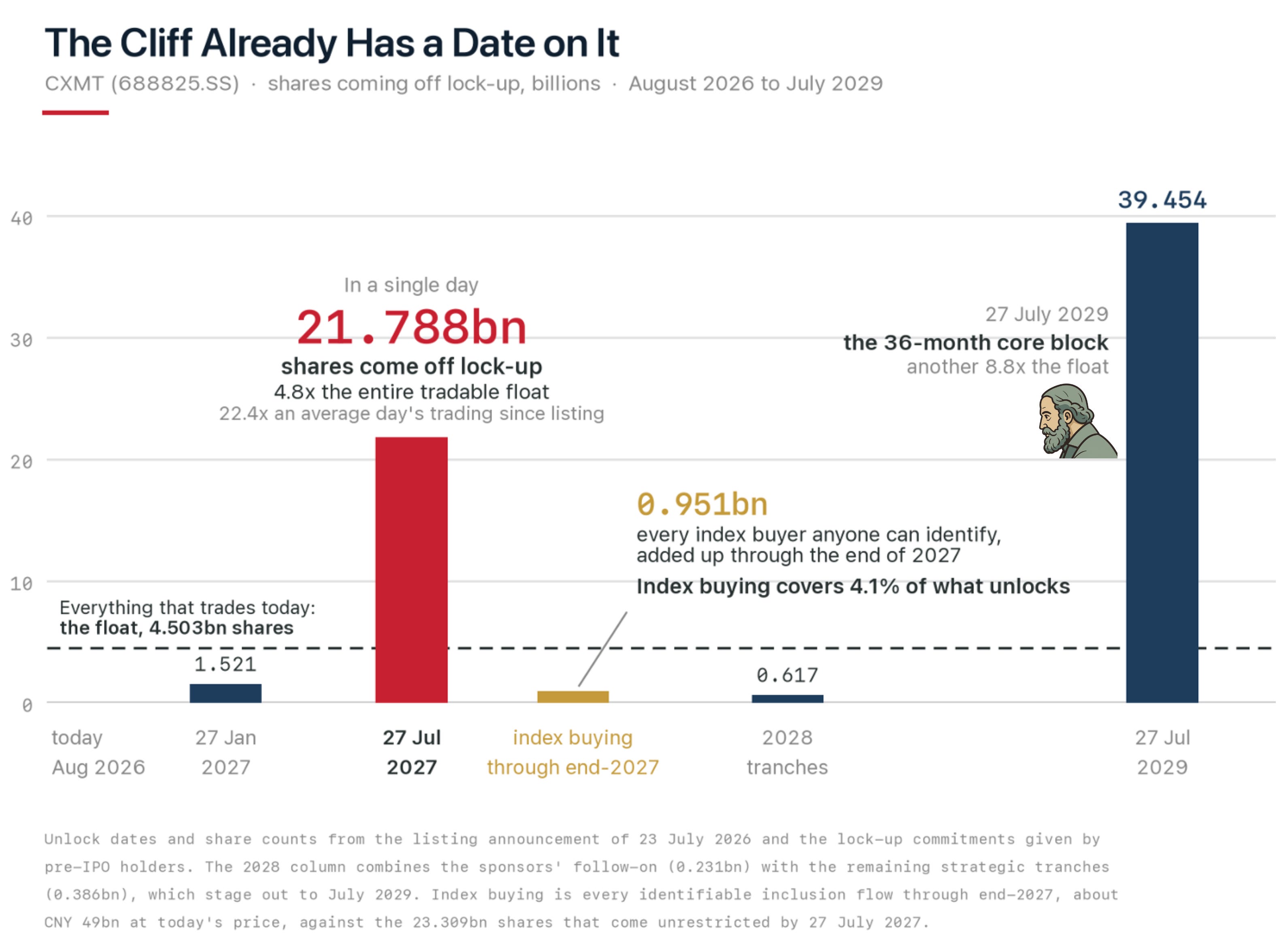 Too much of a good thing | Company Filings
One more number. The underwriters priced the deal at 309 times 2025 earnings and 5 times book value. In other words, this was hardly a cheap IPO to begin with, especially for a memory-chip manufacturer.
Hey there!
If you enjoy the content here and want access to the whole library, plus all the other content in downloadable PDFs, you can access a full year of membership under our “Think Like an Owner” special offer.

Some of the content is free, but if you consider a paid membership you’ll get:
-
The complete Meta Skills library: every field manual in the series, in PDF, with new manuals added as they publish
-
12–14 high-conviction investment write-ups a year: detailed, data-backed reports on underfollowed companies with asymmetric upside
-
The Trend Tracker: emerging themes traced from the data and signals down to the specific public equities positioned to benefit, from AI-infrastructure chokepoints to the defense upcycle
-
The Investing Library: forensic accounting toolkits, sector rulebooks, mental models, and historical base rates to improve your process
-
Every full post and the complete archive: each deep-dive report and the full back catalogue, nothing locked
What This Tells Us About The Market
Memory is in the middle of its sharpest price spike in a decade.
Conventional DRAM contract prices rose 93–98% in the first quarter of 2026 alone6, on top of a 45–50% jump the quarter before, as Samsung, SK hynix, and Micron pushed their limited output toward high-margin AI server memory (HBM and high-capacity server modules)7 and left ordinary DRAM short.
Everyone in the industry is printing record numbers. CXMT booked over 80% of its entire 2025 revenue in the first quarter of 2026 alone.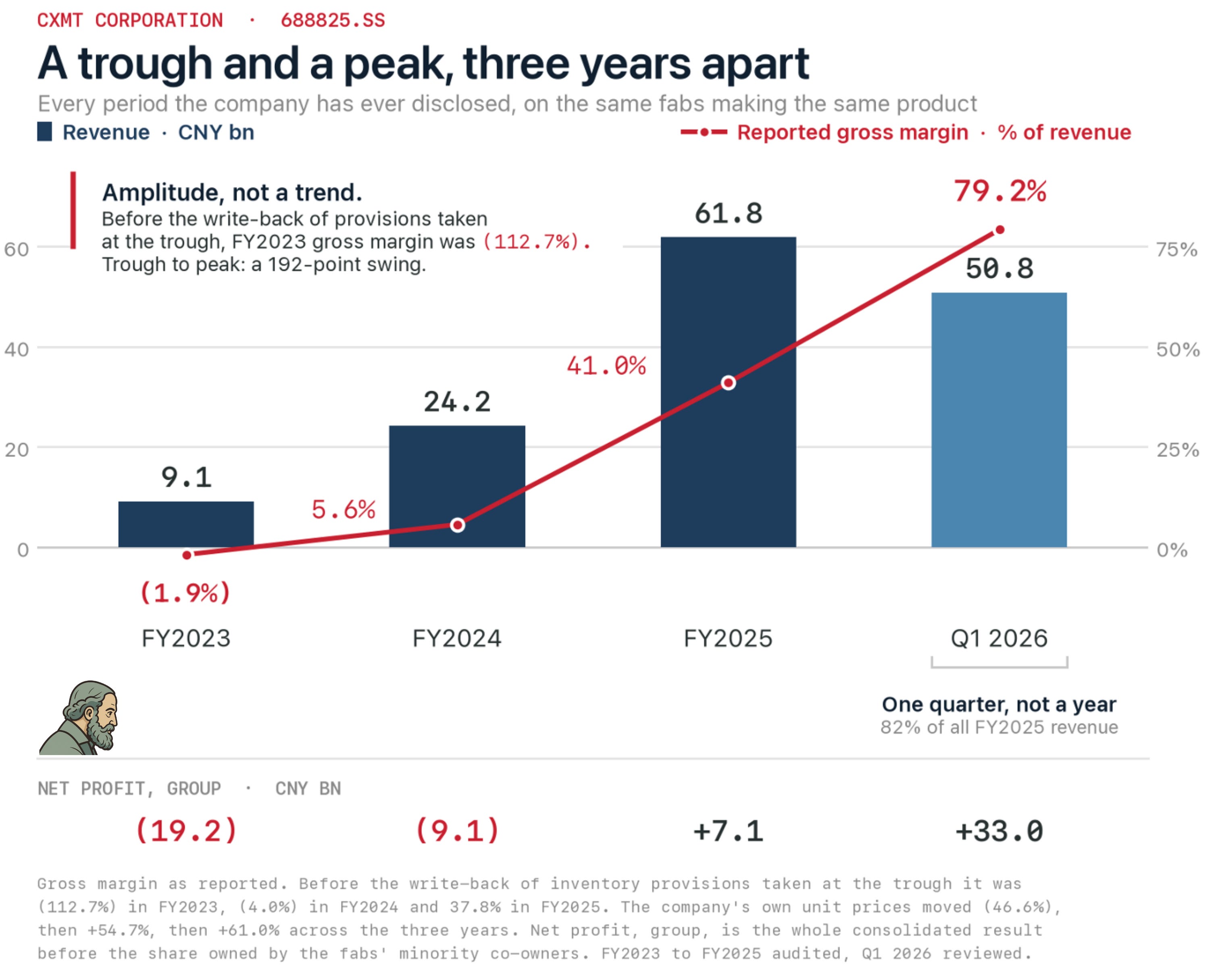 Fly me to the moon | Company Filings