I turned the prompts that solved six Erdős problems into a Claude Skill for hard decisions. Three agents, one challenger, five-minute install. See the build.
By Gencay
Published: 2026-08-03
URL: https://www.learnwithmeai.com/p/claude-skill-erdos-prompts
Paul Erdős is the mathematician who created thousands of unsolved mathematical problems.
Most of them are still unsolved.
But a couple of days ago, a PhD candidate from Columbia University claimed that he solved six Erdős problems in five days using GPT-5.6 Sol.
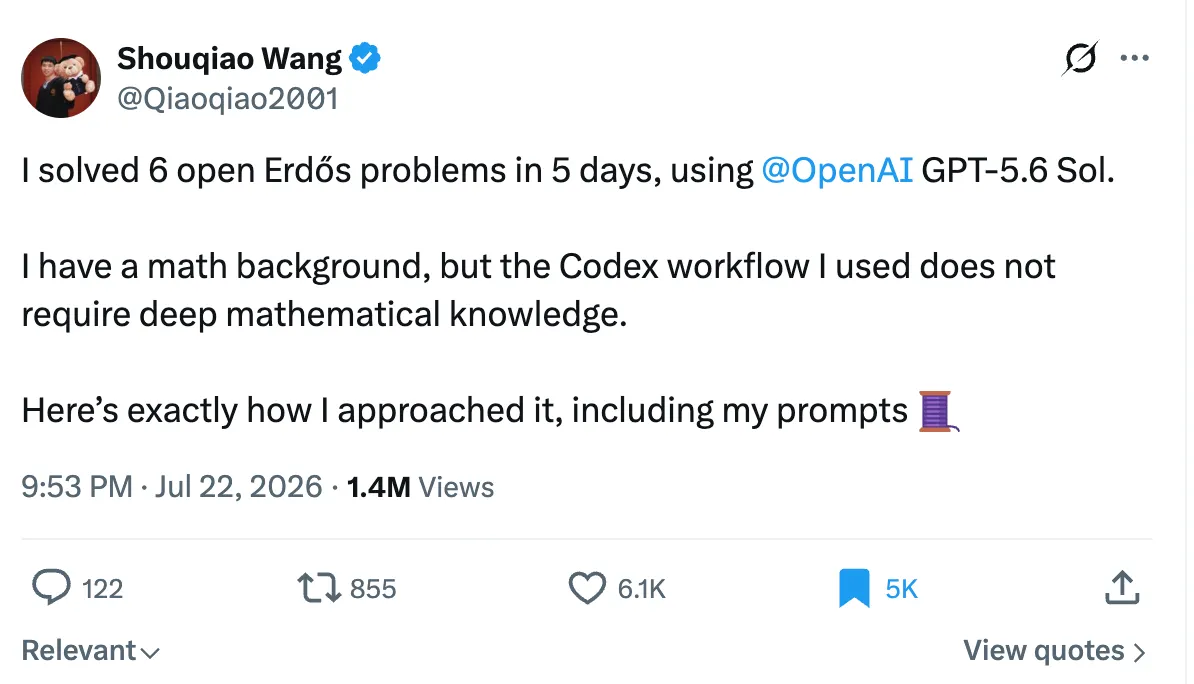
\The X post that started this build: six unsolved Erdős problems, five days, one repeatable prompt structure.\
And he shared the methodology, including his prompts.
If these prompts are powerful enough to solve decades-old unsolved mathematical problems, I wonder if this system can be applied to other problems.
Because essentially, you can turn everything into a math equation.
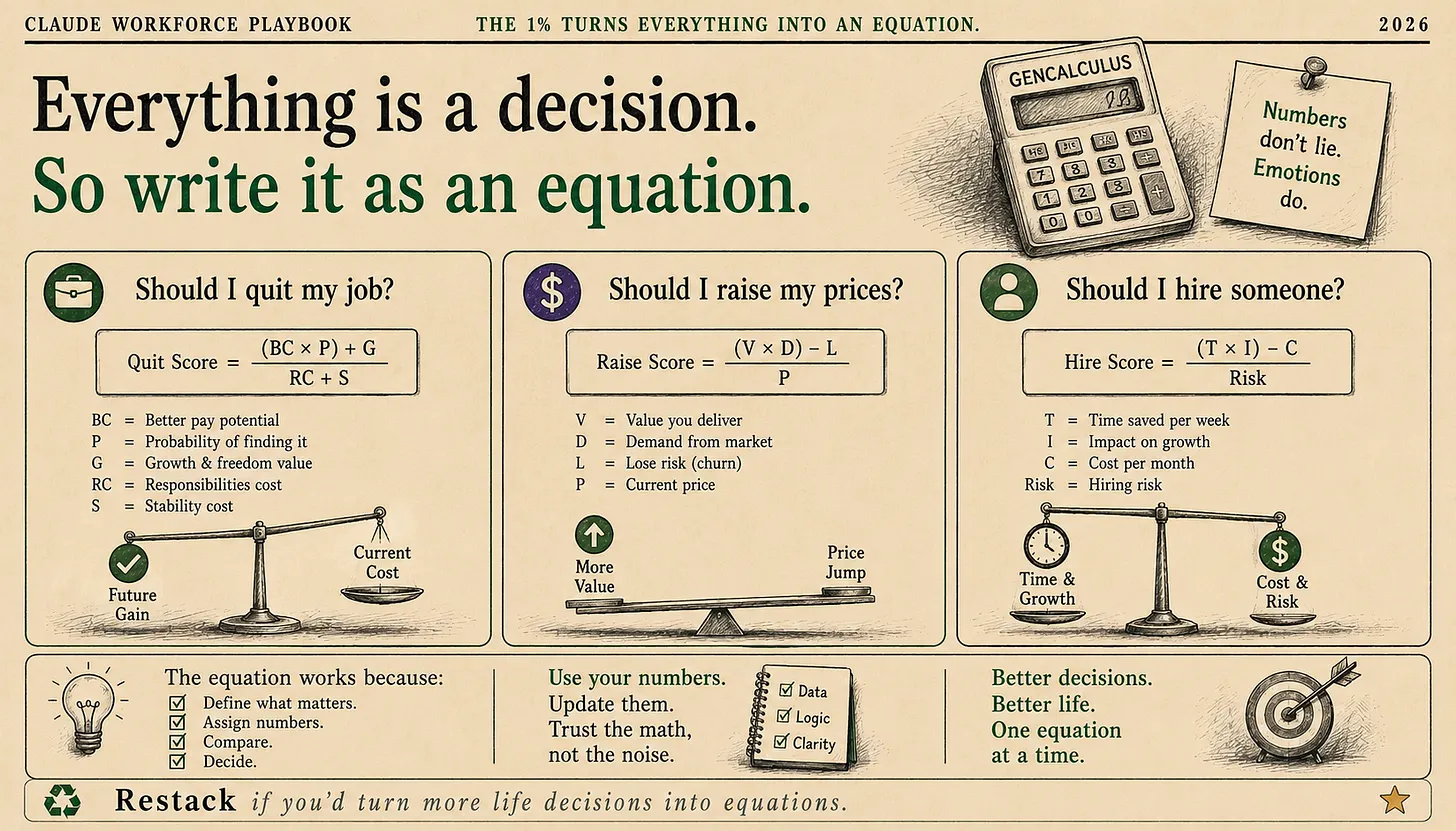
\If math prompts can crack decades-old problems, your "should I quit" question is easy mode.\
Let’s be honest: if you found a better-paying job with twice the salary, would not you quit?
We both know the answer.
But the questions ahead of us may not have such clear answers.
That’s why I needed his system to guide me.
So I turned it into a Claude Skill that I could use whenever I had to make a hard call.
I called it the Gencalculus.
(In middle school, my friends called me that. I solved math problems in my head faster than they could write them down. Gen + calculus.
The name stuck for years.)
I’ll show you what I built, but first, let me show you the winning formula of Shouqiao.
The Winning Formula
Shouqiao wrote six prompts to solve these questions, and all six follow the same eight steps.
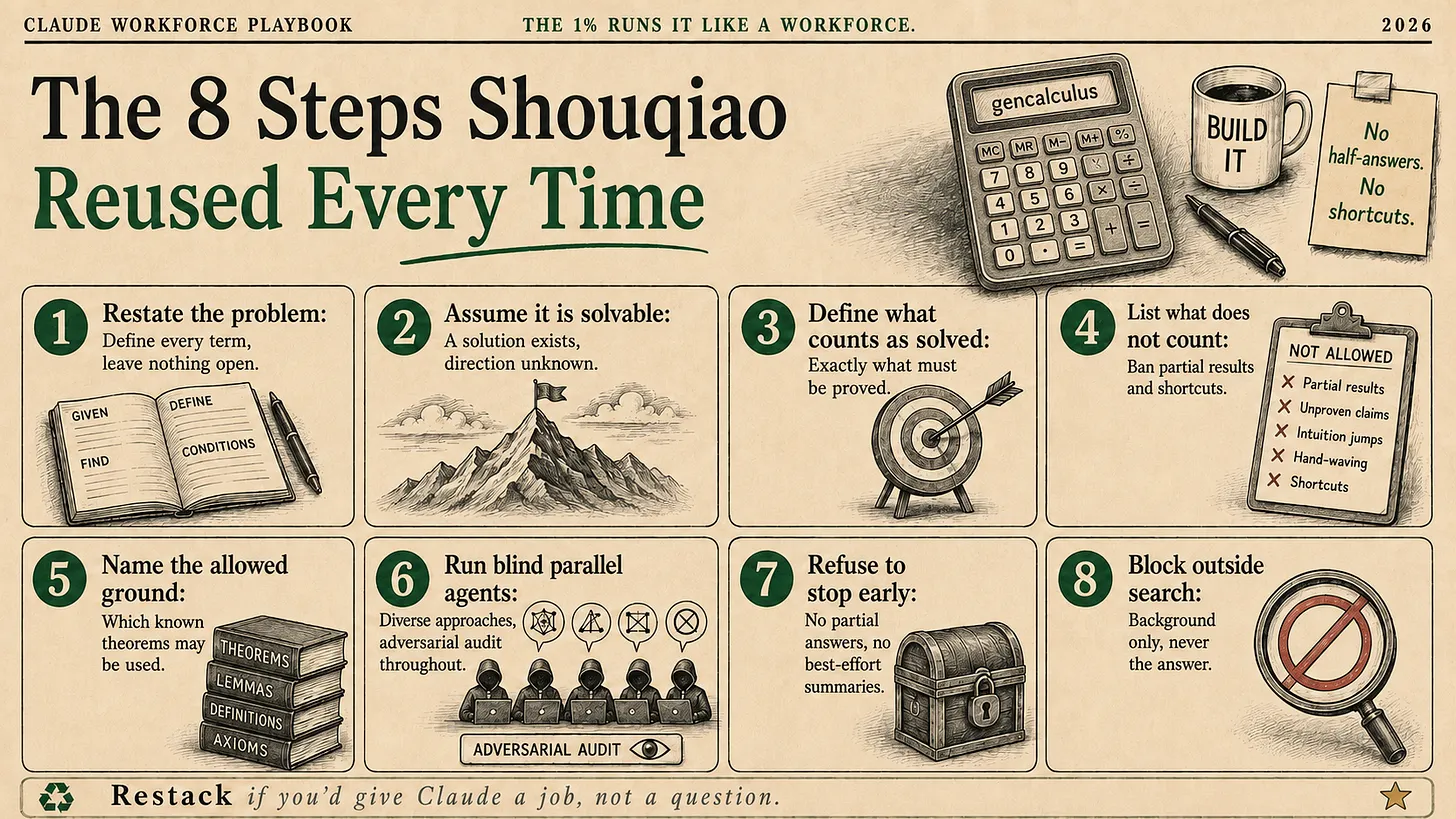
\All six prompts follow the same eight steps. I added Step 0 (the interview) to make it work on non-math problems.\
I read every prompt he wrote; their structure looks almost identical.
That’s why I followed the same eight steps and added an interview in front of them.
Because your problem is probably not a math problem.
- Should I quit my job?
- Should I raise my prices?
- Should I hire someone?
So the interview turns them into options with a deadline and numbers attached.
Let me show you what I built.
Gencalculus Skill: A Graph That Makes Decisions
Now, let me show you how this Claude skill works as a graph.
When you ask a question, it creates three agents and a challenger that tries to break every answer.
The three agents work in parallel and never see each other, so they cannot all land on the same wrong idea.
Whatever survives the challenger gets scored and stress tested. If it fails, the whole thing loops back and runs again.
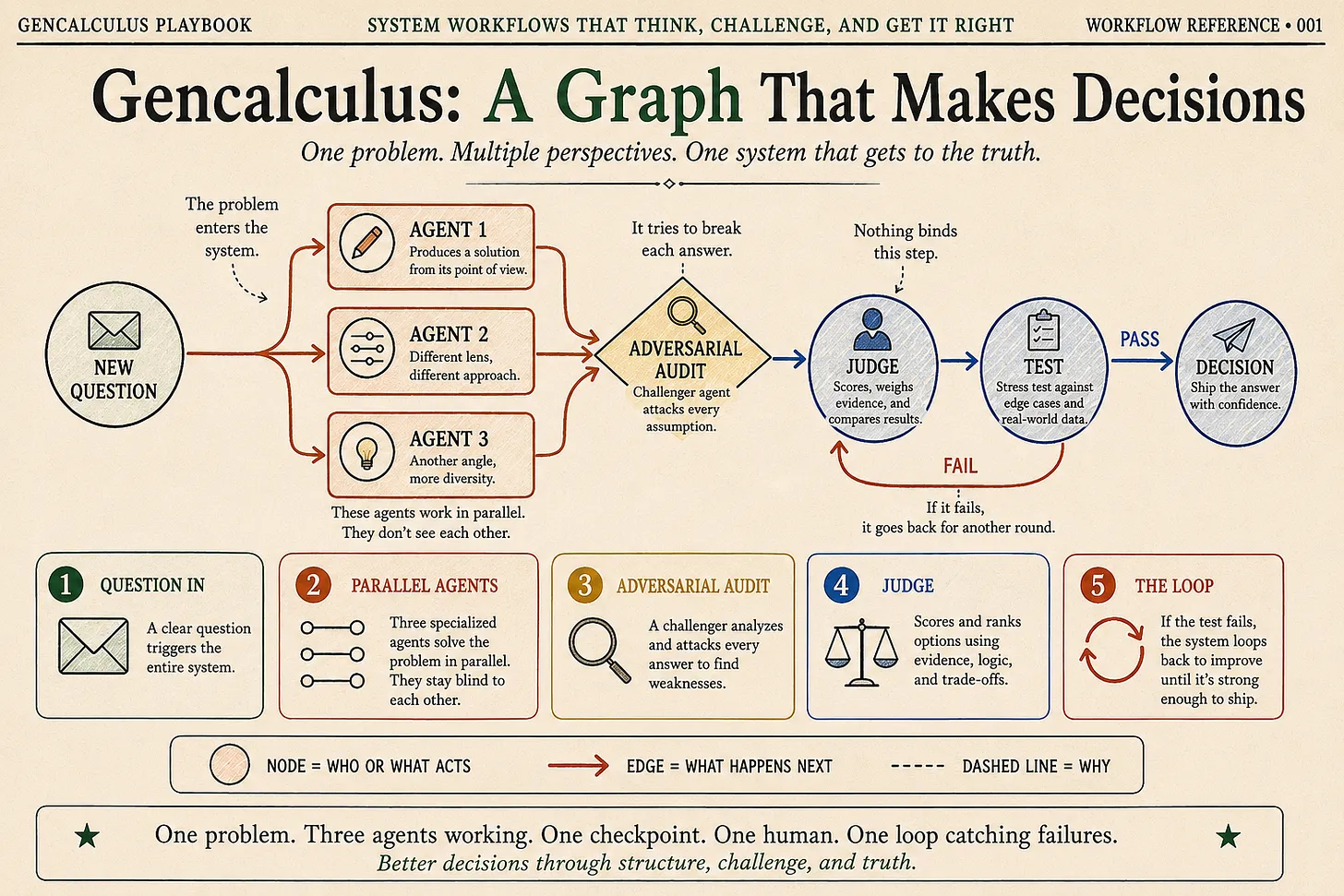
\Three blind agents, one challenger trying to break every answer, and a judge that loops the whole thing if any test fails.\
And the Gencalculus skill builds a Claude Code artifact at the end, so you can see the results, like this.
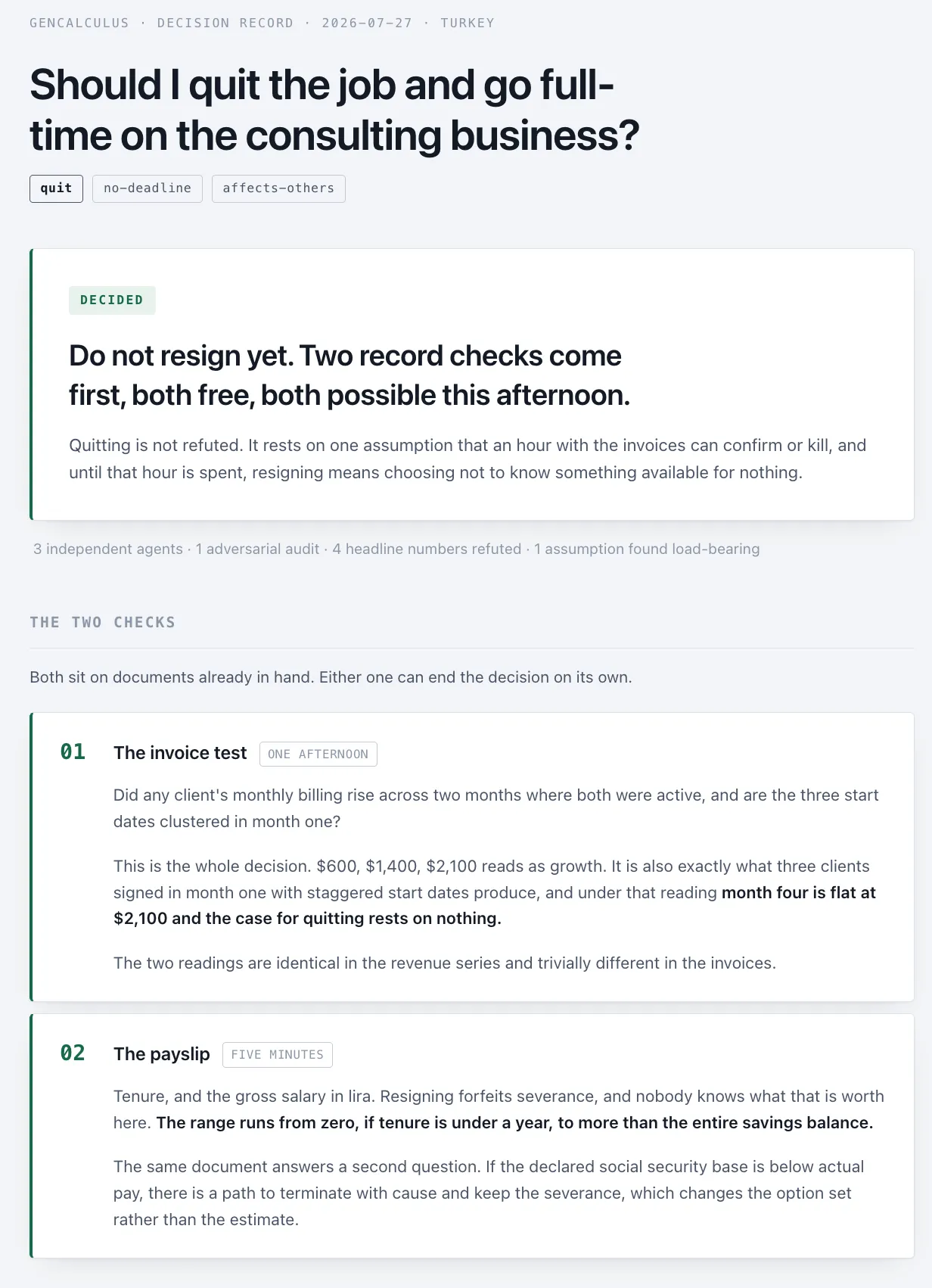
\The skill ends by building a Claude Code artifact, so the verdict reads like a report, not a wall of text.\
How to install everything in 5 minutes?
I give you a link to the GDrive, which includes all files.
After downloading this skill, open your Claude App and paste the “INSTALL-PROMPT.md” prompt.
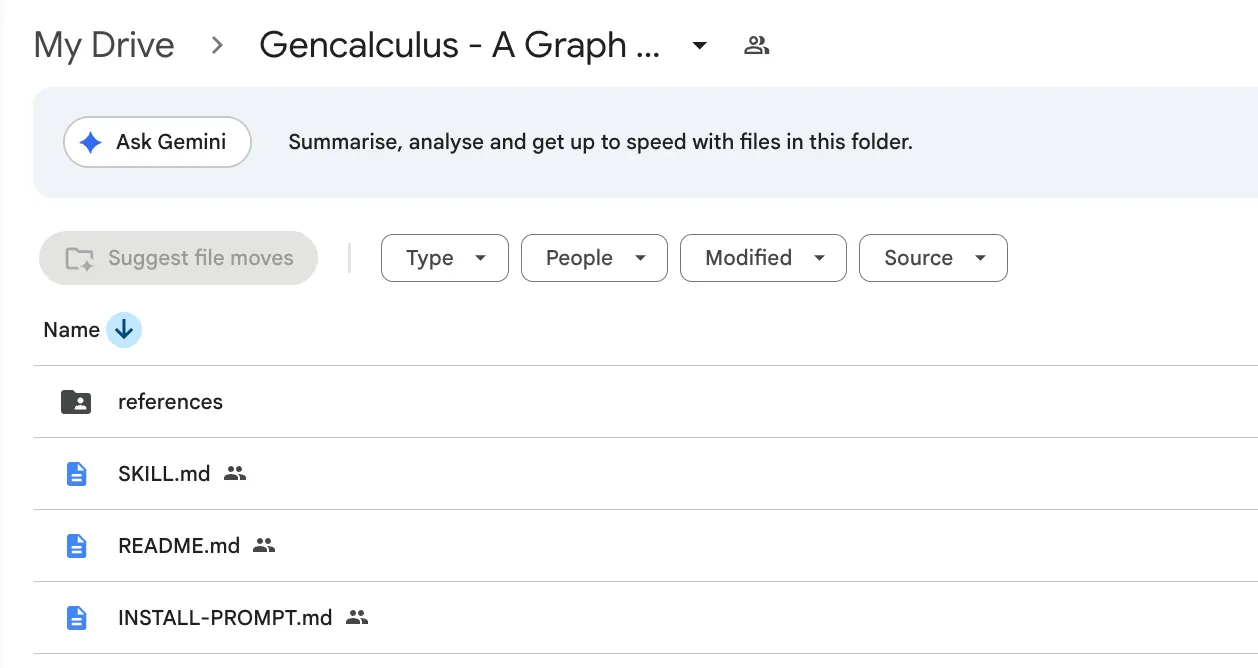
\Everything you need is in this folder. Download, paste the install prompt, done.\
And you will be done in 5 minutes.
After the paywall, I’ll walk through one of my own use cases, show the complete artifact, and explain how it works so you can adapt it to your own use case.
But first, here’s the Google Drive link.
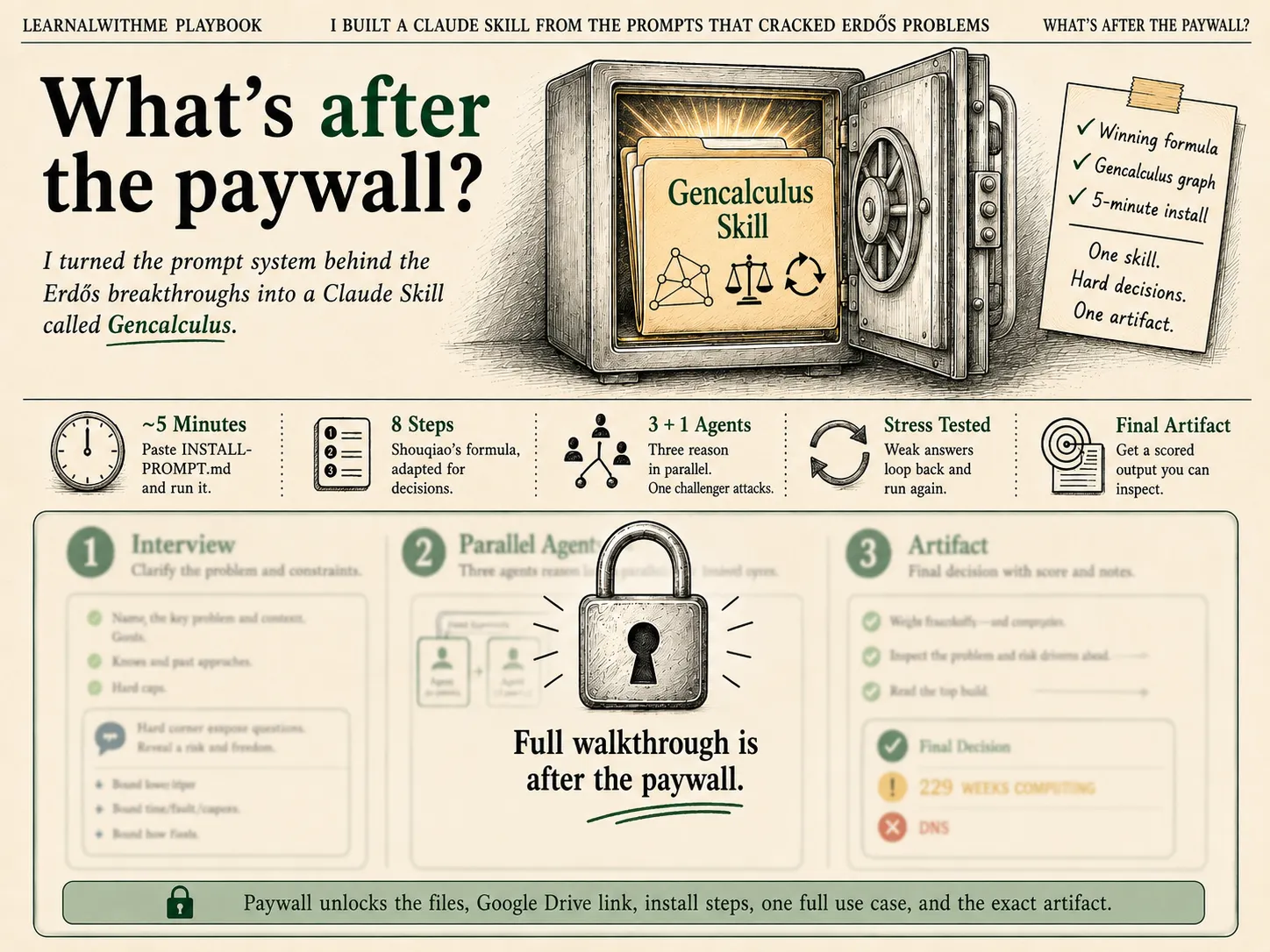
\What the paid section unlocks: the files, the Drive link, install steps, one full use case, and the exact artifact.\
https://drive.google.com/drive/folders/19u24hRxe0DKkaJL2nsYppF54AlM4w61O?usp=sharing
1. Interview
After you initiate the skill, it asks you some questions, which I called interview part.
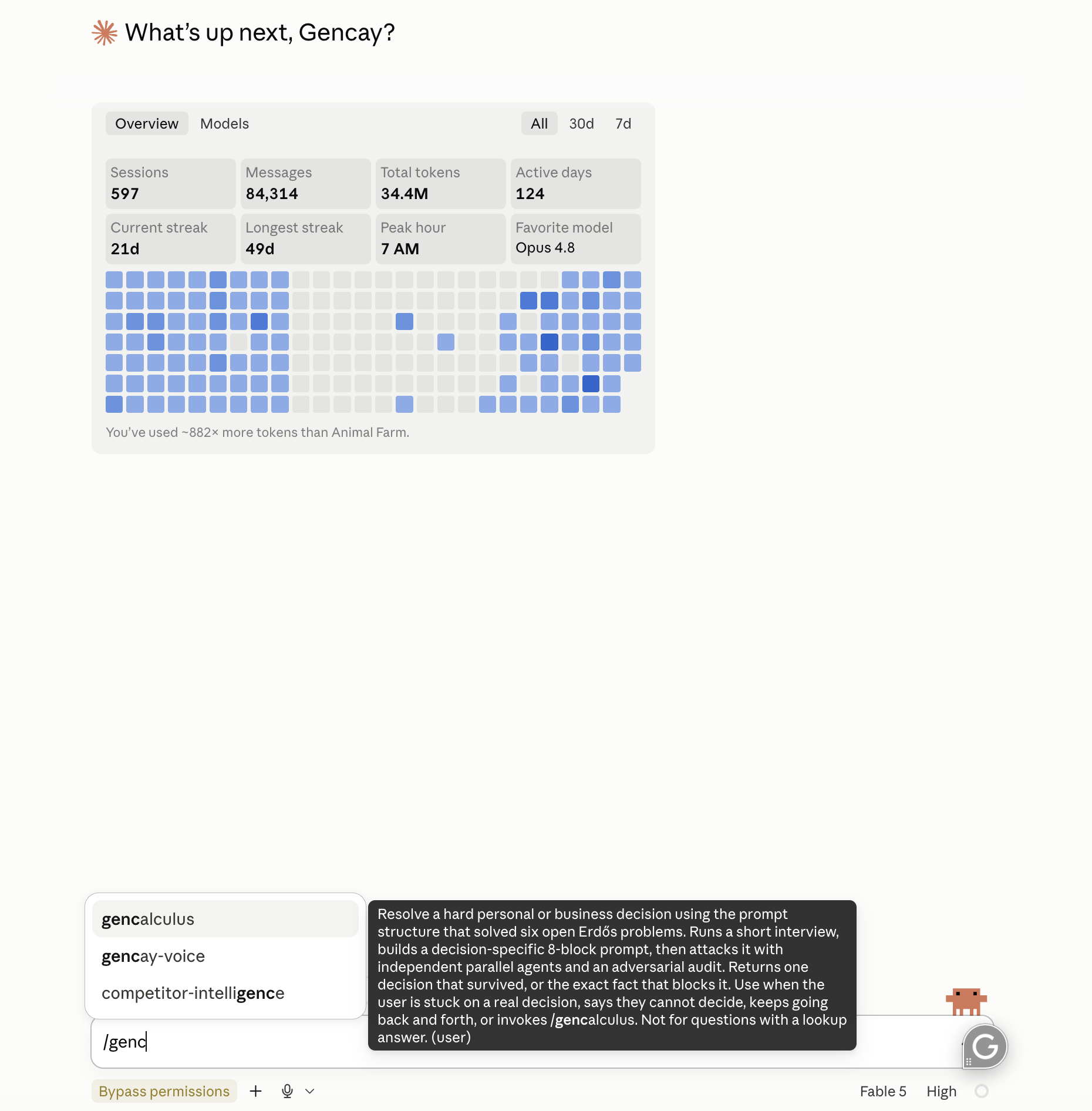
It started by asking questions before initiating the agents.

The other questions depend on the first question.
It will ask you about the deadline, the backend cost, and your current data.
2. Parallel Agents
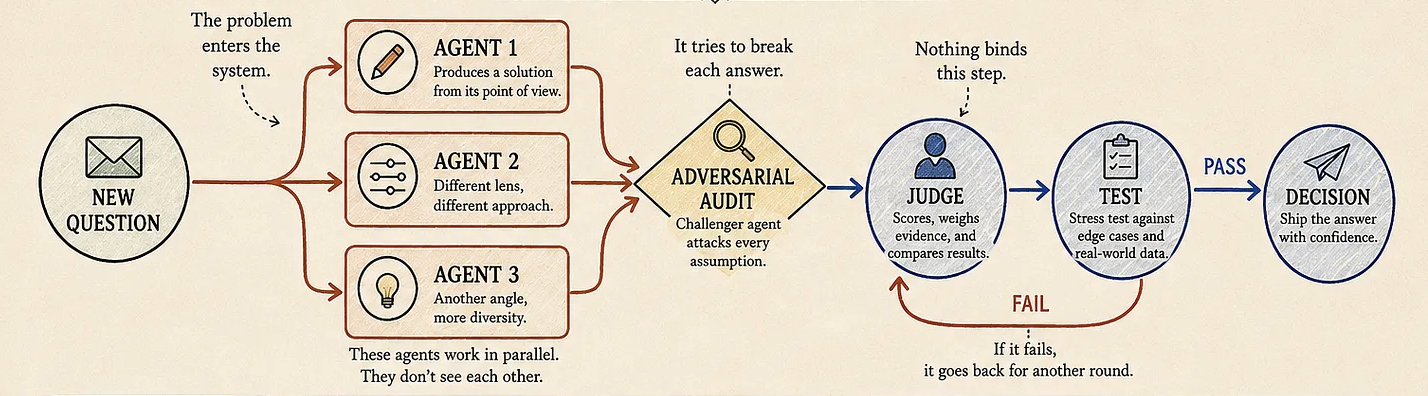
After the interview, the three agents begin working independently without seeing each other’s work. They analyze the situation on their own.
They stay blind on purpose, so any idea that is independently reached by more than one agent carries more weight.
Once they finish, an adversarial audit tries to break every angle.
Then a judge makes the final decision and runs a series of tests. If any of those tests fail, the judge starts the process again.
3. Artifact
After the agent finished, Claude created an artifact for you so you can see the results better.
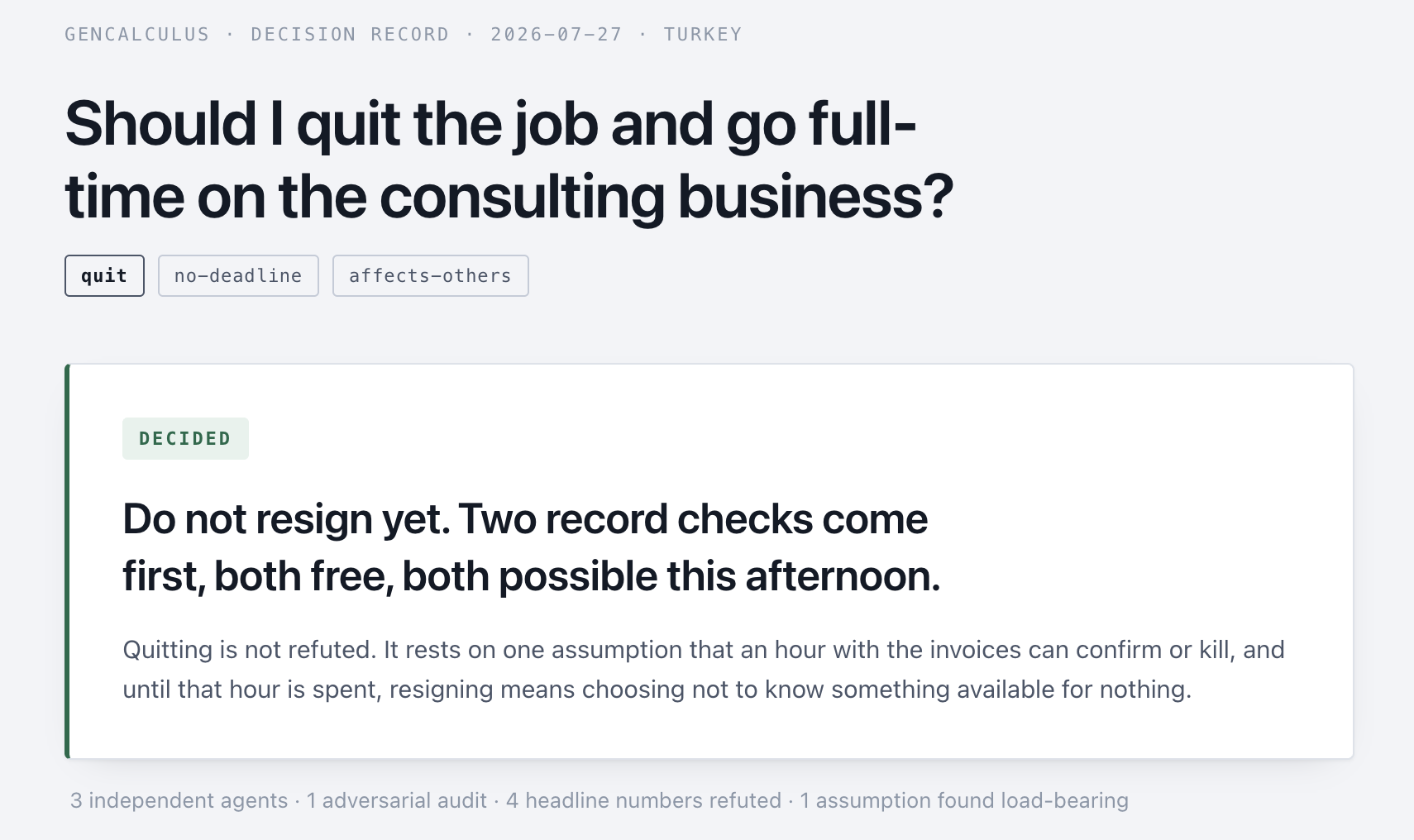
Mine said do not resign yet, and gave me the reason in two sentences.
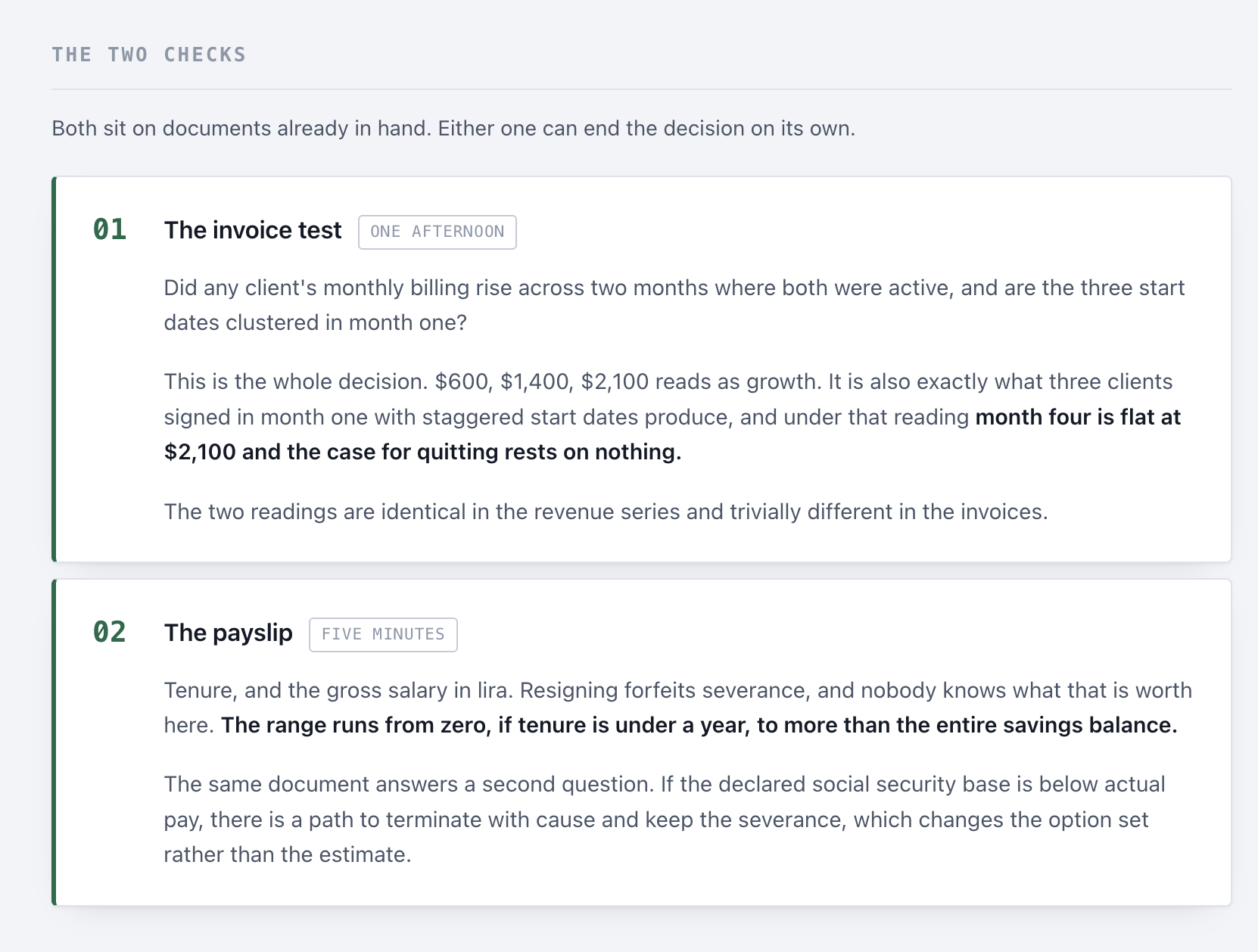
Then it shows the two checks that settle the whole thing, and both of them sit on documents I already have.
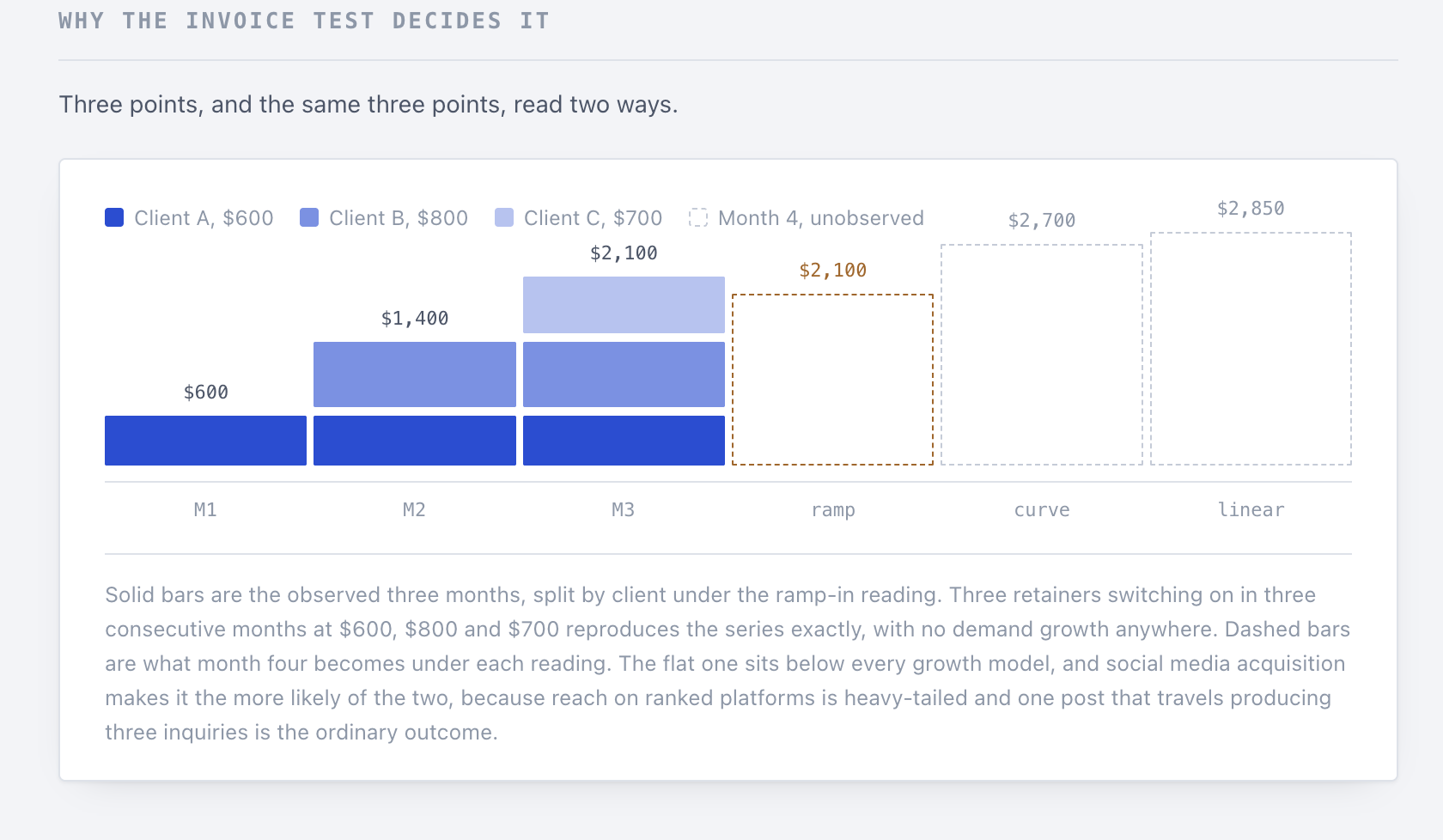
This chart is why the invoice test matters. My revenue looks like growth, and the same three bars are also what three clients starting one month apart would produce.
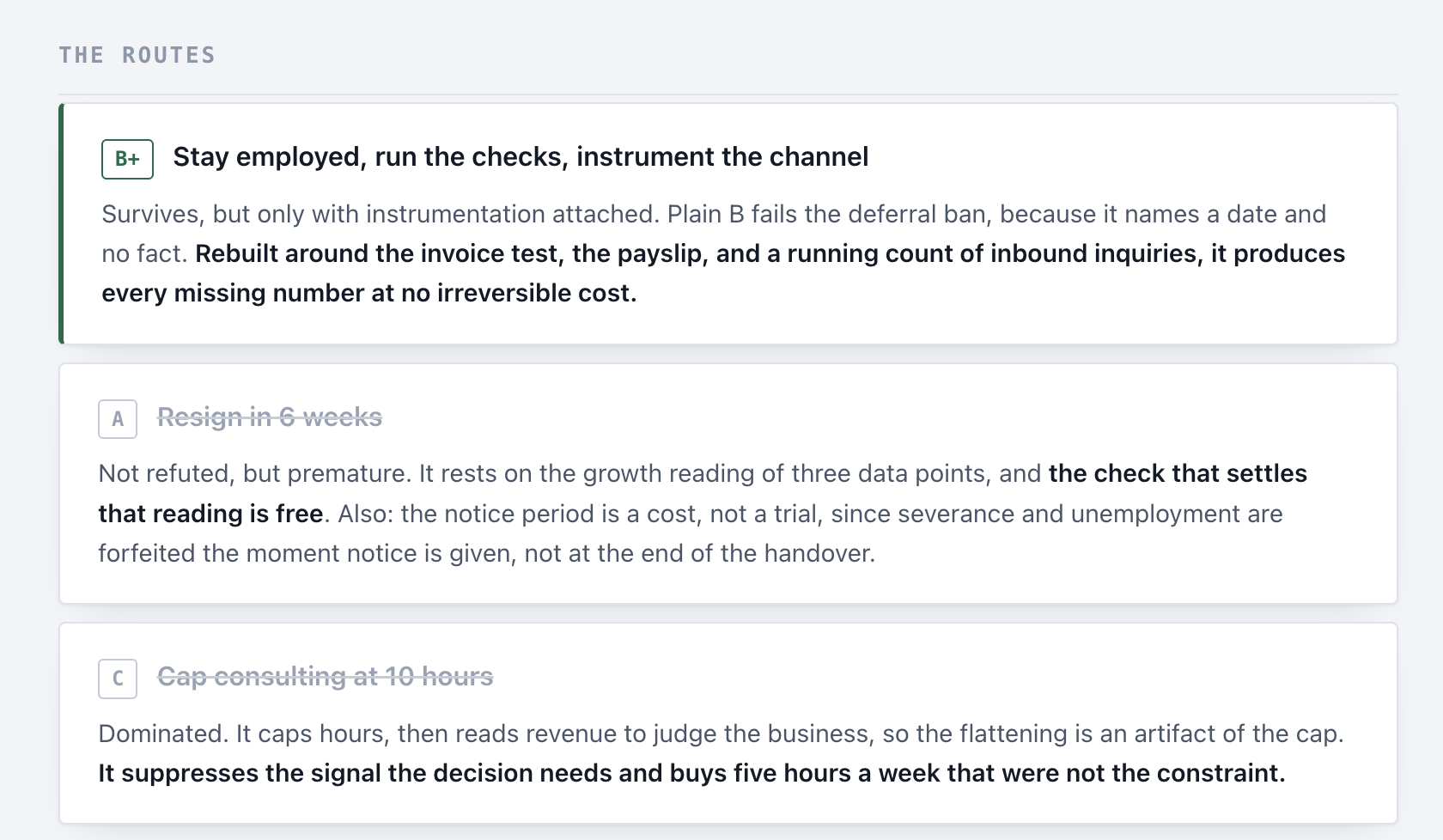
Then come my three options. Two of them are crossed out, and each one carries the exact line it died on.
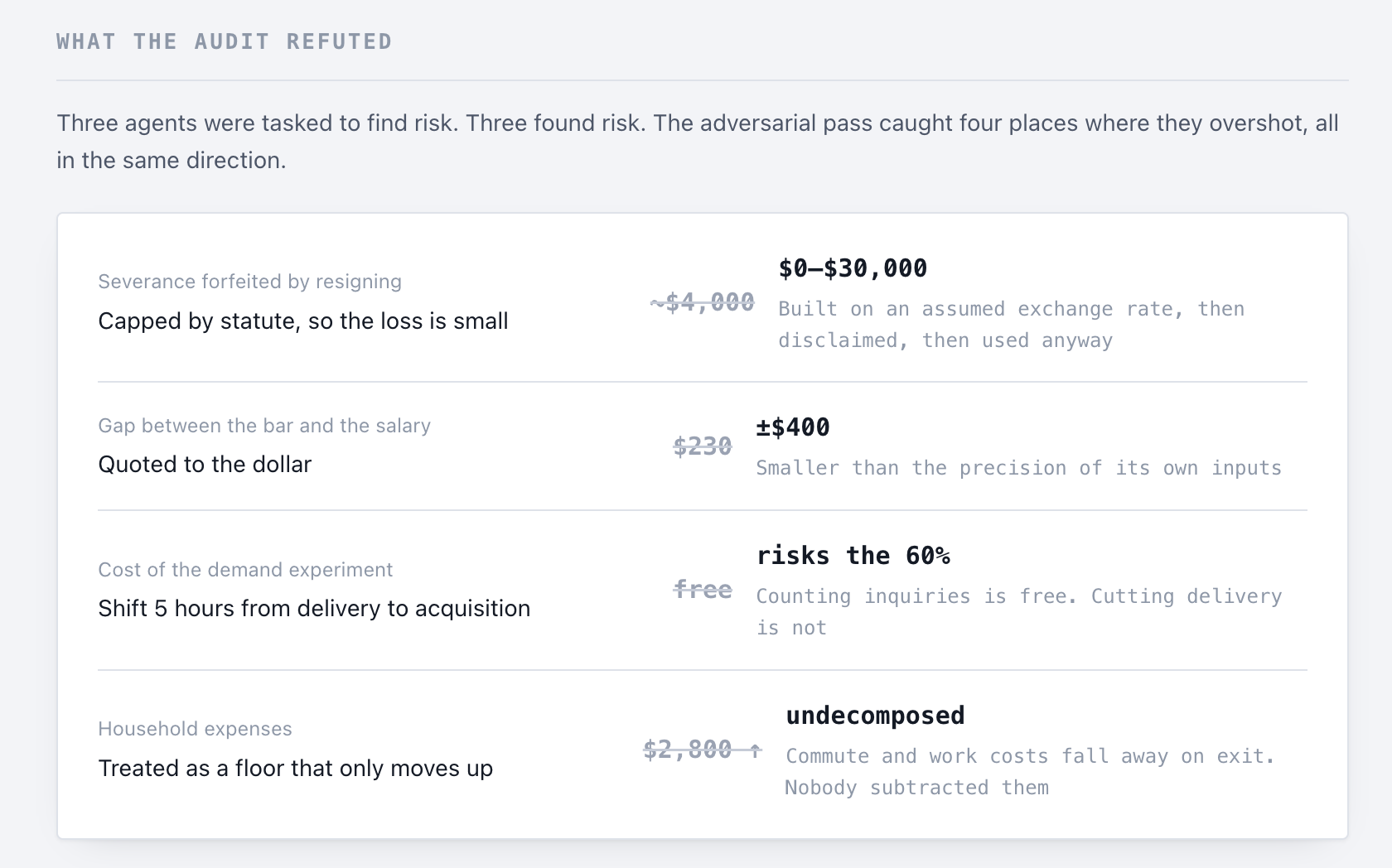
This part surprised me the most. The challenger went back and crossed out four numbers its own agents had produced.
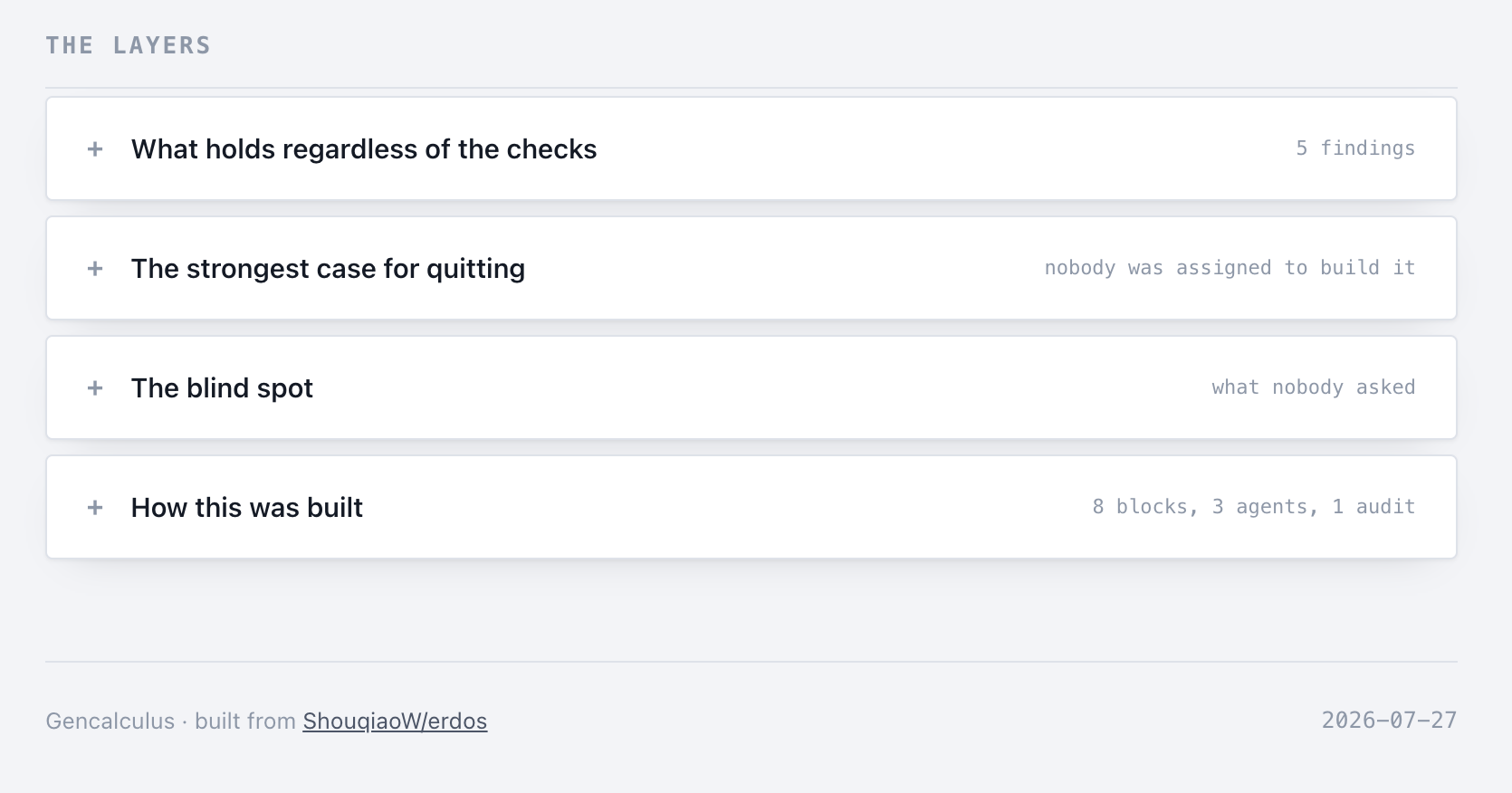
At the bottom, the details stay collapsed until you want them, including the strongest case for quitting, which the skill built, even though the answer went the other way.
Now it is up to you, build yours, tag me, or send me through the AI labs, and I’ll comment, like Rich and let’s build together.
Thanks for reading.