Use this framework to expand any proven idea into a longer pillar piece
By Nicolas Cole
Published: 2026-10-14
URL: https://writewithai.substack.com/p/write-a-viral-article-or-newsletter

Write With AI is our paid newsletter where we share internal AI prompts & workflows we’re using to run our 7-figure digital writing business.
But if you want access to our most in-depth products, and to write with us LIVE during sprints, bootcamps, Ship 30 for 30 cohorts, and Monday Hot Seats, come join us inside AI Writing Skool.
Every idea you post online can become a digital business.
Honestly! Ideas that resonate with your audience deserve more attention and should be expanded. You’re just giving “more” of what your readers want. Eventually, you can sell all this extra content, ideas, and frameworks to your audience.
But first, we need to figure out which ideas to double down on.
This is simple.
If an idea gets more views, likes, and comments than your other content, expand it into a longer-form piece. We call this method “Lean Writing” and it’s the way you take one idea and build it into a library of content and eventually a business.
This is how it works:
-
Write a short-form post
-
Turn your best ideas into an Atomic Essay
-
Turn that idea into a long-form Article
-
Into a newsletter
-
Into a free email course
-
Into a paid digital product
-
Into an entire business
Start small, keep testing your ideas at every level, and eventually you can build a business.
When you have a proven idea that is resonating in your short-form content, it’s time to expand it. We highly recommend expanding your ideas into Articles.
Why Articles?
Because Articles can become any number of assets in your digital ecosystem:
-
They can be broken into “smaller” formats (like new short-form, Atomic Essays, LinkedIn Carousels, etc.)
-
They can be repurposed as a newsletter to your list, on Medium, as a LinkedIn newsletter, etc.
-
They can be expanded further into a lead magnet and/or digital product
Plus, they’re going through a moment on X right now and seem to go viral more than any other content format: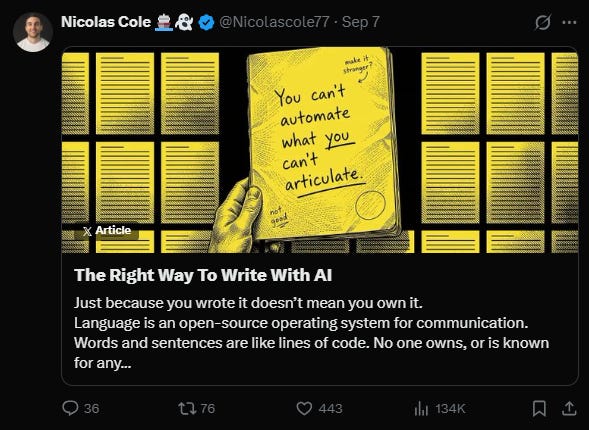
So, let’s take a look at how to write one.
Step 1: Write Your Headline
We’ve written about this before, but as a quick recap, the Perfect Headline has 5 components:
-
The Number
-
The What
-
The Who
-
The Why
-
Twisting The Knife
If you want a full explainer on how to write a headline using these 5 elements, check out this newsletter we published earlier this year (and be sure to watch the video inside!):
Once you have your headline, it’s time to Prep The Page with your main ideas.
Step 2: Prep The Page To Mirror Your Headline
“Mirroring” is the single most important formatting technique.
Think of Mirroring as a way of anchoring the reader’s eyes on the page. When you mirror sections, what happens is the reader can’t help but feel like they are staring at a work of art—because you’ve constructed more than just words on a page. What you’ve done is create sections, blocks, and distinct areas where you’d like them to direct their attention.
Mirroring basically means you take one element and then repeat it:
-
Throughout your entire Article.
-
Throughout an entire section (or multiple sections).
-
And even at the individual sentence level.
This is a very subtle but powerful formatting technique.
Here’s how to mirror the promise in your headline:
Let’s say the headline of your Article is: “3 Mistakes I Made As A First-Time Startup Founder That Cost Me Millions Of Dollars.”
The Promise here is “3 Mistakes.”
Why would a reader click on this piece? To read your 3 Mistakes. Simple.
The way you mirror this promise all the way down the page then is to repeat this same promise over and over again. Which means each one of your Main Points/Subheads would follow the same wording, flow, and punctuation.
Like this:
-
Mistake #1:
-
Mistake #2:
-
Mistake #3:
This might seem like a simple nuance, but it’s more powerful than most writers realize.
When a reader clicks on your piece, they are immediately looking for the “promise” you made them in the headline. So, if you promised them “3 Mistakes,” then your Main Points/Subheads need to be “3 Mistakes.” If you promised them “6 Lessons,” then your Main Points/Subheads need to be “6 Lessons.” If you promised them “11 Crazy Gadgets,” then your Main Points/Subheads need to be “11 Crazy Gadgets.” And so on.
Tying your Main Points to the promise in your headline is one of the simplest ways to immediately upgrade the skimmability of your writing—and make it easy for readers to fly through your content.
But this is only the beginning!
As you begin to write, you may decide to take some creative liberties with your Main Points.
That’s fine.
BUT the golden rule is: if you change 1 Main Point/Subhead, you need to “Mirror” that change all the way down the page.
Just look at these 2 lists of Main Points/Subheads and notice which list your eye sees as more visually appealing:
Example 1
-
Mistake #1:
-
The Right Way To Think:
-
Lesson I Learned:
-
Another Mistake:
-
Sometimes, all you need to do is make sure you’re focusing on the right thing.
-
Ending Thoughts:
Example 2
-
Business-Destroying Mistake #1:
-
Business-Destroying Mistake #2:
-
Business-Destroying Mistake #3:
-
Business-Destroying Mistake #4:
-
Business-Destroying Mistake #5:
Which one of these lists is more visually appealing?
Which list do you immediately assume is “more organized?”
The second one!
But there’s a very clear reason as to why:
Readers love patterns and similarities.
When each of your Main Points/Subheads “looks the same” and follows a clear pattern, it reassures the reader. They understand how you’re moving them down the page and where they are in the piece. But when your subheads alternate in style, capitalization, punctuation, etc., each change makes the reader feel more and more “lost.” They can’t understand why you are changing the rules.
So, if you are going to change one of your Main Points/Subheads, remember to Mirror that change all the way down the page.
Alright, once you’ve Prepped The Page with an outline of your Main Points, let’s start expanding each section.
Step 3: Expand Each Section With Sub Points Using The 10 Magical Ways
Once you have your headline and your outline clarified, 80% of the writing process is done.
Why?
Because writing isn’t really about writing. Writing is about “thinking.” And the outline is where you get all of your “thinking” clarified.
Once this is done, the “writing” itself is easy!
This means that before you even start writing sentences, simply go through your outline and expand your outline into more bullets of information. Think of it like you’re jotting notes to yourself inside your outline: “Here I want to say, X, over here I want to say Y, and right here I want to say Z.” You want to get all of this “thinking” out of the way—so by the time you start writing sentences, you are basically just cleaning up your “notes.”
Versus starting with a blank page.
Now you might be thinking, “How do I expand these Main Points?”
Here’s an easy framework:
How To Expand Anything: The 10 Magical Ways
There are 10 ways you can expand LITERALLY any piece of writing.
-
Tips
-
Stats
-
Steps
-
Lessons
-
Benefits
-
Reasons
-
Mistakes
-
Examples
-
Questions
-
Personal Stories
Don’t believe us?
Watch this—using a sample outline.
Let’s return to our headline of “3 Mistakes I Made As A First-Time Startup Founder That Cost Me Millions Of Dollars.”
Here’s our outline:
-
Mistake #1: Making every new hire full-time
-
Mistake #2: Not having clients on auto-pay
-
Mistake #3: Not taking any money out of the business
We can expand each of these “Mistakes” with other ways from our 10 Magical Ways (we’re going to use Reasons, Benefits, and Steps):
-
Mistake #1: Making every new hire full-time (let’s expand this with the Reasons Why this was a mistake):
-
Reason #1:
-
Reason #2:
-
Reason #3:
-
Mistake #2: Not having clients on auto-pay (let’s expand this with the Benefits of having them on auto-pay):
-
Benefit #1:
-
Benefit #2:
-
Benefit #3:
-
Mistake #3: Not taking any money out of the business (let’s expand this with the Steps we’d take to take money out of the business):
-
Step #1:
-
Step #2:
-
Step #3:
Or we could expand it with other Ways:
-
The first Mistake could be expanded with Personal Stories of how this cost us millions of dollars
-
The second Mistake could be expanded with Questions you should ask when moving clients to auto-pay
-
The third Mistake could be expanded with Tips on how to take money out of the business responsibly.
See?
You can expand ANY Main Point just by rotating through different combinations of the 10 Magical Ways—and you can easily expand any section.
So, how do you decide which of the 10 Magical Ways to use?
Easy!
It’s up to you. But a good rule of thumb I use is: “What will be the most useful thing to list out for the reader?” What would you have wanted to know if you were completely new to this topic? What would you want to know 2 years ago? There’s your answer.
And the best part?
Your readers will often tell you what they want to hear more of in comments, DMs, and what they interact with.
So, don’t overthink it. Just follow what you think would be useful and what your readers are asking for.
Alright, we’ve got our Main Points and Sub Points all outlined so it’s #time to dig into the actual “writing.”
Step 4: Write A Single Sentence Opener For Each Section & Fill In Any Details
When the reader opens a piece of content and is immediately confronted by a giant wall of text, what’s the first thing that goes through their brain?
“Geez. This sure does look like a heavy lift.”
Even if the content is light and fun. Even if the language is simple. VISUALLY, it looks difficult—because that giant paragraph of text looks like a brick wall.
Publications like The New Yorker do this constantly. (And writers think big, chunky paragraphs make them seem “smart.”)
But guess what?
Giant paragraphs don’t make readers want to consume your content MORE.
They make them want to consume your content LESS.
Before you’ve even read a single word of the following, your brain is already tired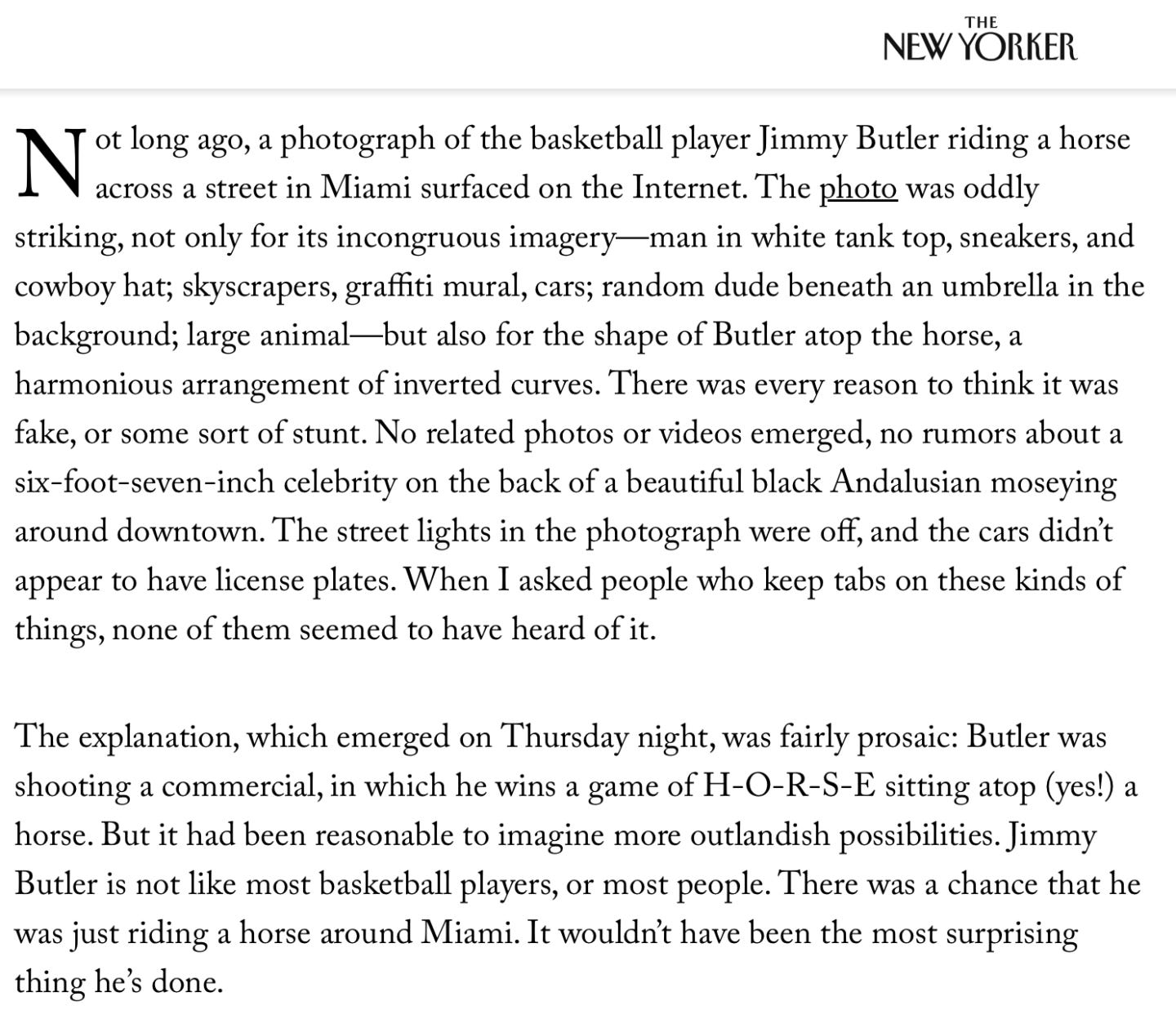 https://substackcdn.com/image/fetch/$s!yRus!,fauto,qauto:good,flprogressive:steep/https%3A%2F%2Fsubstack-post-media.s3.amazonaws.com%2Fpublic%2Fimages%2Ff2c40e08-11a1-43b9-9ccb-53bfaa8328e0_1440x1248.png)
But if we kept this text exactly the same, and just broke out the first sentence… guess what?
All of a sudden, it feels approachable! And the reader can easily “slide” into the reading experience. We call this using single-sentence openers, and there are a few types you can insert into the introduction of your Article and at the start of every Main Point in your Article.
Add In Your Proven Single-Sentence Openers
Go through each section and add a single-sentence opener.
But what KIND of sentences? Great question!
Here’s the list we always come back to: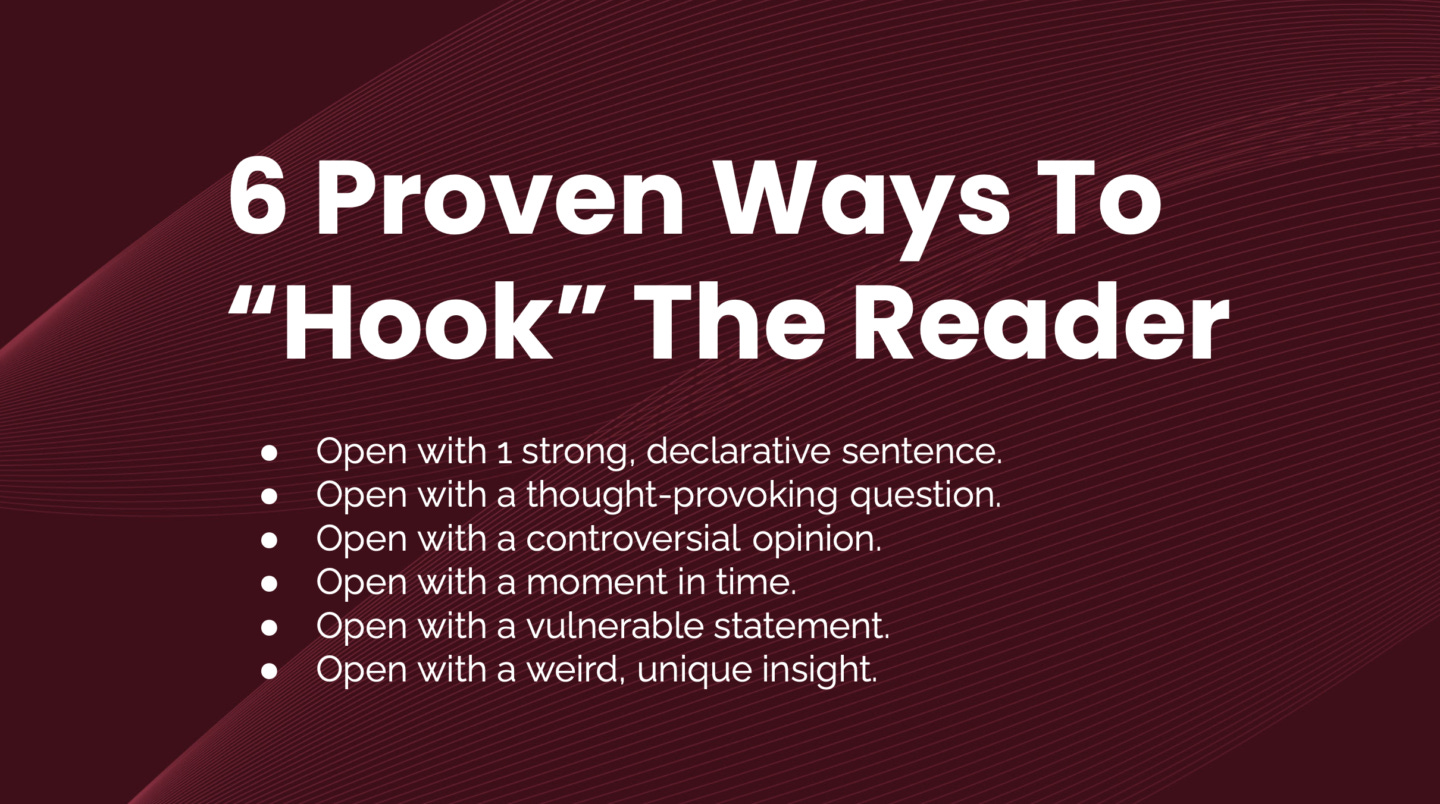
Let’s run through some examples of each one:
Open with 1 strong, declarative sentence.
-
“Most people will spend their entire careers being good at the wrong thing.”
-
“Your morning routine is quietly deciding the outcome of your year.”
-
“The best business decision I ever made cost me my biggest client.”
Open with a thought-provoking question.
-
“What would you build if you knew no one would ever judge it?”
-
“Why do we trust strangers on the internet more than the experts in our own field?”
-
“What if the habit you’re most proud of is the one holding you back?”
Open with a controversial opinion.
-
“Networking events are a waste of time for anyone serious about their work.”
-
“Most “productivity” advice is just procrastination wearing a nicer outfit.”
-
“Passion is overrated; the people who win are the ones who show up when they feel nothing.”
Open with a moment in time.
-
“At 2 a.m. on a Tuesday, I deleted three years of work and felt nothing but relief.”
-
“The email arrived twelve minutes before the meeting that would change everything.”
-
“On Monday, May 23rd, 2019, I was halfway through my coffee when I realized I’d been wrong about all of it.”
Open with a vulnerable statement.
-
“I made six figures last year and still felt like a complete fraud.”
-
“For most of my twenties, I was terrified that everyone could see how little I knew.”
-
“I almost quit the week I made my first $50,000 on the internet.”
Open with a weird, unique insight.
-
“The fastest way to be remembered in a meeting is to be the one who says the least.”
-
“Boredom is the most underrated signal your brain ever sends you.”
-
“The people who give the best advice are usually the ones who ignored it first.”
Alright, we’ve added in our single sentence openers.
Now it’s time to flesh out your outline of Main Points and Sub Points and turn them into complete sentences that link to each other.
Flesh Out Your Main Points And Sub Points
What you’re doing here is turning all your Sub Points into complete sentences and giving the reader more insight, context, and information.
Again, just ask, “What does the reader need to hear to understand this point? What can I give them that helps them make sense of the Sub Point & Main Point?”
Then all you need to do is link the Sub Points and Main Points with little phrases like:
-
“Which leads me to the next example…”
-
“Another reason why this mistake cost me so dear is…”
-
“Once you’ve answered this question, ask yourself this second question…”
Alright, all the “writing” here is done!
But we’re not at a publishable Article just yet.
It’s time to add in one of the most important parts of any Article. This is the number one thing which will make any piece of writing you publish online easy to consume.
Formatting & Style.
Step 5: Formatting & Style: Writing Rhythms And Lists
The overarching idea is to create rhythm and musicality in your writing.
Contrary to popular belief, musicality and rhythm in your writing are not difficult to create.
It’s all about sentence length. And the key to creating musicality and rhythm is literally nothing more than just alternating between long sentences and short sentences—ideally in some sort of pattern. See? Short sentence, followed by a medium sentence, followed by a long sentence. If you pay attention as you read, you can “hear” the pauses, the build-up, and the long crescendo of pace as the sentences are processed in your brain.
This is all you have to do to make your writing “flow.”
Let’s dig into some other ways to add flow to your writing.
Writing Rhythm Basics: 1/3/1
Now, Cole talks more about this in his book The Art and Business of Online Writing, but here’s a quick crash course.
{1} The simplest “rhythm writing” pattern is what we like to call 1/3/1.
{3} This means you open with 1 short to medium-length sentence. Then, in three sentences you add more description and color. And then you finish the idea with one single sentence.
{1} Just like this section here.
1/3/1 literally refers to the number of sentences, and the pattern they’re stacked in.
One strong opening sentence. Three descriptive sentences, advancing your point forward. And then one final concluding sentence.
And you can literally repeat 1/3/1 over and over again, all the way down the page (just like we’re doing here!).
Expanding The Middle
Now let’s say 1/3/1 doesn’t give you enough space to say what you want to say.
The secret to maintaining effective rhythms in your writing is to “expand the middle.” This means keeping the same 1/3/1 structure (single sentences to open and close your longer paragraphs of description), but adding content to the middle part of the “sandwich.”
For example:
-
1/4/1
-
1/5/1
-
1/6/1
-
1/7/1
See how the structure is the same, but all that is changing is the length of the middle paragraph?
The key here is to maintain your single-sentence “bookends” (the opener and closer sentences). This gives the reader an easy entry point into your writing (or next section). Then reward them with a single sentence at the end of your longer descriptive paragraph.
So, if you’re ever going to expand your writing, remember to expand the middle.
How To Use Mirroring To Make Your Sub Points Visually Appealing
You can also “Mirror” within each section of your piece.
For example: if you open with 1 clear declarative sentence, and then give a 5-sentence paragraph description, and then close with a final declarative sentence, you should strive to repeat that same cadence and pattern (1/5/1) in each of the subsequent sections. This helps readers find the flow/melody of your writing. Which makes it even easier for them to quickly skim and consume your content.
This section (and the end of the last section) is an example of this idea in action (it’s a 1/3/1).
What you want to avoid is individual sections looking vastly different.
If one section is 3 giant paragraphs, and then another section is literally 2 sentences, you have a problem: they “look” off-balance.
Instead, you want to strive for each section (inside each of your Main Points/Sub Points) to be visually the same—either in length, or in formatting choices and style. For example, as I’m writing this, I am thinking about the section right before this where I explain the Mirroring technique. I could stop writing at the previous sentence, but then it would look a bit “off-balance.”
So, I fleshed out the description so that it “LOOKS” the same.
See?
Bulleted or Numbered Lists
Ah, now this is how you take your formatting skills to the next level.
The vast majority of Digital Writers & Digital Creators don’t even write using Main Points/Subheads.
Instead, you click on their content, and it’s just one big blocky paragraph after another. (Legacy writers struggle with this the most. And it’s why even New York Times’ best-selling authors struggle to get distribution on their digital content—because they are used to writing long-winded books, not skimmable Atomic Essays, X Threads, and LinkedIn posts.)
Of the Digital Writers & Digital Creators who do learn the importance of organizing their content using Main Points/Sub Points, only a small percentage of them graduate to the next level:
Using Bulleted or Numbered Lists.
-
Can you tell how satisfied your brain feels reading a quick bulleted list right here?
-
Can you “feel” how nice it’s to take a break after reading the few paragraphs above?
-
Do you notice how easy this section of bulleted takeaways is to skim?
-
Are you enjoying how this feels, as a reader, right now?
Incorporating short bulleted or numbered lists inside your Main Points is one of the most underrated writing & formatting techniques that exists today. Because these bulleted or numbered lists force you to strip away unnecessary explanation—and tell the reader what’s most important.
No unnecessary description.
No rambling.
Just boom, boom, boom.
Alright, we’re almost done!
Step 6: Write Your Introduction & Conclusion
Writing Your Introduction
Next, as you finish the Article, you want to make a note to yourself:
“Why should the reader trust me? Why am I the right person to write about this topic? Should they trust me because of my Personal Credibility? Or because of my Borrowed Credibility?”
These are important questions to ask yourself.
Readers aren’t as picky as most people think. You don’t need to be a Harvard Graduate, a Rocket Scientist, or a political official for readers to trust you. All you need to do is tell them why they should take you seriously. Our favorite example: imagine a friend (or a friend of a friend) asks you for a Friday Night Movie Recommendation. It really doesn’t matter what movie you recommend, inevitably the person will ask, “Why? Why should I watch this?” You'll most likely reply, “Because I’ve watched every single Rom Com movie on Netflix, and trust me, this one is the best.”
That’s all they need to hear. And ba-da-bing, they trust your opinion.
Writing is no different: Readers need a reason to trust you.
So, what makes you credible?
-
Is it how many hours you’ve spent doing this thing?
-
Is it because of some meaningful milestone you’ve achieved?
-
Is it how many years you’ve spent studying and practicing this?
If you don’t have personal credibility, how might you borrow it from someone else?
-
Is this what someone else with decades of experience says to do?
-
Is this what a very smart book, written by a very smart person, recommends?
-
Is this wisdom you’ve gathered by spending time around other people who have achieved this same thing?
Make a note to yourself in the introduction of whatever you’re writing:
“This is why you should trust what I’m about to tell you.”
For example:
-
“How do I know how to build a real estate empire? Because over the last 10 years, I’ve bought and sold over 50 different rental properties.”
-
“Why should you take my Netflix series recommendations? Because I’ve watched over 5,000 hours of Netflix shows and movies.”
-
“Why is this the best strategy to get distribution on your writing? Because I went and interviewed 20 different best-selling authors, and this is what they said to do.”
The reader has no problem trusting you—you just have to give them a reason to!
Add this to your Introduction.
Adding A Conclusion or Recap
The last piece of formatting is the ending:
-
Writing a conclusion
-
Sharing a recap
-
Providing a CTA (Call To Action)
That said, our personal philosophy is that conclusions are optional.
So, when should you write a conclusion?
Here’s a good rule of thumb:
If your conclusion is just repeating everything you just said, you don’t need a conclusion.
Right?
Remember: you aren’t writing a 12th-grade English paper. You are writing for highly impatient digital readers (people who would much rather swipe back to TikTok and watch 7-second videos of young children falling face-first into bowls of macaroni and cheese). So if your “conclusion” is just you repeating yourself, ditch it. Just let the piece end. Make it a cliffhanger! If what you wrote was truly helpful, readers will want to click around and read more from you.
Which means you should only write “conclusions” if they add something new to the piece.
Only write “conclusions” if they tie everything together in a new way:
-
New insights
-
A final closing story
-
A clarifying statement
-
More information about your credibility
-
Etc., etc., etc.
Now, to help you implement all of these steps, we’re going to share our Article Draft Auditor Prompt.
Article Draft Auditor Prompt
We’re big believers in you—the writer—doing the thinking and then writing (and not outsourcing both to AI).
But you can ask AI to audit your Article draft against a predefined set of rules. What are those rules? Look at each step in this newsletter—those are the rules! So, we created a prompt you can use to check any Article draft using the writing framework we just shared.
Here’s how to use it: