Free AI courses, playbooks, and guides worth your time, from the fundamentals to advanced applications.
By Alex Pawlowski
Published: 2026-10-21
URL: https://thestrategystack.substack.com/p/best-free-ai-courses-learning-resources-2026

THE STRATEGY STACK · FIELD GUIDE · OCTOBER 2026
There is something increasingly peculiar about learning artificial intelligence in 2026. Some of the most valuable educational material is freely accessible, often published by the very organizations developing the technologies themselves, yet finding the right resources has become surprisingly difficult.
OpenAI maintains an academy. Microsoft publishes complete technical curricula on GitHub. Anthropic shares detailed documentation on working with Claude, while Google, NVIDIA, and Hugging Face provide extensive learning environments covering everything from basic AI literacy to building sophisticated applications.
Universities, independent educators, open-source communities, and specialist technology companies have contributed additional material, much of which would have required expensive training programs or institutional access only a few years ago.
The difficulty lies in navigating this abundance.
A professional trying to improve their research workflows has different learning requirements from a software developer building agents. A founder experimenting with AI-enabled operations needs a different foundation from an executive responsible for introducing these systems across an organization.
Yet these audiences frequently encounter the same undifferentiated collections of courses, tutorials, prompts, and tools.
I wanted to approach this differently.
For this edition of The Strategy Stack, I searched public educational platforms, official developer documentation, GitHub repositories, technical learning hubs, and practical implementation guides to assemble a collection of resources that can help people become more capable at working with AI.
The emphasis is on resources that teach transferable capabilities, provide practical exercises, or offer reusable methods that readers can apply to their own work.
Most of the resources below are freely accessible, although some offer paid certifications, optional learning features, or exercises that require paid computing and API services. Where that distinction matters, I have indicated it.
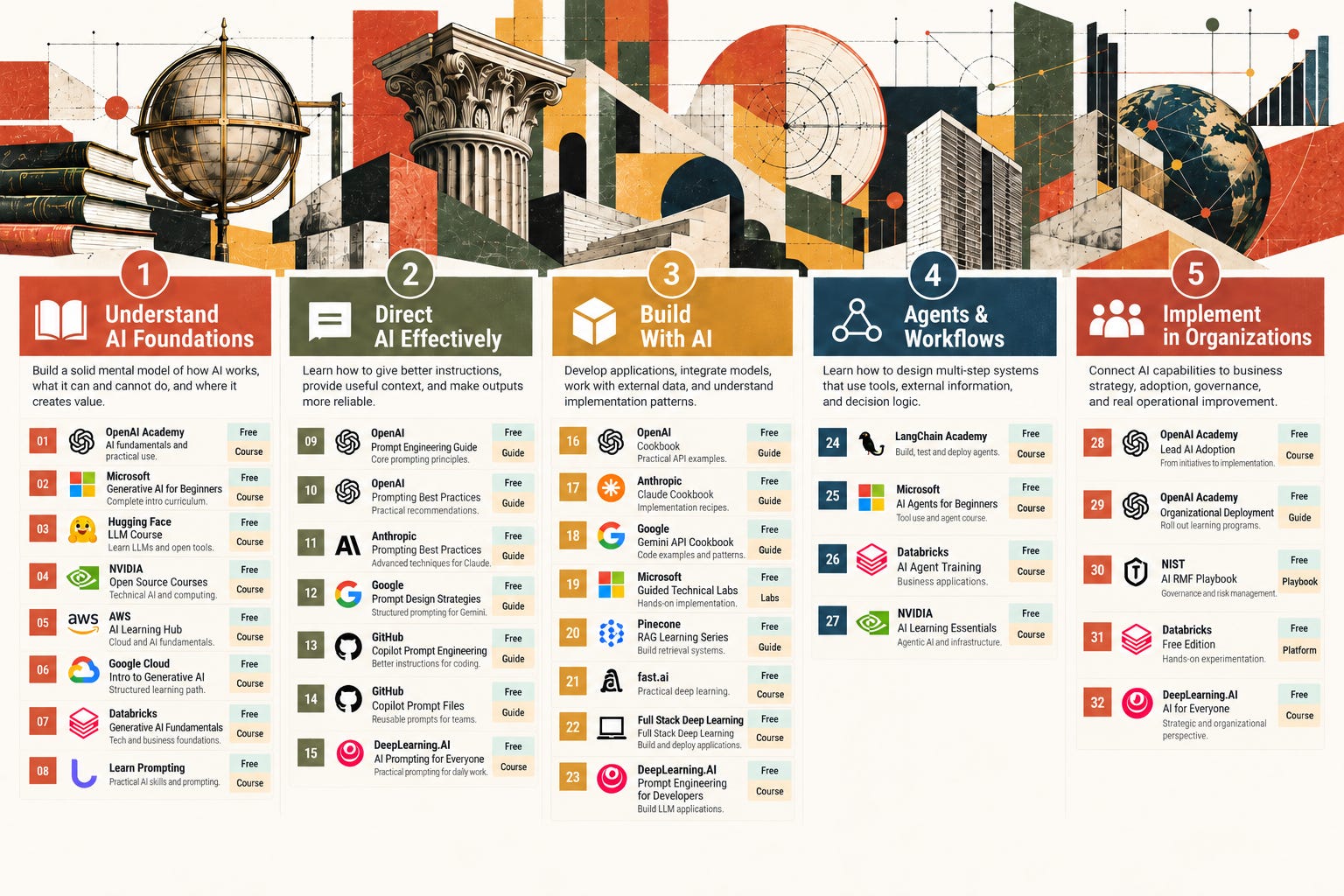
The collection is organized around five areas of capability: understanding AI, directing it effectively, building with it, developing agents, and implementing it across organizations.
You do not need to work through everything. The purpose is to help you identify the next capability worth developing and find a credible place to begin.
01. Build Your Foundations
Eight resources for understanding how modern AI works, what it can accomplish, and where its practical limitations begin.
The first challenge in learning AI is developing a useful mental model of the technology.
People often become comfortable using an AI assistant before understanding how language models generate responses, why certain instructions produce better outcomes, or what differentiates a simple interaction from a reliable workflow.
A solid foundation makes those distinctions easier to recognize. It also helps professionals assess new capabilities without becoming dependent on product announcements or exaggerated demonstrations.
01. OpenAI Academy
Provider: OpenAI
Access: Free courses; account required for enrollment
Best for: Knowledge workers, managers, and professionals beginning their AI journey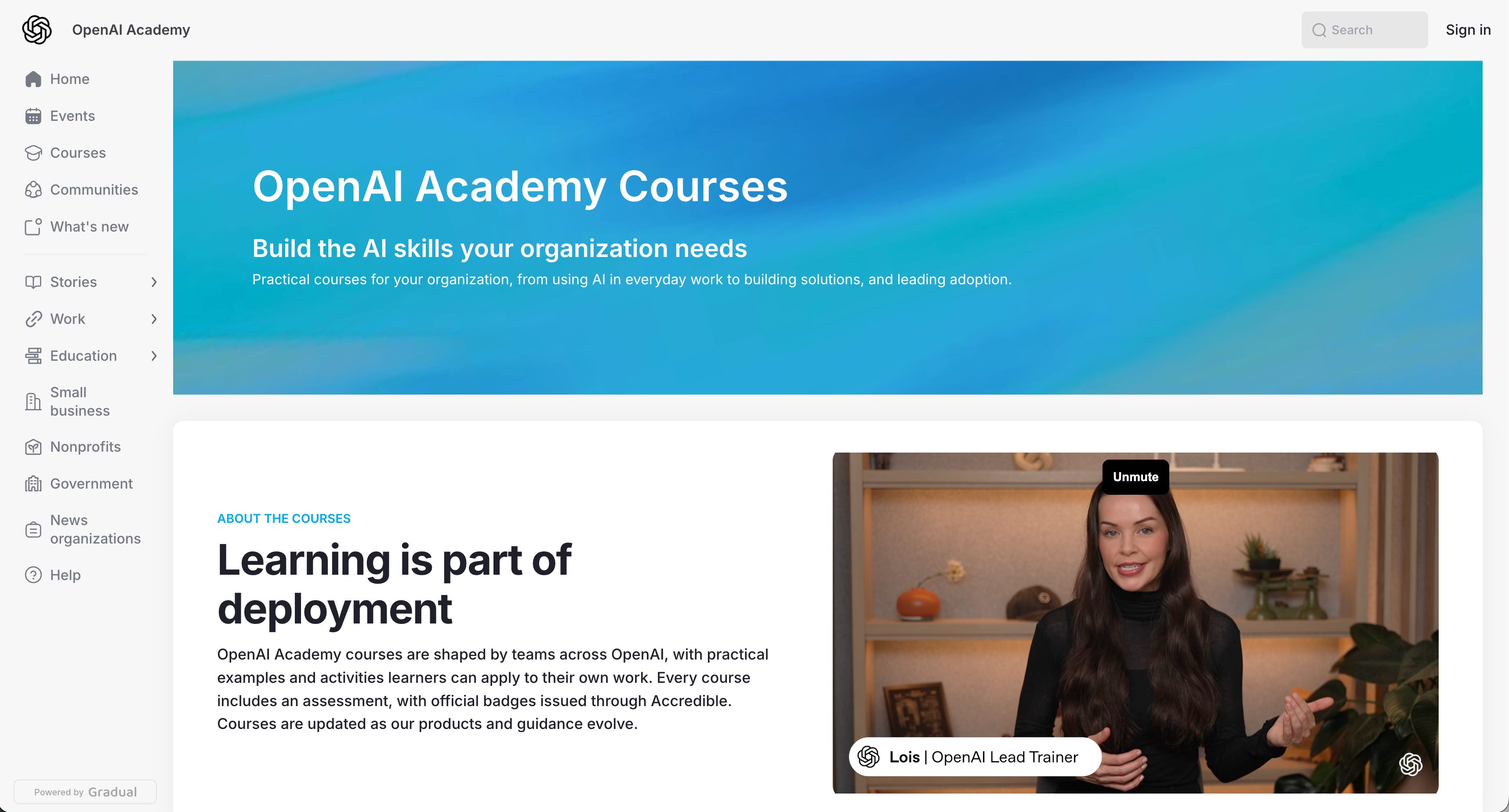
OpenAI Academy provides structured learning paths covering AI fundamentals, effective prompting, workplace applications, agents, and organizational adoption. Its practical orientation makes it particularly relevant for professionals who want to incorporate AI into existing responsibilities without first acquiring extensive technical knowledge.
I would recommend beginning with its AI Foundations material before moving toward Applied AI Foundations or the courses focused on agents and workflows.
02. Generative AI for Beginners
Provider: Microsoft
Access: Free, open-source course materials
Best for: Beginners interested in the technical foundations of generative AI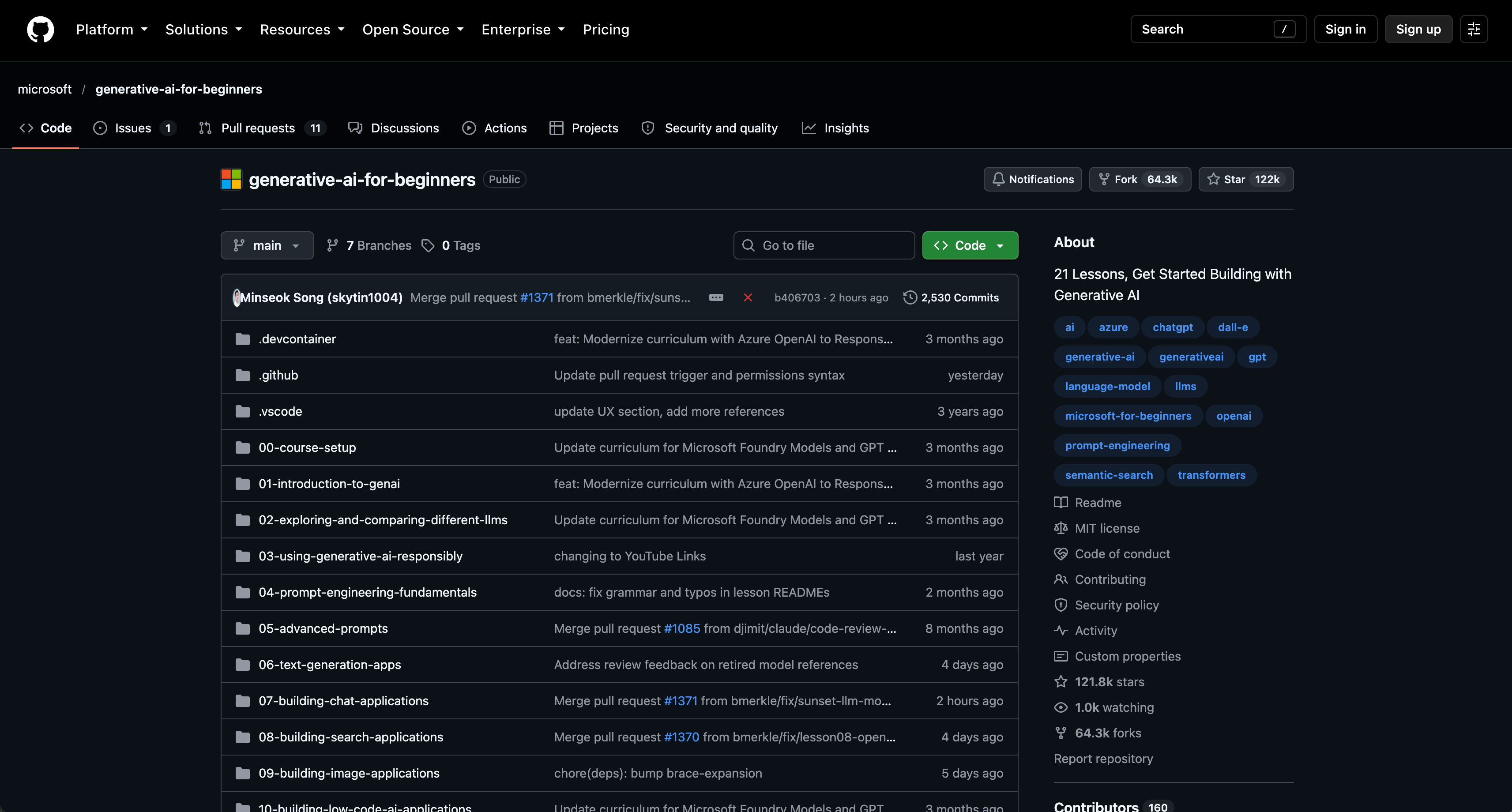
Microsoft has assembled a comprehensive curriculum covering the building blocks of generative AI applications. The course combines conceptual explanations with practical exercises, written lessons, videos, and programming examples.
It is especially useful for people who want to understand what happens underneath the interfaces they use every day and gradually develop the confidence to build their own applications. Some exercises involve external model services, which may incur usage costs.
03. Hugging Face LLM Course
Provider: Hugging Face
Access: Free
Best for: Learners interested in language models, open-source AI, and machine learning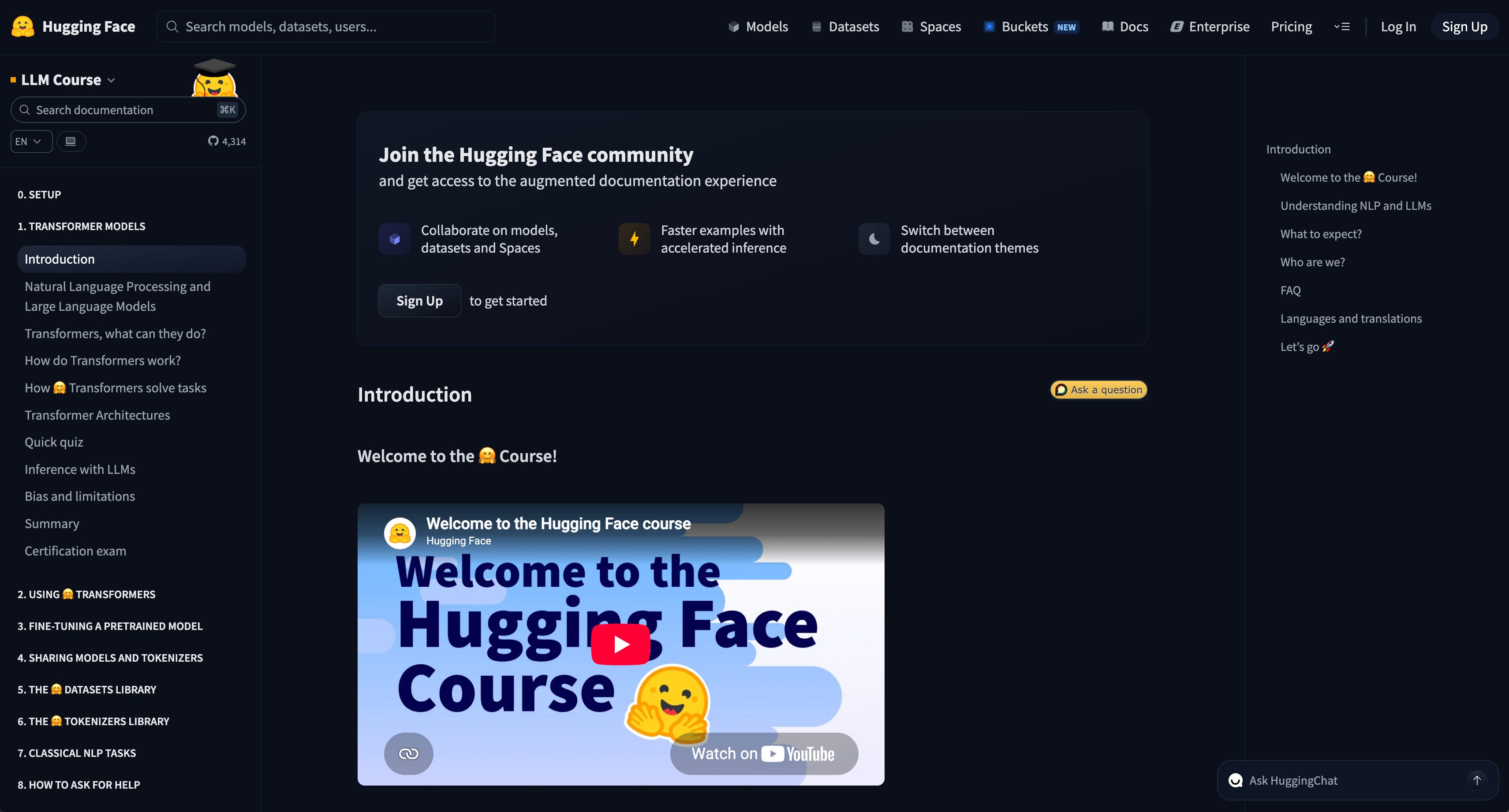
Hugging Face provides an extensive introduction to large language models, natural language processing, transformers, tokenization, and the practical libraries used throughout the open-source AI ecosystem.
The course is particularly valuable because it connects conceptual understanding with real software libraries and model development workflows. Readers who want to understand how AI systems operate beyond commercial chatbot interfaces will find considerable depth here.
04. NVIDIA Open Source Courses
Provider: NVIDIA
Access: Free and openly licensed materials
Best for: Technical learners and educators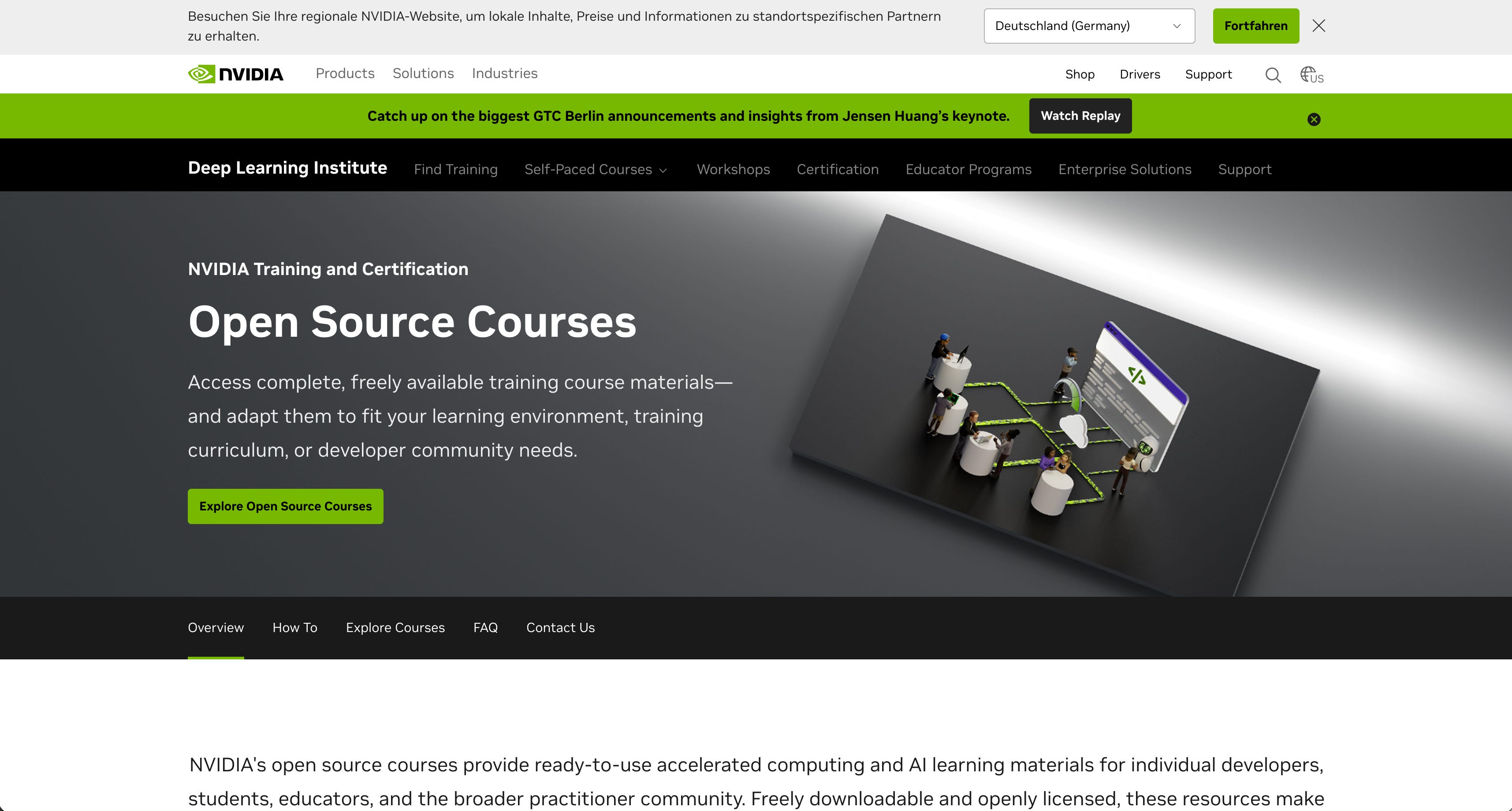
NVIDIA publishes freely downloadable course materials covering AI and accelerated computing. These materials include instructional content that can be studied independently or adapted for educational workshops.
The open licensing is particularly useful for educators and teams developing internal learning programs. The educational materials are free, although running computational exercises in certain environments may create additional costs.
05. AWS AI Learning Hub
Provider: Amazon Web Services
Access: Free introductory materials; advanced training access varies
Best for: Professionals exploring AI applications and cloud infrastructure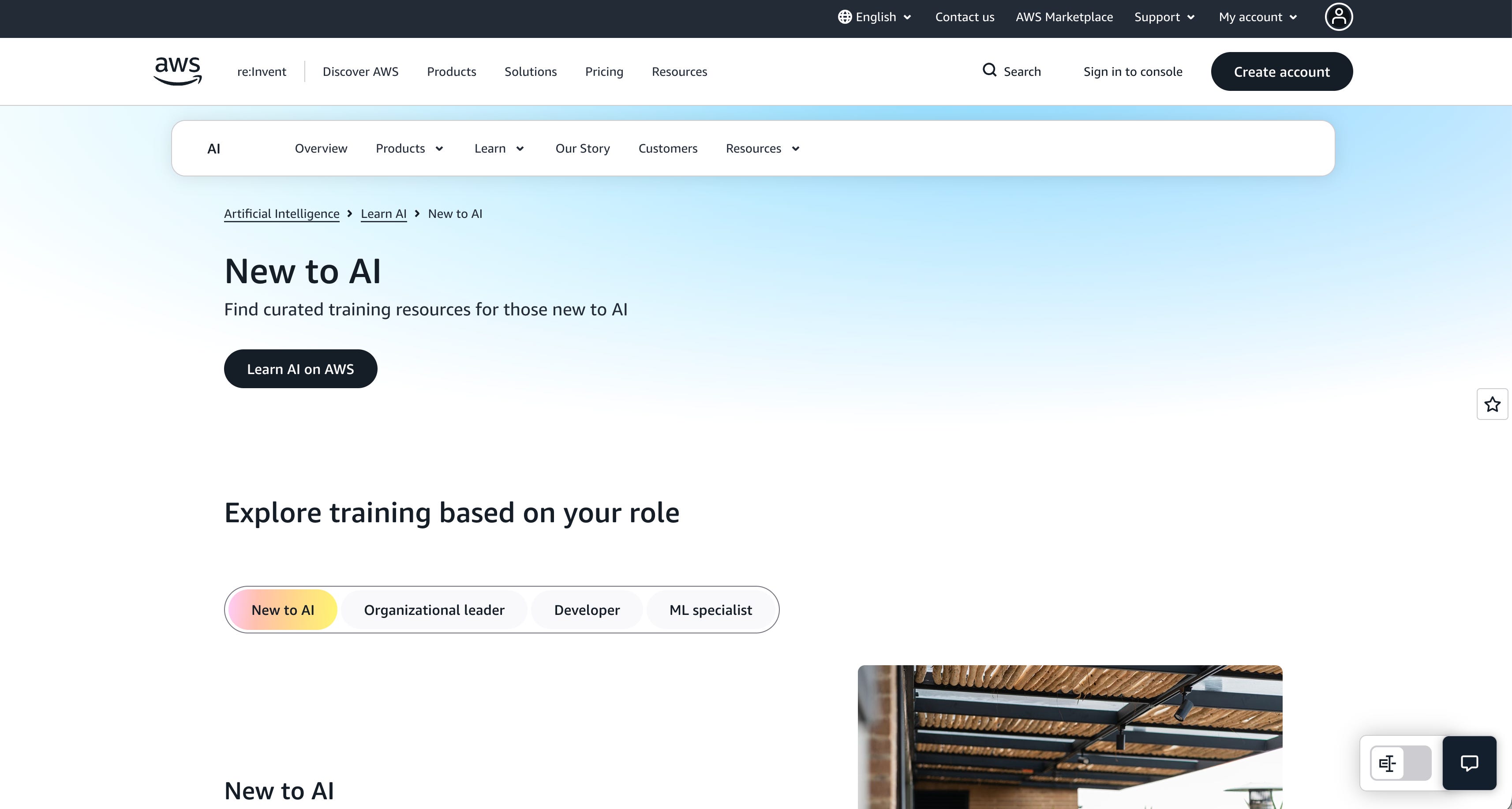
Amazon’s AI learning hub combines introductory explanations with training resources covering artificial intelligence, machine learning, generative AI, and cloud-based applications.
Its value lies in helping readers understand the broader technical environment in which AI systems operate. For professionals considering enterprise deployment, the material provides a useful introduction to infrastructure, services, and common application patterns.
06. Introduction to Generative AI
Provider: Google Cloud
Access: Free introductory learning materials; some advanced labs have access conditions
Best for: Beginners and professionals seeking structured AI education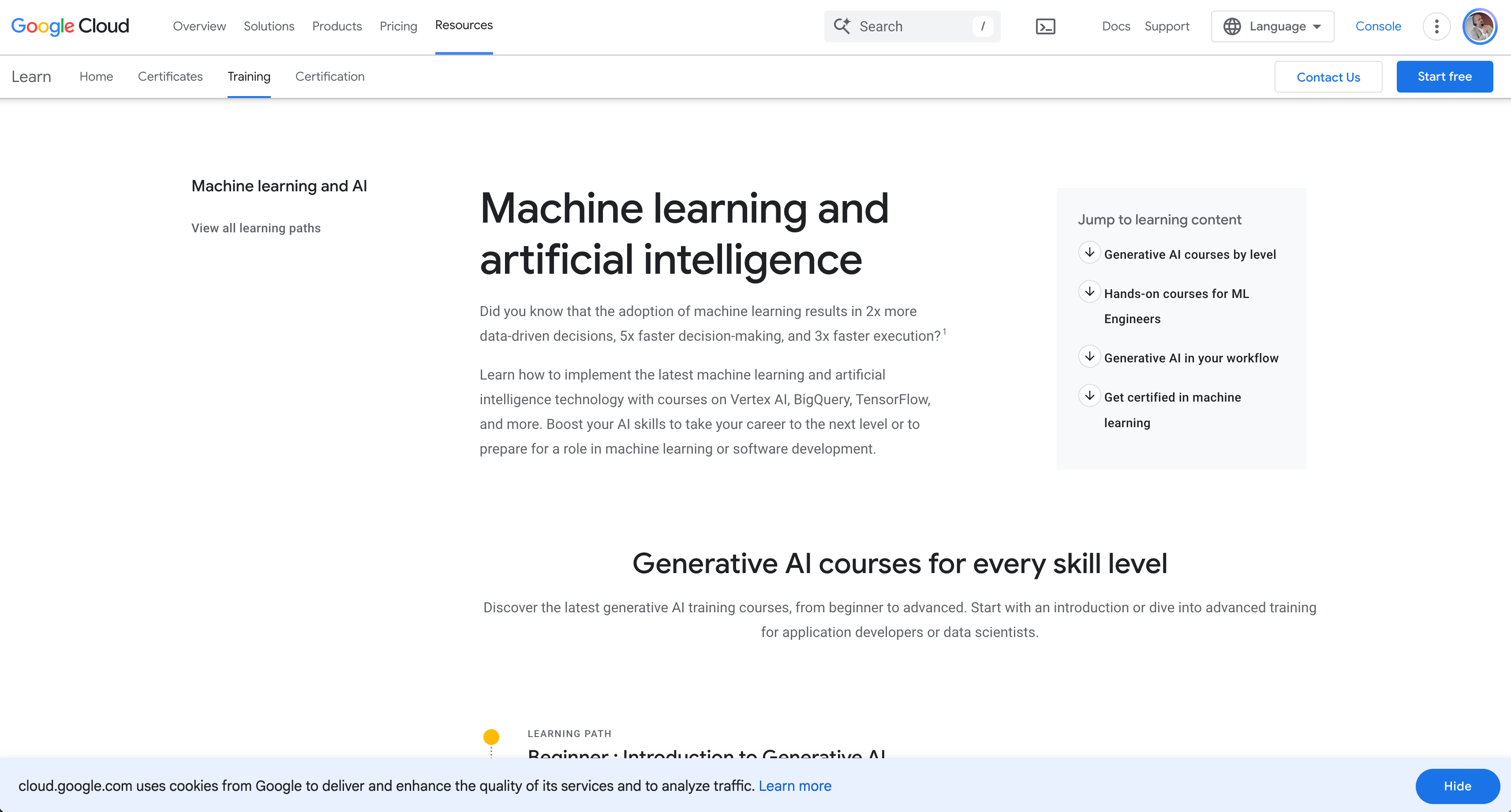
Google Cloud provides introductory and advanced learning paths covering generative AI, language models, model deployment, and application development.
The introductory material is approachable without a technical background, while the broader learning catalog creates a progression toward more specialized capabilities. It is a useful starting point for anyone who prefers organized learning paths rather than disconnected tutorials.
07. Generative AI Fundamentals
Provider: Databricks
Access: Free training
Best for: Business professionals, analysts, and prospective AI practitioners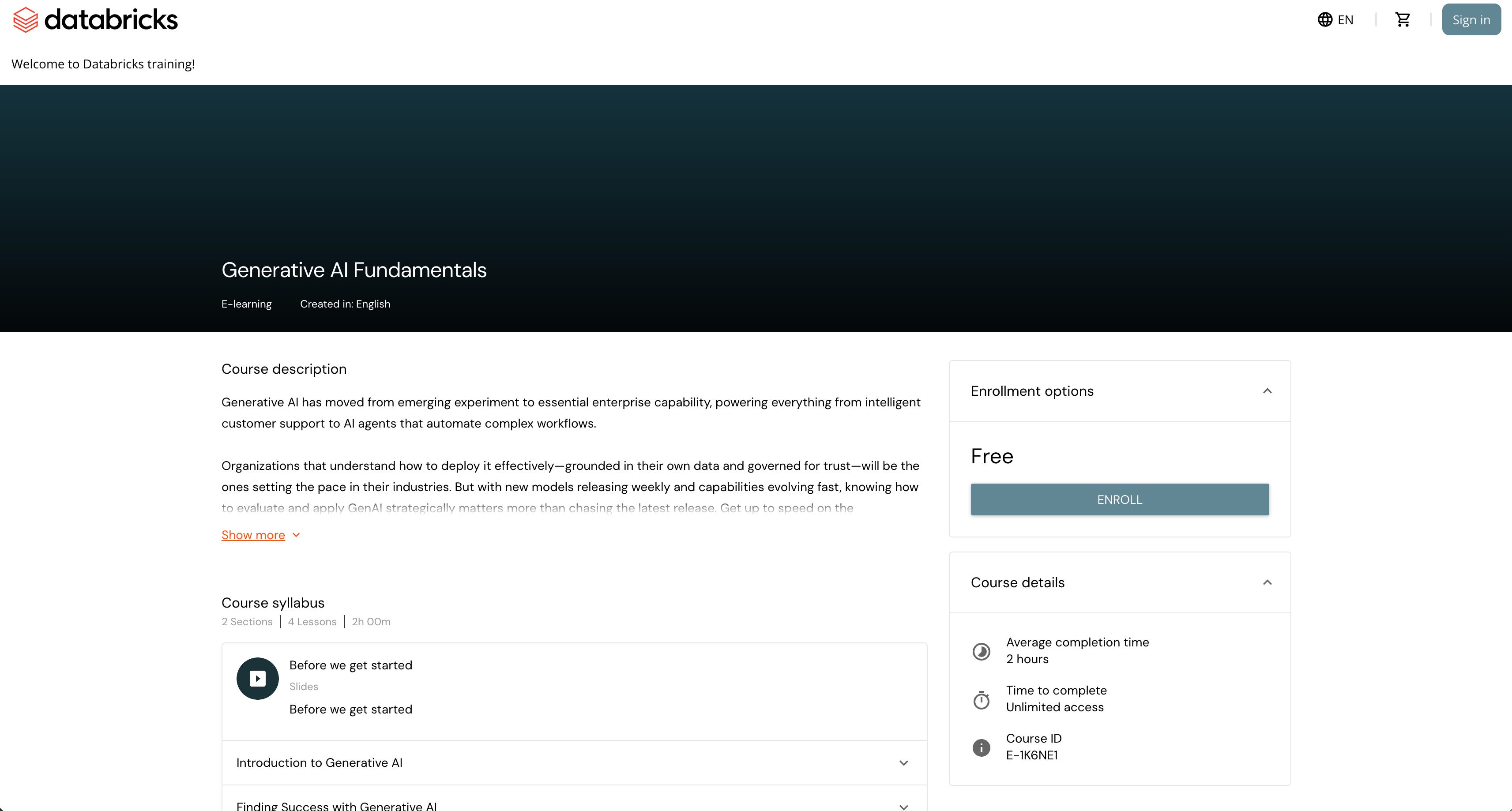
Databricks approaches generative AI through a combination of technical foundations and organizational applications. Its training examines model capabilities, business use cases, governance, and the practical considerations involved in implementing AI with enterprise data.
This makes it valuable for professionals who need to connect the underlying technology with questions of implementation, operating costs, and organizational relevance.
08. Learn Prompting
Provider: Learn Prompting
Access: Free introductory resources; additional paid offerings
Best for: Beginners and intermediate users developing practical AI skills
Learn Prompting provides accessible educational material on communicating effectively with AI systems, together with courses and resources covering more specialized areas of prompting and AI security.
Its structured approach is helpful for people who have already experimented with AI but want to understand the principles behind effective instructions. The platform combines freely accessible introductory material with more advanced commercial offerings.
02. Learn to Direct AI More Effectively
Seven resources for developing better instructions, providing useful context, and making AI outputs more predictable and reliable.
Once someone understands the basic capabilities of AI, the next challenge involves the quality of the interaction.
An AI system can generate a plausible response to an ambiguous request, but plausibility does not establish whether the response addresses the right problem, incorporates the necessary evidence, or satisfies the user’s actual requirements.
Learning to work effectively with AI therefore involves considerably more than developing a collection of impressive prompts.
It requires the ability to formulate problems, communicate constraints, supply relevant information, specify expected outputs, and evaluate results against explicit criteria.
The following resources provide a useful foundation for developing these capabilities.
09. OpenAI Prompt Engineering Guide
Provider: OpenAI
Access: Free documentation
Best for: Professionals and developers seeking reliable prompting principles
OpenAI’s official guide explains techniques for developing more effective instructions and improving model outputs. It also introduces the importance of testing prompts and accounting for the variability inherent in generative systems.
For readers who want to develop a systematic approach to prompting, this is among the most useful first-party references available.
10. OpenAI Prompting Best Practices
Provider: OpenAI
Access: Free
Best for: Everyday ChatGPT users and professionals
This complementary resource translates prompting principles into practical recommendations that readers can apply immediately. It examines the benefits of clear instructions, specific requirements, and examples.
Its accessible format makes it suitable for professionals who want to improve everyday interactions before exploring more advanced workflow design.
11. Anthropic Prompting Best Practices
Provider: Anthropic
Access: Free documentation
Best for: Advanced AI users, analysts, and developers
Anthropic maintains detailed guidance for working with Claude, covering instruction clarity, examples, structured information, and techniques for handling complex tasks.
One particularly useful aspect is its emphasis on defining success criteria before attempting to optimize a prompt. This encourages readers to consider what a successful result should look like and how they intend to evaluate it.
12. Google Prompt Design Strategies
Provider: Google
Access: Free documentation
Best for: Gemini users and professionals working with complex information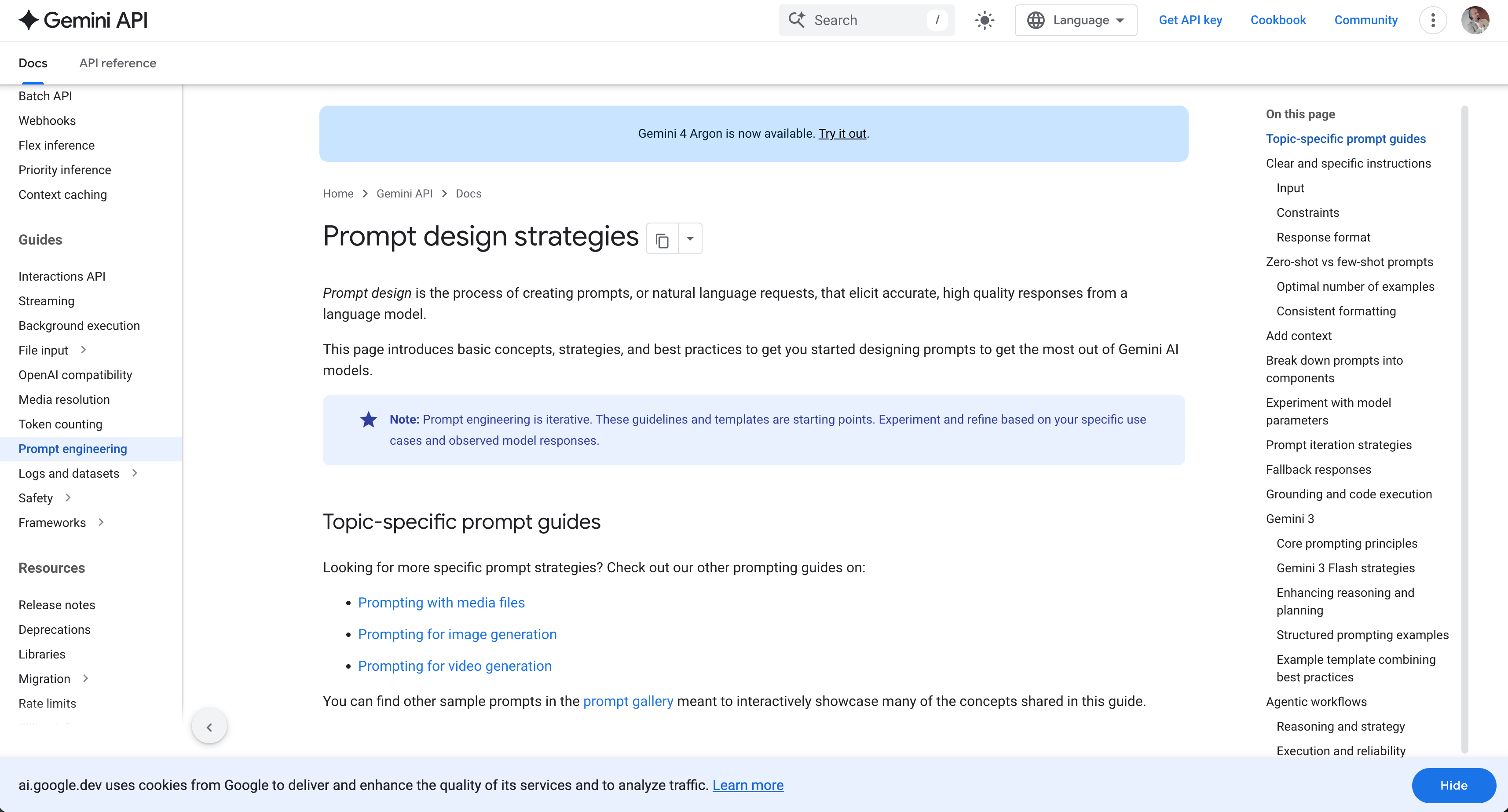
Google’s prompting guidance explores how instruction structure, contextual information, examples, and tool capabilities influence model behavior.
The documentation is especially useful for understanding how to work with substantial amounts of information and how grounding and external tools can improve the reliability of certain outputs.
13. GitHub Copilot Prompt Engineering
Provider: GitHub
Access: Free documentation
Best for: Developers and technical professionals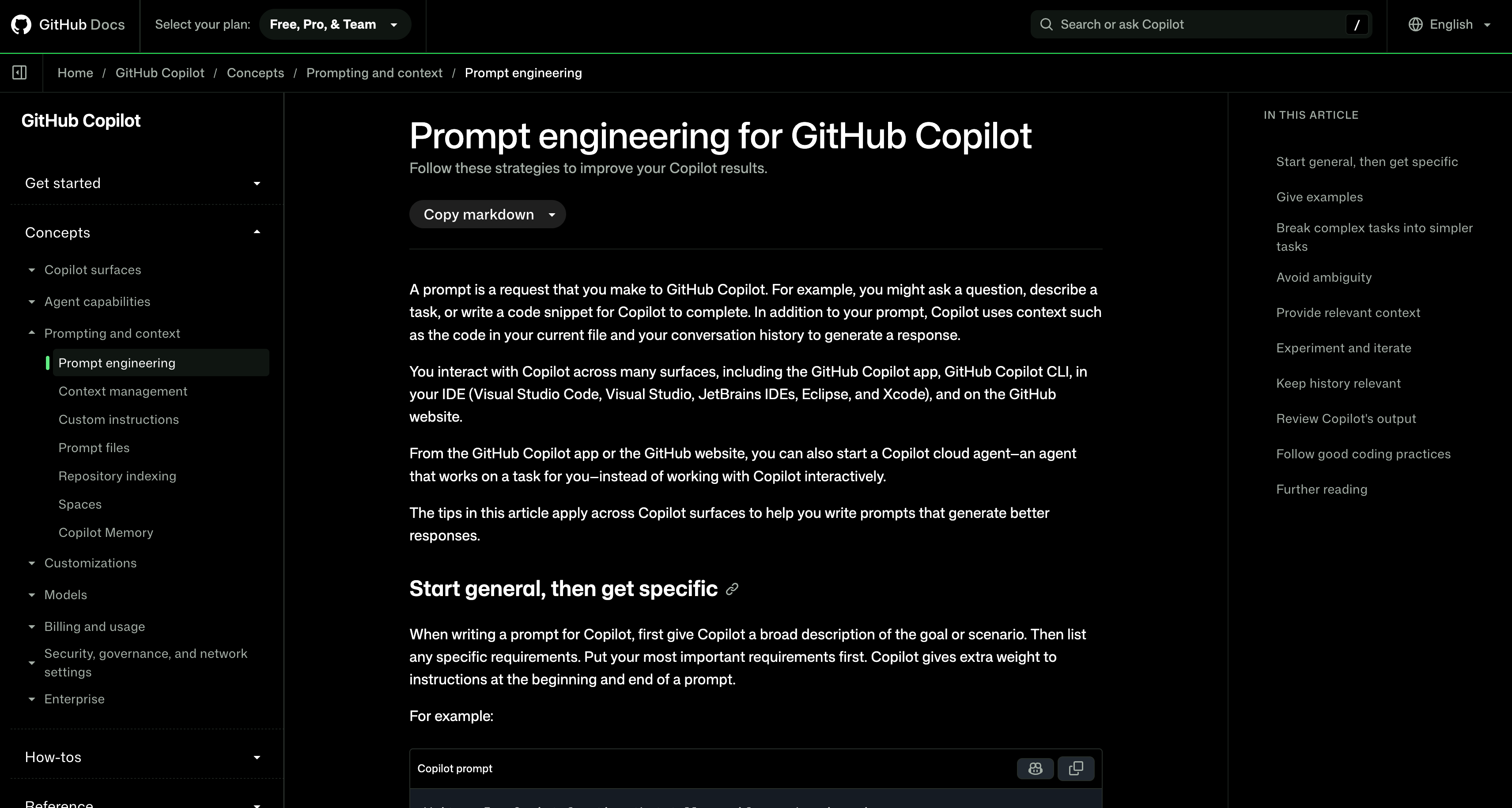
GitHub’s documentation explains how developers can improve AI-generated code by communicating requirements clearly and providing relevant information about the surrounding project.
The underlying principles extend beyond programming. Many of the same techniques apply whenever an AI system must operate within a defined environment rather than respond to an isolated question.
14. GitHub Copilot Prompt Files
Provider: GitHub
Access: Free documentation; using Copilot features may require access to the product
Best for: Teams developing reusable AI workflows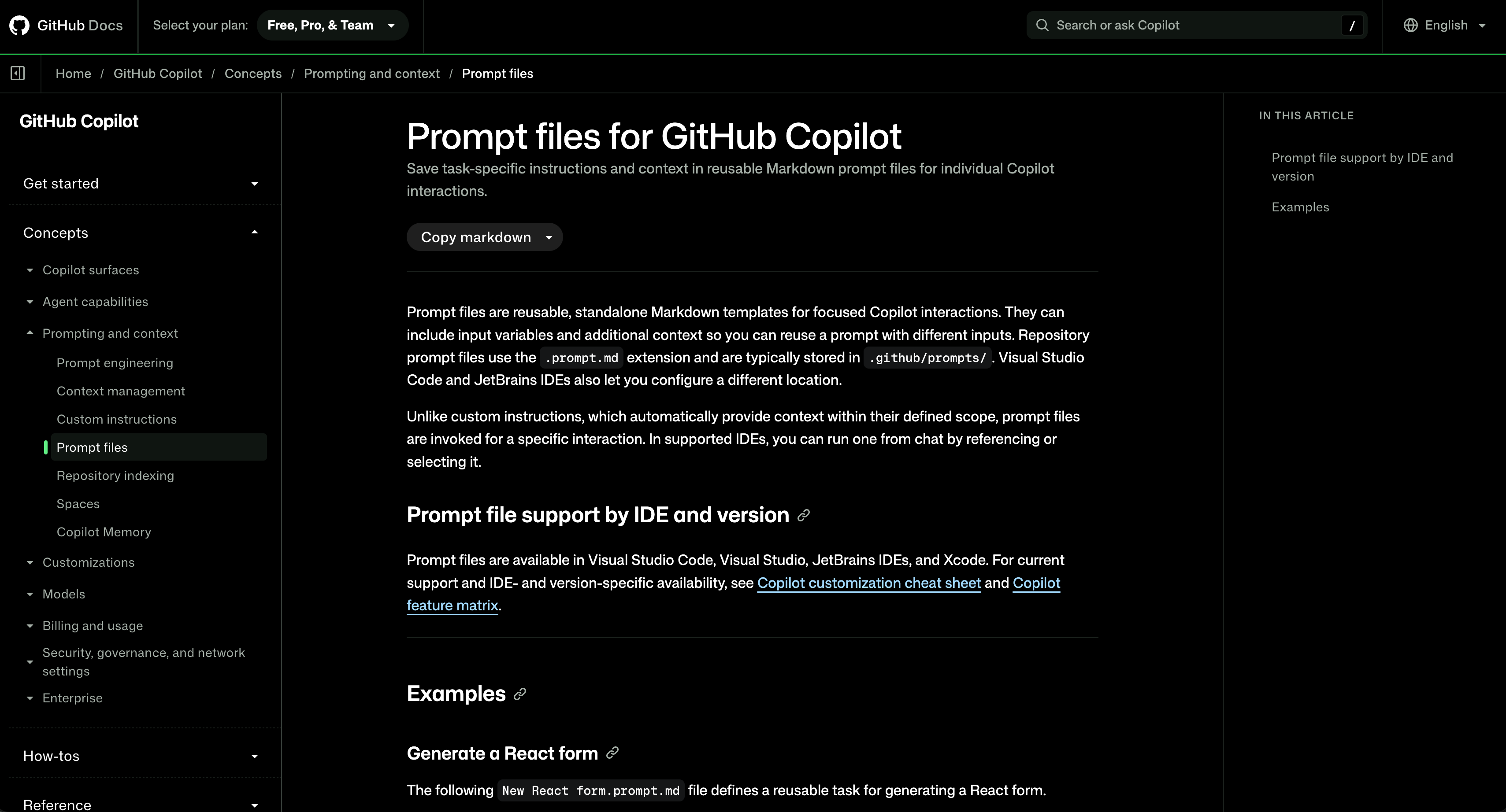
GitHub’s documentation on prompt files introduces a method for storing reusable instructions as project assets.
This approach becomes particularly valuable when tasks recur frequently or multiple people need to produce outputs according to shared requirements. The underlying idea is broadly applicable to organizational AI systems: useful instructions become easier to maintain when they are documented and reusable.
15. AI Prompting for Everyone
Provider: DeepLearning.AI
Access: Course access and additional features depend on the current enrollment offering
Best for: Non-technical professionals improving everyday AI usage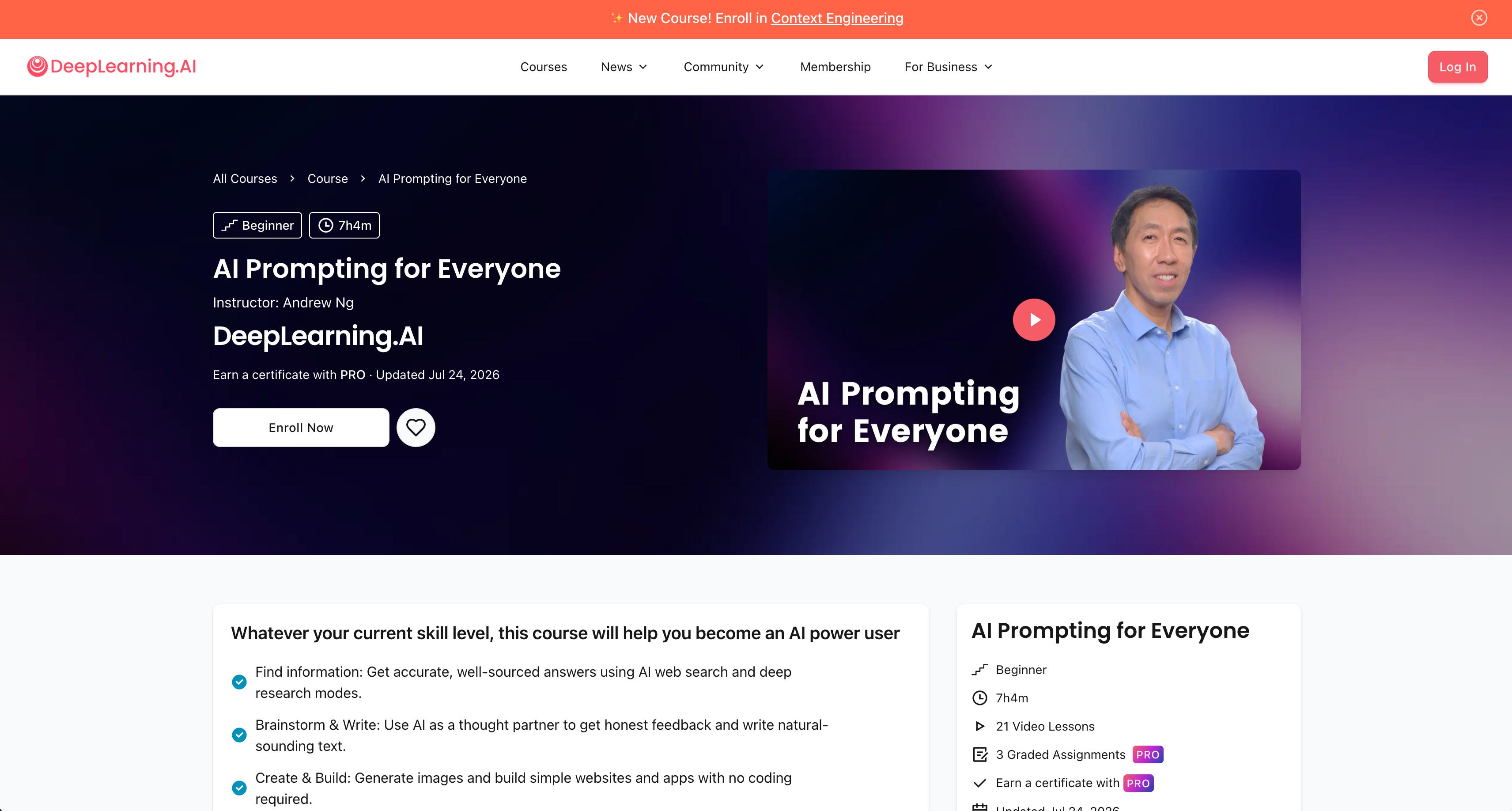
Andrew Ng’s course examines how to use AI for research, writing, brainstorming, and practical creation tasks.
Its strength is the connection between prompting techniques and ordinary professional activities. Readers who are comfortable using AI but feel they are only accessing a fraction of its capabilities may find the examples particularly useful.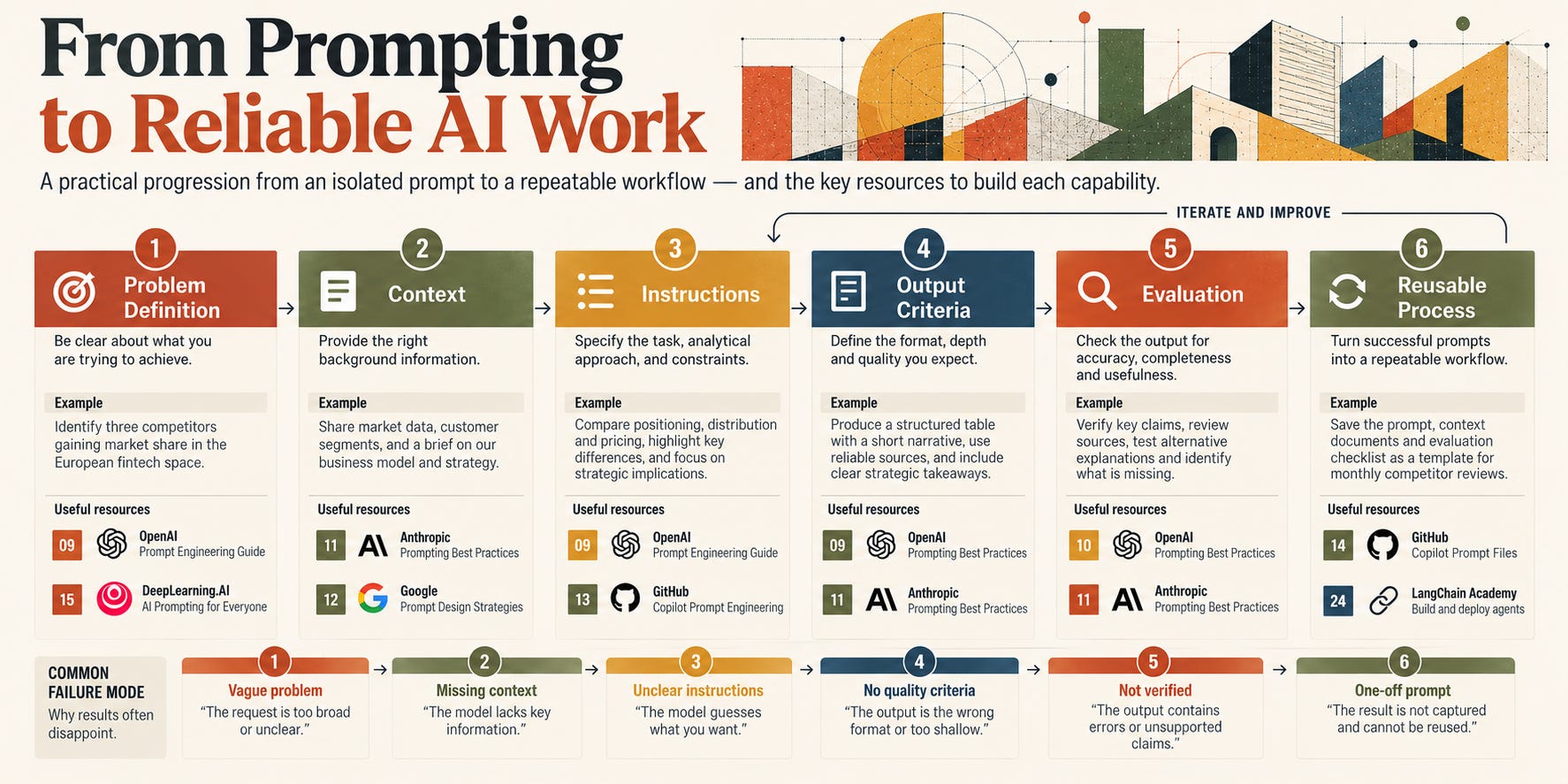
03. Move From Using AI to Building With It
Eight resources for developing applications, integrating models, working with external information, and understanding the foundations of AI systems.
At some point, learning to work with AI becomes a question of architecture.
A conversational interface provides a convenient entry point, but more complex applications require explicit decisions about data sources, tools, system behavior, model selection, and the mechanisms used to evaluate results.
Developers have traditionally approached these challenges through documentation, software examples, and reusable implementation patterns.
Today, many of the companies building foundation models publish extensive collections of these materials for public use.
Their value extends to technically curious strategists and operators who may never write a production application themselves. Understanding how these systems are assembled makes it easier to evaluate vendors, scope initiatives, and distinguish feasible applications from attractive demonstrations.
16. OpenAI Cookbook
Provider: OpenAI
Access: Free examples; API usage may incur costs
Best for: Developers and technical professionals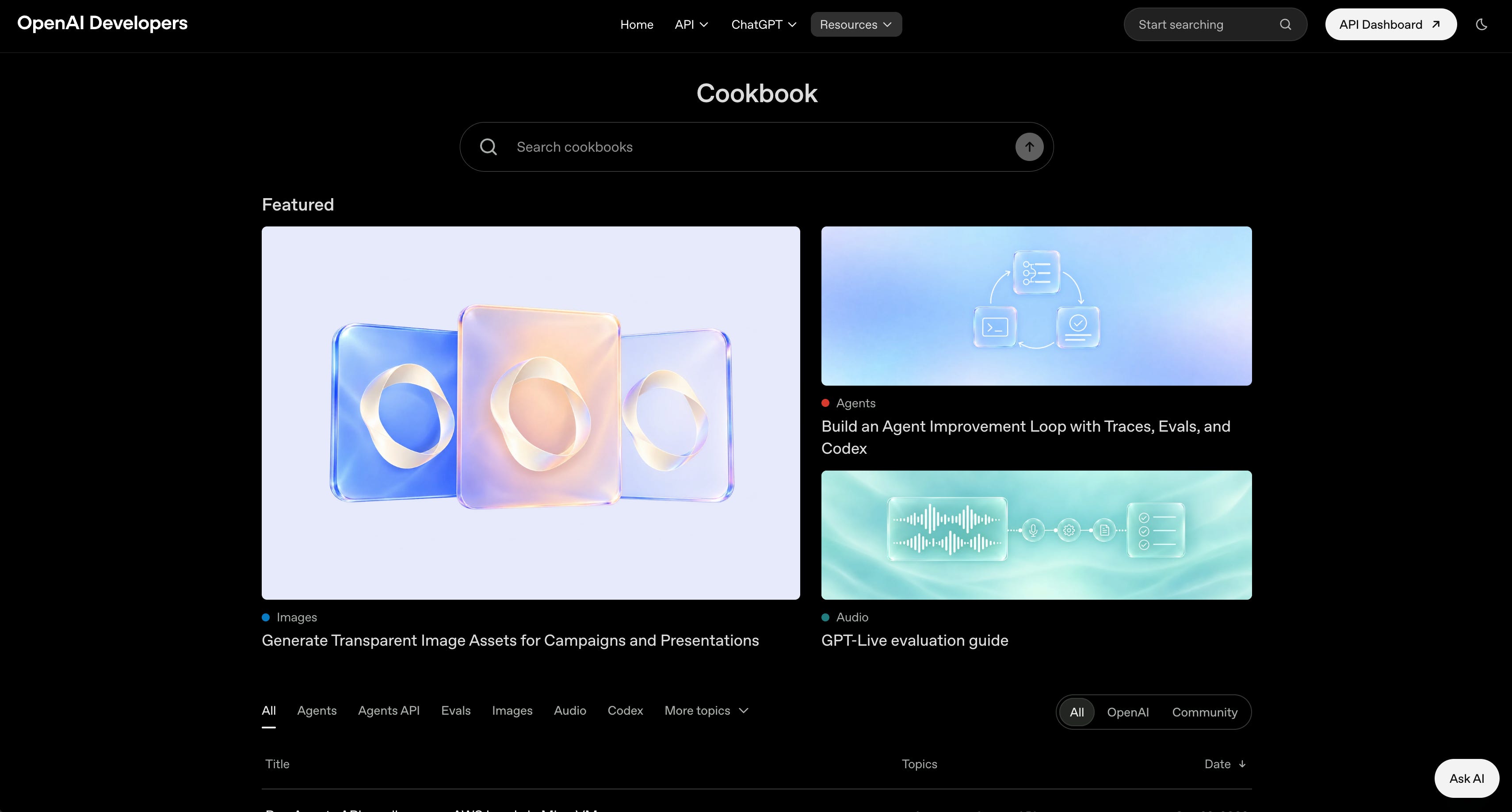
The OpenAI Cookbook provides practical implementation examples covering common tasks performed with OpenAI models and APIs.
Its examples help developers understand how to integrate model capabilities into applications, work with structured outputs, and construct more sophisticated systems. The repository is particularly useful when moving from abstract technical concepts toward working implementations.
17. Claude Cookbook
Provider: Anthropic
Access: Free recipes; execution may require paid API usage
Best for: Developers building applications with Claude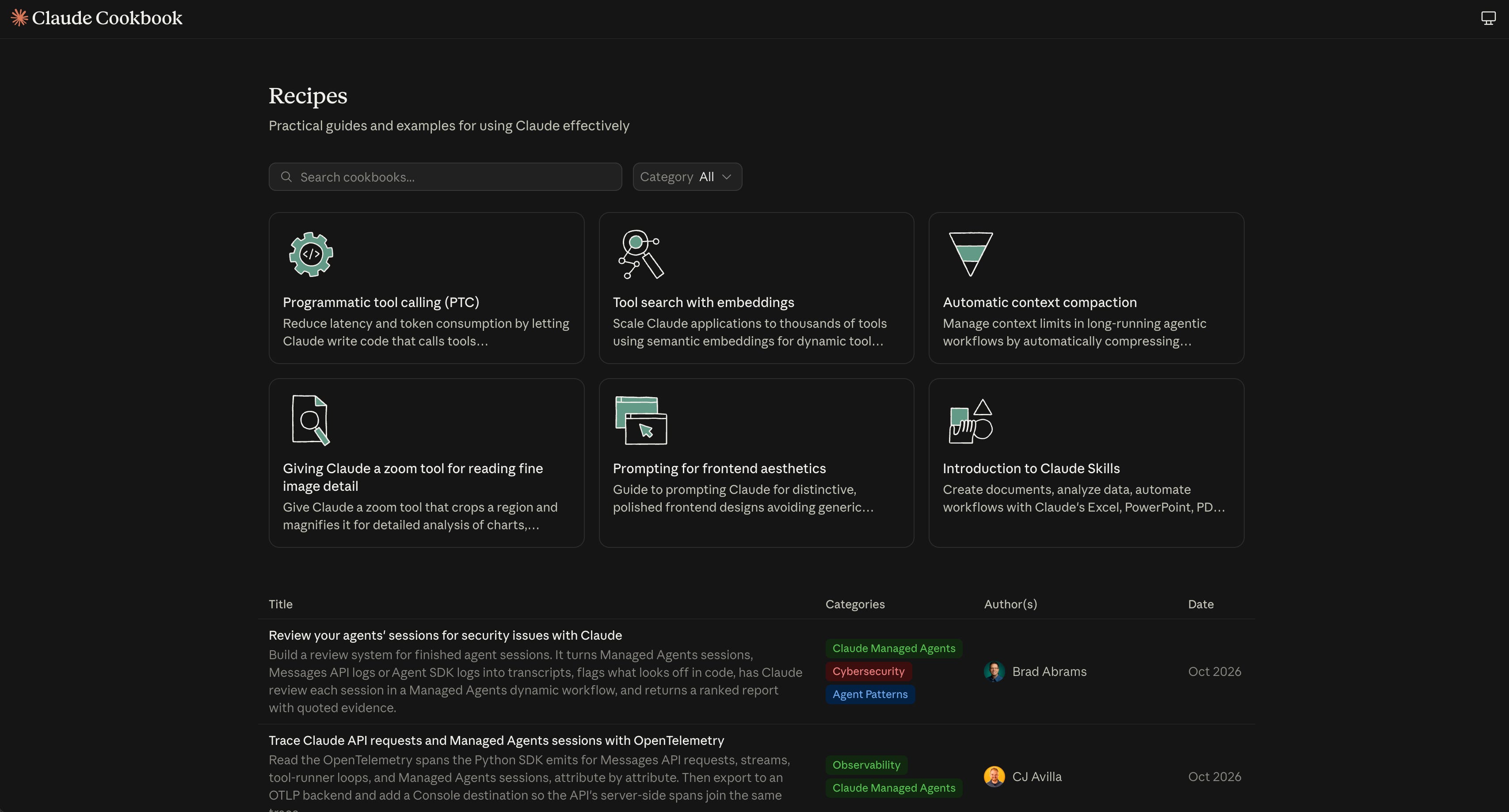
Anthropic’s Cookbook provides practical recipes for building with Claude, including tool use, context management, document analysis, and other application patterns.
These examples are valuable because they illustrate implementation details that are often difficult to understand from high-level product descriptions. They also provide insight into how sophisticated AI applications manage information and coordinate multiple operations.
18. Gemini API Cookbook
Provider: Google
Access: Free documentation and examples; API usage conditions vary
Best for: Developers exploring multimodal AI applications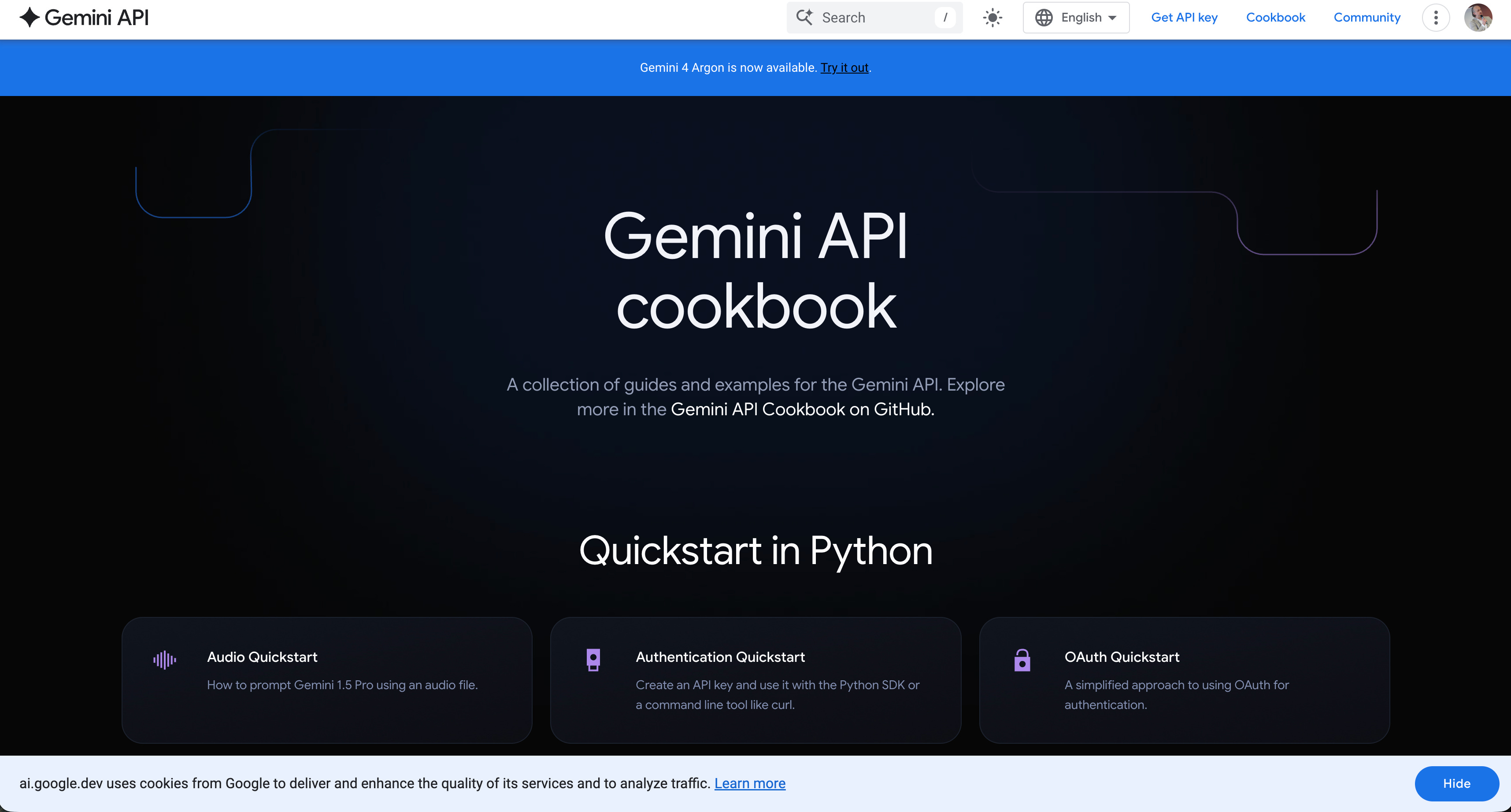
Google’s Gemini Cookbook contains code examples covering prompting, embeddings, function calling, multimodal inputs, and related development techniques.
It is especially useful for developers experimenting with applications that need to process different forms of information or connect language models to external functionality.
19. Microsoft Guided Technical Labs
Provider: Microsoft
Access: Free or trial-compatible introductory labs; some exercises require service access
Best for: Practical learners and aspiring developers
Microsoft’s guided labs provide a structured environment for learning through implementation exercises.
Rather than relying entirely on lectures or conceptual explanations, readers can work through practical tasks related to generative AI applications, coding assistants, and agent development.
This makes the material particularly suitable for people who learn most effectively by building small working examples.
20. Pinecone RAG Learning Series
Provider: Pinecone
Access: Free educational content
Best for: Developers working with enterprise knowledge and retrieval systems
Retrieval-augmented generation has become an important approach for connecting language models to external information.
Pinecone’s educational series explains the components and architectural decisions involved in building retrieval systems, including embeddings, reranking, and evaluation.
The material is useful for anyone investigating how AI applications can work with company documents, knowledge bases, or continuously updated information.
21. fast.ai
Provider: fast.ai
Access: Free public course materials
Best for: Technically curious learners and developers
fast.ai has long emphasized practical approaches to machine learning education, providing resources that connect underlying principles with implementation.
Its educational material is particularly valuable for readers seeking a deeper understanding of model training, machine learning techniques, and the technical foundations behind modern AI applications.
22. Full Stack Deep Learning — LLM Bootcamp
Provider: Full Stack Deep Learning
Access: Publicly accessible course materials
Best for: Developers and technical teams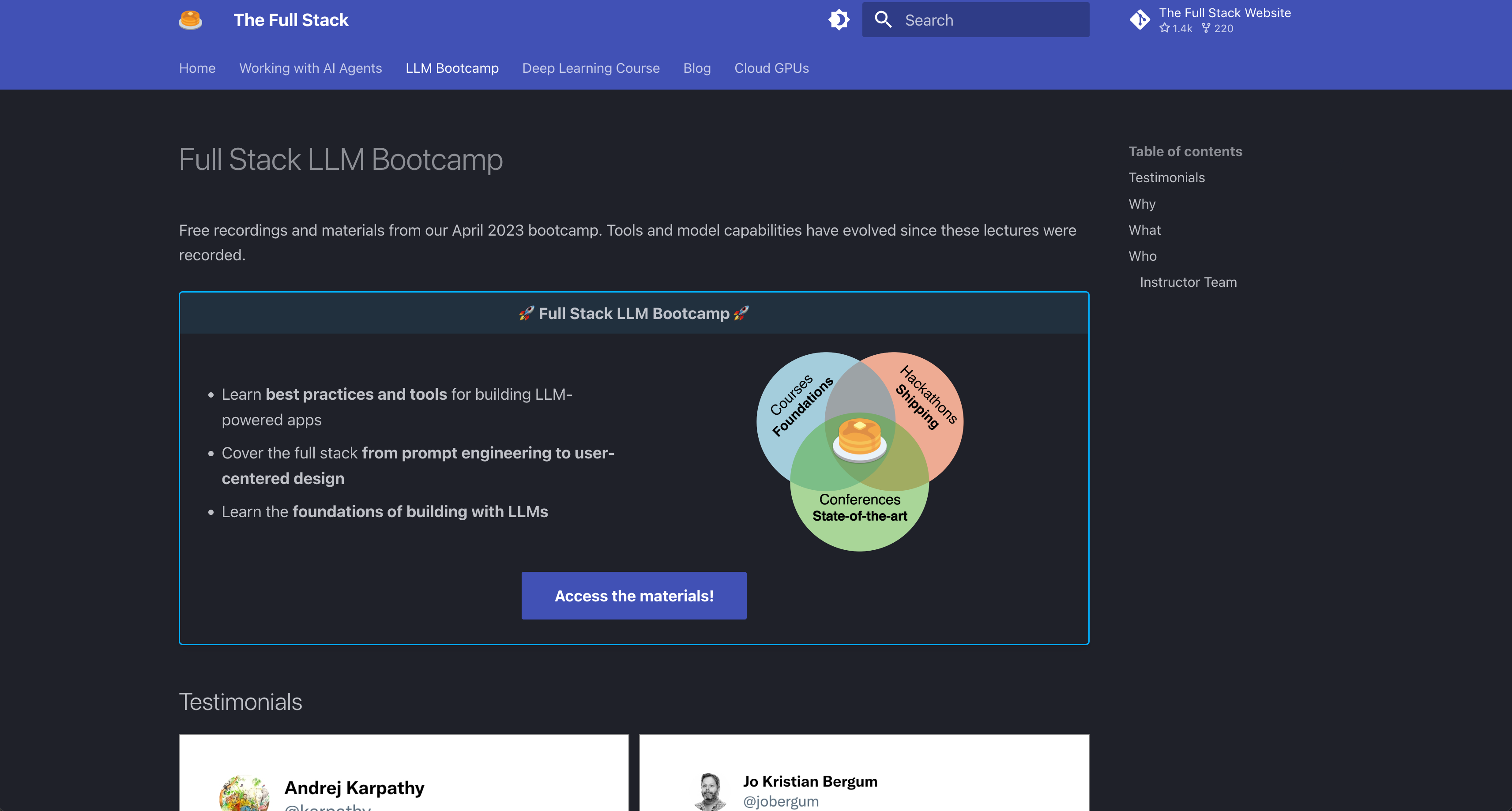
Full Stack Deep Learning’s LLM Bootcamp examines the practical challenges associated with building language-model applications.
Its publicly available lectures cover foundations, prompt engineering, augmented language models, application interfaces, and operational considerations.
Although some material reflects an earlier stage of the generative AI landscape, many of the architectural concepts remain valuable.
23. ChatGPT Prompt Engineering for Developers
Provider: DeepLearning.AI and OpenAI
Access: Public course information and learning materials; enrollment conditions vary
Best for: Developers entering LLM application development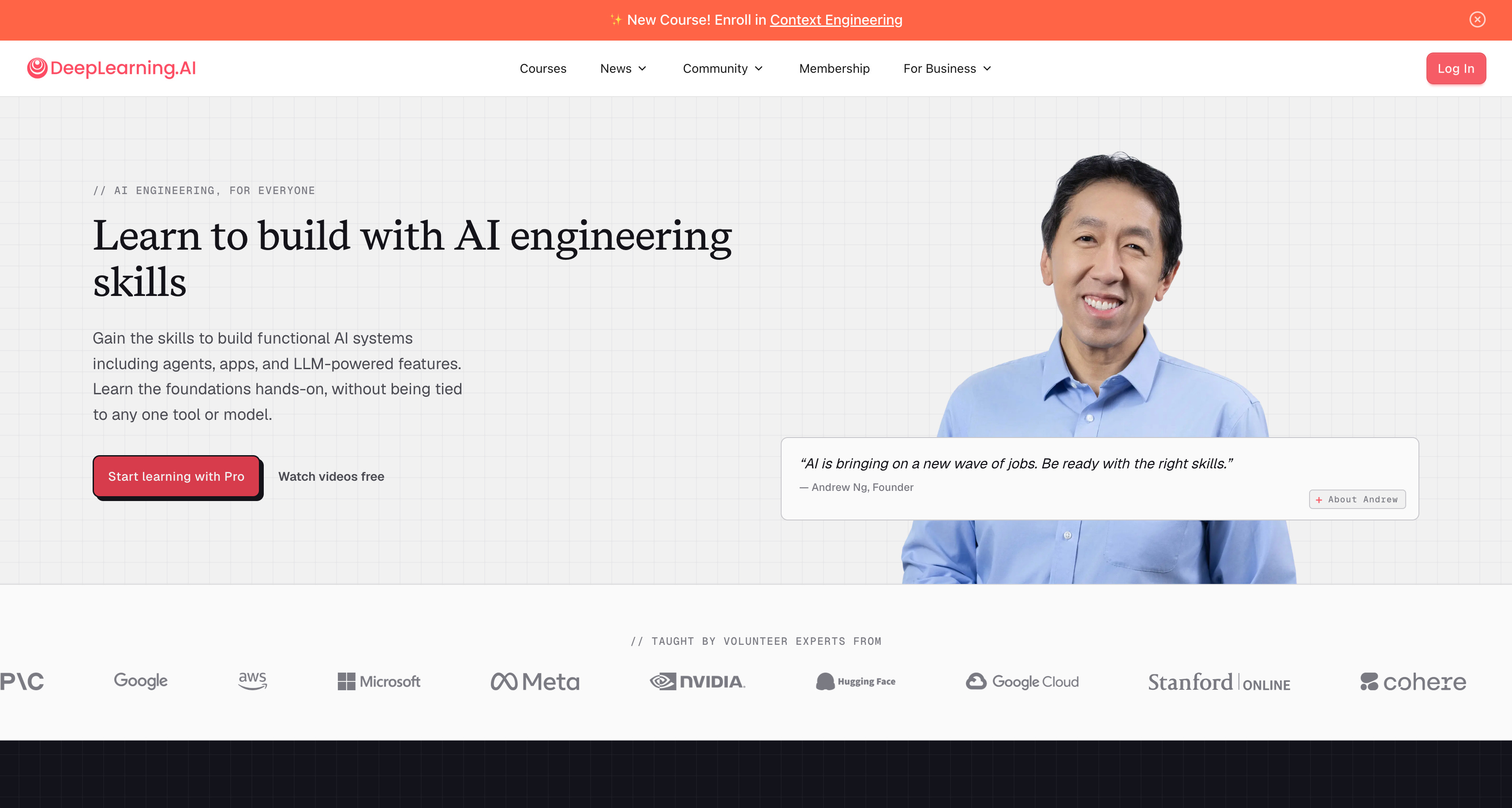
Developed with instruction from Andrew Ng and Isa Fulford, this course connects prompting principles to application development.
It introduces techniques for directing language models and developing practical functionality through model APIs.
Readers can use it to establish a foundation before exploring more complex application architectures and autonomous workflows.
04. Understand Agents and Multi-Step AI Workflows
Four resources for learning how AI systems can perform connected operations, use tools, and participate in more substantial workflows.
The next important capability involves understanding how AI systems operate across multiple steps.
A single response may be sufficient for generating an outline, summarizing a document, or answering a question. More demanding activities involve retrieving information, transforming data, invoking tools, checking intermediate results, and determining whether further action is necessary.
These requirements introduce architectural and operational challenges that are easy to underestimate.
An effective agent system needs an appropriate model, access to the right tools, reliable context, a defined scope of authority, and a method for detecting when the system is producing unsatisfactory results.
The resources below provide different entry points into these questions.
24. LangChain Academy
Provider: LangChain
Access: Free course content; paid certification available
Best for: Developers and advanced practitioners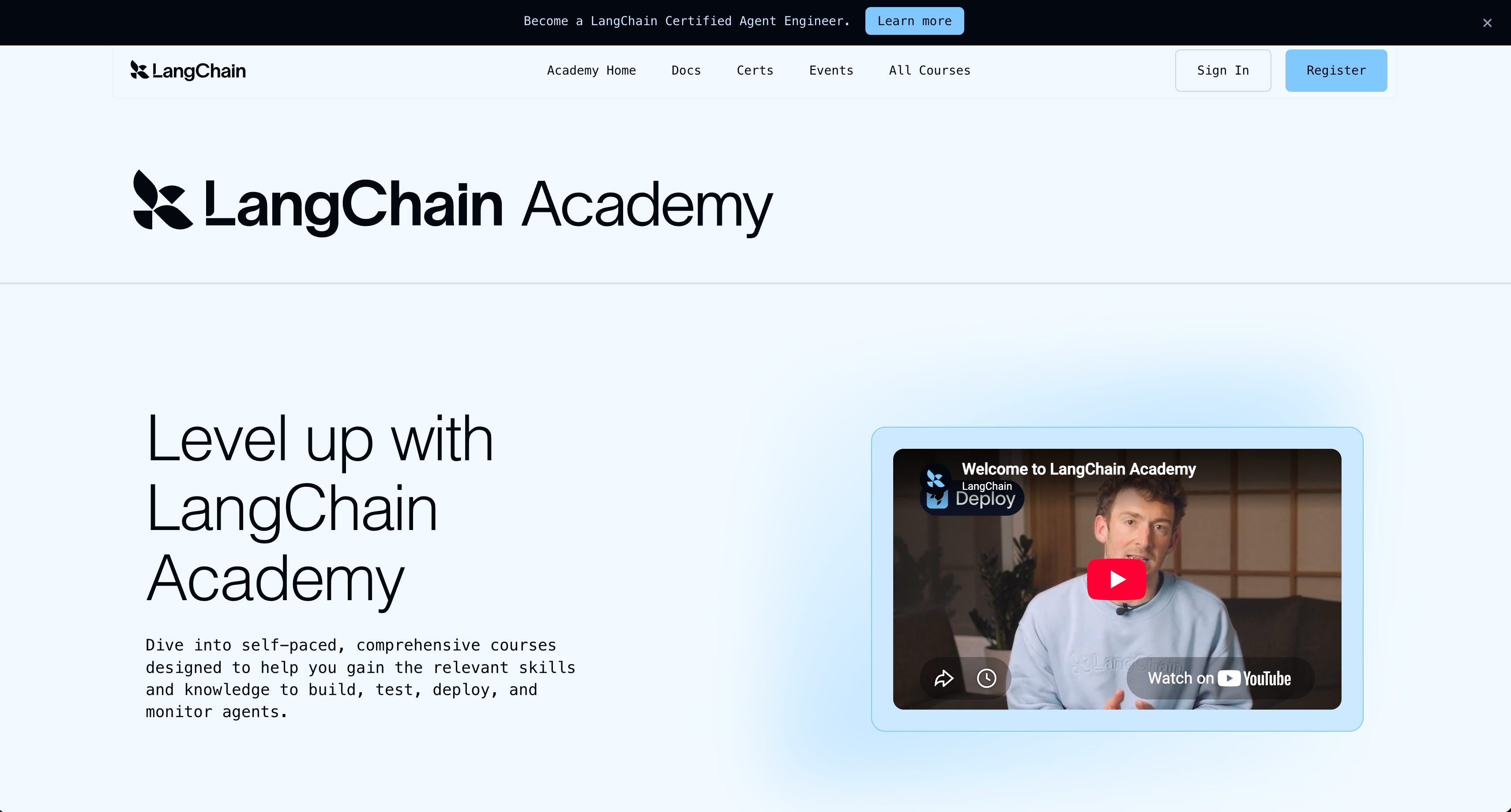
LangChain Academy provides structured courses covering the development, testing, deployment, and monitoring of AI agents.
Its learning paths include LangChain, LangGraph, and related components of the agent development lifecycle.
The material is particularly valuable for people who want to understand how multi-step agent systems are structured, how their behavior can be controlled, and how applications can be evaluated after deployment.
25. Microsoft AI Agents for Beginners
Provider: Microsoft
Access: Free course materials; some exercises require cloud or model access
Best for: Beginners transitioning into agent development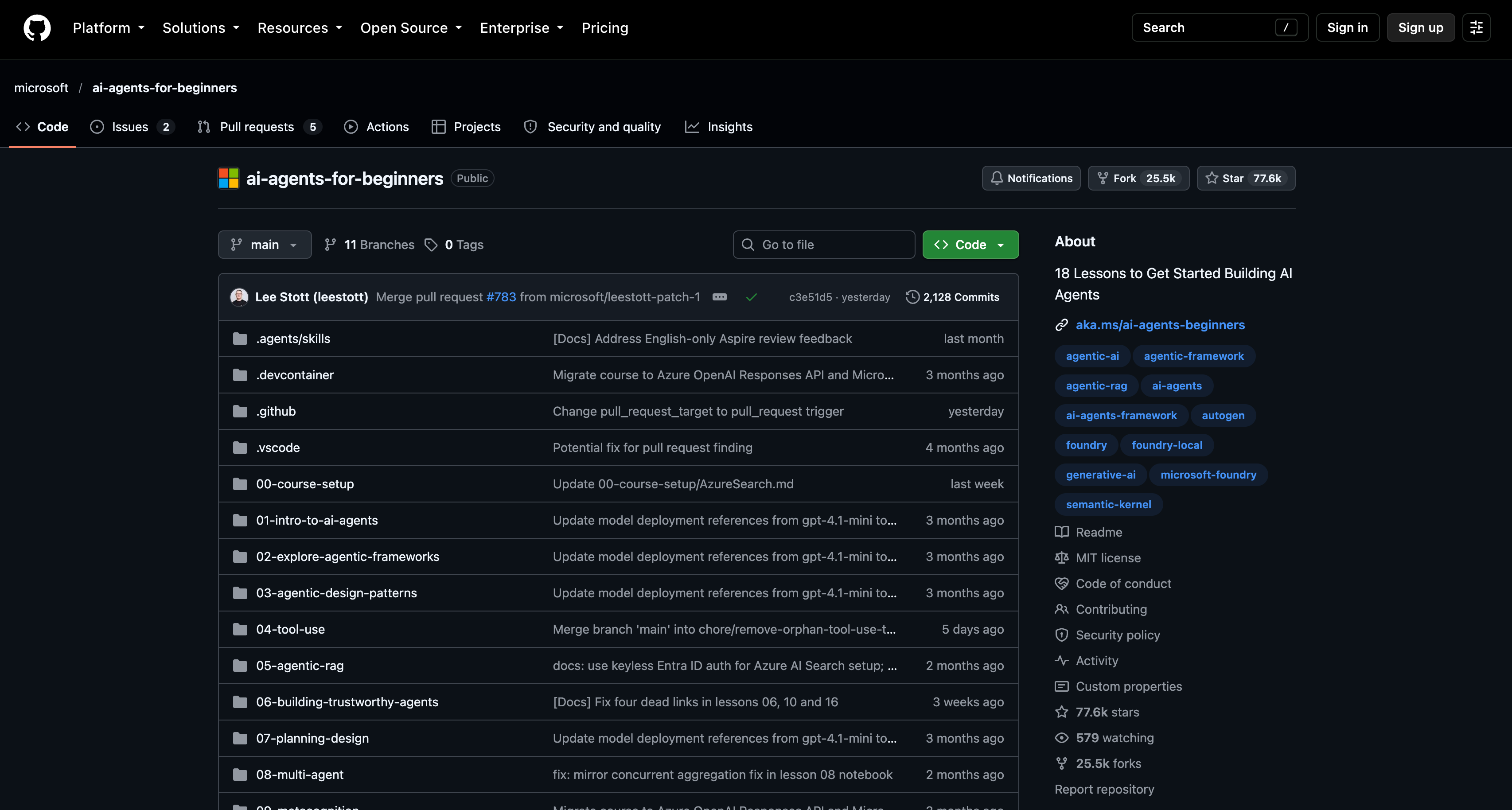
Microsoft’s public course introduces the foundations of AI agents through written lessons, videos, and implementation examples.
It covers agent concepts, common design patterns, tool integration, and practical development considerations.
The structured learning progression makes it a useful starting point for professionals who understand generative AI fundamentals and want to explore agent systems in greater depth.
26. Databricks AI Agent Training
Provider: Databricks
Access: Free training
Best for: Business professionals and enterprise AI practitioners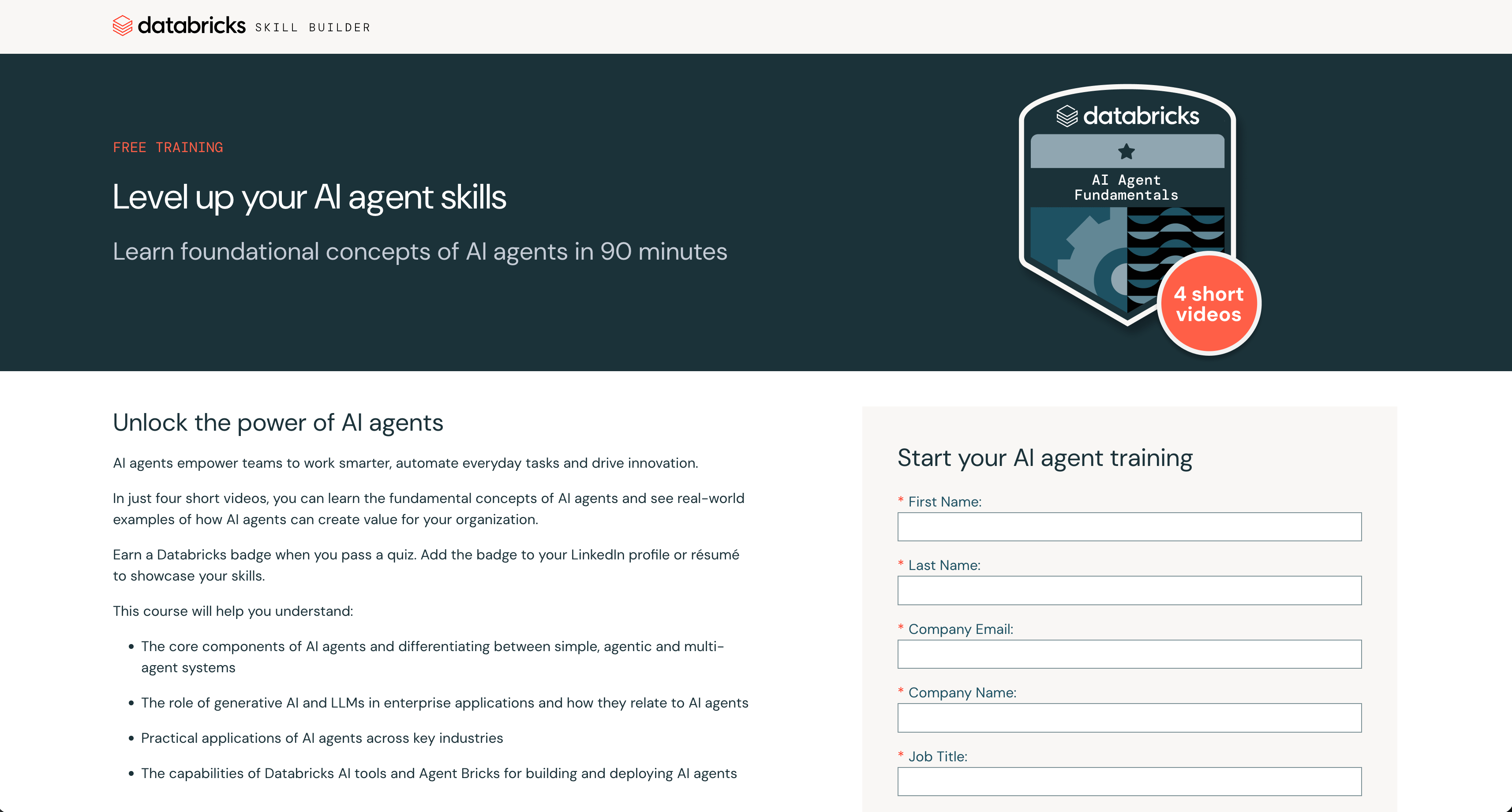
Databricks offers introductory training explaining the components of AI agents and the ways they can be applied to organizational workflows.
The material connects technical concepts to operational examples, making it useful for people responsible for evaluating AI opportunities without necessarily building the underlying applications themselves.
27. NVIDIA AI Learning Essentials
Provider: NVIDIA
Access: Free learning resources; additional training and certification conditions vary
Best for: Advanced learners exploring agentic AI and model infrastructure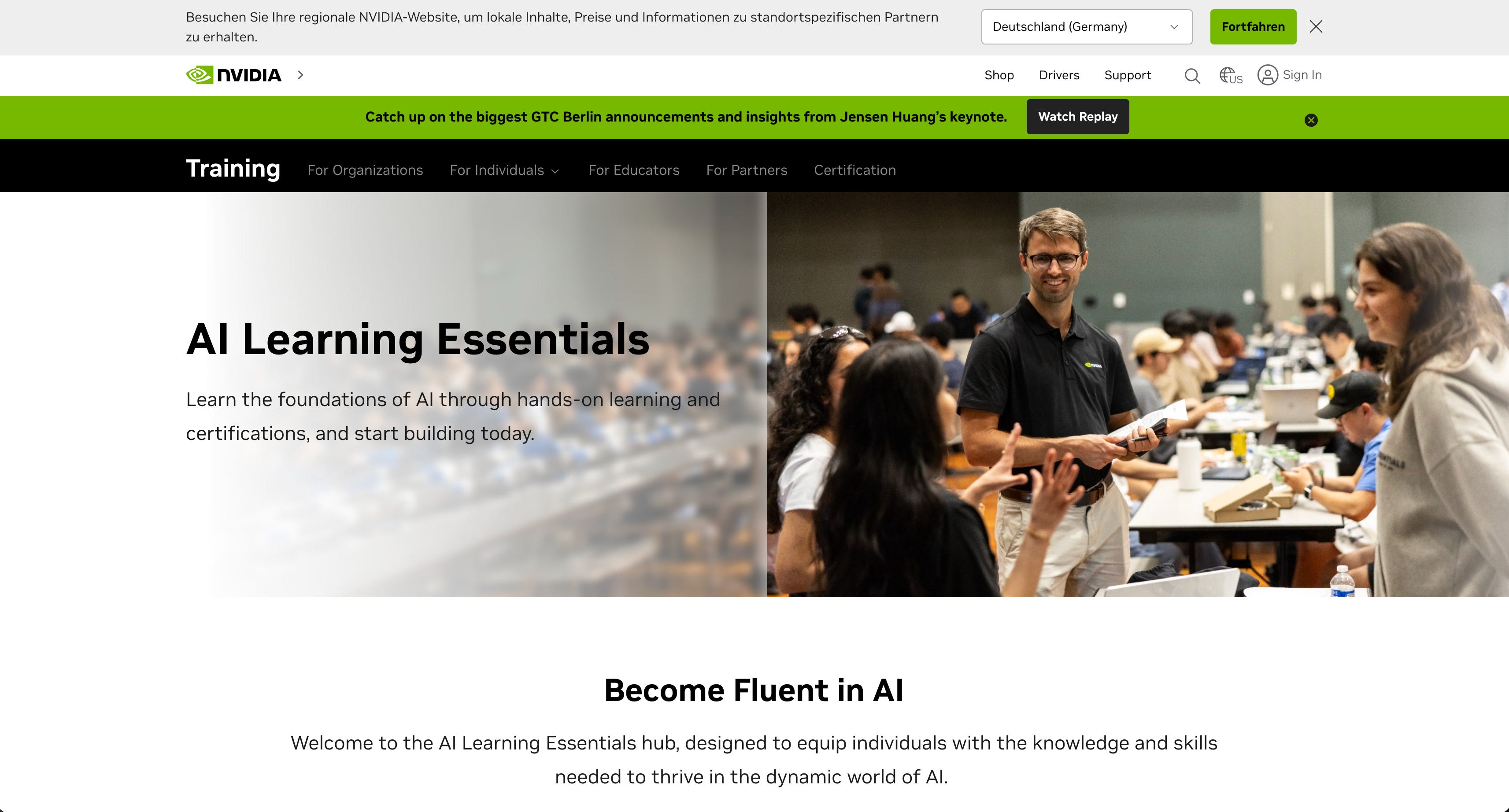
NVIDIA’s learning hub provides resources covering agentic AI, foundation models, and adjacent technical disciplines.
For readers interested in understanding the broader ecosystem supporting sophisticated AI systems, the material offers a useful progression toward more advanced technical knowledge.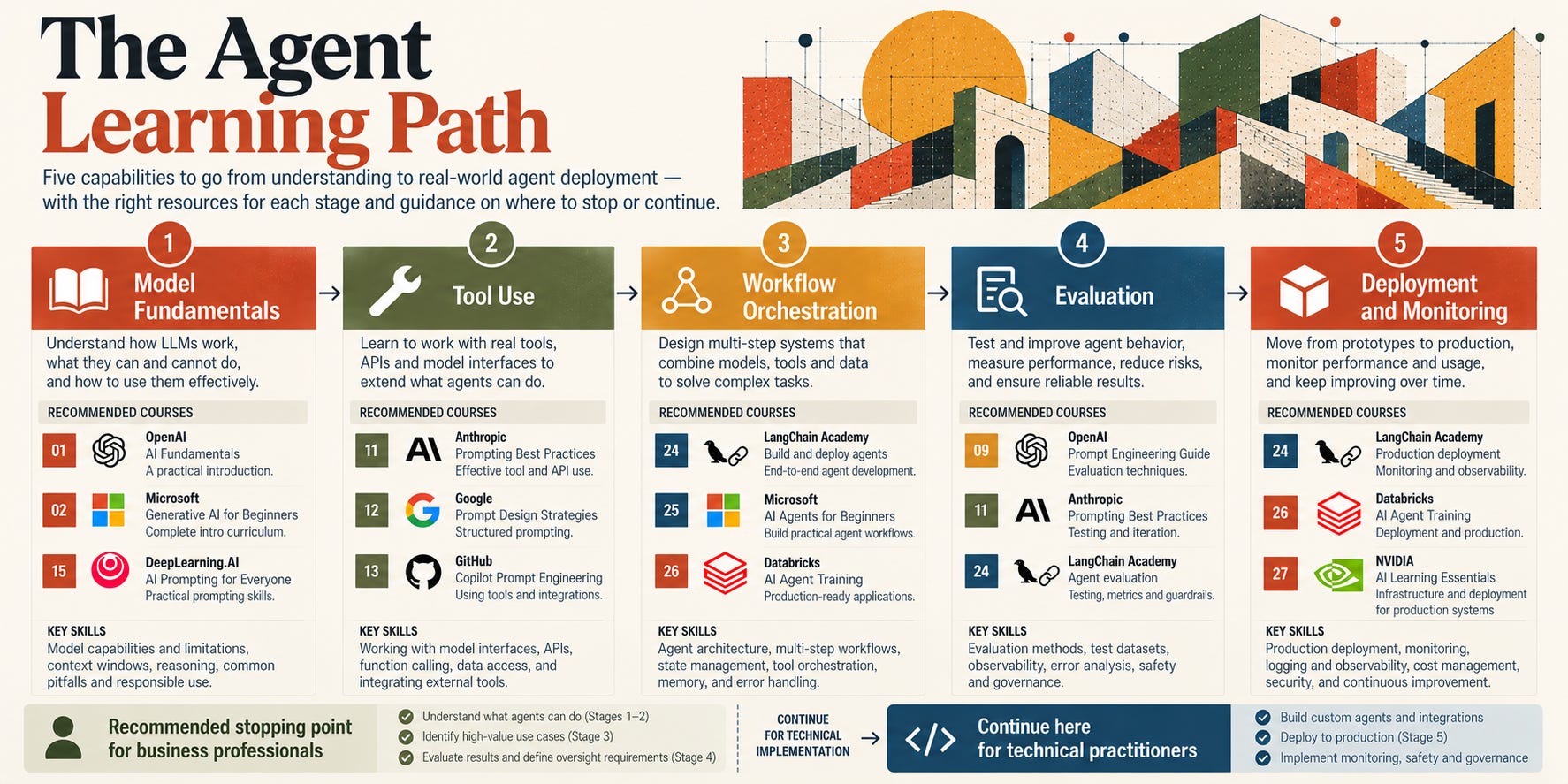
05. Learn How to Introduce AI Into Real Organizations
Five resources for connecting AI capabilities to business strategy, adoption, governance, and operational improvement.
For organizations, access to capable AI models is only one part of the implementation challenge.
The more difficult questions involve deciding which activities should change, how responsibilities need to be allocated, what information systems require access to, and how organizations can evaluate whether new capabilities are generating meaningful improvements.
These questions demand a combination of technological understanding, managerial judgment, and organizational design.
The following resources are particularly valuable for leaders, consultants, founders, and professionals responsible for moving AI initiatives into everyday operations.
28. OpenAI Academy — Lead AI Adoption
Provider: OpenAI
Access: Free courses
Best for: Executives, managers, and transformation leaders
OpenAI Academy includes learning paths designed for people responsible for leading AI adoption within organizations.
The material addresses the connection between AI initiatives and business priorities, the definition of ownership and governance, and the development of implementation plans.
It provides a useful foundation for leaders who need to translate technological possibilities into coordinated organizational action.
29. OpenAI Academy — Organizational Deployment Guide
Provider: OpenAI
Access: Free guidance
Best for: Learning leaders and organizational AI program owners
OpenAI also provides guidance on deploying its Academy learning programs across organizations, including executive sponsorship, employee engagement, and approaches to reinforcing learning.
This is useful for teams developing internal AI education initiatives because it addresses the organizational conditions that help training become part of everyday practice.
30. NIST AI Risk Management Framework Playbook
Provider: National Institute of Standards and Technology
Access: Free
Best for: Leaders, governance teams, and professionals responsible for AI risk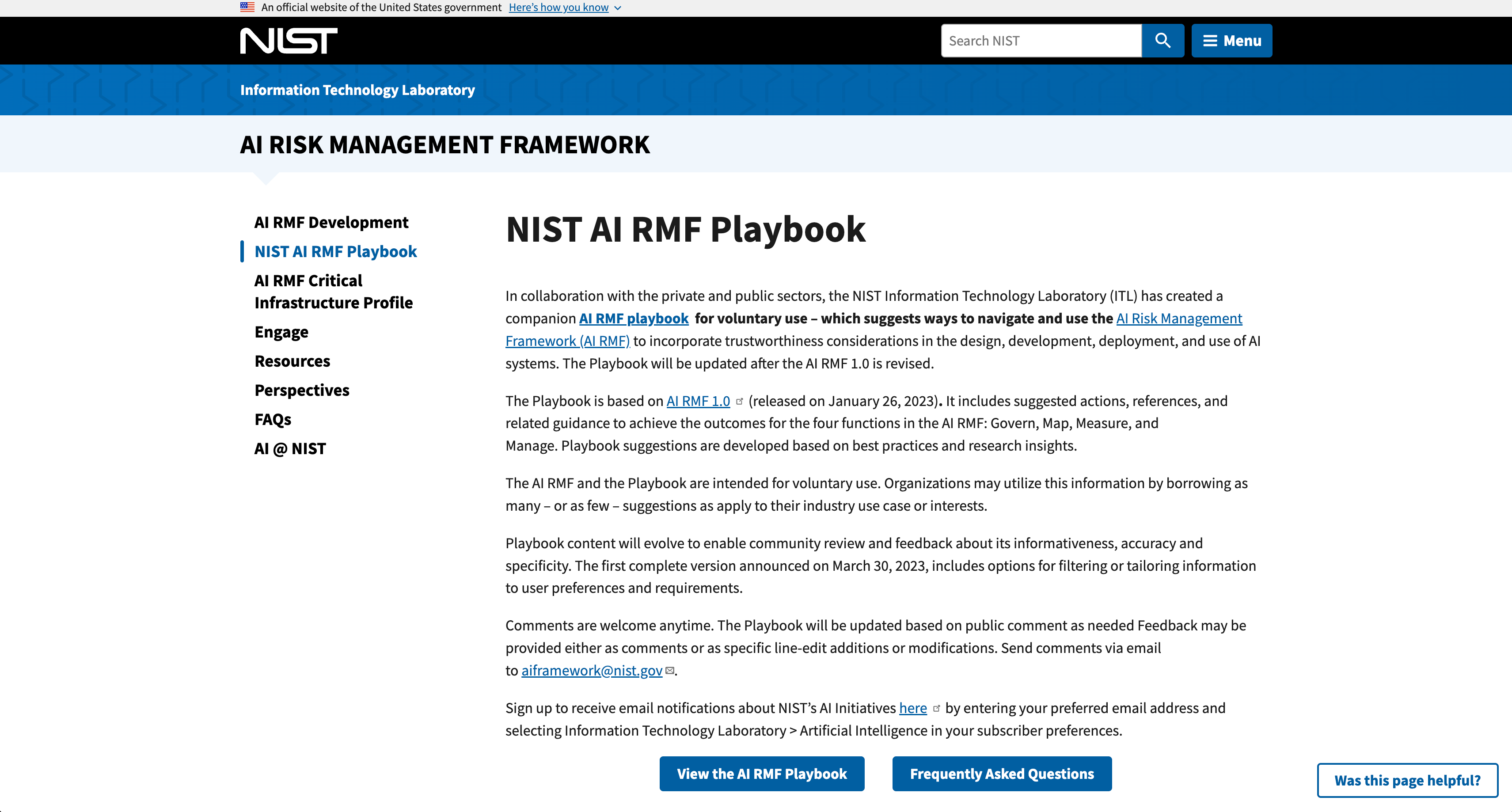
NIST’s AI Risk Management Framework Playbook provides a structured reference for incorporating trustworthiness and risk management considerations into AI systems.
The framework organizes its recommendations around four functions: Govern, Map, Measure, and Manage.
It is particularly valuable for organizations seeking a disciplined approach to questions of accountability, risk assessment, oversight, and operational governance.
31. Databricks Free Edition
Provider: Databricks
Access: Free edition with usage and commercial restrictions
Best for: Analysts, developers, and professionals learning through experimentation
Databricks Free Edition provides access to a learning environment in which users can experiment with data and AI capabilities.
This is especially useful for people who have reached the limits of theoretical learning and want to develop practical familiarity with the infrastructure and workflows used in more complex analytical systems.
The free edition is intended for learning and experimentation rather than production commercial deployment.
32. AI for Everyone
Provider: DeepLearning.AI
Access: Learning access and certificate pricing depend on enrollment; the course has paid options
Best for: Executives, managers, founders, and non-technical professionals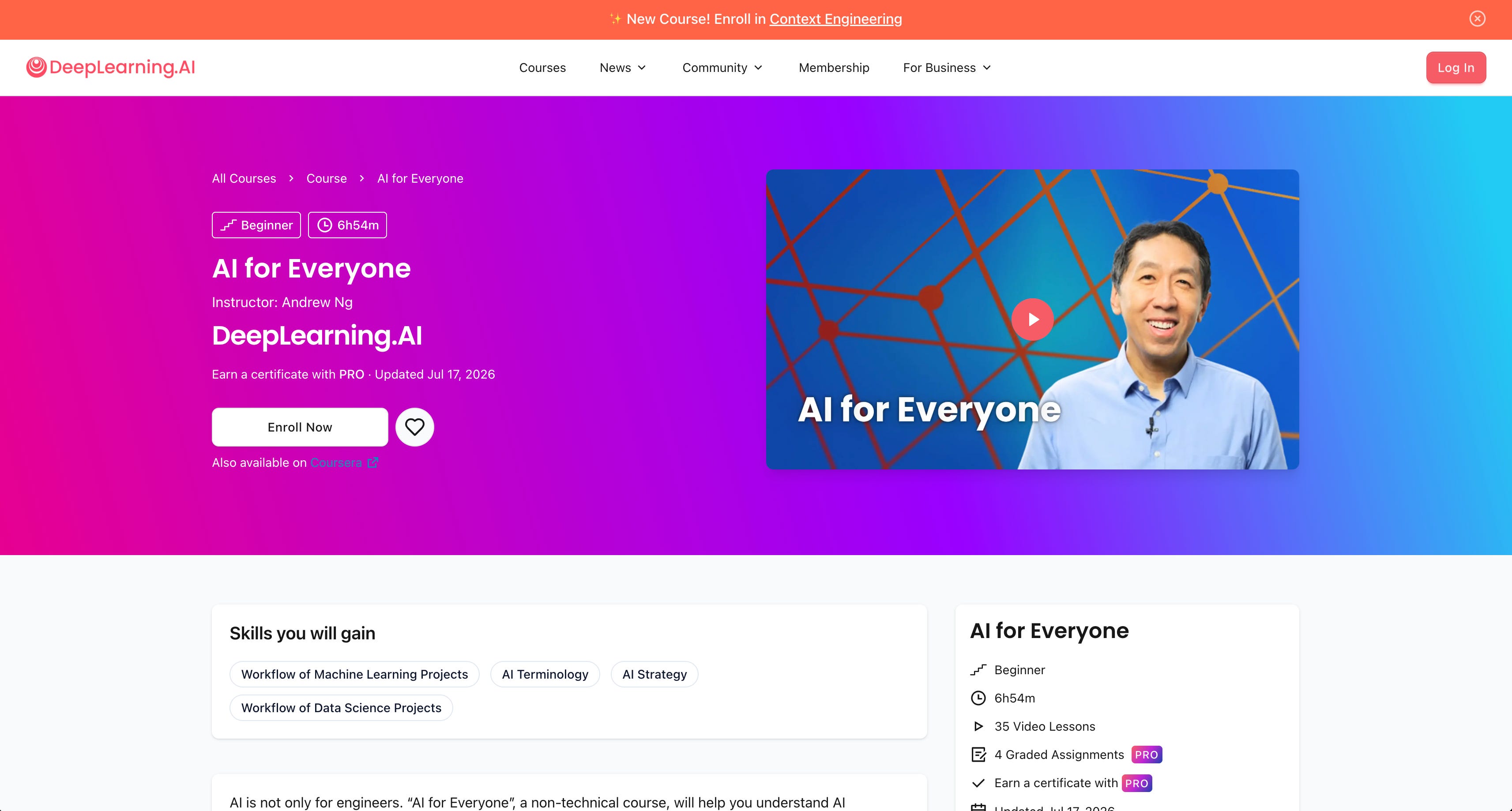
Andrew Ng’s AI for Everyone approaches artificial intelligence from the perspective of organizational opportunities, project selection, implementation, and the implications of AI adoption.
The course provides a useful conceptual foundation for people who need to understand how AI projects are developed and managed without becoming machine learning engineers themselves.
It is particularly relevant for professionals whose primary responsibilities involve strategy, operations, or management.
Where Should You Actually Begin?
A collection of 32 resources can quickly become another reading list that never produces meaningful progress.
I would approach this library by identifying the capability you want to develop next and selecting one resource that directly addresses it.
If you have limited experience with AI, begin with OpenAI Academy or Microsoft Generative AI for Beginners. Both provide structured entry points and allow you to develop a foundation before moving into more specialized material.
If you already use AI regularly but struggle with inconsistent outputs, the prompting documentation from OpenAI, Anthropic, and Google will probably offer greater immediate value.
If you want to develop applications, choose one of the official cookbooks and work through an example that resembles something you might build for your own work.
If agent systems are your primary interest, LangChain Academy and Microsoft’s AI Agents for Beginners provide more focused routes into multi-step workflows.
And if you are responsible for implementing AI across an organization, combine a practical adoption resource with the NIST framework so that operational opportunities and governance requirements are considered together.
The most effective learning path will depend on your responsibilities, existing knowledge, and the problems you want to solve.
A Practical Exercise: Build Your Personal AI Learning Stack
Choose one recurring activity in your professional environment that could benefit from AI assistance. This might involve preparing research, analyzing documents, organizing information, developing software, or coordinating a repetitive workflow.
Describe the activity and the outcome you want to improve. Then identify the capabilities you currently lack, whether those concern prompting, model selection, data integration, workflow design, or evaluation.
Select two resources from this collection that directly address those gaps.
Over the following week, apply what you learn to that activity and assess the results. Consider whether the quality of the output improved, whether the process became more repeatable, and which new limitations became visible.
Document the resulting workflow, including the instructions, information sources, review steps, and conditions under which you would trust the output.
By the end of the exercise, you should have both a clearer understanding of AI and a practical artifact that can be reused or improved.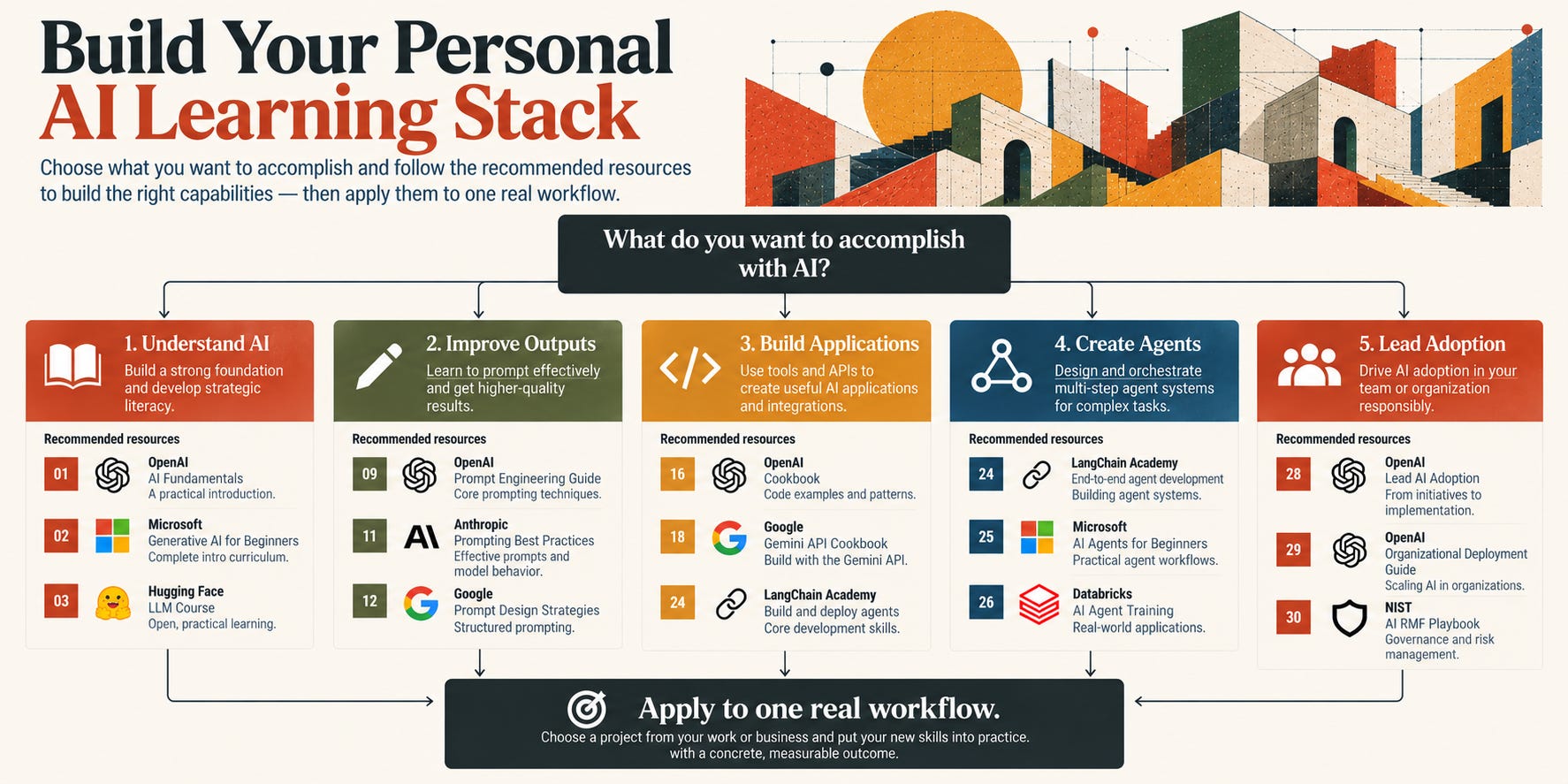
The Advantage of Knowing Where to Learn
As AI capabilities continue to develop, the amount of knowledge required to work effectively with these systems will continue to expand.
It is becoming increasingly unrealistic to expect any individual professional to remain equally proficient across foundation models, prompting, software development, orchestration, governance, and the many specialized applications emerging around them.
What matters is the ability to recognize which capabilities are relevant to a particular problem, understand the underlying principles well enough to make informed decisions, and locate reliable educational material when deeper knowledge becomes necessary.
A collection like this is useful precisely because the available resources will continue to change.
New courses will appear, documentation will evolve, and some techniques will gradually become obsolete as models acquire new capabilities. The underlying practice of deliberately identifying knowledge gaps and developing the relevant competencies remains valuable across those changes.
My suggestion is to bookmark this collection, return to it whenever you encounter a new challenge, and treat it as a reference for continuous learning.
You may find that the resource you need most in six months is one you have no reason to explore today.
That is perfectly reasonable.
The objective is to develop a working understanding of AI that becomes progressively more useful through application, experimentation, and accumulated experience.
If you know another public AI course, playbook, or practical learning resource that deserves inclusion, I would be interested in hearing about it.
I intend to use the strongest suggestions to refine this collection as the ecosystem continues to develop.
Resource information reviewed in October 2026. Course availability, enrollment conditions, and pricing may change.