Two competing philosophies of database consistency, and why the tradeoff between them still defines how modern systems are built
By The Coding Gopher
Published: 2026-10-08
URL: https://thecodinggopher.substack.com/p/acid-vs-base
Every database has to make a promise about what happens when things go wrong — a server crashes mid-write, two users try to update the same row, a network link between data centers drops. How it keeps that promise splits nearly every database in existence into one of two camps: ACID, which promises correctness even if it means occasionally being unavailable, and BASE, which promises availability even if it means occasionally being wrong for a moment.
Neither is outdated. Neither is universal. They’re two different answers to the same unavoidable constraint, and knowing which one you’re actually building for is one of the more consequential calls in system design.
Join a community of senior engineers. Subscribe and get FREE access to System Design deep dives.
The ACID Guarantees ACID guarantees are four core rules for database systems: Atomicity, Consistency, Isolation, and Durability. They make sure data stays safe, correct, and complete. This happens even if the computer crashes, power goes out, or many users try to change data at the same time.
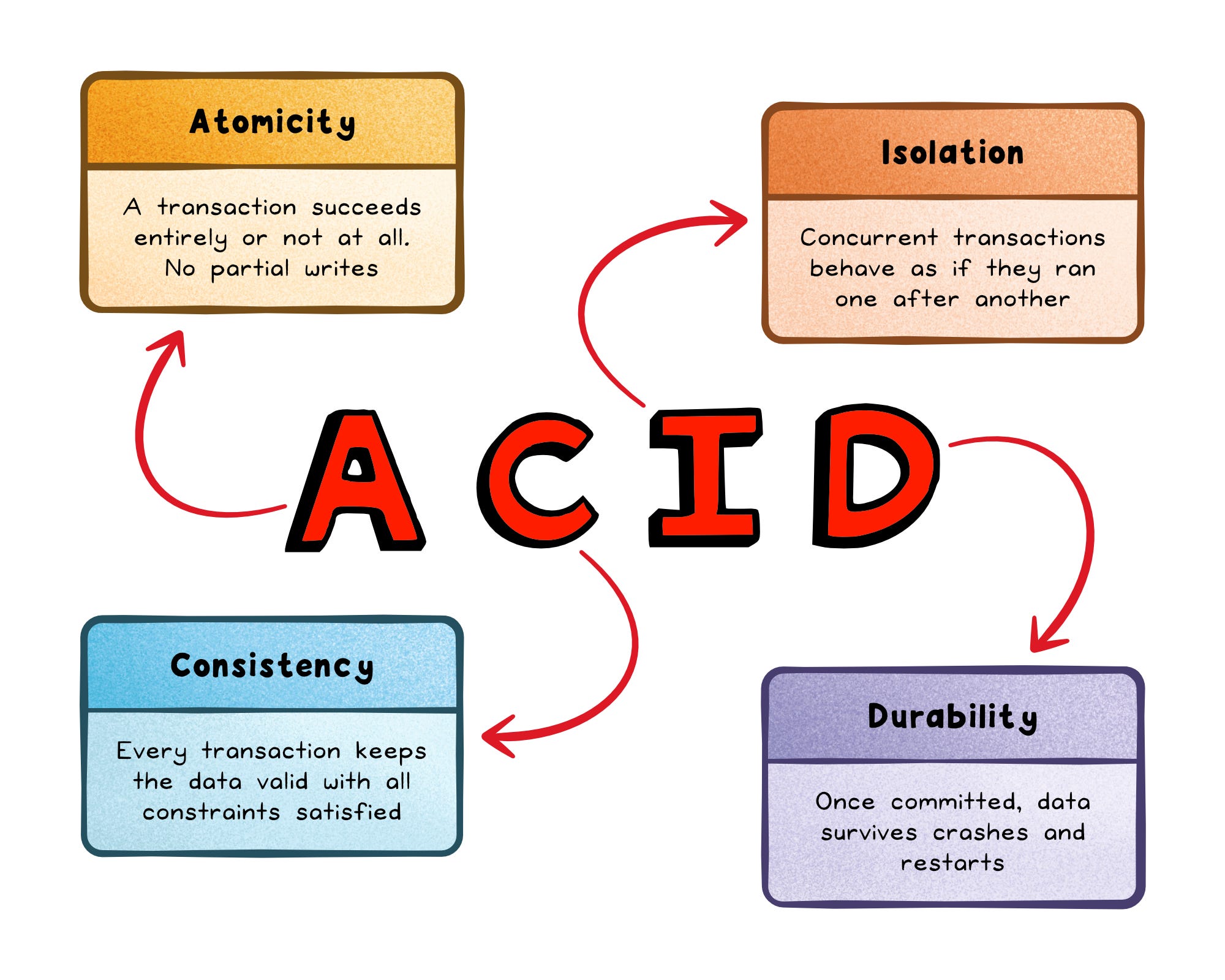
ACID is a set of four specific promises a database makes about every transaction:
-
Atomicity — a transaction is all-or-nothing. Transfer money between two accounts, and either both the debit and the credit happen, or neither does. There’s no in-between state where money disappears.
-
Consistency — a transaction can only move the database from one valid state to another. Constraints, foreign keys, and rules are never violated, even temporarily.
-
Isolation — concurrent transactions don’t see each other’s half-finished work. A thousand transactions running at once still produce the same result as if they’d run one at a time, in some order.
-
Durability — once a transaction commits, it survives. Crash the server a millisecond later, and the write is still there.
This is the model behind PostgreSQL, MySQL, and every traditional relational database, and it exists for systems where being wrong is more expensive than being slow: bank ledgers, order pipelines, anything touching money or inventory. The cost shows up in concurrency — enforcing isolation and atomicity generally requires locking, and locking means transactions sometimes wait on each other. That’s the ceiling ACID runs into: push it far enough, and correctness starts to compete directly with scale.
Build Redis, Git, Docker & Claude Code From Scratch
Want to become a better software engineer?
Trusted by engineers at Google, NVIDIA, and Anthropic, CodeCrafters helps you rebuild technologies like Redis, Git, Docker, and Claude Code from scratch so you can deeply understand how real systems work.
We’ve partnered with CodeCrafters to give all readers an exclusive 40% lifetime discount.
💡 Engineers may expense platforms like this through their team’s learning budget.
Start Building & Unlock 40% Off
The BASE Guarantees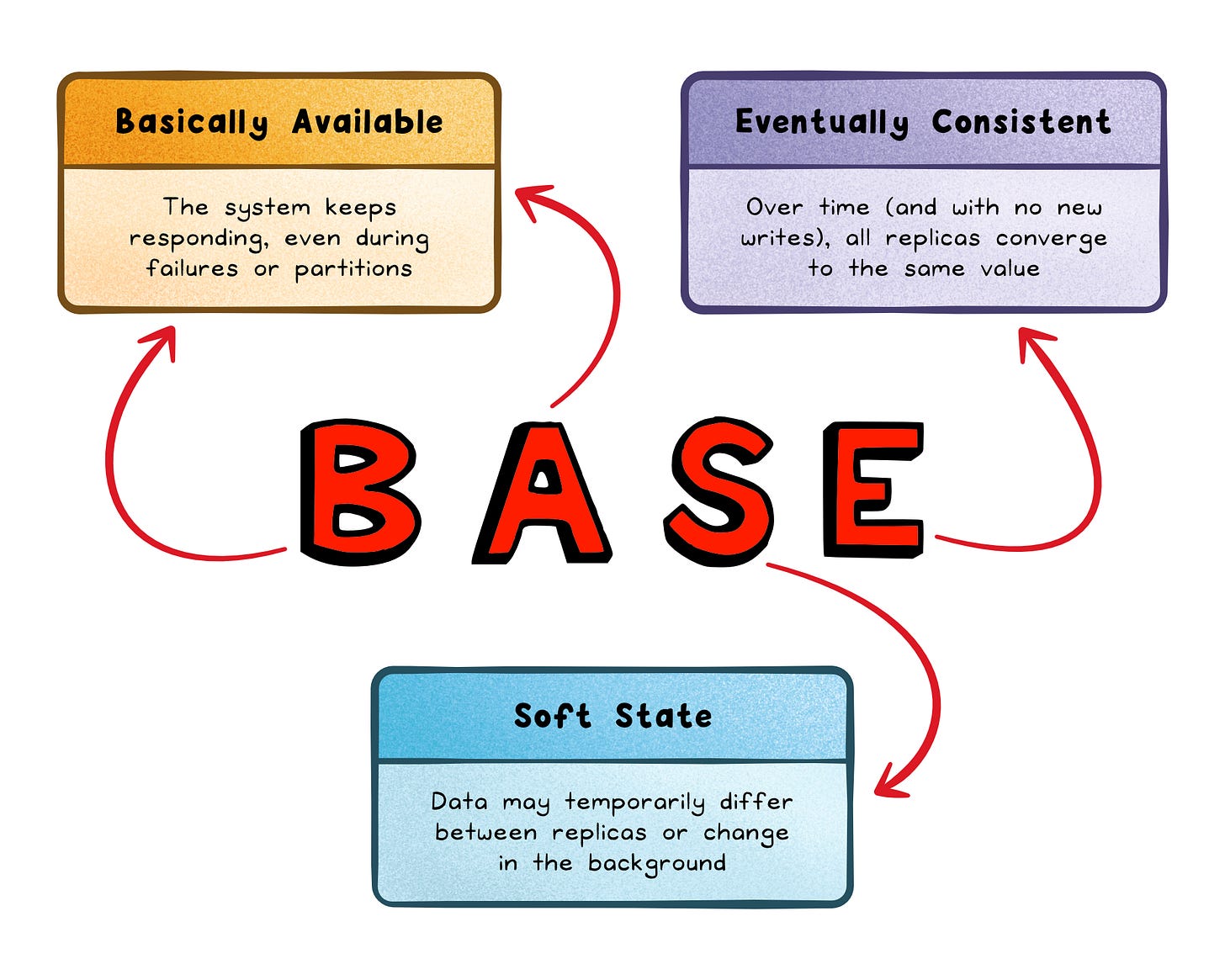
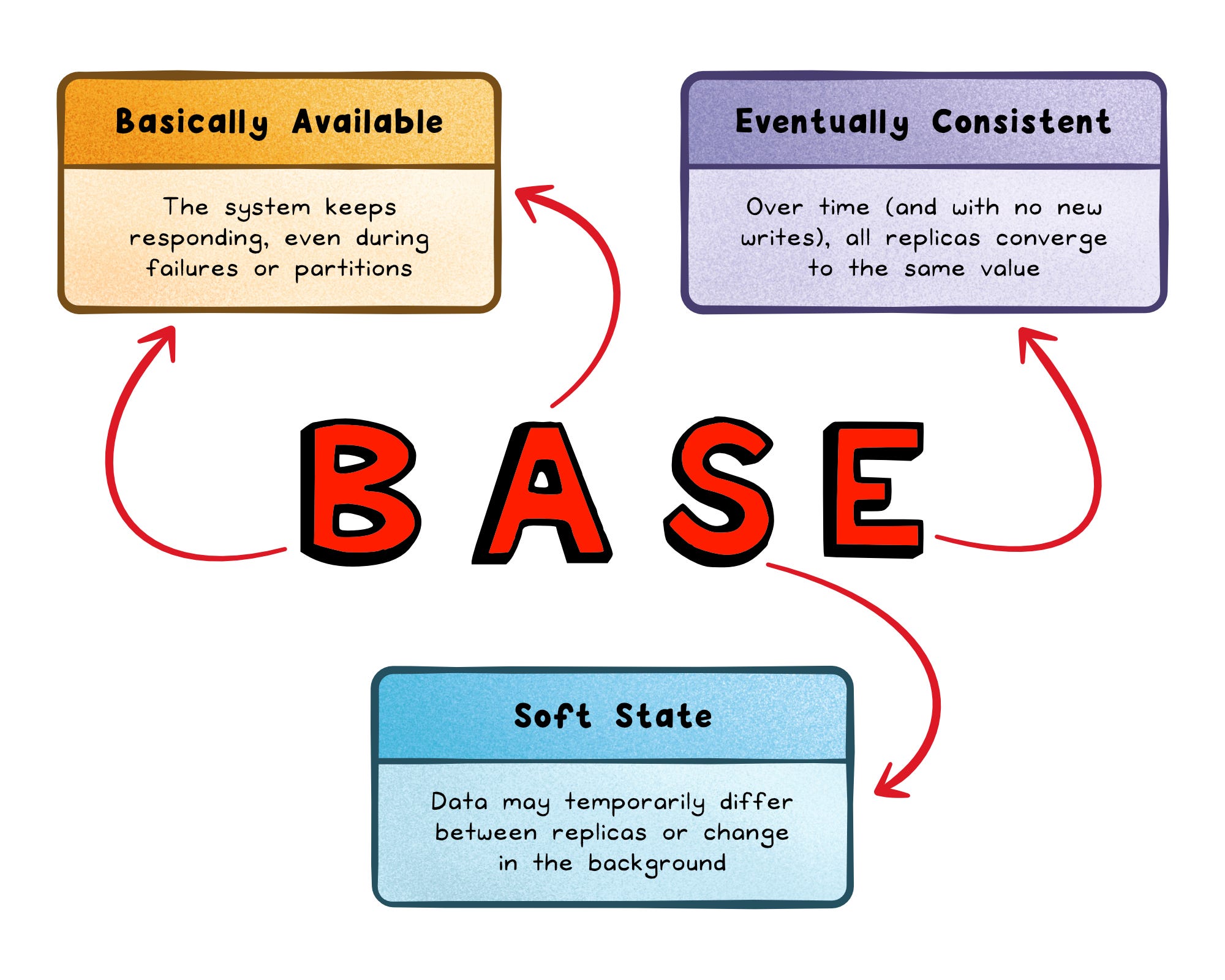
BASE grew out of the systems that hit that ceiling — Amazon, Google, and the internet-scale companies that found a single, strictly consistent database couldn’t serve hundreds of millions of users without becoming a bottleneck. It’s deliberately the mirror image of ACID: