Extract, Transform, Load in Modern Data Pipelines
By The Coding Gopher
Published: 2026-09-08
URL: https://thecodinggopher.substack.com/p/etl-explained
Deconstructing how to move and process massive datasets for analytics without bringing down production.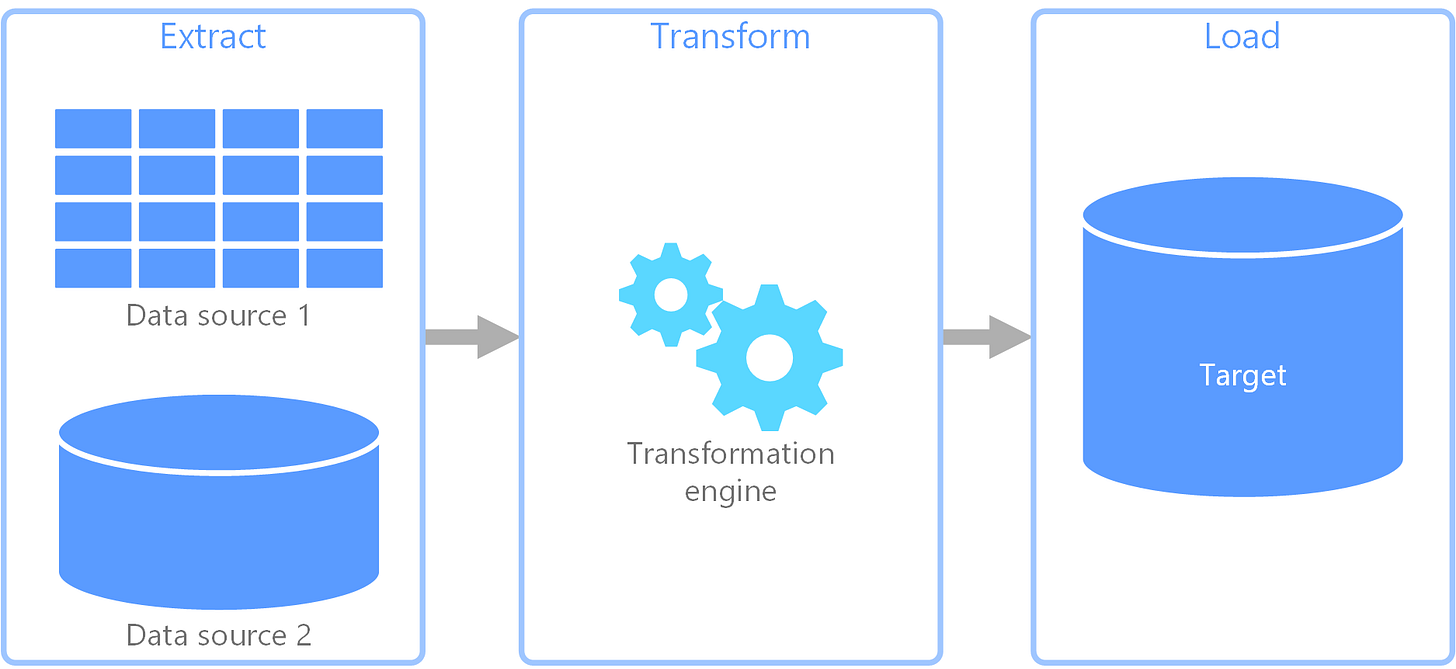 ETL stands for Extract, Transform, and Load. It is a data integration process used to gather raw information from multiple sources, clean and format it, and store it in a central database (like a data warehouse) so it can be analyzed to drive business decisions.
If a company wants to run a complex analytics query—such as calculating the average lifetime value of users grouped by marketing campaign over the last three years—they cannot run that query on the primary production database.
Running heavy historical aggregations on a live transactional database (OLTP) will lock up the tables, spike the CPU, and cause the active application to crash for end users. Analytics requires a completely different database architecture (OLAP) than standard web traffic.
OLTP (Online Transaction Processing) and OLAP (Online Analytical Processing) are the two core database workload categories used to power modern businesses. OLTP runs day-to-day operations (like processing a purchase), whereas OLAP digests historical data to generate business intelligence and reports (like analyzing monthly sales trends).
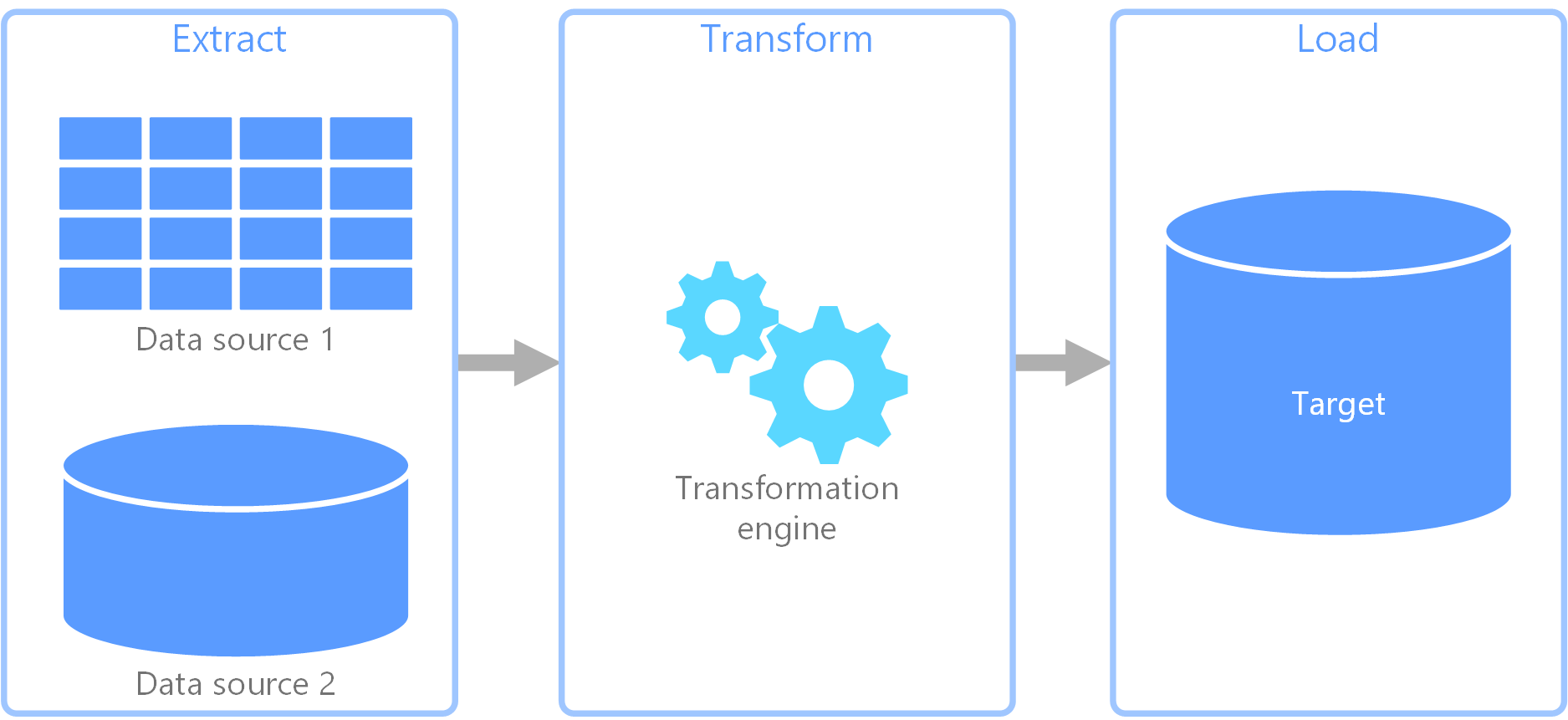
ETL is the physical pipeline that bridges this gap. It operates in three distinct phases to safely move data from the live application to the analytics team.
1. Extract: The Ingestion Phase
Gathering data from disparate systems—PostgreSQL databases, NoSQL clusters, external APIs like Stripe, and flat CSVs—presents a severe physical risk to production infrastructure.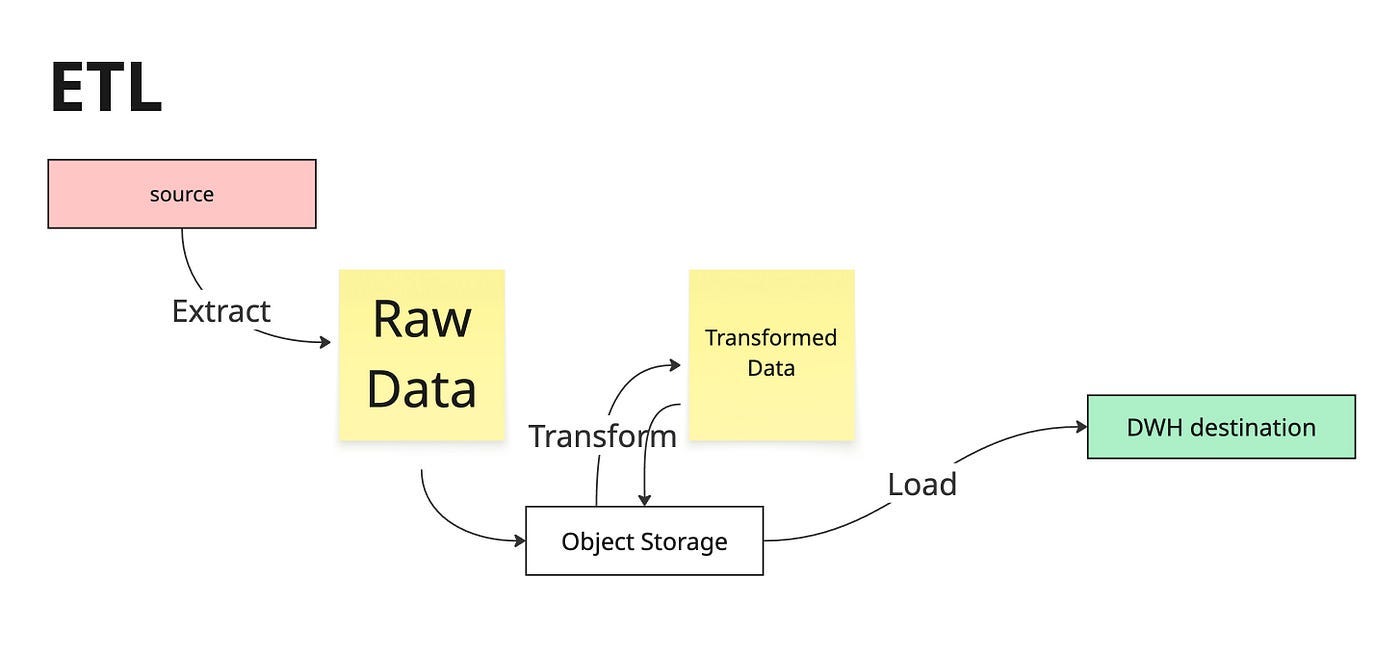 Extraction is the first step in the ETL (Extract, Transform, Load) data integration process. It involves identifying, collecting, and copying raw data from various source systems. The goal is to safely gather this data without damaging the original systems, so it can be moved to a central location for analysis.
If an engineering team attempts to pull this data by executing a massive SELECT * query against the live database every hour, the operation will saturate the disk’s IOPS. The database engine will be forced to scan millions of rows, causing live user transactions to queue, timeout, and ultimately fail.
Note: Disk IOPS stands for Input/Output Operations Per Second. It is a standard benchmarking metric used to measure the performance of storage devices—such as Hard Disk Drives (HDDs) and Solid State Drives (SSDs).
To bypass this bottleneck, modern ingestion pipelines rely on Change Data Capture (CDC) or dedicated read replicas. Instead of querying the database directly, CDC tools (like Debezium) quietly tail the database’s internal transaction log—such as the Write-Ahead Log (WAL) in PostgreSQL or the Oplog in MongoDB. As data is created or modified, the CDC system reads those raw byte changes and streams them into an event queue in real-time. This extracts the data instantaneously while remaining completely invisible to the live application.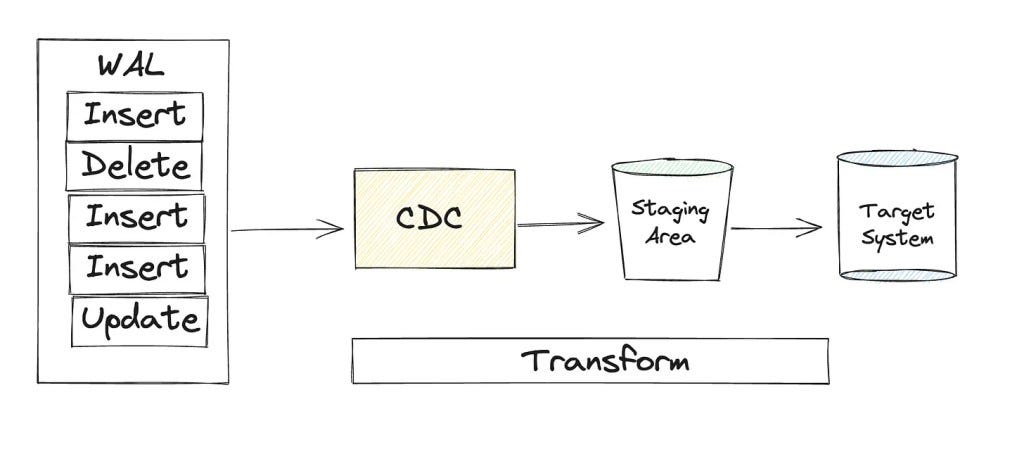 Change Data Capture (CDC) is a data integration process that identifies and tracks row-level changes (inserts, updates, and deletes) in a database. Instead of extracting and reloading entire datasets, CDC streams only the modified data to downstream targets in real time, keeping data warehouses, analytics platforms, and microservices perfectly synchronized.
2. Transform: The Compute Engine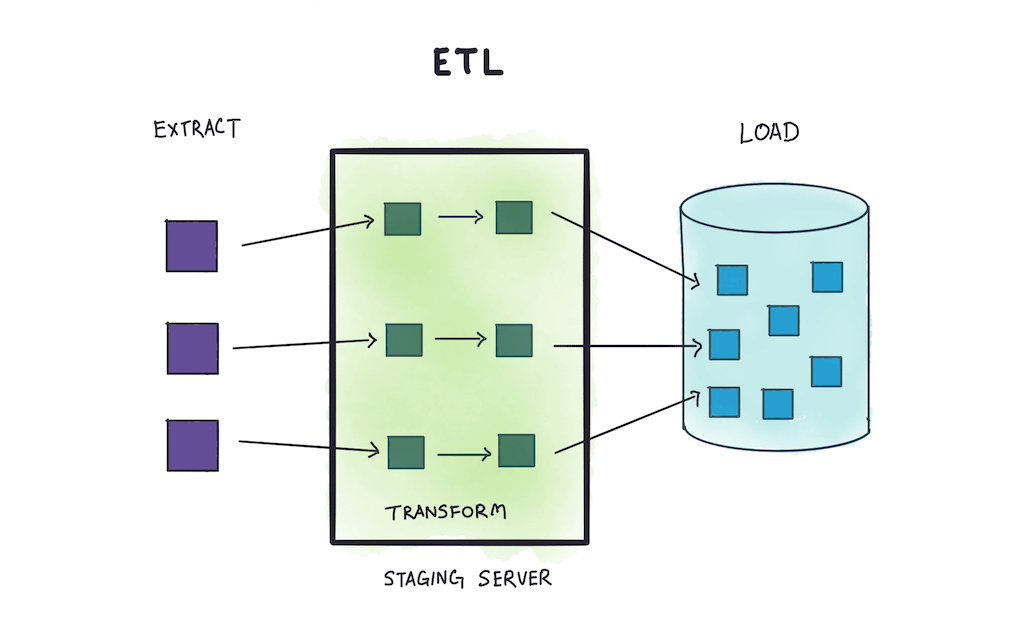 Transformation is the core stage where raw, unorganized data is cleaned, structured, and reformatted to fit the needs of a destination system. This step ensures that data from multiple different sources is accurate, consistent, and ready for business reporting or analysis.
Once extracted, the raw data is inherently messy, incompatible, and unstructured. The transformation phase is the computationally heavy engine designed to normalize this chaos.
This phase is responsible for aligning the data into a usable schema. It involves joining siloed datasets—such as stitching a payment event from the Stripe API to a user profile from the core database. It standardizes formats, converting varied Unix epoch timestamps and ISO-8601 strings into a unified timezone. It is also the layer where strict data governance is enforced: dropping corrupted records, stripping out HTML tags, and securely hashing Personally Identifiable Information (PII) to maintain compliance.
Because sorting, joining, and holding terabytes of raw data requires massive amounts of RAM and CPU, transformation cannot happen on a single machine. Historically, this occurs in dedicated, distributed processing engines like Apache Spark, which slice the massive datasets into smaller partitions and process them in parallel across a cluster of servers.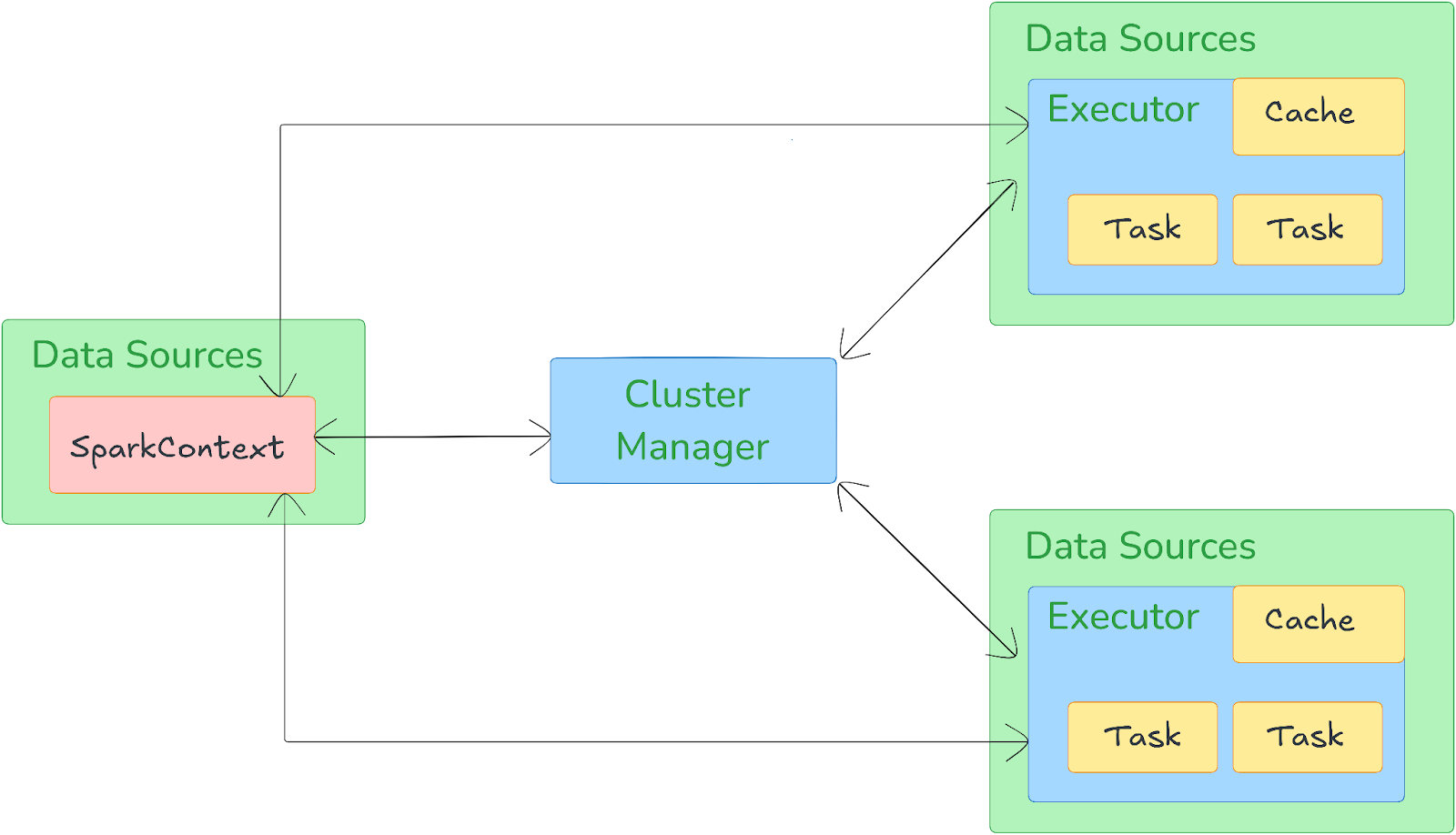 Apache Spark works by distributing large datasets across a cluster of computers and processing that data in parallel using RAM (in-memory computing) rather than writing intermediate results to slow physical disks. It separates computing logic from the underlying storage layer, meaning Spark can read data from cloud buckets, relational databases, or local streams, crunch the numbers, and write the output back anywhere needed.
𝐋𝐞𝐚𝐫𝐧 𝐭𝐨 𝐛𝐮𝐢𝐥𝐝 𝐆𝐢𝐭, 𝐃𝐨𝐜𝐤𝐞𝐫, 𝐑𝐞𝐝𝐢𝐬, 𝐇𝐓𝐓𝐏 𝐬𝐞𝐫𝐯𝐞𝐫𝐬, 𝐚𝐧𝐝 𝐜𝐨𝐦𝐩𝐢𝐥𝐞𝐫𝐬, 𝐟𝐫𝐨𝐦 𝐬𝐜𝐫𝐚𝐭𝐜𝐡. Get 40% OFF CodeCrafters: https://app.codecrafters.io/join?via=the-coding-gopher
This Substack is reader-supported. To receive new posts and support my work, consider becoming a free or paid subscriber.
3. Load: The Destination
The cleaned, heavily processed data is finally pushed into a central Data Warehouse, such as Amazon Redshift, Google BigQuery, or Snowflake.
These environments are architecturally distinct from the relational databases that power web applications. While a production database stores data row-by-row to optimize for writing single records (OLTP), a Data Warehouse utilizes Columnar Storage to optimize for reading massive datasets (OLAP).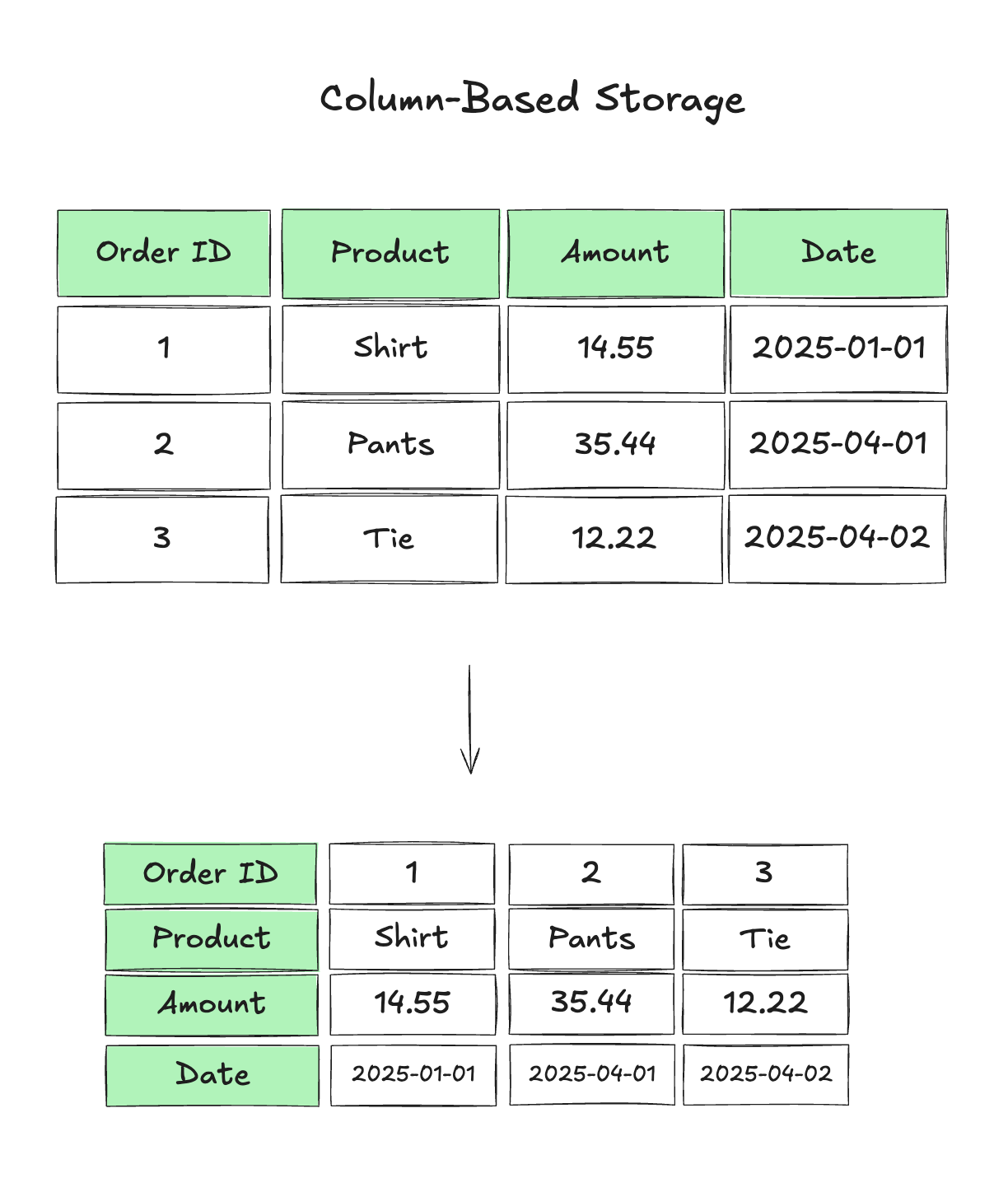 Columnar storage is a database architecture that stores data by column rather than by row. By grouping all values of a single column together in disk or memory, it drastically reduces I/O and speeds up analytical queries, making it the industry standard for modern data warehousing and big data analytics.
By physically grouping and writing data to the disk column-by-column, the warehouse drastically reduces disk I/O. If a data scientist runs a query to sum the revenue of five million historical transactions, the disk only has to locate and read the isolated revenue column. It completely ignores the heavy text strings, names, and addresses associated with those transactions, allowing complex aggregations to execute in milliseconds.
The "Load" phase is the final step in the ETL (Extract, Transform, Load) process. It writes the cleaned and transformed data into a target destination, such as a data warehouse, data lake, or database, making it immediately available for analytics, reporting, and business intelligence.
The Modern Shift: ELT vs. ETL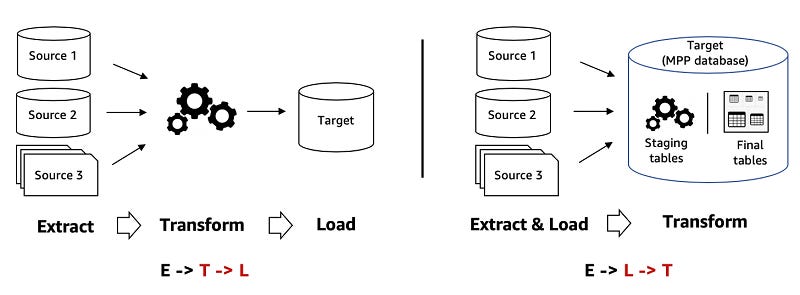 ETL and ELT are two approaches to moving and preparing data for analysis. The core difference is the timing and location of the transformation step. ETL transforms data before loading it into a storage system, while ELT loads raw data directly into a destination and transforms it afterward.
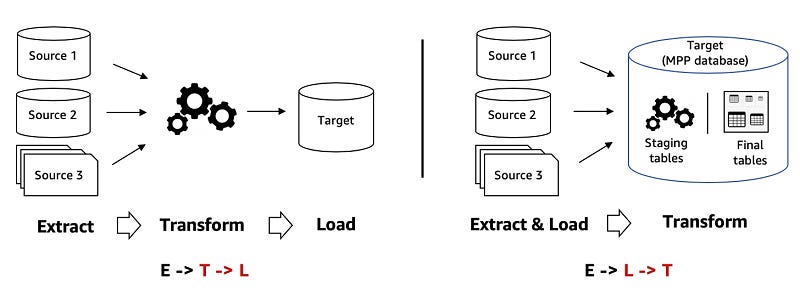
For decades, hardware constraints dictated the pipeline’s order. Storage was incredibly expensive, and on-premise data warehouses possessed fixed, rigid CPU limits. Engineers were forced to transform data on a separate, external server before loading it (ETL) to avoid overwhelming the warehouse’s limited storage and compute capacity.
The cloud completely inverted this constraint by uncoupling compute from storage.
Because raw cloud storage is now incredibly cheap, the industry has largely shifted to ELT (Extract, Load, Transform). Data pipelines now extract raw, messy data and dump it directly into the warehouse’s storage layer in its native state. Once the data is safely inside, engineers spin up the warehouse’s own elastic, massive compute clusters to transform the data in place using standard SQL (often orchestrated by tools like dbt).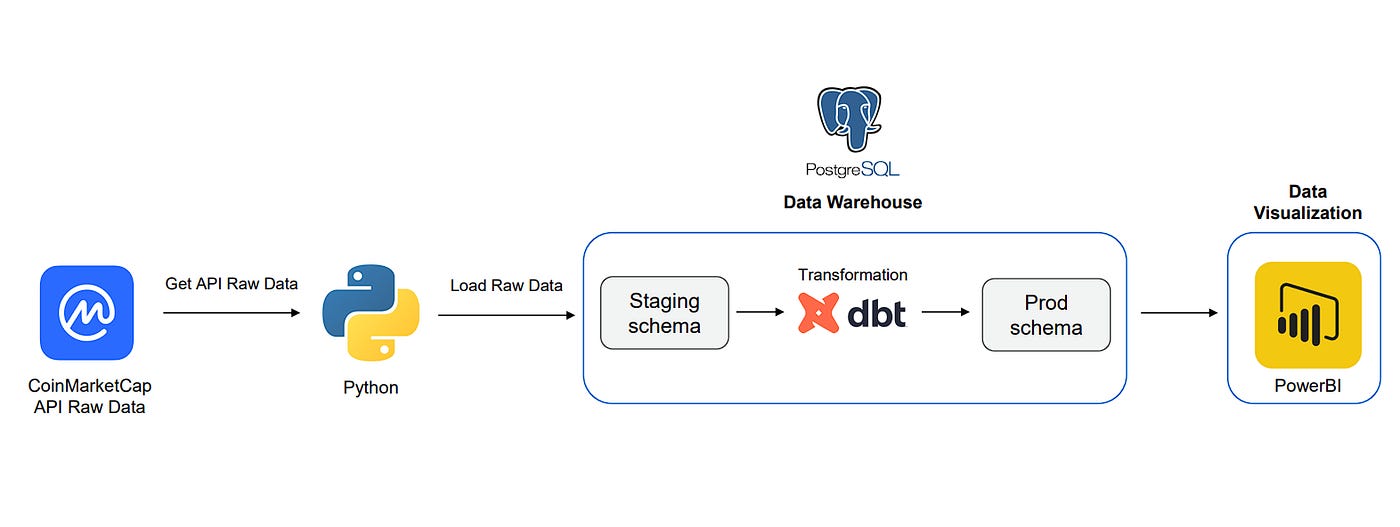 dbt (Data Build Tool) is an open-source development framework that enables data analysts and engineers to transform raw data loaded into a cloud data warehouse (like Snowflake, BigQuery, or Redshift) into analytics-ready models using SQL.
This architectural shift eliminates the operational burden of maintaining a separate external processing engine, while permanently preserving a pristine, unaltered copy of the raw data for future auditing.
This Substack is reader-supported. To receive new posts and support my work, consider becoming a free or paid subscriber.
Thanks for reading! This post is public so feel free to share it.