Breaking Down Data Distribution Strategies for Scalable Systems
By The Coding Gopher
Published: 2026-09-01
URL: https://thecodinggopher.substack.com/p/partitioning-sharding-and-chunking
Deconstructing how massive datasets are physically divided for scale, performance, and processing.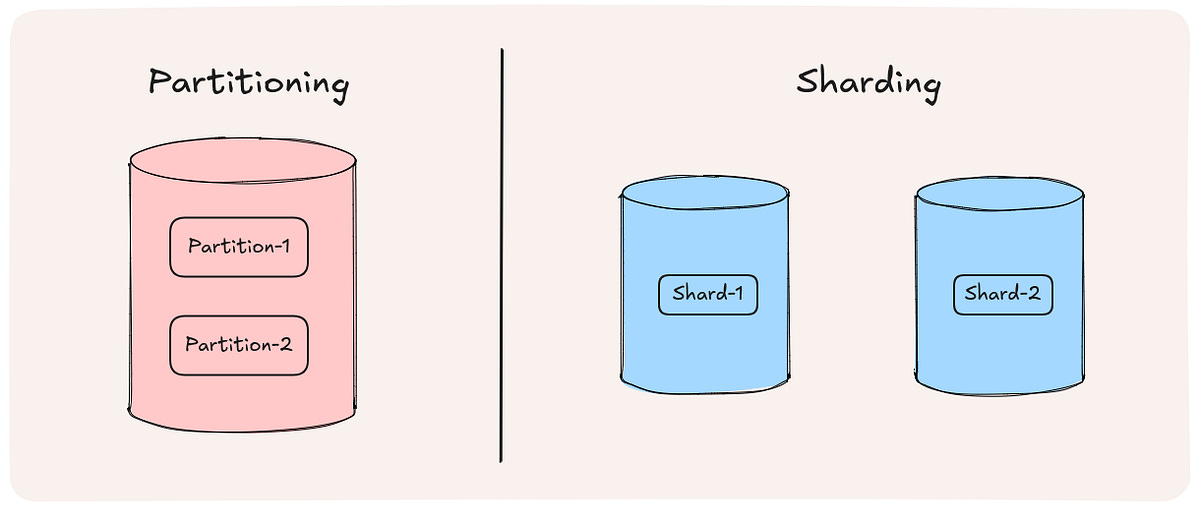
When a dataset outgrows the capacity of a single hard drive or the processing limits of a single CPU, the system must divide it. However, the specific method used to slice that data dictates whether you are optimizing a local database query, scaling a system across multiple data centers, or preparing text for an AI model.
Here is the architectural distinction between Partitioning, Sharding, and Chunking, and the engineering trade-offs of each.
1. Partitioning: Logical Division on a Single Node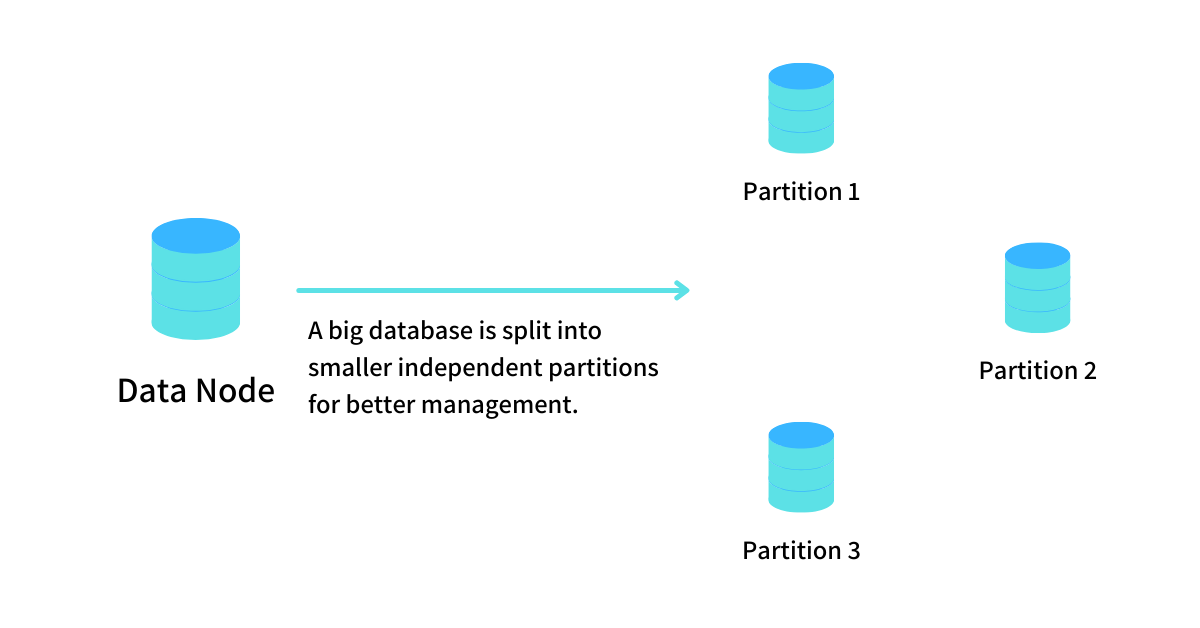 Database partitioning is the process of dividing a large database or its individual tables into smaller, more manageable pieces. It improves query performance, simplifies maintenance, and enables scalable growth without compromising system availability.
Partitioning is the process of dividing a massive database table into smaller, more manageable pieces while keeping all of those pieces on the same physical machine. The goal of partitioning is to reduce disk I/O by preventing the database engine from scanning irrelevant data and keeping index sizes small enough to fit into RAM.
There are two primary ways to partition data:
Horizontal Partitioning (By Row)
This divides a table by its rows. A single massive table is physically stored as several smaller tables on the disk, though the database engine presents it to the application as one unified table.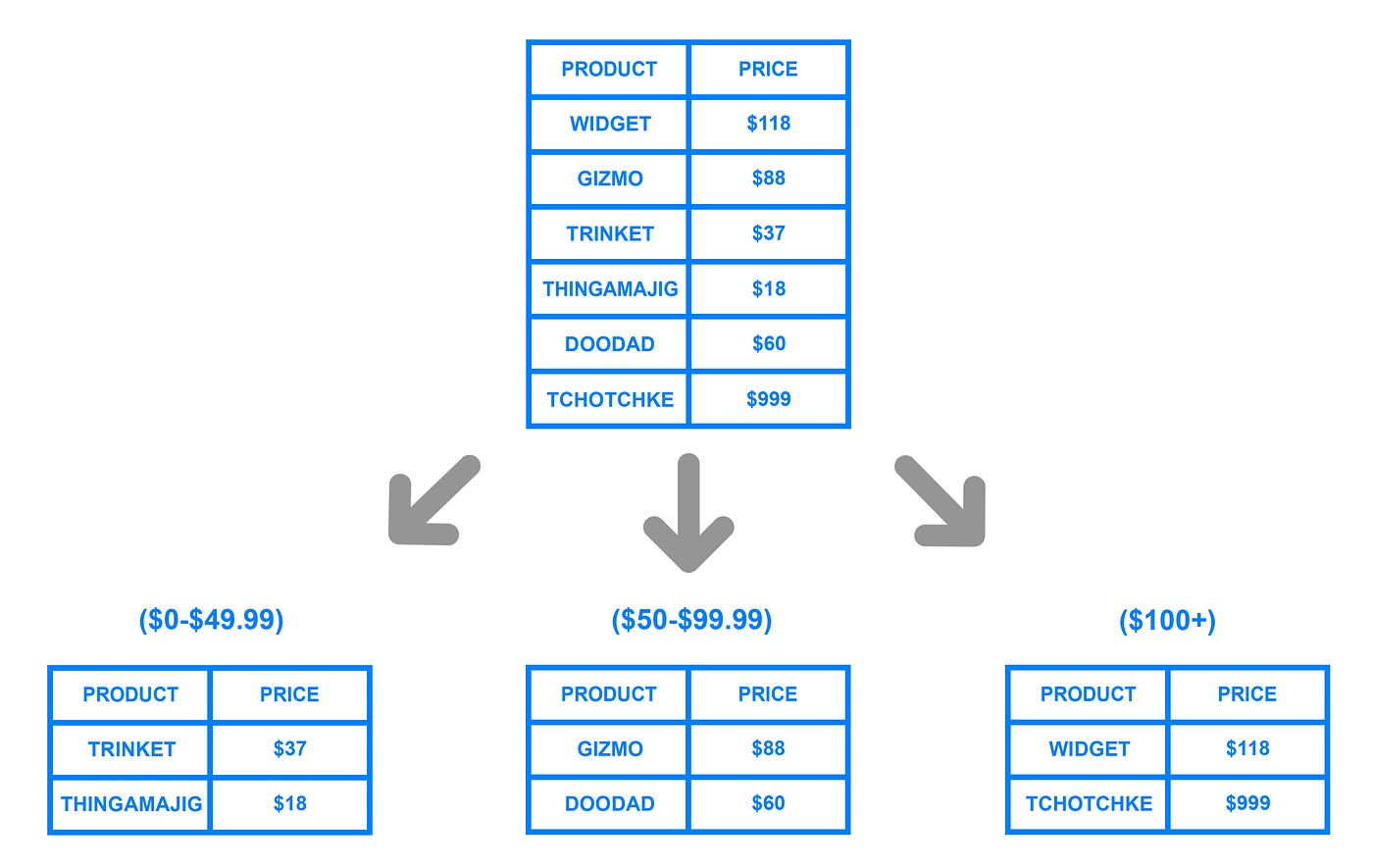 Horizontal partitioning, also known as sharding, is a database design technique that splits a single large table into multiple smaller tables, where each table contains the same columns but a different subset of rows.
Engineers must choose a partitioning strategy: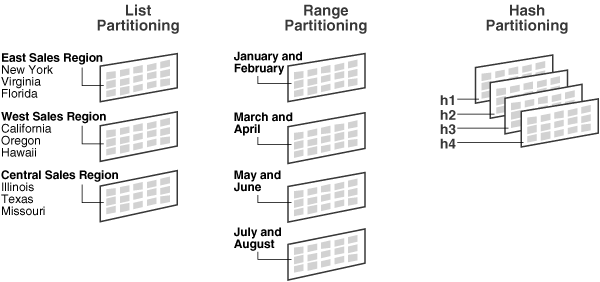 Range partitioning divides data sequentially into partitions based on continuous boundaries like dates or prices, making it ideal for range queries and easy data archiving. Conversely, hash partitioning uses an algorithm to randomize data placement across a predefined number of partitions, which ensures even storage and workload distribution but makes direct range searches less efficient. List partitioning is a database management technique that splits a large table into smaller, more manageable pieces by mapping rows directly to specific categories. Instead of organizing data by a sequence of numbers, the system assigns rows to partitions based on predefined discrete values, such as country codes, product types, or status flags.
-
Range Partitioning: Splitting data by contiguous values, typically time. If a table contains ten years of logs, it is partitioned by month. When a user queries last week’s data, the engine completely ignores the 2018 partitions, drastically reducing the physical search space.
-
List Partitioning: Splitting data by discrete values, such as grouping users by geographic region (e.g., USEast, EUWest).
-
Hash Partitioning: Running a unique identifier through a hash function to evenly distribute rows across a set number of partitions, preventing any single partition from becoming too large.
Vertical Partitioning (By Column)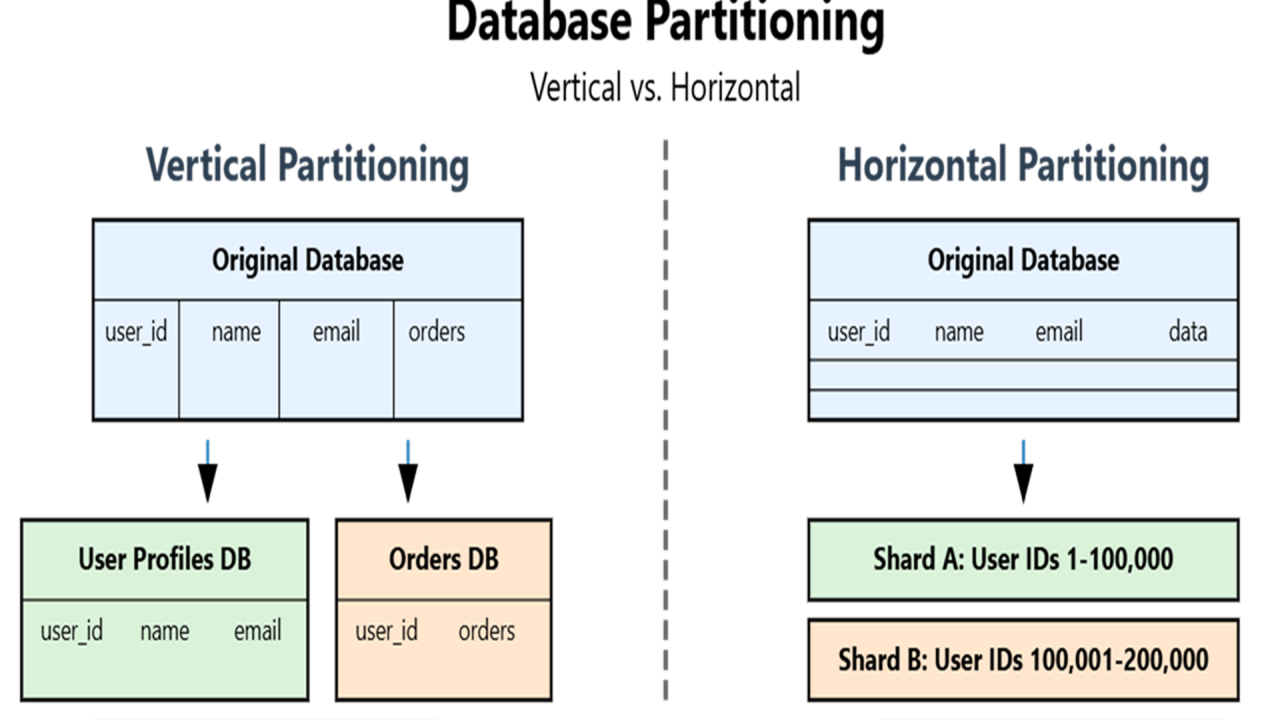 Vertical partitioning is a database design technique that splits a wide table into smaller, thinner tables by columns. Instead of separating rows, it isolates specific columns into separate tables—all sharing a primary key—to improve cache locality, reduce disk I/O, and optimize access patterns for frequently used "hot" data.
This divides a table by its columns. If a Users table contains a frequently accessed username column and a rarely accessed, massive 5MB biography_text column, loading the biography into memory for every simple login query destroys performance. Vertical partitioning moves the heavy, rarely used columns into a separate physical table, keeping the primary table narrow, lightning-fast, and highly cacheable.
2. Sharding: Physical Distribution Across the Network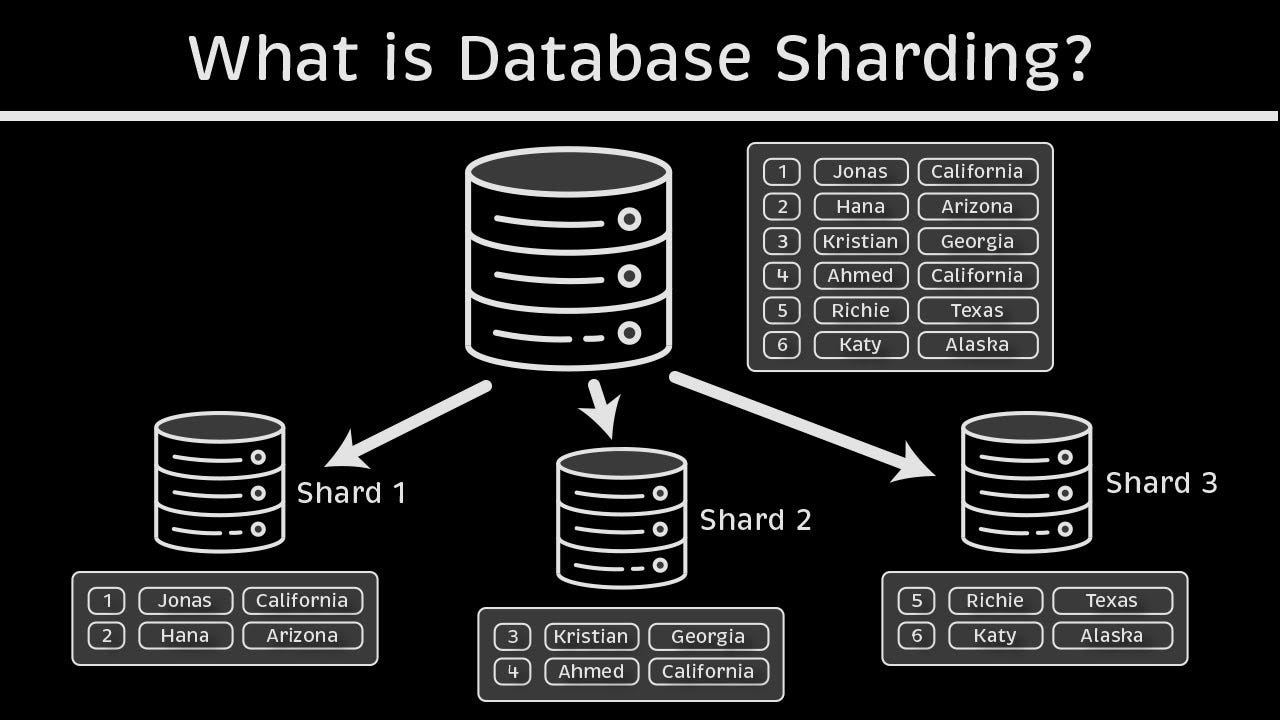 Data sharding is a horizontal scaling technique that splits a massive database into smaller, independent segments called "shards". Each shard is stored on a separate server to distribute load, allowing systems to store petabytes of data while significantly improving query performance and bypassing individual hardware limits.
Sharding is horizontal partitioning pushed to its physical limit. While standard partitioning keeps data on the same disk, sharding distributes the data across multiple independent physical servers (nodes).
When a database reaches a scale where a single server physically cannot process the sheer volume of incoming writes, engineers must implement a Shared-Nothing architecture.
A shared-nothing architecture is a distributed computing design where every node (server) in a cluster is entirely independent. Each node has its own processor, memory, and storage, and nodes do not share these resources with one another. They only communicate by passing messages across a computer network.
The Shard Key and The Hotspot Problem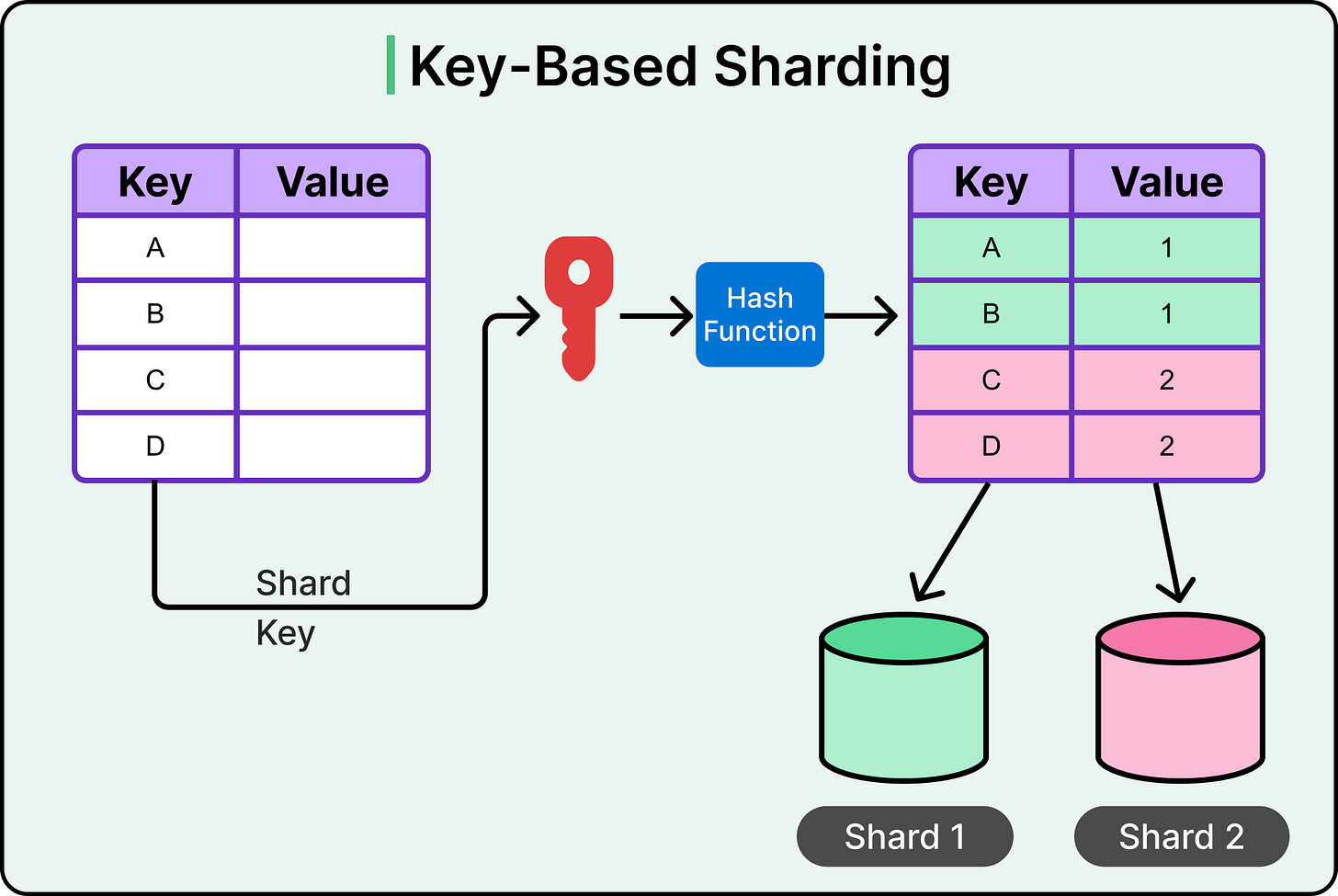 A hotspot in key-based sharding occurs when a disproportionate amount of read or write traffic is routed to a single database server (shard). In key-based (or hash-based) sharding, a shard key (like a
user_id) is passed through a hash function to determine which shard receives the data. If certain keys are accessed far more frequently than others, the shard holding that key becomes overloaded and acts as a bottleneck.
When a record is created, the application layer uses a routing algorithm based on a specific “Shard Key” (like a user ID or tenant ID) to determine which server should hold the data. User A’s data goes to Server 1; User B’s data goes to Server 2.
Choosing the wrong Shard Key is catastrophic. If you shard a social network by User ID, and a celebrity with 50 million followers posts an update, 99% of your traffic will hit a single server. This creates a Hot Shard, causing that specific server to melt down while the other servers sit completely idle.
𝐋𝐞𝐚𝐫𝐧 𝐭𝐨 𝐛𝐮𝐢𝐥𝐝 𝐆𝐢𝐭, 𝐃𝐨𝐜𝐤𝐞𝐫, 𝐑𝐞𝐝𝐢𝐬, 𝐇𝐓𝐓𝐏 𝐬𝐞𝐫𝐯𝐞𝐫𝐬, 𝐚𝐧𝐝 𝐜𝐨𝐦𝐩𝐢𝐥𝐞𝐫𝐬, 𝐟𝐫𝐨𝐦 𝐬𝐜𝐫𝐚𝐭𝐜𝐡. Get 40% OFF CodeCrafters: https://app.codecrafters.io/join?via=the-coding-gopher
This Substack is reader-supported. To receive new posts and support my work, consider becoming a free or paid subscriber.
The Architectural Trade-off
Sharding provides theoretically infinite compute and storage scale; you simply rack up more servers as the user base grows. However, it introduces severe operational complexity:
-
No Cross-Shard JOINs: Because data is split across different machines, you can no longer execute a standard SQL JOIN across shards. If an aggregation requires data from Server 1 and Server 2, the application layer must query both over the network and stitch the results together in memory.
-
Re-sharding Complexity: If Server 1 runs out of disk space, you must add a Server 3 and migrate half of Server 1’s data over to it. Doing this without locking tables and causing downtime requires complex infrastructure like Consistent Hashing algorithms.
Re-sharding is the process of redistributing data or system components across different database nodes (shards) when the original system grows too large or unbalanced. It typically involves changing shard keys or adjusting the number of shards by splitting, merging, or moving data ranges to ensure proper load balancing.
3. Chunking: Application-Level Slicing
While partitioning and sharding are database infrastructure concepts, chunking happens entirely at the application layer. It is the process of breaking a large stream of data, a massive file, or a text document into fixed or variable-sized segments (chunks) for processing.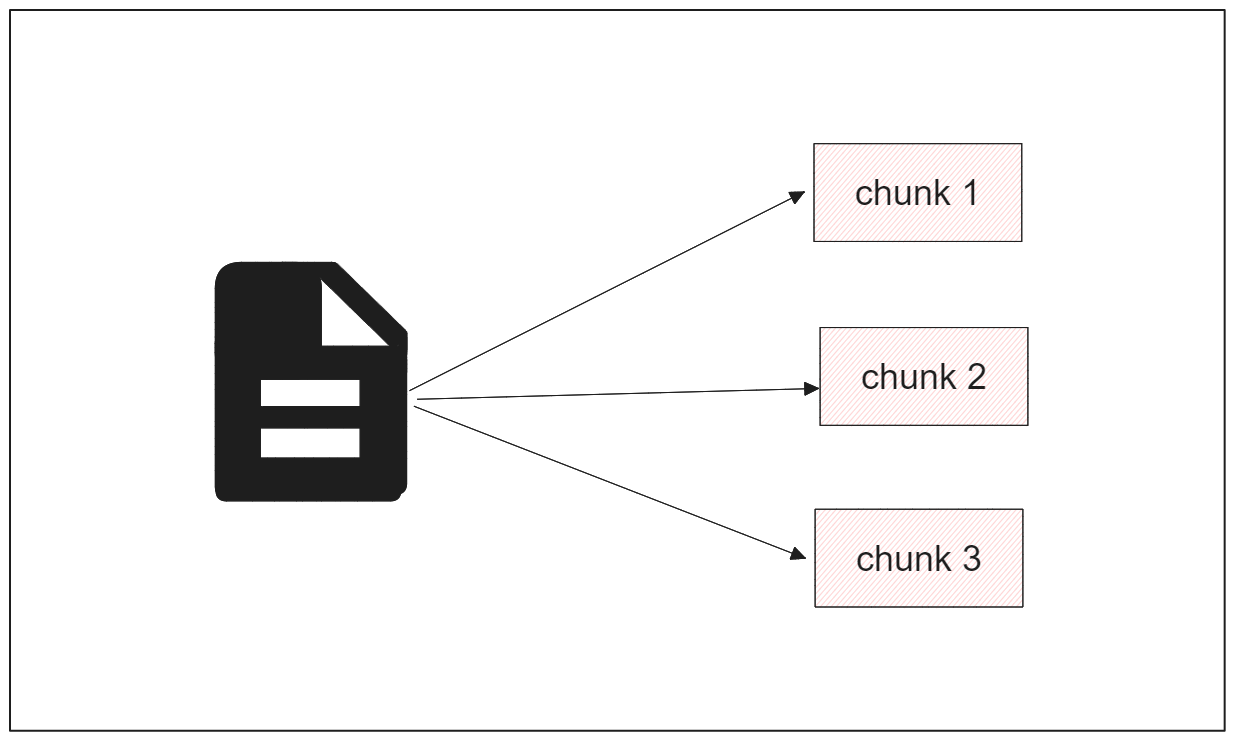 In AI and software, chunking at the application layer refers to breaking down large datasets—such as documents, logs, or databases—into smaller, manageable segments. It is an essential preprocessing step for Retrieval-Augmented Generation (RAG) pipelines, allowing search systems to retrieve specific, relevant information instead of forcing an entire document into an AI model's context window.
Chunking is heavily utilized in two specific domains:
Network Transmission and Resiliency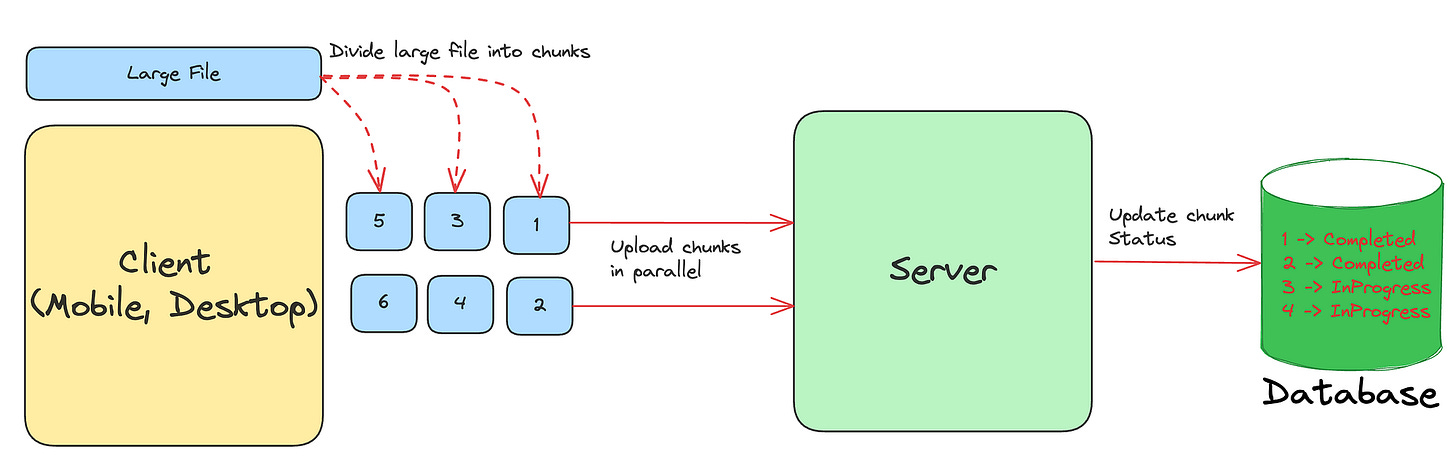 A multipart upload is a file transfer technique that splits large files into smaller, manageable chunks. Each chunk is uploaded independently and reassembled into the original file upon arrival. This approach improves upload speeds, maximizes network bandwidth, and provides fault tolerance by allowing you to retry only the failed chunks.
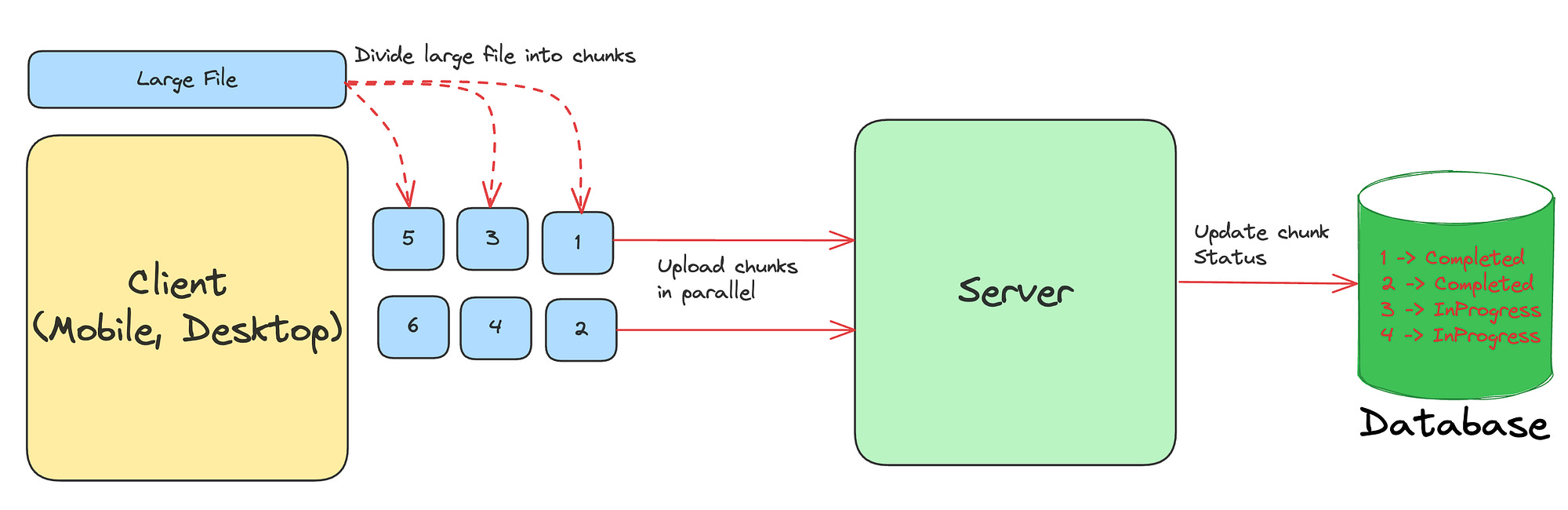
When a client uploads a massive 10GB video file to an object store like Amazon S3, the client does not send it as a single TCP stream. It uses a Multipart Upload.
The application chunks the file into 10MB segments and uploads them in parallel. This is critical for resiliency. If the network drops at 9.9GB on a single stream, the entire upload fails and must restart. With chunking, if chunk #842 fails, the application simply retries that specific 10MB chunk, saving massive amounts of bandwidth and time.
Vector Databases and AI (RAG Pipelines)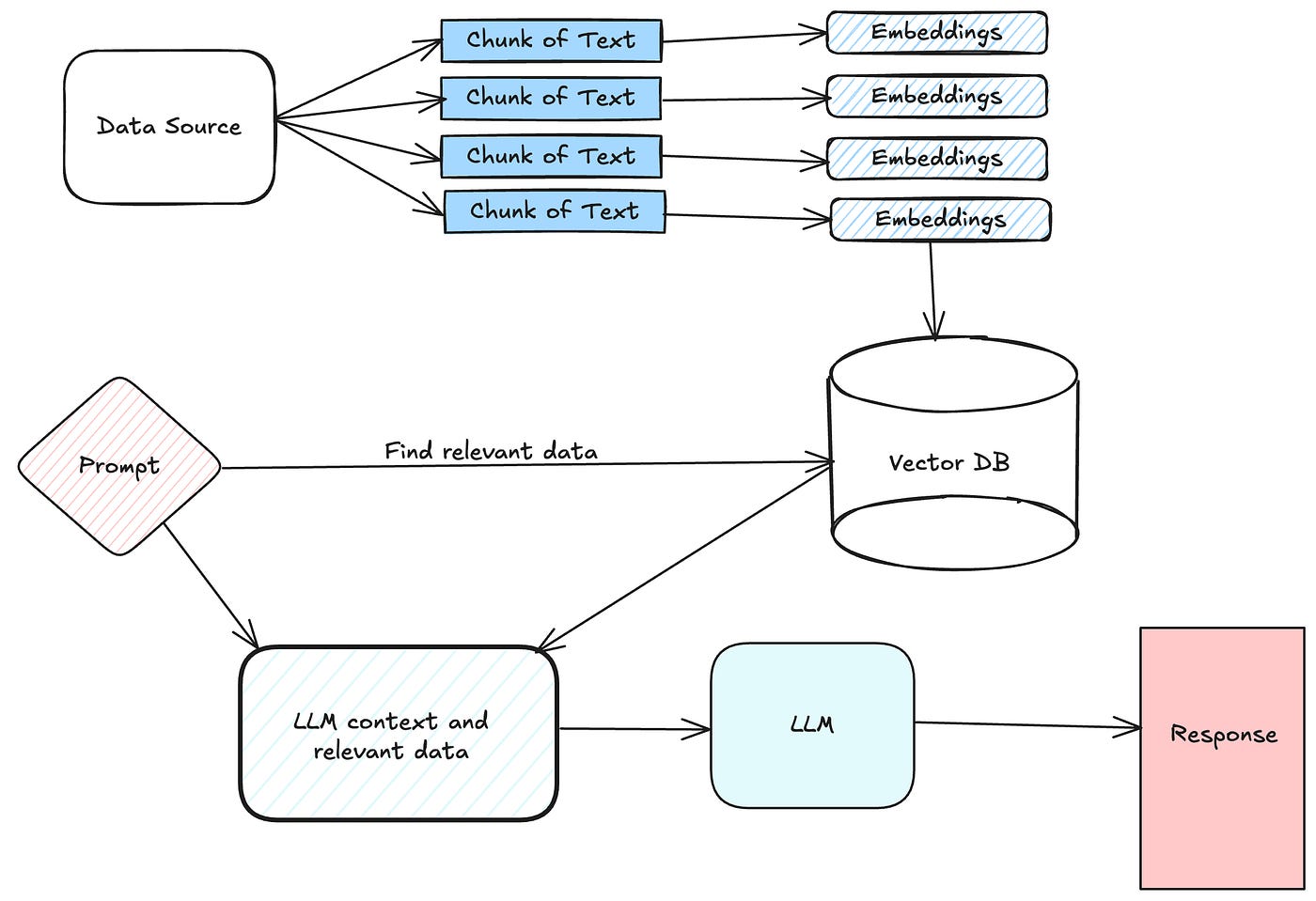 Chunking in Retrieval-Augmented Generation (RAG) is the process of breaking large documents into smaller, manageable segments before embedding and indexing them. It is the most critical factor for RAG success: poorly sized chunks sever context and cause inaccurate or hallucinated AI responses.
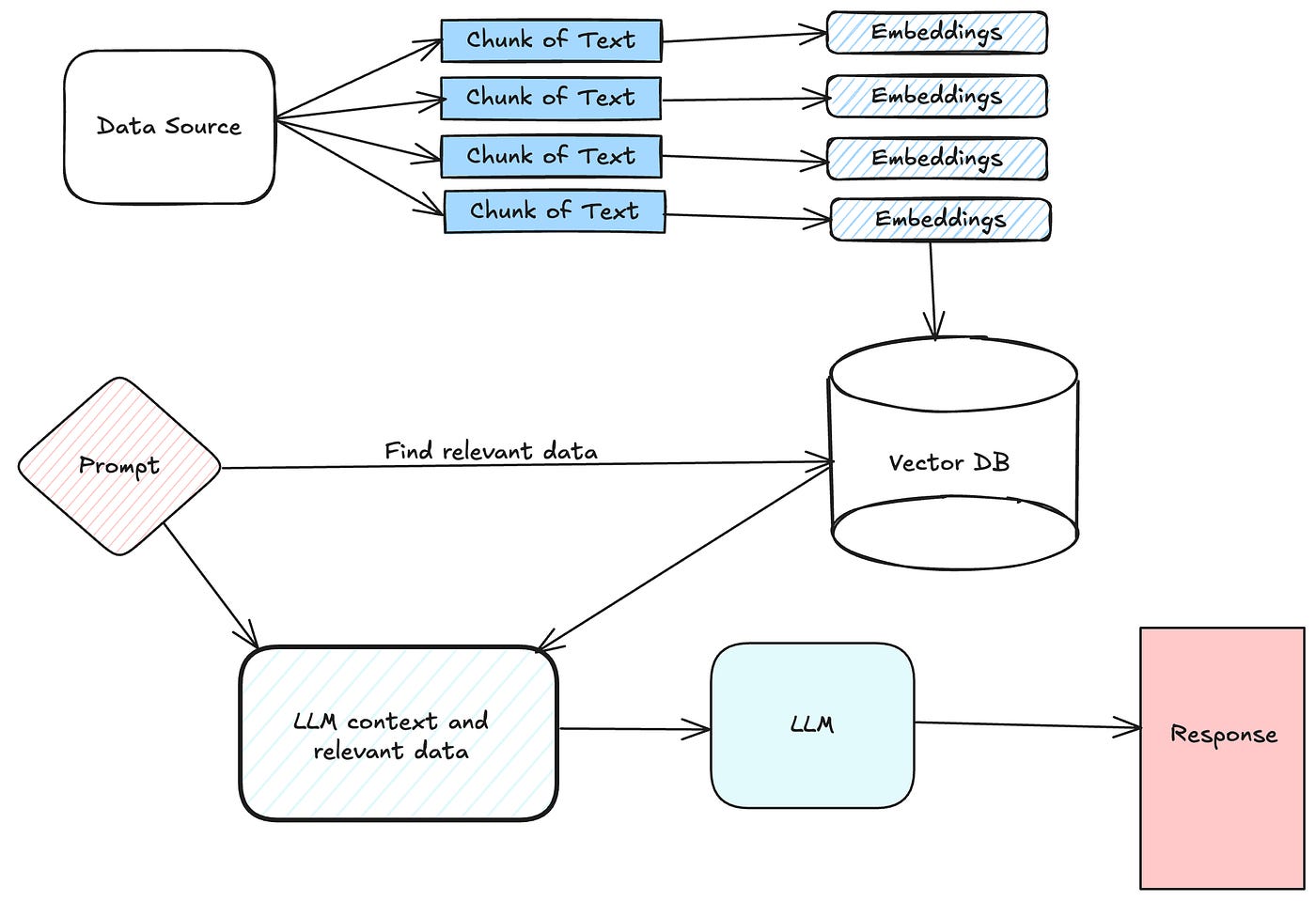
With the rise of Large Language Models and Retrieval-Augmented Generation (RAG), chunking has become a mandatory data preparation step.
You cannot feed a 500-page PDF directly into an embedding model due to context window limits. The document must be logically chunked. Engineers cannot simply cut the text every 500 words, as this might split a crucial sentence or paragraph in half, destroying the semantic meaning. Instead, systems use Semantic Chunking with overlap (e.g., 500-word chunks with a 50-word overlap into the next chunk) to preserve context. Each chunk is then mathematically vectorized and stored, allowing the AI to retrieve only the specific paragraphs relevant to a user’s prompt.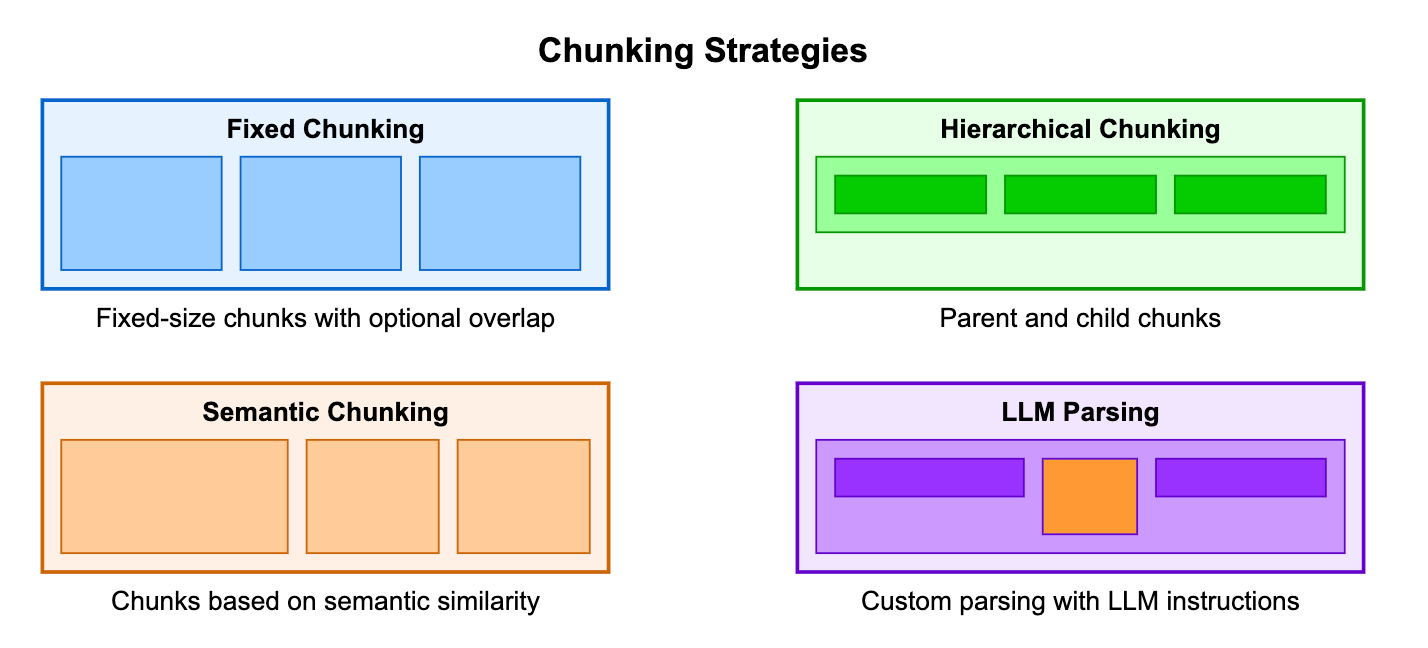 Chunking strategies in Retrieval-Augmented Generation (RAG) divide large documents into smaller, manageable pieces to optimize AI search accuracy. Fixed-size chunking provides a simple, fast approach using set character or token counts, while recursive chunking iteratively splits text at natural boundaries like paragraphs and spaces to preserve formatting. Semantic chunking groups sentences by meaning rather than length to prevent broken context, and structure-aware chunking parses documents using native markdown or HTML tags. Finally, hierarchical chunking allows systems to retrieve small, specific text segments while providing the Large Language Model (LLM) with larger, overarching parent chunks for better conversational context.
TL;DR. Partitioning divides a large database table into smaller pieces within the same physical server to optimize disk I/O and indexing. Sharding distributes those pieces across entirely separate physical servers to scale compute and storage infinitely. Chunking is an application-level process of breaking large files or text documents into smaller segments for network resiliency or machine learning processing.