Scaling Beyond a Single Point of Failure
By The Coding Gopher
Published: 2026-06-25
URL: https://thecodinggopher.substack.com/p/database-replication-explained
Every growing application eventually reaches hardware limits. If you run a read-heavy system—like an e-commerce platform or a social feed—a single database server can only handle so many queries per second before its CPU maxes out and request times spike.
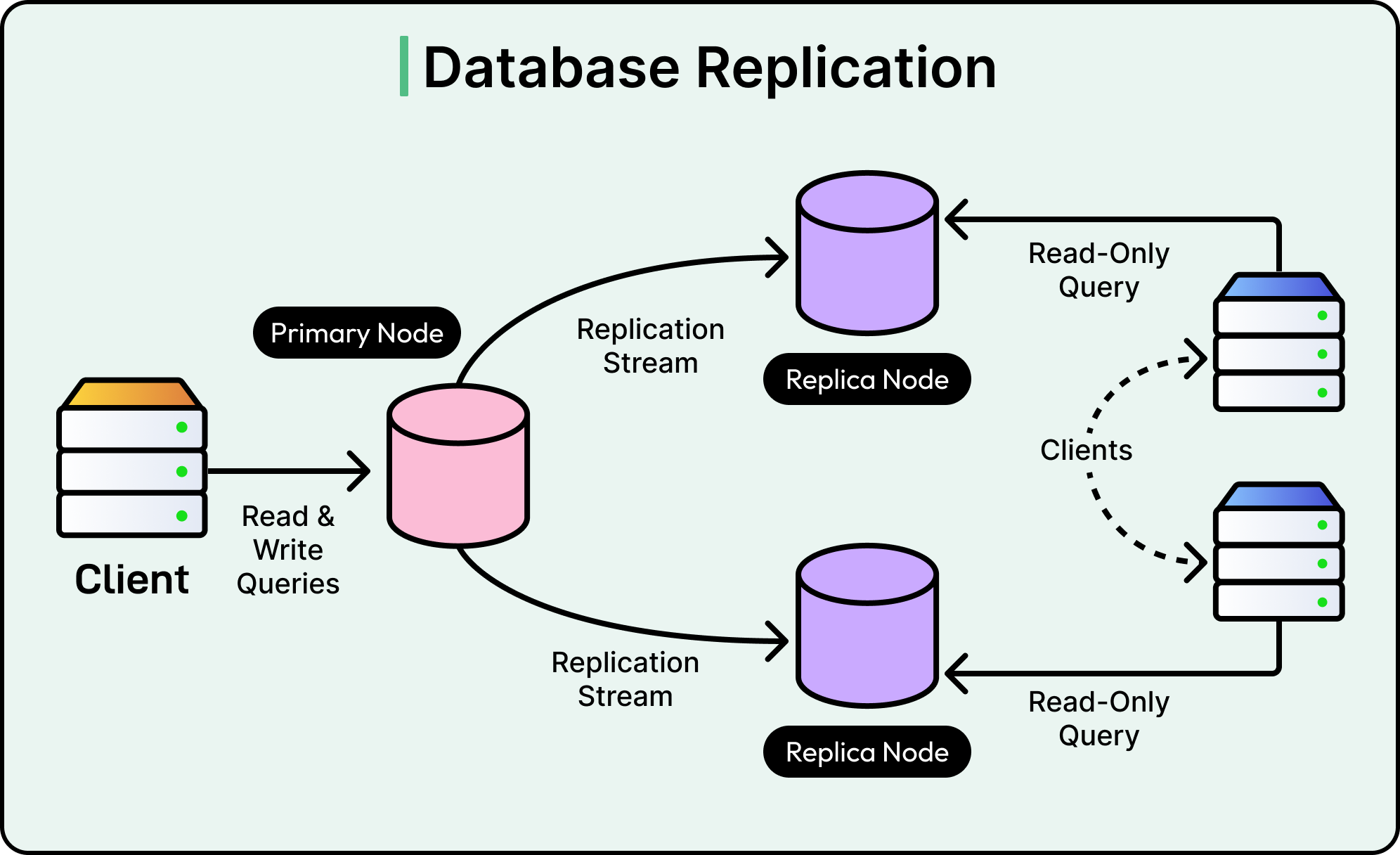
Relying on a single server also introduces a critical single point of failure. If that machine’s hardware fails or a power outage hits that specific data center, your application goes offline, and data may be permanently lost.
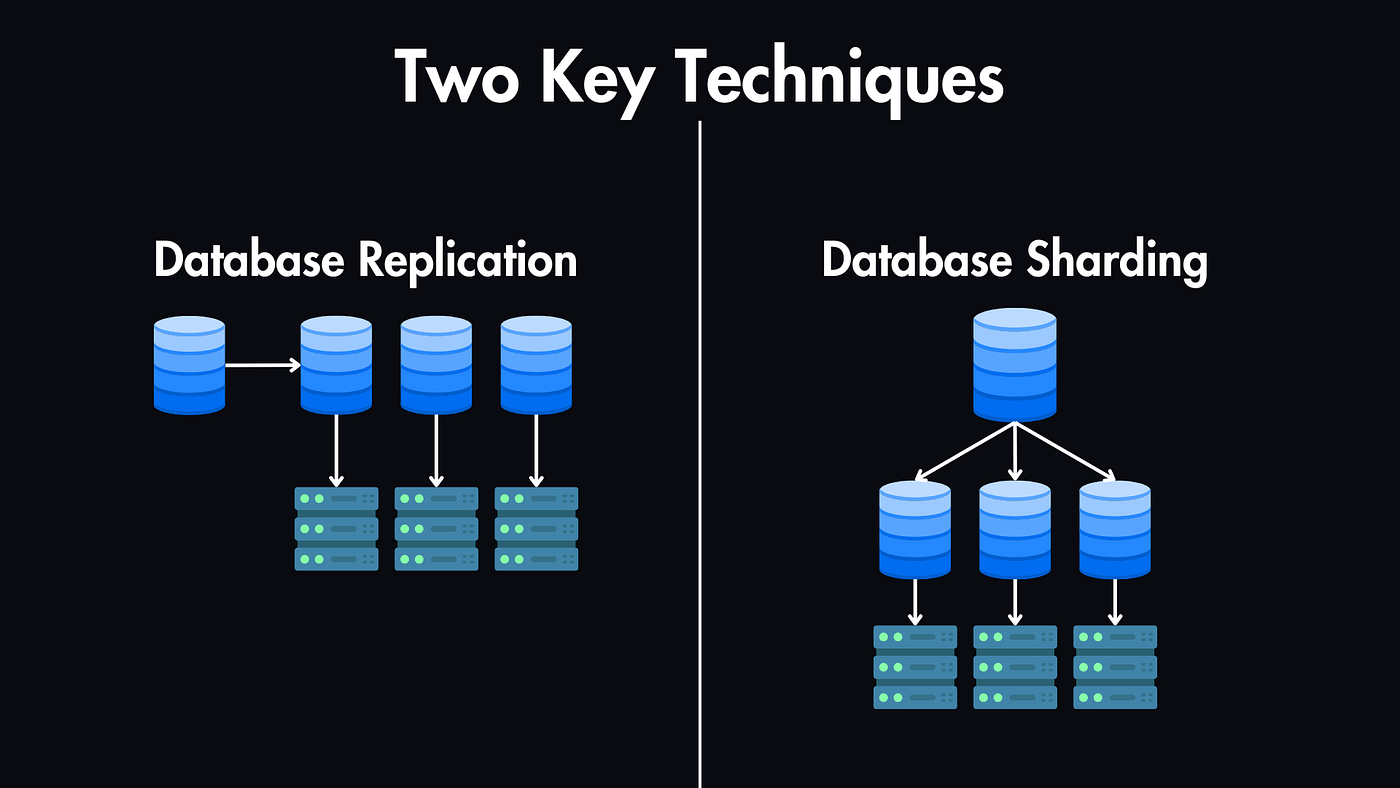
To ensure high availability and performance at scale, distributed systems utilize database replication.
\Database replication and sharding are both used to scale databases, but they solve different problems. Replication makes identical copies of data to improve read performance and availability. Sharding partitions data into smaller chunks across different servers to handle massive dataset sizes and write-heavy loads.\
Replication is the process of keeping multiple, synchronized copies of your data across different servers (often called “nodes”). It solves two primary architectural problems: availability (if one node dies, others take over) and read scalability (you can spread read queries across multiple machines).
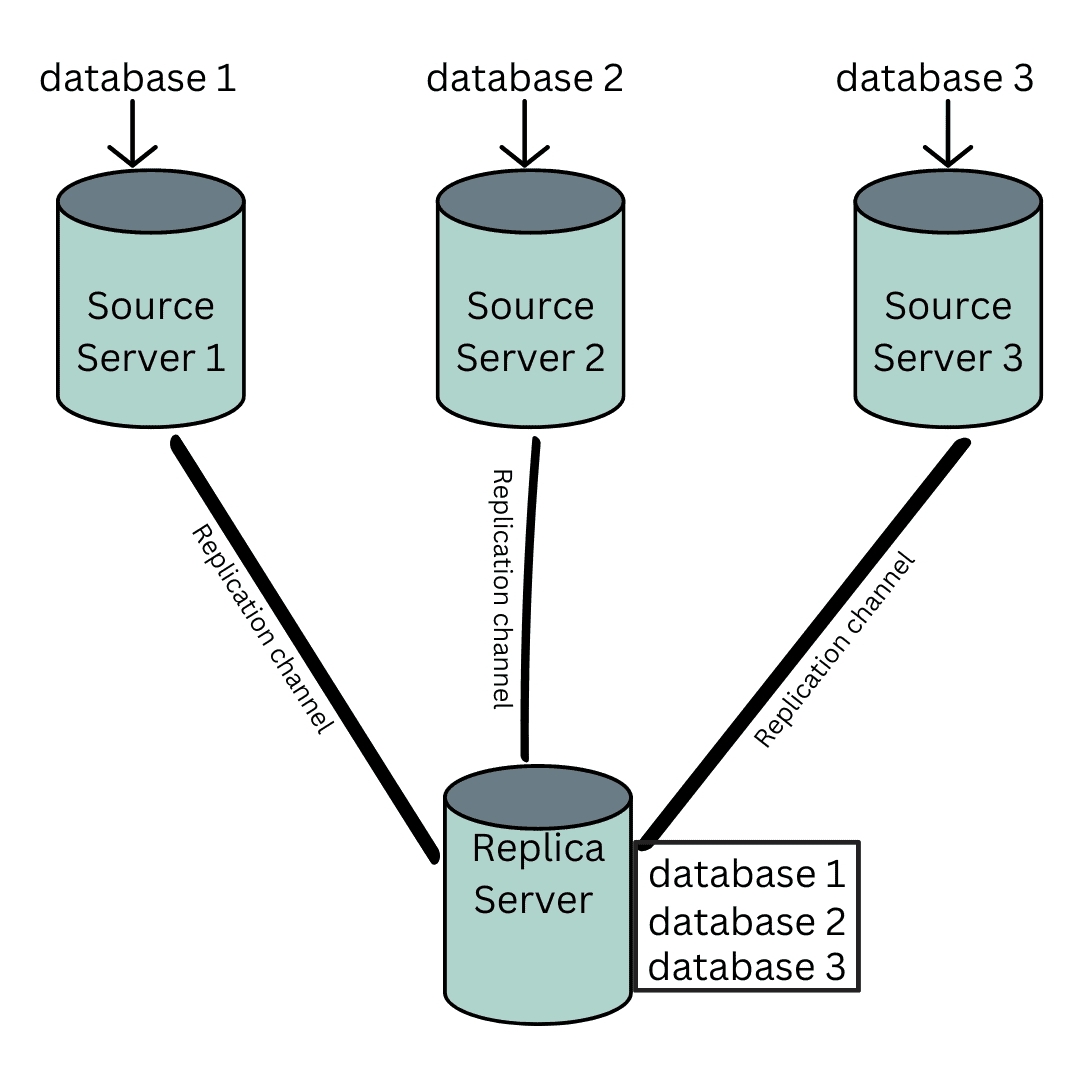
Here is an overview of the most common replication strategies and their architectural trade-offs.
Leader-Follower (Single-Leader) Replication
Also known as primary-secondary replication, the Leader-Follower model is a single-leader architecture and serves as the default setup for most relational databases like PostgreSQL and MySQL.
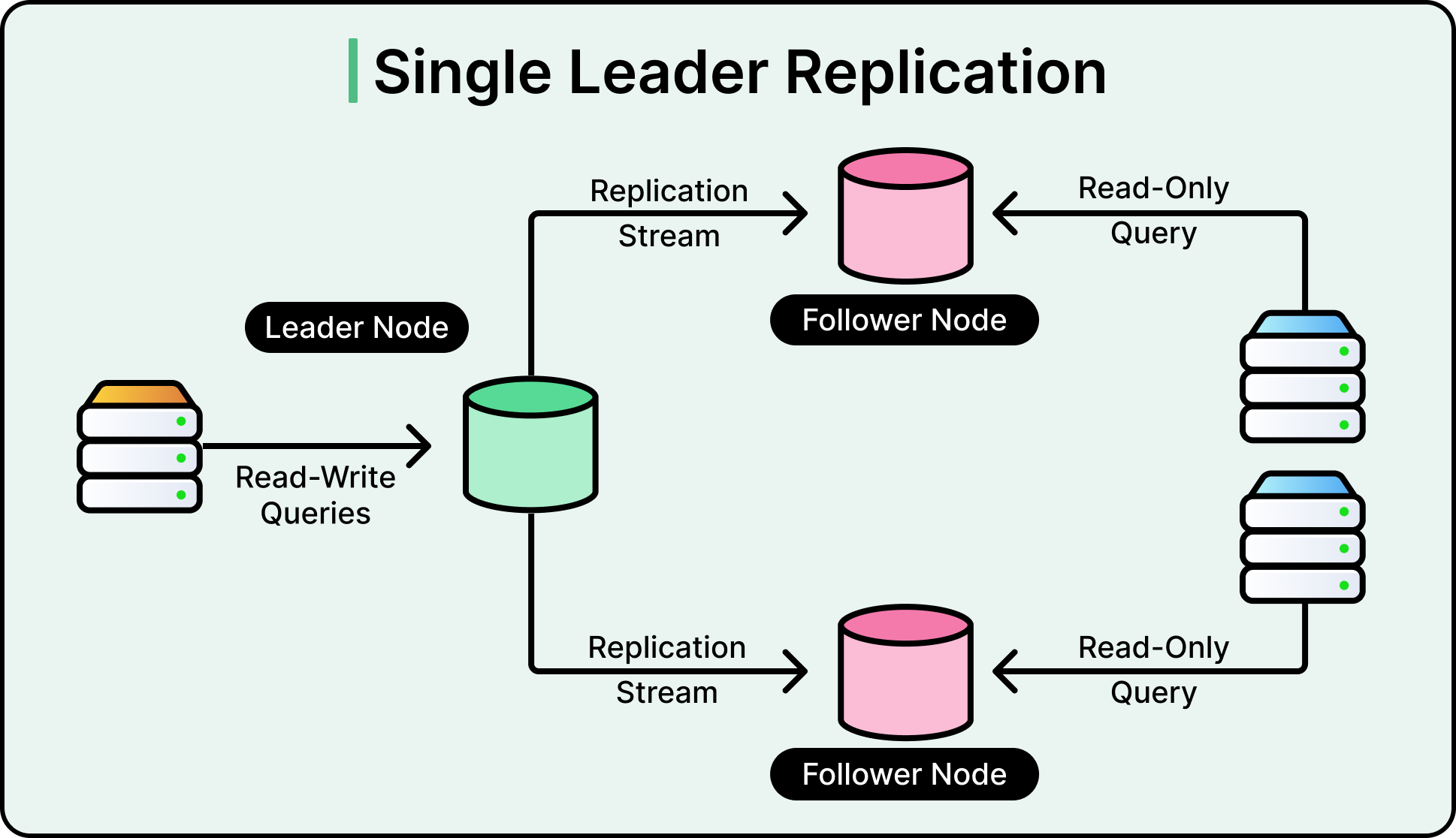
In this architecture, nodes are assigned strict roles:
- The Leader (Primary): There is exactly one leader. Every single “write” operation (inserts, updates, deletes) must be routed to this node.
- The Followers (Secondaries): There can be multiple followers. They maintain a read-only copy of the leader’s data. Whenever the leader writes new data to its local storage, it sends a replication log to its followers, instructing them to update their own copies.
This setup leverages the fact that most web applications are heavily read-biased. By routing all writes to the single leader and distributing all reads across multiple followers, you significantly increase the system’s capacity to handle concurrent traffic.
Scaling Writes. Multi-Leader and Leaderless Architectures
While the standard single-leader (Leader-Follower) model scales reads efficiently, write throughput is still bottlenecked by the leader’s CPU and disk speed. To scale writes, architectures must evolve:
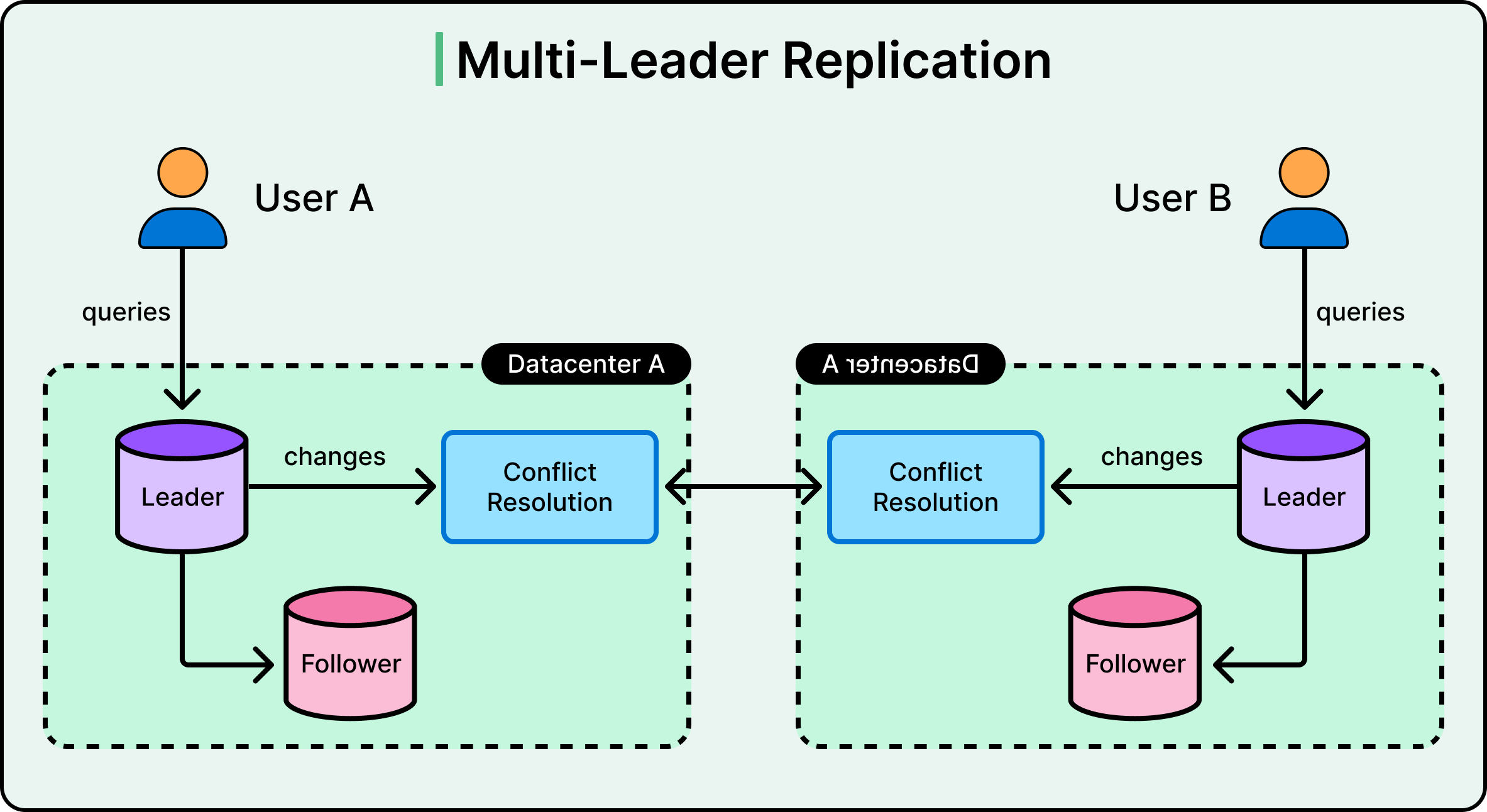
- Multi-Leader (Active-Active) Replication: In this setup, the system contains more than one node authorized to accept writes. Each leader processes writes locally and simultaneously acts as a follower to the other leaders, syncing data in the background. This is typically used for globally distributed systems (e.g., one leader in Toronto, one in Tokyo) to provide users with exceptionally low latency. The major trade-off is write conflicts—two users might modify the same record simultaneously on different servers, requiring complex resolution logic (like timestamps or CRDTs) to safely merge the data.
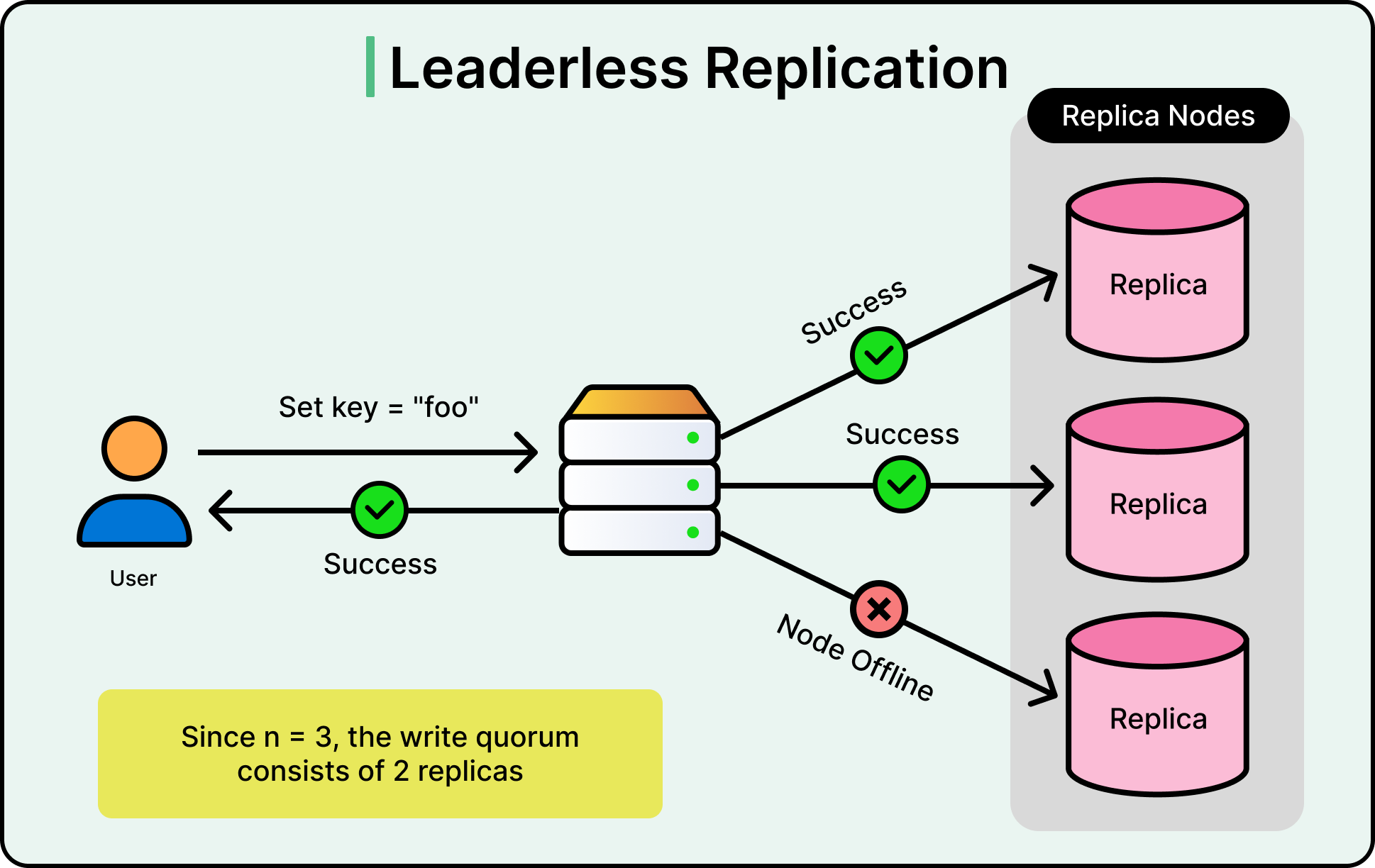
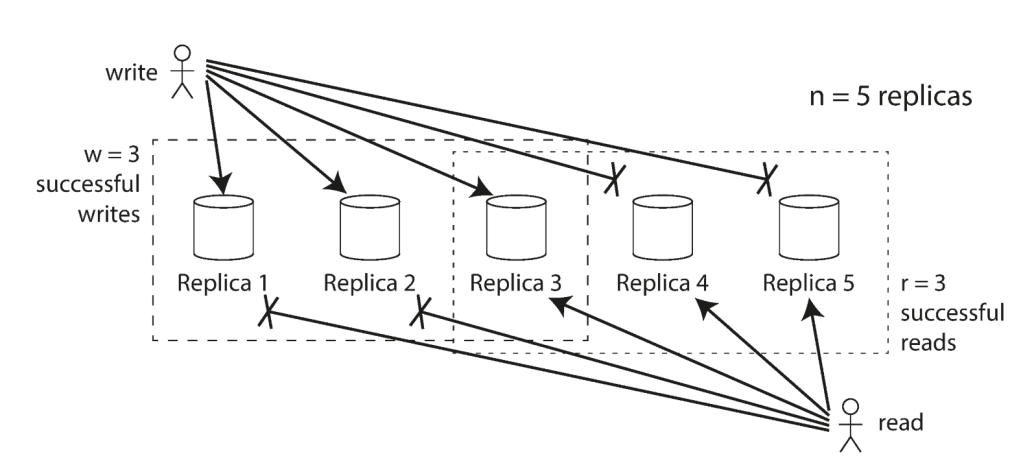
- Leaderless Replication: Used by databases like Cassandra and DynamoDB. Every node accepts both writes and reads, eliminating the leader concept entirely. To ensure accuracy, the system writes to multiple nodes simultaneously and requires a “quorum” (a majority vote) to consider an operation successful. It is designed for high-availability data pipelines where 100% uptime is strictly required.
Synchronous vs. Asynchronous Updates
When the leader receives a write, it must transmit the update to the followers. There are two primary methods for this, requiring engineers to compromise between speed and data safety.
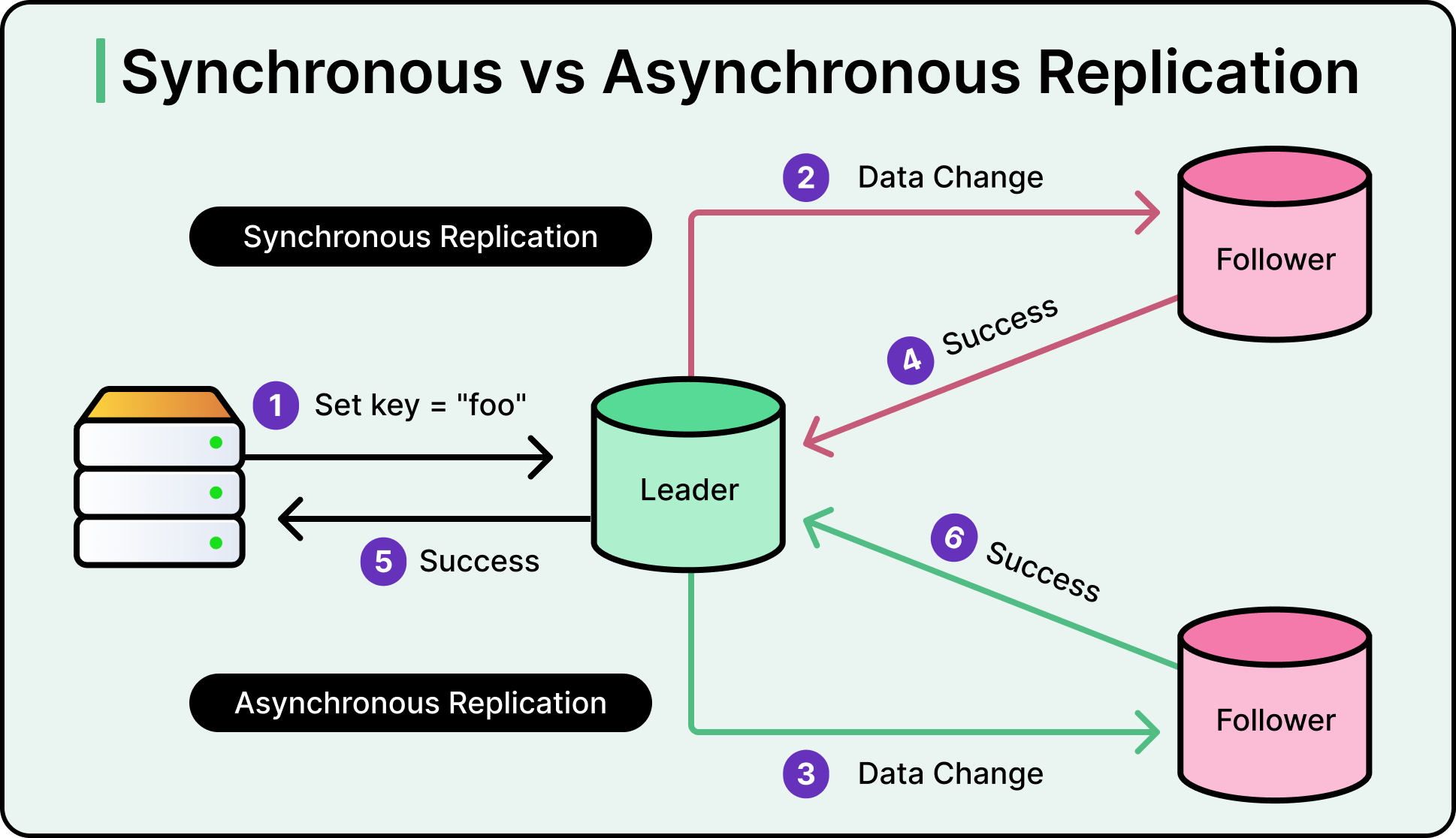
Synchronous Replication
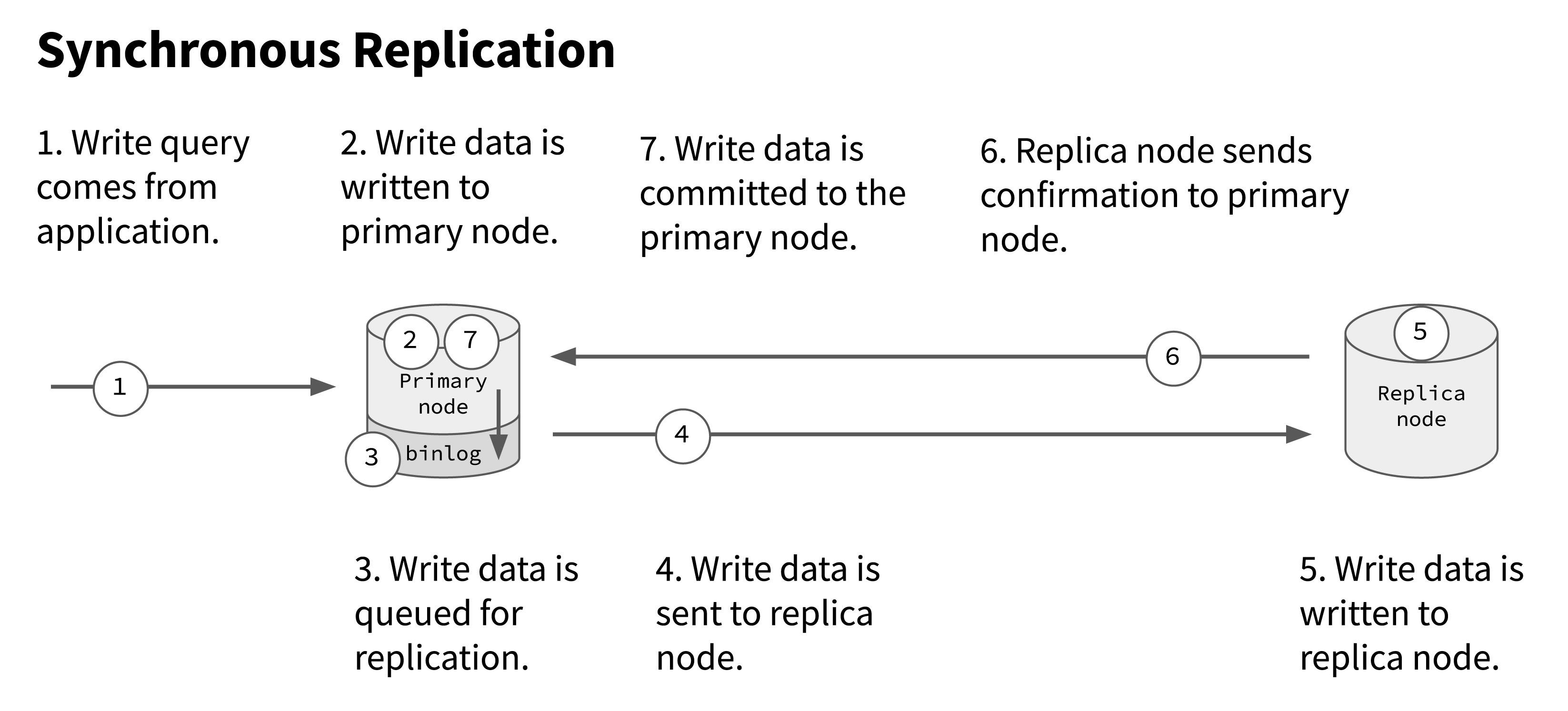
The leader receives a write from a client, sends the data to the followers, and waits for them to confirm they have saved it before returning a “Success” response to the client.
- Advantage: Data consistency is guaranteed. If the leader crashes immediately after the write, the followers possess the exact same data.
- Disadvantage: Performance is bottlenecked. The leader’s write speed is limited by the slowest network connection to a follower. If a follower goes offline, the leader may block incoming writes until it recovers.