The company knows which warehouses it’s worried about. Unions might want to take a look.
By Alex Press
Published: 2026-09-16
URL: https://thealexpress.substack.com/p/amazons-organizing-map
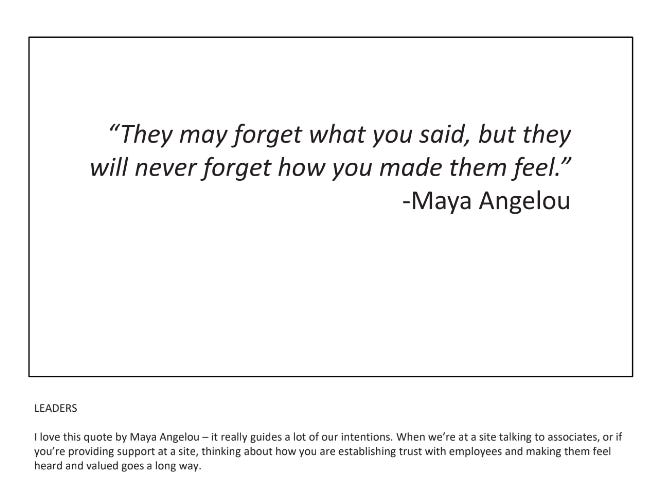 Slide from Amazon Leadership Training presentation
Benjamin Fong wrote this week in Jacobin about a cache of internal Amazon documents that became public through a labor case in British Columbia. Among other things, they show Amazon keeping tabs on which warehouses might organize, sorting facilities into tiers, assigning them a “Labor Continuity Score” from 100 to 900, and tracking what workers at individual sites are complaining about.
A lower score means more trouble. Tier 1 covers warehouses where workers were already signing cards or there was a “direct 3rd party, i.e., union, campaign; Tier 2 covers sites Amazon thought might be headed in that direction (the document is based on data Amazon compiled in 2024). The spreadsheet also records what workers at each warehouse were complaining about at that time.
The Alex Press is a reader-supported publication. To receive new posts and support my work, consider becoming a free or paid subscriber.
At SWF1 in Rock Tavern, New York, Amazon listed SWF1United and the Teamsters and recorded complaints about compensation, time off during bad weather and shortages of “harnesses, scanners & batteries.” Workers there had already been petitioning and marching on management and held a rally and practice picket on Cyber Monday in 2023.
At DDT6 in Pontiac, Michigan, Amazon recorded safety and leadership problems and a “Card Solicitation Attempt” involving the Teamsters. Workers there had gone on strike during Prime Week in 2023. At KSBD, Amazon’s West Coast air hub in San Bernardino, the company listed “Internal Activists” and complaints about compensation, management and safety culture. In July 2024, more than one hundred workers walked out over what the Teamsters said was retaliation for union organizing.
More interesting are the places Amazon thought might be next. Its Tier 2 list includes DJT6 in Riverside, California, where workers were complaining about stow and pick rates; DIL3 in Chicago, where the theme was manager favoritism; BHM1 in Bessemer, where it was weekly shifts and attendance; SOR3 in Portland, where it was women’s restrooms; and SNJ1 in Woodland Park, New Jersey, where it was music playlists and noise. DJT6, which had the lowest Labor Continuity Score among the Tier 2 facilities in the documents at 223, has since seen three walkouts, most recently on September 2. BHM1, of course, had by the time Amazon gathered this data already seen the first NLRB election at an Amazon facility in the United States, as well as a rerun of that vote (still unsuccessful thus far).
The Teamsters have made Amazon a major organizing target. They could do worse than read Amazon’s own research.
The training materials that accompany the spreadsheets are worth reading. Amazon teaches managers TIPS—Threaten, Interrogate, Promise, Spy—for what they cannot do during an organizing campaign, and FORE—Facts, Opinions, Rules, Experiences—for what they can. As an example, the training warns managers who overhear workers planning a union meeting at the Applebee’s down the road not to suddenly decide to eat there for the first time. Another section, on telling workers about experiences with unions, warns: “Do not make up stories if you don’t have one!!”
There is a lot of advice about being nice to people. Managers should learn workers’ names, ask about their families and vacations, and remember things like a daughter’s soccer game. One slide consists entirely of an apocryphal Maya Angelou quote: “They may forget what you said, but they will never forget how you made them feel.” Managers should create opportunities for workers to vent, “stand in the employee’s shoes,” and show “care and empathy.” Employee Relations staff, meanwhile, are supposed to determine whether workers are willing to listen to “Amazon’s philosophy and the facts about unions.”
These particular slides were prepared for managers in Canada, which is important context. The deck repeatedly warns managers that provincial labor law protects workers’ right to organize and restricts what management can do during a campaign. The tactics available to Amazon vary with the law; in jurisdictions where employers have more latitude to campaign against unions, management can be more aggressive.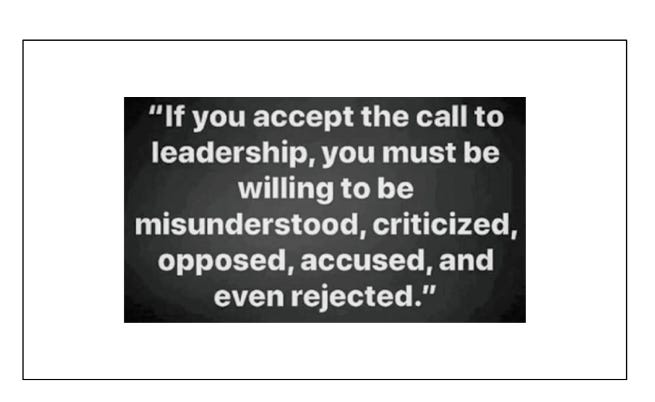 Slide from Amazon Leadership presentation
Amazon’s own analysis says comments on Voice of the Associate, the company’s internal worker-feedback system, were predominantly negative in every region it tracked over the course of three months. Treatment by process assistants—hourly workers who help supervise and direct other warehouse workers—was the top “voice vector” in 60 percent of North American regions. Workers complained of “favoritism, disrespect, and unprofessional/rude treatment from PAs,” contributing, Amazon’s summary said, to “a toxic workplace environment and overall low morale.”
Amazon trains managers to approach employees with “care and empathy,” while also turning what workers tell them into measures of labor risk. As Fong puts it, worker feedback is solicited in part “to gauge the temperature of labor unrest.” He describes the result as “manipulative and mathematical.”
Fong also notes that the documents don’t show how Amazon deploys Employee Relations staff in response to the risks it identifies. But the ruling in the British Columbia labor-board case that we have to thank for these documents supplies some of that missing part.
At YVR2 in Delta, Unifor had been organizing workers since June 2023. The drive became public that fall, and in February 2024 Amazon sent in its Rapid Response Team. Managers brought in from elsewhere in Canada and the US “pulsed” workers one-on-one. Employees away from work received calls described as “wellness checks.” The BC Labour Relations Board later found that the union campaign was a factor in the team’s deployment and that the calls were intended to tell employees about the organizing drive. Amazon said the team was there to identify and address workplace concerns.
Unifor first applied for certification on April 10, then withdrew the application six days later. It filed again on May 21. The Board later found that Amazon responded by trying to increase the number of employees at YVR2, diluting the union’s support, and then sought additional volume to give those new hires work to do. The next day, Amazon Regional Finance Manager Jeffrey Ho asked YVR2 site leader Sharath Nair whether he needed more volume routed through the warehouse.
“I need volumes,” Nair replied.
“copy.”
Ninety minutes later, Ho told Nair, “we are working on driving volume.”
They discussed sending 400,000 additional units through YVR2, which they acknowledged would get them fifty new hires. Ho asked when the union vote would happen: “So we know when hir[e]s matter until.” When someone said the hires might not arrive until the following week, he replied: “that would be too late.”
Someone in Production Planning noticed that the timing was unusual.
Mohammad: Its interesting we are hiring at the site that is going thru vote.
Ho: Let’s not talk about that
Mohammad: there were no ER [Employee Relations] concerns on that? generally we do not hire at such sites.
Ho: I have heard the opposite
Mohammad: think of what associates are going to think
I hope its cleared by ER
Ho: This is coming from chuck
We can discuss on call
Mohammad: I understand but ER is corporate
Ho: This coming from two levels above chuck
Mohammad: copy
Then, later that evening:
Ho: Question - do white badge get to vote
Nair: don’t know
A finance manager wrote a week later that some hires had “no strong business reason” or “no clear business justification.” Amazon, he wrote, was increasing projected volume “to accommodate the extra hiring that we are doing which is indeed artificial.”
YVR2’s nonsalaried workforce went from 664 employees in January to 878 in June. Workers testified that there was not always enough normal work for everyone. Kimberly Kodama, an employee at the site, testified that she saw workers scraping tape from the warehouse floor and replacing it even though the old tape was still fine. She was told there wasn’t enough work and Amazon was finding things for them to do.
Amazon did indeed send more merchandise through the warehouse too. Kodama testified that YVR2 ordinarily received one to three trans-in loads a night; by May she was seeing six to eight. Amazon’s records showed weekly trans-in volume rising from 146,610 units to 276,696 and then 450,532 over three weeks.
Amazon said the hiring reflected projected business needs, changes to its fulfillment network, and preparation for Prime Day. The BC labor board rejected that explanation. An Amazon executive testified that there “must have been a signal” prompting the additional volume but could not identify it.
“More likely than not,” the board wrote, “the signal was the Second Certification Application.”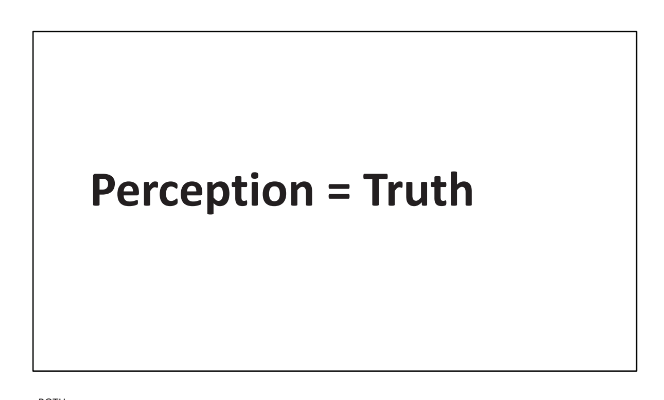 Slide from Amazon Leadership presentation
The board found that Amazon hired workers it did not need in an effort to interfere with the union drive and that its broader campaign had been coercive and intimidating. It ordered Unifor certified in July 2025.
Amazon has built an elaborate system for figuring out where workers might organize and why. A union might consider putting that information, a list identifying warehouses where the company itself thinks workers might organize, along with what workers there are unhappy about, to use. Why not? Amazon has already done so much of the organizing department’s research.
P.S. I continue to receive very few Shift Notes submissions! Not nearly enough to do it as envisioned, combining several sets of notes, publishing entries on a regular basis. Rectify this problem! Send bullet points, send jokes, send profound life lessons! All to [email protected]. More info about what to send is in the post.
The Alex Press is a reader-supported publication. To receive new posts and support my work, consider becoming a free or paid subscriber.