Some literature recommendations. Do yourself a favor and read one of these.
By Alex Press
Published: 2025-11-14
URL: https://thealexpress.substack.com/p/reading-works-in-translation
I’ve been reading the work of Egyptian novelist Naguib Mahfouz lately. Midaq Alley, his hyper-local epic, follows the fortunes of the habitues of the alley, both residents and shopkeepers. (Once in a while, I looked up scenes’ locations on Google maps, and the characters never stray further than a mile or so from the alley.) It’s a perfect book, one that has led me to try to think of other novels with similarly bounded geographies, to no avail.
Mahfouz’s Cairo trilogy is incredible too: it follows the fortunes of a moderately wealthy Muslim family across three generations in the early twentieth century. Modernity is arriving in Cairo, and it’s a bumpy landing: the family weathers scandals, deaths, and divorces as they try to navigate their lives against the backdrop of seismic political events—the Egyptian revolution against the British, World War Two.( Personally, I love the occasionally pathetic patriarch of the family, strict and intimidating at home and beloved by his friends as a philanderer and jokester, a side he never allows his family to see.
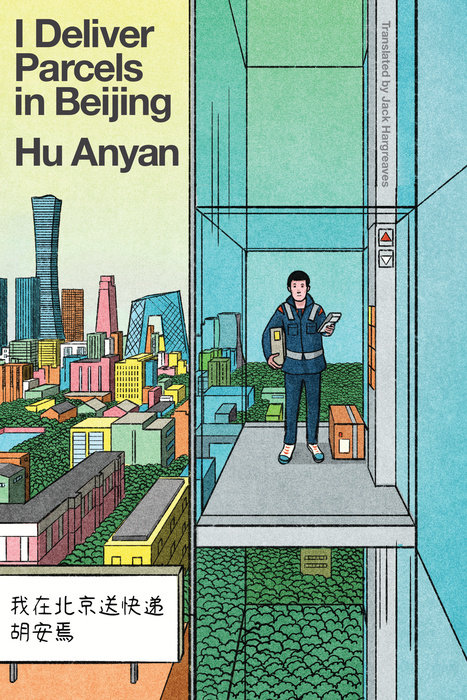
Everybody can’t stop talking about China, yet there isn’t a ton of translated literature about contemporary low-wage working life there. So I was thrilled to get my hands on I Deliver Parcels in Beijing: One Man’s Quest to Speak the Truth about the Global Gig Economy by Hu Anyan.
The book’s a memoir of the author’s time in nineteen low-wage jobs, including as a courier for some of the country’s mega-corporations; it started as a series of online essays, one of which went viral.
The book’s a bestseller in China.
The titular chapter comprises half the book: I breezed through much of it, fascinated by the sheer size of the city Hu has to navigate, driven insane alongside him by the red tape that prevents him from getting paid day after day, exasperated by the customers who ask him to bend over backwards for them, as if he has time—but I must admit it became a slog toward the end.
That might be fitting (what is the subject of the book if not exhaustion?) but , the narrative picks back up with the following chapters; Hu’s deadpan humor kept me reading. I probably write more about Amazon work than any other type of labor in the US, and from that angle, my main takeaway was: this type of work is just as terrible in China. Maybe the Chinese century won’t look radically different after all. Anyway, the Astra House translation’s cover is wonderful, one of the coolest I’ve seen in a long time.
Came out two weeks ago, go get it!
Hunchback by Saou Ichikawa is a Japanese novella, readable in one sitting. Izawa Shaka, the book’s protagonist, suffers from myotubular myopathy and lives in a group home, where she spends much of her time writing pornographic stories for money. She’s also addicted to Twitter, posting gems like “My ultimate dream is to get pregnant and have an abortion, just like a normal woman.” She might not be able to speak, but that doesn’t stop her from saying a lot, and the result is a totally disturbing, somewhat excruciating story that turns upon her desire to get laid without dying in the process.
The book landed Ichikawa the prestigious Akutagawa prize, making her the first disabled writer to win it (she has the same condition as her protagonist). It was published in 2023, and you could read it as an extreme version of how insane everybody went during Covid lockdown.
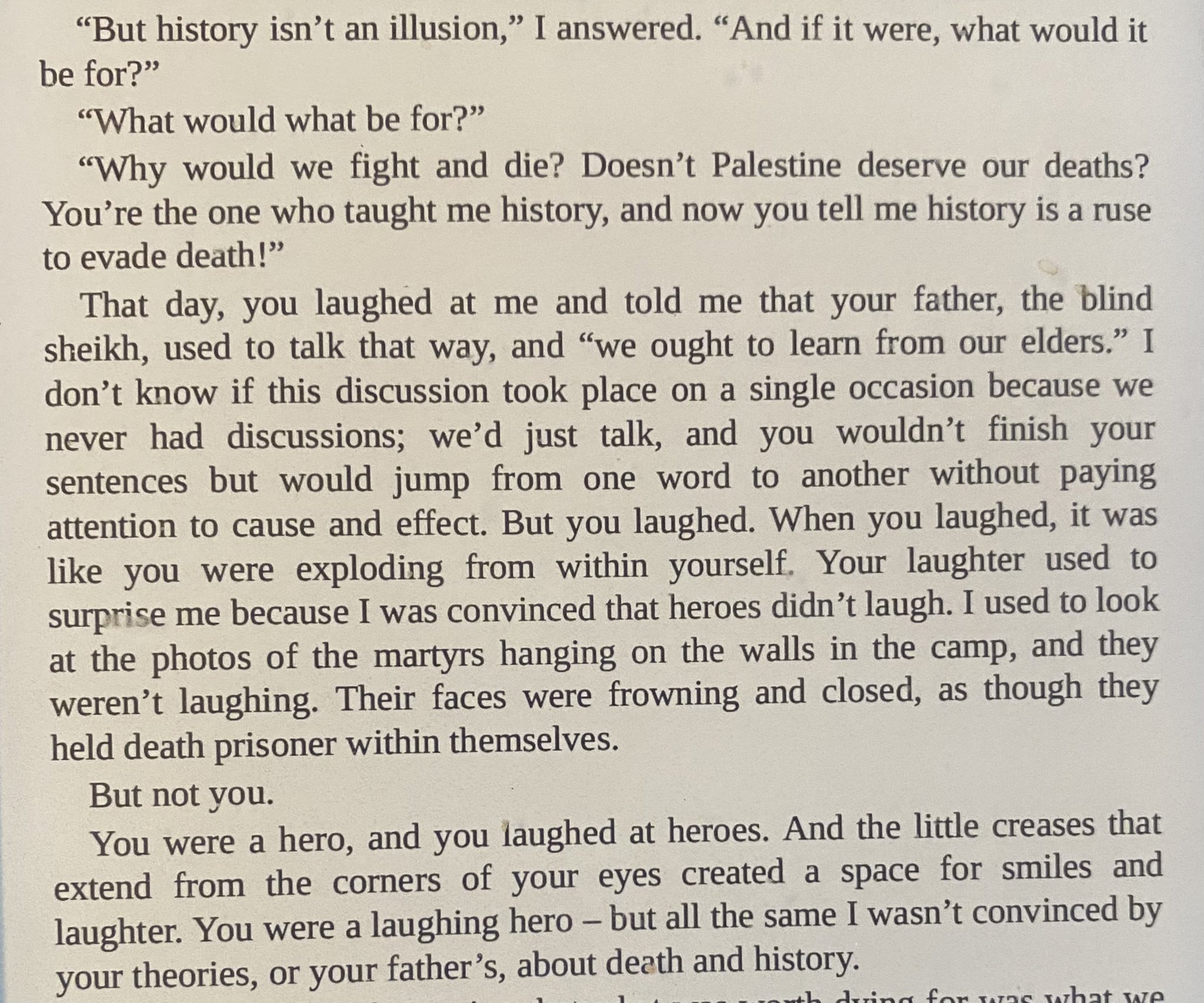
Last one for now is one of the most beautiful books I’ve ever read: Gate of the Sun by the recently deceased Elias Khoury. It’s the saga of a Palestinian resistance fighter post-1948, told by Khalil, a younger man keeping a vigil at the fighter’s bedside in a makeshift hospital near the Shatila refugee camp in Beirut. I’m not breaking any ground here, it’s widely recognized as one of the greatest Arab novels ever written, but I read it shortly after Israel began its genocide in Gaza and it’s really worth getting to now if you haven’t.
I frequently think of this passage about heroes who laugh: