When powerful technology becomes infrastructure, access stops being neutral.
By The Agentic Teacher
Published: 2026-07-02
URL: https://theagenticteacher.substack.com/p/when-ai-gets-powerful-access-gets
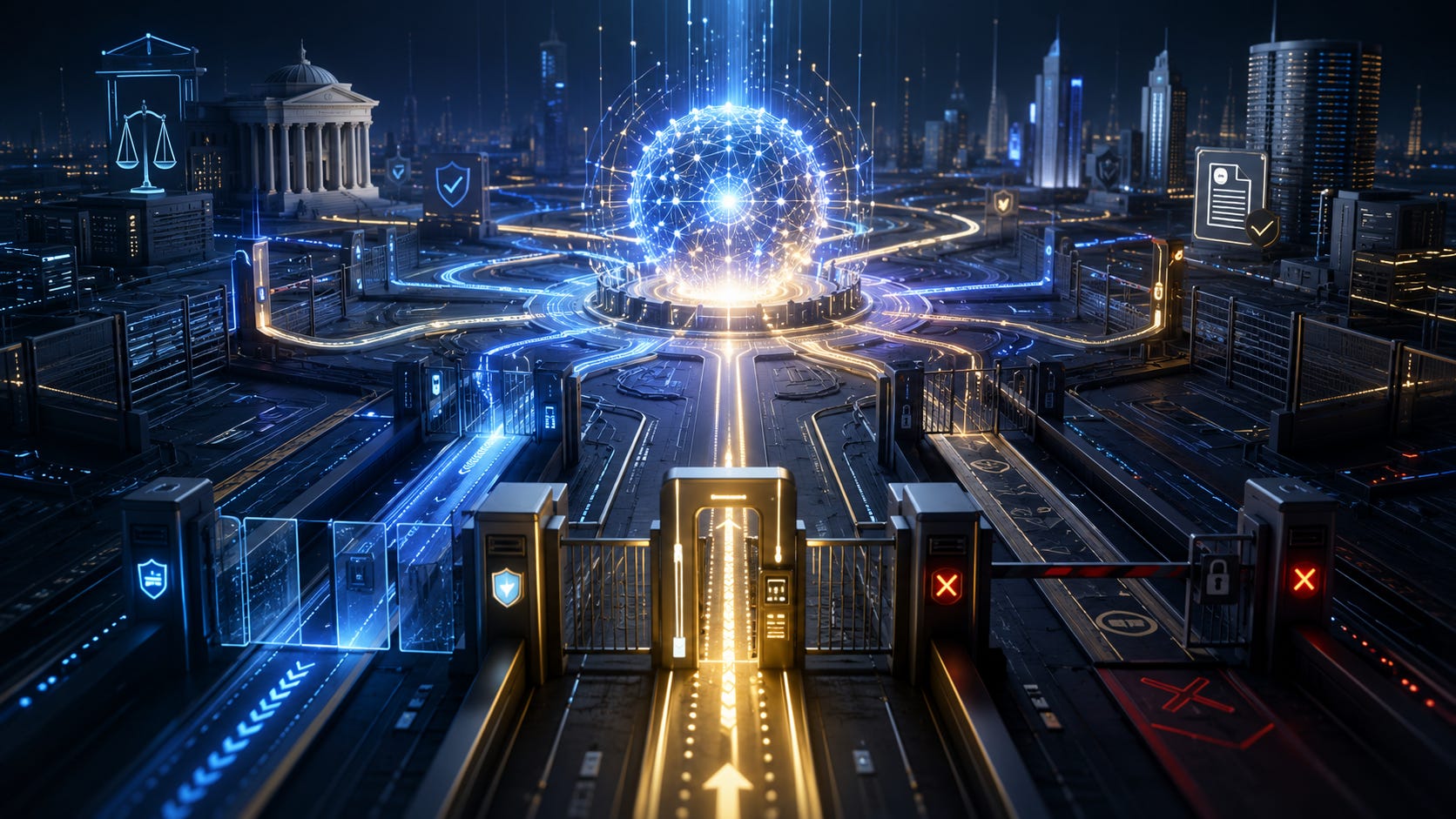
AI is entering the phase where the question is no longer only what the model can do, but who gets access, under what rules, and who benefits from the delay.
That is the real tension behind a lot of recent AI news.
If powerful AI models are restricted for the public but made available to selected “trusted” companies, how are ordinary builders supposed to compete?
That question is not paranoia. It is a serious signal.
I spent years teaching how new technologies reshape society. But watching government intervention shape access to advanced AI still caught me off guard.
At first, it can feel like something unusual is happening. AI companies build powerful models. The public waits. Governments intervene. Some access gets paused. Some access gets restored. Some organizations are trusted earlier than others. Everyone else is left wondering what the rules actually are.
But the more I study this moment, the more familiar the pattern becomes.
We have been here before.
When a technology becomes powerful enough to affect labor, markets, security, education, health, communication, or public trust, institutions eventually enter the room.
That does not mean every intervention is wise. It does not mean every restriction is fair. It does not mean ordinary people should quietly accept whatever access rules get handed down.
But it does mean this phase of AI is not random.
It is predictable.
The Pattern
The pattern usually looks like this:
breakthrough -> experimentation -> excitement -> visible risk -> institutional response -> access rulesAt first, a technology feels like a frontier. People experiment. Builders move fast. Rules are unclear.
Then the technology becomes consequential.
It starts touching safety, money, labor, public opinion, war, medicine, education, or trust.
That is when governments, courts, regulators, insurers, schools, militaries, corporations, and standards bodies start asking different questions.
The early question is:
“What can this do?”
The institutional question is:
“Under what conditions should it be allowed to do it?”
That is the phase AI is entering.
The Historical Pattern Is Familiar
Aviation began as a dangerous frontier. Planes crashed. Training was inconsistent. Rules were thin. But once airplanes affected travel, commerce, mail, military power, and public safety, aviation could no longer stay a spectacle. Licensing, certification, air traffic control, and safety standards followed.
Regulation did not end aviation. It helped turn aviation into infrastructure.
Nuclear energy showed the same pattern with higher stakes. The technology created electricity, medical tools, weapons, geopolitical leverage, and enormous danger. Concentrated power attracted concentrated governance.
AI is not nuclear energy. But frontier AI models can create outsized effects across software, cybersecurity, education, media, business operations, and decision-making. That is why governments are paying attention.
Pharmaceuticals show the trust side of the pattern. A drug can help people, but it can also harm people if it is poorly tested, mislabeled, contaminated, or oversold. Approval pathways, clinical trials, labeling, prescriptions, and safety monitoring slowed some access, but they also created public trust.
AI is beginning to face a similar question:
“Is this system reliable enough for the context where it will be used?”
A writing assistant, a medical summarizer, a hiring tool, and an autonomous agent should not be governed the same way. The rules will likely become more use-case specific.
Finance and crypto show the trust problem from another angle. Moving money faster sounds good until fraud, identity, custody, taxes, sanctions, consumer protection, and systemic risk enter the picture. Once systems move value, gatekeeping follows.
That matters because AI agents are starting to act on behalf of people. OKX recently launched an AI-agent marketplace where agents can find work, transact, and build on-chain reputation, according to TechCrunch. That may stay niche, but the larger signal is clear: when AI can act, people will ask who gave permission, who checks the work, and who is liable.
Social media gives us the late-arrival warning. Platforms scaled before institutions fully understood misinformation, polarization, algorithmic amplification, privacy problems, creator dependency, and public-trust collapse.
AI is moving even faster. Institutions are trying not to arrive too late this time.
That is the historical perspective.
AI is not outside the pattern. AI is entering the pattern.
Where AI Regulation May Go
AI regulation probably will not arrive as one clean rulebook.
It will likely arrive in layers.
Some rules will focus on who can access the most capable models. Some will focus on safety testing. Some will focus on data privacy, copyright, child safety, education, hiring, finance, health care, cybersecurity, and national security.
Watch for:
-
model access tiers
-
safety evaluations
-
audit logs
-
enterprise controls
-
government partnerships
-
restricted releases
-
disclosure requirements
-
use-case-specific rules
-
compliance features inside AI products
That does not mean AI becomes impossible to use.
It means powerful AI may start to look less like a simple consumer app and more like infrastructure with conditions attached.
For small businesses and knowledge workers, the practical question is not:
“Can I predict every future regulation?”
The better question is:
“Am I building my AI workflows in a way that can adapt when access, rules, pricing, or platform policies change?”
Why Access Is Becoming Political
AI is moving from tool to infrastructure.
Anthropic’s Claude Sonnet 5 announcement reinforced a larger industry signal: advanced capability is becoming easier to build into everyday work.
OpenAI’s research on how agents are transforming work points in the same direction. People are not just asking AI for answers. They are beginning to delegate longer, more complex work.
Once AI becomes part of the work system, the stakes change.
It touches software, education, client work, media trust, cybersecurity, business operations, personal advice, hiring, money, research, and public communication.
That is why access is becoming political.
When capability becomes strategic, access becomes political.
The Access Problem
Some access controls may be legitimate.
If a frontier model has strong cyber capability or could be misused in national security contexts, governments will not treat access like a normal software subscription.
Anthropic’s statement on Fable 5 and Mythos 5 described a U.S. government export-control directive that required suspending access to those models by foreign nationals. Anthropic said it disabled the models for customers to comply.
That is the governance logic.
But there is another side.
Selective access can create real market advantage.
If the most capable tools are available first to approved companies, government partners, large institutions, or organizations with compliance teams, those groups gain more than a better chatbot.
They gain earlier learning curves, better internal workflows, product-development advantage, regulatory familiarity, and relationship advantage.
That can become a moat.
This is the tension:
Safety gates may be necessary.
But safety gates can become power gates.
Both things can be true.
Why This Matters
The wrong lesson is:
“AI is being stopped.”
The better lesson is:
AI is entering the governed phase.
That matters because access rules are becoming part of AI strategy.
If you are a non-technical knowledge worker, creator, consultant, educator, or small business owner, you cannot assume the best AI tool will always be available to you on the same terms.
Some capabilities may appear first inside enterprise plans, trusted-access programs, government partnerships, or platforms with compliance controls. Some features may be delayed, restricted, region-limited, or wrapped in new rules.
You do not need to become a policy expert.
But you do need to understand the direction of travel.
The signs to notice are:
-
who gets early access
-
what counts as “trusted”
-
whether access rules are transparent
-
whether smaller builders can qualify
-
whether the gates favor organizations that are already powerful
-
whether AI products add audit logs, enterprise controls, safety evaluations, and model access tiers
-
whether AI companies shift their language from capability to trust
This matters most in your own work.
If your weekly newsletter workflow depends entirely on one model, one saved chat, one upload feature, or one tool’s current limits, you are not just using AI. You are depending on a specific access environment.
Do your workflows depend on one model staying available, affordable, and unchanged?
Do you have a backup if access shifts?
Do you know where human review belongs?
Do you know what data should not go into an AI workflow?
Those questions matter because platform dependence becomes riskier when AI enters the governed phase.
The future advantage is not raw access. It is adaptive capability.
The people who understand this pattern will be less likely to panic when access changes. They will also be more likely to build AI workflows that can survive changes in tools, rules, pricing, and permissions.
When AI gets powerful, access gets political.
That is not the end of opportunity.
It is the next phase of the opportunity.
Do not panic,
but do not be naive.