How to get AI to say unpopular opinions:
By Ruben Hassid
Published: 2026-11-24
URL: https://ruben.substack.com/p/73
AI is not random. Let’s ask for “a book that will change my life”.
And it’s always the same book:
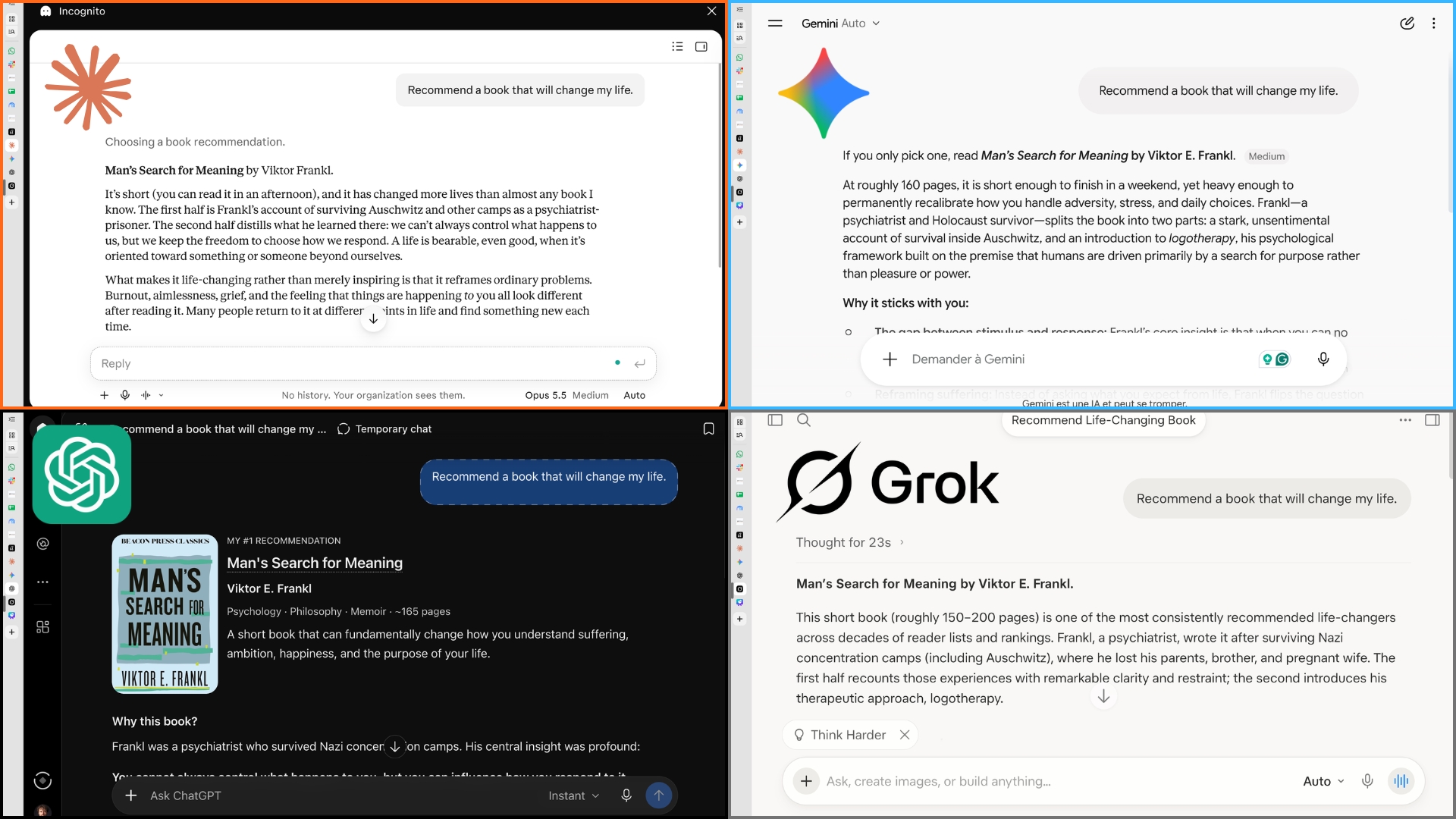
\They all recommend the same book. And it’s not the only thing.\
I went down a rabbit hole and landed on this article fromCodie Collier(highly recommend you read it).
I asked 65 AIs from 30 companies the questions people ask them every day, 127,918 times. They kept giving everyone the same answer.
Out of 127,918 answers, most are the exact same recommendations.
- A book to change my life? 73 answers out of 100 say “A Man in Search for Meaning”.
- Where to invest $10,000? 98 answers out of 100 say an index fund.
- What to study? 90 out of 100 say computer science.
Asking it to “be original” doesn't help.
Because their 2nd answer is also always the same.
To get originality from AI, you have 4 levels of prompting.
Level 1. Ask for 10, pick 1.
There is a concept called “temperature” for AI. It’s how original it should be.
If you pick a temperature of 1.0 = it’s as original as it can be.
If you pick a temperature of 0.0 = it’s as average as possible.
It used to be very important, but the main AI stopped giving you access to it.
You can still simulate it:
[YOUR QUESTION]
Give me 20 answers, from the one you give everyone (1) to the most original (20).
Level 2. Turn on Memory.
This is why you probably tried my test of the “life-changing book” and got a different answer: you have memory turned on. And you should.
When I turn it on, Claude recommends me this book:
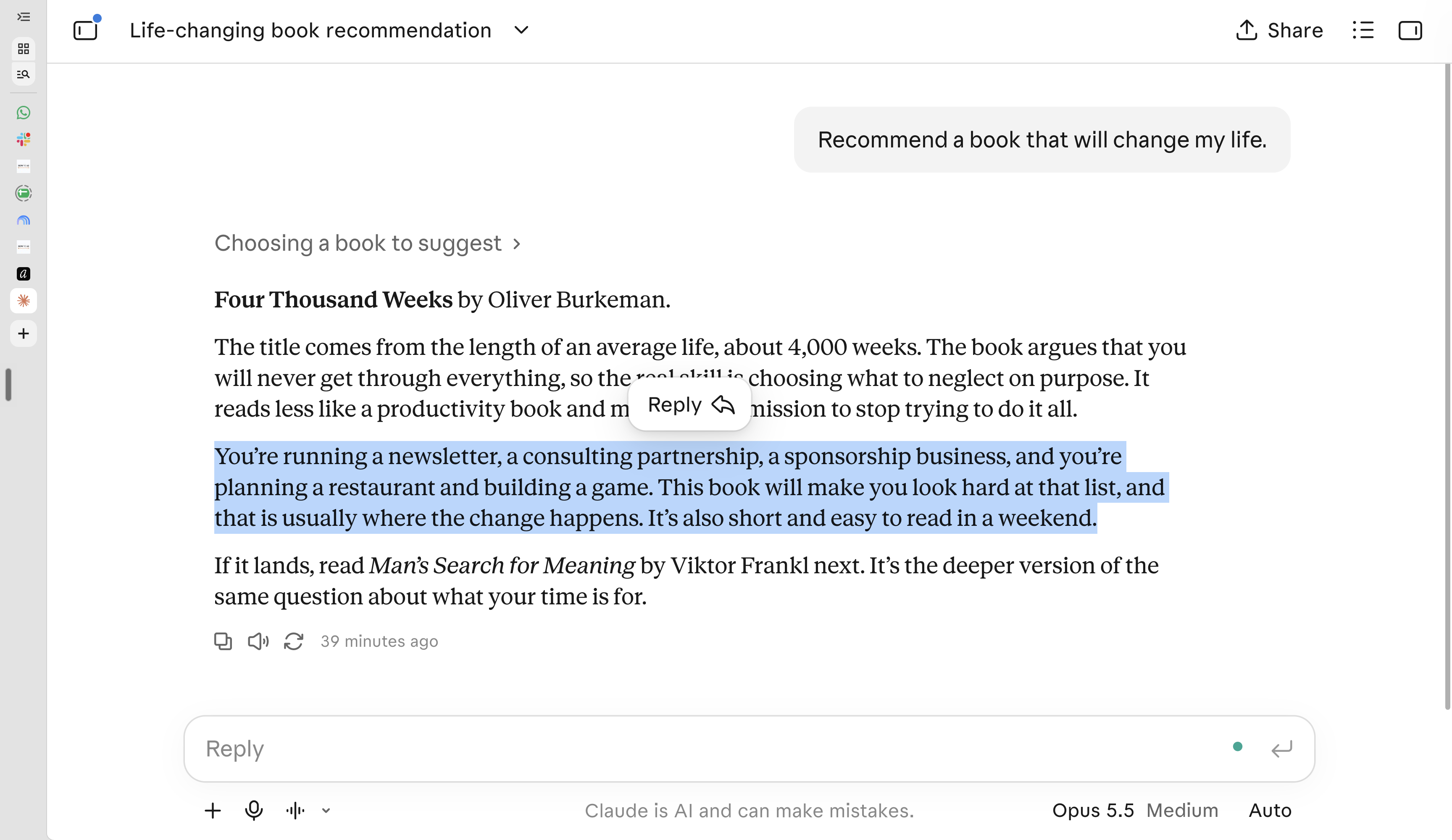
\Claude knows me. But funny enough, the second book is still the same.\
Now combine level 1 & 2:
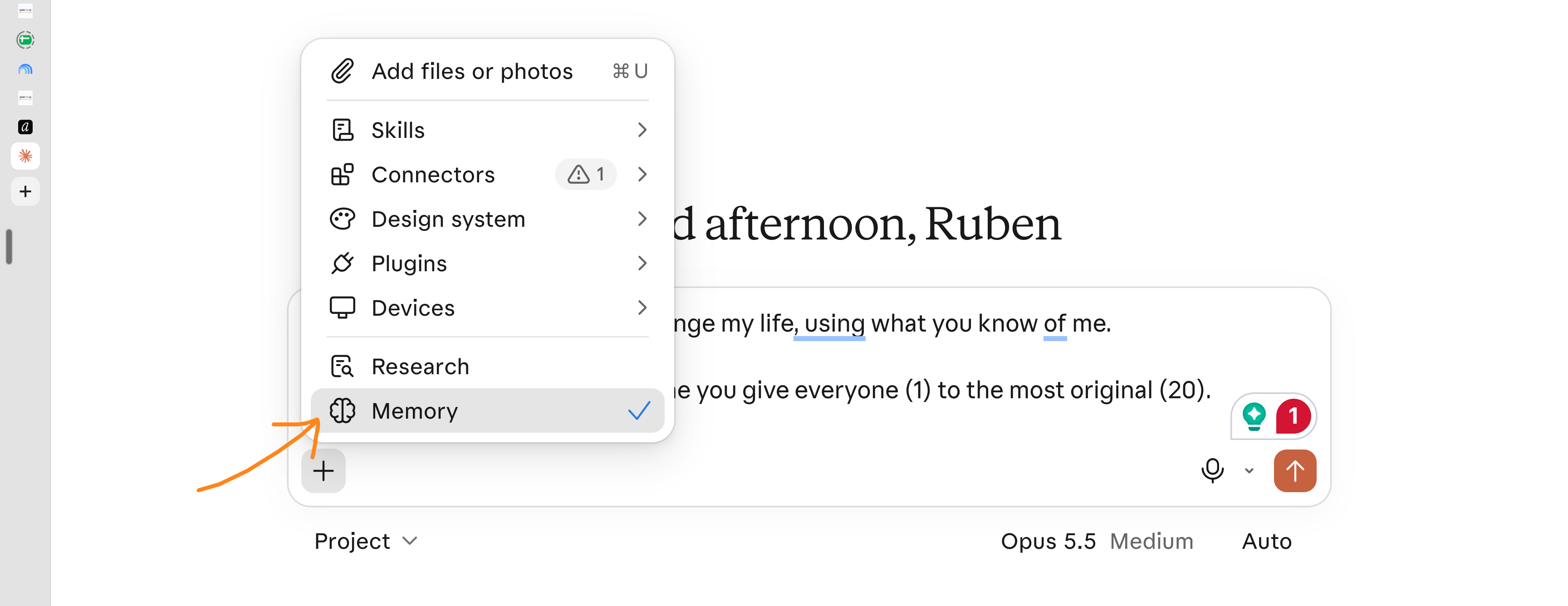
\Make sure to turn on “Memory” in the + of Claude.\
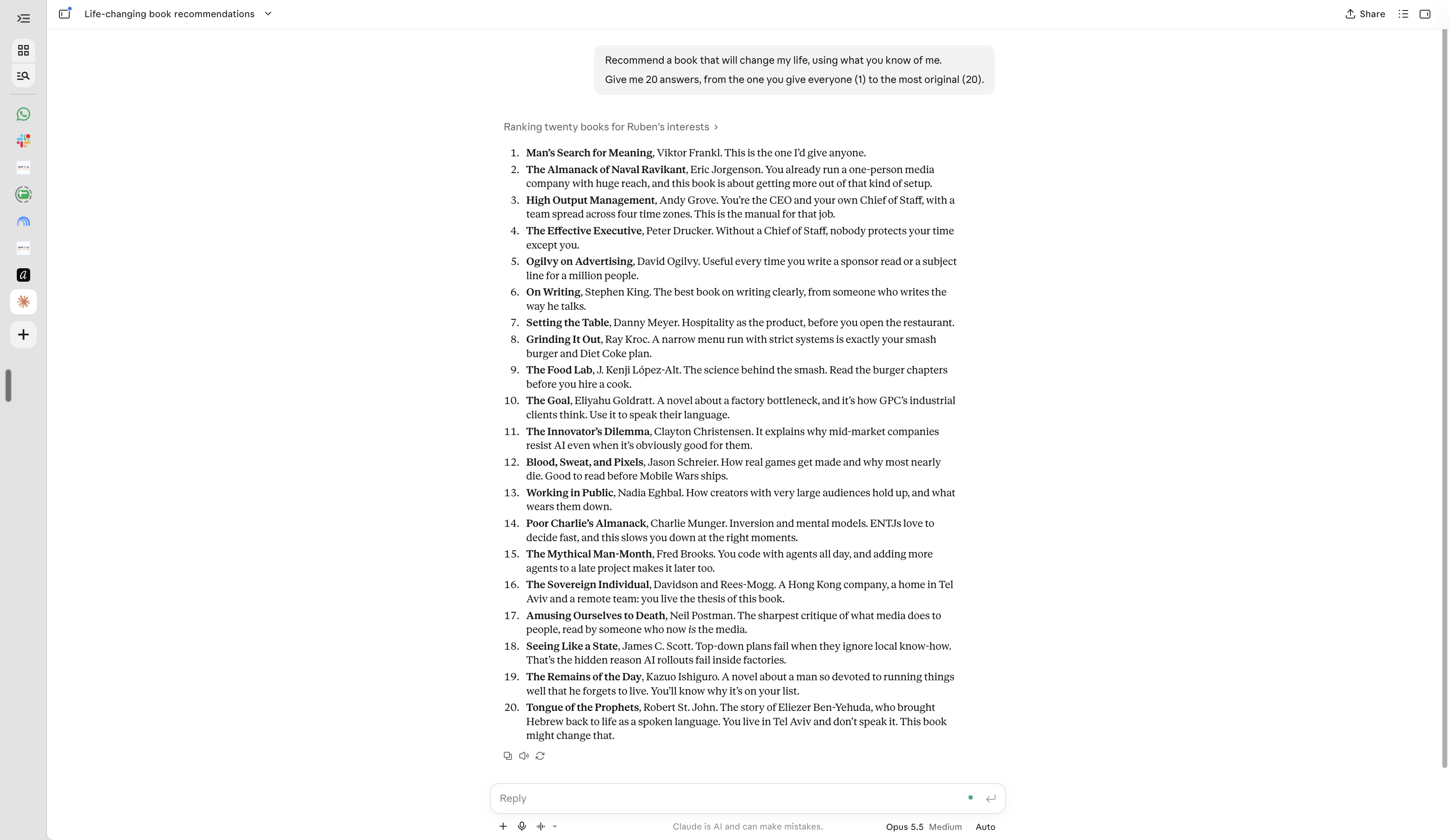
\The first one is the usual one, and then the list gets interesting.\
Level 3. Use Gemini Notebook.
Gemini Notebook is free, and it reads YouTube videos.
Most of my mentors have hour-long podcasts.
Let’s create one for Alex Hormozi, for example.
- Go to <https://notebook.google.com>.
- Click Create notebook. In the Sources box, type this:
Latest and longest YouTube videos of [NAME] on [TOPIC].
- Untick the videos made by other people. Untick the “Deep Research Report”. It must be “Fast research”.
- Import all.
It looks like this:
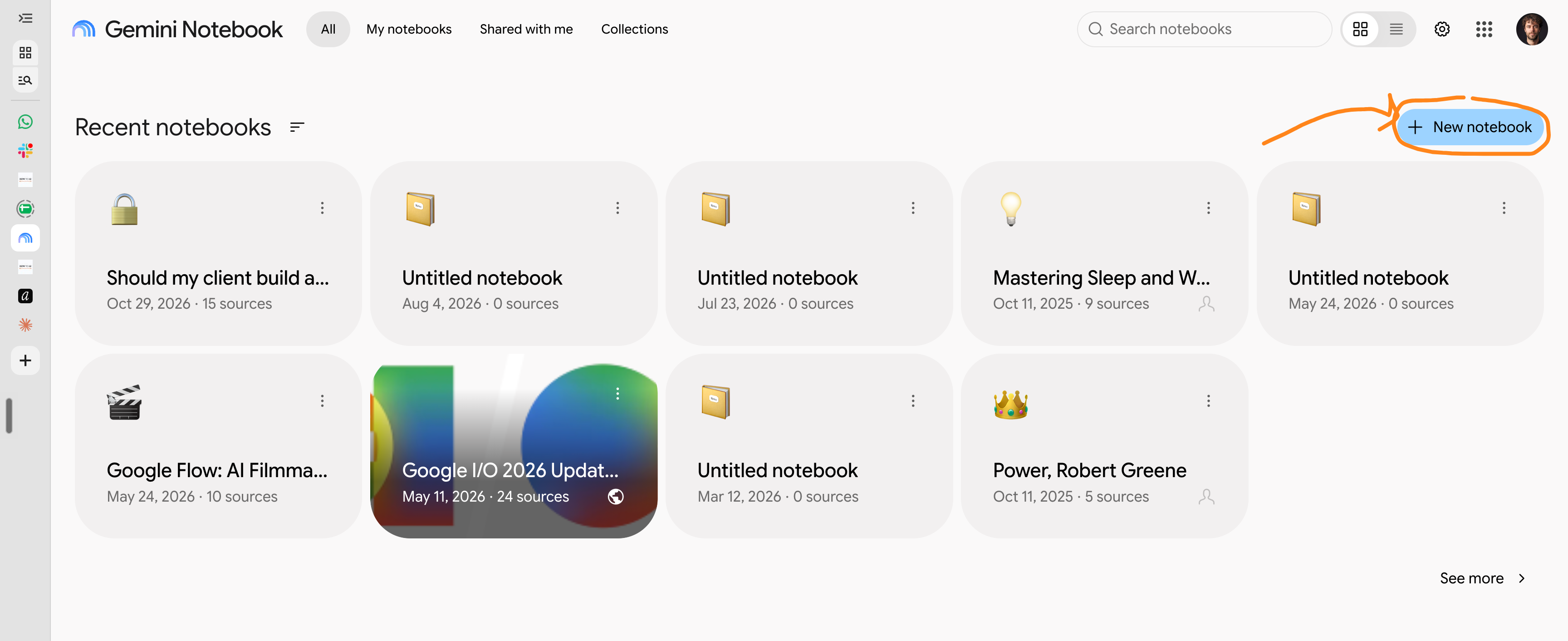
\Step 1.\
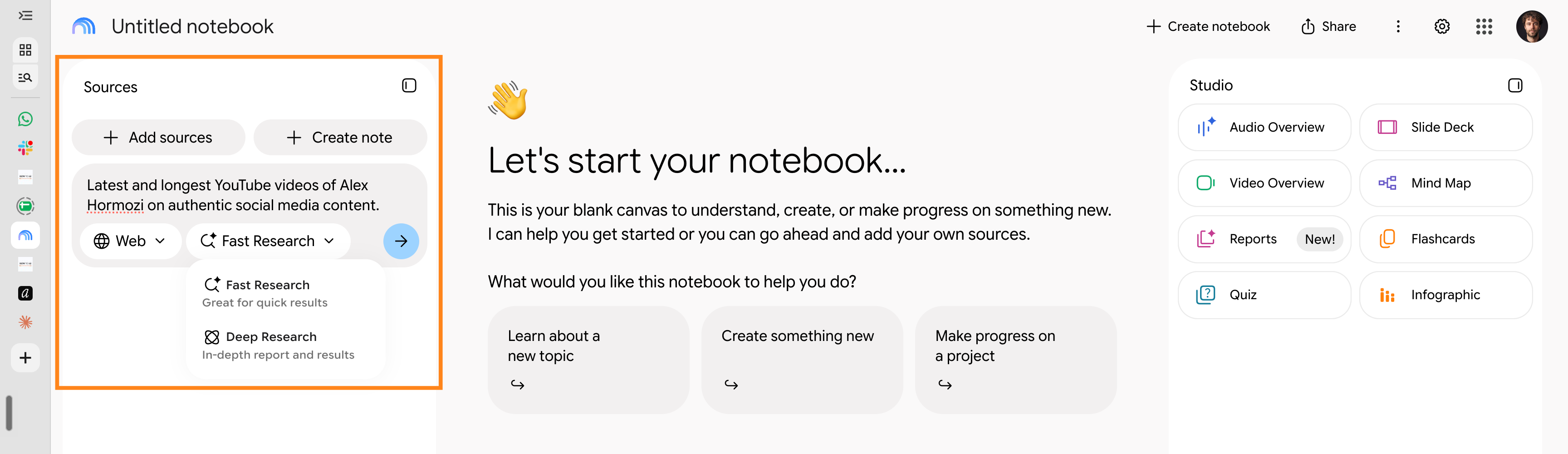
\Step 2 & 3. Fast Research only.\
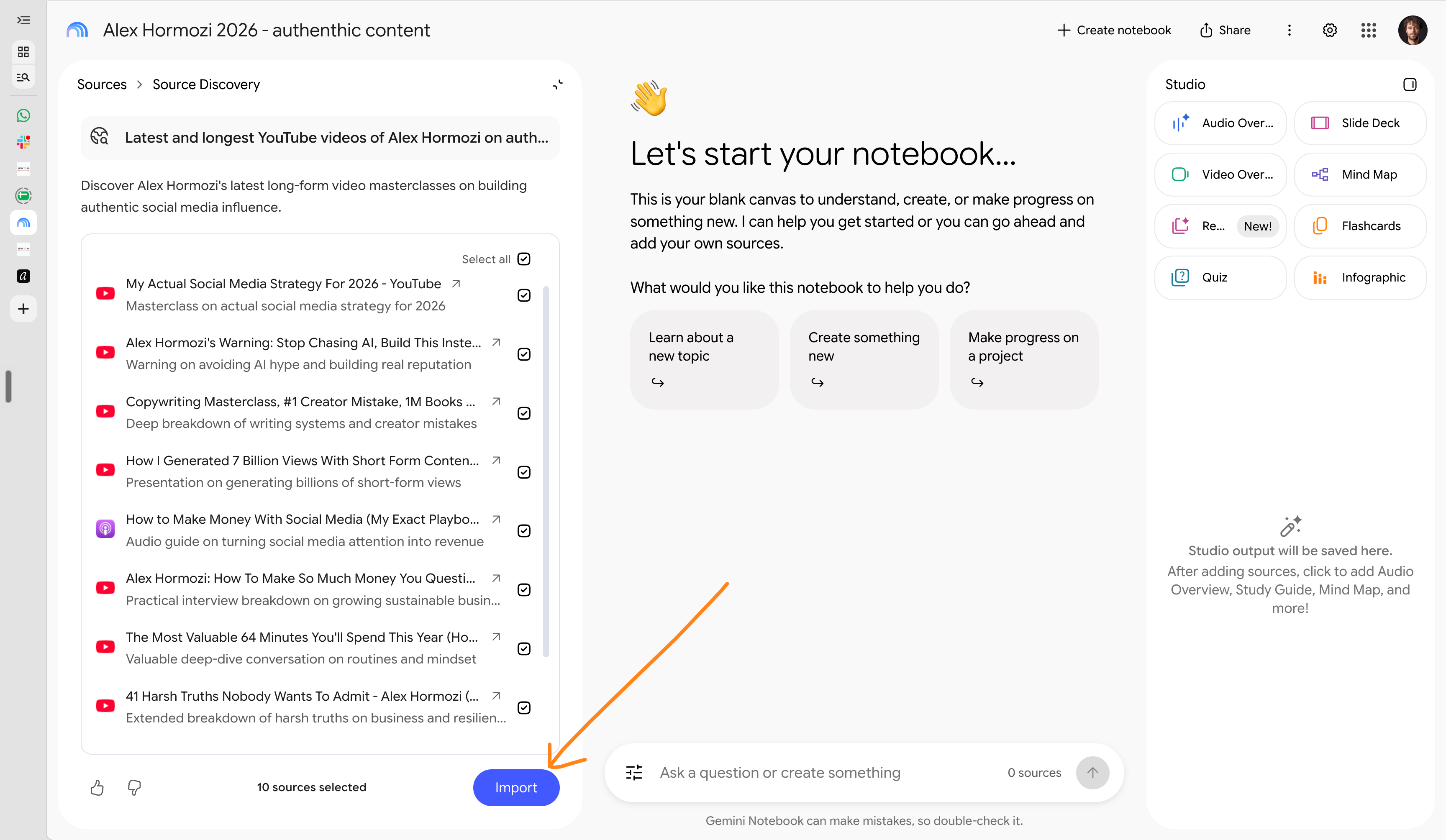
\Step 4.\
Then ask your question.
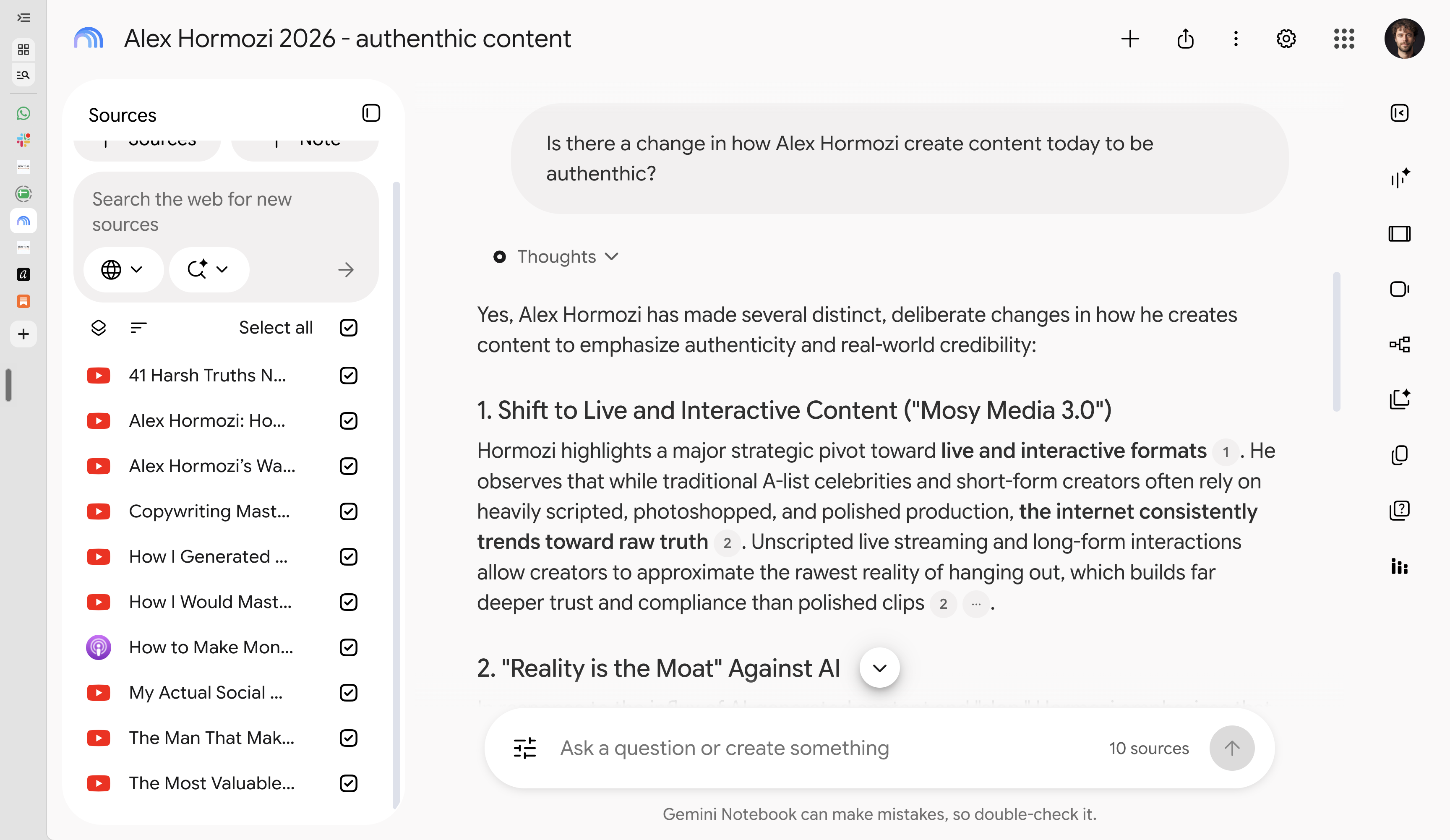
\The answer is heavily biased, like a mentor would answer.\
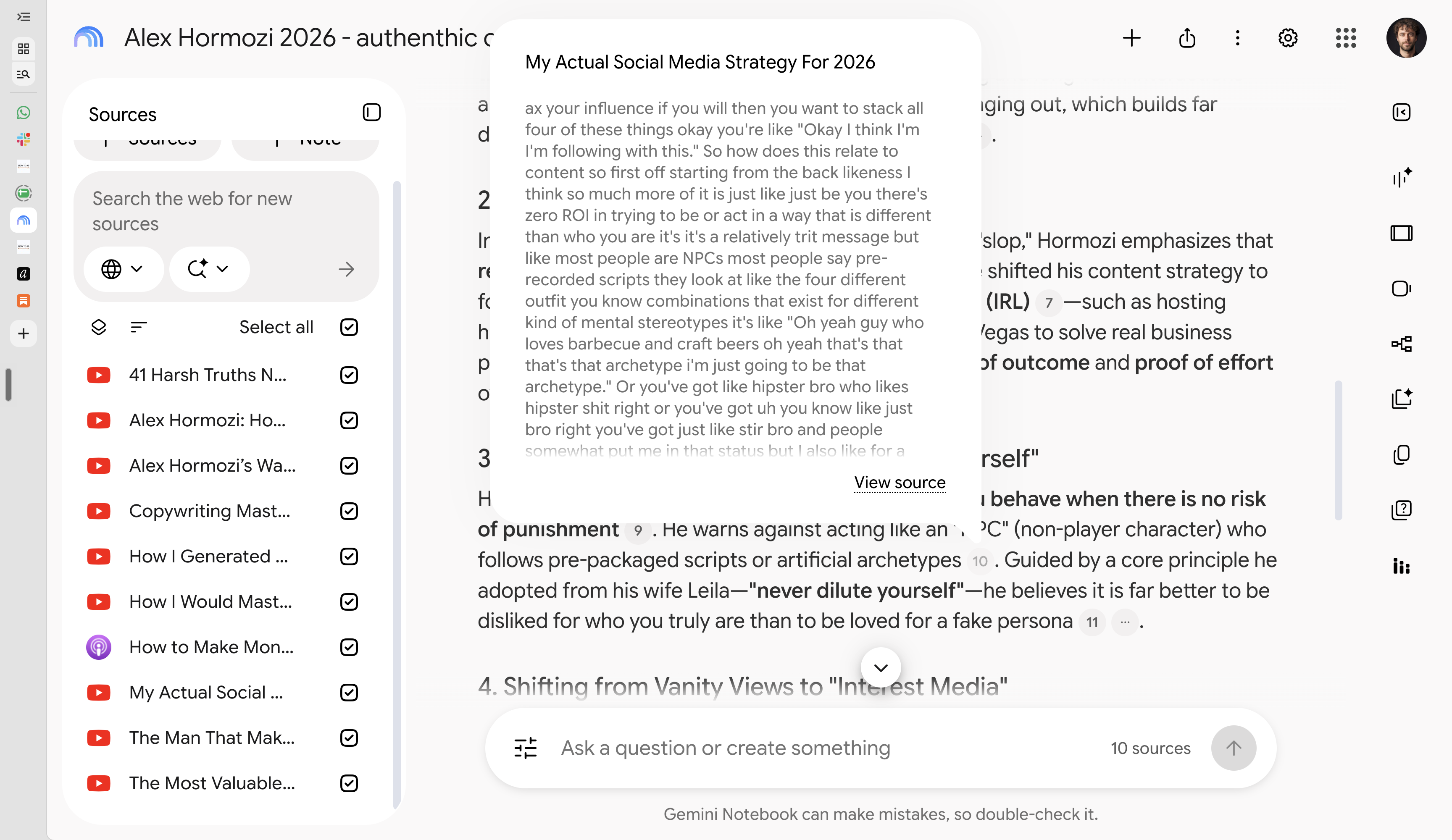
\All of the sources are listed.\
Now I can hear your objection: “But Claude or ChatGPT also have access to the internet, so why use Gemini Notebook?” Because it’s not true. Claude or ChatGPT don’t have access to YouTube. They can’t access the transcripts there.
I use Gemini Notebook to get access to YouTube. And it’s a lot of podcasts, and what I call “Alpha” (knowledge AI can’t find out by itself).
It’s the opposite of average, if you’re good enough at finding gems.
Level 4. Like a pro.
I found a way to only use Claude Code + GitHub, and it’s much stronger than Gemini Notebook.
First, copy and paste this prompt inside Claude Code: