By Tiger Capital Research
Published: 2026-07-05
URL: https://princetonchen.substack.com/p/america-at-250-ai-boom-meets-debt
Daily Market Read I | Category: Macro & Systemic Risks | Date: July 4, 2026
Tiger Capital Research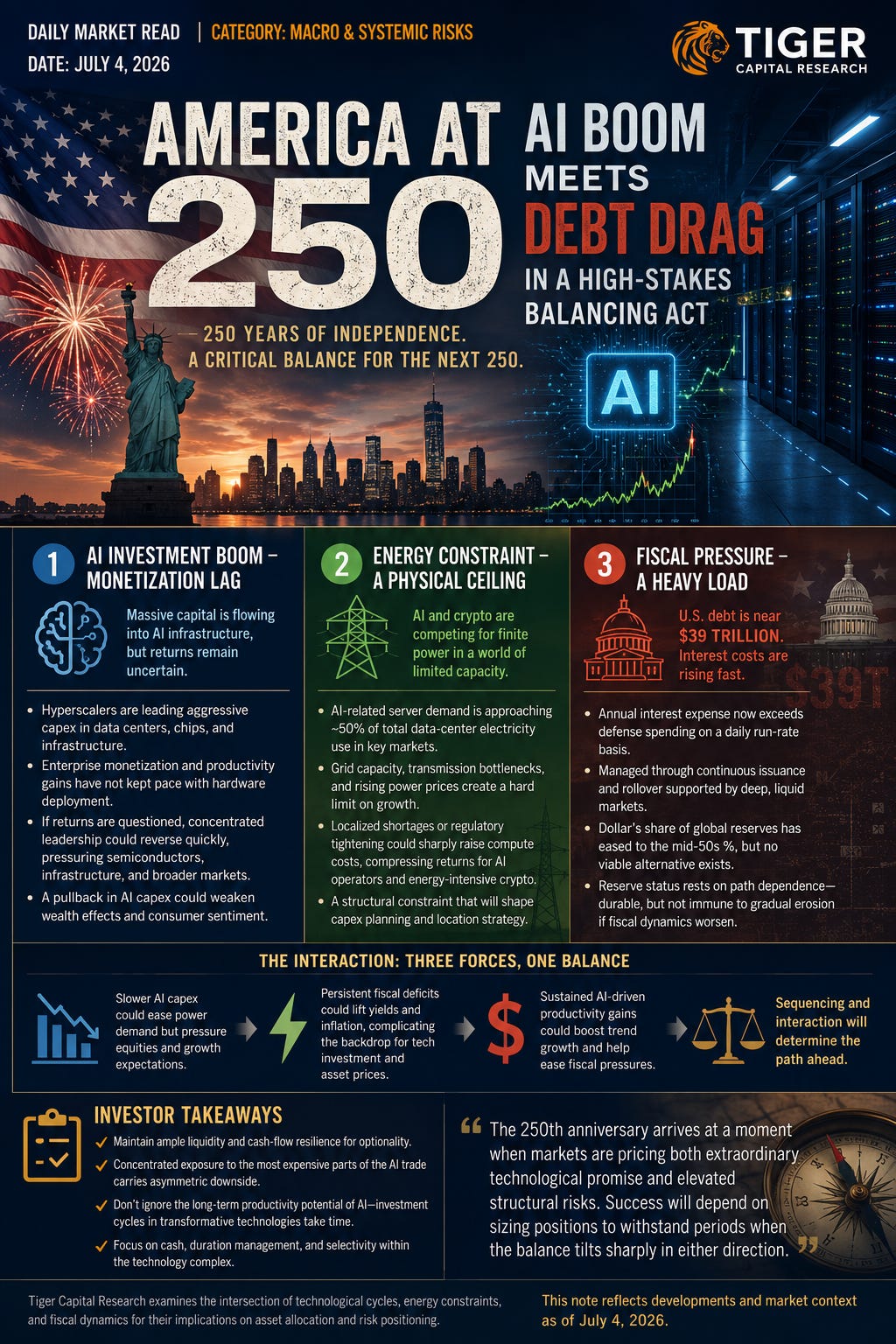
Today marks the 250th anniversary of American independence. At this symbolic midpoint, the United States presents a study in contrasts: an extraordinary surge in artificial intelligence capability and capital formation running alongside a deeply entrenched fiscal imbalance. The tension between these forces defines the most consequential macro questions for markets over the next several years.
The first centers on the durability of the current AI-driven equity narrative. Large technology companies have shouldered the market through aggressive capital expenditure on data centers, chips, and infrastructure. Yet enterprise monetization and tangible productivity gains have not kept pace with the pace of hardware deployment. If the gap persists and capital allocators begin to question the return on incremental spend, the same concentrated leadership that has supported index levels could transmit downside quickly. A reduction in orders from the hyperscalers would not only pressure semiconductor and infrastructure names but could also erode wealth effects that have supported broader consumption and sentiment.
A second, often underappreciated constraint is energy. AI training and inference workloads, together with cryptocurrency mining, are competing for finite power resources. Industry estimates suggest AI-related server demand is already approaching half of total data-center electricity consumption in key markets. Grid capacity, transmission bottlenecks, and rising power prices create a physical ceiling that is difficult to expand quickly. Should localized shortages or regulatory tightening occur, the marginal cost of compute could rise sharply, compressing returns for both AI operators and energy-intensive crypto activities. This is not a near-term headline risk in most base cases, but it represents a structural limit that will influence long-term capex planning and location decisions.
The third element is the fiscal position. U.S. federal debt has approached $39 trillion. Annual interest expense now exceeds defense spending on a daily run-rate basis. The Treasury has managed this stock through continuous issuance and rollover, relying on deep and liquid markets to absorb new supply. The dollar’s share of global reserves has eased modestly toward the mid-50s percent range, yet no other currency or asset class currently offers comparable depth, liquidity, and institutional acceptance. The dollar’s reserve status therefore rests less on perfection than on the absence of a ready substitute — a form of path dependence that has proven durable but is not immune to gradual erosion if fiscal dynamics deteriorate further.
These three pressures do not operate in isolation. A slowdown in AI-related capital spending could reduce demand for power and ease one constraint while simultaneously pressuring equity valuations and growth expectations. Persistent fiscal deficits, if they begin to affect inflation or real yields, could complicate the monetary backdrop that has supported both technology investment and asset prices. Conversely, sustained productivity gains from AI could eventually ease fiscal pressures through higher trend growth. The sequencing and interaction of these forces will determine whether the current expansion extends or encounters more abrupt adjustments.
For investors, the environment rewards clarity over conviction in any single narrative. Maintaining ample liquidity and cash-flow resilience provides optionality if any of the three pressures intensifies. Concentrated exposure to the most expensive parts of the AI trade carries asymmetric downside if monetization disappoints or power costs rise. At the same time, outright dismissal of the productivity potential embedded in current infrastructure spend would ignore the scale of resources already committed and the historical pattern of general-purpose technologies eventually delivering returns after prolonged investment cycles.
The 250th anniversary arrives at a moment when markets are pricing both extraordinary technological promise and elevated structural risks. Navigating the period ahead will depend less on predicting which force prevails and more on sizing positions to withstand periods when the balance tilts sharply in either direction. Cash, duration management, and selectivity within the technology complex remain the practical tools for preserving capital while the larger questions resolve themselves through data rather than narrative.
Tiger Capital Research examines the intersection of technological cycles, energy constraints, and fiscal dynamics for their implications on asset allocation and risk positioning. This note reflects developments and market context as of July 4, 2026.