By Prof. Pilyoung Kim
Published: 2026-03-30
URL: https://pilyoung.substack.com/p/bringing-ai-safety-and-child-development
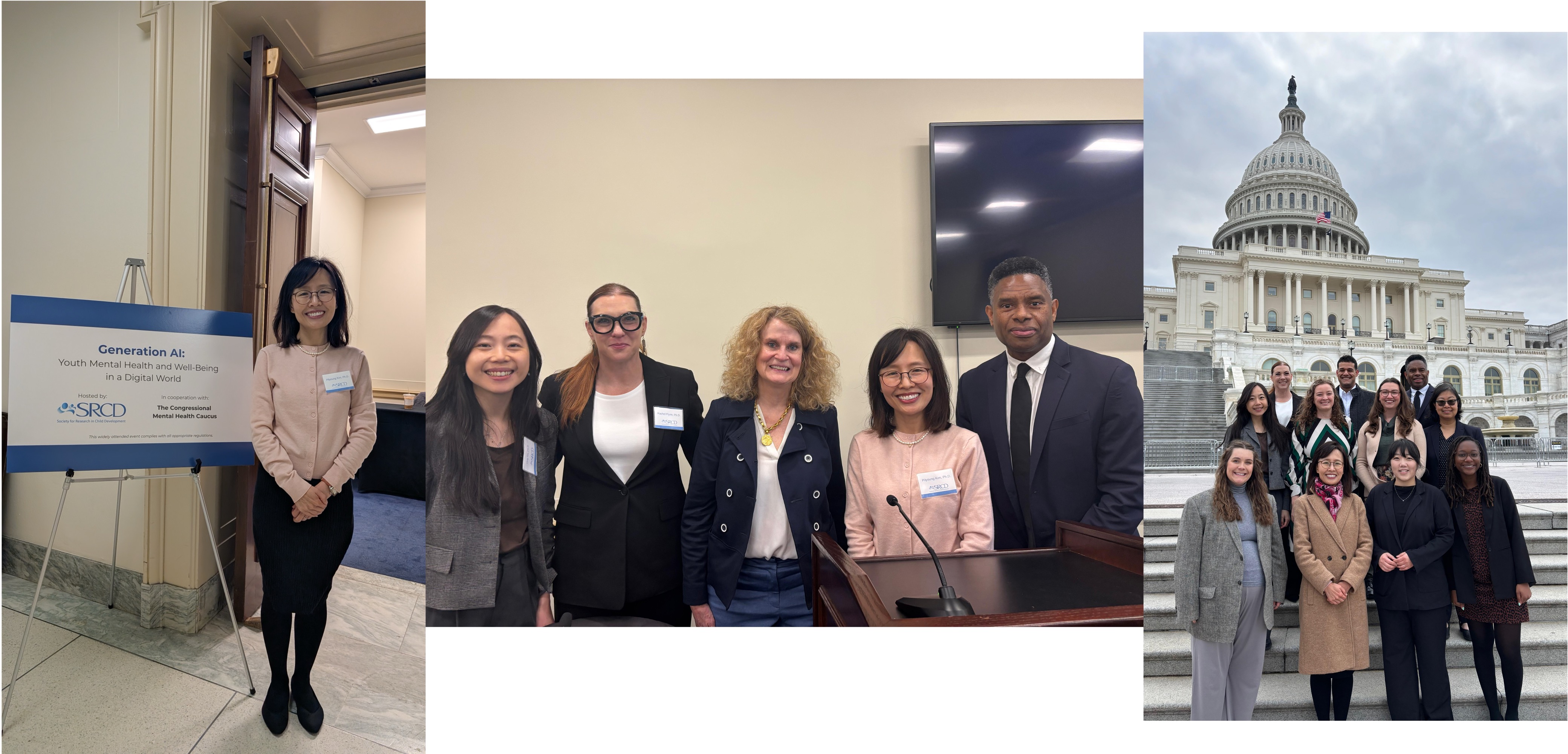
On March 19, I spoke at the congressional briefing “Generation AI: Youth Mental Health and Well-Being in a Digital World,” held in cooperation with the Congressional Mental Health Caucus at Capitol Hill. Hosted by SRCD and Child Policy Connect, the briefing brought together researchers, policymakers, and congressional staff for a timely discussion of how AI is shaping children’s and adolescents’ daily lives, mental health, and wellbeing.
I was encouraged by the strong engagement, more than 100 people registered, and by the seriousness of the conversations throughout the day. In addition to the briefing itself, I met with Representatives, Senators, legislative directors, and other staff for thoughtful discussions about AI safety for children and adolescents.
We also released a new policy brief, The Child Development Perspective on Artificial Intelligence: Emerging Policy Considerations for AI’s Impact on Children’s Wellbeing (see attached below). The brief makes three central recommendations: start AI literacy early, keep AI task-bound, and require safeguards for relational and mental-health use.
Srcd Leave Behind Generation Ai Briefing
103KB ∙ PDF file
In the brief document:
Why developmental science matters for AI policy: Children and adolescents are already using AI not only for schoolwork and information seeking, but also increasingly for conversation, companionship, and emotional support, often with little adult guidance.
Key policy priorities from the brief:
· Start AI literacy early
· Strengthen safeguards for relational and mental-health uses
· Protect memory, privacy, and personal data
· Create safer school-based AI environments
· Increase public investment in child-centered AI research
In preparation for this visit and the brief, I also reviewed current bills related to AI safety for children, and I highlighted a few federal bills that are especially worth watching right now.
The Children and Teens’ Online Privacy Protection Act (COPPA 2.0) would update COPPA by extending stronger privacy protections to teens, restricting targeted advertising to children and teens, strengthening data minimization, and expanding rights to access, correct, and delete data.
Those provisions matter for child AI safety because many AI systems rely on large-scale data collection, profiling, and personalization that can intensify manipulation and vulnerability.
The Kids Online Safety Act (KOSA) focuses on platform design and would require covered platforms to prevent and mitigate specific harms to minors that arise from their own product choices, including addictive features and harmful recommendation systems.
It would also require safety tools and safeguards for children and teens while emphasizing that platforms need not collect new data for age verification if they do not already know a user’s age. For child AI safety, KOSA is important because it targets the design choices that can amplify emotional, behavioral, and mental-health risks online.
For AI chatbots specifically, the GUARD Act is especially notable. According to the bill summary released at introduction, it would require AI companies to check users’ ages before allowing access to chatbots, bar minors from using AI companions that simulate romantic or emotional attachment, require clear disclosure that users are interacting with a machine rather than a person or licensed professional, and make it illegal to design or distribute systems that solicit sexual content from minors or encourage violence, self-harm, or coercive behavior.
This is one of the clearest federal efforts to address the specific risks posed by companion-style AI chatbots for children and adolescents.
I left Capitol Hill feeling genuinely optimistic that there is growing momentum to build AI policies and design standards that better protect and support young people.