Founders cashed out, Microsoft pulled IP strings, Anthropic withdrew Claude—how Silicon Valley’s brutal AI talent race unraveled a billion-dollar startup overnight
By Nate
Published: 2025-07-15
URL: https://natesnewsletter.substack.com/p/windsurfs-3b-collapse-how-ai-talent
I’ve been kicking around Silicon Valley for a couple decades now, and trust me—I’ve seen my fair share of crazy startup stories. But Windsurf’s collapse and resurrection might just be the wildest yet. Imagine this: a $3 billion acquisition by OpenAI imploding in a matter of days, Microsoft flexing its IP muscles to sink the deal, and Google stepping in with a jaw-dropping $2.4 billion payout just to poach 42 employees—leaving everyone else scrambling.
And that’s not even the end of the story…
This isn’t just gossip or startup theater—it’s a vivid illustration of what’s happening right now in the heart of Silicon Valley. The AI talent wars aren’t just heating up—they’ve reached a boiling point. Founders are cashing out in ways we’ve never seen, loyalty is being tested, and the implicit trust that startups are built on is getting shredded in real-time. As someone who was actively using Windsurf when Anthropic abruptly pulled Claude access, I wasn’t just watching—I was feeling the chaos firsthand.
Why does this matter? Because we’re not just talking about a single startup drama. We’re talking about a seismic shift in how talent, tech, and power intersect in the AI landscape. The stakes are enormous. This story touches every founder who’s ever dreamed of an exit, every employee holding stock options, and every developer relying on third-party AI tools. It’s about understanding the new rules—or lack thereof—that govern success and survival in today’s AI-driven tech economy.
If you’re building, investing in, or even remotely interested in AI startups, pay close attention. The Windsurf saga is the ultimate case study in how billion-dollar valuations can evaporate overnight, how trust can fracture, and how strategic moves can either destroy or save companies in the blink of an eye. Buckle up—this is Silicon Valley’s AI talent war at its most brutal and revealing.
I’ve got special sidebars for founders and employees, so you are (less likely) to be left holding the bag at your company. And to wrap it up, I have a few reflections on what the Windsurf story tells us about the state of the industry and how AI is breaking and remaking norms and expectations that have guided the Valley for decades. Come for the chaos, stay for the sober reflections that help you make sense of the next Windsurf (there will be one, I promise.)
Subscribers get all these newsletters!
Inside Windsurf’s 72-Hour Meltdown: How AI Talent Wars Killed a $3B Sale
This really is one of those crazy stories…
Windsurf is one of the most insane startup stories I've run across in a couple decades hanging around Silicon Valley. And I’ve seen enough wild stuff to earn the gray hairs. But Windsurf? It’s right up there. We’re gonna be talking about this one for years.
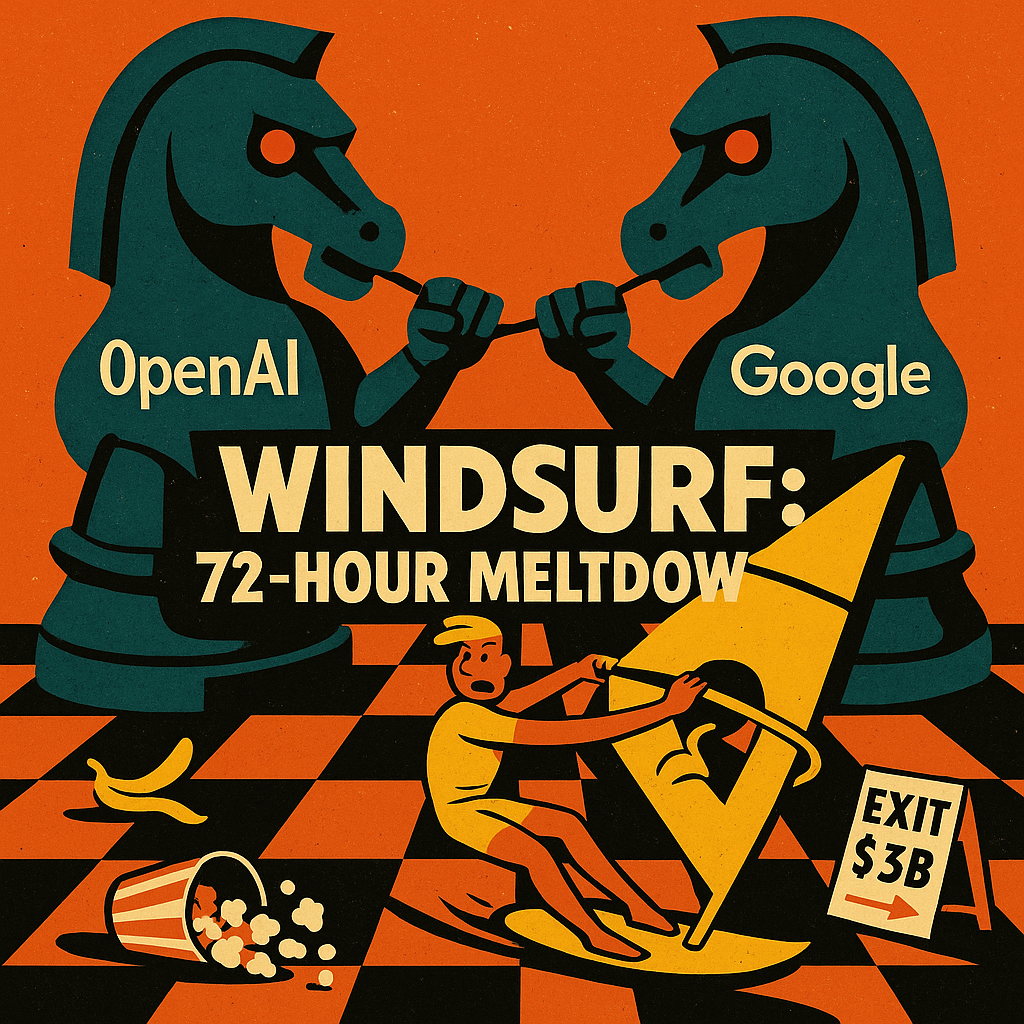
Look at the stakes: We're talking about a company that went from a $3 billion acquisition by OpenAI to complete collapse to resurrection by a competitor—all in 72 hours. We saw Founders walking away from their own company, opening themselves to potential lawsuits from their own employees, all for unprecedentedly fat paychecks. We saw Microsoft flexing legal muscles (well that one’s not new). Ethical Anthropic playing hardball with Claude. It's got everything: backstabbing, billions, and broken dreams. I firmly expect Aaron Sorkin to get the script assignment next week.
I was one of those actual Windsurf users watching all this go down. I had code on the line. I was coding away, happy as a clam with Claude integration, when Anthropic started withdrawing Claude from the platform. I complained, publicly. I knew it would do no good. I get it—if you’re Dario and you've got something called “ChatGPT Dev Suite” coming, the last thing you want is Claude's output tokens and data flowing into that environment.
My projects still felt the pain though.
We're gonna walk through this whole saga, piece by piece, so you can see how long this has been brewing. Because what happened to Windsurf isn't just a startup story. It's a warning shot about what happens when the AI talent wars break every rule Silicon Valley ever had.
Buckle up. Every time you think we’re done we’re not.
The Timeline: From GPU Tools to $3B Dreams
2021-2024: The Foundation Years
Let's rewind to 2021. Two MIT grads, Varun Mohan and Douglas Chen, start a company called ExaFunction. Their original focus? GPU optimization tools. So even back then, they were swimming in the AI waters—just not the sexy generative AI stuff everyone's obsessed with now. These guys were early.
Then came the pivot. They saw where the puck was going and launched Codeium for AI coding assistance. Smart move. By 2024, they're raising a Series C that values them somewhere between $1.25 billion and $1.3 billion. Total raised to date? $243 million. Almost a quarter of a billion dollars.
The investor list reads like a who's who of Silicon Valley royalty. Founders Fund. Kleiner Perkins. These aren't the kind of VCs who throw money at pipe dreams. They saw something real here.
Late 2024 is when things get interesting. Major rebrand time. Out goes Codeium, in comes Windsurf. They launch this thing called the Cascade agent—basically their answer to Cursor, which was absolutely taking off at the time. Spoiler alert: I love Cascade, and I think whatever secret sauce they’ve got there is real. Very thoughtful, very easy to work with, and they had it out before Claude Code (it reminds me a bit of Claude Code). Remember, this was peak "everyone's building a coding assistant" season. Cursor was hot. Bolt was heating up. Lovable was starting to make noise.
Windsurf positioned itself as the full-stack app builder in that ecosystem. And here's the kicker—they went straight for the jugular on pricing. Free tier to get you hooked, then $15 per seat for premium. Cursor was charging $20.
Classic disruption playbook: come in cheaper, grab market share, figure out the rest later.
Little did they know "later" was about to get absolutely wild.
Q1 2025: FedRAMP and Clues to Windsurf’s Growth Strategy
March 11th, 2025. Mark that date. That's when Windsurf achieved something that sounds boring as hell but is actually a massive deal: FedRAMP-High certification.
If you don't know what FedRAMP-High is, count yourself blessed. Seriously. It’s worse than RBAC. It's one of those government compliance nightmares that makes HIPAA look like a fun weekend project. We're talking about the highest level of security authorization for cloud services that touch federal data. The kind of certification that involves so much paperwork, you could build a small fort with it.
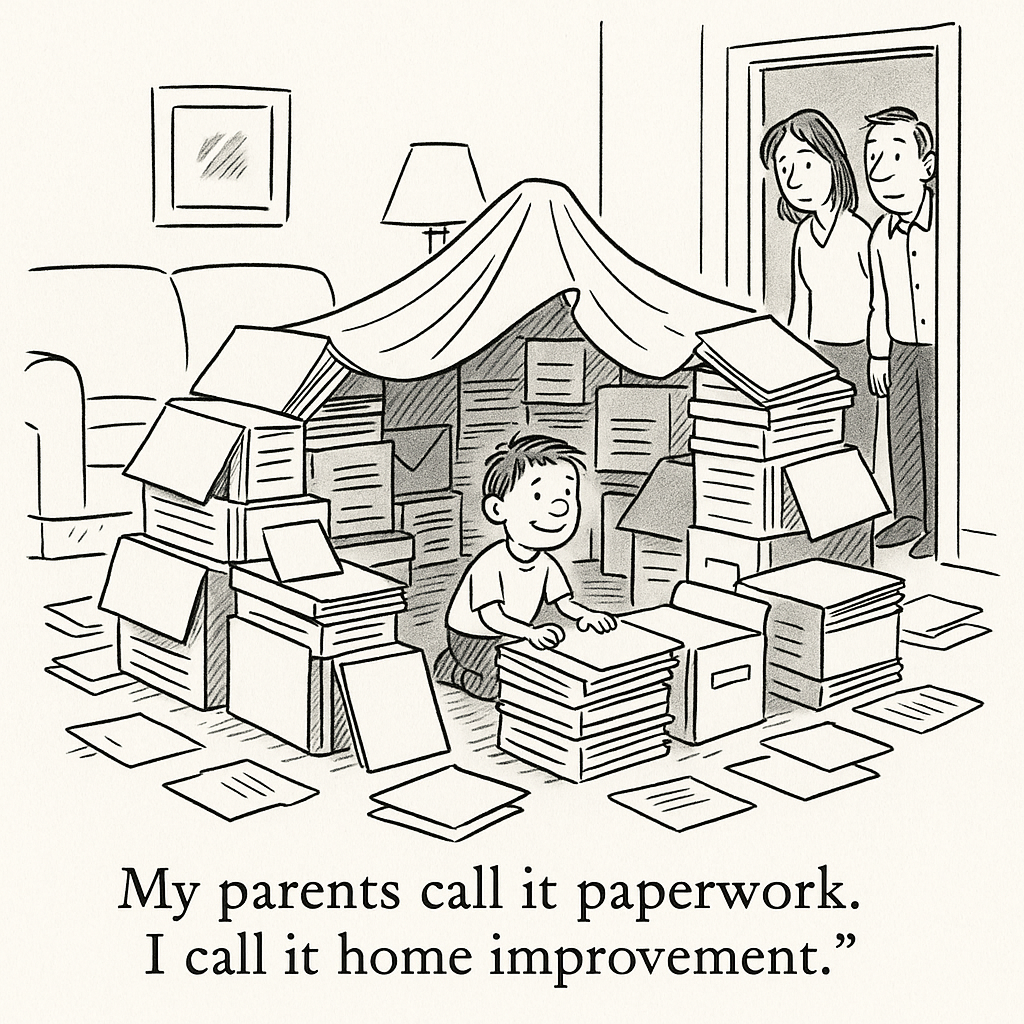
But here's why it matters: Windsurf became the first AI coding tool approved for US government workloads. First. Not Cursor. Not GitHub Copilot. Not any of the other players. Windsurf.
You know what that means? Every three-letter agency, every government contractor, every company that even sniffs at federal contracts—they can now use Windsurf. And more importantly, their competitors can't. That's not just a moat. That's a fortress with crocodiles in it.
This wasn't an accident. Windsurf clearly saw the enterprise and government angle as their way to differentiate. While everyone else was fighting over individual developers and small teams, these guys were playing the long game with the big, boring, regulated customers.
It's like bringing a compliance manual to a knife fight. Unsexy? Sure. Effective? You bet. Not least because you can stop those knives with lots of bureaucratic paper. That was the Windsurf strategy: lean into high-compliance, serious enterprise industries faster than Cursor, and gain an edge on very sticky high value contracts.
They were planning to take that certification all the way to the bank. And for a minute there, it looked like it was going to work.
April 2025: The Good Times
Early April rolls around and Windsurf is crushing it. They (allegedly) hit $100 million in ARR. Now, that might not sound impressive compared to Cursor's numbers, but here's the context—they were at $40 million just a few months before. That's not growth. That's a rocket ship.
The press releases are flying. Supposedly one million plus developers on the platform. Over 350 enterprise customers. They're firmly in the number two position behind Cursor. The Lyft to Cursor's Uber, if you will. But (they would argue) with better prospects.
But here's something I noticed that the numbers don't capture. And this is purely anecdotal, but I think it matters. When I talk to individual engineers—the folks actually writing code day to day—I hear Cursor constantly. It's like the default. "Oh yeah, I use Cursor." No big deal.
But when I talk to decision makers? CTOs, engineering managers, the people who actually sign the checks? That's when I hear Windsurf more often. Way more than you'd expect from their market share.
Windsurf somehow punches above its weight in decision-making circles. Maybe it's the enterprise features. Maybe it's that FedRAMP certification making them look serious. Maybe it's just better enterprise sales. But they had this weird dynamic where the bosses knew about them even if the developers didn't. I can count on one hand the number of developers that preferred Windsurf to Cursor, but that’s not true of their bosses.
And that's not nothing. In enterprise software, the person writing the check sometimes matters more than the person writing the code. It's not fair, but it's true.
So—April 2025, life was good at Windsurf. They were the scrappy underdog making real money, taking real market share, with real enterprise traction.
Then Bloomberg mixed things up.
The OpenAI Dance (April-June)
April 16th, 2025. Bloomberg breaks the news that makes every Windsurf employee stop what they're doing and start doing math. OpenAI wants to acquire Windsurf. The price? $3 billion. All cash.
Let that sink in. We're at a stage in AI where a startup can drop $3 billion cash to acquire another startup. That's not normal. That's not even Silicon Valley normal. That's "AI has completely broken the scale" normal.
Now, if you've never been through an acquisition, let me tell you what happens next. Every single person at Windsurf immediately opens Excel and starts calculating their payout. How many shares do I have? What's my strike price? When do I vest? What's the tax situation?
#### Sidebar
I've done this dance before, and here's my advice: Don't. Do not do the math yourself. You will end up with a number that is, by definition, wrong. You'll forget the taxes. Or the fees. Or some clause buried on page 47 of the acquisition agreement that changes everything. There are a million legal ways the math changes, and you'll miss most of them. Just don't bother. Wait for the professionals to tell you the real number.
But I get it. Hard to resist when we're talking about $3 billion.
May rolls around. Letter of intent gets signed. Exclusive negotiation window begins. Internal memos start leaking like a sieve. The plan? Fold Windsurf into something called ChatGPT Dev Suite. Makes sense—OpenAI needs a development environment, Windsurf has one. I wrote about it here.
This is also when things get spicy. Anthropic starts withdrawing Claude from Windsurf. As I shared, I was not happy at the time, but it made too much sense for Dario. Anthropic could not give those tokens to Sam Altman.
Think about what happens when you're coding with an AI assistant. The AI writes code, you either give it a thumbs up ("great job, that worked") or you correct it ("no, try this way instead"). Every interaction is a training signal. Pure gold if you're in the AI arms race.
The last thing Anthropic wants is all those beautiful Claude interactions—all that feedback data—flowing straight into ChatGPT Dev Suite. That would be like FedExing your playbook to your biggest competitor. So they start pulling the plug.
Then May 6th, 2025. Definitive agreement announced (supposedly). The $3 billion price is confirmed—rare for these deals to not get haircut somehow. Windsurf employees are popping champagne.
They think they've made it.
They have no idea what's coming.
June: Microsoft Says No
Early June, the whole thing hits a wall. And that wall's name is Satya Nadella.
How? Microsoft raises IP concerns about the deal. Turns out, back in 2023 when OpenAI still needed Microsoft's money more than Microsoft needed OpenAI, they signed this agreement. And buried in that agreement? Microsoft gets rights to all OpenAI tech. Including IP rights to tech from acquisitions. Classic Microsoft lawyer move to think of that clause.
Now, OpenAI didn't want to hand over Windsurf's IP to Microsoft. There's been what I'll politely call a "soft separation" between Microsoft and OpenAI. Not a divorce—that sounds too dramatic. More like they're sleeping in separate bedrooms but still sharing the mortgage. Very adult. Very polite. But the power dynamics have shifted since 2023, and you’ll notice the latest anchor round for OpenAI was led by Softbank, not Microsoft.
OpenAI's gotten more powerful since that 2023 agreement. They're feeling their oats. Flexing their wings. So they try to play hardball. "You know what, Microsoft? We're acquiring Windsurf and no, you can't have the IP."
Satya's response? "Talk to my lawyers."
If you've never dealt with Microsoft lawyers, let me paint you a picture. These are the people who've been playing patent warfare since before some of you were born. They've got more lawyers than some companies have employees. They eat startups for breakfast. There’s only two sets of lawyers I’m more scared of: Amazon lawyers and Disney lawyers (in that order).
And here's the thing—Satya and his legal team were right. The contract was clear. Microsoft had the legal high ground. Plus, GitHub Copilot directly competes with Windsurf. Why would Microsoft hand their biggest competitor a loaded weapon? Made no sense, so of course they took the power play.
So Microsoft refuses to grant an exception. No wiggle room. No negotiation. Just a flat no.
Now the deal starts falling apart faster than a house of cards in a hurricane.
July 11-14: The 72-Hour Chaos
July 11th, Friday morning, 7 a.m. Pacific. The OpenAI exclusivity period officially expires. No renewal announced. The deal is "under review," which is corporate speak for "dead but we're not ready to admit it yet." But I’m not the only one who can read the tea leaves.
By mid-morning, it's official. The $3 billion OpenAI deal has collapsed. Microsoft's IP issues get the blame, though Anthropic yanking Claude probably didn't help. Think about it: if you are trying to value the deal and developers are publicly complaining while your corporate officers are in a public spat with the owners of the best coding LLM in the world, it doesn’t look great for you. One way or the other, the whole thing is toast.
But we’re not done yet! Here's where it gets absolutely wild.
By 3 p.m. that same day—the SAME DAY—Google announces a $2.4 billion deal. They must have been on the phone the second the OpenAI deal died. Hell, they were probably already talking before it was official.
But this isn't your normal acquisition. Google structures this thing as a "reverse acquihire" with a licensing deal. And honestly? I wonder if this is just a clever way to dodge FTC scrutiny. Because technically, it's not an acquisition. Those Google lawyers are also good.
Here's how it works: Google hires CEO Varun Mohan, co-founder Douglas Chen, and about 40 of their best engineers and R&D people. They raid the company. These 42 people split $2.4 billion. Just for the talent. Plus Google gets a non-exclusive license to Windsurf's tech. Non-exclusive, mind you.
Do the math on that. $2.4 billion divided by 42 people. That's almost $60 million per person (probably less since the founders got a pile, but still). For joining Google. That's not an acquihire. That's a heist.
Meanwhile, the remaining 250 employees? They get nothing. Well, not quite nothing. They get to keep their jobs at a company that now has $100 million in cash, no founders, no top talent, and no exclusive rights to their own technology because Google can use it too.
The employees who didn't make the cut find out about this deal when everyone else does. Can you imagine? You're celebrating a $3 billion exit on Monday, and by Friday afternoon you're basically working at a zombie company while your CEO and top colleagues are splitting $2.4 billion without you.
Look, I get that Gergely Orosz has a point when he says this outcome is still better than most startups, which usually just fail completely. Most startup equity goes to zero. At least these folks still have jobs and the company has some cash.
But Gergely misses something crucial. This breaks the fundamental trust equation in Silicon Valley. There's always been this implicit contract: founders are in it for the long haul with their teams. They go down with the ship or they stay aboard for victory. And sure, victory has always looked different—sometimes employees win a lot, sometimes they win a little.
But when you reward a founder for literally walking away from their company and leaving 250 employees in the lurch? That's not just bad optics. That's poisonous to the entire ecosystem.
The weekend is absolute chaos. Saturday morning, the structure leaks. Vested employees who made the Google cut got cash payouts. Anyone with less than 12 months? Nothing. Which, sure, that's typical for acquisitions, but remember—most of these employees ARE under 12 months because the company was growing so fast.
Jeff Wang gets named interim CEO of whatever's left. They claim they'll keep going, emphasize the Google license isn't exclusive. Like that matters when you've got no technical leadership.
Social media goes nuclear. #WindsurfBetrayal starts trending. Employees are sharing their equity calculations that went from millions to zero. Channel partners start pulling support. Industry analysts are predicting bankruptcy within 12 months. The remaining company gets called a zombie because everyone knows it's just shuffling along until it dies. Not fun if you’re working there.
By Sunday afternoon, things look absolutely hopeless for those 250 people still at Windsurf.
And then Monday happens.
July 14th. Cognition Labs, the makers of Devin, announce they're acquiring what's left of Windsurf. The IP, the product, the brand, the training data, and—this is the key part—all 250 remaining employees.
But here's the kicker. Cognition Labs structures this completely differently. 100% employee participation. Full vesting acceleration. They waive all the cliffs. Every single person gets something, whether they've been there a year or a week.
Cognition saw what Google did and said, "We can be the good guy here." It's brilliant, really. They get Windsurf's development environment to pair with their Devin agent. They keep that precious FedRAMP certification. And they get 250 employees who are probably insanely loyal because Cognition just saved them from getting completely screwed.
And Cognition needs the win here. Because as much as they look like the good guys today, they’ve had issues building trust with developers since launch. Part of why? The launch video was faked. They falsely claimed Devin was doing work on Upwork independently when Devin was doing no such thing. And of course they deliberately positioned Devin as a replacement for engineers—never a way to endear yourself to developers.
All in all, Cognition needed this win as badly as Windsurf, if not as urgently. They needed a developer name developers use. They needed a development environment. They needed to look like the good guy.
Anyway, Windsurf reposts Cognition's announcement. They emphasize they're friends with Anthropic again—Claude might come back. The show goes on.
In 72 hours, we went from a $3 billion exit to complete collapse to resurrection. I've been around Silicon Valley for decades. I've never seen anything like it.
Postscript: The Deal Terms Leak
Late on July 14th, the details are starting to leak out. These are alleged, but if true, they paint a fascinating picture of how this whole thing went down.
First, props to Jeff Wang and the Windsurf exec team. Getting acceleration and full participation for all employees in the Cognition deal? That's not just good—that's heroic given the circumstances. These guys basically said "if we're going down, everyone's coming with us." That's how you rebuild trust.
Here's where it gets interesting. The hypothesis is Founders Fund played puppet master here. They're investors in both Windsurf AND Cognition. Convenient, right? Nothing like having the same VC in both cap tables to grease the wheels when you need a quick deal. I'd bet money they were on the phone the second the Google deal was announced, orchestrating a rescue mission. Frankly they probably needed it for their own reputation with other portfolio companies.
Now, let's talk numbers. The speculation is $200-400M for the acquisition. Here's how that math might have worked:
- Windsurf at $80M+ ARR, doubling year-over-year? Normally that's worth $250-500M in this market
- But they just got abandoned by their founders and lost their star engineers
- Haircut that valuation by 50% or more: $100-200M
- Add in the $100M cash they had lying around
- Total consideration: $200-300M
If that's right, Cognition just got an absolute steal. They're paying maybe 5-8% of their company (they were last valued at $4B) for a perfect product fit, 250 trained employees, and that golden FedRAMP certification.
Here's the kicker—this was apparently all Cognition stock. An all stock deal with high upside is good for the team. Not cash good. But good. It’s a long shot, but the employees who got "screwed" might have actually gotten a better deal than the ones who went to Google. Or at least, you can believe that if you choose (and that hopeful maybe-not-fiction is why startups exist).
So grab some coffee and let all this sink in.
The product fit is obviously perfect. Devin needs a development environment (and brand help). Windsurf is a development environment with a more trusted name than Devin. It's like peanut butter meeting jelly. Scott Wu at Cognition played his hand well.
But here's what worries me: culture. Cognition just went from 80 people to 300 overnight. That's not growth—that's a heart transplant. And the incoming Windsurf folks are heavy on go-to-market and sales, while Cognition is mostly product and engineering nerds. Complementary? Sure. Potential for organ rejection? Absolutely.
The integration is going to be everything. Get it right, and you've got a juggernaut. Get it wrong, and you've got two companies wearing the same t-shirt pretending to be friends.
But here's the real tell: The Windsurf team sold IMMEDIATELY. They didn't even try to go it alone. They didn't shop around. They went straight to a competitor that Google definitely didn't want to get stronger.
That tells you everything. These weren't people who wanted to "operate the business standalone" or "pursue our vision independently" or whatever corporate BS usually gets spouted. They wanted to GO BIG. They wanted to compete. They wanted to win. And maybe they wanted a taste of revenge.
And honestly? Good for them. After getting abandoned by their founders, they could have curled up and died. Instead, they found their own path forward.
The AI coding space just got a lot more interesting. And despite all the drama, all the backstabbing, all the billions flying around—the employees got taken care of. It's not the immediate, liquid exit they were dreaming of. But in this market, in this situation? It's pretty damn good.
Sometimes the best revenge is just refusing to die.
Sidebar: Implications for Startup Employees
The Harsh Truth About Your Equity
Let's have a real talk about what the Windsurf story means for you, the startup employee sitting there with your stock options and your dreams. Or your friend you have drinks with while they complain about startup life…

First, the bad news: Your equity can go from millions to zero overnight, and there's basically nothing you can do about it. Those 250 Windsurf employees who didn't make Google's cut? They did everything right. Worked hard. Shipped product. Helped build a billion-dollar company. And they got zilch.
The lesson? Your equity is worth exactly $0 until it's liquid cash in your bank account. Not when your company raises at a unicorn valuation. Not when acquisition talks start. Not even when the definitive agreement is signed. Zero. Until. Cash.
And you get even less options if you’ve been at the company less than 12 months. It’s just true.
The New (Old) Playbook for Startup Employees
So what do you do with this knowledge? Here's the five lessons you need to engrave on your laptop:
1. Negotiate salary first, equity second. The old Silicon Valley wisdom was to trade salary for equity. That made sense when founders stuck around. Now? Get paid market rate. Treat equity as a lottery ticket, not a retirement plan.
2. Understand your acceleration clauses. Single-trigger? Double-trigger? No acceleration? These aren't boring legal terms anymore—they're the difference between millions and nothing. If your equity doesn't accelerate on acquisition, you're basically hoping management likes you enough to include you in the deal. During the 2010’s a lot of us just…ignored this legal stuff even if we knew we shouldn’t. Don’t do that.
3. Watch for the warning signs. When Anthropic pulled Claude from Windsurf, users were pissed but employees should have been terrified. When your company's core partnership falls apart, update your resume. Don't wait for the all-hands where they announce the "strategic restructuring." Also, let this remind us all that if we are one model maker’s hissing fit away from a disaster, we have less product market fit than we thought.
4. The one-year cliff is a killer. Cognition waiving cliffs for all employees? That's the exception, not the rule. If you're under a year and acquisition talks start, you're probably screwed. Plan accordingly. And if it happens, be a grownup about it. I’ve been there. It’s how the game is played. The employees who stayed longer should be rewarded.
5. Your leverage is your skills, not your loyalty. This one hurts to write, but it's true. In a world where founders abandon ship for $60 million payouts, your loyalty is a nice-to-have, not a must-have. Keep your skills sharp. Keep your network warm. Keep your options open. I feel like this one, at least, got learned after 2022 by everybody. I’ll just say it again here.
The Silver Lining (Sort Of)
Here's the thing though—we're also in the greatest AI talent market in history. Those 42 people who went to Google? They're set for life. The 250 who landed at Cognition? They ended up at a company that actually values them.
And you? You're working in AI (or interested in AI if you’re reading this) during the biggest technological shift of our lifetimes. Your skills are more valuable than ever. Companies are paying insane amounts for AI talent. Even if your current equity goes to zero, your next job could pay 2x what you're making now.
The game has changed. The old "join a startup, vest for four years, pray for an exit" playbook is dead. The new playbook is messier, less fair, but also full of more opportunity than ever.
Just don't bet your kids' college funds on those stock options.
Three Big Lessons
1. The Talent Wars Have Broken Silicon Valley
This whole Windsurf saga underscores something that should worry everyone who cares about Silicon Valley: the talent wars have completely broken the normal incentive structures. And yes, I know the Valley is annoying, but considering its’ outsize economic impact we all have to care when trends there change.
When you can pay a founder—someone who was already a multi-millionaire—so much money that they'll abandon their company and become an employee, something's fundamentally wrong. The model is broken. These founders didn't just leave. They potentially exposed themselves to lawsuits for breaching their fiduciary duty. They broke a code of honor that's been sacred in the Valley for decades.
And they did it anyway. Because Google's check was that big.
We're seeing this everywhere now. Zuck just poached Apple's head of AI for $200 million. That's more than Tim Cook makes, depending on how you count the equity. When you're throwing around those numbers, you break everything.
Here's the problem: If you can be a $200 million employee, why would you ever found a company? Why take the risk? Why deal with the stress? Why be loyal to your team?
The whole Silicon Valley ecosystem runs on founders believing they'll build something big with their teams. When that belief breaks down—when founders will bail for unprecedentedly fat paychecks—the whole thing starts to crumble.
This isn't just bad for morale. It's an existential threat to how startups work.
2. Model Makers vs Tool Makers: The Real Battle
The second lesson is about the massive tectonic plates shifting under the AI industry. We're seeing a brutal struggle between the model makers (OpenAI, Anthropic, Google) and the tool makers trying to build on top of them.
The model makers hold most of the cards. Think about what Anthropic did—they just yanked Claude access and nearly killed Windsurf's product overnight. That's power. Real power.
But here's the thing: the model makers are also hungry. They look at these tool companies and think, "Why should you capture that value? Our models are doing the real work." Claude Code is literally just a terminal, but it competes directly with Cursor. The model makers think they can eat these tools for lunch just by making their models better.
I'd say it's about a two-thirds, one-third power split. Model makers have two-thirds of the leverage, but tool makers still have that crucial one-third. Because at the end of the day, someone needs to build the interfaces, handle the enterprise sales, get those government certifications. Build a distribution relationship around a specific industry and application.
Windsurf still got acquired. They're still going to be a company. That FedRAMP-High certification didn't go to Claude Code—it stayed with Windsurf. Tool makers aren't dead.
But man, they're going to have to negotiate carefully. Every tool company now knows they're one API change away from disaster.
I’ll say it again: check your thinking on your product market fit. If your fit depends on a model maker, then maybe they have the market fit. Not you.
3. Agents in Code: The Tip of the Spear
The third lesson is about where all this is heading. Coding agents aren't just another AI application. They're the tip of the spear for where the entire industry is going.
Why? Because code is easy to reward. It either runs or it doesn't. You get immediate, clear feedback that can train models. That's why we're seeing so much innovation here first.
Devin acquiring Windsurf isn't just about saving a company. It's about the agentic agenda moving forward. We're going to see development environments and agent management systems merge into these hybrid platforms. Cursor's already doing it with their own model. Now Devin's doing it with Windsurf.
And here's what's wild—mobile is becoming huge for developers. Not for writing code on your phone, but for managing agents from anywhere. You can deploy an agent from your phone and have it cranking out code while you're at lunch. That's a fundamental shift in how development works.
This is all early days. What we're seeing in coding is going to happen everywhere AI can get clear feedback signals. Customer service, data analysis, content creation—anywhere you can tell if the AI did a good job or not.
The evolution from autocomplete to genuine coding agents to actual AI coworkers? That's not the future. That's happening right now. Windsurf's story is just the messy birth of this new world.
Sidebar: The Model Wars Survival Guide for Founders
The New Reality: You're Building on Quicksand
If you're a founder building AI tools right now, the Windsurf story should have you sweating bullets. But it should also have you thinking strategically. Because this isn't going away—this is the new normal.
Here's the brutal truth: If you're building on top of someone else's model, you're one API change away from extinction. Anthropic proved that with Claude. One day you're humming along, the next day your core feature is gone. Poof.
So how do you build a defensible business when the ground keeps shifting under your feet?
The Strategic Playbook
1. Multi-model or die. Windsurf's fatal flaw? Too much dependence on Claude. Never, ever let one model provider have a gun to your head. Support OpenAI, Anthropic, Google, and ideally some open-source options. Make model-switching a core feature, not an afterthought. Your users should be able to flip between models like changing TV channels.
2. Own something the models can't. What did Windsurf have that OpenAI wanted? FedRAMP certification. Enterprise relationships. Government contracts. These are moats that take years to build and can't be replicated by just shipping a better model. Find your equivalent. I wrote about startup strategy here. Maybe it's:
- Compliance and certifications (HIPAA, SOC2, FedRAMP)
- Industry-specific workflows they'll never bother to build
- Data and feedback loops from your specific use case
- Distribution channels models providers can't access
3. The integration play is dead. Go deeper. Just wrapping an API with a nice UI isn't enough anymore. Cursor didn't win by just integrating models—they built their own. Cognition didn't just use models—they built Devin. You need to add genuine technical value that compounds over time.
4. Pick your sugar daddy carefully. If you're going to align with a model maker, understand what you're signing up for. OpenAI wants to own everything. Google will acquihire your talent and leave your company for dead. Anthropic will pull access if you flirt with competitors. Microsoft will enforce every clause in every contract. Choose wisely.
5. The enterprise escape hatch. Notice how Windsurf had way better penetration with decision makers than developers? That wasn't an accident. Enterprise buyers care about boring stuff—support, SLAs, compliance, integration with their Byzantine tech stacks. Model makers hate this stuff. It's your opportunity.
The Three Paths Forward
Looking at the landscape, I see three viable strategies for AI tool builders:
Path 1: The Switzerland Play Be aggressively neutral. Support every model. Build the best tool regardless of who provides the intelligence. Develop deep technical moats around the integration and workflow layer. Think Photoshop—Adobe doesn't care whose camera took the photo.
Path 2: The Vertical Domination Play Pick an industry or use case so specific that model makers won't bother. Become the undisputed king of AI for dentists or AI for architectural drawings or AI for whatever niche you choose. Build workflows so specialized that general models can't compete.
Path 3: The Full Stack Play If you can't beat them, compete with them. Build your own models for your specific use case. Fine-tune open source. Develop proprietary architectures. Yes, it's expensive. Yes, it's hard. But it's the only way to truly control your destiny. Cursor is playing this game.
The Questions Every Founder Should Ask
Before you build anything in the AI tools space, answer these:
- If [dominant model provider] cuts off my access tomorrow, do I still have a business?
- What do I own that would take a model maker 2+ years to replicate?
- Which path am I taking, and do I have the resources to see it through?
- Am I building something people need, or just arbitraging temporary API access?
The Bottom Line
The model makers are playing for keeps. They've got billions in funding, the best researchers, and no qualms about crushing tool builders who get too comfortable. But they're also slow, bureaucratic, and allergic to boring enterprise requirements.
Your opportunity lives in those gaps. Build something genuinely valuable. Protect yourself with multi-model support. Own your customer relationships. And whatever you do, don't put all your eggs in one model maker's basket.
Because as Windsurf learned, those baskets have a tendency to disappear right when you need them most.
And if someone offers you $60 million to walk away? Well... that's between you and your conscience.
The Bigger Picture
Look, this isn't just about one company getting jerked around by bigger players. The Windsurf saga is a preview of the next five years in AI.
We're watching LLMs evolve from cute autocomplete toys to genuine coding agents right before our eyes. Remember when GitHub Copilot first came out and we were all impressed it could finish a function? That was like, what, 2021? Ancient history. Now we've got agents that can build entire features, refactor codebases, and debug complex problems.
And everyone wants a piece of this action. That's why the Windsurf deal got so messy.
OpenAI wanted Windsurf because they need a development environment. They've got the models but no real way for developers to use them beyond API calls and ChatGPT. That's like having a Ferrari engine but no car to put it in.
Google REALLY wanted Windsurf—or at least the talent—because they're even further behind. They've got Gemini doing impressive things, but where's their Cursor? Where's their development environment? Nowhere. They needed this. That's why they moved so fast and threw $2.4 billion at 42 people. Desperate times, desperate measures.
And that FedRAMP certification? Everyone's sleeping on how important that is. Cognition didn't just buy a broken company. They bought a golden ticket into every government contract, every regulated industry, every enterprise that takes security seriously. You can't just apply for FedRAMP-High and get it. It takes time. Millions of dollars. Pain you wouldn't believe.
Devin with FedRAMP certification could be the first AI coding agent approved for government work. Think about that. Every defense contractor, every federal agency, every company that touches government data—they all become potential customers overnight.
The real story here is that we're in the middle of a platform war that makes the mobile OS wars look quaint. It's not about iOS vs Android anymore. It's about who owns the layer where humans and AI meet. The development environment is just the first battleground.
And the stakes? They're astronomical. We're talking about the future of how all software gets built. The company that wins this space doesn't just get revenue. They get to shape how humans and AI work together for the next decade.
That's what Windsurf represented. That's why everyone wanted it. And that's why the fight got so ugly.
What Would You Do?
So there you have it. One of the most eventful startup stories of the last couple decades, and I've seen some doozies. A company goes from hero to zero to zombie to reborn—all in the span of a few months. Billions of dollars flying around. Founders abandoning ship. Microsoft playing kingmaker. Anthropic playing defense. Google swooping in like a vulture. Cognition playing the white knight.
It's exhausting just recounting it. Imagine living it.
But here's the question that keeps rattling around my brain: What would you do in Windsurf's shoes?
I mean really think about it. You're Varun Mohan or Douglas Chen. You've built this company from nothing. Raised quarter billion dollars. Got a thousand developers using your product. You're on track to be the number two player in a massive market.
Then Google shows up with a briefcase. Inside is more money than most people see in ten lifetimes. All you have to do is walk away. Leave your 250 employees behind. Break the implicit promise that you're all in this together.
Do you take it?
The idealist in me wants to say hell no. You dance with the ones who brought you. You stick with your team. You see it through. That's the Silicon Valley way. Or at least, it used to be.
But the realist in me gets it. When someone offers you generational wealth, when the delta between taking the money and not taking it is $50+ million, when you've got family to think about... man, those principles start looking expensive.
And that's what scares me about where this leaves the ecosystem. If founders can be bought out from under their companies, if the talent wars are so spicy with AI dollars now that they mean loyalty is just another asset to be acquired, then what happens to the whole startup dream?
We're entering uncharted territory here. The old rules don't apply. The social contracts that built Silicon Valley are being rewritten by companies with more money than God and an AI arms race that makes the cold war look chill.
Maybe Cognition's approach is the future—coming in as the good guy, making everyone whole, building trust in a trustless world. Or maybe that's just the exception that proves the rule.
I honestly don't know.
What I do know is that the Windsurf story isn't over. Hell, it might just be getting started. We've got agents in code today. Tomorrow it'll be agents everywhere. The same forces that tore Windsurf apart and put it back together are going to hit every industry AI touches.
Which is to say, all of them.
So I'll ask you again: What would you do? Take the money and run? Stick with your team? Try to find some middle ground?
And more importantly: What do you think this means for the next startup that gets caught between the model makers and their billions?
Because trust me, there will be a next one. And the stakes will only get higher.
Drop a comment. Tell me what you think. I'm genuinely curious where people land on this.
After all, in a world where founders can make $60 million by walking away, we better figure out what we actually value.
Before it's too late.
For more on AI, subscribe and share!
Windsurf AI Saga - Supporting Links
News Articles and Reports
<https://techcrunch.com/2025/07/14/cognition-maker-of-the-ai-coding-agent-devin-acquires-windsurf/>
<https://www.nytimes.com/2025/07/14/technology/cognition-ai-windsurf.html>
<https://techcrunch.com/2025/07/11/windsurfs-ceo-goes-to-google-openais-acquisition-falls-apart/>
<https://bdtechtalks.com/2025/07/12/google-hires-windsurf-ceo/>
<https://startupnews.fyi/2025/07/15/cognition-ai-buys-windsurf-as-ai-frenzy-escalates/>
<https://www.linkedin.com/news/story/windsurf-acquired-by-cognition-6956753/>
<https://finance.yahoo.com/news/windsurf-ceo-goes-google-openai-222151132.html>
<https://www.linkedin.com/news/story/google-to-pay-2b-for-windsurf-tech-6956089/>
<https://research.contrary.com/company/windsurf>
<https://windsurf.com/blog/fedramp-certification>
<https://windsurf.com/enterprise/government>
<https://www.perplexity.ai/page/openai-agrees-to-acquire-winds-wP7Qkx_mRKCB7rDX7N74Zg>
Tweets and X Posts
<https://x.com/cognition_labs/status/1944819486538023138>
<https://x.com/windsurf_ai/status/1944820153331671123>
<https://x.com/henrythe9ths/status/1944093650734264625>
<https://x.com/HarryStebbings/status/1929540114020986907>
<https://x.com/itsvarora/status/1943794744691413157>
<https://x.com/Overlap_Tech/status/1919626936508350545>
<https://x.com/lidothegreat/status/1943814517428776987>
<https://x.com/jowettbrendan/status/1919636861724852671>
<https://x.com/solashenone/status/1943879590411153782>
<https://x.com/aiforsuccess/status/1919568610978341082>
<https://x.com/brandonboyd50/status/1944043108842328522>
<https://x.com/illscience/status/1920899252508913913>
<https://x.com/PossiblyTejas/status/1944029919325090213>
<https://x.com/aiforsuccess/status/1925626463916527810>
<https://x.com/HipCityReg/status/1943800194723688639>
<https://x.com/Katie_Roof/status/1919547270913048804>
<https://x.com/helloAmyLi/status/1943807282867057058>
<https://x.com/heathahrens/status/1922301928979235000>