Why today's A2A announcement isn't about agents talking to agents—it's about software learning to work together, and what happens when protocols emerge faster than we can plan them.
By Nate
Published: 2025-04-10
URL: https://natesnewsletter.substack.com/p/when-ai-learns-to-ship-the-real-story
Something happened today that feels bigger than its technical specifications. Google released the Agent-to-Agent (A2A) protocol, and while fifty-plus major companies have already signed on, the protocol itself isn't the story. The timing is.
Just yesterday, I wrote about Model Context Protocol (MCP) and how it fundamentally changes how AI systems use tools. The dust hasn't even settled on that shift—we're still learning what it means to let AI systems reason about their tools instead of following rigid scripts. And yet here we are, watching the next wave crash before the first one has even reached shore.
This isn't normal enterprise software evolution. This is something else. Something faster, more organic, more alive.
Subscribers get all these articles!
The Speed is the Signal
To understand why A2A matters, you have to understand what's different about how it emerged. Enterprise protocols usually follow a predictable pattern: years of discussion, careful consortium building, rounds of specification review, gradual adoption. They move at the speed of governance.
A2A feels different. It arrived fully-formed, already backed by an ecosystem, ready to reshape how AI systems work together. This isn't just fast—it's emergent. It's what happens when development patterns shift from planning to discovering, from specifying to shipping.
Think about what we've witnessed in just the last few months:
- MCP showed us AI could reason about tools
- Companies started building agents that could actually get things done
- Teams discovered the limits of solo agents
- The need for coordination became obvious
- A2A emerged as if summoned by that collective realization (lol)
This compression of the traditional protocol development cycle isn't a quirk. It's a feature of how AI development actually works: through rapid iteration, through learning by doing, through shipping before you feel ready.
From Solo Performance to Symphony
But let's go deeper. What makes A2A more than just another protocol? Why does it feel like a threshold we're crossing rather than just another specification?
The answer lies in how it fundamentally reshapes our understanding of AI systems. With MCP, we learned to let AI reason about tools. That was revolutionary enough—moving from explicit programming to capability description, from scripts to catalogs.
But A2A takes this pattern and applies it to something more fundamental: how work actually gets done. Because here's the truth about real-world tasks: they don't resolve at the level of tools. They resolve at the level of coordination.
Think about any significant piece of work you've shipped. Was it just about having the right tools? Or was it about:
- Understanding who could help
- Knowing when to hand things off
- Coordinating across specialties
- Adapting to unexpected challenges
- Building on intermediate results
This is what A2A encodes into protocol form. Through Agent Cards, it creates a way for AI systems to understand each other's capabilities—not just as function calls, but as potential collaborators. Through its task lifecycle management, it enables genuine coordination—not just request-response patterns, but ongoing collaboration with state, memory, and shared context.
The Cultural Shift
What's fascinating about A2A isn't just how it changes software architecture—it's how it encodes a fundamental truth about how good teams actually work. When you look at high-performing product teams, they don't succeed through perfect planning. They succeed through effective coordination.
They understand each other's strengths. They negotiate ownership in real-time. They adapt to new information. They build on each other's work. Sound familiar? This is exactly what A2A enables for AI systems.
Think about Agent Cards. On the surface, they're just structured JSON describing what an agent can do. But look closer—they're really resumes. They're introductions. They're ways for agents to say "here's what I'm good at" and "here's how I can help." This isn't just technical specification. It's social architecture.
Why This Changes Development
This shift from solo agents to coordinated teams fundamentally changes how we build AI systems. Instead of trying to create all-knowing monoliths, we can build specialized agents that know how to work together. This maps surprisingly well to how humans actually build things:
- Instead of perfect specs, we have clear interfaces
- Instead of rigid workflows, we have goal-oriented collaboration
- Instead of fixed pipelines, we have dynamic coordination
- Instead of trying to predict every edge case, we let solutions emerge
But here's what's really wild: this pattern accelerates itself. Just like teams get better at working together over time, multi-agent systems using A2A can develop more effective coordination patterns through use. The protocol isn't just enabling collaboration—it's enabling learning about collaboration.
The New Failure Modes
Of course, this new world brings new challenges. When you shift from explicit programming to emergent coordination, you get different kinds of problems:
- Coordination overhead becomes a real cost
- Agent interactions can create unexpected loops
- State management gets exponentially more complex
- Security boundaries become harder to enforce
- Resource conflicts emerge in surprising ways
But here's the thing: these aren't bugs in the system. They're features of any collaborative environment. They're the same challenges that human teams face—just expressed in code. And just like human teams, the solution isn't more control—it's better coordination patterns.
What this implies is that A2A problem spaces need to be higher leverage to work. Fundamentally, if you need to take aboard more coordination costs to solve a problem with agility, then you need to pick more valuable problems to solve. This is part of why the logos that hopped onto the Google announcement were so high profile—A2A is probably at its best when the costs to build are set against high-value enterprise problem spaces.
Learning to Build Together
What makes A2A particularly fascinating is how it reshapes our understanding of system architecture. We're moving from a world of explicit instructions to one of emergent behaviors. From control to coordination. From monoliths to meshes of agents.
And this is a big bet! I want to underline that I still view “The AI as a vibe” as a useful paradigm for computing in this age. In that world, we’re passing significant reasoning decisions to token transformers that simulate thinking well enough to be given actual thinking to do. And the weird thing is, it kind of mostly works! That is, we get useful enough value out of next-token prediction that building frameworks like A2A actually makes sense.
Anyway, think about what all this means in practice. When you're building with A2A, you're not just writing code—you're designing interaction patterns. You're not just exposing APIs—you're creating interfaces for collaboration. The whole mental model shifts from "how do I make this work?" to "how do I make this work with others?"
This is why the timing of A2A, right after MCP, feels so significant. MCP taught us that AI systems could understand and use tools through description rather than programming. A2A takes that same pattern—description over prescription—and applies it to how systems work together.
The New Development Pattern
What emerges is a fundamentally different way of building AI systems:
- Start Small, Start Specialized: Instead of building one agent to do everything, build focused agents that do specific things well. Let them declare their capabilities clearly through Agent Cards.
- Design for Collaboration: Don't just expose endpoints—create interfaces that enable meaningful interaction. Think about how your agent can contribute to larger workflows.
- Enable Discovery: Make it easy for other agents to understand what your agent can do. Clear descriptions, well-defined inputs and outputs, explicit constraints.
- Build for Adaptation: Assume your agent will be used in ways you didn't anticipate. Design for flexibility in how it can collaborate.
- Focus on Coordination Patterns: The magic isn't in individual capabilities—it's in how they combine. Think about how your agent can participate in larger workflows.
This isn't just theory. Look at the companies signing on to A2A: Box, Intuit, Atlassian, SAP, Salesforce, MongoDB, and lots of others. They're not just supporting a protocol—they're betting on a new way of building software. I’m not saying Jira will look different tomorrow, but I think it’s fair to say that Jira is at least dreamingof looking different tomorrow. Which is progress for Jira (I kid I kid, sort of).
The Real Revolution
Here's what makes this moment feel so significant: we're not just changing how AI systems work. We're changing how we work with them. And more importantly, how they work with each other.
Think about the way the software problem space has opened up now. What kinds of new problems can we solve with capabilities like this?
- Specialized agents that can discover and coordinate with each other
- Dynamic workflows that emerge from collaboration rather than prescription
- Systems that can adapt to new requirements without being reprogrammed
- Intelligence that compounds through interaction rather than just addition
This isn't just about making AI more powerful. It's about making it more collaborative. More adaptable. More like how humans actually work together.
And that's the real story behind A2A. It's not just a protocol for agent communication. It's a blueprint for how software learns to ship—not through perfect planning, but through effective collaboration.
What This Means For Teams Building Now
The emergence of A2A changes how we need to think about building AI systems today. Not in some distant future—right now. Because the shift from solo agents to coordinated teams isn't just coming. It's here.
A few quick thoughts on what this means for your development practices:
- Observability Over Control: Instead of trying to predict and handle every edge case, focus on making agent interactions visible and debuggable. You need to see not just what each agent does, but how they work together.
- State Management Gets Social: Your agents aren't just managing their own state anymore—they're participating in shared workflows. You need patterns for handling distributed state, partial failures, and coordination conflicts.
- Security Through Boundaries: Instead of trying to control every interaction, focus on defining clear boundaries and trust levels. What can agents share? What requires verification? How do you maintain security without breaking collaboration?
The New Velocity
The other tie-in I think is to the idea of shipping velocity upshifting with AI. This new model enables a completely different development velocity. When your agents can discover and coordinate with each other, you can:
- Ship smaller, more focused capabilities
- Let solutions emerge from agent collaboration
- Adapt to new requirements without rebuilding
- Scale through composition rather than expansion
Think about traditional enterprise software development. Every new integration is a project. Every workflow change requires coordination. Every new capability needs explicit programming. Project management meeting after coordination meeting after stakeholder meeting after executive update. All to get a fairly brittle workflow defined.
Now think about A2A-enabled systems. New capabilities can be discovered dynamically. Workflows can adapt to available agents. Integration becomes a matter of description rather than programming.
At least, that is the dream! And given where we are today I’d say we’re just at the beginning of seeing that agent-driven shipping velocity actually unfold. We’ll probably be significantly farther along by YE 2025.
What We're Really Building
Anyway, all this gets me thinking about the deeper truth about A2A: it's not just a protocol for agent communication. It's a framework for building software that can learn how to work together. That’s the possibility that makes it really interesting.
When you combine MCP's ability to reason about tools with A2A's ability to coordinate between agents, you get something that has suspiciously human characteristics. A system of agents that could look a lot like a human team:
- Discovering what's possible in dynamic, collaborative agent interactions
- Figuring out new ways to solve problems together
- Adapting to new situations as input data changes
- Learning from their interactions to make smarter decisions next time
Look that’s the dream, but honestly 50% of that is already better than a lot of human teams I’ve worked with. We're not just building smarter software. We're building software that knows how to collaborate. And that changes everything about how we approach development.
Where This Takes Us
Looking ahead, the combination of MCP and A2A points toward something bigger than either protocol alone. And that’s what’s interesting to me. We're watching the emergence of what you might call "social computing"—systems that don't just process or respond, but actually work together.
Again, I know it’s early, I know we’re not there yet, but take a second to think about where a protocol like this takes us in the next few months:
- Agent marketplaces where specialized capabilities can find each other
- Dynamic workflows that assemble themselves based on available agents
- Systems that learn not just from data, but from how they collaborate
- Software that gets better at working together through practice
And now think about how this changes the way we we build:
- We stop trying to build perfect systems—I know I’m still wrapping my mind around this one too
- We start building systems that know how to ask for help—we haven’t talked about this one enough
- We focus on clear interfaces over complete solutions—I think in a sense a lot of the A2A and MCP energy is about starting to build interfaces for agents vs. building software directly—expect more here
- We optimize for collaboration over control—I’m not sure most software teams are ready for this one tbh
The Signal in the Speed
Coming back to where we started: the timing of A2A matters. Not just because it followed MCP so quickly, but because of what that speed represents. It's a sign that we're learning to build differently.
The old way: plan exhaustively, specify completely, build carefully, ship slowly. The new way: ship fast, learn fast, adapt fast, coordinate fast. I know I know: Agile teams have been saying that for years now, but it feels like with agents we might actually start to see real shifts in shipping velocity at scale.
A2A isn't just enabling this new velocity—it's exemplifying it. It showed up fully formed, backed by an ecosystem, ready to reshape how AI systems work together. That's not just fast. That's emergent. AI continues to be very good at not slowing down.
What Happens Next
So what should teams be doing right now? I have a few pieces I’m taking in my back pocket as I start to parse through what all this means:
- Start Small, But Start: Don't wait for the perfect agent architecture. Build focused agents that do one thing well, but design them to participate in larger workflows.
- Think in Teams, Not Tools: Stop building isolated capabilities. Start thinking about how your agents can work with others—even ones that don't exist yet.
- Design for Discovery: Make your agents' capabilities clear and discoverable. Good Agent Cards aren't just documentation—they're invitations to collaborate.
- Build for Adaptation: Assume your agents will be used in ways you didn't anticipate. Design them to be flexible, to negotiate, to adapt.
- Watch the Patterns: Pay attention to how agents actually work together in production. The patterns that emerge will teach you more than any specification.
The Real Shift
What we're witnessing with MCP and A2A isn't just a technical evolution. It's a fundamental shift in how software gets built. From monoliths (or microservices) to meshes of agents. From control to coordination. From programming to teaching.
Look it’s not going to replace all of software tomorrow, but it’s going to significantly extend what’s possible, and it’s going to change how the best teams in the world design systems, and that’s worth paying attention to.
A2A and MCP together are introducing an intelligent substrate into software. They're showing us that the future of software isn't about building perfect systems. It's about building systems that know how to work emergently to solve problems together.
And that might be the most important lesson of all: the way to build better software isn't to make it smarter. The model makers will take care of that.
It's to make it more collaborative.
Which is ironic because that’s what we’ve been saying about our own human teams for years! In the end, that's how everything worthwhile gets built.
Together.
For more on AI, subscribe and share!
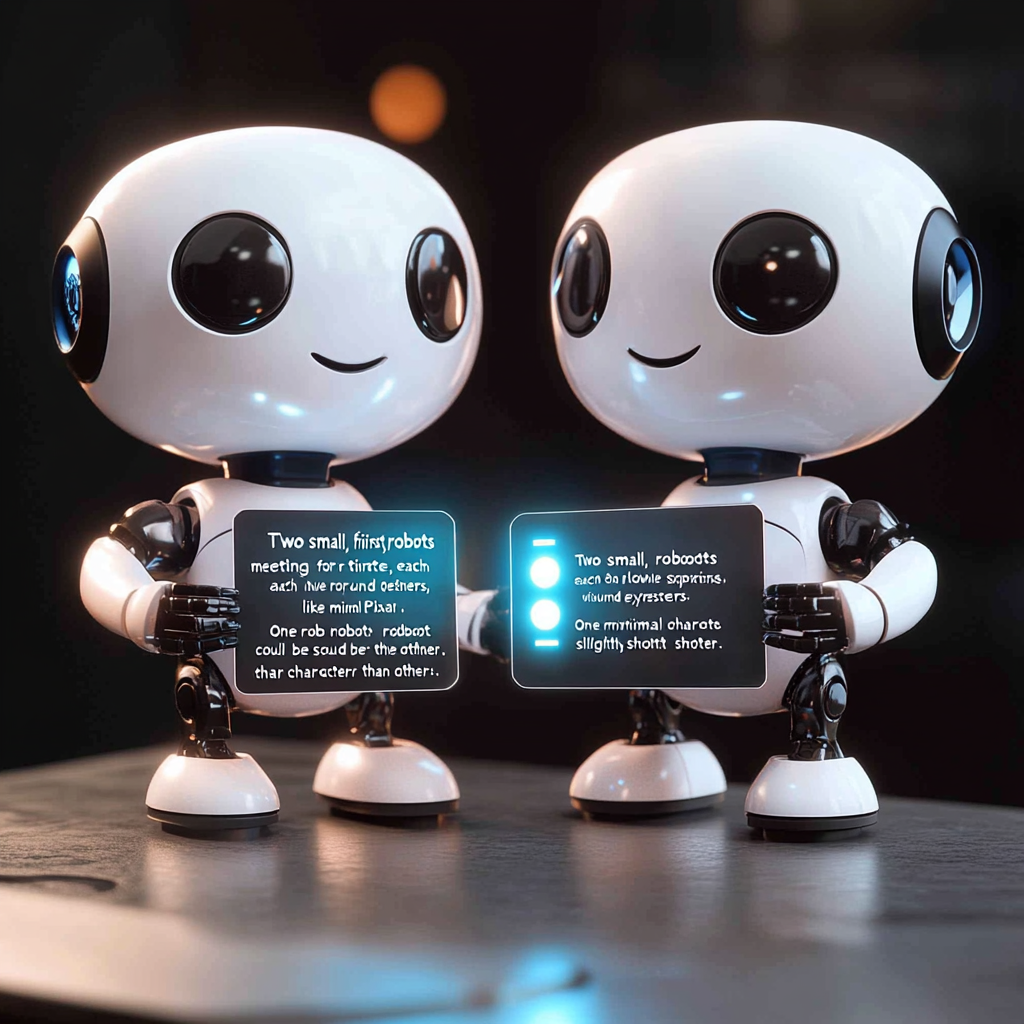
\The robots can make friends now with their cute lil cards\