A long read about AI creativity, tokens, and how AI exposes the way we think—and how creativity is evolving and changing in the age of AI—plus lots of hate for Crystal Skull what a terrible movie
By Nate
Published: 2025-02-25
URL: https://natesnewsletter.substack.com/p/indiana-jones-and-the-rise-of-tokenized
This idea has been kicking around my head for awhile. I’ve been looking for a really relatable way to communicate the power of tokens in the large language model view of the world. For most people, tokens are pretty inaccessible. It’s hard to explain what they do. So I hit upon the idea of tracing tokens across different generations of a very relatable story, using actual examples from large language models—including from Claude 3.7, which came out today! If you want to see full text of all the LLM responses to the pitch challenge, you can see them here.
Token Transmission: An Eerie Convergence on the Spear of Destiny
Yes I absolutely watched Indy this weekend. Let’s just get that out of the way first. No I did not watch Kingdom of the Crystal Skull, and you will find lots of hate for Crystal Skull across this piece, so enjoy those easter eggs.
With that being said, it began, as AI stories often do, with a simple prompt. I asked multiple AI language models—specifically ChatGPT 4o, o1 Pro, Claude 3.5, the new Claude 3.7, and DeepSeek—to pitch me a brand-new Indiana Jones trilogy. (Yes, I’ll be doing a whole Claude 3.7 teardown tomorrow!)
I assumed I’d get a range of results: some leaning toward the comedic, others veering into fan-fiction territory. But each model, nearly without fail, latched onto one legendary artifact: The Spear of Destiny (also known as the Holy Lance that pierced Christ’s side, and yes it has a Wikipedia).
Model after model highlighted the Spear. The stories overlapped in narrative beats: Nazi or Soviet villains. A race against time. A moral test at the artifact’s moment of discovery. The repeated motif that the Spear grants invincibility to its possessor, making it the ultimate MacGuffin for an adventure film. At first glance, it seemed like a bizarre coincidence—did someone slip a link to an obscure Spear-of-Destiny wiki into every model’s training data? Were all the models just ripping off the comic series? Yet the more I interrogated the phenomenon, the clearer it became that something else was at play: the token-based architecture underlying modern AI was pushing each system toward the same culturally resonant choice.
And I think exploring the Spear story a bit will help explain how tokens work, and open up some interesting larger implications for this converging AI-human world we’re all rushing toward headlong.
If you have one takeaway it’s this: the convergence on the Spear of Destiny is anything but random. It’s also not helpful to characterize it as the tokens just “copying” the comic series. It’s more complex than that.
Through the story of the Spear I’ll show how Large Language Models (LLMs) “think” in tokens and how those tokens reflect, amplify, and reshape our collective mythos. We’ll see how different AI models—from GPT-style networks to Claude variants—spontaneously re-created a “most likely” Indiana Jones quest. We’ll dive into the concept of tokens themselves and explore why “tokenization” has become the foundation for next-generation AI in every domain, from text to audio, images, and beyond.
We’ll also turn the lens back on ourselves, because a surprising question lurks beneath the surface: Are we humans, in our own creative processes, performing a similar token-based dance? Our repeated cultural motifs, from Holy Grails to ancient curses, may be less a sign of “pure inspiration” and more an echo of the patterns we’ve internalized over centuries. By the end, you might never look at a story—or your own imagination—the same way again.
So grab your fedora (or your reading glasses), crack that metaphorical whip, and let’s delve into how the Spear of Destiny and token-driven AI can unlock a profound new understanding of creativity and culture.
Subscribers get all these posts!
Opening Shot: AI, Tokens, and the Mechanics of Creativity
To appreciate why multiple AI models all singled out the Spear of Destiny, we first need to understand how large language models generate text. At a high level, these systems work by predicting, one token at a time, what bit of language is most likely to come next.
A Token’s-Eye View of the World
A “token” is the smallest meaningful chunk of data the model processes. In text, that chunk can be a single word, a subword (like -ing or de-), or even a single character. Most large language models (LLMs) use subword tokenization: “archaeology,” for instance, might be broken into “arch,” “ae,” and “ology.” Each of these tokens becomes a vector, a string of numbers that represents something about meaning, context, and usage.
When you ask a model to continue a sentence—say, “Indiana Jones and the…”—the system starts scanning through billions of parameters that encode probabilities for what token best follows. If the training data includes many references to “Indiana Jones and the Last Crusade,” the token sequence might push us toward Last, then Crusade. Or, if the data is saturated with other references, it might supply something else: Temple, Fate, Spear …
This is where things get a bit murky. Most LLMs in production today don’t do any “big picture” reasoning in the human sense. For example, ChatGPT 4o doesn’t say to itself, “I should set this next film in WWII to mirror the tone of Raiders of the Lost Ark.” Rather, it’s scanning an astonishing array of potential next tokens, weighting them by likelihood: Is Spear more probable than Horde, Crown, Curse, or City? The sum total of the ChatGPT 4o’s prior training leads it to choose the token that best fits the patterns it has absorbed—patterns that come from novels, scripts, fan fiction, online articles, and more.
There is a notable exception to this though: o1 Pro, the first truly deep inference compute model available. OpenAI has kept exactly how o1 Pro works pretty dark. There’s been speculation that it runs parallel reasoning threads (like tends or hundreds of 4o-style next token prediction threads at once), and then uses something like Monte Carlo Tree Search to figure out the correct answer. There’s also been speculation it’s not that complex, and it just looks for the most common response across the tens or hundreds (or more) parallel threads it runs. The one thing most everyone agrees on is that true inference compute takes time. Like, if it’s not running for a minute or more it’s probably not running inference compute.
Does o1 Pro’s more complex approach to tokens produce better results in the real world? I’ll let you decide. Below you can see 4o’s pitch followed by o1’s pitch.
4o’s pitch
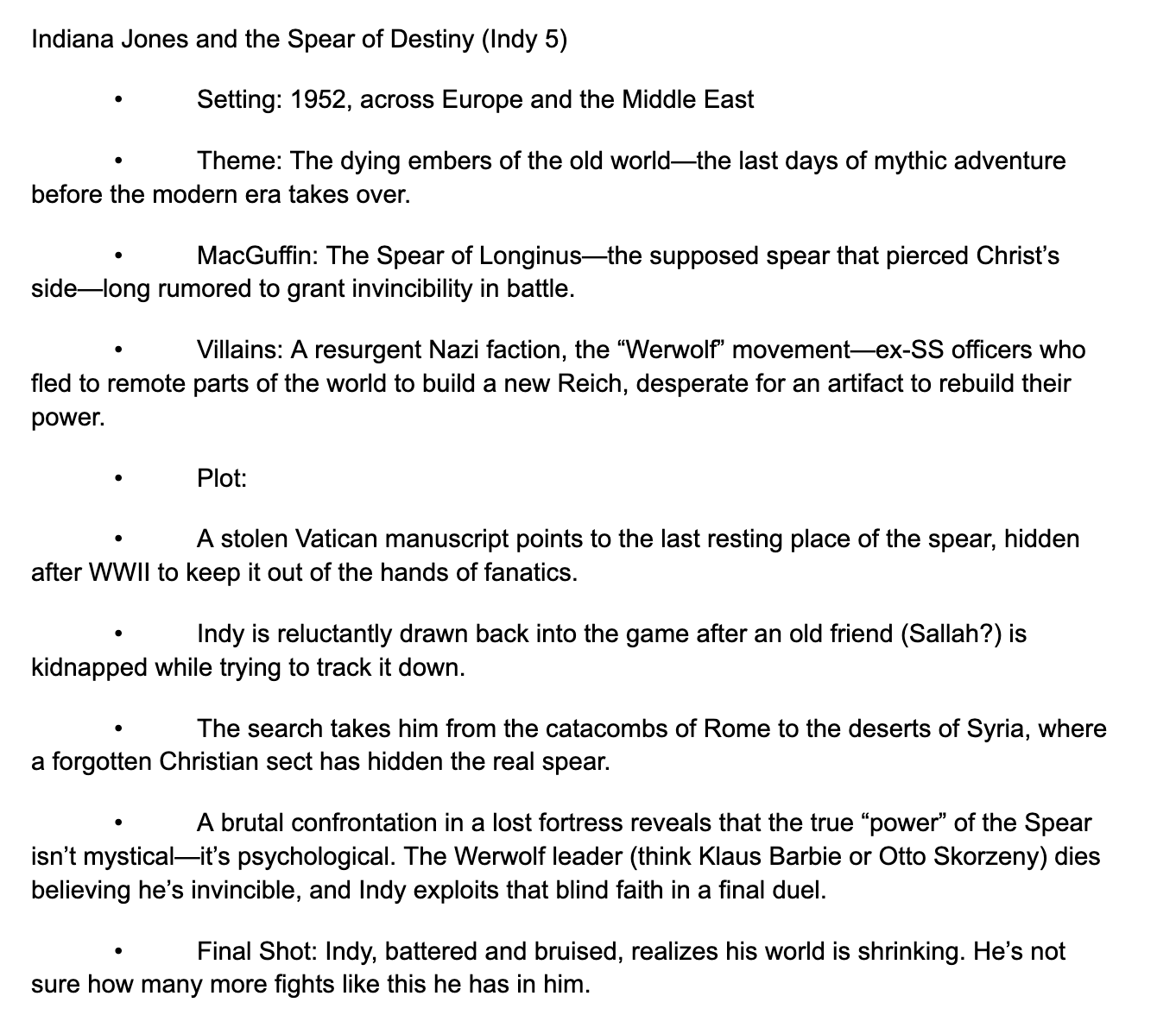
\Notice all the bullets…very characteristic of 4o\
o1 Pro’s pitch
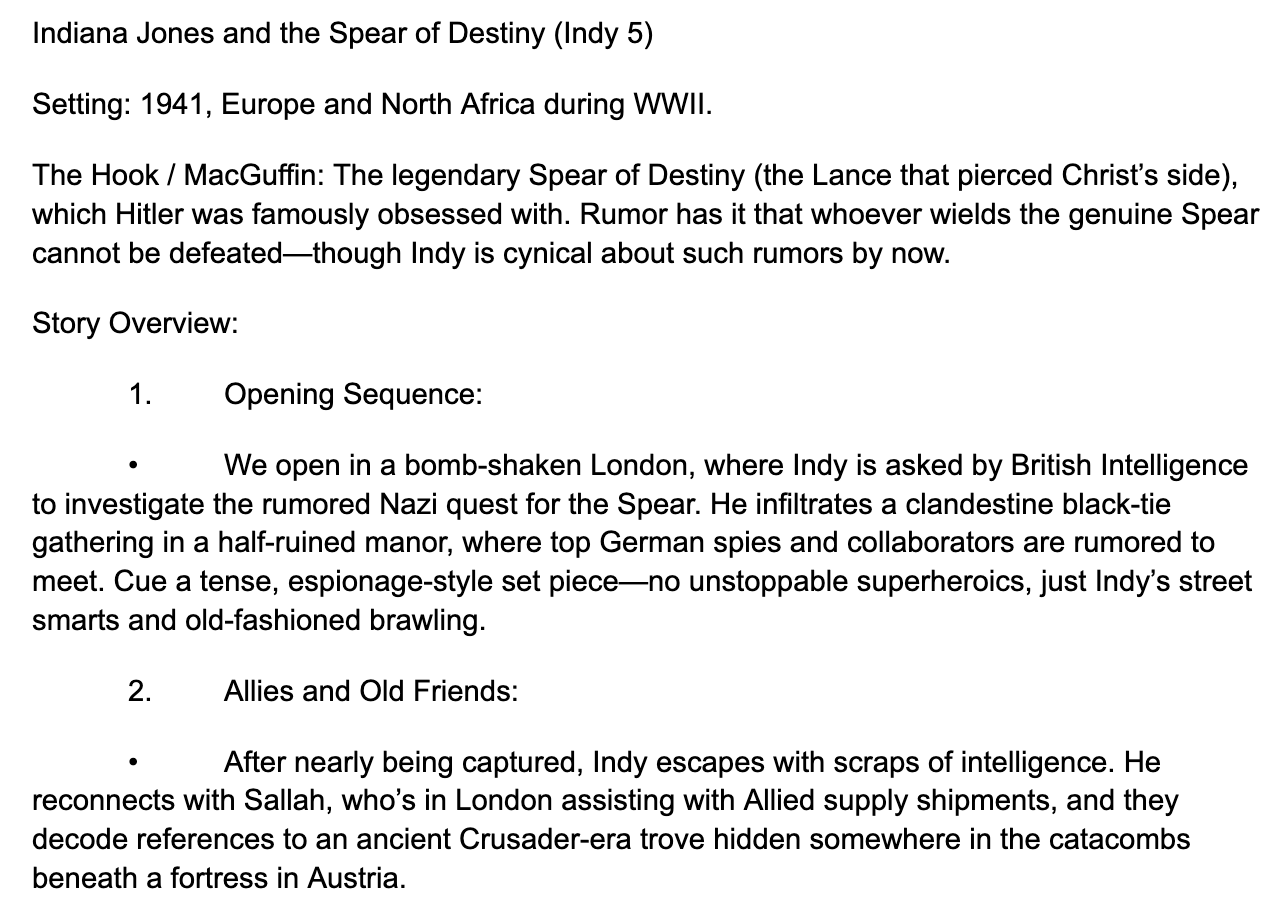
\This wasn’t even the whole pitch!\
As you can see, the result of next token prediction can be breathtakingly coherent: the AI can conjure new story arcs, high-level themes, even moral dilemmas. Yet from the inside, it’s all a matter of picking the next token based on the distribution of possibilities.
Transformers as “Universal Pattern Recognizers”
Today’s large language models rely on the Transformer architecture. Transformers revolve around self-attention, a mechanism by which each token in a sequence can selectively focus on other tokens to glean context. Picture a conversation at a party: you might be listening to one speaker, half-listening to another, ignoring someone else entirely. Self-attention does this in a systematic, parallelized way. Each token “attends” to relevant tokens to figure out how to respond.
A major breakthrough of the Transformer was that you could apply this same idea to any data that can be tokenized—text, images, audio, graph structures, molecular sequences, and so on. If you slice an image into small patches, each patch is a token. A chunk of audio can also be turned into tokens (short frames of sound or acoustic codes). Proteins, which are basically amino acid sequences, can be tokenized too. The “self-attention” mechanism is domain-agnostic. In other words, the world is made of information, and information is tokenizable.
Thus, the impetus behind the joke “tokens are all you need” is not just about text generation: it’s a unifying principle in AI. The same conceptual engine that decides “Spear of Destiny” is the next token for an Indiana Jones plot can also fold proteins (as in DeepMind’s AlphaFold) or create actual movie trailers.
The Spear of Destiny as an Unlikely but “Statistically Plausible” Token
So why does “Spear of Destiny” keep popping up? The simplest explanation is that the notion of a spear that “could conquer armies” or “makes its wielder invincible” is deeply imprinted in the textual data swirling through the internet. Over decades, the Spear has turned up in legends, conspiracy theories (e.g., Hitler’s occult interests), popular fiction, and even mainstream entertainment.
For an AI model that has been “trained” on countless stories about mystical artifacts, the Spear has a high probability weighting whenever you prompt for “legendary artifact” in the context of a Nazi-era or Cold War storyline. The model effectively says: “Given all the stories about magical Christian relics, Nazi occult obsessions, and the Indiana Jones aesthetic, the Spear of Destiny is a strong candidate for the next token sequence.”
But there’s a deeper question: Is the AI just spitting out a known trope, or is it actually tapping into a fundamental pattern of how humans approach mythic relics? To explore this, let’s examine the actual text outputs from multiple models as they pitched brand-new Indiana Jones trilogies.
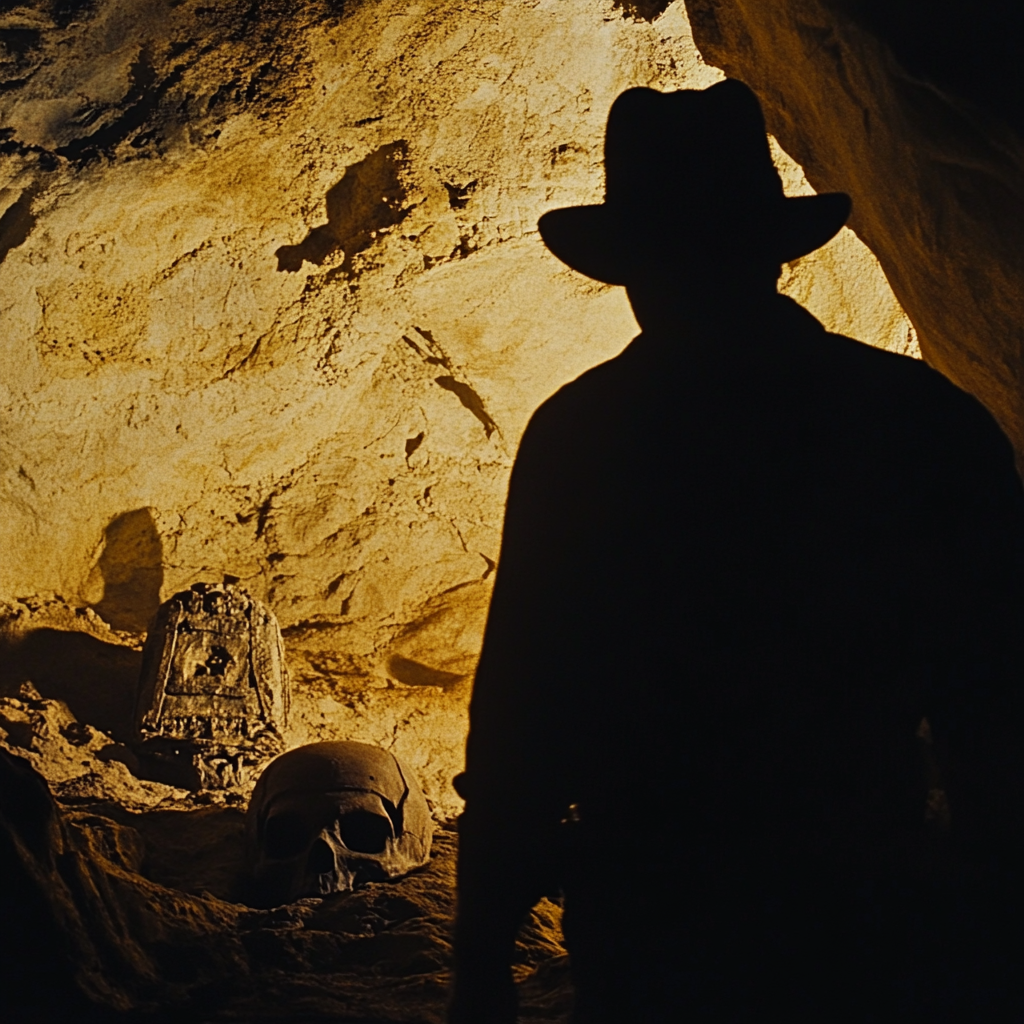
\Had to include a bonus shot with the shadow on the wall here\
Pan Down to a Man in a Hat: AI Indy and A Spear in Every Draft
Let’s get concrete. Over several sessions, I prompted different models to “pitch me a new Indiana Jones trilogy.” Here are some highlights from three different model families, each converging on The Spear of Destiny as the prime MacGuffin in at least one of their proposed films. And no, I did not ask for Spear of Destiny in the prompt.
Here’s the prompt:

Here’s the convergent responses:
- Model O1 Pro:
- Film: Indiana Jones and the Spear of Destiny (Indy 5)
- Era: 1941, WWII setting
- Premise: The Nazis seek the Holy Lance to ensure Germany’s unstoppable victory. Indy teams up with Sallah, infiltrates war-torn Europe, and engages in a final showdown in an Austrian stronghold.
- Key Motif: The Spear “tests” the worthiness of those who claim it, punishing fanaticism and hubris.
- Model 4O:
- Film: Indiana Jones and the Spear of Destiny (Indy 5)
- Era: 1952, late Nazi/early Cold War conspiracies
- Premise: A resurgent Nazi faction called “Werwolf” hunts the spear to rebuild a Fourth Reich. Indy’s pursuit leads from Vatican archives to Syrian deserts.
- Key Motif: The Spear’s power is partly psychological—the enemy’s belief in its invincibility drives them to suicidal overconfidence.
- Claude 3.7:
- Proposed Title: Indiana Jones and the Spear of Destiny (featured as a central or recurring storyline)
- Themes: Cold War paranoia, espionage undertones, a globe-trotting chase from the catacombs of Rome to hidden crypts in the Middle East.
- Key Motif: The Spear is an emblem of moral testing and near-limitless power, a weapon of mass manipulation.
The story beats across these pitches are uncannily similar. In each version, the Spear has an established legend granting divine or supernatural might. The quest to find it involves infiltration of Nazi or Soviet enclaves. The final confrontation typically reveals the Spear’s “true nature,” be it an outright mystical test or an ironically mundane artifact whose power is derived from belief. And all of them have important differences vs. the comic book of the same name. These models aren’t just regurgitating past work.
Despite small variations—some set in 1941, others in 1952 or 1957, different sidekicks or final set pieces—the big picture is the same: Indiana Jones prevents an authoritarian regime from using the Spear to conquer the world.
This uniformity might seem spooky, but from a token-based AI perspective, it’s just the emergence of a well-trodden cultural template. The AI knows—on some deep statistical level—that old Christian relic + Nazi interest = strong narrative synergy in the pulp-adventure domain. The presence of an “ancient power” that tests morality aligns perfectly with the Indiana Jones brand. So each model weighs the next token and arrives at a remarkably similar conclusion—one that humans have independently validated with an actual published story in this case.
At Indy’s Blackboard: The Cultural Weight of the Spear of Destiny
Of course, The Spear of Destiny is not the only artifact that might appear in an Indiana Jones adventure. The Ark of the Covenant, the Holy Grail, Excalibur, the Crystal Skulls, the “Eye of Cleopatra,” the Shroud of Turin, or the lost city of Atlantis are all contenders in the realm of historical-mystical MacGuffins. Yet the Spear stands out because it has been so frequently evoked across centuries—appearing in medieval lore, Christian tradition, Nazi occult conspiracies, comic books, and more.
History, Myth, and Conspiracy
In Christian lore, the Spear (or Lance) that pierced Christ’s side was described in the Gospel of John. Medieval rulers, from Charlemagne to the Habsburgs, claimed to possess it as a symbol of divinely sanctioned power. During WWII, Hitler’s fascination with occult artifacts was well-documented in both historical accounts (though often embellished) and popular culture. Conspiracy theories flourished during and after WWII, suggesting that if Hitler obtained the true Spear of Destiny, he would (have) become invincible.
In sense, the cultural trauma of the war became embedded as a story point around which many human stories gathered. Like a watering hole in history. But things are changing! Now that we have large language models, those human watering holes—those story gravity wells around which our stories focus—those cultural reference points are getting populated with AI tokens as well.
Whether or not Hitler truly believed in its mystical power is kind of irrelevant. The story is what matters, and the synergy between the Lance and authoritarian ambition became a staple of alternate-history fiction. By the time we got Raiders of the Lost Ark (1981), pop culture was well primed for the notion that the Nazis would chase biblical relics. The storyline felt “natural,” tapping into real myths that had circulated for generations.
Why The Spear? The Tokenized Logic of Adventure Fiction
In the Indiana Jones formula, a MacGuffin must be:
- Ancient (to justify tomb raiding and hidden traps),
- Significant (to lure powerful antagonists), and
- Potentially Supernatural (to allow for a climactic moral test or cosmic comeuppance).
The Spear checks every box. Furthermore, it fits snugly into WWII or Cold War contexts because it resonates with real or rumored historical obsessions. As a story blueprint, it has enough cultural gravity to keep re-emerging.
That’s precisely why AI language models, steeped in digital archives of adventure tropes, keep “predicting” The Spear of Destiny. It’s not just another relic on a list. It’s a culturally potent token in the story generator of our collective psyche, reinforced by centuries of retelling and 20th-century occult speculation.
Plot Twist: Are Humans Also Token Predictors?
Like any good Indy movie, here we arrive at the big philosophical twist. When we see an AI spontaneously propose The Spear of Destiny, we might scoff: “That’s just a predictive model repeating tropes.” But if we analyze how human writers craft stories, a similar pattern emerges.
The Paradox of Human Creativity
Writers often talk about “inspiration” or “muse,” implying a quasi-mystical origin for new ideas. Yet if you read interviews with your favorite author, you frequently find they drew from:
- Age-old mythic structures (the “Hero’s Journey,” derived from comparative mythology),
- Personal experiences,
- A library’s worth of prior fiction,
- Cultural motifs that resonate (ancient relics, doomsday weapons, coming-of-age arcs, forbidden love, etc.).
Shakespeare borrowed heavily from existing myths and historical sources. George Lucas famously tapped into The Hero with a Thousand Faces (Joseph Campbell) for Star Wars. Steven Spielberg and George Lucas themselves built Indiana Jones out of 1930s adventure serial tropes.
In short, we humans also “predict the next token” in our creative work, albeit in a more metaphorical sense. We’re shaped by the narratives we’ve consumed. Our creative leaps often come from remixing known elements. While we might add personal flair or subvert expectations, the underlying process is not wholly dissimilar to what an AI model does: picking, weighting, and assembling well-worn tokens from a mental library.
Creativity as Remix and Synthesis
If you ask a poet where a certain line came from, the answer often references a swirl of influences—a bit of T.S. Eliot, some personal memory, a dash of pop culture. Similarly, an AI model, after being trained on gigabytes of text, fuses influences from thousands of sources. When it produces a new line, it’s performing a complex remix of prior examples, weighted by probability.
This raises an existential question about creativity: Is originality merely a hyper-complex form of pattern recognition and token assembly? For many, the idea seems reductive. We want to believe in a mysterious creative spark. And indeed, the human mind is more than just a text predictor. We have emotions, desires, bodies, experiences, and sense data that no large language model can replicate. However, the generative aspect—the weaving of coherent narratives from existing building blocks—does bear a striking resemblance to the token-based logic of AI.
Flying at 30,000 Feet: A High-Level Look at “Tokens Are All You Need”
Perhaps you’ve seen the catchphrase “Attention is all you need,” referencing the 2017 paper that introduced the Transformer architecture. In the last couple of years, that’s morphed into “tokens are all you need,” a tongue-in-cheek motto pointing to the idea that once you break any data—text, images, audio, protein sequences—into tokens, the Transformer can handle it.
Here’s a quick overview of how tokenizing works across diverse domains, which will help illuminate why “token thinking” is bigger than just text generation:
- Vision Transformers (ViT):
- Split an image into 16×16 patches, each patch becomes a “token.”
- The Transformer looks at the tokens with multi-head self-attention, learning to classify objects in an image.
- This dethroned the once-dominant CNN (Convolutional Neural Network) in certain tasks, proving that “attention is all you need” even in vision.
- Audio Transformers:
- Convert audio into short frames or spectrogram patches (tokens).
- Use a Transformer to understand speech, music patterns, or audio events.
- This can rival or outperform traditional RNN or CNN-based approaches in speech recognition tasks.
- Graph Transformers:
- For molecular or social graphs, treat each node (and sometimes edges) as tokens.
- Use attention to let each node see “which other node is relevant” for a particular property or classification.
- Great for predicting chemical reactions or analyzing social networks.
- Protein Folding (AlphaFold):
- A protein’s amino acids are tokens in a linear sequence.
- A Transformer-based architecture helps figure out which amino acids might fold near each other.
- This cracked a decades-old puzzle in biology, showcasing the power of tokenized self-attention.
- Reinforcement Learning (Decision Transformer):
- Actions in a game become tokens.
- The model “predicts” the next best action, similar to how it predicts the next word in a sentence.
- This unifies game-playing with language modeling frameworks.
In each case, the key is tokenization: represent your data as discrete chunks (tokens), embed those chunks into vectors, then let the Transformer’s attention mechanism do its magic. The parallels to how we internally break down stories or experiences into units of meaning are hard to ignore.
Feedback Loops: When AI and Culture Reinforce Each Other
One fascinating implication is that as AIs churn out stories about the Spear of Destiny (or any other trope), they might further reinforce the presence of that artifact in popular culture. Future AI training sets—scraped from the internet—could encounter more references to the Spear, boosting its probability in a self-reinforcing cycle.
This can lead to a sharpening of our story probability distribution over time. Effectively those “watering holes” in history become even more concentrated with myth and power as human and AI stories begin to converge there more and more. This could lead to less divergent story-telling over time.
The Danger of Homogenized Output (aka “The Crystal Skull Paradox”)
If we rely too heavily on AI for creative generation, we risk an echo chamber: a world where “new” stories are just permutations of the same tokens, overshadowing original voices and experiences. The repeated Spear-of-Destiny phenomenon suggests a future where certain “high-probability” tropes dominate.
This is already happening to some extent, as you can see in the proliferation of formulaic storylines in mass media. And yes, I’m going to invoke the disastrous Kingdom of the Crystal Skull here. All formulaic Indy, no actual effects, poor writing. And (importantly) no AI to blame! The failure of Crystal Skull was entirely on the studios, showing that humans are susceptible to these same convergent story-telling forces even without the reinforcing power of AI.
Yet it’s not all bleak. If we want more originality, we can specifically prompt AI for unexpected combinations—like “Indiana Jones in the Mongolian tundra searching for an artifact that merges Buddhist and shamanistic legends.” A sufficiently advanced LLM can break out of the obvious token path and explore rare or novel sequences—provided we push it there.
o1 Pro’s pitch for Indy in Mongolia
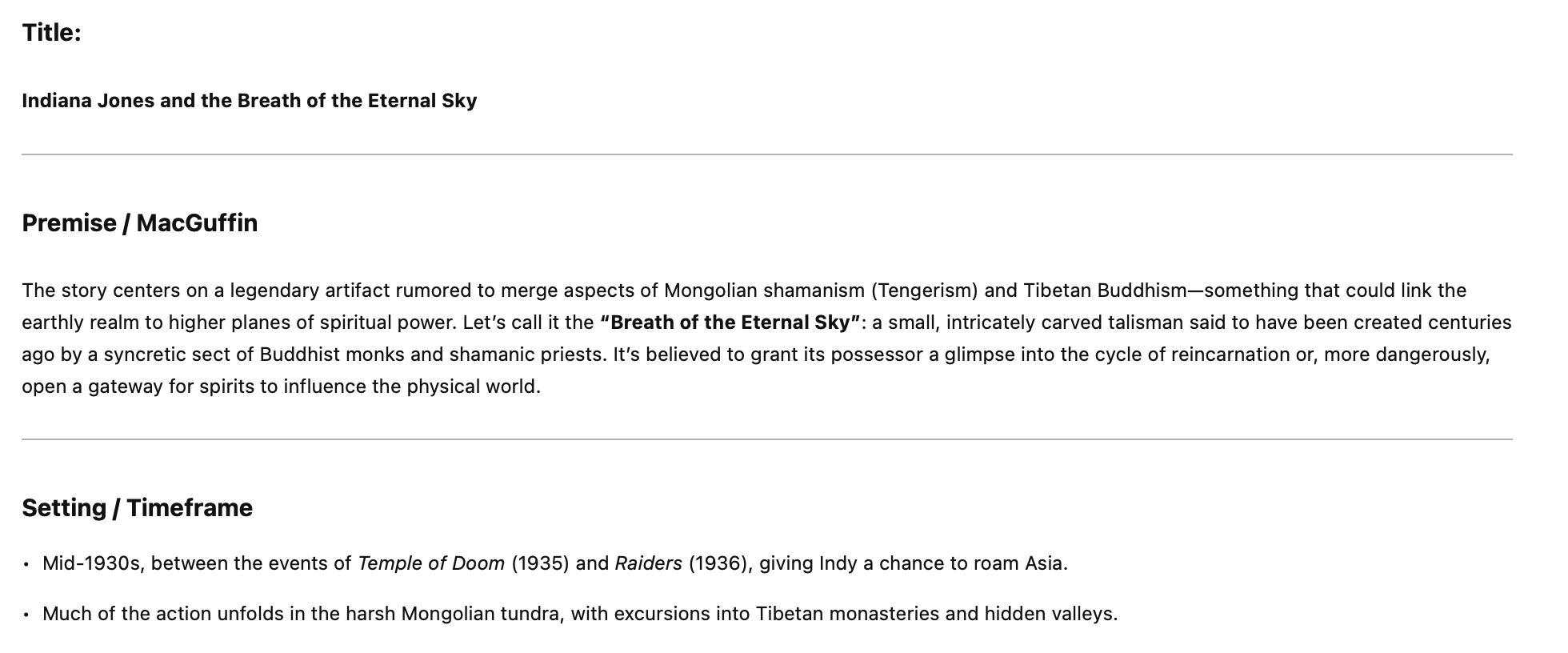
\Not bad honestly\
Keeping Our Hats: Human Oversight and Curatorial Choice
AI might saturate the creative sphere with high-probability ideas, but humans remain the final curators. We can select, refine, or discard AI suggestions. We can mix them with our lived experiences that no AI model has. We can adopt a meta-awareness of these token-based biases, ensuring that at least some creative works step off the beaten path.
For better or worse, we’re entering an era where AI shapes the cultural imagination just as culture shapes the AI. The repeated Spear-of-Destiny phenomenon is a small but telling illustration of how these feedback loops can entrench certain archetypes in the collective psyche—digital and human alike.
In the Studio: Reflecting on the Actual AI-Generated Pitches
Let’s step back and look more closely at some of the full Indiana Jones pitches from various models, because they reveal even more about token-based storytelling. Remember you can see the full text here. We’ll see how each system reuses stock tropes, but also how each one sneaks in novel angles:
ChatGPT o1 Pro’s Trilogy (Excerpts)
- Indy 4: Indiana Jones and the Eye of Cleopatra
- MacGuffin: A legendary gemstone rumored to grant supernatural persuasion, hidden in Cleopatra’s lost tomb.
- Setting: 1939, overshadowed by WWII. Nazis want the gem for psychological warfare.
- Tropes: Egyptian tombs, illusions, moral test of ambition.
- Indy 5: Indiana Jones and the Spear of Destiny
- MacGuffin: The Lance that pierced Christ’s side, rumored invincibility.
- Setting: 1941, Allies vs. Nazis in a cat-and-mouse quest.
- Tropes: Stormy final confrontation, Nazi occult obsession, artifact “tests” the wielder.
- Indy 6: Indiana Jones and the Shroud of the Sun
- MacGuffin: A Mesoamerican relic linked to life-force manipulation, set against the final days of WWII.
- Tropes: Rainforest temples, illusions of undead guardians, moral dilemma about healing vs. meddling with nature.
What’s striking is how neatly each story re-maps the essential Indiana Jones formula: an ancient relic, formidable enemies, booby traps, a dash of supernatural terror, and the final reveal that hubris is punished by the very power the villains seek. This is a classic structural “token chain” for adventure narratives, easily recognized by LLMs.
ChatGPT 4o’s Trilogy (Excerpts)
- Indiana Jones and the City of the Gods (Indy 4)
- Post-WWII, 1947, searching for a lost Incan city rumored to hold advanced knowledge.
- A rogue Nazi scientist allied with the Soviets, a CIA operative, and of course, a supernatural puzzle at the heart of the temple.
- Indiana Jones and the Spear of Destiny (Indy 5)
- 1952, the final days of Nazi influence.
- A breakaway faction called “Werwolf” hunts the Spear to start a new Reich.
- Indiana Jones and the Atlantis Reckoning (Indy 6)
- 1958, end of the pulp-adventure era, a reflection on mortality.
- A global quest from the Bahamas to the Mediterranean to uncover the truth about Atlantis.
Again, we see how each film is pegged to a historically resonant year, each artifact is plausibly rumored to tip the balance of power, and each storyline leads to a moral test reminiscent of the Ark or Grail in the original trilogy. The shapes differ, but the underlying skeleton remains the same, as if the “Indiana Jones blueprint” were an unstoppable gravitational force.
Claude 3.7’s Trilogy: The Indiana Jones Legacy Trilogy
Indiana Jones and the Serpent’s Curse (Indy 4)
- 1957, Cold War tensions, Soviet interference in Guatemala.
- A missing CIA operative, a Soviet plot to harness the Crystal Skull, and a jungle temple where time itself bends.
Indiana Jones and the Ghost of Shanghai (Indy 5)
- 1960, Chinese Civil War echoes.
- A kidnapped son, a mythical Emperor’s Pearl, and terracotta warriors that refuse to stay buried.
Indiana Jones and the Eternal Horizon (Indy 6)
- 1963, post-Cuban Missile Crisis, a reflection on mortality.
- Ancient sites align, a race to unlock the “Eternal Horizon,” and a final lesson on the nature of time itself.
Each installment remains faithful to the original trilogy’s DNA: grounded mythology over supernatural excess, real-world archaeological mysteries, and gritty, practical effects. Aged but unyielding, Indy wrestles with his legacy, ultimately accepting that the greatest treasures aren’t found—they’re preserved in the memories of those who follow.
Claude 3.5’s Trilogy: The Lost Trilogy
Indiana Jones and the Crown of Perseus (Indy 4)
- 1945, post-WWII, the hunt for a Nazi psychological weapon.
- A lost Nazi relic, a Soviet race to control fear itself, and a final test deep within a Grecian labyrinth.
Indiana Jones and the Empire of Brass (Indy 5)
- 1948, Chinese Civil War, lost ancient technology.
- A forgotten underground city, mechanical wonders ahead of their time, and a moral question of preservation versus destruction.
Indiana Jones and the Veil of Eternity (Indy 6)
- 1952, Cold War paranoia, glimpsing the future.
- A kidnapped Marion, an artifact that reveals the future, and the choice between knowledge and free will.
A return to practical effects, mythologies grounded in history, and character-driven adventure. Each film mirrors real-world tensions of its era, evolving Indy’s journey from wartime survivor to reluctant Cold War participant, ultimately realizing that his duty isn’t just to history, but to the future.
DeepSeek’s Trilogy: The Cold War Chronicles
Indiana Jones and the Iron Curtain (Indy 4)
- 1947, early Cold War, post-war espionage.
- A stolen Spear of Destiny, Soviet agents, and a final choice between power and destruction.
Indiana Jones and the Kingdom of the Moon (Indy 5)
- 1953, Cold War science race, Soviet weather manipulation.
- A lost Mayan device, an old flame turned enemy, and a volcanic eruption sealing history away.
Indiana Jones and the Shadow of Atlantis (Indy 6)
- 1957, the final adventure, Atlantis and its buried secrets.
- A secret cabal, a lost civilization, and the final cost of protecting the past.
A trilogy steeped in Cold War paranoia and ideological conflict. The films emphasize historical plausibility, practical effects, and morally complex villains. Indy, battered and older, ultimately understands that some knowledge is too dangerous to preserve—and that real legacy is not in artifacts, but in those who carry the lessons forward. I also notice the Chinese model doesn’t take Indy to Asia.
Getting Mystical: Cultural Tokens and the Human Subconscious
We often talk about “archetypes” in storytelling: the wise mentor, the shadow villain, the hero’s call to adventure, and so on. In a traditionally Jungian sense, these are deep patterns in the collective unconscious. In a more modern, media-theoretical sense, they’re just repeated narrative building blocks that societies pass along.
What the token-based phenomenon highlights is that these building blocks can be made explicit in the model’s probability distribution. AI is, in a sense, a bright spotlight shining on the skeletons of our myths. The more times a motif or token recurs, the more likely the AI is to replicate it.
But that same logic applies to us. The more we’re exposed to certain motifs, the more likely we are to retell them. We have our own “internal weighting system,” shaped by culture, that leads us to produce certain kinds of stories. Is it any wonder that so many of the world’s epics revolve around a chosen hero, a lost artifact, a test of character, and a final cosmic comeuppance? Are we not, in our own way, token machines scanning the mental library of cultural memory to find the next bit of narrative code? Perhaps we should be more humble about the origins of our creativity.
The Ark in the Warehouse: Practical Applications and Implications
While these reflections on creativity and myth are fascinating in their own right, there are also practical takeaways for anyone using AI for content creation, worldbuilding, or brand storytelling:
- Prompt Engineering:
- If you don’t want the AI to pick “the next most obvious relic,” you need to explicitly push for novelty. Try prompts like, “Create an Indiana Jones storyline that avoids all known Christian relics and focuses on a lost meteorite in Siberia.”
- This technique helps the model skip over the default high-probability tokens (Spear, Grail, Ark) and generate something more unique.
- Curating and Editing:
- AI can produce a decent first draft, but if you see it leaning on tired tropes, you can pivot it with additional constraints or steer it toward lesser-known myths.
- By recognizing token-based patterns, you become a more effective “director” of your AI co-writer.
- Cultural Preservation vs. Innovation:
- Reusing motifs like the Spear of Destiny keeps us anchored in shared heritage. There’s a reason we retell stories of Grails, Excalibur, or cursed idols. They resonate deeply.
- Yet if we want fresh mythmaking, we must actively cultivate new tokens. This can involve highlighting marginalized legends, overlooked historical footnotes, or modern phenomena that haven’t yet become ossified in the cultural matrix.
Next Script: The Future of AI Storytelling
As AI systems grow more powerful, they’ll likely internalize an even broader swath of cultural data—possibly entire archives of global folklore. They may cross-pollinate motifs from different cultures, synthesizing them into new “token sequences” that appear truly novel. Imagine an AI combining Yoruba mythology with Nordic sagas, or pre-Columbian legends with futuristic cyberpunk.
Still, the underlying mechanism remains the same: the AI sees everything as tokens in a sequence. Originality, if it arises, is a function of how it randomizes or explores lower-probability token paths. This has two big implications:
- Humans Will Drive Divergence
We’ll need creative humans to push AI off the beaten path. Otherwise, left to its own devices, the AI will revert to highest-probability tokens—like the Spear of Destiny.
- AI as a Mirror
Rather than lament that AI is “uncreative,” we can celebrate how it reveals the engine of creativity in ourselves. If we want new stories, we must expand our own cultural lexicon—incorporate new experiences, knowledge, and vantage points. The AI can be a tool that we direct toward uncharted territory.
Closing Shot: Is Everything “Tokenized”?
In the tradition of Indy, we’ll get just a little bit philosophical at the end. After witnessing how multiple AI models spontaneously conjured The Spear of Destiny, you might wonder: “Does this mean we’re all just lumps of data, reassembling tokens from memory?” It’s a question that grazes the realm of philosophy. On the one hand, humans have bodies, emotions, and consciousness that a language model does not replicate. We engage with the world in ways that shape our narratives beyond text corpora.
But if we narrow the lens to just the generative aspect of language—how we form sentences, chain ideas, evoke mythic images—the parallel is strong. We reach into our mental library of known words, phrases, images, archetypes, and produce them in a coherent sequence. We choose “the next word” based not on a random guess but on probabilities shaped by grammar, cultural knowledge, and personal taste.
There’s no final verdict here on whether that is “all” we do. Yet the lesson from the Spear-of-Destiny phenomenon is humbling: even an AI, with no body or personal stake in the matter, can replicate a “classic” Indiana Jones quest by purely statistical means. Frankly, I like every single one of the AI arcs I got better than Kingdom of the Crystal Skull, and that one got made! Perhaps what sets us apart is not the ability to produce the quest but the meaning we imbue it with, our emotional resonance, and the lived experiences that color each retelling. Hopefully what makes us human isn’t our preference for low-risk copycat films with heavy-handed CGI (I will not stop hating on Crystal Skull so don’t ask me to try).
The Long Shadow of the Spear: Lessons for Writers, Storytellers, and Fans
Every Indy film ends with a nod to the next adventure. So what’s next here? I think what we’ve learned about tokens and storytelling gives us lesson we can take away as human creators and builders.
- Embrace the Mirror:
Seeing AI spontaneously conjure The Spear of Destiny might seem unoriginal, but it’s also revealing. The artifact’s cultural “probability wave” is so high that it dominates the MacGuffin race. Acknowledge that your own imagination may also be drawn to these high-probability relics.
- Subvert Expectations:
If you want to stand out, subvert the Spear-of-Destiny trope. Let the Nazis or Soviets chase it, only to find it’s a decoy. Meanwhile, the real power lies in a lesser-known relic. This kind of creative twist often resonates with audiences precisely because it defies a well-known token chain.
- Use AI as a Collaborator:
Ask AI for a standard pitch. Then prompt it to introduce an unexpected element—e.g., an indigenous perspective that flips the colonial lens on archaeology. You can nudge the model to incorporate critiques of treasure-hunting or highlight the voices historically overshadowed in pulp adventures.
- Recognize the Bigger Picture:
The Spear is just one example. The same token-based logic will produce default storylines for romance novels, superhero origin tales, or epic fantasies. If you can identify these default pathways, you can actively choose whether to follow them or break away.
Credits: The Future of Cultural Tokens
In the end, The Spear of Destiny’s repeated cameo in AI-generated Indiana Jones pitches is more than a neat curiosity. It’s a microcosm of how AI and humans share story-building processes grounded in repeated tokens—cultural building blocks that have accrued potency over time.
What’s truly intriguing is the evolving interplay between AI, which “predicts” culture, and humanity, which “creates” it. The lines blur as we realize that so much of our own storytelling is also an act of probabilistic assembly, guided by the narratives we’ve absorbed. Perhaps the next wave of AI will be better at forging new paths—at intentionally selecting low-probability tokens, weaving them together in ways humans never tried. Or perhaps we’ll remain enthralled by the comfortable resonance of high-probability tokens like The Spear of Destiny, the Holy Grail, or the Lost Ark.
One thing is certain: as Transformers continue to devour everything from text to images to proteins, the idea of token-based creativity will only grow in importance. We’ll see AI weaving narratives across media, bridging language and images, forging cross-cultural epics that sample from every corner of recorded lore. Meanwhile, the human impetus to find meaning, moral depth, and emotional authenticity in stories will remain as strong as ever.
The next time you watch a movie or read a novel, keep an eye out for those ubiquitous tokens—be they Holy Lances, magic swords, unstoppable superweapons, or chosen-hero arcs. Ask yourself: Did the creator pick this token for reasons of deep personal resonance, or was it simply floating near the top of the cultural probability distribution? And if you catch yourself critiquing an AI for rehashing tired tropes, take a moment to reflect on the possibility that we do the same, but have merely inherited those tropes over centuries.
In other words, the presence of The Spear of Destiny in every AI pitch is both an indictment of unoriginal cultural echoing and a clue to our own hidden nature. We, too, are shaped by the stories told before us, scanning them for the next piece of narrative to continue the chain. AI has merely given us a mirror, formed from billions of tokens, in which we can behold the patterns that define us.
We’re at the dawn of a new era, one in which AI’s reliance on tokenization is bridging the gap between text, images, audio, and more. The same mechanism that predicted “Spear of Destiny” in an Indiana Jones pitch can, in principle, handle any domain you can break into tokens—whether that’s protein sequences in biotech, sensor readings in robotics, or financial data in algorithmic trading. The universal translator is here, built on the concept of tokens passing through a Transformer.
And so, if you find yourself reading an AI-generated script about ancient relics or a biotech paper on AI-driven protein design, remember that each domain—no matter how different—has been broken into tokens for the model’s attention-based rummaging. We live in a tokenized reality now, where creativity, analysis, and prediction converge in a single architecture.
Will that lead to uniformity, or to an explosion of new possibilities? That’s up to us. Just as we can choose to write a story about The Spear of Destiny or not, we can also shape the direction of AI research, deciding whether we want to push for bigger, more uniform models, or more specialized ones. We can emphasize interpretability, cultural nuance, or domain expertise.
But if there’s one lesson The Spear of Destiny fiasco can teach us, it’s that the patterns encoded in our cultural tokens run deep. Our illusions of radical originality might be just that—illusions. Yet illusions need not be illusions alone; they can be glimpses of collective meaning. Whether in the hands of AI or humans, tokens are about more than just prediction. They’re about the stories that hold us together, that fill our imaginations with wonder, dread, ambition, and hope.
So the next time you see an AI model conjuring an ancient relic, or you catch yourself rewriting a mythic quest with slight variations, pause and marvel at the power of tokens. They are the seeds of meaning—and if you plant them wisely, they can bloom into something profoundly new.
Until then, keep your hat close, your whip at the ready, and your eyes peeled for the Spear of Destiny around the next corner. If AI can teach us anything, it’s that certain tokens—certain stories—never lose their grip on our collective soul. And that, in itself, is a testament to the strange, token-based magic of being human.
For more on AI, subscribe and share!

\I think MidJourney did an ok job with Indy’s hat here\