The Hidden Infrastructure Crisis That Could Stall the AI Revolution
By Nate
Published: 2024-12-24
URL: https://natesnewsletter.substack.com/p/the-trillion-dollar-memory-problem
Does intelligence matter without memory? We’re going to find out this year.
We're obsessed with making AI smarter and we seem to be on an accelerating curve to essentially free general-purpose intelligence, but we've overlooked something fundamental: memory. While we debate consciousness and AGI, a more practical crisis looms - the staggering cost of giving AI systems meaningful long-term memory. The numbers are so large they seem like a typo, but they're not.
First, let’s set the stage…
Picture working with an AI assistant without memory: every morning you have to re-explain your projects, your preferences, your writing style, and your goals. Each conversation starts from scratch, like a new employee who's brilliant but needs to be trained from zero every single day. This is basically the world we live in today!
Want the AI to remember that you prefer Python to JavaScript, or that you're working on a book about quantum computing, or that you need all your code commented in a particular way? You'll need to specify it again and again, or else depend on the extremely undependable and limited memory scrapbooks that model-makers have installed.
True memory would transform our lives as much as intelligence. I’m convinced of it. Imagine your own experience - your AI would accumulate understanding of your work patterns, maintain context across months of project development, and build a genuine model of your needs over time. It would be the difference between working with a brilliant stranger and a longtime collaborator who finishes your sentences.
But what would memory take? We can do math for that and it will blow your mind:
First, let's establish what good memory looks like. For a single power user working with an AI daily on complex projects, you need about 50-100 million tokens of context. This allows for several months of conversation history, multiple project contexts, reference materials, and enough historical data to learn user preferences and patterns. Each token's embedding (the AI's way of understanding and storing information) requires about 3-6KB of storage.
It’s important to note that this is approximately feasible for a single nerd user! The hardware requirements are substantial but not outrageous: 128GB+ RAM, 1TB+ fast SSD storage, and a beefy CPU. Total cost? Around $3,000-8,000 for a dedicated setup. Expensive, but within reach for professional use. Gamers spend this much on their systems now.
The problem is scale, as usual. ChatGPT has about 125 million daily active users. If we wanted to give each of them the same memory capacity we calculated for our power user, the math becomes staggering:
125M users × 50M tokens × 3KB per token = 18.75 zettabytes of storage
At enterprise storage costs of roughly $25/TB, we're looking at $468.75 billion just for storage. That's before we consider compute costs for retrieval, power, cooling, or operations. For perspective, OpenAI's recent $6 billion funding round would cover ~1% of just the storage needs.
This explains why even premium services like o1 Pro (at $200/month) only offer a 200K token context window - about 0.4% of what we calculated as necessary for good long-term memory. It's not that they don't want to offer more; the economics simply don't work at scale.
The implications are profound. We're building AIs that can reason but can't remember, like a brilliant professor with severe anterograde amnesia, or a brain sparking in the void and leaking memories (the prompt I gave to MidJourney for this post). With this new intelligence, every conversation starts fresh, losing the compounding benefits of true long-term interaction. This isn't just an inconvenience - it's a fundamental limitation on AI's ability to develop deep, contextual understanding over time.
Solutions won't be simple. We need either a revolutionary breakthrough in storage efficiency, a completely new architecture for AI memory, or a radical decrease in storage costs. Until then, we're stuck with brilliant but forgetful AIs that reset with each conversation.
We talk endlessly about making AI smarter, but perhaps we should be talking about making AI remember. After all, what good is intelligence without memory to build upon? The next great AI breakthrough might not come from bigger models or better algorithms, but from solving the trillion-dollar memory problem hiding in plain sight.
The real question isn't when we'll build artificial general intelligence - it's whether we can afford to let it remember what it learns.
The math here raises uncomfortable questions about AI accessibility. While consumer AI products will likely remain limited by these economic constraints, the math works quite differently for individual power users. A dedicated AI instance with full memory capabilities costs roughly what law firms bill in a day. For high-value knowledge workers, executives, or specialized professionals, personal AI systems with true long-term memory could create such significant productivity advantages that the cost becomes trivial.
Are we heading toward a world where meaningful AI memory becomes a luxury good? Where only the highest-earning professionals can afford AI systems that truly learn and adapt to them over time? The productivity gap between those with memory-enabled AI assistants and those without could create a new form of digital inequality - not just in access to AI, but in access to AI that remembers.
This memory gap might prove more significant than processing power or model sophistication. After all, a less capable AI that remembers everything about your work, preferences, and patterns might be far more valuable than a more sophisticated one that starts fresh each day. The implications for professional competition, economic mobility, and knowledge work are profound.
We're entering a peculiar future: one where raw intelligence is becoming abundant and cheap, but memory remains astronomically expensive. It's a world of brilliant amnesiacs - AI systems that can solve complex problems but can't remember what they learned yesterday. We might soon reach a point where powerful AI reasoning is universally accessible, but persistent understanding remains a luxury.
This raises fundamental questions about what we value in intelligence. Is it the ability to solve complex problems in isolation, or the capacity to learn and build understanding over time? Perhaps we need to reconsider what we mean by "intelligence" in a world where perfect recall and deep pattern recognition over time remain economically out of reach for most applications.
The memory problem isn't just about storage - it's about the nature of intelligence itself. As we race to make AI systems more powerful, we might need to ask ourselves: what kind of intelligence are we actually building? And in a world of brilliant but forgetful AI, how will our own human relationship to memory shift? Will we remember in the same way if we’re this used to chatting with something that doesn’t have functional longterm memory?
Want more on AI, subscribe and share!
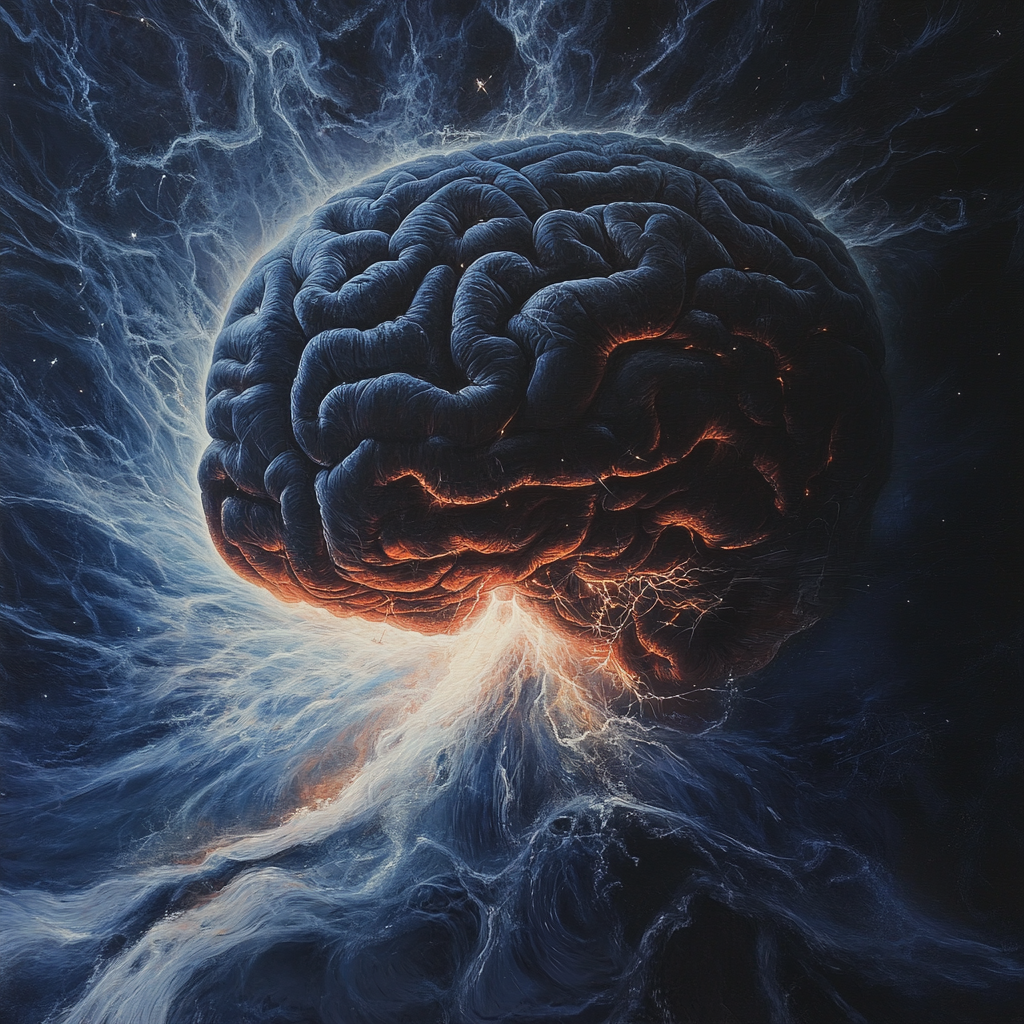
\A brilliant brian, leaking memories…\