In a plot twist worthy of Silicon Valley's finest dramas, December 2024 wasn't OpenAI's victory lap – it was Google's comeback story.
By Nate
Published: 2024-12-18
URL: https://natesnewsletter.substack.com/p/the-great-ai-power-shift
OpenAI's "12 Days of OpenAI" was meant to be their year-end flourish, a celebration of their dominance in both headlines and hearts. Instead, it became the backdrop for Google's most stunning counter-offensive in recent tech history. Through a relentless barrage of shipping across models, tools, and systems, Google hasn't just stolen the spotlight – they've fundamentally altered the AI landscape.
Let's cut to the chase: Google's Gemini captured over 50% of developer market share in just three months. If you're not in tech, imagine a new player in smartphones suddenly taking half of Apple's market in a quarter. That's the magnitude we're talking about.
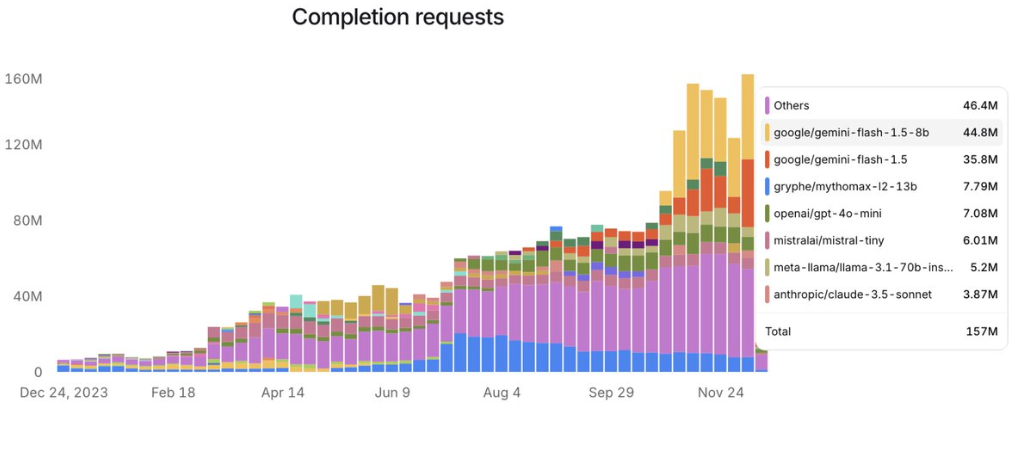
\Look for the canary yellow bar on the chart there—see how it starts to spike?\
Meanwhile, ChatGPT – OpenAI's crown jewel – hit a plateau. During what should have been their biggest product event of the year, consumer interest barely registered a blip. The AI throne, it seems, isn't as secure as we thought. Maybe it never was. Red shows search interest for “ChatGPT” over time and blue shows search interest for “Gemini”—I’m not here to say Gemini is winning with consumers, but OpenAI’s inability to make December pop should worry Sam Altman and Microsoft.
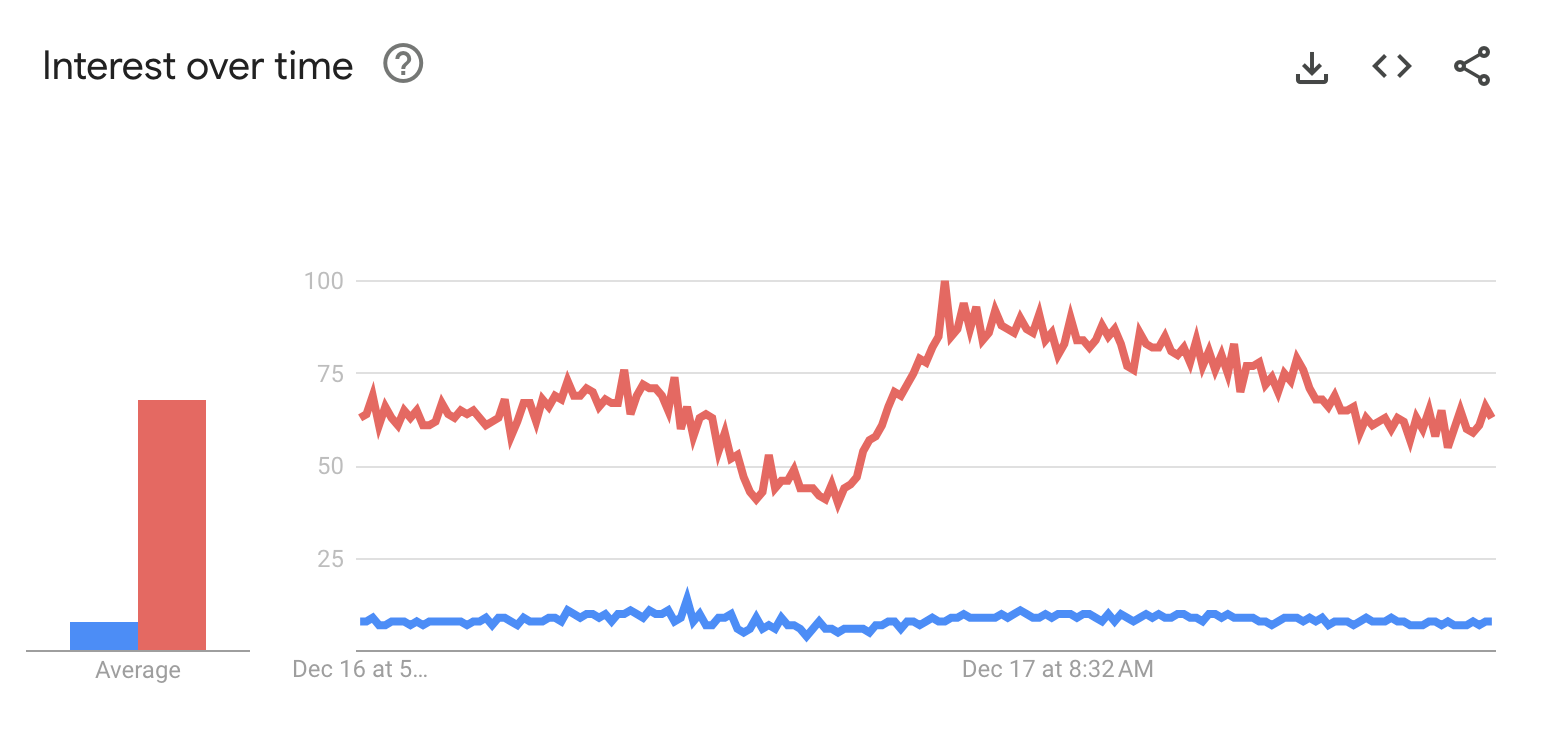
\Don’t assume flat search interest = lower product usage—product usage is direct\
But Google hasn’t been aiming at consumers with AI, at least not until now. Google has been aiming at experimenters—builders, developers, people who want to be on the cutting edge of AI.
Google's masterstroke wasn't just launching Gemini – it was making it irresistible to developers. The secret sauce? Speed, raw power, and seamless integration with Google's existing tool ecosystem. And what made it work is relentless ship after relentless ship. Let’s look at just a few of the big pieces Google actually shipped and how they’re outplaying OpenAI right now:
Gemini 2.0: Not just an upgrade, but a statement. It’s a performant 4-class model that is so fast people are literally asking Google to slow it down. I’ve never had that happen in all my years in product. The streaming feature is actually breaking it’s so fast.
VideoFX and ImageFX: Remember when OpenAI's Sora was the talk of the town? Google's new tools make it look like yesterday's news, especially with VideoFX's hyper-realistic videos.
Deep Research: A 10x productivity boost for academics and businesses. OpenAI's response? Still pending.
Project Astra & Mariner: While OpenAI talks about agentic AI, Google shipped it. Real-world context awareness and task completion aren't promises – they're products.
Here's where the story gets potentially interesting. Microsoft, OpenAI's biggest champion, suddenly finds itself in a precarious position. They bet big on OpenAI, integrating GPT models across their empire – Office, Teams, Azure. Now, with OpenAI facing a steep funding hill to fund GPT-6 at the same time the value of LLM pre-training gets called into question by a former founder, Sam and team are looking less like a safe winner.
Think about the stakes here: Google isn't just staking pole position in the AI race; they're threatening Microsoft's entire productivity stack. If Satya is correct and the agentic layer of intelligence is going to eat software, then these releases show Google is coming for Microsoft's enterprise stronghold.
The AI race isn't over – it's entering a new phase. This week OpenAI may yet come out with something compelling enough to pull developers in, jumpstart and ecosystem, and drive new consumer engagement. But the bar is high. Google has proven that dominance in AI isn't about who makes the splashiest announcements; it's about who can execute and launch product across the entire stack: consumer products, developer tools, and enterprise solutions.
Google spent a year or so seemingly asleep at the wheel and then definitively showed over the last week that it was betting for real on the space. OpenAI made a huge splash in 2022 and has been (in some sense) riding that hype train ever since. I’m not forgetting that GPT-4 was impressive, and o1 is a huge deal. OpenAI is still in the game to win. But they have been completely out-shipped on their biggest shipping week of the year by a competitor. It’s not great.
For those keeping score, this isn't just a corporate battle. It's a lesson in how quickly technology leadership can shift when a determined giant decides to wake up. OpenAI and Microsoft aren't playing with an easy edge (as Satya claimed last week) – they're fighting to stay relevant in a game where the rules have suddenly changed.
The question isn't whether Google has won the AI race. The ultimate prize of Artificial General Intelligence (and maybe Artificial Superintelligence) are still up for grabs. The question is: what will OpenAI and Microsoft do now that Google has shown its full hand?
Enjoyed this post? Subscribe and share!

\Who will seize the ultimate price on the chessboard? Google is back in the game!\