Microsoft’s grand vision reshapes enterprise software, but the real value lies in specialized, domain-specific AI solutions that co-exist—and flourish—alongside the giants.
By Nate
Published: 2024-12-17
URL: https://natesnewsletter.substack.com/p/when-ai-agents-devour-the-app-layer
In an hour-and-a-half conversation published on December 12, 2024, Satya Nadella sat down with Bill Gurley and Brad Gerstner to articulate Microsoft’s vision for the AI era. He delivered a series of provocative statements that challenge how we think about the entire SaaS ecosystem. “The traditional application layer as we know it — CRUD apps with business logic — is collapsing,” he said. “AI agents will become the new business logic, dynamically orchestrating across databases and services.”
For Nadella, the crux of this shift is that software itself—the familiar dashboards, interfaces, and menus—dissolves into something more fluid. “In the AI era, the app itself is just a view,” he explained. “The real value is in the agent that understands context, takes action, and continuously learns. The app layer dissolves into intelligent agents driving outcomes.” He went even further, stating, “AI-driven agents are not just assistants; they are becoming the business logic itself. They consume the SaaS application layer and rewrite how enterprises interact with data, services, and customers.”
These pronouncements sketch out a future where big players like Microsoft will be positioned at the center of the enterprise AI stack—where the logic, intelligence, and orchestration that once lived in traditional applications migrate wholesale into an agentic layer that controls the entire digital workflow.
In 2025, the lofty vision painted by leaders like Satya Nadella is clear: business logic, once diligently coded into the layers of SaaS applications, will have dissolved into the neural fabric of AI agents. These agents won’t just pull data from one tidy database; they’ll rove across fragmented streams, orchestrating operations that once required a small army of application logic and human oversight. Microsoft, AWS, and Google will be there to provide the broad infrastructure and general-purpose intelligence, making the corporate IT stack feel less like a sprawling complex and more like a single, cooperative brain.
And yet, that’s only one side of the story—an aspirational blueprint that looks neat from a CEO’s vantage point at a cloud titan. On the ground, especially in the Fortune 100, life is rarely that tidy. These companies are deeply multi-cloud, by design and necessity. They’ve spent decades cultivating resiliency by diversifying their vendors, leaning on different infrastructures for different workloads, and honing complex procurement strategies to prevent a single monolith from calling all the shots. Throwing AI agents into this mix doesn’t simplify these power dynamics. If anything, it makes them richer and more complex.
Sure, Nadella is right: AI agents will eat business logic at scale. But that doesn’t mean they’ll all come from Microsoft, or even that they’ll be tied to a single cloud. Enterprises, especially at the upper echelons, know better than to hand their crown jewels—data, operational processes, strategic insights—over to a single, unified intelligence layer without some counterbalance. They will mix and match. In practical terms, that means an AI agent for resource planning might come from a specialized vendor who understands the nuances of global supply chains in a way a generalist never could. Another agent for regulatory compliance might be built on top of a niche platform optimized for interpreting obscure pharmaceutical trial data. A third might handle risk analytics using a novel modeling technique that’s too esoteric for any mainstream provider to bother supporting, but critical to the company’s unique risk profile.
This fragmentation is precisely where the opportunity emerges for SaaS founders in 2025 and beyond. The future isn’t just about plugging into a single platform’s “happy path.” It’s about carving out domains where you can bring extraordinary depth, knowledge, and performance to bear. Think about it: As general-purpose AI handles the day-to-day grunt work, it leaves the door wide open for niche players who know how to push beyond “good enough” and into “absolutely indispensable.” If the big vendors aim for the 80% of tasks that are broadly similar across industries, then the specialized founders can focus on the remaining 20% that’s unique, messy, heavily regulated, or simply so cutting-edge that the giants haven’t deployed a solution yet.
This isn’t just a sliver of the market; it’s where outsized value lies. In the enterprise world, success often hinges on the exactitude of execution. A supply chain optimization system that’s incrementally better at predicting shortages can save a retailer millions of dollars a year. A compliance-checking agent that understands the nuance of pharma regulations across dozens of international jurisdictions could prevent catastrophic legal issues. A financial modeling tool that provides hyper-accurate forecasts at the micro-segment level can redefine a company’s investment strategy. These are places where a general-purpose agent’s “pretty good” performance isn’t good enough. The difference between pretty good and best-in-class can be measured in millions of dollars, reputational damage avoided, or entire product categories that never run into stockouts.
Founders who build such tools won’t try to fight the cloud giants head-on. Instead, they’ll integrate seamlessly into these agent ecosystems. They’ll ensure their products are cloud-agnostic, easy to slot into a procurement manager’s patchwork of services and data sources, and designed to harmonize with the large-scale orchestrators that big enterprises will inevitably deploy. Their end users—the analysts, compliance officers, operations managers—won’t care that their AI assistant for a specific task isn’t from the same vendor as their main AI orchestrator. They’ll only care that it’s the best solution available, a tool that knows the nuance of their work so intimately that using a general-purpose model would feel like stepping down from a luxury vehicle into a basic sedan.
As the generalist AI layers lay a broad foundation, these specialized solutions will form the pinnacles of excellence atop that base. They’ll be powered by proprietary data pipelines, informed by relationships with domain experts, and constantly honed against stringent benchmarks. Over time, the combination of broad capability (from the giants) and deep specialization (from the upstarts) will form a hybrid ecosystem—one in which both sides flourish. The cloud providers retain the massive scale and general-purpose appeal, while founders keep finding new corners of the enterprise universe to master.
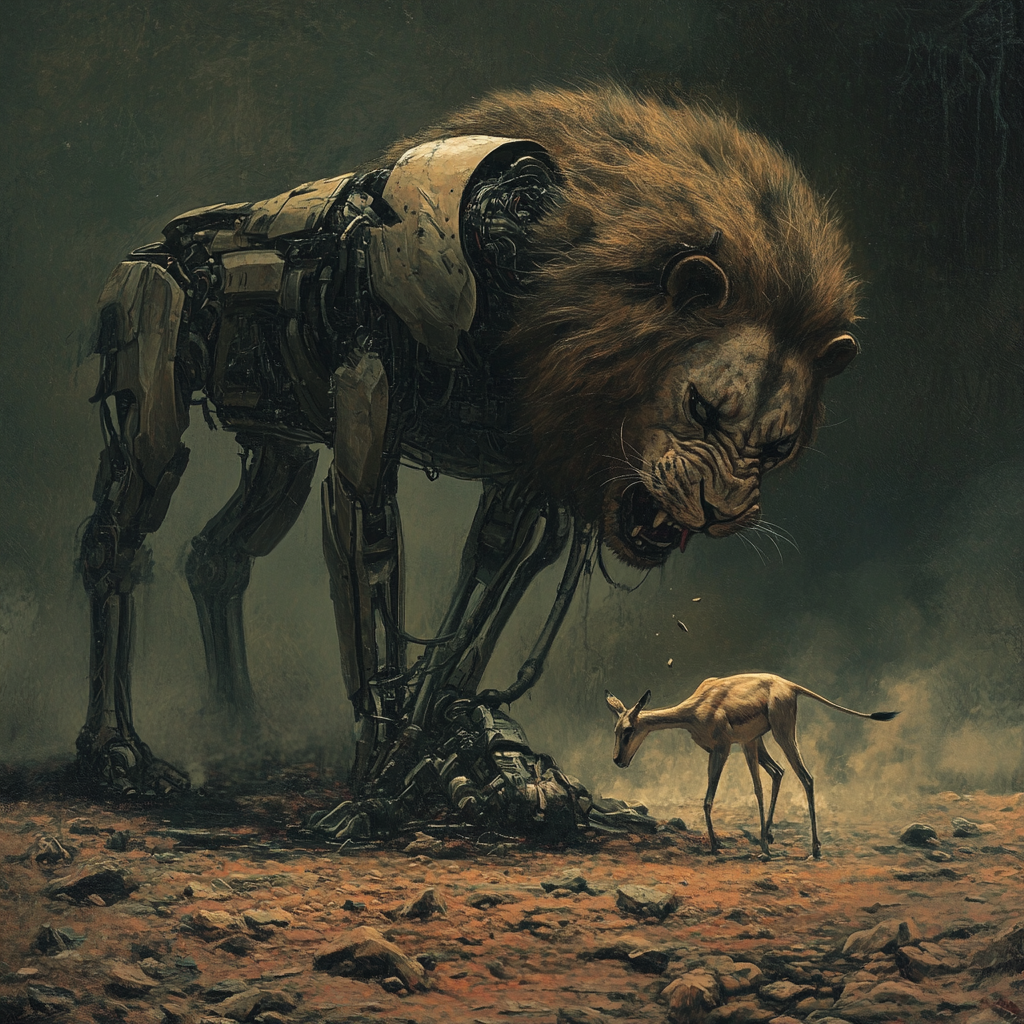
This is the real SaaS thesis for 2025: Don’t try to out-do Microsoft, AWS, or Google at serving everyone. Instead, serve someone deeply and unforgettably. Become the name enterprises whisper to each other when they realize their general-purpose AI agents can’t quite crack the toughest challenges. Be the specialist that proves indispensable, the vertical player who not only thrives alongside the giants but also ensures that the AI future remains a vibrant, multi-layered ecosystem rather than a one-size-fits-all machine.
In short, the next decade of SaaS won’t be defined by choosing sides in the battle for AI infrastructure dominance. It will be defined by finding the niches where precision matters, building alliances with larger platforms without depending on them entirely, and staking out turf where you can genuinely say: “We do this better than anyone in the world, full stop.” That’s how you build an enduring company in the age of agents, orchestrators, and multi-cloud complexity.
If you enjoyed this, subscribe and share!
\SAAS founders are the gazelles here lol\