Part 2 of "From Labor to AI: Unraveling the Historical Threads of Work, Economy, and Society"
By Nate
Published: 2024-11-21
URL: https://natesnewsletter.substack.com/p/beyond-automation-understanding-ais
The Robots Are Here
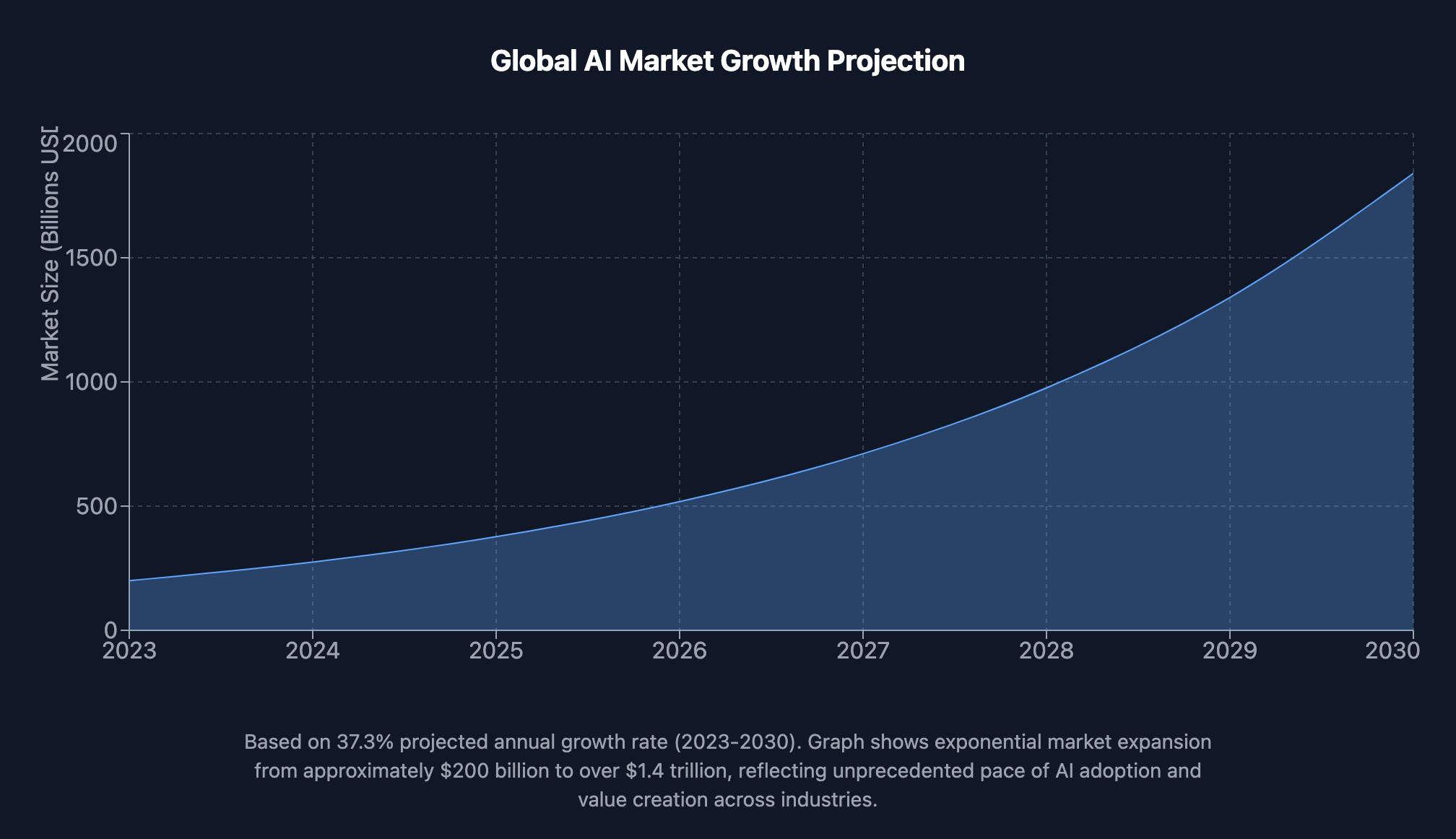
AI is reshaping the global economy faster than any technology in history. The numbers tell the story: AI markets are growing at 37.3% annually through 2030. This isn't just faster automation. It's a fundamental shift in how we create value.
The internet boom saw 20% annual growth. AI nearly doubles that rate. To understand why, we need to look at what makes AI different from every technology that came before it.
The Compounding Revolution
Past technological revolutions moved in straight lines. Steam engines gave us physical power. Assembly lines changed manufacturing. Computers handled calculations. Each breakthrough changed specific parts of how we work.
AI works differently. It builds on itself. When an AI system masters one task, it can apply that knowledge to new challenges. The technology doesn't just move forward—it accelerates. Each advancement makes the next one possible, creating a cycle of rapid improvement we've never seen before.
Look at manufacturing. AI will add $3.8 trillion in value to this sector by 2035. But this value isn't coming from cutting costs. It comes from doing things that were impossible before: machines that know when they'll break down before they do, quality checks that catch what human eyes can't see, and production systems that juggle thousands of variables at once.
When Efficiency Creates More Work
The old fear was that better technology would eliminate jobs. History shows the opposite happens, through a counterintuitive pattern first observed in the coal industry. In 1865, economist William Stanley Jevons noticed that as steam engines became more efficient at burning coal, coal consumption increased rather than decreased. This "Jevons Paradox" revealed a fundamental truth about technology: when we make something more efficient, we typically find so many new uses for it that total consumption actually increases.
This pattern has repeated throughout technological history. The printing press didn't reduce the need for written content—it created an explosion in publishing. Email didn't reduce business communication—it led to exponentially more messages being sent. Spreadsheet software didn't eliminate accounting jobs—it transformed every manager into a part-time financial analyst. Now AI is proving this principle at unprecedented speed.
When organizations adopt AI for tasks like content creation, they don't simply produce the same amount of content more efficiently—they expand into new formats, experiment with personalization at scale, and develop entirely new content strategies that would have been impractical before. The technology's efficiency doesn't reduce work—it expands the boundaries of what's possible, creating new forms of value and new categories of human work.
Or take copy writing. AI writing tools were supposed to replace human writers. Instead, they've created an explosion of new content. Companies using AI don't just write faster—they create new types of content, personalize at massive scale, and try strategies that would have been too time-consuming before.
This pattern repeats everywhere. Banks using AI for risk assessment create new financial products. Hospitals using AI diagnosis develop new types of preventive care. The technology doesn't just speed up old work—it creates new possibilities.
The Moravec Puzzle
In the 1980s, researcher Hans Moravec noticed something strange: what's hard for humans is often easy for computers, and what's easy for humans is often impossible for machines. This observation helps explain why AI isn't simply replacing workers.
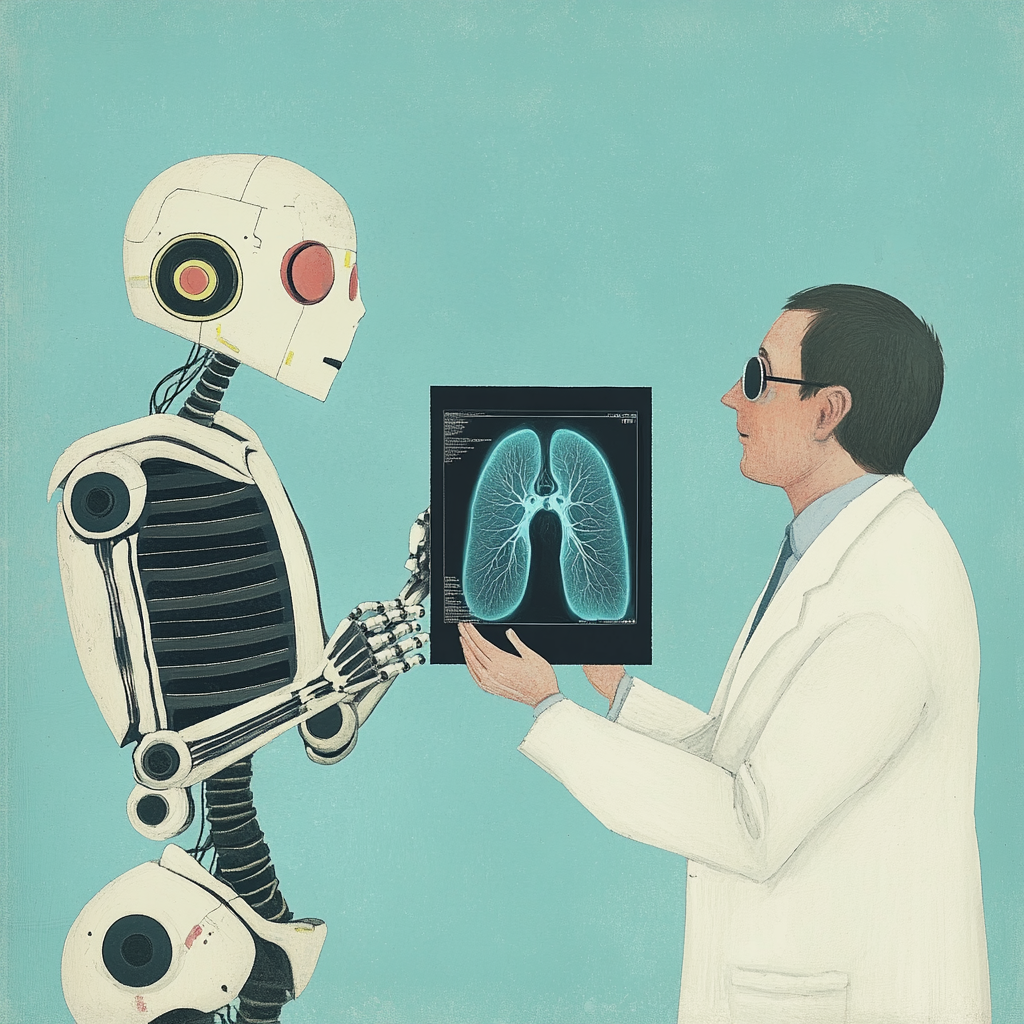
A machine can spot tumors in X-rays better than human doctors. But it can't match a family doctor's ability to understand a patient's full situation. An AI can process thousands of legal documents in minutes but can't grasp the subtle implications of legal precedent like an experienced lawyer.
The pattern appears across every industry:
- Legal AI can search millions of cases but can't build a persuasive argument
- Marketing AI can write endless variations but can't feel which message will move people
- Supply chain AI can calculate perfect routes but can't handle an angry customer
Humans and Machines Working Together
This reality is creating new ways of working. Instead of replacing humans, AI is combining machine precision with human judgment.
Manufacturing shows how this works. That $3.8 trillion in new value isn't coming from laying off workers. It's coming from new systems where AI handles the data and humans handle the exceptions, make judgment calls, and solve new problems as they appear.
This combination is creating jobs that didn't exist before:
- People who teach AI systems about real-world complexity
- Specialists who make sure AI systems stay on track with human goals
- Experts who design workflows that play to the strengths of both humans and machines
The Clock Is Running
The biggest difference between AI and past technologies is speed. The industrial revolution took centuries. Computers took decades. AI is changing everything in years. This compression of adaptation time represents a profound challenge to our social and economic systems that we've never faced before.
Previous technological revolutions gave societies time to develop new institutions, educational systems, and safety nets. Child labor laws, universal public education, and worker protection systems emerged gradually alongside industrial automation. The computer revolution allowed for generational adaptation—parents could guide their children toward emerging technical fields.
Look at that 37.3% growth rate again. It's not just about money—it's about pace. Companies and workers have less time to adapt than ever before. A factory worker in 1800 might have seen their children or grandchildren need to adapt to mechanization. Today, workers must reinvent themselves multiple times within a single career.
This speed creates opportunities but also puts pressure on everyone to keep up. The traditional model of front-loaded education followed by stable career progression is becoming obsolete. Instead, we're seeing the emergence of a new imperative for continuous adaptation, raising crucial questions about how to support workers through these rapid transitions.
What Comes Next
The AI revolution isn't about replacing human work. It's about transforming what humans can do. This transformation is happening faster and reaching further than any technology we've seen before. It's creating new challenges for workers, businesses, and society.
In our final piece, we'll look at how people are adapting to these changes, and what that tells us about the future of work in the AI age.
Next in this series: "Adapting to the AI Economy: Workforce, Skills, and the Path Forward," where we'll examine how workers and organizations are responding to these transformative changes, and what it means for the future of human work.
If you loved this, subscribe and share!
\Collaboration is the future of medicine!\