Multi-datacenter AI training is enabling logarithmic scaling
By Nate
Published: 2024-11-09
URL: https://natesnewsletter.substack.com/p/todays-sharp-thought-beating-moores
The pace of AI advancement has broken free from Moore's Law. While traditional computing power doubled every two years, AI capabilities now double or triple annually. This acceleration stems from a fundamental shift in how we build and run AI systems: multi-datacenter training.
Traditional data centers house various applications for multiple clients. This is what’s known as co-location, where clients act as tenants in a larger data center. But the new generation of AI facilities serves a single purpose: training large language models and other AI systems. These "AI factories" represent a complete redesign of computing infrastructure, built specifically for the demands of modern artificial intelligence.
The core innovation of multi-datacenter training lies in its distributed approach. Instead of concentrating computing power in one location, companies spread AI training across multiple specialized facilities. This distribution brings two major advantages: fault tolerance and scalability.
Fault tolerance matters because AI training runs require hundreds of thousands of GPUs working in perfect sync. A single chip failure can derail days or weeks of progress. Multi-datacenter setups solve this through checkpointing – saving progress across multiple locations. If one facility encounters problems, others continue the work while repairs happen.
The communication system between these AI factories (which could have chips numbering in the millions) resembles a neural network in themselves. Each facility processes its portion of the training independently but synchronizes regularly with others. This coordination relies on high-speed connections like Nvidia's NVLink, which can transfer massive amounts of data across long distances almost instantly.
The shift toward distributed AI training has sparked innovation in specialized hardware. While Nvidia currently dominates the market, companies like Groq are developing chips optimized for specific AI tasks. These purpose-built processors can offer faster speeds and lower costs for certain types of AI work, particularly in applying trained models to new data (inference).
Why does this matter? For users, this infrastructure evolution means more capable AI tools. Picture an AI travel assistant that doesn't just plan itineraries but actively adjusts them based on real-time changes in weather, traffic, or flight schedules. The raw computing power of multi-datacenter systems makes such responsive, context-aware AI possible.
The future of AI infrastructure blurs the line between hardware and software. Companies now design entire datacenter systems – from individual chips to management software – as unified systems. The datacenter itself becomes the computer, and its distributed nature could be key to achieving artificial general intelligence. The data center becomes the computational unit.
Today’s Sharp Thought: Moore’s Law was always more complex than it appeared on the surface, but we would be wise at this point to forget it entirely. Our fundamental scale constraint is now the data center. The data center is becoming the new chip, and data centers can out-scale Moore because they combine two exponential curves at once: the continued underlying growth of compute power (H100’s are already last generation) and on top of that the multiplied value of megascale data center installations. This is why Sam Altman views AGI as (by one definition or another) achievable in 2025.
Enjoyed this one? Subscribe and share!
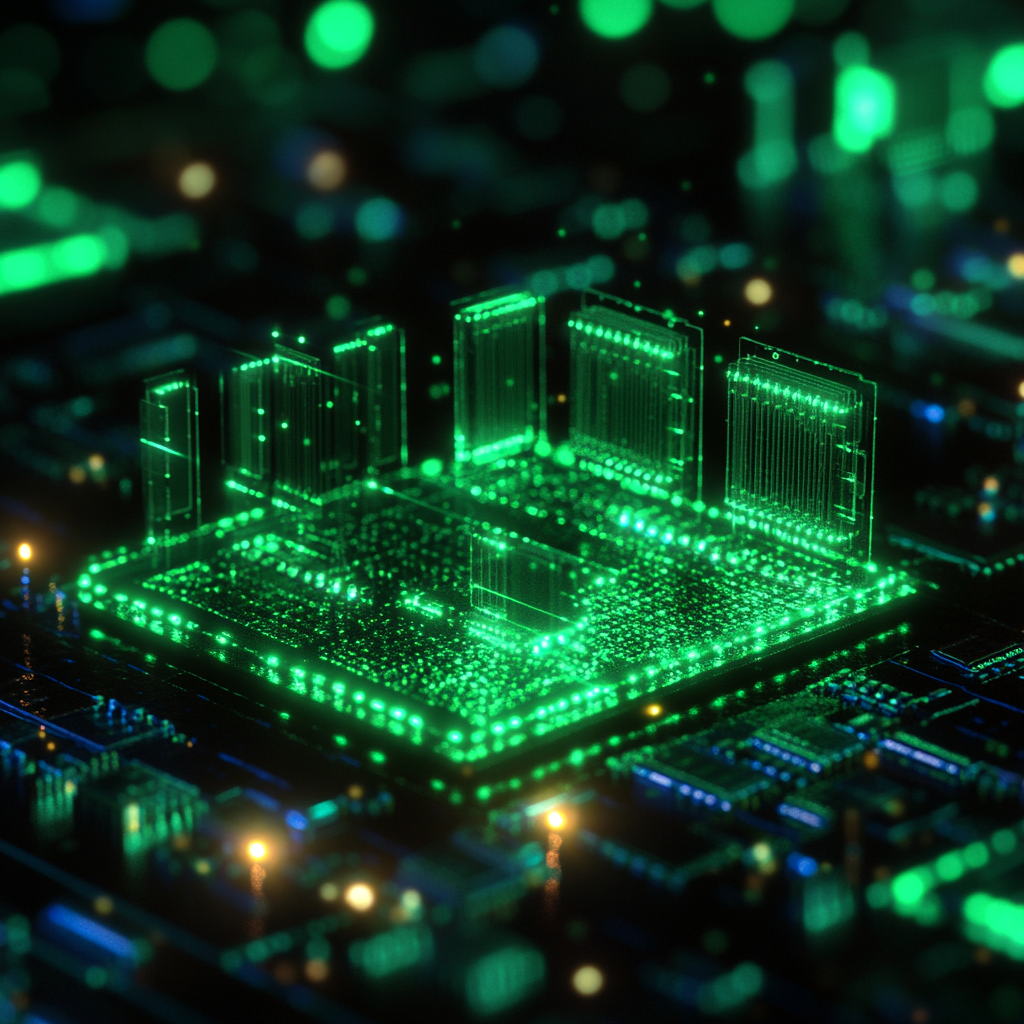
\The chips are talking to each other faster and faster…\