A clear-eyed look at deployment in modern AI building tools
By Nate
Published: 2024-11-08
URL: https://natesnewsletter.substack.com/p/you-get-a-deploy-we-all-get-a-deploy
Writing code is only half the battle. The harder part often comes next: deployment. And LLMs haven’t automatically fixed that deploy part yet! For non-devs reading here, deployment means taking code from a developer's computer and making it run somewhere that users can actually access it. Think of it like the difference between cooking in your home kitchen (development) and running a restaurant kitchen that serves hundreds of customers (production). Hopefully you make this transition without setting the kitchen on fire!
Traditionally, the deploy process has meant dealing with servers (powerful computers that run your code), containers (packages that hold all your code and its requirements), and complex deployment pipelines (the step-by-step process of getting your code running safely).
So why does deploy matter now?
Ten years ago, deploying code meant either buying and maintaining your own servers or learning complex cloud platforms like Amazon Web Services. It's like having to build or rent an entire commercial kitchen just to try out a new recipe. Today's developers face different pressures. Teams need to release new features faster. Individual developers want to test ideas without buying expensive equipment. Startups need to serve customers quickly without hiring specialists to manage their infrastructure.
With the advent of LLMs, a new set of tools has emerged to address these challenges, and I want to go over just a few of them here: Val Town, Bolt, v0, and Cursor. Each represents a different philosophy about how to get code from development to production. Understanding their approaches helps you pick the right tool for your needs, just as different types of restaurants need different kitchen setups. I included them for range, and yes I know Val Town isn’t as well known but I thought why not expand our horizons a little?!
A Nice Sample of LLM-Driven Coding Tools
Yes, there are others, but these offer a spread that illustrates use-cases.
Val Town rethinks deployment entirely. Instead of treating deployment as a separate step, Val Town makes it automatic. When you write a piece of code that does something useful (called a function), it's immediately available for other applications to use. Write code that creates a webpage, and it's instantly visible to users. It's like having a kitchen where dishes appear on customers' tables the moment you finish writing the recipe. This works great for quick experiments and simple applications, but you give up some control over exactly how and when your code runs.
Bolt moves your entire development setup to your web browser. Created by a company called StackBlitz, it's like having a complete kitchen in the cloud that you can access from any computer. This works especially well for frontend development - creating the parts of applications that users see and interact with, like buttons, forms, and layouts. It's perfect for collaboration, like having multiple chefs work in the same kitchen remotely. However, it struggles with more complex tasks, especially those involving storing and processing large amounts of data.
v0 specializes in React and Next.js development. React is a popular tool for building user interfaces - all the visual parts of an application that users interact with. Think of v0 as a specialized kitchen designed specifically for French cuisine. It even includes an AI assistant, like having a master chef guide you through recipes. This focused approach means v0 does React development very well, but it's not much help if you need to cook Italian food.
Cursor works differently. Instead of automating everything, it gives developers complete control over how their code is deployed. Built on a popular code editor called Visual Studio Code, it's like having a fully customizable professional kitchen where you control every aspect of the setup. You can handle complex projects using many different programming languages (different ways of writing code for different purposes). This power comes at a price: you need more knowledge and time to set everything up correctly.
Real World Examples
When building a way for different applications to talk to each other (what developers call an API), the differences between these tools become clear. Think of an API like a restaurant's ordering system - there's a standard way to request things (the menu) and get results (your food). Val Town makes this simple: write a piece of code that does something useful, and it instantly becomes available for other applications to use, much like putting a new item on the menu. You can easily add security checks too - like making sure only certain customers can order certain dishes. Bolt makes this process harder, requiring you to set up the whole kitchen before you can serve a single dish. v0 only lets you create APIs in one specific way (using something called Next.js), like a restaurant that can only serve French cuisine. Cursor gives you complete freedom to set up your kitchen however you want, but you have to install the stoves and arrange the prep stations yourself.
Creating a website or web application shows similar patterns. Val Town handles small parts well but struggles with larger sites - it's great for appetizers but not for full menus. Bolt provides an excellent environment for building everything users see and interact with, like designing the perfect dining room. v0 was built specifically for this purpose, especially when using React - it's like a restaurant designed from the ground up for a specific type of cuisine. Cursor offers the most flexibility but requires more setup work, like building your restaurant from scratch.
For automation tasks - having your code run on a schedule or in response to certain events - each tool shows its character. Val Town shines here: tell it when to run your code, and it handles everything else. It's like having a kitchen that automatically preps ingredients at specific times. Bolt wasn't designed for this kind of work at all. v0 can handle basic automation related to building and releasing code. Cursor can do any kind of automation you want, but you need to set up and manage the scheduling yourself.
Picking Your Poison
When picking a tool, start by examining your goals. I cannot emphasize this enough. Goals matter. Once you have goals you can pick your tool more effectively.
Think of it like choosing what kind of food service to open. Quick prototyping - testing new ideas rapidly - works best with Val Town or Bolt. It's like running a food truck where you can change the menu daily and experiment freely. Building a complete application that's ready for customers (what developers call a production app) is more like opening a full restaurant - you might want v0 or Cursor for that. Complex systems that involve many different parts working together need Cursor's flexibility, like running a chain of restaurants with central kitchens and multiple locations.
Control needs matter too. Val Town automates everything but limits your choices - like a highly automated ghost kitchen where everything follows a strict system. v0 and Bolt provide standard ways of working that suit most projects, similar to a conventional restaurant kitchen layout that most chefs would find familiar. Cursor gives you complete control if you're willing to handle the complexity - like designing and building a custom kitchen from the ground up.
Project size affects your choice as well. Small scripts - bits of code that do simple tasks - run perfectly on Val Town. It's like having a single chef prepare simple dishes. Medium-sized applications fit well with Bolt or v0, like running a busy café. Large applications with many users need Cursor's robust feature set, like managing a large restaurant with multiple dining rooms and kitchens.
Team size influences the decision too. Solo developers, like individual chefs, can use any of these tools effectively, but might prefer Val Town or v0 for their simplicity - like a small restaurant staff who need clear, standardized procedures. Large teams would need Cursor's advanced features for working together or potentially an alternative like Copilot for Github (out of scope here)—like a large restaurant staff with specialized roles and clearly defined processes.
Looking Forward
The landscape of deployment tools keeps evolving. These tools show different approaches to solving the same problem: getting code from a developer's computer to somewhere users can access it. None of them works perfectly for every project, just as no restaurant setup works perfectly for every type of cuisine or service style. The key is matching your needs with the right tool's strengths.
As projects and teams grow, their needs change. A developer might start with simpler tools like Val Town or v0 for testing ideas - like using a pop-up kitchen to test a restaurant concept. They might move to Cursor when they need more control, similar to moving from a food truck to a permanent restaurant location. The tools will keep changing, but the core challenge remains the same: finding the fastest path from idea to working code.
The future likely holds more consolidation. We might see these tools borrow features from each other - Val Town's simplicity with Cursor's control, or v0's AI assistance with Bolt's collaboration features. It's like seeing restaurants combine fast-casual service with fine dining elements, or ghost kitchens adopting traditional restaurant practices. For now, the diversity of approaches gives developers more options than ever to get their code running where users can access it.
Today’s sharp thought: Deploy isn’t just for developers. Understanding these tools matters even if you're not a developer. As software continues to eat the world, the way it gets deployed affects everything from the apps on your phone to the websites you visit. These new tools are making it easier than ever to turn ideas into working software - and that means more innovations reaching users faster than ever before.
If you enjoyed this, subscribe and share!
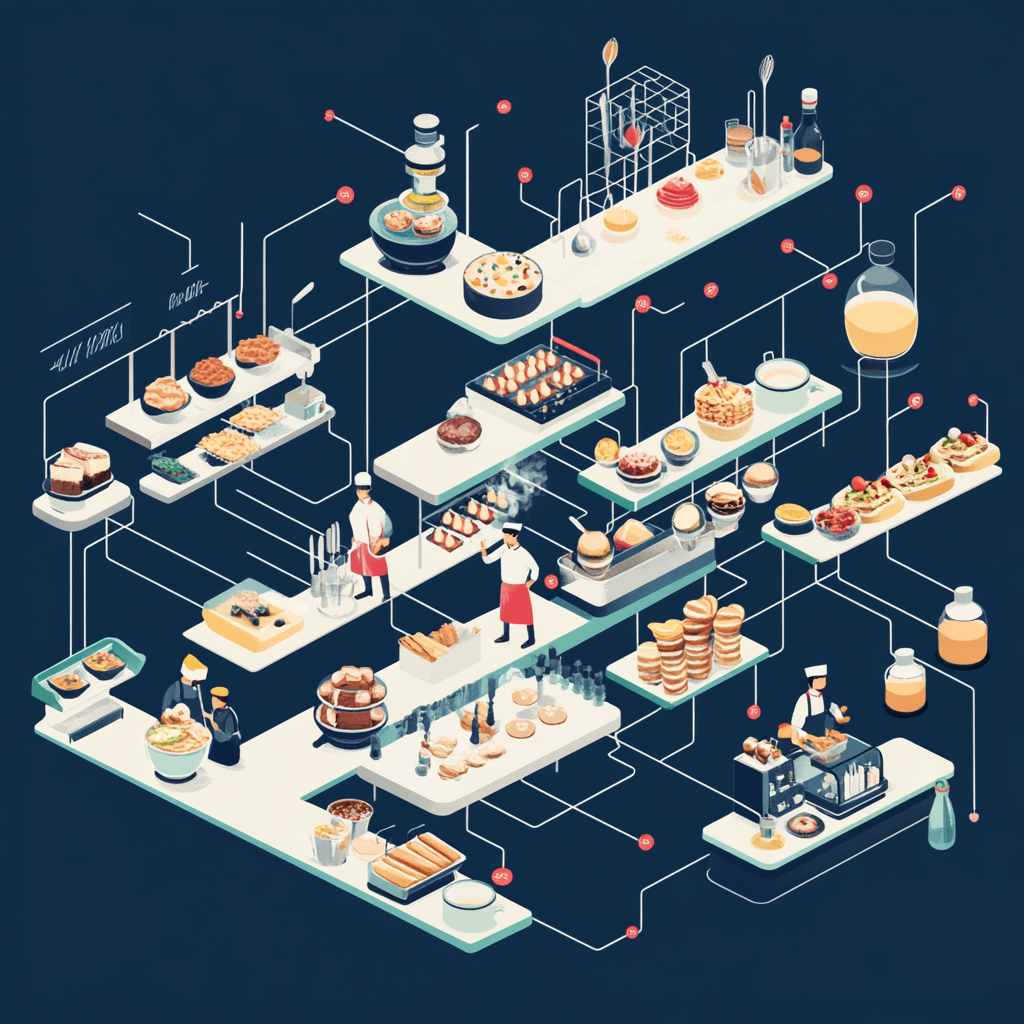
\This is what Midjourney thinks a restaurant API is like\