They sliced them, scanned them, pulped the paper. Nobody did it out of malice: destroying the original was the cleanest legal route.
By Matteo Arnaboldi
Published: 2026-08-19
URL: https://aiespressotechbrew.substack.com/p/27-they-destroyed-millions-of-books
This issue in 30 seconds:
-
Anthropic bought used books, sliced them, scanned them, pulped the paper.
-
Nobody did it out of malice. Destroying the original is the cleanest legal path.
-
The scarce asset of 2026 isn't text anymore. It's how you judge work.
Welcome back to the bunker.
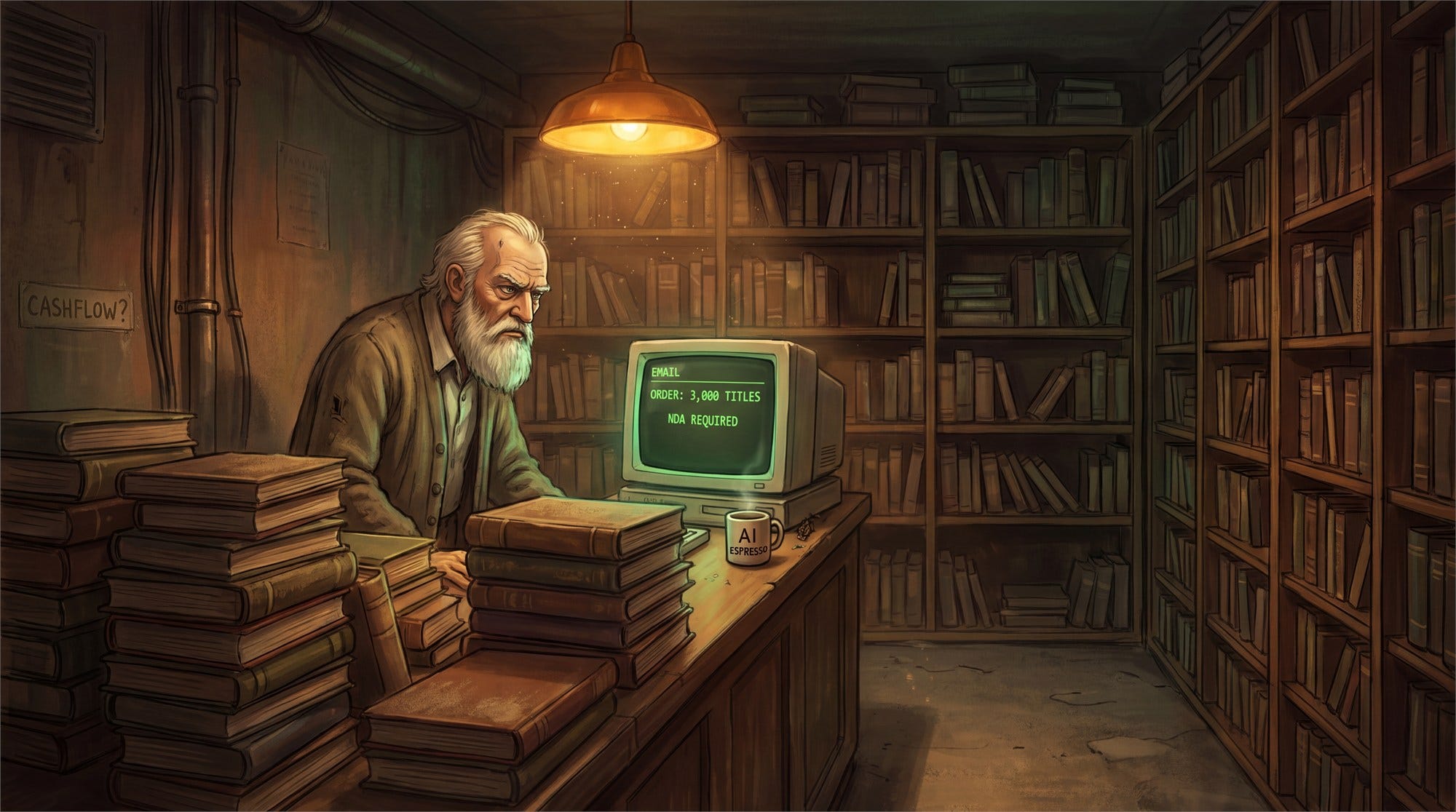
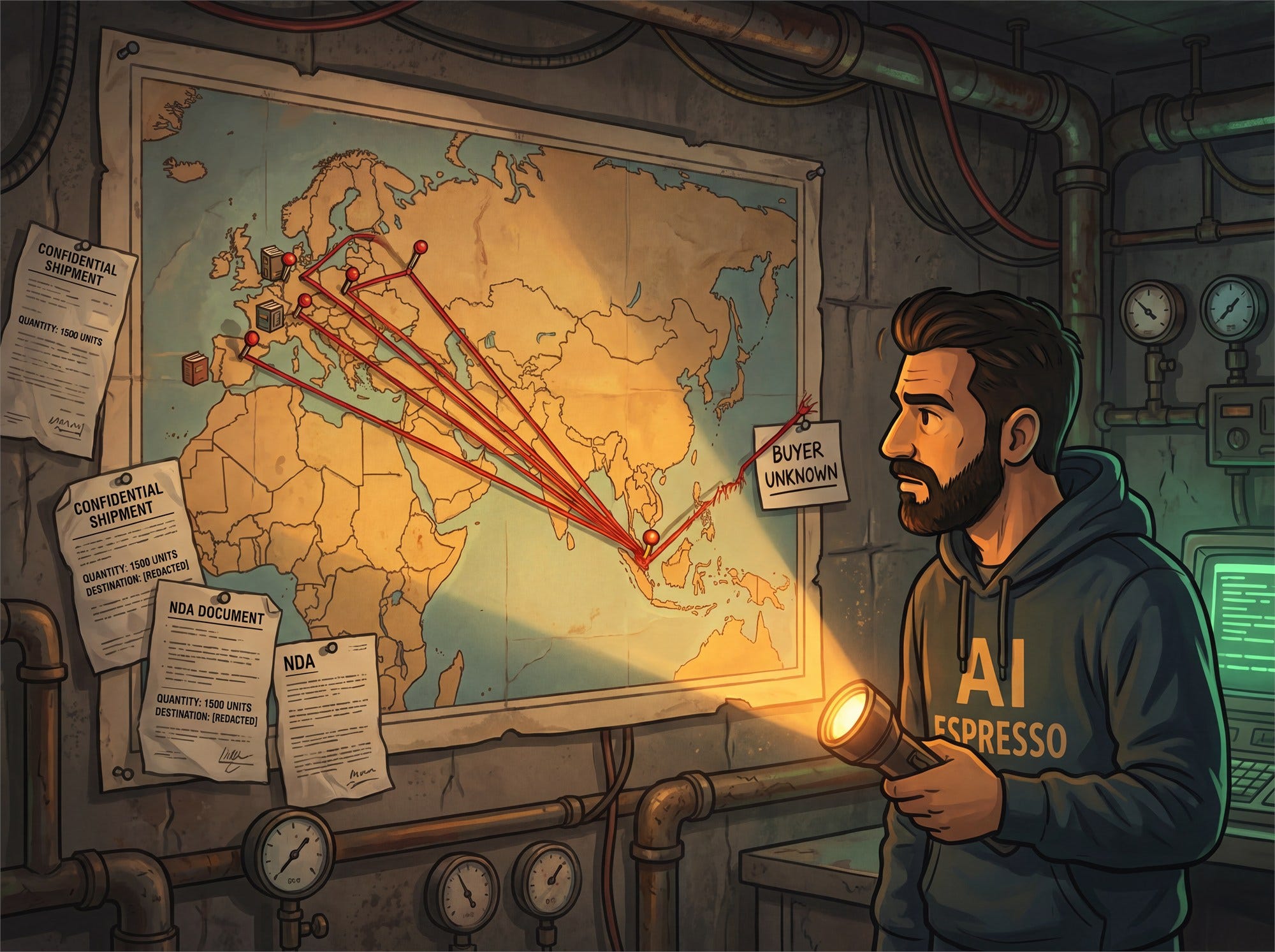
Pieter de Vries runs a specialized bookshop in Haarlem: out of print titles, twenty books a week. A few months ago a company in Singapore emailed him wanting almost three thousand titles. Not one title in three thousand copies: three thousand different titles, picked by ISBN, no questions about content, NDA attached. He figured it was phishing. It wasn't. It was the tail of a supply chain that went industrial in 2026: brokers buying used books in blocks of a thousand up to a million, shipping them to a vendor who cuts the spine off with a hydraulic blade, runs the loose pages through a high speed scanner, and pulps the paper.
The press covered it with the tone you'd expect: AI burns books, the Library of Alexandria in reverse. That framing is wrong, and the truth is more uncomfortable. Nobody cut those books out of cruelty. They cut them because cutting them was the cleanest legal path. And the part that touches your P&L isn't the paper. It's what suddenly became scarce, and what it costs now.
Honesty note. This issue is about Anthropic, the company behind Claude, the model I work with every day and wrote this newsletter with. I'm not softening anything, but you'd rather know up front.
☕ Cup in hand. Let's go.
💡 Thought of the Day
"When absurd behavior becomes systematic, it's almost never the people. Someone wrote the rules of the game badly, and they're following them to the letter."
🧪 AI in Action
#1: The Man Who Saved Google's Books Was Hired to Slice Them
January 2026. Thousands of unsealed pages from Bartz v. Anthropic contain one line from an internal document:
"Project Panama is our effort to destructively scan all the books in the world."
The same document notes it wasn't meant to go public. Not a company hiding a crime. A company that knows how it will sound.
The plan, from the filings: buy used books in bulk, favoring uncommon titles over bestsellers already available everywhere. Cut the spine. Scan the loose pages. Build a permanent internal digital library. Recycle the paper.
But the detail that tells the story is a hire. In early 2024 Anthropic hired Tom Turvey, for years the head of partnerships at Google Books. The man who digitized over forty million volumes without destroying one, then defended that model in court for a decade and won. They hired him to build Panama.
They didn't buy an engineer, and they didn't buy technology: cutters and scanners have existed for twenty years. They bought the only person alive who had already won that lawsuit once. What's scarce in this market isn't technical. It's knowing how to acquire a global catalog while staying on the right side of the line.
The number that doesn't exist: the filings mention vendor capacity of five hundred thousand to two million books in six months, and forty articles repeat it as a final tally. It's planned capacity. Parts of the documents are redacted. How many books were actually destroyed, nobody knows. Same with "rare": Panama bought uncommon titles because they're cheap and not already digital, not because they were collector's items. Snopes fact checked that and scaled it back. Your first test: anyone headlining "millions of rare books destroyed" is selling outrage, not information.
The solid fact is big enough alone: a multibillion dollar company launched the systematic destruction of legally purchased books, to build an archive nobody outside it will ever consult.
#2: The Burning Wasn't Malice. It Was Compliance.
June 2025, Judge William Alsup sets precedent in three pieces.
Training a language model on books can be US fair use, because the use is transformative. The model doesn't hand you back the book. It learns to write.
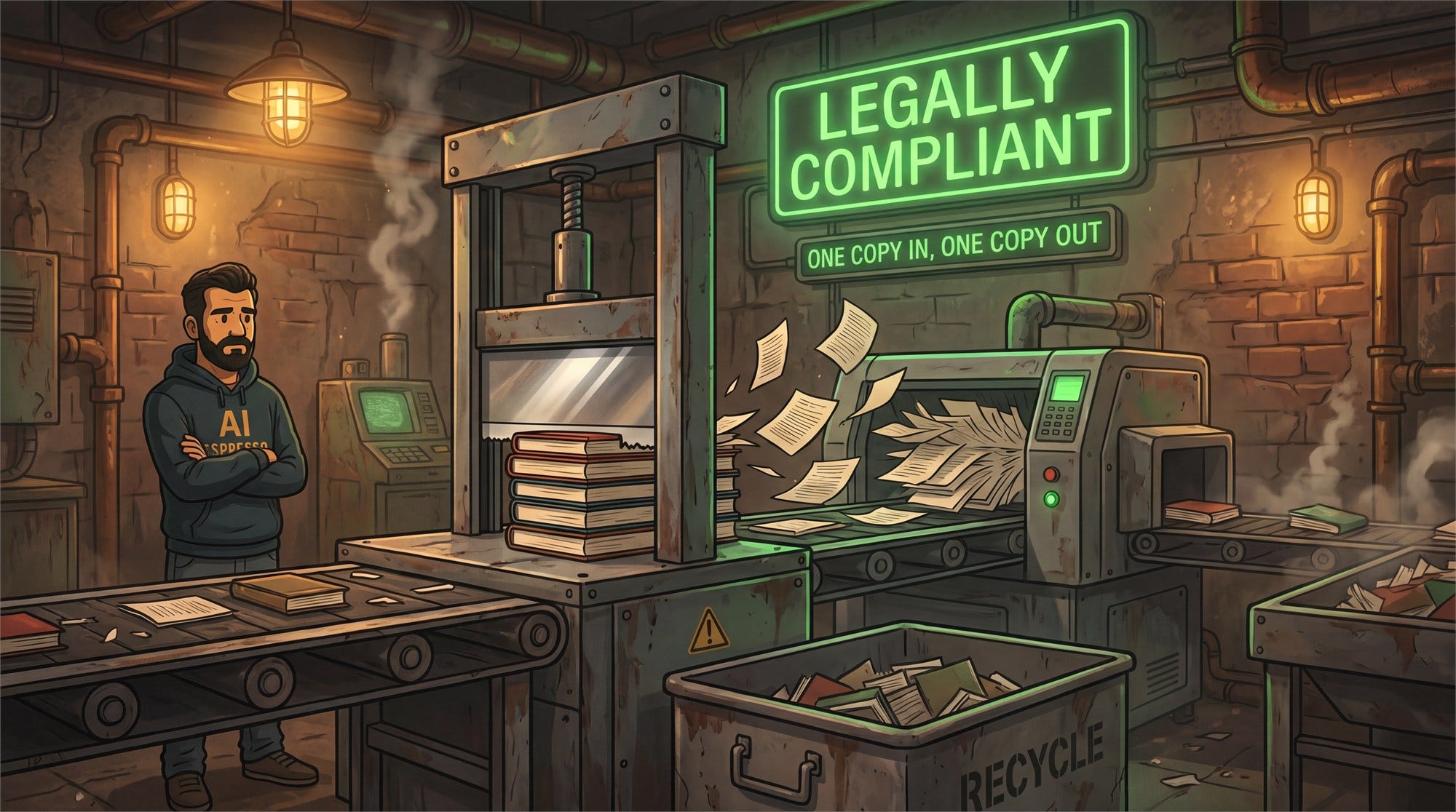
Buying a paper copy, digitizing it and destroying the original can be lawful, because the digital copy replaces the physical one. A format shift, like ripping a CD you own. One copy in, one copy out.
Downloading pirated books from LibGen and PiLiMi is a different matter, and fair use doesn't cover you there.
The second point is where the gear sits. It holds only if the paper disappears. Keep the physical book plus the scan and you have two copies, and two copies aren't a format shift. They're a reproduction. So the ruling that made the operation legal makes destruction the cleanest route. Pulping isn't overzealous staff. It's the technical condition holding the legal defense up. Nobody burned books out of contempt for culture. They burned them to stay inside the ruling.
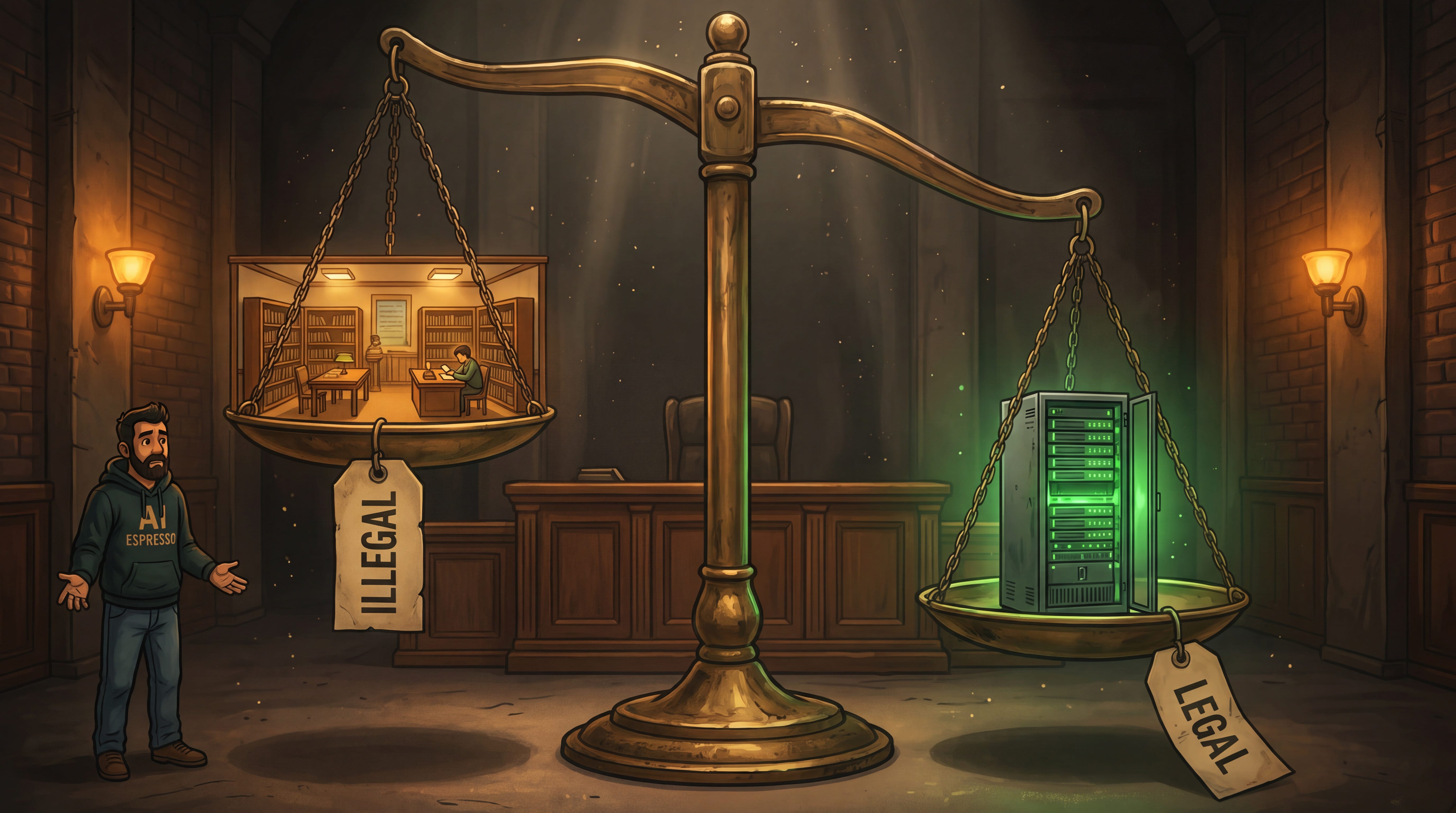
Now the punch, because there's a second decision nobody sets beside this one. September 2024, Second Circuit, Hachette v. Internet Archive. A nonprofit that buys physical books, scans them, and lends the digital version one copy at a time, to one person at a time, like your local library. Verdict: not fair use. Illegal.
Read them back to back.
Buy a book, scan it, lend it to one human at a time: unlawful.
Buy a book, scan it, destroy the original, feed it to a machine you sell by subscription: lawful.
Same books, same blade, same scanner.
Honesty, or I become what I criticize: the cases turn on different points. The Internet Archive redistributed copies, Anthropic kept them locked inside, and the distinction stands legally. The practical result is still the one above, and the question stays open: why is a digital copy that replaces paper fine when buried in a private lab, and not when a library lends it one person at a time?
Your operating point, and you're neither scanning books nor running a library: systematic behavior that looks absurd is almost never irrationality. It's a badly written incentive, followed with precision. If a department has done something senseless for months, there's a rule, a bonus, an evaluation criterion rewarding exactly that. Swapping people changes nothing. Find the rule.
From the Counter: the absurd procedures inside companies are almost never the work of stupid people. They're the work of someone who wrote an evaluation criterion in a hurry three years ago. Now twenty people execute it perfectly.
#3: The Twentieth Century Hole: Why Free Public Domain Isn't Enough
If all you need is good human text, why buy and destroy instead of using what's already free?
Because the clean alternative exists and is funded by the same players. December 2024, Harvard's Institutional Data Initiative released nearly a million public domain books, training ready, open to anyone. Five times the size of the infamous Books3. Paid for by OpenAI and Microsoft, alongside millions of historical newspaper pages with the Boston Public Library.
So why the blade? For a reason that has nothing to do with technology: the public domain ends almost a hundred years ago.
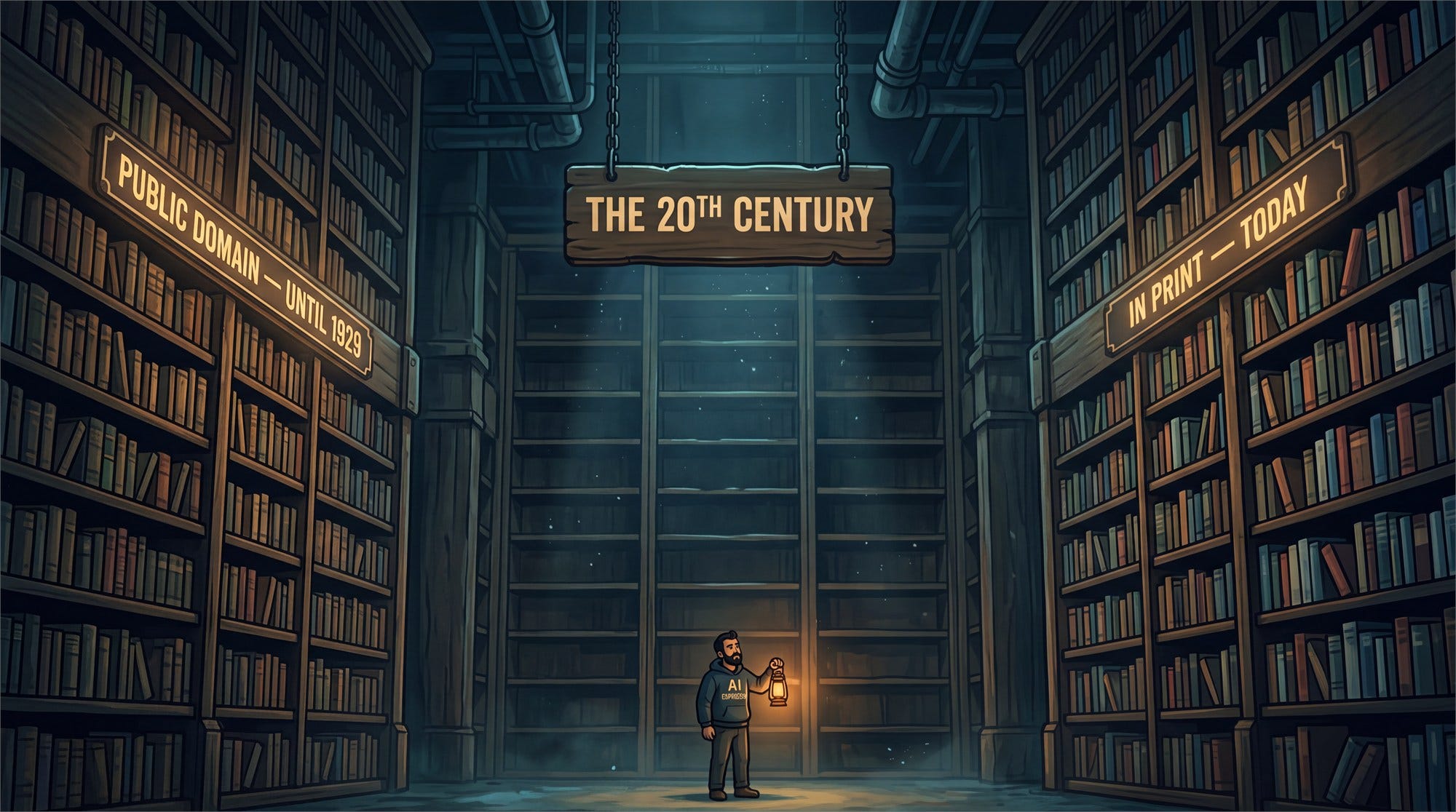
The twentieth century, where practically all the technical, scientific, managerial and narrative knowledge we still use was written, is almost entirely out of print but still under copyright. Nobody reprints it because it doesn't sell. You often can't license it because there's nobody to contact: publisher bankrupt, author dead, heirs untraceable. Orphan works. It isn't digital because nobody had a reason to digitize it.
An entire century of human knowledge, protected and unreachable at once. The only legal way in is buying the used physical copy, somewhere, in a bookshop in Haarlem.
Hence the secondhand market exploding from April 2026. Hence ISBNdb as the infrastructure for bulk orders from a thousand to a million copies. Hence booksellers in the Netherlands, Germany, Switzerland and Spain reporting orders selected by code, with NDAs, going from twenty books a week to several hundred. It isn't greed. It's the only open corridor into the twentieth century.
The real problem isn't the blade. It's a rights system where a century of culture is too protected to be used and too abandoned to be sold. When the only legal door to a body of work is buying the last physical copies in circulation, eventually someone buys them all.
Who's behind the Singapore company is unknown, and brokers don't say who they buy for. Anyone claiming "all the AI companies are doing this" is guessing: the documented case is still one. That hole is the most interesting question left open.
#4: The Web Is Burned, and Paper Is Pre-Bomb Steel
Why would a company that already swallowed half the internet bother with paper?
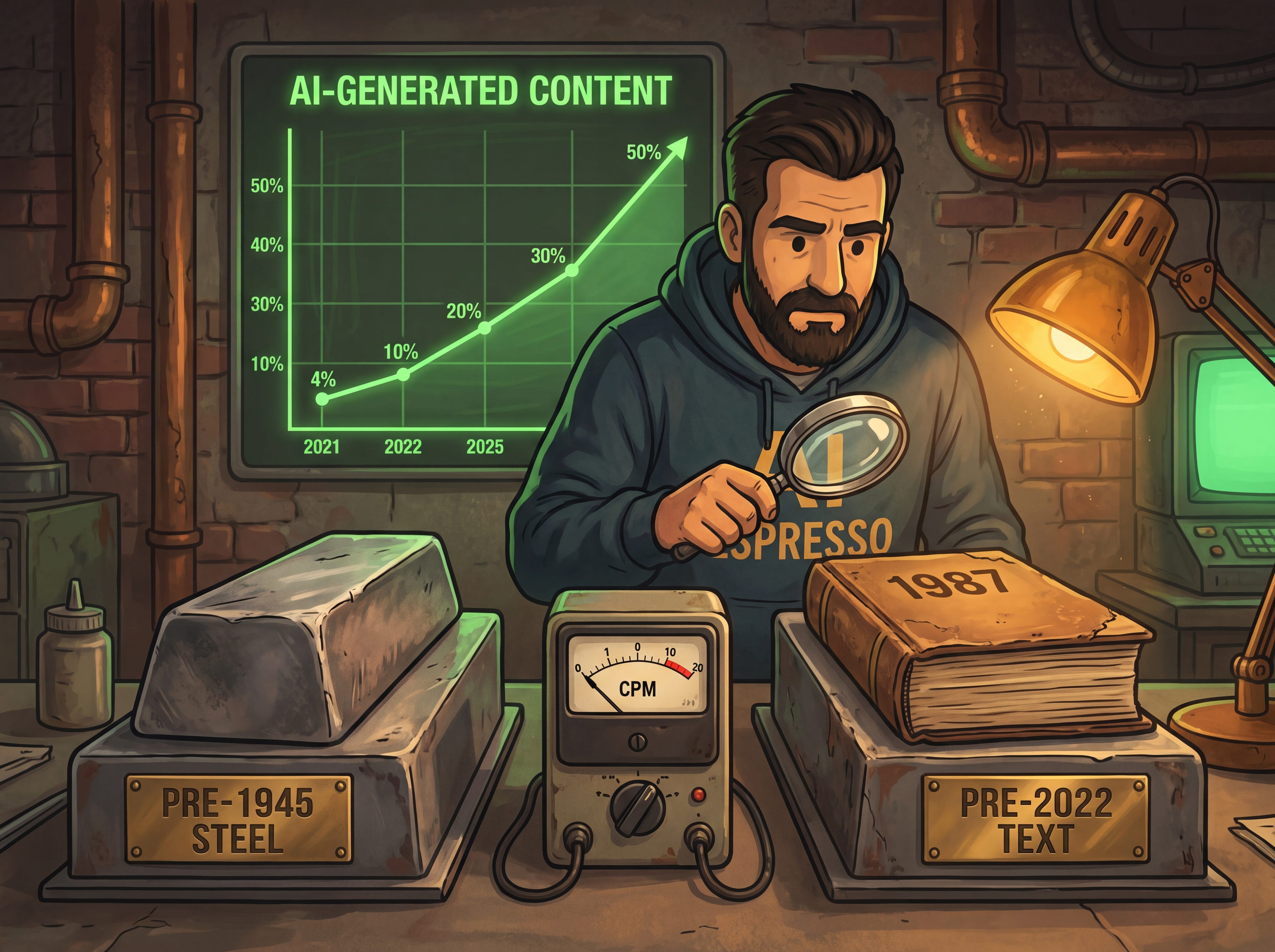
One number. Online articles written predominantly by AI were 4.2% before November 2022. By the end of 2024 they had passed 50%. In two years the largest data source humanity ever built filled halfway with output from the machines that learned on it.
The technical term for training a model on another model's output is model collapse. Not philosophy, statistics. Each generation on synthetic data reduces variance and clips the tails of the distribution, and the tails hold the rare cases, the exceptions, the unusual phrasings. Exactly what makes text interesting instead of mediocre. Photocopy the photocopy: a few rounds in, uniform grey.
And here's the analogy that's the most useful thing you'll carry out of this issue.
After 1945, atomic testing filled the atmosphere with radioactive isotopes, and since then all steel produced in the world is slightly contaminated, because smelting uses air. For sensitive instruments that steel is useless. For decades there was one solution: recover steel from ships that sank before the bomb. Low background steel, worth a multiple of the normal kind.
Human text written before November 2022 is pre-bomb steel.
Panama isn't a reading project. It's a salvage operation. The books are the wrecks: sealed, dated, guaranteed human, impossible to contaminate after the fact. A book printed in 1987 is the only text format where you have mathematical certainty no machine ever touched it.
Now the part about you.
If uncontaminated human text is the scarce asset of 2026, your company's archive just changed nature.
Client call transcripts. Support tickets with your people's real answers. Internal manuals. Meeting minutes. Training recordings. Sales emails, including the ones that went badly. Site notes, reports, appraisals, quotes with the reasoning written by hand.
Three traits that together are worth gold: human, dated, never online. No model on earth has it, because there was no way to get it.
I'm not telling you to sell your data to an American lab, which for ninety nine companies out of a hundred is a terrible idea. Something simpler: that material is the fuel for building, in house, a system that knows how the work gets done at your place, with your language, your edge cases, your recurring objections. A generic model knows everything about the world and nothing about your trade. Only your archive closes that gap. Anyone who spent ten years deleting call recordings to free up space threw away the one thing AI can't generate on its own: the evidence of how humans in that industry actually work.
From the Counter: at Morfeus every call runs through a system that transcribes, structures and analyzes it, and that material has become the basis of how we train people and answer clients. It started because I got tired of relistening to recordings. The real value landed later, when I noticed the archive answered questions no generic model could. Not because it's smarter. Because it had been in those rooms.
#5: They Don't Buy Your Text Anymore. They Buy Your Judgment.
The book story is already old. Look at the human data market over one year, and read the numbers slowly.
Handshake: enters in early 2025 with annualized revenue between five and ten million dollars. January 2026, five hundred fifty million. April 2026, nearly one billion one hundred million. A hundred times in a year.
Mercor: about five hundred million annualized in September 2025, over a billion in February 2026, over two billion in June 2026.
Scale, Surge, Mercor and Handshake together are more than three quarters of the sector's revenue. Surge pays fifty to two hundred dollars an hour to frontier experts. Mercor averages eighty five, seniors above two hundred. Handshake, one hundred to one hundred twenty five.
The important part isn't the money. It's what they buy with it. In 2026 the frontier moved from labels to RL environments: environments where a professional doesn't produce content, but writes the rubric used to judge whether a piece of work is done well. That criterion becomes the reward signal that trains the model.
Rewind the whole issue. First they bought raw web text, free. Then it got contaminated, and they bought paper books by weight, slicing them. Now they pay two hundred dollars an hour to a flesh and blood professional to explain how they tell good work from mediocre work in their own trade.
They're not buying what you wrote. They're buying how you judge.
It's the one thing the web never contained, because nobody ever wrote it down. Your professional judgment lives in your head, shows up in your decisions, and is documented nowhere. It's what makes a senior a senior, and what nobody hands to a junior except by osmosis over three years.
What you do Monday morning.
First: stop deleting. Recordings, transcripts, tickets, reviews, rejected drafts with the reason for the rejection. Storage costs are ridiculous next to what you're throwing away. You don't need a project. You need to stop destroying.
Second, the real work: write the criterion. Not the procedure, the criterion. Not "how to build a quote," but "how do I tell whether this quote is good before I send it." Not "how to handle a complaint," but "what separates an answer that closes the problem from one that postpones it." Tiring work nobody does, because it produces nothing visible the same day. It's also exactly the piece American labs pay two hundred dollars an hour for.
Third: use that criterion as instructions to the model, not as documentation to file. The difference between generic output and useful output almost never lives in the model. It lives in whether you told it what yardstick to measure the result with.
📌 Espresso Prompt
Inventory your human corpus, then turn your professional judgment into operating instructions
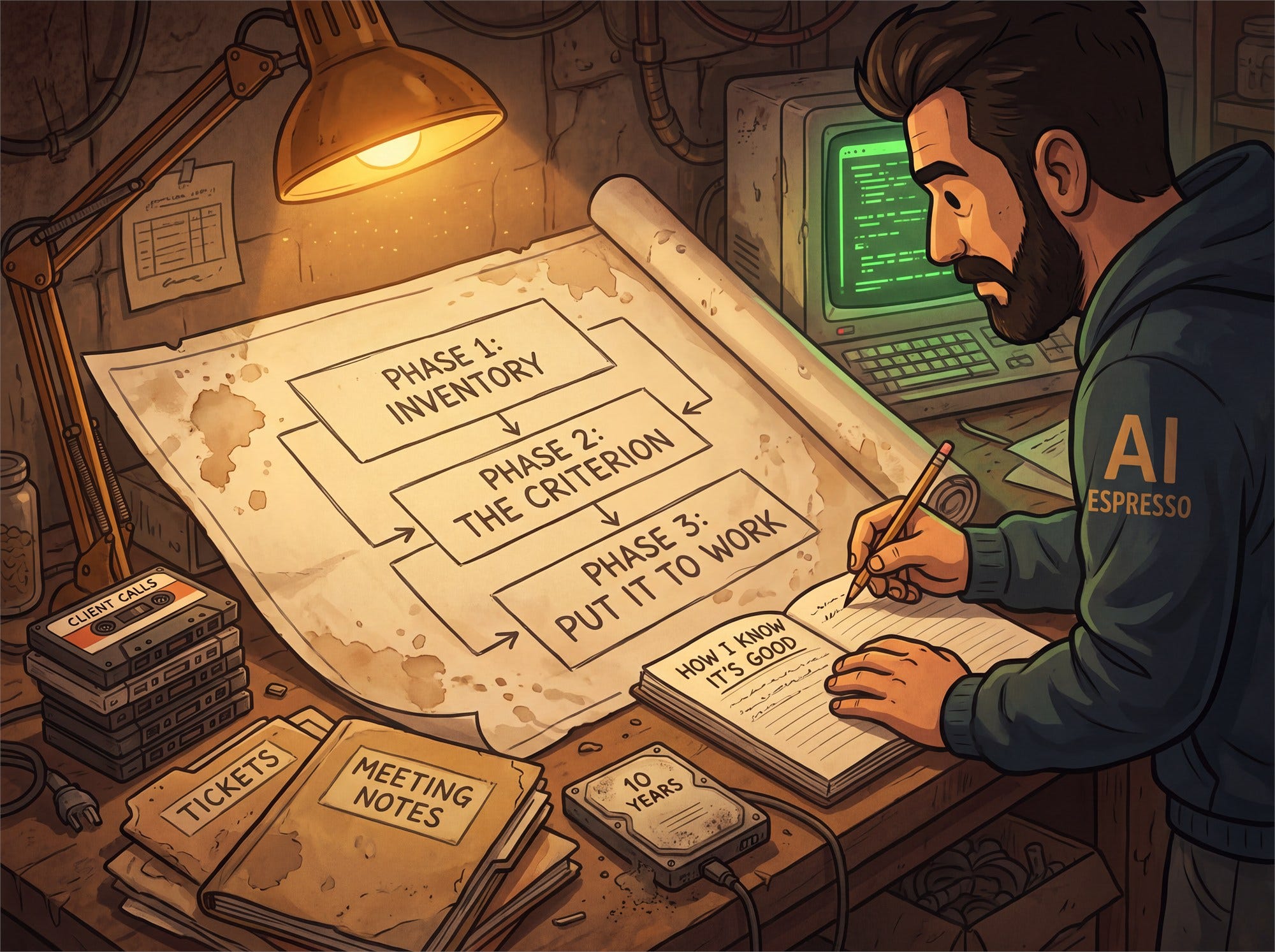
Two moves: first you see what you actually own in human, dated, non public material. Then you extract the hardest thing of all, the criterion you use to tell good work from mediocre. Written down, it becomes the part of the prompt that genuinely changes what you get back. Open Claude in a dedicated Project so context accumulates.
System prompt:
"You are a senior consultant specialized in knowledge management and in extracting tacit expertise. Your approach is analytical and insistent: when you get a generic answer you don't accept it, you ask for the concrete case. You know competent people can do things they can't explain, and your job is to force it out with specific questions. I am [role, industry, company size]. We work in three phases. Start with PHASE 1 and don't move on until I tell you."
PHASE 1: What you own. Not a list of folders. The human material no model has ever seen. Three sweeps, one at a time. One: where do real client conversations end up today, and for each source, is it kept, for how long, and is it searchable or a file graveyard? Two: which decisions from the last two years are documented with the why, not just the result? A won quote without the reasoning is worth a tenth. Three: what do you produce regularly that lives only in two or three heads? Then have Claude score every entry on three axes: how human, how industry specific, how available elsewhere. High on the first two and zero on the third is your asset. Close with: "which single source am I wasting most, and why?"
PHASE 2: The criterion. The hard one. Pick a recurring, important output: a quote, a diagnosis, an editorial plan, an appraisal, a complaint response. Ask: "ask me the right questions to extract how I judge whether a [output] is done well, before I send it to the client. Not the production process. The yardstick." Answer with real examples, not principles. Fastest route is contrast: two pieces you actually produced, one good, one mediocre, explain the difference. The difference, not the definition. Then the question that carries the phase: "which signals tell me something is wrong before I've finished reading?" Experienced people always have two or three fast warning signs, written down nowhere. Close by having Claude reframe it all as a five item rubric, each item describing what separates an excellent result from an acceptable one.
PHASE 3: Put it to work. Turn the rubric into three tools. A block of instructions to paste at the top of your recurring prompts, telling the model what yardstick to judge its own output by. A seven point review checklist to use by hand, for when AI isn't involved. Three questions to ask a new hire after thirty days, to see whether the criterion transferred or they're copying the form.
⚠️ Final warning: if a competitor could use your rubric as is, you haven't done the work. You stayed on industry best practice, which is already inside the model and useless to you. The criterion that counts reflects your context, your clients, the mistakes you paid dearly for. Go back to PHASE 2 and restart from two real pieces of work. The value here is directly proportional to how specific and uncomfortable you're willing to be.
☢️ Radioactive Humor
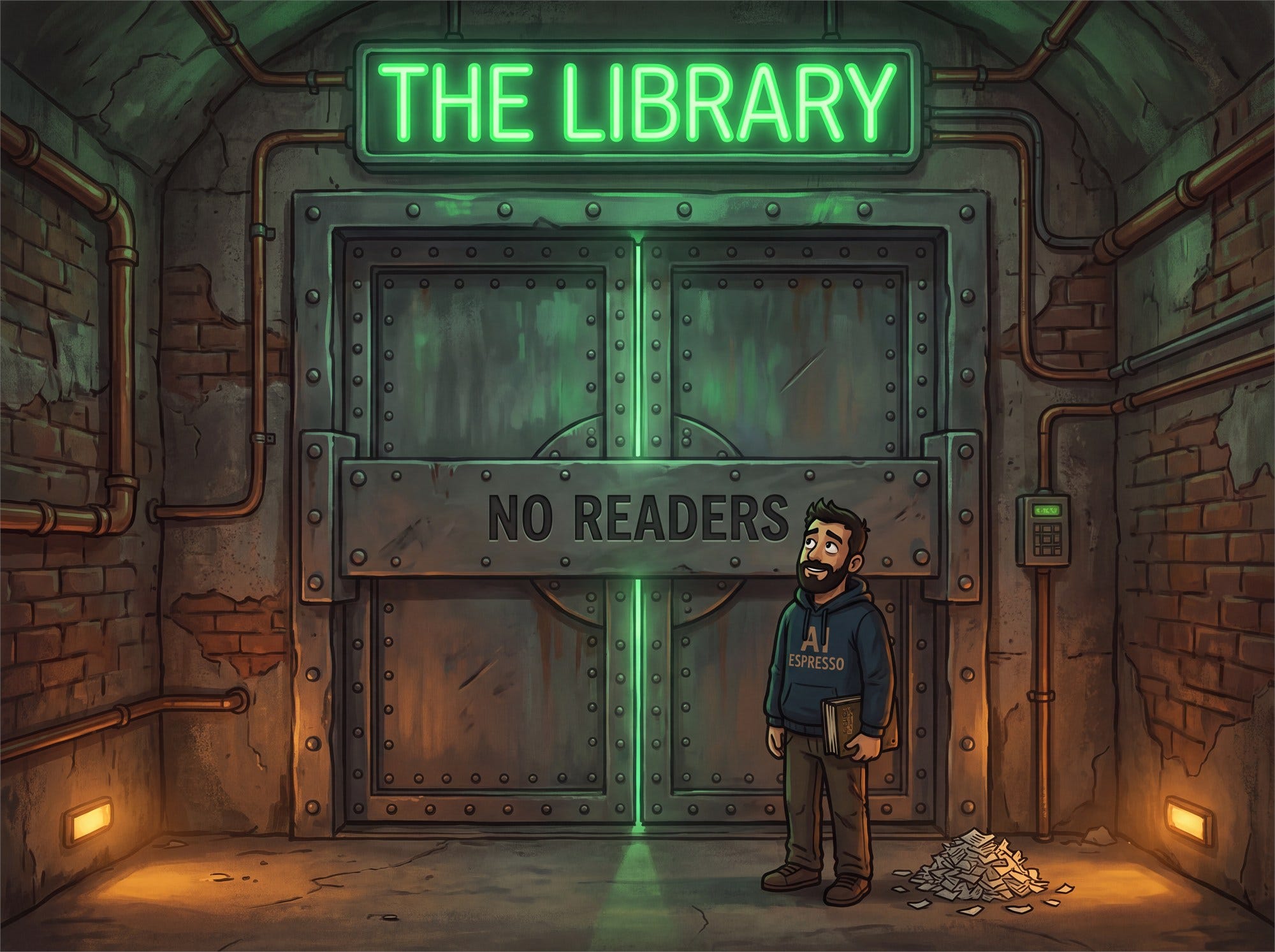
Let's tally up.
Google, since 2002, has digitized over forty million books without destroying one. Libraries kept the originals, got a digital copy, and the result is still consultable by anyone with a connection. Taken to court for years, and won.
The Internet Archive bought books, scanned them, lent them one at a time like a library. Taken to court, and lost.
Anthropic bought books, sliced them, scanned them, pulped the paper, and trained a model nobody can consult as a library. Taken to court and, on that specific point, won.
There's a progression in those three lines, and it isn't comforting. The difference isn't "they cut the books." It's what they cut them for. Google built a library you can walk into. The Internet Archive tried to build one you could walk into, and that's why it lost. Anthropic built one nobody walks into, and won partly because of it: the material never leaves, so the use stays internal, and internal use is defensible.
So the honest version isn't that AI destroys books. It's that digitization stopped being preservation and became acquisition. The book wasn't destroyed, which is worse: it was dissolved. It's inside the model, diluted into some millionth of a weight, with millions of others. You can't read it, quote it, or verify it's in there.
It isn't an archive. It's a memory.
And the paradox that keeps you up: if the digital copy really does "replace" the physical one, then in twenty years, for some out of print twentieth century title, the only place on earth where that text still exists will be inside the weights of a private model. Which will never give it back, because it wasn't built to return books. It was built to have read them.
One last piece, flagged as my own hypothesis. This market rewards whoever owns organized, cataloged, licensable corpora. Italian publishing is fragmented, catalogs are small, the Italian public domain is digitized badly and in patches. The risk isn't censorship. It's more banal and harder to fix: Italian ending up underrepresented in the models through contractual disorder. Not because anyone excludes us, but because buying us is too complicated compared to buying something else. If you work in a language that isn't English, this is your problem too, and nobody is thinking about it.
Three things to take away.
First: when absurd behavior becomes systematic, look for the rule that rewards it, not the people doing it. True for sliced books, true for your operations department.
Second: your archive changed nature. Human, dated, never published online is now the hardest material in the world to source, and you have ten years of it in a folder you were about to empty.
Third, the one that counts: the market is already past text. What's worth two hundred dollars an hour today isn't what you know how to do. It's how you judge whether something is done well. If you've never written it down, nobody in your company knows it except you. And when you leave the room, it leaves with you.
See you at the next cup.
P.S.: genuine curiosity, not rhetoric. How many years of conversations with your clients do you still have somewhere, and what shape are they in? Write back, I'm collecting cases.
☢️ Matteo