Election certification used to be a formality. Republicans are using it to steal the vote.
By Will Saletan
Published: 2026-11-03
URL: https://www.thebulwark.com/p/election-certification-seating-formalities-republicans
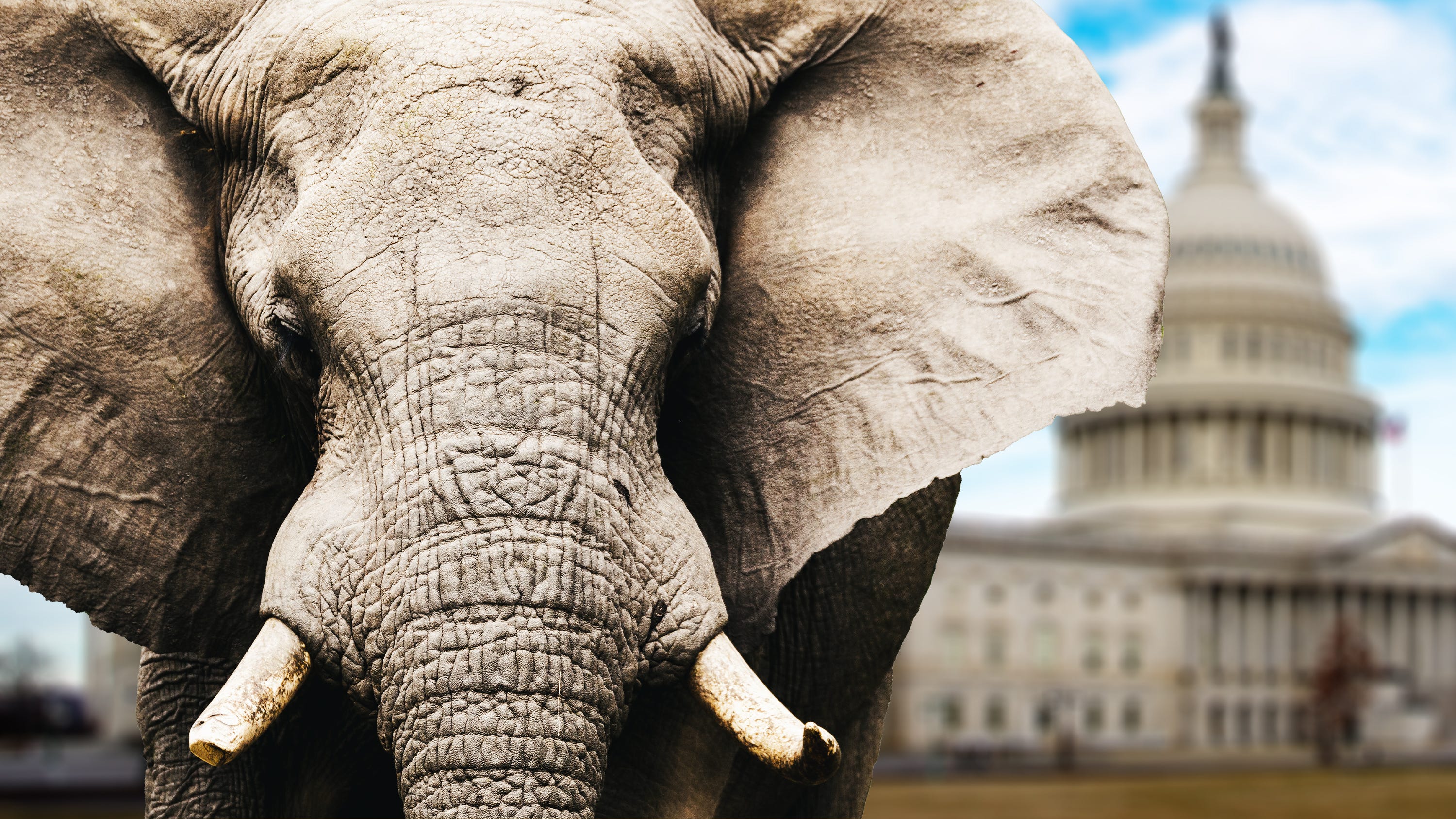 (Photo illustration by Bill Kuchman/The Bulwark | Photos: Shutterstock)
WHEN WILL WE KNOW the outcome of the midterm elections? If your answer is ‘when all the ballots are counted,’ think again. Republicans are trying to institutionalize two later stages at which they could overturn the results.
The first stage is certification: If a Democratic nominee comes out ahead, Republican governors and state legislatures could decide whether to reject the numbers. The second stage is seating: If a state certifies a Democrat’s victory, Republicans in Congress could refuse to let her take office. Ordinarily, certification and seating have been formalities. Donald Trump and his party are trying to convert them into routine forums for dispute.
Republicans didn’t invent post-election challenges. Democrats have challenged elections themselves, most notably after the Bush-Gore contest of 2000. But in 2020, Republicans raised the game to a new level, filing dozens of lawsuits to challenge presidential election results in multiple states. They tried to use state legislatures to overturn their losses. And on January 6th, they turned the congressional certification of electors into a political and literal combat zone. Trump went on to claim that if Democrats hadn’t rigged the election, he “probably would have won all fifty” states.
The latest battleground is Alaska, where Democrats allegedly conspired to put a man named Daniel J. Sullivan Jr. on the ballot alongside the state’s incumbent Republican senator, Dan S. Sullivan. Alaskan election officials tried to solve the problem by identifying Sen. Sullivan on the ballot as the incumbent. And since Alaska has ranked-choice voting, anyone who’s confused could vote for both Dan Sullivans—one as a first choice, the other as a second—so that if the other Sullivan is eliminated while the incumbent remains in contention, their vote transfers to the incumbent.
Nevertheless, if Sen. Sullivan loses, Republicans are threatening to reject the results.
Two weeks ago, Trump’s Department of Justice filed suit to block Alaska “from certifying any result that may be impacted by voter confusion.” DOJ defined this confusion scenario as Sen. Sullivan losing the election by a margin smaller than the number of votes cast for the other Sullivan.
The next day, Trump affirmed that he had told DOJ to file the suit. “I’m the one that said, ‘Do it,’” he told the press.
DOJ’s rationale for federal intervention was flimsy, and on Sunday, a federal court rejected it. DOJ appealed the same day. But the administration’s underlying goal, according to Attorney General Todd Blanche, is to get Alaska itself to withhold certification. “If a court ultimately determines that [the election] was decided because of confusion and not the will of the voters, then we do not think the states should certify,” Blanche explained on Face the Nation a week ago. He said DOJ’s aim was “to allow a process for Alaska to decide who should be certified as a winner.”
Whatever Election Day brings, we’ll need independent journalism to hold the powerful accountable, to challenge falsehoods and hypocrisy, and to help figure out what comes next.
Join a community that’s committed to that work—through 2028 and beyond.
In the past few days, Alaska’s Republican governor, Mike Dunleavy, has hinted in several interviews that the state might overturn a victory by the Democratic nominee, former Rep. Mary Peltola. On Friday, Dunleavy was asked on NewsNation whether he would certify a Peltola win. “If we find out there’s wrongdoing, and if that means that the certification then is stopped or changed, then that’s what happens,” he replied.
Dunleavy also suggested that even if Peltola were certified as the winner, the state might play a subsequent role in blocking her from taking office. “If we conclude that . . . there were things that should not have happened—let me put it that way—that are illegal, we will act on that,” he said. “And that may in fact impact whether somebody is seated in the U.S. Senate. That’ll be a discussion with obviously the head of the U.S. Senate as well.”
On Fox News, anchors and pundits are chattering with excitement at the prospect of defying a Peltola victory. On Thursday, Ari Fleischer, a former press secretary to President George W. Bush, said that if Peltola were to win by a small margin, “I don’t know that the Senate is going to seat her. There is so much corruption and so much wrongdoing.” On Saturday, Jason Chaffetz, a Fox contributor and former chairman of the House Oversight Committee, suggested that DOJ’s investigation of the election could “take it to the point that she doesn’t get seated.” On Monday, Kellyanne Conway, Trump’s former political adviser, told Fox & Friends that if Peltola were to win, “I don’t think they should seat her.”
It’s not just the talking heads: Republican senators, who could actually move to stop Peltola from being seated, seem open to the idea. On Saturday, Sen. Tim Sheehy (R-Mont.) tweeted, “This was a fraud perpetrated against the people of Alaska. Under no circumstances should Mary Peltola be seated if she wins an election in a fraudulent manner.” On Sunday, in an interview on Meet the Press, Sen. Tim Scott (R-South Carolina) repeatedly refused to say whether he would accept the results if Peltola were certified as the victor. He claimed, absurdly, that it was “a federal offense to confuse voters. That’s the law.” Meanwhile, on Fox News Sunday, Sen. Ron Johnson (R-Wis.) declined to say whether Peltola should be certified as the winner or seated in the Senate if she got the most votes. “We’ll have to see how it all plays out,” he hedged.
Trump is likewise reserving his options. On Thursday, a reporter asked him, “If Mary Peltola wins, should Republicans refuse to seat her?” The president replied, “Well, you’re going to have to see what happens. It’s hard to believe that she could even be allowed to run.”
PELTOLA ISN’T THE GOP’S ONLY post-election target. Trump says Rep. Ilhan Omar (D-Minn.) “will not be legally allowed to be a member” of the House because she’s under investigation for possible immigration violations. Fox News is abuzz about refusing to seat her, too. And three weeks ago, DOJ filed a suit to stop California “from tabulating in federal elections vote-by-mail ballots received from individuals identified by the Federal Government as likely noncitizens,” at least “until those individuals’ citizenship status can be verified.”
Courts, including the U.S. Supreme Court, have rejected DOJ’s requests for emergency orders that would block California from counting those ballots. As to Omar and Peltola, the president himself has no legal authority to stop them from taking office. But even if Republicans lose these fights, as Trump did after the 2020 election, they’re laying the groundwork for an era of routine post-election challenges—not just in courtrooms, but in legislatures and Congress. In the Trump era, achieving a victory at the ballot box is just the beginning. Then you have to fight to defend it.