His opponent says he takes them for granted—but let’s compare the candidates’ agendas.
By Jonathan Cohn
Published: 2026-10-28
URL: https://www.thebulwark.com/p/the-case-abdul-el-sayed-can-make-to-black-michigan-voters
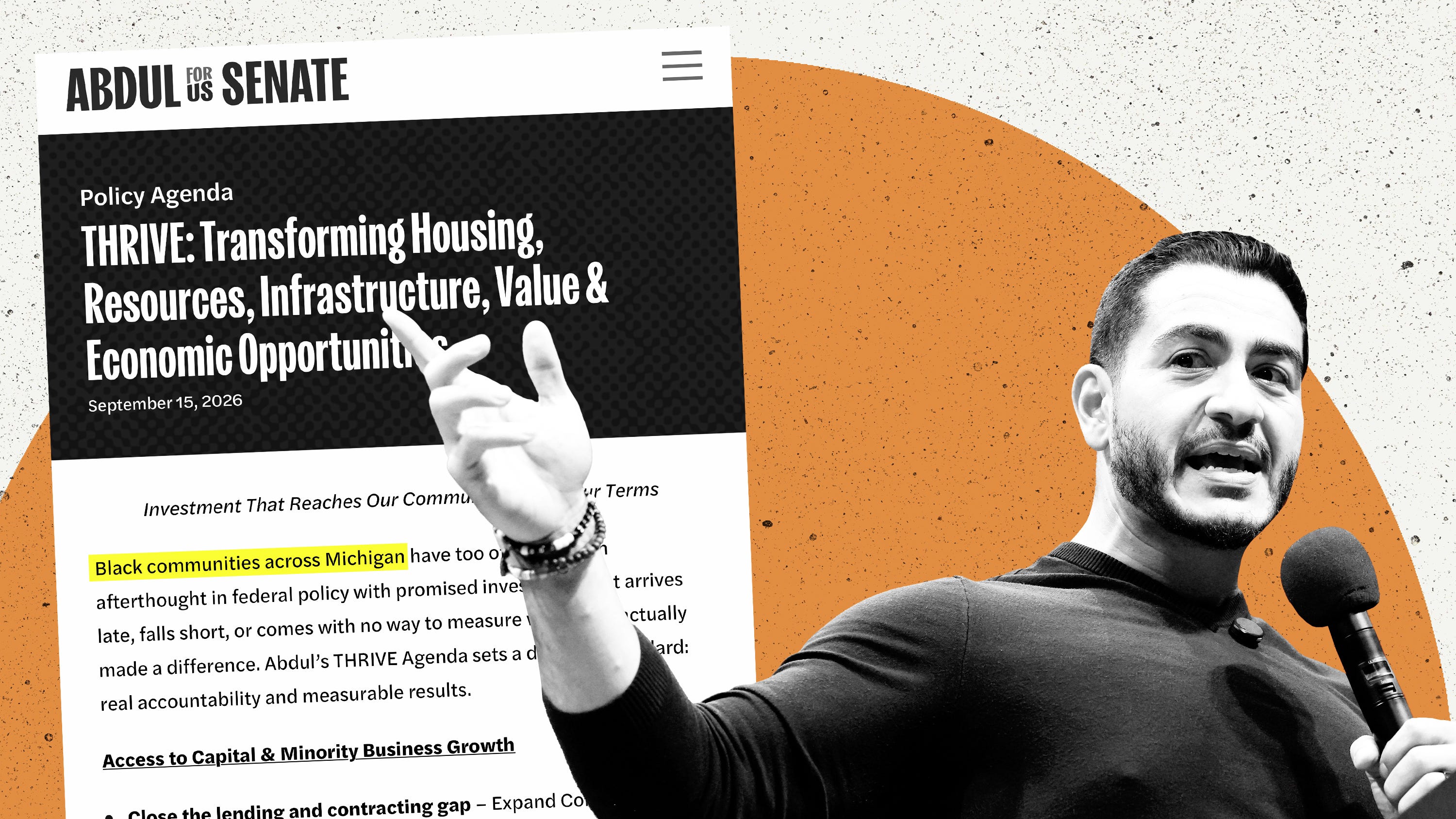 (Photo illustration by Bill Kuchman/The Bulwark | Photos: Getty, Shutterstock, El-Sayed campaign website)
A NEW ADVERTISEMENT running against Abdul El-Sayed in Michigan’s Senate race targets black voters by arguing the Democratic nominee takes them for granted.
“Abdul El-Sayed’s platform is nearly five thousand words,” says a narrator. “He names fifteen foreign countries he cares about. A single mention of black people? Not once.” The narrator then lists issues like housing and school choice as important to black voters on which El-Sayed allegedly says nothing. “He can’t find the words to talk about us,” the narrator concludes, “and he wonders why we don’t trust him.”
The ad’s central premise is an abject lie. If you type “El-Sayed agenda black Americans” into Google, literally the very first hit is a page from his campaign website called “Abdul El-Sayed Announces Policy Agenda to Empower Michigan’s Black Communities.” The page summarizes (and links to a longer version of) what El-Sayed has called his “THRIVE” agenda, released in September.1 It includes a twenty-one-point plan to help black Michiganders through a variety of programs, including housing assistance and education reform.
The attack ad, which comes from an independent political action committee that opposes El-Sayed, isn’t the only dishonest one circulating in the tightly contested Michigan Senate race.
But the ad has extra political significance because of its target audience.
To win in Michigan, Democrats have in modern times needed both overwhelming support of black voters and high turnout, too. El-Sayed struggled with these voters during the primary, and his Republican opponent, former congressman Mike Rogers, has been trying to exploit that weakness by appealing directly for their support.
The contest for Michigan’s black voters has gotten a ton of media attention (including from me!). It’s a genuinely important story that sheds light on larger, deeper issues, like historical tensions between black and Arab communities in Michigan and the way black voters think about progressive versus moderate politics in the Democratic party.
But something important is missing from the current dialogue: What the two candidates