On the limits of tolerance.
By Sonny Bunch
Published: 2026-10-21
URL: https://www.thebulwark.com/p/fjord-review
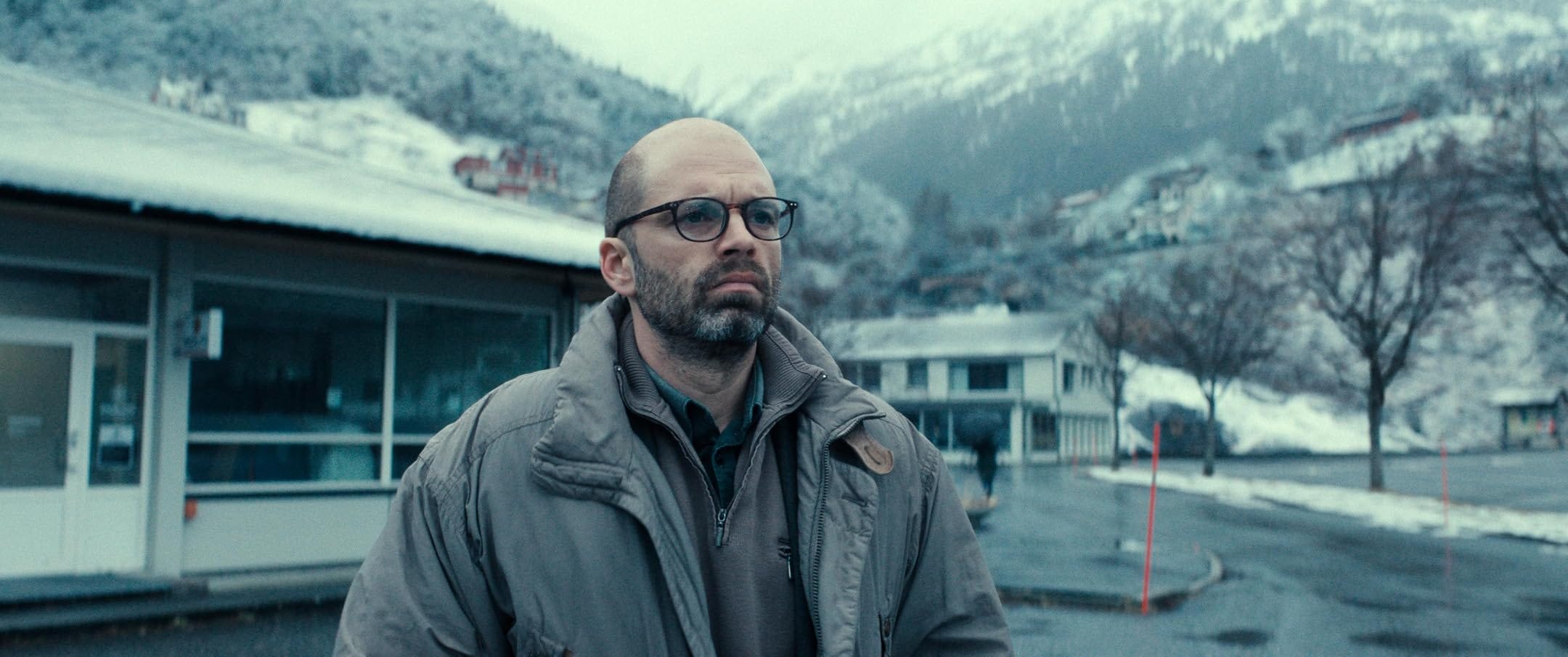 Sebastian Stan in Fjord. (Courtesy Neon)
FJORD IS A PROVOCATION in the best sense of the word, a probing examination into self-conceptions of tolerance and the limits therein, brought to life with a keen naturalism that pulls the neat trick of both obfuscating the facts and clarifying the reality on the ground.
Writer-director Cristian Mungiu opens with the obfuscation. We see Elia Gheorghiu (Vanessa Ceban), a teenage girl, wiping away a tear. Her mother, Lisbet (Renate Reinsve), tells her to give her father, Mihai (Sebastian Stan), a hug. She has been punished, but we don’t know how or how severely, which will matter momentarily. For now, we just watch as this family prepares for the kids’ first day at their new school.
This Norwegian mother and Romanian immigrant father have five children, in total—four off to school, one still at home, nursing—and Fjord’s primary preoccupation is how they should be raised. Is it the responsibility of the family to instill discipline? Or does it take a village to take a child from the family and instill in him or her modernity’s progressive impulses? Norway is aggressively secular; Mihai’s neighbors and coworkers at the school (where he is the IT director) find the family’s Christian evangelicalism odd, perhaps even perverse. When he plays a few bars of “Amazing Grace” on the piano, one of the teachers, Frida (Lisa Loven Kongsli), reacts almost viscerally, grimacing at the notes.
It is this cultural clash that sets the stage for the film’s drama. After bruises are seen on Elia’s arms, the school’s teachers call the Norwegian equivalent of Child Protective Services; when Mihai admits to lightly spanking his children when they misbehave, he is taken into custody and the kids are removed from their home. That no one knows for sure how Elia got the bruises that aroused the suspicion means little, given Mihai’s admission: Norwegian law prohibits even light corporal punishment, and so does not seem to see a distinction between a swat on the butt or a slap on the wrist and an actual beating.
The real problem this town has with the Gheorghius is their religion, their refusal to let their kids have cell phones and watch YouTube and listen to pop music, their defense of the “traditional family.” Laying hands on the kids is only the stated reason for taking them; the real problem, the problem that Mungiu’s lingering camera reveals in the askance looks and the quiet asides, is that Lisbet and Mihai are poisoning their children’s minds against the religion of secularity. This is a family of heretics, one whose ideas are reviled by every element of the Norwegian state. The result of heresy is, as always, an inquisition. And if the state has its way, the family unit will be made to burn.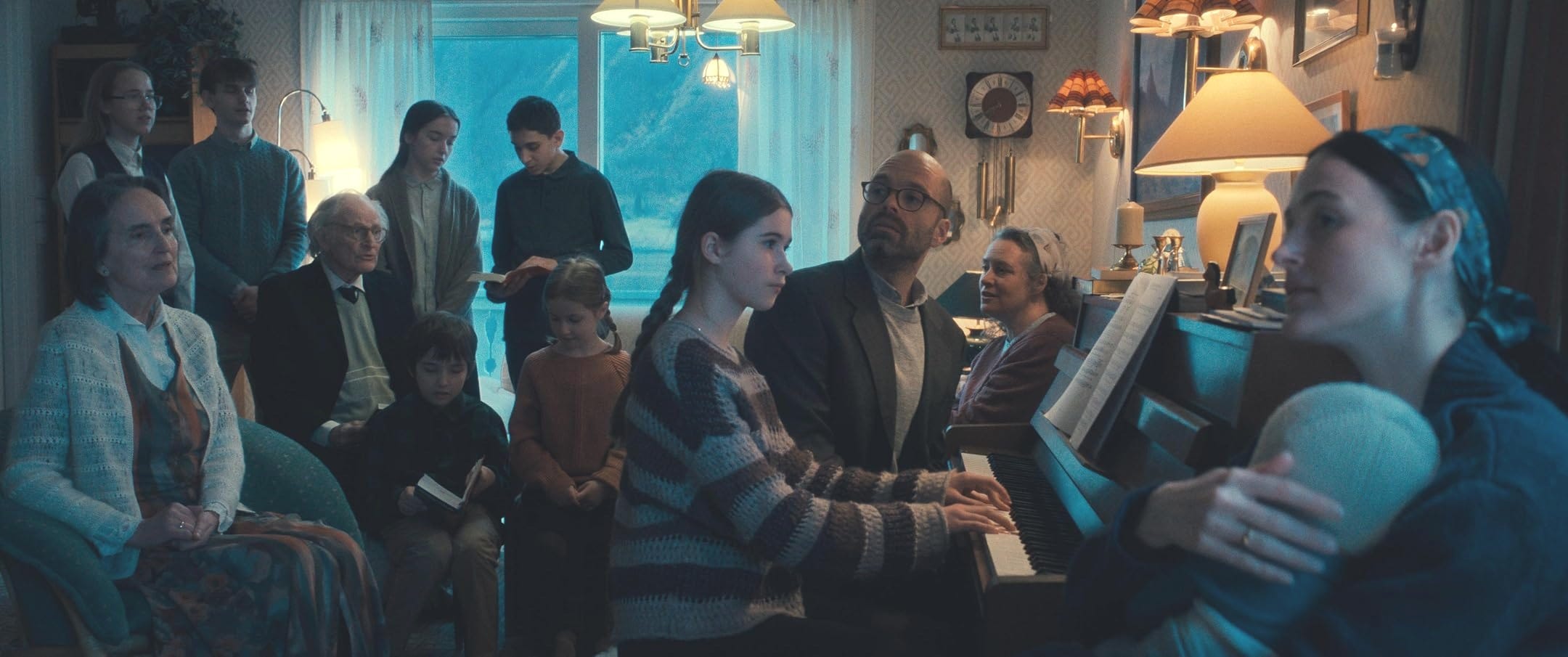 Sebastian Stan (center) and Renate Reinsve (right), and other cast members, in Fjord. (Courtesy Neon)
Fjord—which won the Palme d’Or at Cannes this year and is Romania’s official selection for best international feature at the Oscars this year—is an actor’s showcase, one that takes great advantage of the stark, snow-swept beauty of Norway’s mountain-bound villages. (That avalanches threaten to wipe out the town at a moment’s notice contributes to the claustrophobia of the family’s predicament; the stone walls are closing in on them.) Stan, who was born in Romania before the fall of the Iron Curtain, is exceptional as the increasingly frustrated patriarch of the Gheorghiu clan. He is friendly but not open, precisely; his furrowed brows and occasional interruptions agitate the employees of the state who demand submission when all he offers up is defiance. And those employees—every teacher, every social worker, every judge, every lawyer—are all perfectly cast as well as the visage of implacable, icy bureaucracy, faces frozen in the rictus grin that sits on all those granted authority by Leviathan.
They have the legitimate monopoly on force, a notion reinforced very subtly when Mihai, frustrated, slams an ax head into a wood stump. This is a legal drama, not a John Wick film, and his fight will be won or lost in the courts of law and public opinion. When Mihai enlists the online mob to support him—fans in America and Romania rally to the family’s cause, outraged that their kids could be stripped from them by the state’s morality police—he risks alienating the few in his community who still backed his cause.
Reinsve is similarly poignant, possessed of a quiet decency in her role as the caretaker of an old-age home who gives comfort to the families of the recently deceased. It is only when her youngest child, still nursing, is threatened with removal that she turns nearly feral in her protectiveness.
Fjord is genuinely subversive in the most pleasing sort of way, a movie that wrestles with difficult questions of assimilation, tolerance, and personal liberty without offering up easy answers or culminating in grandstanding statements. It is, ultimately, about the complications of modern life in an interconnected age, an era of unceasing cultural clashes. And it’s a movie that will stay with you for weeks after seeing it.