How the Michigan progressive is trying to forge a relationship with the state’s Jewish Democrats, and what it means for the future of the party.
By Jonathan Cohn
Published: 2026-09-02
URL: https://www.thebulwark.com/p/abdul-el-sayed-asks-michigan-jewish-democrats-forgiveness
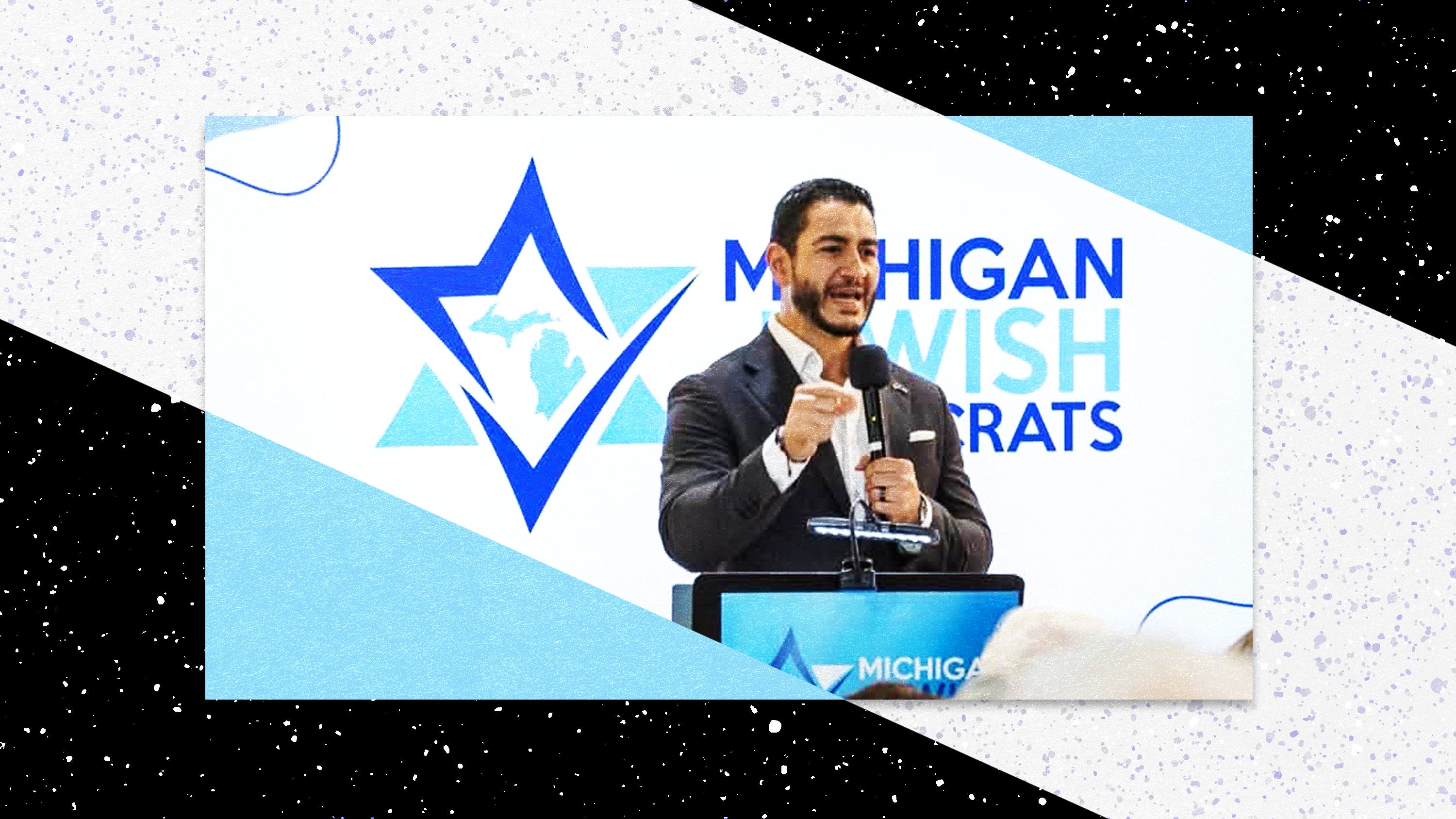 (Photo illustration by Bill Kuchman/The Bulwark | Photos: Abdul El-Sayed, Shutterstock)
ABDUL EL-SAYED MET WITH A GROUP of Michigan Jewish Democrats on Sunday in an attempt to mend a badly frayed relationship—and to offer an apology.
He spoke for about ten minutes in the northern Detroit suburb of Birmingham, during an annual “Summer Simcha” gathering put on by the state party’s Jewish caucus. El-Sayed had actually been at the previous year’s event, though under somewhat different conditions. Back then he was one of three candidates seeking the Democratic Senate nomination, still in the early phases of his campaign and focused on introducing himself to members.
This time El-Sayed was the nominee, speaking to Jewish voters who feel like they already know him quite well—and, in many cases, who have significant problems with what they’ve seen. That made this year’s gathering a far more difficult task, and not just for him.
Jews are among the most reliably and overwhelmingly Democratic voting blocs in America. Most want to support the party’s nominees. But they are having a difficult time with El-Sayed for a now-familiar litany of reasons.
There’s El-Sayed’s strident criticism of Israel, which many believe goes beyond championing the human rights of Palestinians or deploring the policies of the current government (positions the vast majority of Jewish Democrats share) to questioning the very idea of a safe homeland for the Jewish people. On top of that are objections to El-Sayed’s association with streamer Hasan Piker, whose own inflammatory pronouncements on Israel and Jews many voters in Michigan—and around the country—see as flagrantly antisemitic.1
And then there are the raw feelings about El-Sayed’s statements following a March attack on Temple Israel in West Bloomfield, another northern Detroit suburb. A Lebanese-born man who had lost several family members back home in an Israeli airstrike drove a truck loaded with gasoline and fireworks into the synagogue. It was an apparent attempt to blow up the building, which at the time had children attending school. It failed when security guards shot him.
El-Sayed’s first reaction was to put out an unambiguous condemnation. But a day later he issued a follow-up statement on video that repeated the condemnation while adding what he has called “context” about how Israel’s aggression in the Middle East—and American support of it—created conditions that fostered such acts. Or, as he put it, “hurt people hurt people.”
That second statement was the focus of his remarks on Sunday, based on a recording that the campaign provided to a few reporters.2 After reprising campaign verses he has made before—about growing up celebrating at friends’ bar mitzvahs, his reverence for the Jewish faith, and his commitment to protecting the lives of Jewish children as if they were his own—he talked about the Jewish concept of tikkun olam, which means “repairing the world,” and its similarity to an Islamic concept that somebody who saves a life has saved the world.
Then El-Sayed said he wanted to make some repairs of his own.
Don’t think of this paywall as an obstacle. Think of it as an opportunity! It’s your chance to read the rest of this newsletter before someone badly summarizes it on social media.
Leap over the paywall—Join Bulwark+