A compounder, a monopoly, a brand, a moat — how long do they last?
By Polymath Investor
Published: 2026-07-31
URL: https://www.polymathinvestor.com/p/how-long-a-durable-thing-stays-durable
"What's NOT going to change in the next 10 years?" - Jeff Bezos
It was the summer of 1969, and a twenty-two-year-old American named J. Richard Gott III was traveling around Europe, touring the Berlin Wall.
I imagine a strange question may have popped into his mind: how long is this thing going to last? Not that he had any inside information. Gott didn’t know anything about politics, had no contacts in Moscow, not even any knowledge of the economics of East Germany.
What he did know was a number, at that time the Berlin Wall had been standing for eight long years, and one simple fact about himself: there was nothing special about the timing of his visit. He was a simple kid passing through at a random moment in the Wall’s life.
And from that simple observation, Gott came up with a principle that would estimate how much longer the Wall had left standing in the middle of Berlin.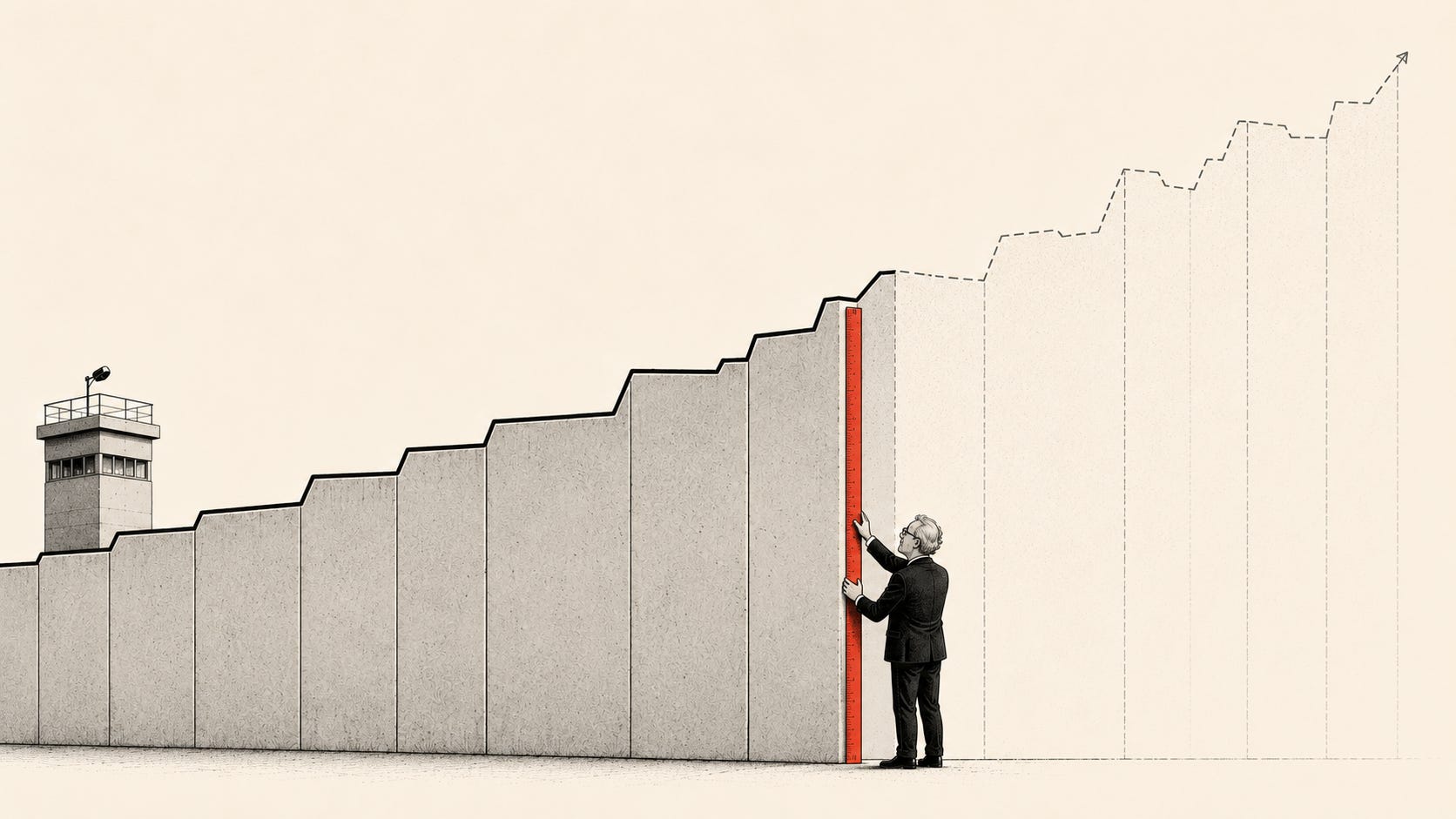 Polymath Investor (2026). “How long will this thing last?”
What this future astrophysicist realized was that if his visit landed at a random point in the Wall's total lifespan, then this probably was not the very beginning and most likely not the very end. Push that logic through some very simple arithmetic1 and you have a window of duration for how long things last: in fact, he predicted with 50 percent confidence that the Wall would stand at least (roughly) three more years, and at most twenty-four.
The Wall came down in November 1989. Twenty years after his visit, and squarely inside the window he proposed.
Gott went on to become an astrophysicist at Princeton, and in 1993 he finally published the Wall argument in Nature. In that article he applied the formula to humanity itself: our species is roughly 200,000 years old, so with 95 percent confidence we have somewhere between 5,100 and 7.8 million years left!
You can apply his formula to anything and you’d get pretty interesting results. So, how did he do it?
Hey there, don’t forget to check out this July offer!
If you enjoy the Meta Skill series and want access to the whole library, plus all the other content in downloadable PDFs, through July 31st you can access a full year of membership at 60% off.
Some of the content is free, but if you’re able to support, please consider a paid membership, and you’ll get:
-
The complete Meta Skills library: every field manual in the series, in PDF, with new manuals added as they publish
-
12–14 high-conviction investment write-ups a year: detailed, data-backed reports on underfollowed companies with asymmetric upside
-
The Trend Tracker: emerging themes traced from the data and signals down to the specific public equities positioned to benefit, from AI-infrastructure chokepoints to the defense upcycle
-
The Investing Library: forensic accounting toolkits, sector rulebooks, mental models, and historical base rates to improve your process
-
Every full post and the complete archive: each deep-dive report and the full back catalogue, nothing locked
Offer closes July 31st.
You Are Not Special (And That Is Pretty Useful!)
Copernicus was the one who made us realize Earth is not the center of the universe (at least for the Europeans of that time). What Gott did was similar. His genius insight was not to change our perception of space, but our perception of time. Gott squarely took us out of the center of the timeline.
When you encounter something already in progress — a Wall, a competitive advantage, a company’s brand — your looking at the thing is not an event in that thing’s history. It’s a random sample from it.
But wait a minute. That random sample tells us something; it carries information. If the fraction of the thing’s life that has already passed is equally likely to be anything from nearly zero to nearly one, then its current age can give us an idea of the thing’s durability in the future. If you want the standard 95 percent version of confidence (the confidence interval Gott used), then the remaining lifetime of anything falls somewhere between 1/39 of the current age and 39 times the current age (for those of you mathematically inclined, I included the calculations in a footnote).
Ok, I know what you may be thinking: that range is enormous! (But the width is actually the point.) The formula uses no information whatsoever except age, so it doesn’t pretend to have more precision than that. What it does give you, I think, is an intuition: young things are fragile, old things are durable, and survival itself is evidence.
You may have heard of Lindy’s.
Lindy’s was a restaurant in New York where comedians used to gather after shows. With time, they started to observe that the longer a Broadway show had already run, the longer it would keep running — an observation that Nassim Taleb later popularized as the Lindy effect: for things that do not perish, like ideas, books, and technologies, every additional year of survival raises the life expectancy.
Gott’s principle gave us the confidence intervals and became known as the Copernican Estimate.
How Long Will This Company Last?
“It’s tough to make predictions, especially about the future.”― as Yogi Berra probably didn’t say
Monopolies, brands, competitive advantages, CEO tenures, supplier relationships — how long will they last? The investing world is full of uncertainties on which we have to have, at least, an opinion.
Gott gives us a crude but useful prior. If a company has compounded, let’s say profits, at 15% for 30 years, the 95% confidence interval on how long it’s going to last says it can last somewhere between roughly 9 more months and 1,100 years. Comically wide, I know. But also honest. Sparse input, wide output.
The usefulness of the Copernican Estimate for investing is to run it backwards.
As Munger used to say: Invert, always invert.
If you need a competitive advantage to last for 20 more years to maintain those exceptional returns you are underwriting, and you can clearly see that the company has had this advantage for 5 years already, then under Gott’s assumption you are claiming a one-in-five event.
Comparatively, if you need that competitive advantage to last 20 more years, but the company has been showing exceptional performance with a hundred-year-old brand (the good ol’ Coca-Cola example), then your odds are far better.
One-in-five (20%) versus five-in-six (83%). Identical terminal assumption, widely different degrees of confidence. 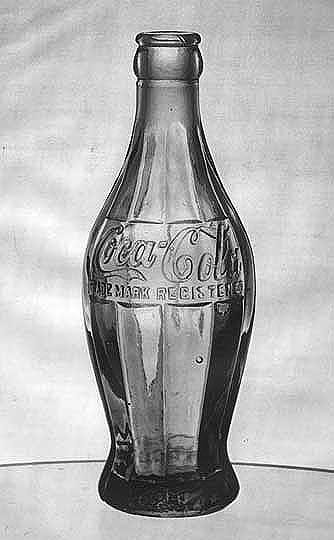 Recognized in the dark, and remembered for a century. Coca-Cola glass bottle [Photograph]. (n.d.). Wikimedia Commons.
And that’s Gott’s genius: as Copernicus told us we are not at the center of the Universe, Gott tells us we are not at the center of the timeline. Our observing the thing is not relevant to the duration of the thing.
An exchange, a marketplace, a heritage brand — often the strongest evidence these businesses offer for their persistence is their persistence.
Who Let The Dogs Out?
When The New Yorker profiled Gott in 1999, a University of New Mexico physicist named Carlton Caves read the piece and started looking for dogs.
He chose 24 dogs and collected their ages. He then selected the six oldest and noted that Gott’s rule gave each of them a 50% chance of living to twice its current age. Obviously, a ridiculous statement.
He then offered Gott a thousand-dollar bet on each dog, at 2:1 odds in Gott’s favor, that they would not live that long.
Gott, being the smart person he is, declined, arguing that the six dogs were unfairly chosen.
What does this tell us about the principle?
Caves did break the rules by cherry-picking, and his cherry-picking was the argument: you can pick out old dogs because dogs have a known lifespan, actuarial tables, a life expectancy you can base your calculations on. There’s plenty more information you can use.
Gott’s formula, by contrast, requires a uniform-ignorance assumption. It assumes that you know nothing about the relevant time scale.
If you are assuming ignorance that you do not actually have, then you are fooling yourself — and you are the easiest person to fool, Feynman would add.
CEO tenures have published base rates that cluster around five to seven years; customer contracts have renewal statistics; dogs have vets. When a real base rate exists, the base rate always wins.
So treat Gott as the prior of last resort. Use it when age is really the only known fact, and stop using it the moment better information comes up.
The Wall fell on schedule. The gift of the Copernican estimate is not so much about giving precise estimates as about its usefulness as a mental model. Old things usually last, young things are still being tested. And you, the observer, are not special — which, for once in investing, is genuinely useful news.