How to learn more and forget less
By Polymath Investor
Published: 2026-07-01
URL: https://www.polymathinvestor.com/p/the-science-of-studying-part-i
Note to readers: This piece is part of the Investor Meta Skills series, where I typically cover the thinking and learning skills that compound into better investing. This time, I’m kicking off a three-part series on the science of studying, ending with 63 science-based techniques for learning more and forgetting less. [Full Version printable PDF available at the end.]
Most of us were never actually taught how to study or how to learn difficult material when it matters. We were simply handed the material, told to learn it, and left to invent methods that felt like learning: reread, highlight, repeat.
The problem is that the feeling of learning is not the same as actual learning. In fact, many popular study methods are popular precisely because they create the illusion of progress.
So what I’ve put together here is a set of science-based protocols that actually work. By the end of this three-part series, you’ll have 63 techniques designed to build durable memory, help you learn faster, and make knowledge available when you actually need it.
The series is organized around three core processes of learning and memory: encoding, storage, and retrieval.
Let’s begin.
ENCODING
Abandon willpower to remember. Stop trying to memorize harder, and change what you do with the material instead. Why It Works: Mandler’s word-sorting experiment found that students told to memorize did about as well as students told only to sort the words into categories, because both groups ended up processing the meaning either way. So the intention to learn has no power of its own; what determines retention is the operations you actually run on the material. This is probably the foundation for every other encoding heuristic below. How to Apply It: Trade vague resolutions to “focus harder” for a concrete task: sort the terms, generate examples, or answer a why-question about each paragraph. Judge a session by the operations you performed, not by how much effort it felt like. Common Mistake: Re-reading a chapter with grim determination, and mistaking the strain of concentration for learning.
Process for meaning, not surface. Encode information by what it means and where it fits, not by how it looks or how it was worded. Why It Works: Depth-of-processing research suggests that encoding for meaning leaves a richer, more retrievable trace than encoding for surface features, because it draws on spreading activation across related concepts. A disorganized list tends to disappear; items tied to a category come back in clusters, pulled along shared associative paths. How to Apply It: Before you memorize a list, give it structure: group the items by function, hierarchy, cause and effect, or theme. When you read, ask “what category does this belong to, and what does it resemble?” before you move on. Common Mistake: Highlighting verbatim phrases and trusting that exposure alone will produce recall.
Give every topic a visible architecture. Turn new material into a hierarchy, flow diagram, or mind map before you try to memorize it. Why It Works: Bower, Clark, Lesgold, and Winzenz (1969) showed that hierarchically organized word lists produce much higher recall than the same words in random order. Structure becomes a scaffold for spreading activation, so that retrieving one node pulls its neighbors along with it. Meaning by itself is not enough if the meaning is left unarranged. How to Apply It: Before you take notes on a chapter, draw the skeleton first. Find the top-level claim, then what supports it, then the sub-branches, and write into that skeleton instead of onto a blank page. Common Mistake: Producing a flat bulleted dump of facts that follows the lecture’s sequence rather than the material’s structure.
Explain it to yourself out loud. After each new concept, make yourself explain it in your own words and answer the how, why, and what-if questions about it. Why It Works: Self-explanation, which Bisra et al. confirmed in a meta-analysis, forces you to rebuild the logical connections and tie the new idea to what you already know. That deepens the encoding and builds the extra associative paths that spreading activation later uses to find the memory. How to Apply It: After you read a page, close the book and narrate: “This relates to X because... the implication is... the steps to apply it are...” Do it audibly. Silent rereading is not a substitute. Common Mistake: Nodding along as you read, and confusing comprehension in the moment for encoding that will last.
Ask why it must be true. For every fact you want to keep, answer “why would this be true, given what I already know?” before you move on. Why It Works: Elaborative interrogation wakes up the prior-knowledge schemas you already have and folds the new fact into an existing causal network, which multiplies the routes back to it. Pressley, McDaniel, and colleagues (1987, 1988) found large gains on factual sentences; Dunlosky et al. (2013) rated the technique “moderate utility,” with effect sizes in the original studies running from roughly d = 0.85 to 2.57. How to Apply It: After each assertion in a textbook, write one sentence on why it follows from what came before; add a “why?” field to your fact flashcards in anatomy, biology, or history. Common Mistake: Using elaborative interrogation on material where you have no foundation, which produces confident but wrong explanations that then get encoded as false memories. (Dunlosky et al., 2013; Pressley et al., 1987, 1988)
Explain it like they are twelve. On a blank page, without notes, write a plain-language explanation of the concept as if you were teaching a curious novice, then hunt for the spots where you stall or reach for jargon. Why It Works: The Feynman technique packs generation, retrieval, self-explanation (Chi et al. 1994), and gap-finding into a single pass, and the inability to simplify is an unambiguous sign that your understanding is shallow. Scott Young popularized it in Ultralearning (2019), and each of its parts has its own empirical backing. How to Apply It: After a lecture, pick the two or three most central concepts, write a page per concept in plain words with a concrete example, and mark every stumble as a restudy item. Common Mistake: Peeking at the source during the explanation step, so the output just mirrors the text. That turns the technique into paraphrasing and throws away the diagnostic benefit. (Chi et al., 1994; Young, 2019)
Study as if you will teach tomorrow. Before and during study, tell yourself you will have to teach the material to someone else, and then actually produce a recorded or written explanation. Why It Works: Nestojko, Bui, Kornell, and Bjork (2014) found that simply expecting to teach produces better-organized free recall than expecting to be tested, with no extra study time. Fiorella and Mayer (2013) found that actually teaching yields about d = 0.56 on delayed tests, against d = 0.22 for merely preparing to teach; Kobayashi’s meta-analysis puts interactive teaching around g = 0.50. How to Apply It: Before you open a chapter, commit to recording a five-minute explainer or teaching a study partner that evening, and then follow through and generate the explanation. Common Mistake: Stopping at the expectation to teach and never producing anything. The durable gains seem to require the generative act, not just the mindset. (Fiorella & Mayer, 2013; Kobayashi, 2019; Nestojko et al., 2014)
Write by hand, not by keyboard. Take lecture and reading notes in longhand, and reserve the laptop for drafting rather than capturing. Why It Works: Mueller and Oppenheimer (2014) found that laptop note-takers transcribe verbatim even when told not to, because the keyboard is fast enough to stenograph, while handwriting is slow enough to force you to paraphrase. Paraphrasing is what triggers encoding for meaning, and the mechanism is the same as self-explanation: your words beat their words. That verdict is plausible rather than settled, though. Later direct replications (Morehead, Dunlosky, and Rawson 2019; Urry et al. 2021) failed to reproduce the longhand advantage, so what holds up best is the mechanism, paraphrase beating transcription, more than the specific choice of pen over keyboard. How to Apply It: Close the laptop in lectures. Write shorter notes that put the ideas in your own phrasing, and accept that you will capture less text but keep more meaning. Common Mistake: Producing a verbatim transcript of a lecture and feeling productive while encoding almost nothing.
Recite at every section break. At the end of each section, close the book and state or write the main idea and two questions from memory before you turn the page. Why It Works: McDaniel, Howard, and Einstein’s (2009) Read-Recite-Review protocol beat both rereading and note-taking on free recall, and beat rereading while matching note-taking on comprehension and inference items, all while taking less study time than note-taking. Recitation is really retrieval practice, which is probably why Dunlosky et al. (2013) rated rereading and highlighting “low utility.” How to Apply It: After each section, close the book, write a three-sentence summary and one diagnostic question, and queue the questions for spaced review. Skip the highlighter entirely on the first pass. Common Mistake: Running the passive steps of SQ3R (survey, read) as ritual while skipping the effortful recite step, which gives you the look of study without the retrieval that actually builds memory. (Dunlosky et al., 2013; McDaniel et al., 2009)
Front-load reading with questions. Before you open a text, write the questions you expect to be asked about it. Why It Works: McCrudden (2011) showed that specific pre-reading relevance questions switch on transfer-appropriate processing at the encoding stage. You pull out the arguments and evidence as you read, because that is exactly what retrieval will later ask for. Questions in hand turn passive reading into active rehearsal. How to Apply It: Before a chapter, list three essay prompts, three what/why/how questions, and three application scenarios. Then read hunting for the answers. Common Mistake: Reading with a highlighter, absorbing the author’s narrative, and only later realizing you have no answers because you asked no questions.
Generate before you read. Produce an answer, definition, or example from a cue before you check the source. Why It Works: When you generate, you force a semantic search and an elaborative encoding, which leaves a richer and more distinctive trace than passive reading does. Slamecka and Graf (1978) established the effect across five experiments; Bertsch et al.’s 2007 meta-analysis of 86 studies found about d = 0.40 overall, rising to roughly d = 0.64 once the retention interval ran past a day. How to Apply It: Use cloze deletions instead of full sentences in your notes; try your own definition before you read the textbook’s; supply first letters as the minimum cue when something is genuinely new. Common Mistake: Making cues so sparse that generation always fails, or so complete that you end up copying rather than producing. (Bertsch et al., 2007; Slamecka & Graf, 1978)
Test before you study. Try the questions on new material before you read or hear the answers. Why It Works: Kornell, Hays, and Bjork (2009) found that failed retrieval attempts followed by feedback beat spending the same time reading; Richland, Kornell, and Kao (2009) replicated it with textbook passages. A failed retrieval seems to wake up the semantic network around the cue, so when the right answer arrives it slots into a primed, elaborated structure. How to Apply It: Take the end-of-chapter quiz before you read the chapter; guess at glossary definitions before you check them; have students predict the outcome of an experiment before the lecture reveals it. Common Mistake: Skipping the feedback. Without a correct answer following the failed attempt, the wrong guess just consolidates and the pretest buys you nothing. (Kornell et al., 2009; Richland et al., 2009)
Pair every concept with an image. Encode verbal material at the same time through a concrete, meaningful picture. Why It Works: Paivio’s dual coding theory (1971, 1986) holds that the verbal and visual systems run as independent but linked channels, so an item encoded in both has two ways back and survives the failure of either one. Mayer’s multimedia-learning research reports a large effect, a median of about d = 1.39, for words plus relevant pictures over words alone. How to Apply It: Sketch a crude diagram next to every key term; pair narration with animation rather than narration with on-screen text; prefer a labeled schematic to a paragraph. Common Mistake: Decorative stock images that don’t map onto the words, or reading bullet points aloud while they appear on the slide, which just creates redundancy and kills the advantage. (Mayer, 2001, 2009; Paivio, 1971, 1986)
Chunk to beat the four-slot ceiling. Group raw information into meaningful units drawn from long-term memory before you try to hold it in working memory. Why It Works: Working memory holds roughly four chunks (Cowan 2001), not four items, so what expertise really does is enlarge what fits in a slot rather than add slots. Chase and Simon (1973) found that chess masters recall about 90% of a real board but drop to novice levels on a random one; Chase and Ericsson’s subject SF grew his digit span from about 7 to 79 digits in the original study, and ultimately to roughly 82, by encoding strings of digits as running times (Chase and Ericsson 1982). How to Apply It: Pre-learn the patterns of your domain (common chord progressions, standard proofs, recurring code idioms) so you can see them as single units, and offload onto paper anything that runs past your current chunk capacity. Common Mistake: Grinding against the four-chunk ceiling by memorizing items one at a time instead of learning the repeating patterns that let you compress them. (Chase & Simon, 1973; Cowan, 2001; Ericsson & Chase, 1982)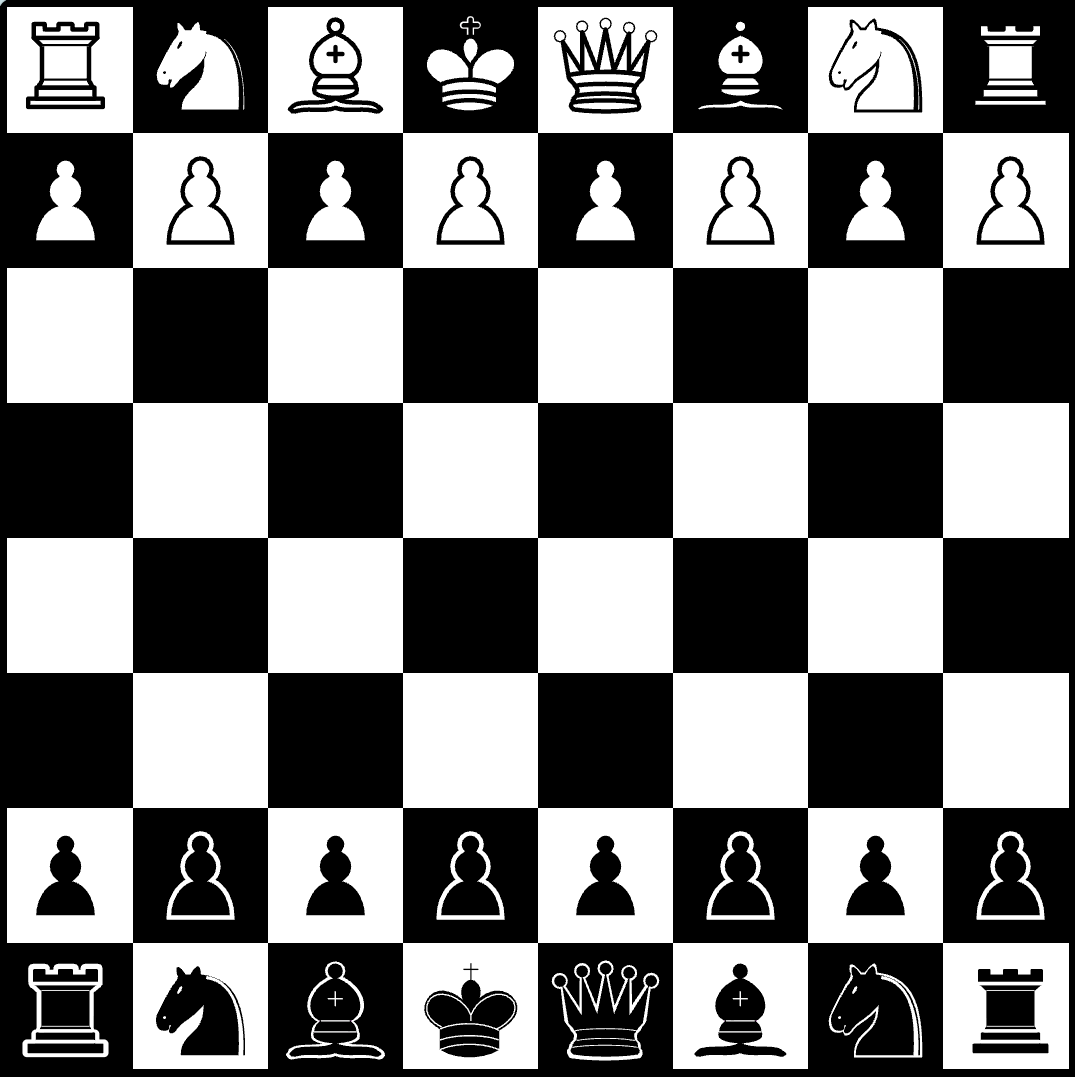 Figure 1. A standard chess position. Chase and Simon found that masters reconstruct a real board like this almost perfectly but drop to novice levels on a random one, because they see meaningful chunks rather than individual pieces.
Park items on a familiar route. For ordered lists and arbitrary sequences, place each item as a vivid image at successive stops along a path you know well. Why It Works: The method of loci borrows the hippocampus’s spatial-navigation circuitry as a scaffold for arbitrary content, and it combines dual coding, distinctiveness, and ordered retrieval in one move. Dresler et al. (2017, Neuron) trained novices for six weeks and watched average word recall climb from about 26 to roughly 61 items, with much of the gain (over 20 extra words) still holding at four months. Maguire et al. (2003) found that 9 of 10 world-class memorizers used this single technique. How to Apply It: Pick a route with 10 to 20 well-spaced landmarks you know cold, and at each one imagine the target item in some bizarre, animated, multisensory interaction with the place. Common Mistake: Using bland, static images, or an unfamiliar palace; the gains collapse without vivid, interactive imagery on a route you’ve truly consolidated. (Dresler et al., 2017; Foer, 2011; Maguire et al., 2003)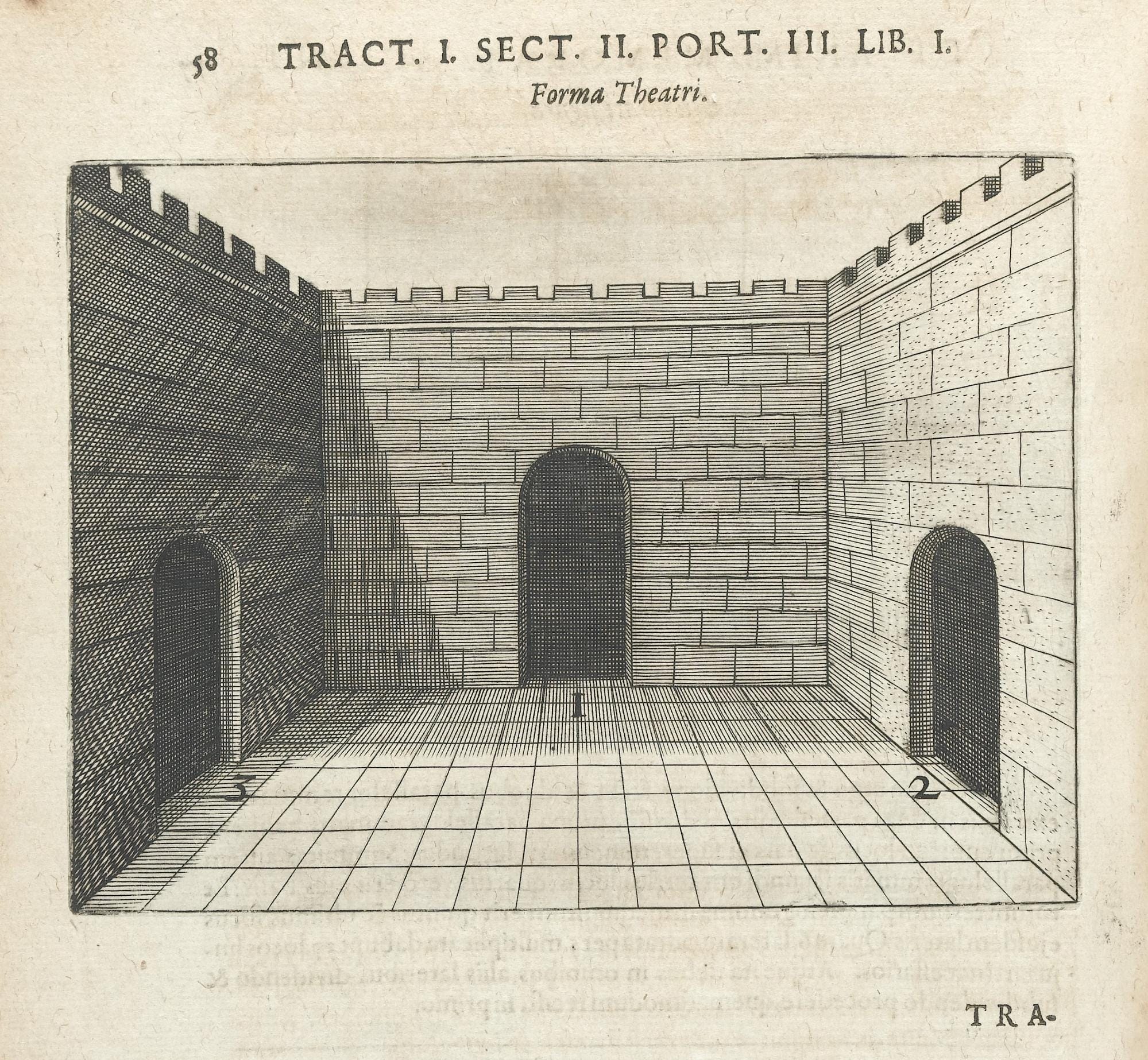 Figure 2. Robert Fludd’s 1619 “memory theatre,” one of the classical art-of-memory schemes the method of loci grew out of: you store what you want to remember at fixed spots inside an imagined building.