10 NotebookLM notebooks built from MIT lectures, Hormozi's sales playbook and Buffett's letters. Every link is public. Steal all 10 links.
By Gencay
Published: 2026-08-30
URL: https://www.learnwithmeai.com/p/notebooklm-notebooks-mit-hormozi-buffett
I have trained 290 NotebookLMs, but I realized some of them really hit the spot.
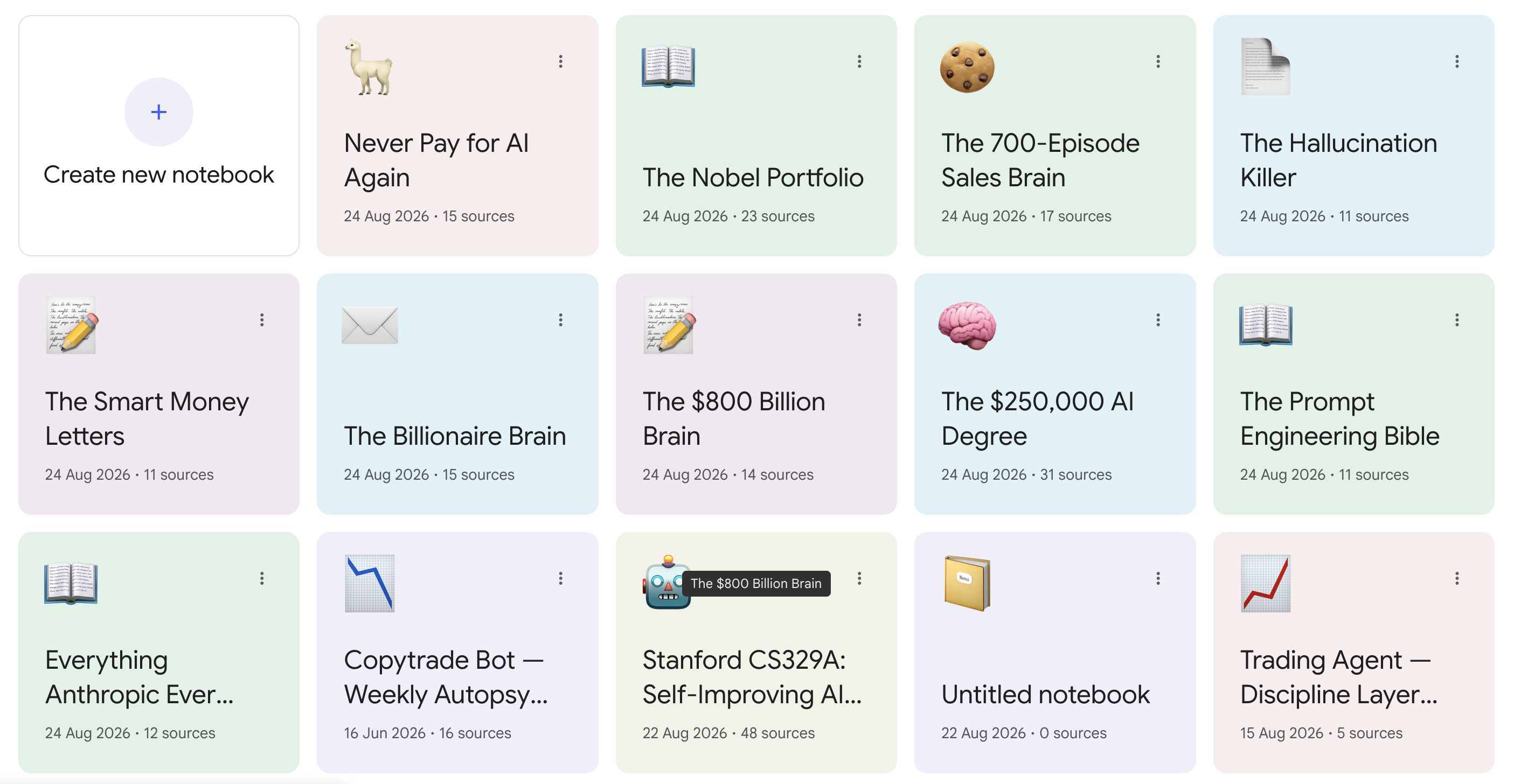
\My NotebookLM dashboard. The 10 from this post, plus a few private builds you can see leaking at the bottom.\
In this one, I’ll show you 10 NotebookLM notebooks that can change how you work, operate, and even think.
Let’s start.
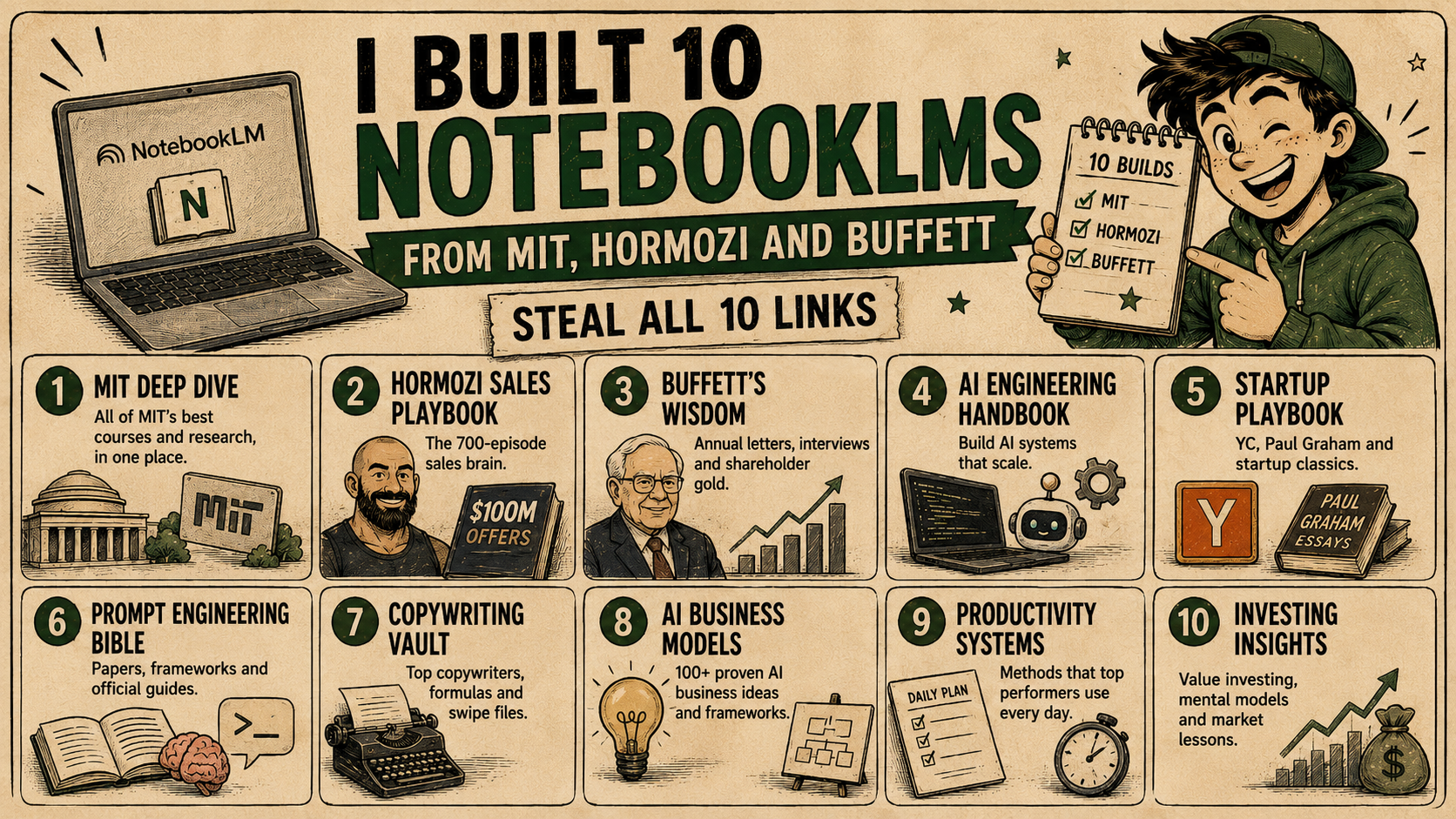
\The full lineup: MIT, Hormozi, Buffett and 7 more.\
1. Everything Anthropic Ever Wrote
Anthropic’s documentation is very detailed.
The problem is nobody has time to read all of it, and honestly, it is everywhere.
The docs live on one site, the cookbook on GitHub, the engineering posts somewhere else.
So I put all of it in one place.
24 sources inside one Notebook.
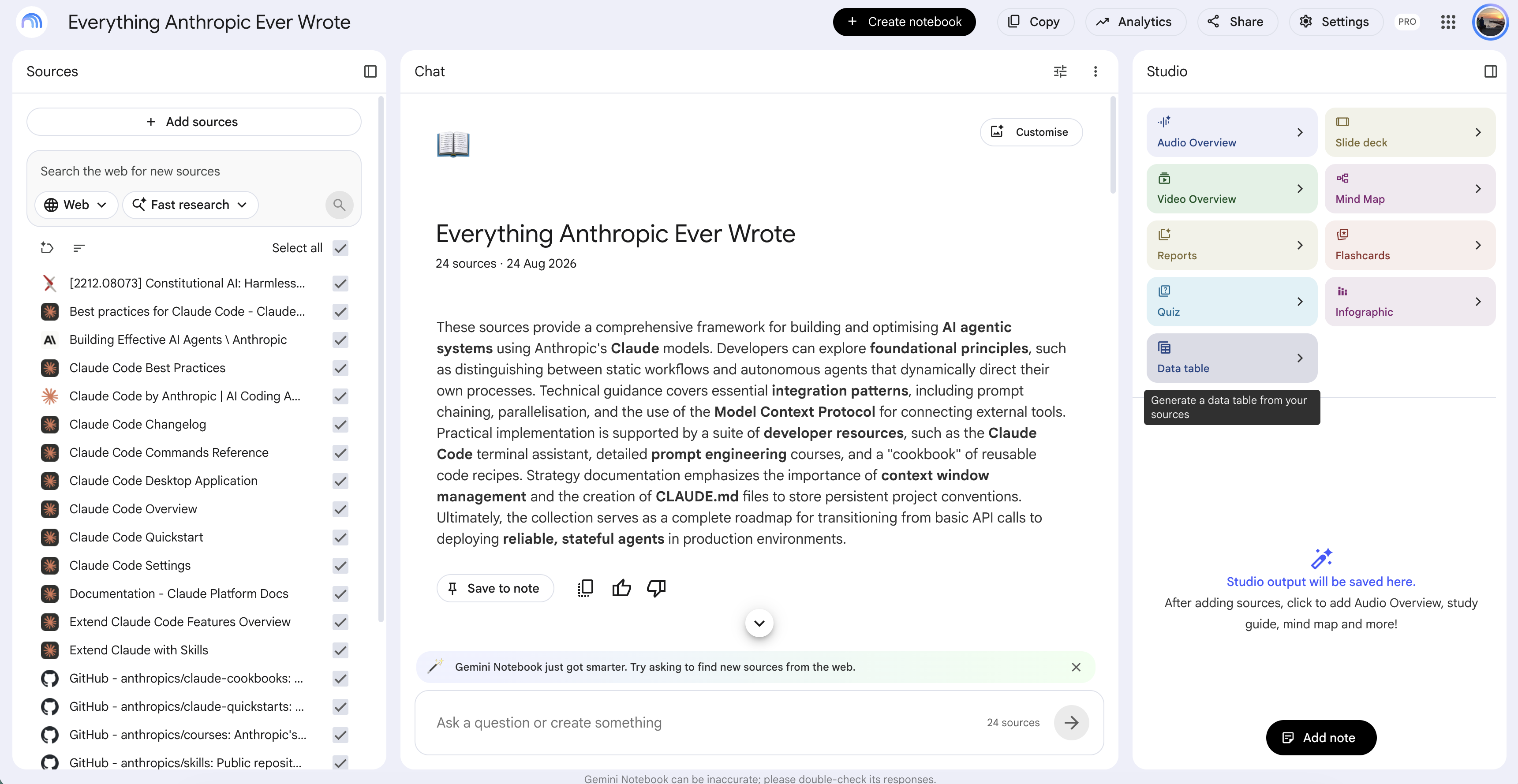
\24 Anthropic sources in one place: docs, cookbook, GitHub repos, engineering posts.\
Let’s ask one question about Skills, hooks, and subagents, using this prompt.
In 3 sentences: what is the difference between a Claude Skill, a Hook and a Subagent in Claude Code?
Here is the output.
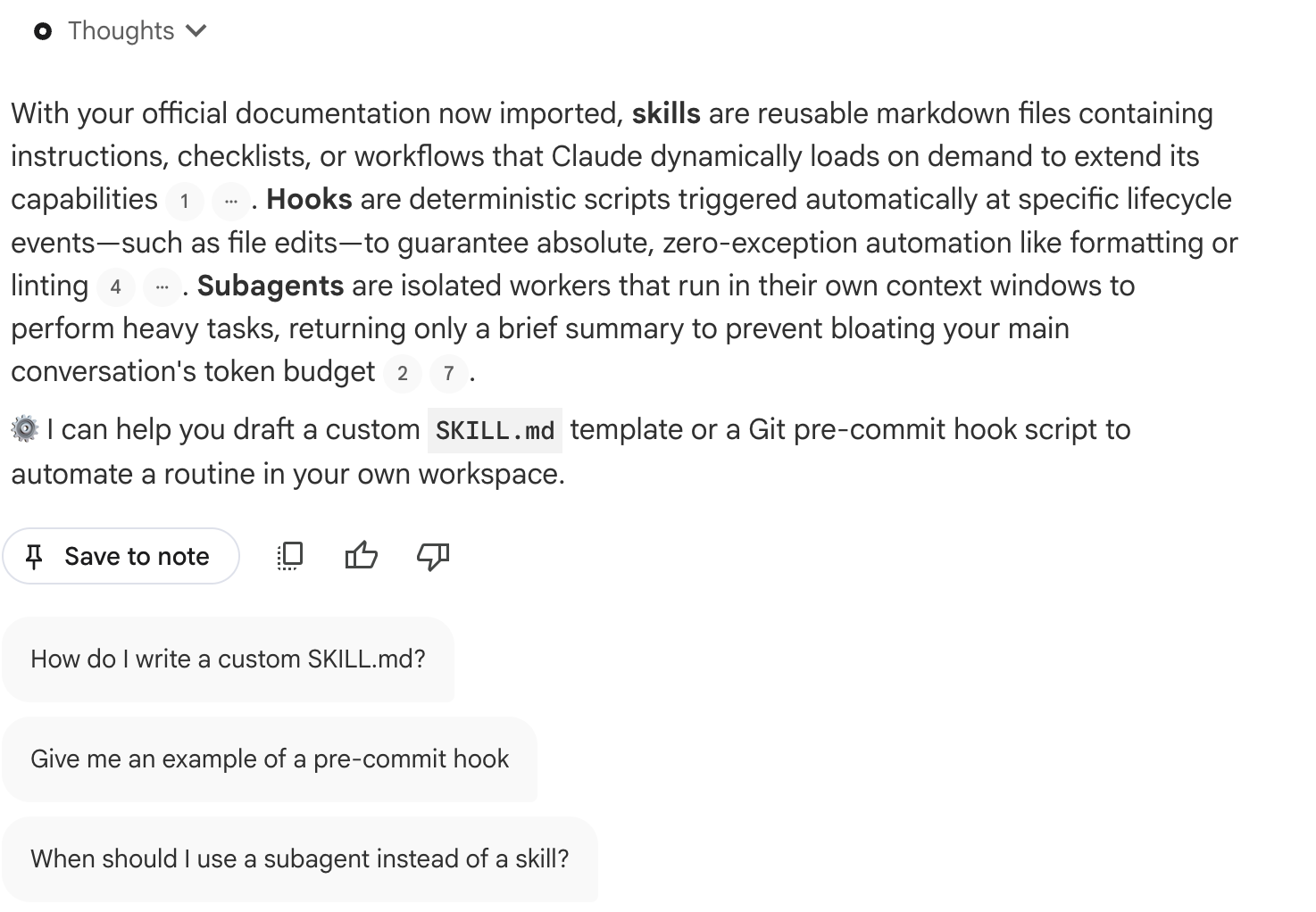
\Skills, Hooks and Subagents in 3 sentences, every claim cited.\
I suggest you connect this NotebookLM with your Claude Code, and when you want to build a new hook, subagents, or anything technical related to Claude, use it. Read this one to discover how to connect NotebookLM and Claude.
Here is the link to this Notebook: https://notebook.google.com/notebook/df6dd90f-8b23-4aff-aa0c-e2fe5a1d8a50
2. The Prompt Engineering Bible
Everyone shares prompting tips.
Almost nobody reads the papers those tips came from.
I added the papers. Chain-of-Thought, ReAct, Tree of Thoughts, Self-Consistency, and The Prompt Report, which reviews 1,500+ papers on its own.
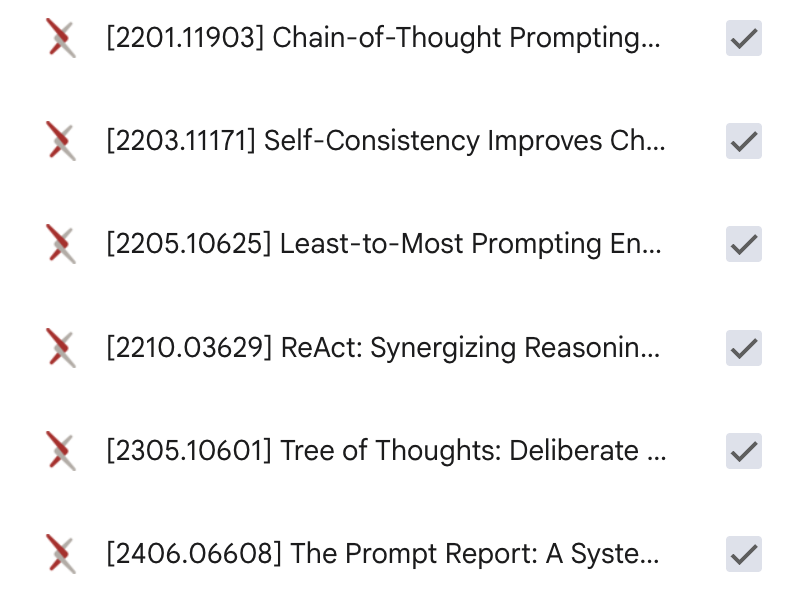
\The papers behind the tips: Chain-of-Thought, Self-Consistency, ReAct, Tree of Thoughts.\
On top of them, there are official prompting guides from Anthropic, OpenAI, and Google.
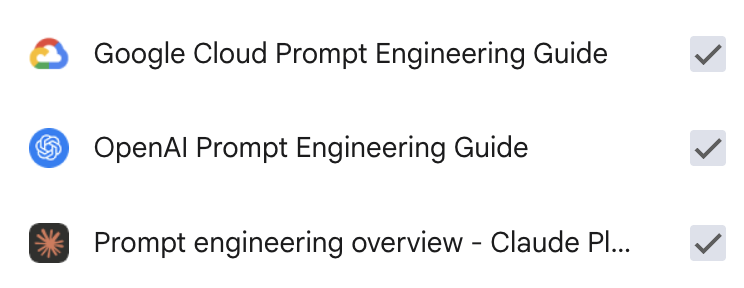
\The official prompting guides from Google, OpenAI and Anthropic, side by side.\
12 sources inside one Notebook.
Let’s test it with this prompt.
In 3 sentences, tell me the best prompt engineering techniques to use in Claude, Codex or Claude Code.
Here is the output.
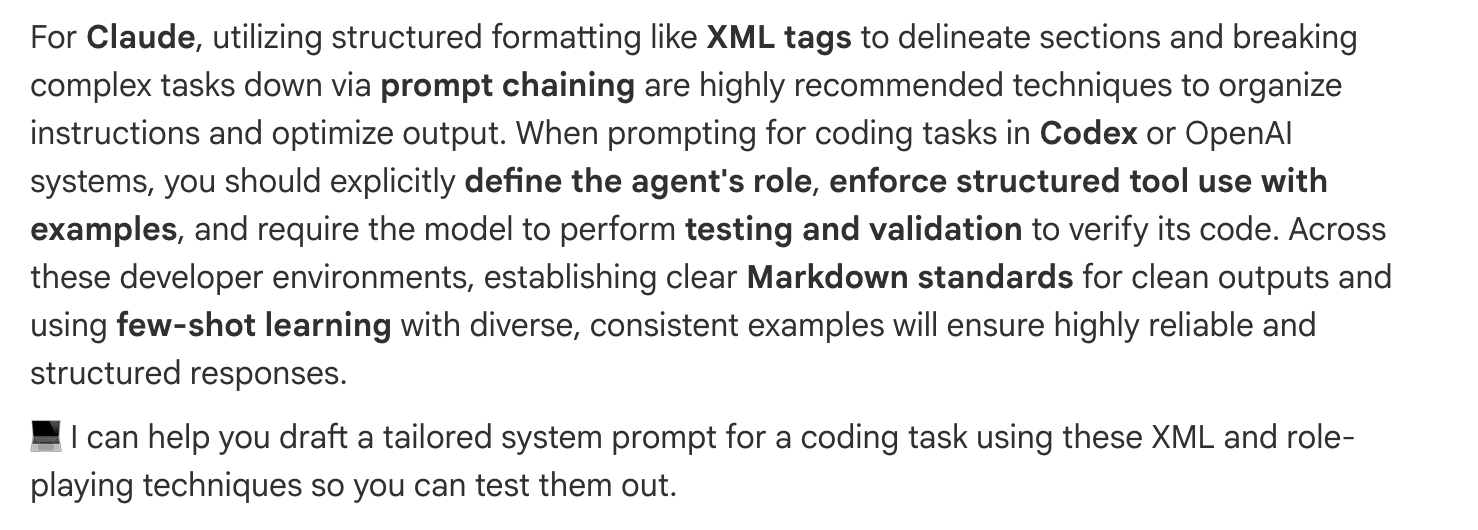
\One answer, three platforms: XML tags for Claude, role definitions for Codex.\
Here is the link for you to use: https://notebook.google.com/notebook/1d5818b9-5119-428e-a893-964d06fd4b7d
3. The $250,000 AI Degree
If you have been reading my notes for a while, you have become familiar with this template:
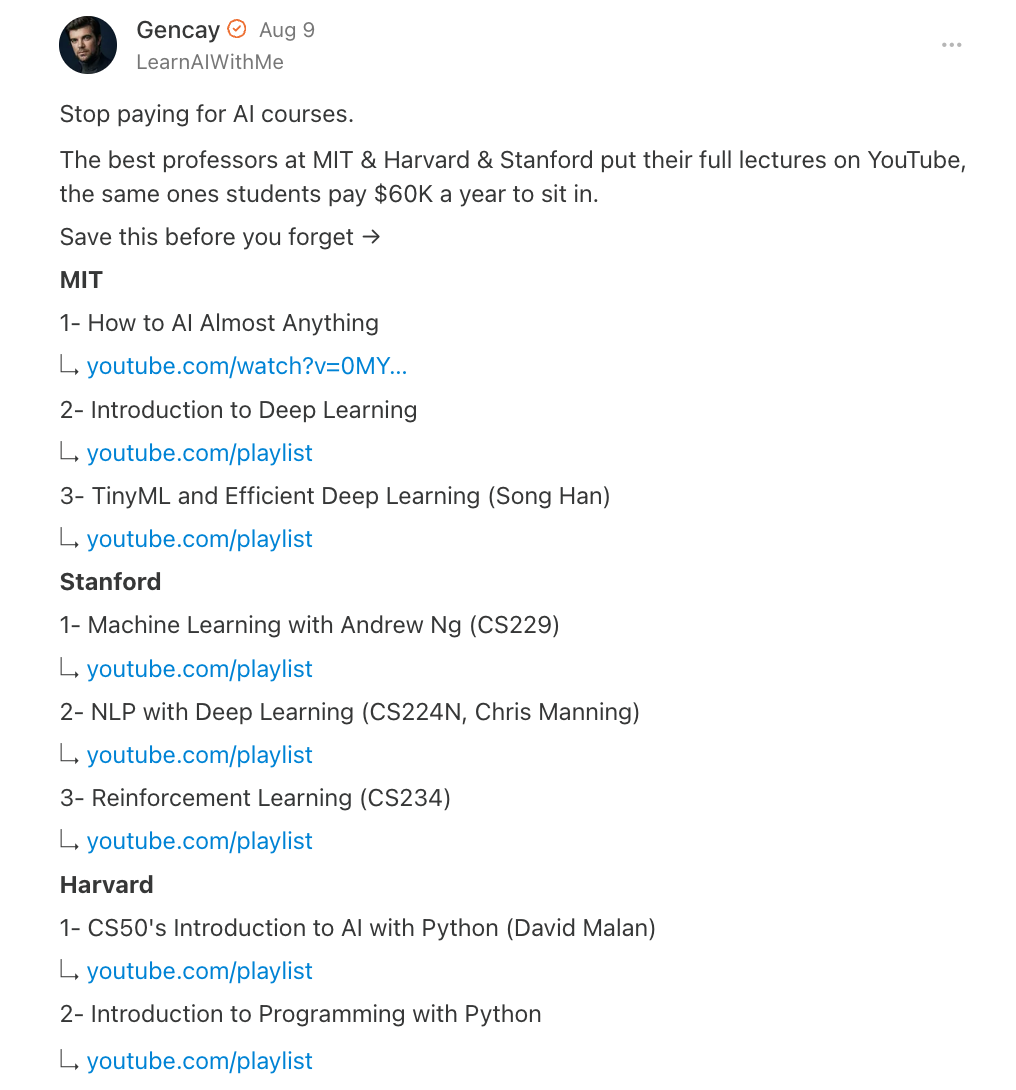
\The note that started it: MIT, Stanford and Harvard lectures, all free on YouTube.\
I created a NotebookLM by adding all links from the above Substack note.
But let’s ask it where to start learning AI:
I want to start learning AI, can you create me a roadmap from these sources?
Here is the answer.
We are in the best time in human history to learn AI for free.
Here is the link to this Notebook: https://notebook.google.com/notebook/94f24a59-bcc1-4d4b-816f-fb28c9d9f4fd
4. The $800 Billion Brain
If you want to build a successful startup, this one fits perfectly for you.
Every startup question you have was already answered years ago by Paul Graham and Y Combinator. These are the people behind Airbnb, Stripe, Coinbase, and DoorDash.
I collected all of them into one Notebook.
14 sources are inside.
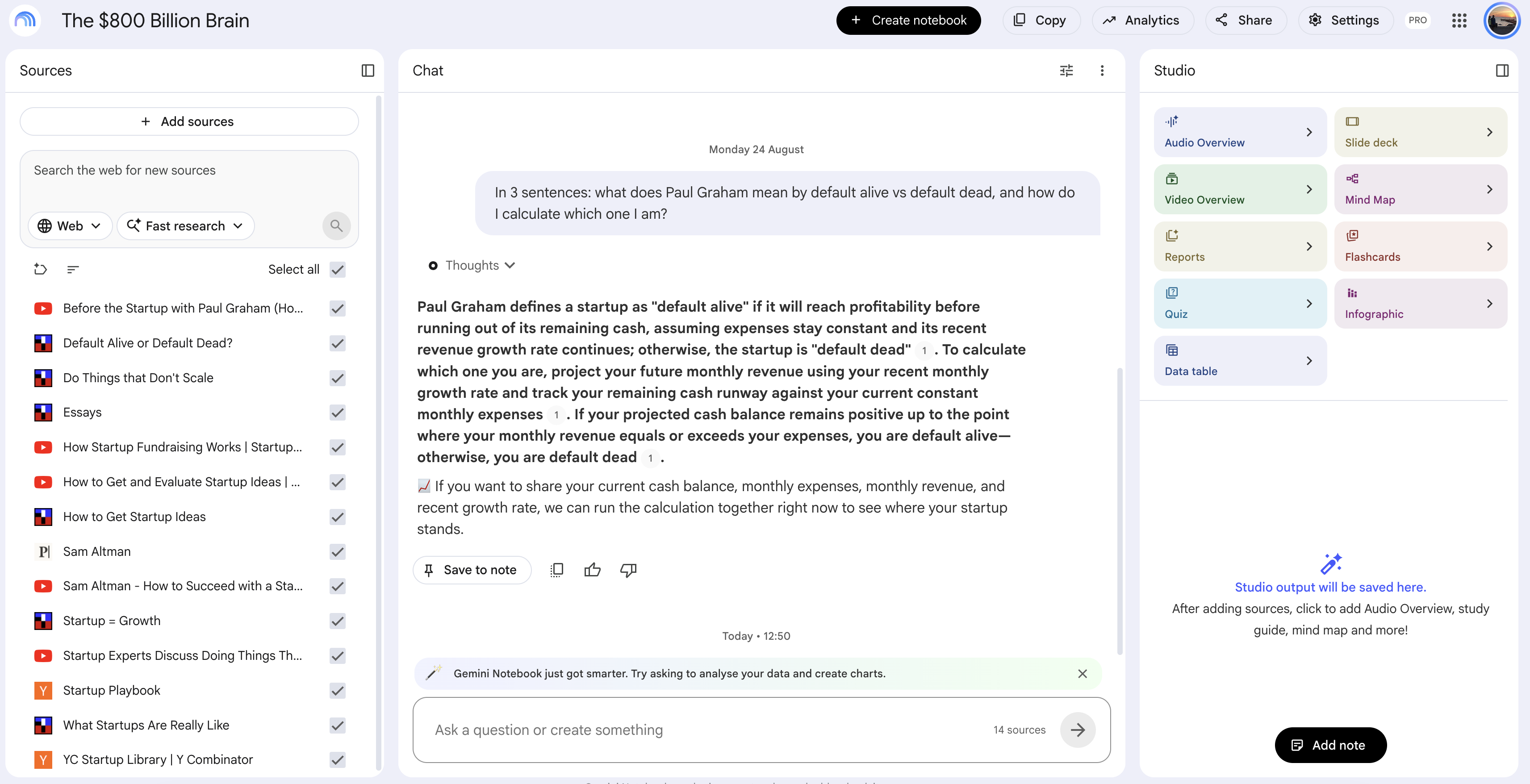
\14 sources of YC wisdom. Paul Graham explains default alive vs default dead.\
If you’re familiar with my content, I’ve built Claude Skills for everything, because it is the fastest way of building with AI and sharing these with you.
This week, I built a Claude Skill that can create an AI movie for just $1. Now, let’s see whether it can become a real product, and whether NotebookLM can help me find the right angle.
I want to build an AI startup around a tool called Director, which creates movies using APIs instead of Higgsfield with Claude. It can produce an AI movie for just $1. What should my startup’s angle be?
Here is the answer;
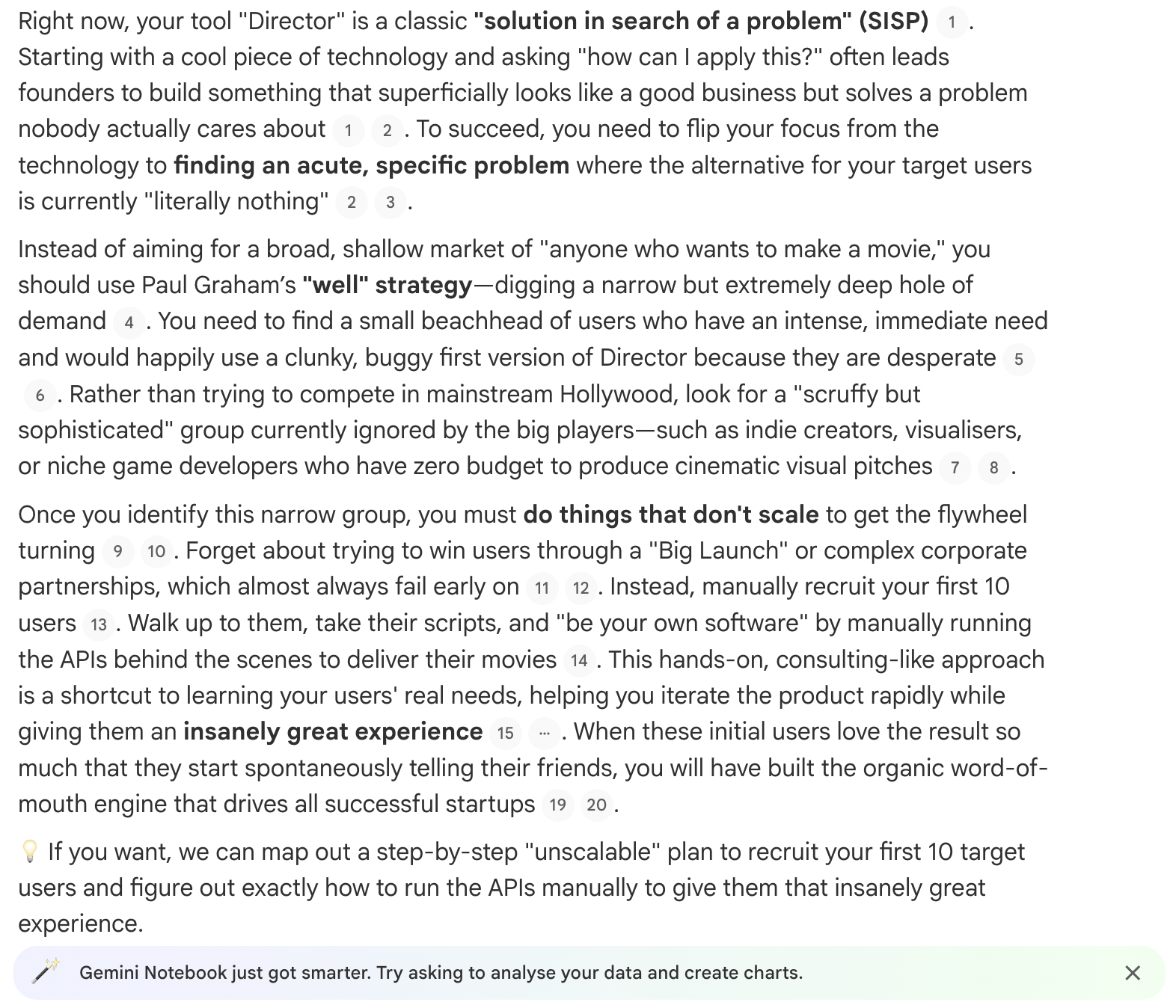
\NotebookLM calls my tool a "solution in search of a problem." Fair.\
By the way, if you want to turn this into a product, you can use this two-part series, where I am teaching you how to turn ideas into a product that your followers pay for, using Claude Code.
You can turn every build I’ve shared in Build It into a product.
Here is the link to this Notebook: https://notebook.google.com/notebook/998d91e7-f2da-4254-8d1c-c2356f721bd1
5. The 700-Episode Sales Brain
I’m an engineer, and I had a really hard time when I first started creating content.
Writing is only part of the job. You also need to know how to sell what you create.
If you don’t want to learn the hard way, this NotebookLM notebook could be perfect for you.
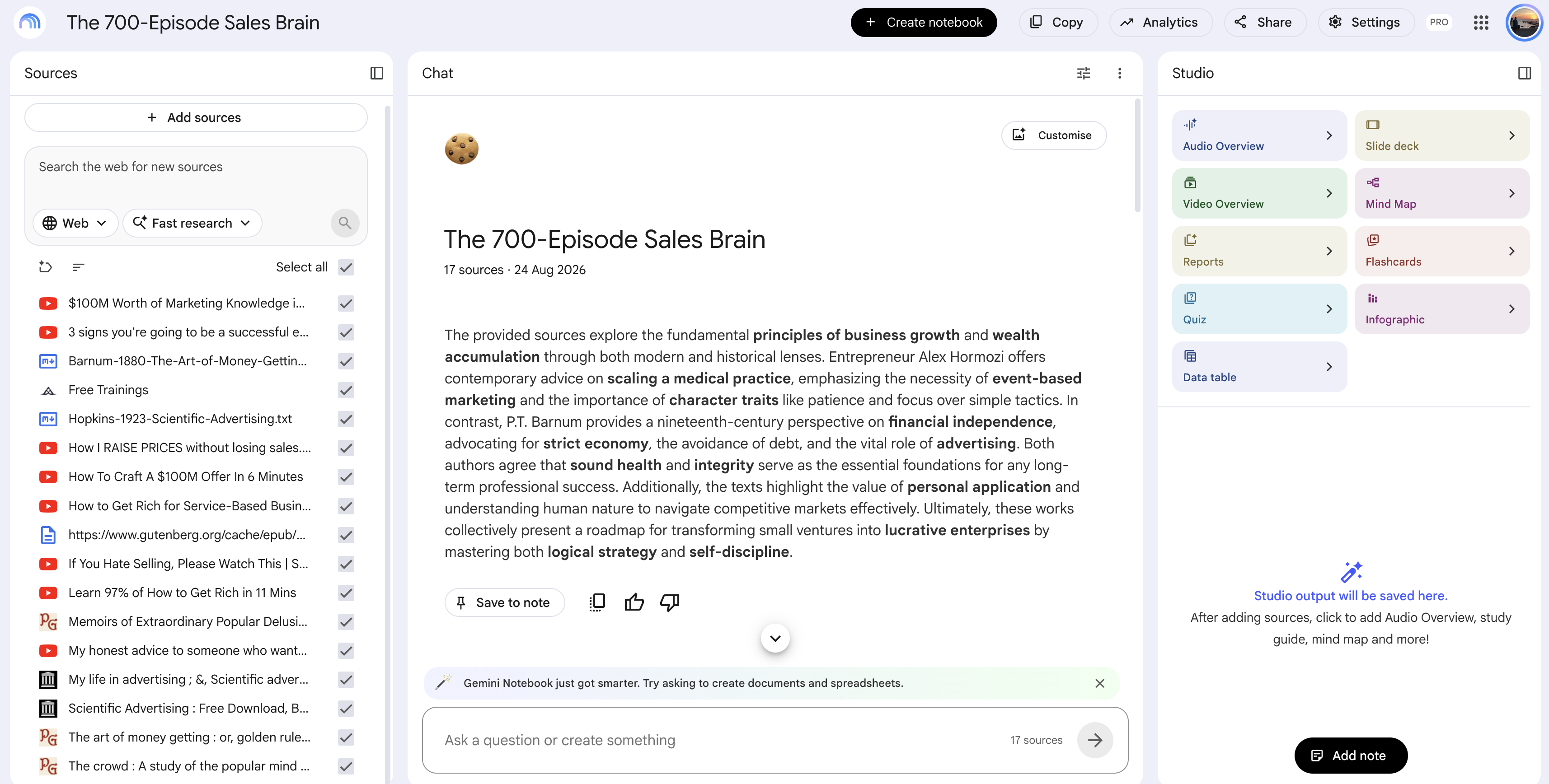
\Hormozi sits next to a 1923 advertising book. 17 sources total.\
It contains advice from Alex Hormozi, along with the 1923 book that inspired his framework: Scientific Advertising, which is now in the public domain. David Ogilvy famously recommended reading it seven times before working in advertising.
There are 17 sources inside.
Let’s test it:
I have a substack and want to increase my paid subscribers 10x. I am writing in the niche of AI, what do you suggest for me in 3 sentences.
Here is the answer.
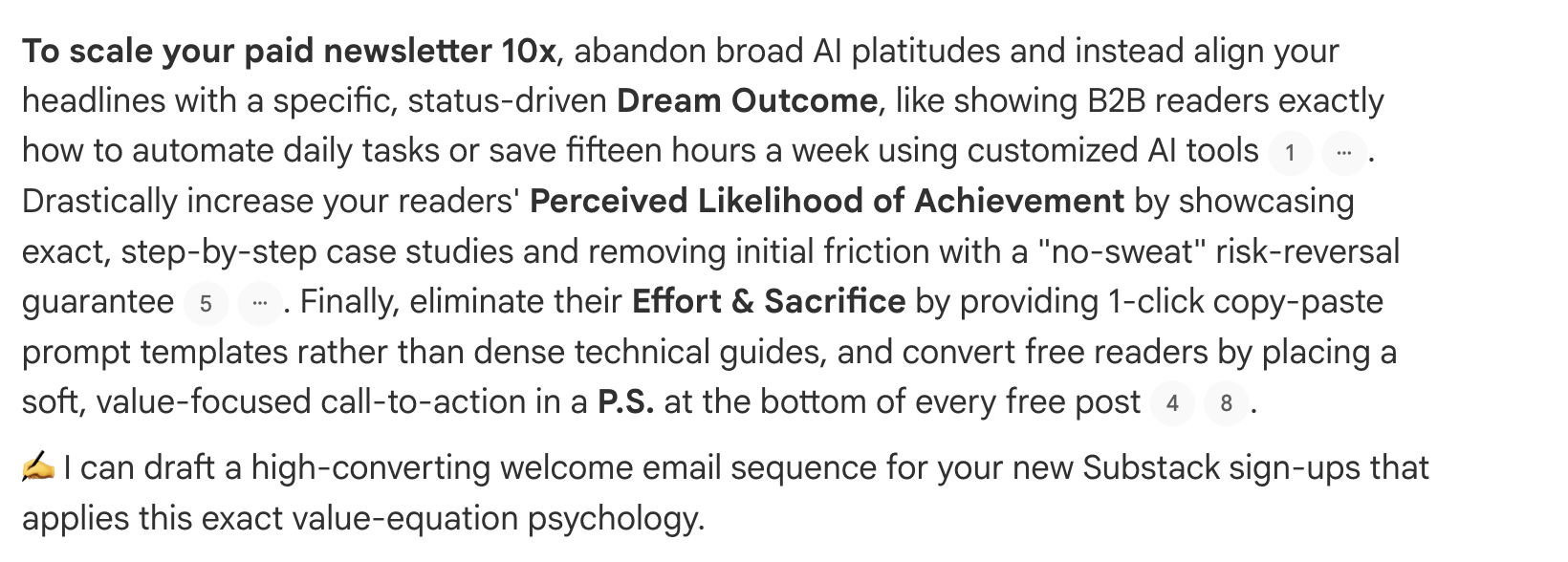
\The 10x answer: Dream Outcome, proof, and removing reader effort.\
Showing B2B readers how to automate daily tasks:
1-click copy-paste templates?
Please visit here and get these templates for yourself.
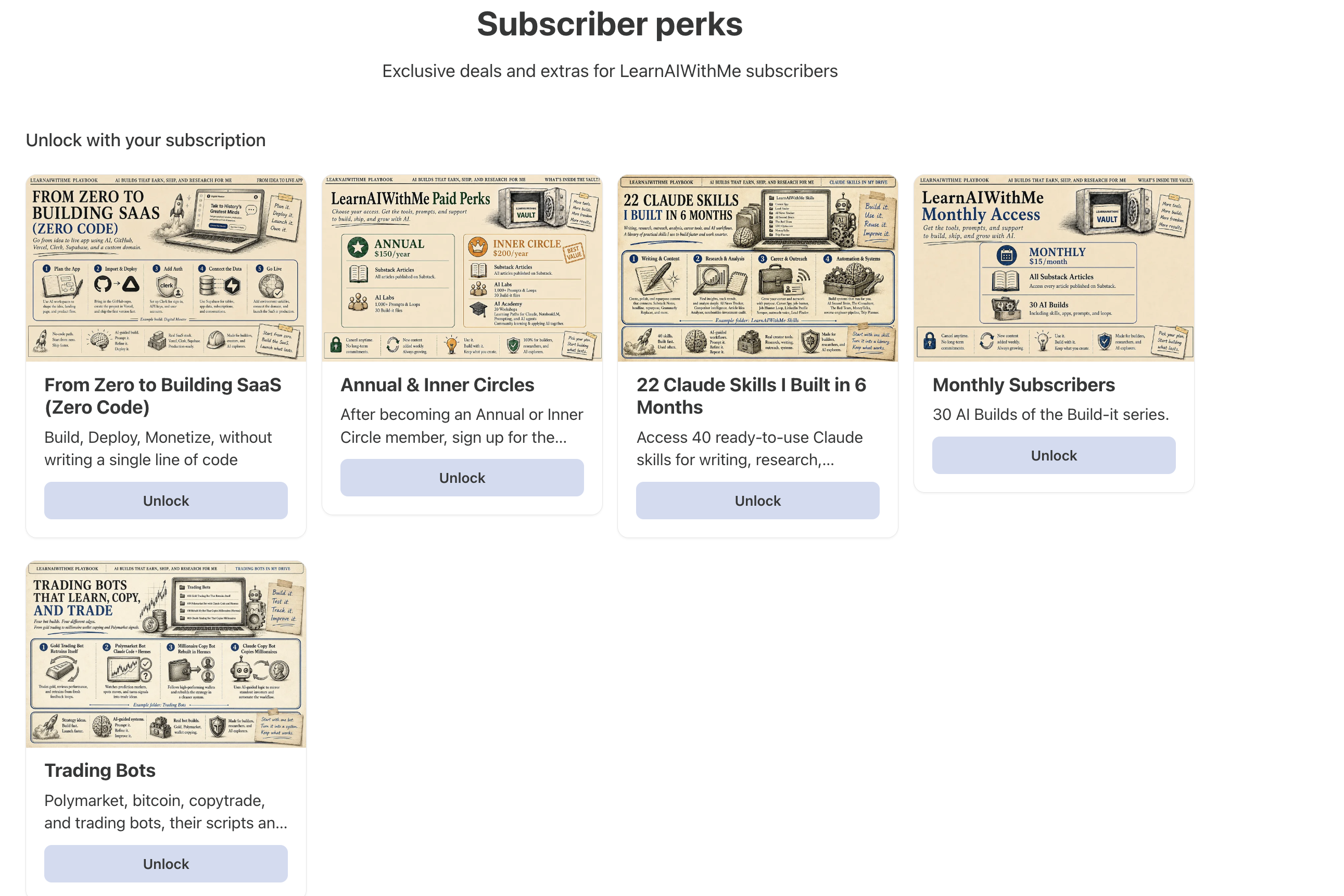
\My subscriber perks page. The 1-click templates live here.\
But after reading this answer, I added a couple of things to my to-do list.
I made this notebook private. You can build the same one in 5 minutes. Create a new notebook and add these sources.
6. The Billionaire Brain
Is there anyone reading this who doesn’t want to be a billionaire? If so, I really admire you.
Because in my wildest dream, I became a billionaire and the president of Fenerbahçe. Let me write it here, so I can show this exact paragraph in the future when it happens :)
To become one of them, I believe we first need to learn how the current ones think. Not from books written about them, but from their own words.
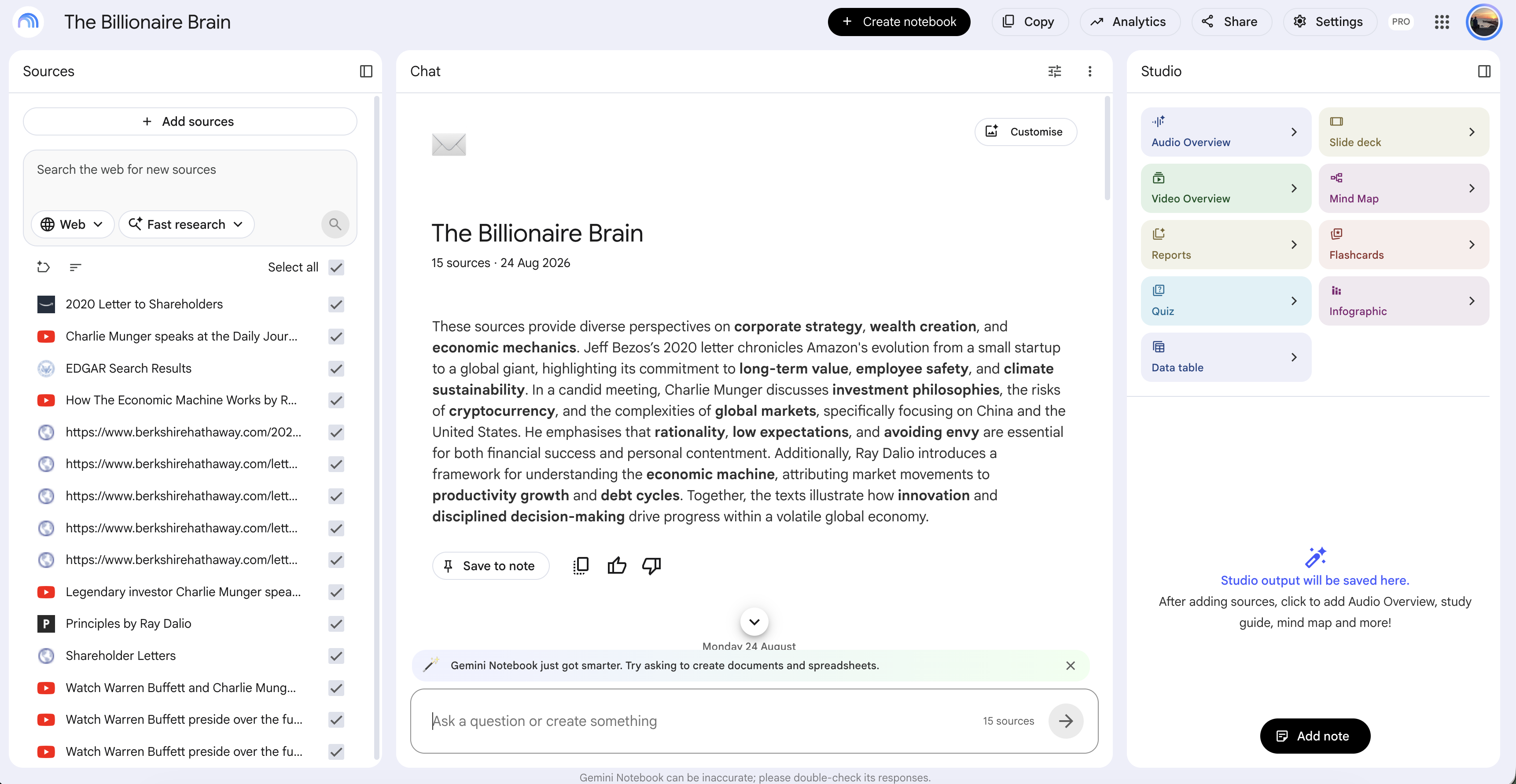
\Buffett's letters back to 1977, Munger, Dalio and Bezos in one notebook.\
That’s what I did with this Notebook. Buffett’s shareholder letters going back to 1977, his last three annual meetings from CNBC, Munger’s Daily Journal meetings, Dalio’s Economic Machine, and Bezos’s letters to Amazon shareholders.
Now, let’s ask one question:
Please reverse engineer how I become a billionaire from where I already am. I write a Substack called LearnAIWithMe with 15K subscribers, and my paid tiers are $15/month, $150/year and $300/year. Use the principles of Buffett, Munger, Dalio and Bezos from the sources.
And here is the answer’s last part:
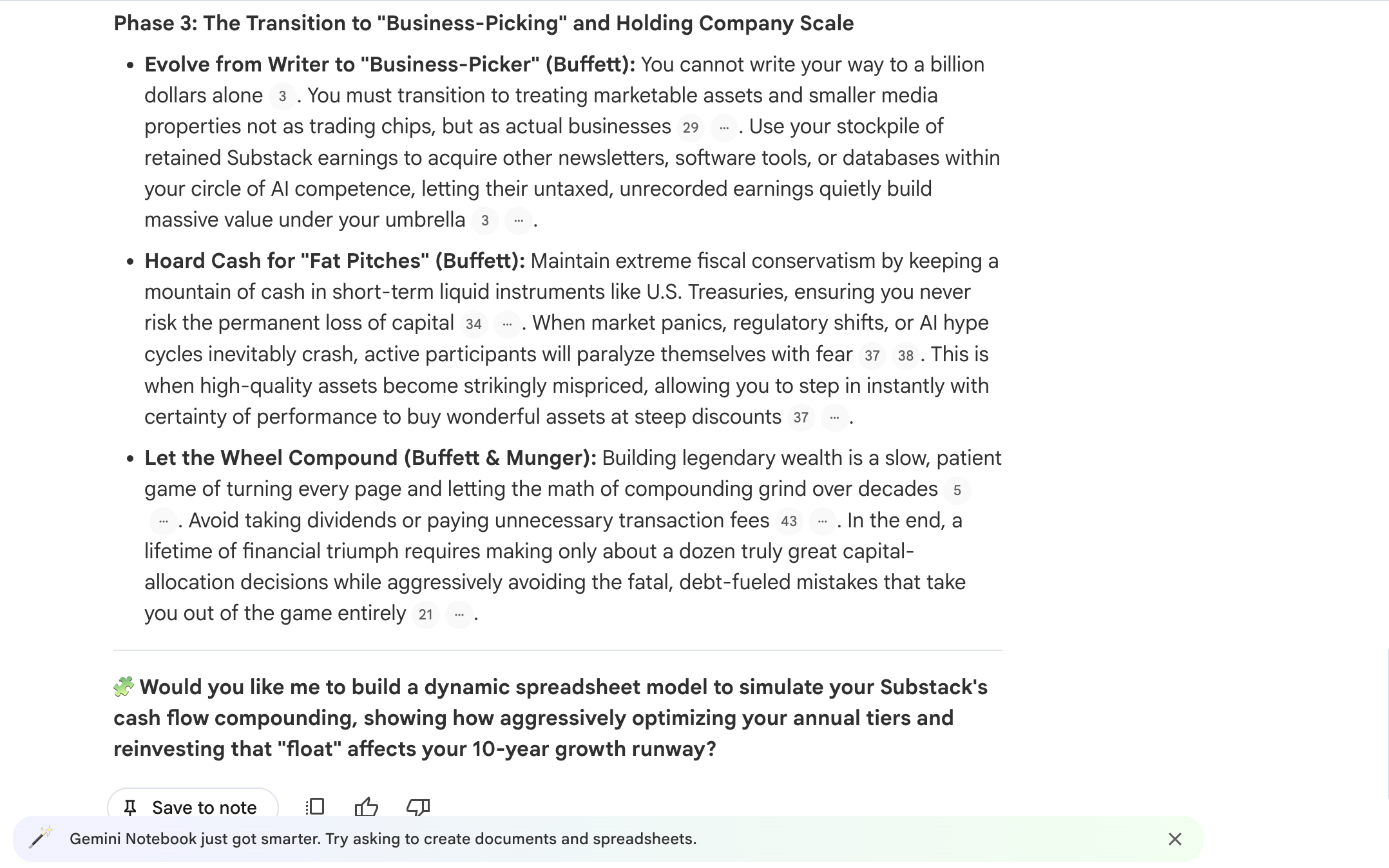
\Phase 3 of my roadmap: stop writing, start business-picking.\
Well, actually, I follow some advice from here, like writing more AI builds related to business and finance.
Here is the link: https://notebook.google.com/notebook/d7d12072-90a3-4fe8-944e-620d32c613ee
7. The Nobel Portfolio
This one can be the most expensive one if you invest.
Six Nobel Prizes were given to people who proved investors keep making the same mistakes. Kahneman, Thaler, Shiller, Fama.
Their lectures are free. Shiller’s entire Yale finance course is on YouTube, and Damodaran, the professor who taught valuation to half of Wall Street, uploads every NYU lecture for free.
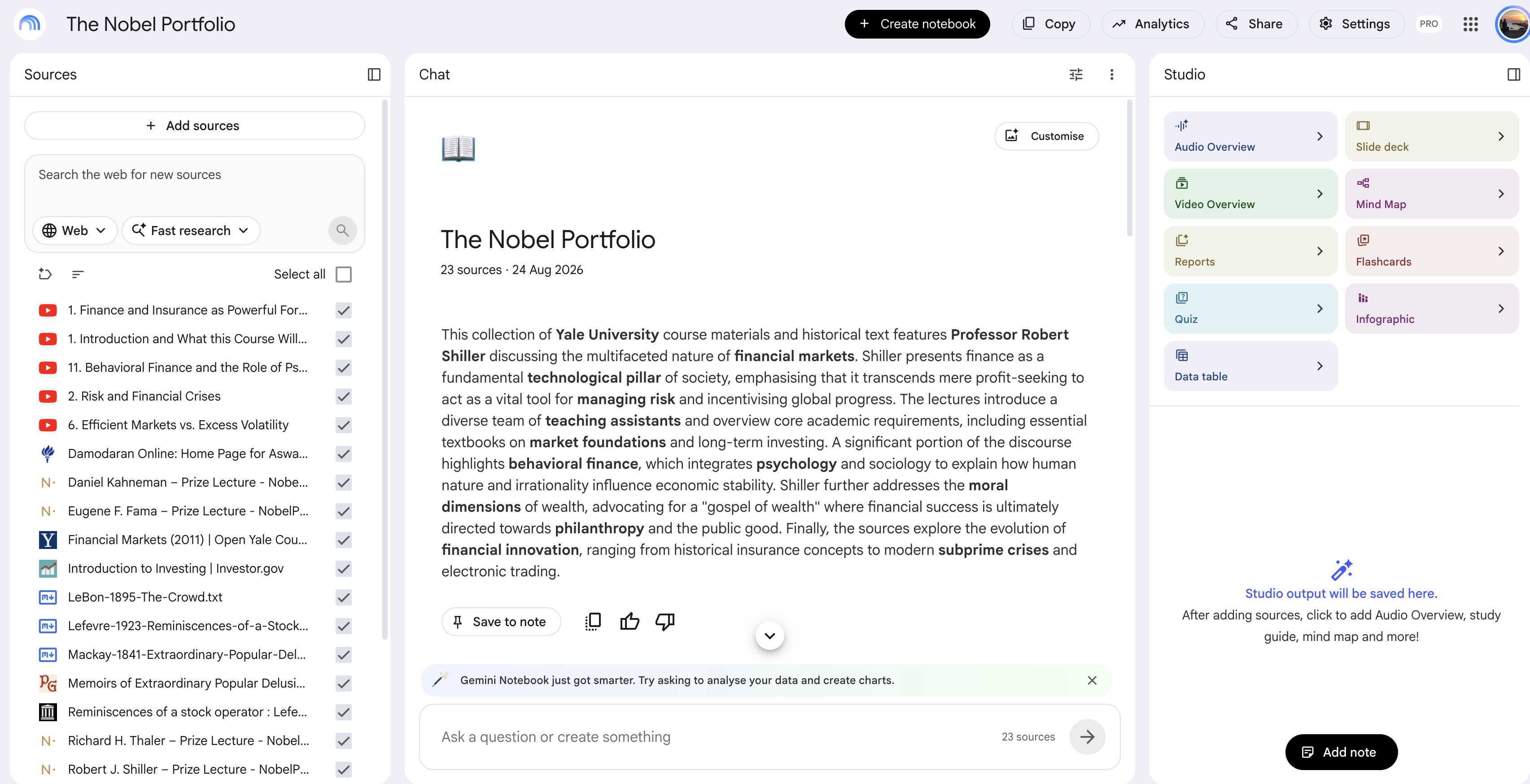
\23 sources: Shiller's full Yale course, Damodaran's NYU lectures, four Nobel lectures.\
I admit that I still have a lot to learn before becoming a confident investor.
That’s why I’ve spent a long time searching for a solid investment strategy, which eventually led me to copy trading.
This approach can be used in the crypto market to copy the trades of successful wallets. It sounds almost perfect in theory, but I want to find out whether it is actually a reliable investment strategy.
Can you do SWOT of copy trade, a.k.a smart money concept on bitcoin marketing
Here is the answer.
(SWOT: Strengths - Weaknesses - Opportunities - Threats )
Also, I’ve built a copytrade bot on paper using GitHub Actions first, and then switched this to Hermes agent, and now I've actually handed $452 real money to Claude and am sharing results.
Here is the link to this Notebook: https://notebook.google.com/notebook/a282b0db-8eb9-4a76-a6be-70e9687976e3
8. The Smart Money Letters
If the last two notebooks made you curious about copying smart investors, this is the one where the real data lives.
Smart money is similar to copy trade. You need to follow the money to make profitable transactions, based on this logic.
To do this, I use Howard Marks’ Oaktree memos. Warren Buffett once said they are the first thing he reads whenever they land in his inbox. Beneath the memos, I added the relevant filings.
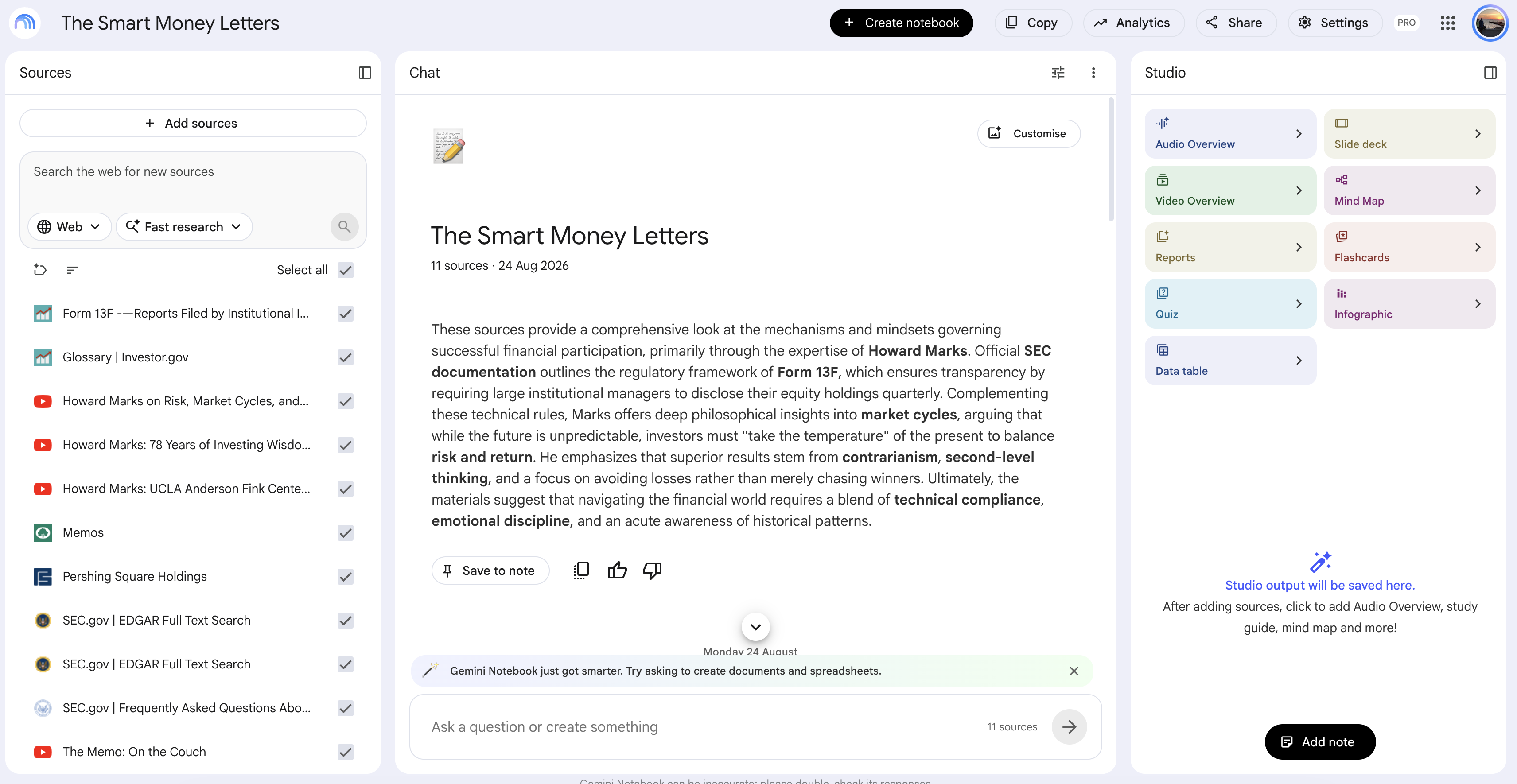
\Howard Marks' memos plus the SEC's own 13F documentation.\
My copytrade bot works in crypto, where every wallet move is visible in real-time. I wanted to know whether the same idea works on stocks by copying hedge funds.
My bot copies successful crypto wallets. Now I want to do the same in stocks by copying the smartest hedge funds. How do I read a 13F filing to see what they bought last quarter, and what are the traps of copying 13Fs?
Here is the answer.
Connect this NotebookLM notebook to Claude Code and have it build a paper-trading bot based on this strategy. Then run the bot using your OpenClaw or Hermes agent and have it send you regular updates on its current positions, just as I did with my Polymarket bot.
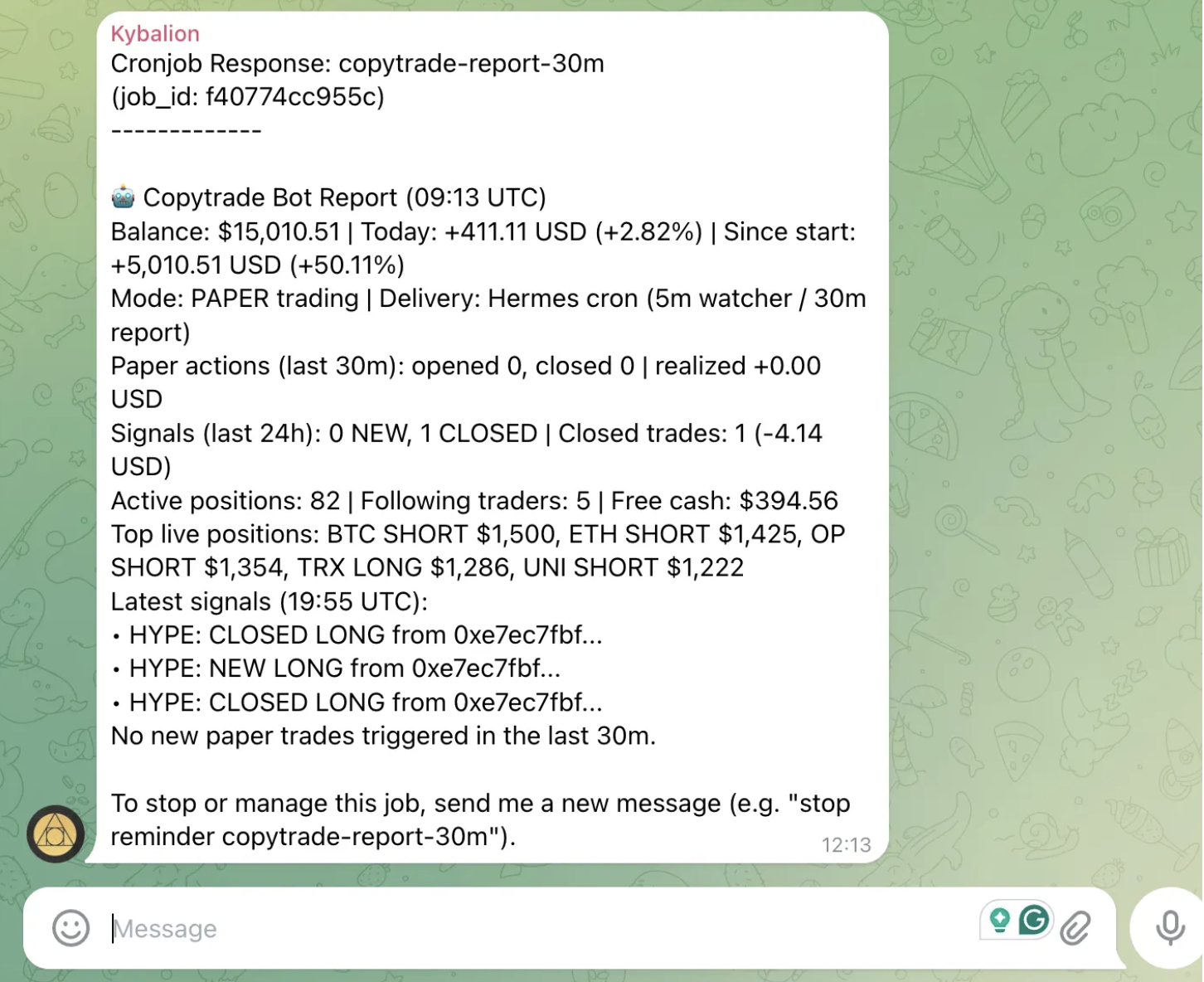
\My copytrade bot reporting to Telegram every 30 minutes. Paper mode, up 50% since start.\
Here is the link to this: https://notebook.google.com/notebook/bd8d8e21-c6a4-47fd-b6f1-b1066f0271b0
9. Never Pay for AI Again
This is my insurance policy. All of you guys remember how powerful Fable 5 are powerful, but in days, after the US government's order, they took it from us.
I even built NotebookLM and Claude Code’s offline version on my Mac mini.
But the good news is that the number of open-source models has increased, and their ability also matches frontiers, like Qwen almost matches Opus 4.8.
This notebooklm has all technical reports from Llama, DeepSeek, Qwen and Mistral.
I collected all of them into one Notebook.
15 sources are inside.
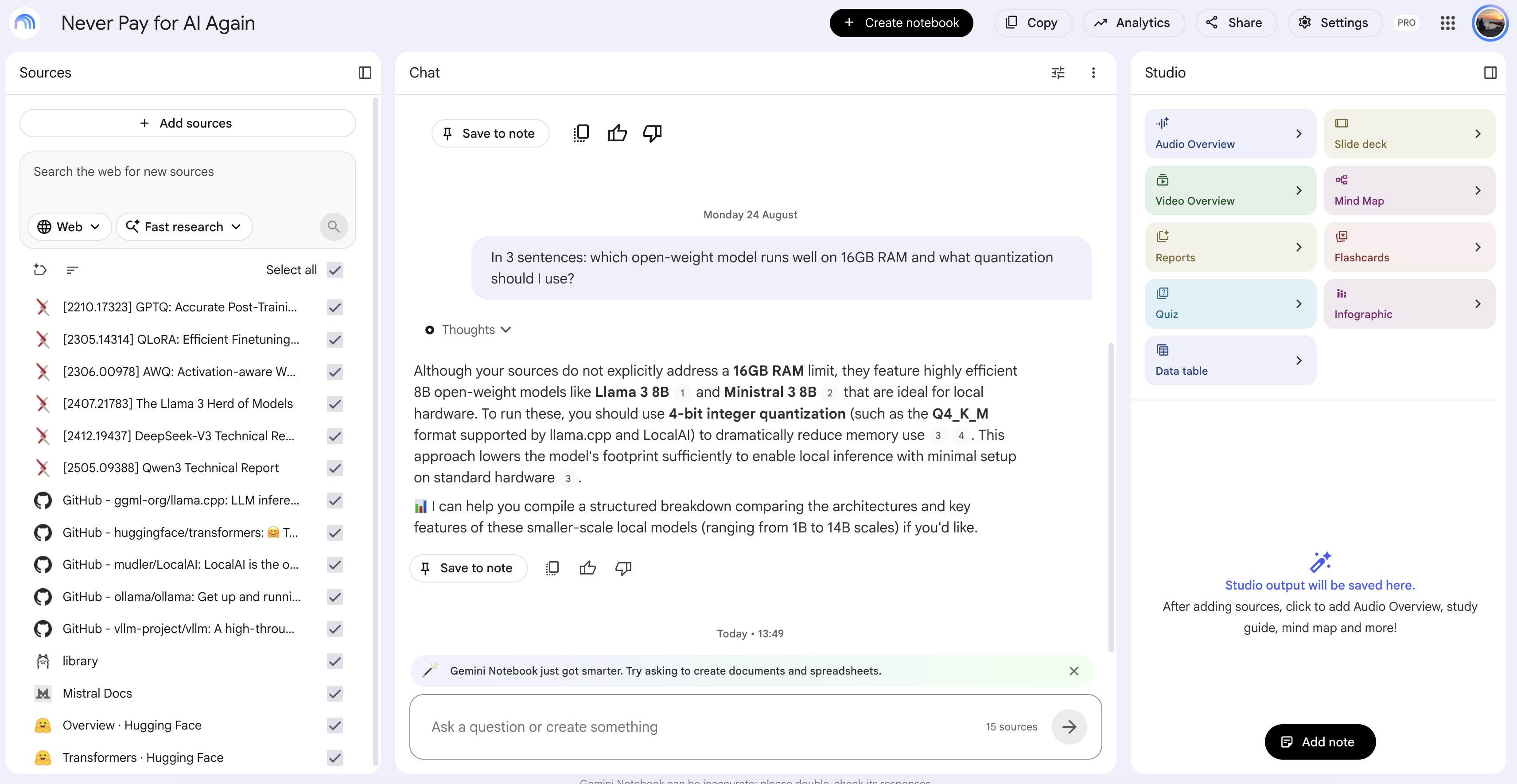
\15 sources: technical reports from Llama, DeepSeek, Qwen and Mistral.\
Give away your RAM and let it guide you about which model to use.
In 3 sentences: which open-weight model runs well on 16GB RAM and what quantization should I use?
Here is the answer.
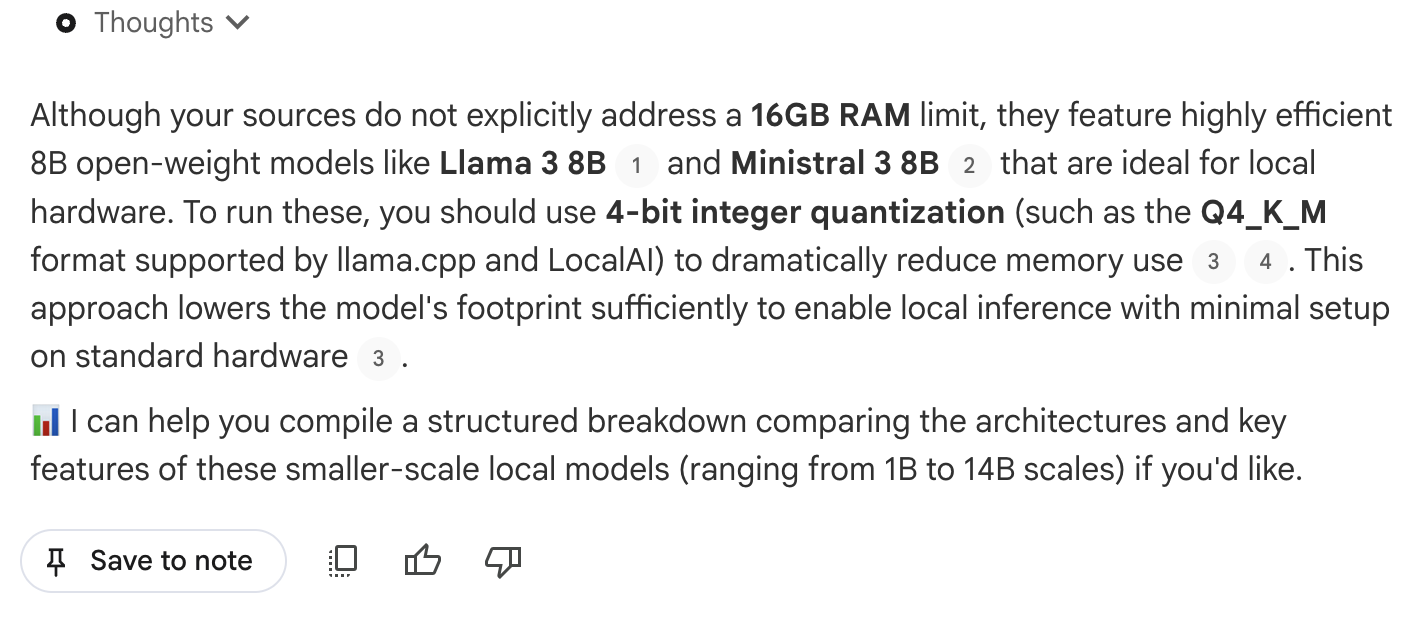
\The 16GB RAM answer: 8B models with Q4\K\M quantization.\
Here is the link to this Notebook: https://notebook.google.com/notebook/6615992b-136b-4e63-a434-81f09bb6455d
10. The Hallucination Killer
Hallucinations should be the first thing you need to solve if you want to build systems with AI.
NotebookLM is one powerful way because of its grounding feature.
But if you have a hallucination problem in your AI product, connect your Claude Code to NotebookLM and use this.
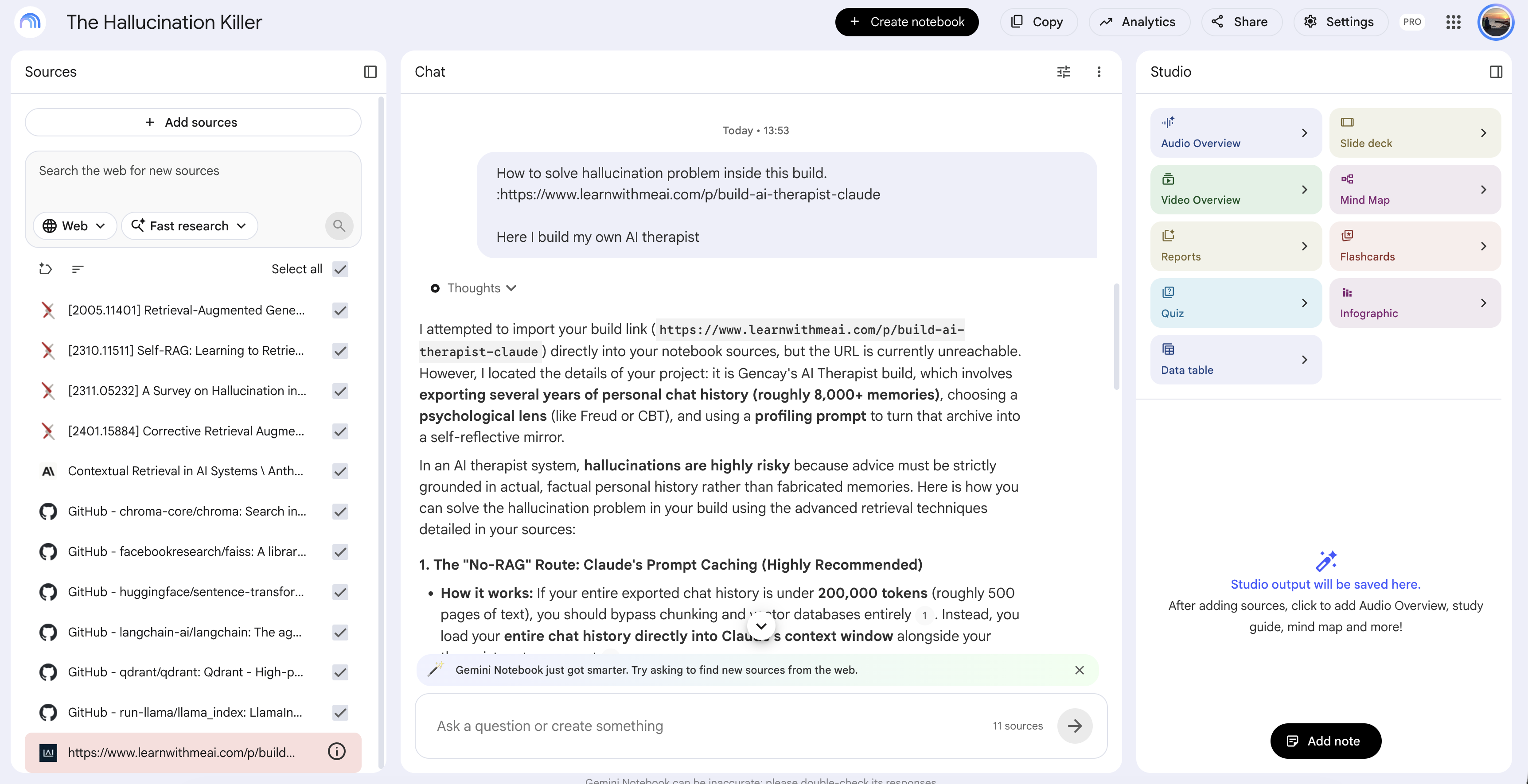
\11 sources on RAG, retrieval, and grounding. It even found my paywalled build.\
Let’s say you successfully build one AI use case from build-it.
But you have a hallucination issue.
Use this prompt:
How to solve hallucination problem inside this build. :https://www.learnwithmeai.com/p/build-ai-therapist-claude
Here I build my own AI therapist
It couldn’t access the full content because of the paywall, but you can ask Claude Code to implement these techniques to reduce hallucinations and then test the system again.
Here is the link to this Notebook: https://notebook.google.com/notebook/fe54b3c4-8477-403f-a9e6-1f4b73a1e401
Next Steps
Thanks for reading. If you want to build with AI instead of just reading, and do it with the community and me, check out the AI Academy.
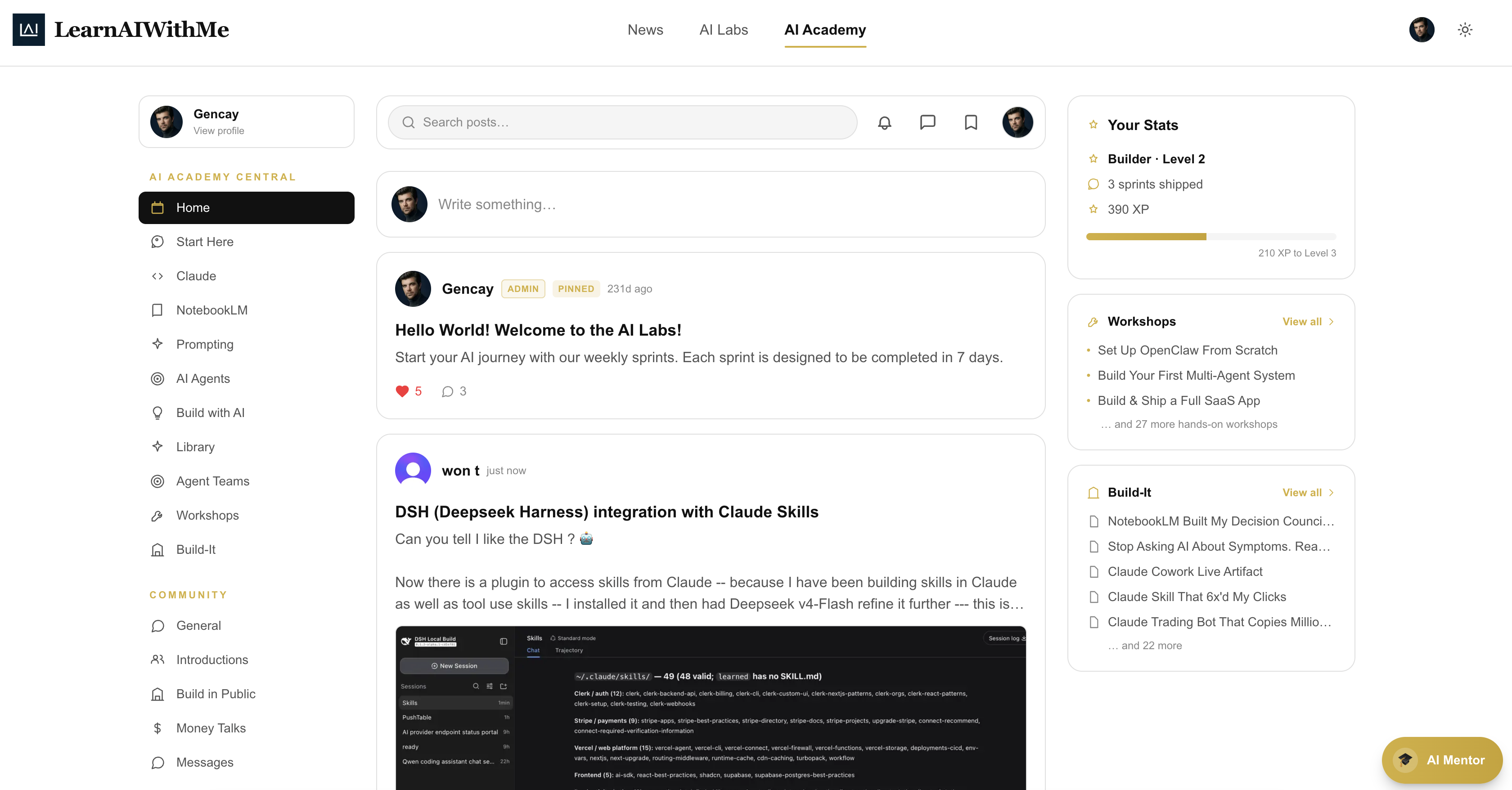
\AI Academy, for moreinfo\
It is a platform that I built for my Substack paid subscribers.
Here, we build together, and I comment on each build. It’s like a private community.
Inner Circle members can access it.
Until September 1, it’s $200/year. After that, it will be $300/year.
Note: Inner Circle is capped at 200 members because I comment on every build myself.
Thanks for reading!