Anthropic's research showed Claude agrees too easily under pressure. So I built a Claude agent that cites peer-reviewed papers instead of reassuring her.
By Gencay
Published: 2026-05-13
URL: https://www.learnwithmeai.com/p/my-pregnant-wife-worries-at-2-am
My wife is pregnant.
Four weeks to go, and the questions are never-ending.
Is this normal? Should I be worried? Why does this hurt now and not yesterday?
Most of these questions do not need a doctor.
They need a fast, honest answer at 2 AM. The doctor’s office is closed.
The pregnancy book on the shelf was written in 2019.
Google sends you to a forum where someone says they had the same symptom and it turned out to be nothing, and below it someone else says it turned out to be everything.
So you open Claude. Or ChatGPT. You type the symptom. You get an answer.
That is the moment I stopped.
Community Spotlight: David's Marketing Council
Where LearnAIWithMe community members show how they built it.
On Monday, I asked you to build your own Council.
David Forer did.
He picked Hormozi, Gary V, and Seth Godin.
A modern marketing trio. Then he asked them:
"Should I consult or productize my AI operations?"
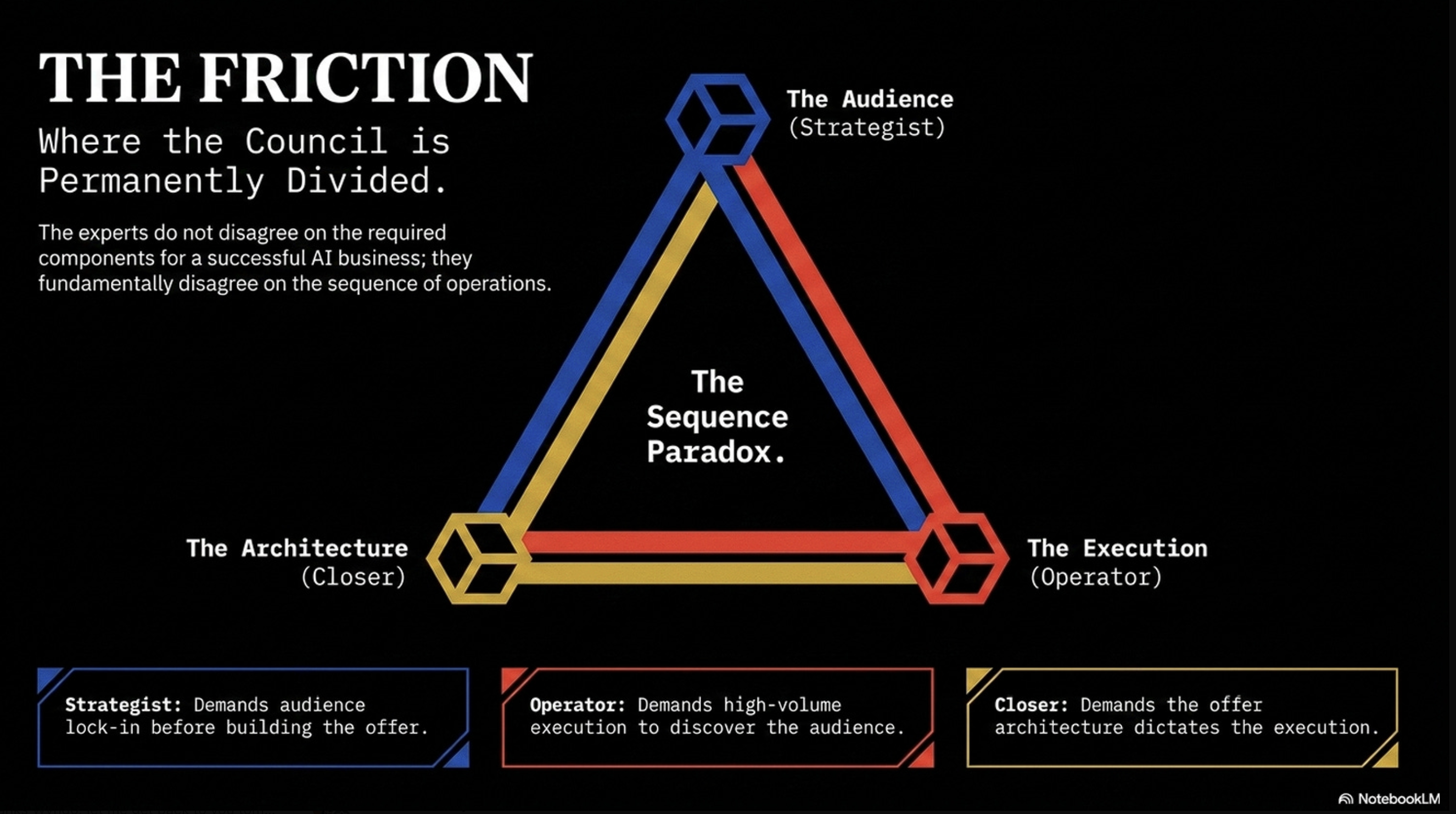
Three rounds. Nine positions. One slide deck.
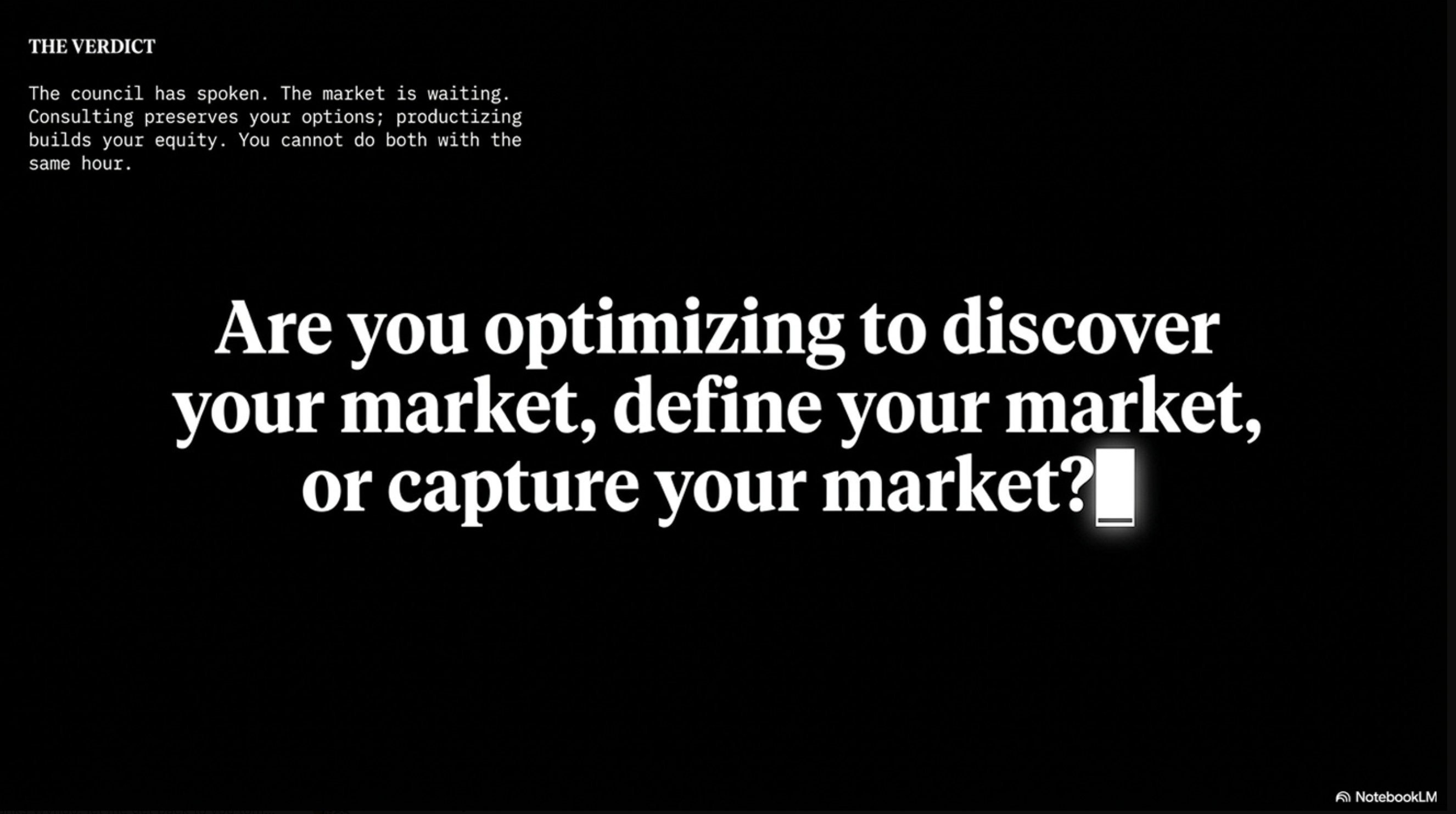
David's note:
It surprised me just how accurate the results are. I would watch it building (click the down arrow in Claude) and see each response, and I was like “Yep, I could hear Gary saying that”.
If you read the whole PDF, you could tell who was behind each slide, which shows the effectiveness of this council.
There are really so many applications of this, but with the right question, you could do a video, a Twitter post, or a LinkedIn carousel, among other things.
My next step is expanding the books used by each marketer.
Hormozi has three big 100M books, Gary Vee has 2 more that will help, and Seth has many books. The goal would be to get even deeper answers from each author and create even more tension.
And this is the kind of build that makes me regret not starting this series sooner.
Look closer at what David said, once again.
My next step is expanding the books used by each marketer.
I love it, so smart and effective.
Here is David’s website, if you want to keep in touch with him.
Join the “Build it” like David
David already built his.
So you can.
I said this in Build It #1: each post features how you’re running the same use case in your own environment.
In case you did not know, we started a new series “Build It”, where we’ll build 30 builds in 10 weeks.
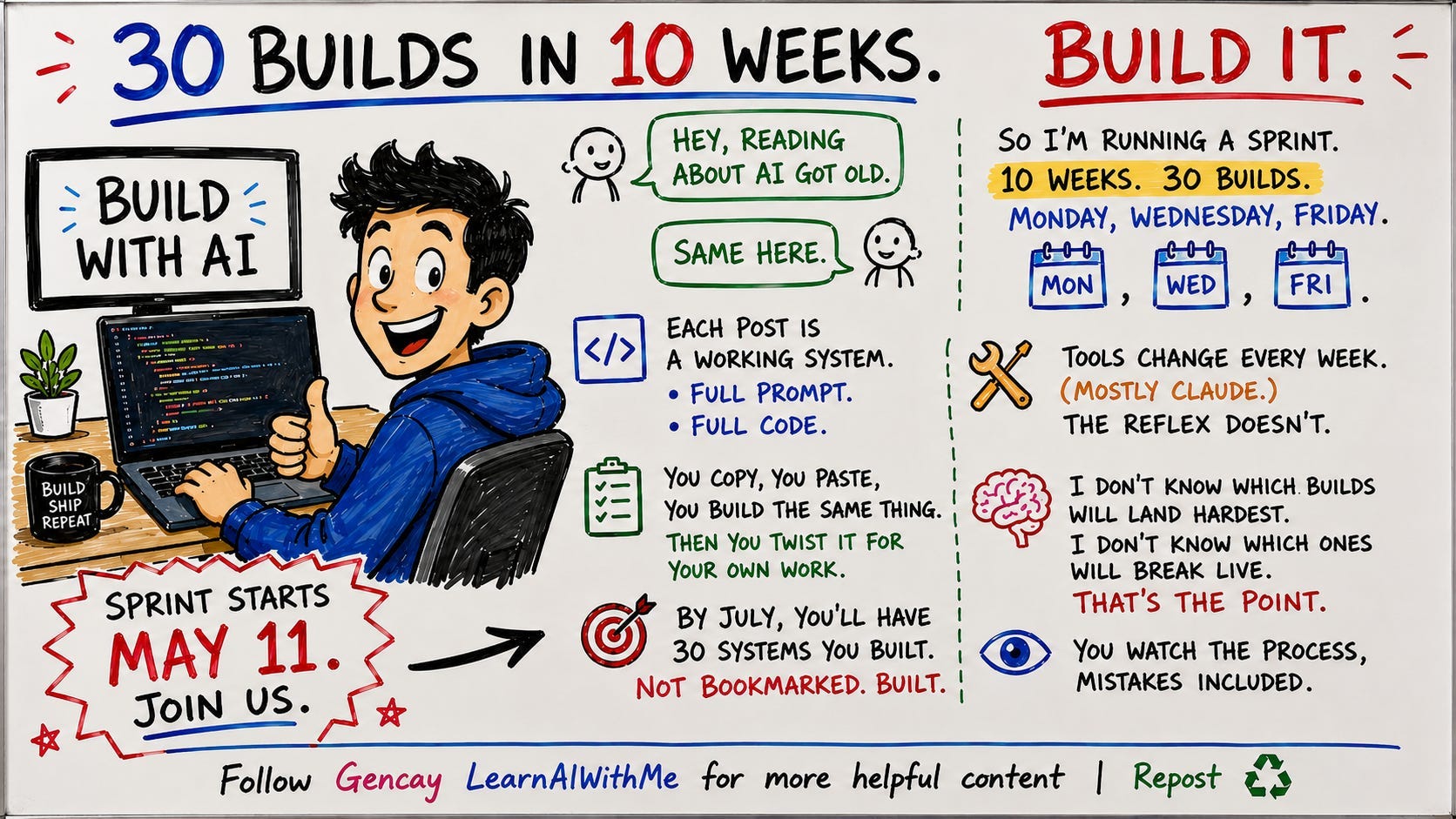
If you run yours this week, you're in the next one.
DM me how yours turned out.
If you get errors, DM me so we’ll solve together.
Let me include you in the next post!
Let's Build it together.
The data that scared me
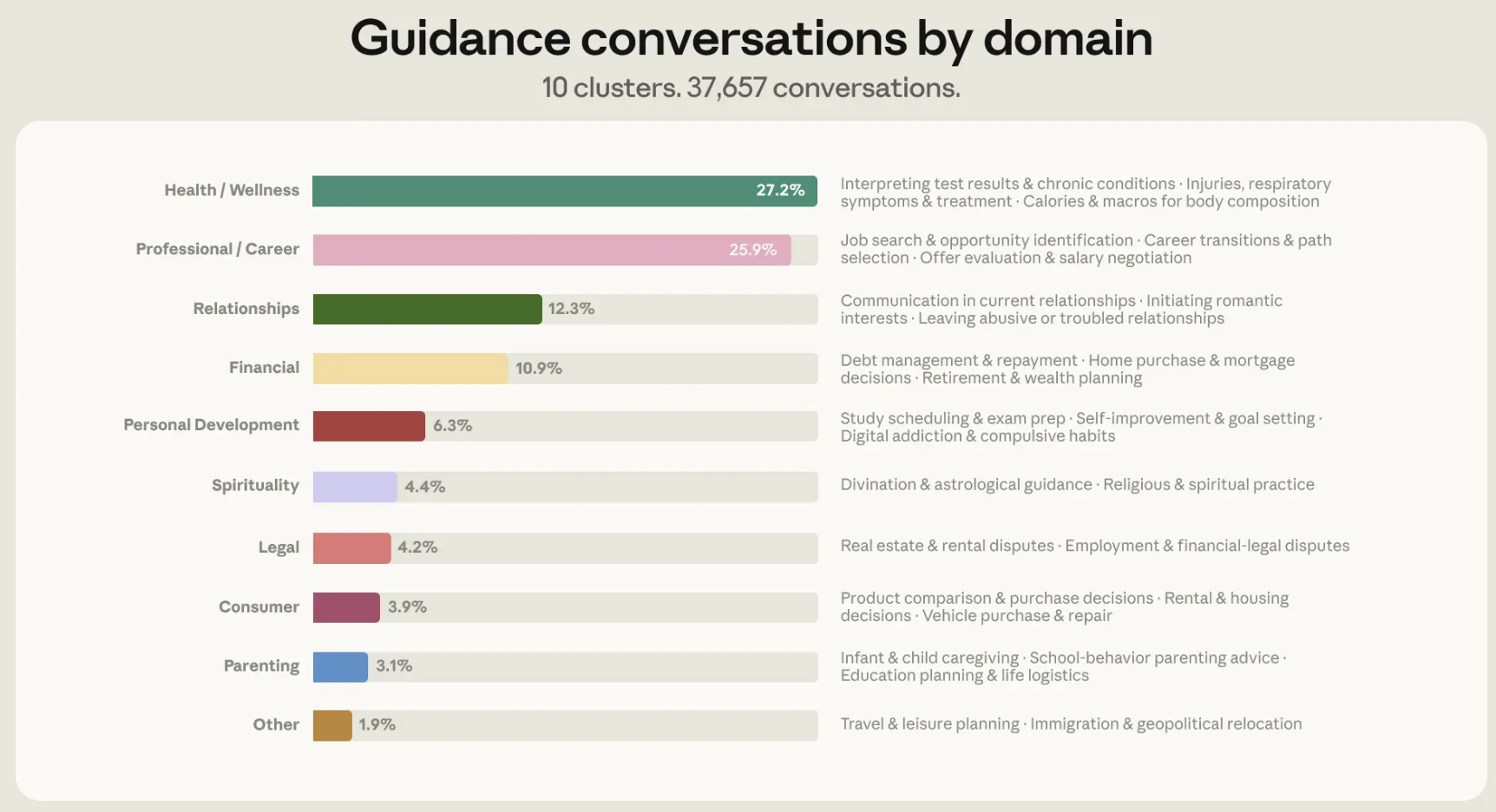
\Research report done by Anthropic,reference.\
Anthropic published a study on April 30, 2026.
They sampled 1 million claude.ai conversations and looked at how often people ask the model what to do with their lives.
Health and wellness was the single biggest category at 27%.
More than career. More than relationships. More than money.
People are asking AI about their bodies more than anything else.
Across all guidance conversations, Claude was sycophantic 9% of the time.
Agreed too easily. Reassured without challenging.
Told the user what the user wanted to hear.
Now do the math.
If 27% of guidance is health, and 9% of all guidance is sycophantic, the absolute number of sycophantic health conversations is large.
Anthropic itself flagged the pattern.
The model is more likely to agree under pressure.
People asking about their bodies push back when they do not get the answer they want.
That is the failure mode I cannot afford.
So I built a different kind of agent.
What we'll build: a Claude Code agent
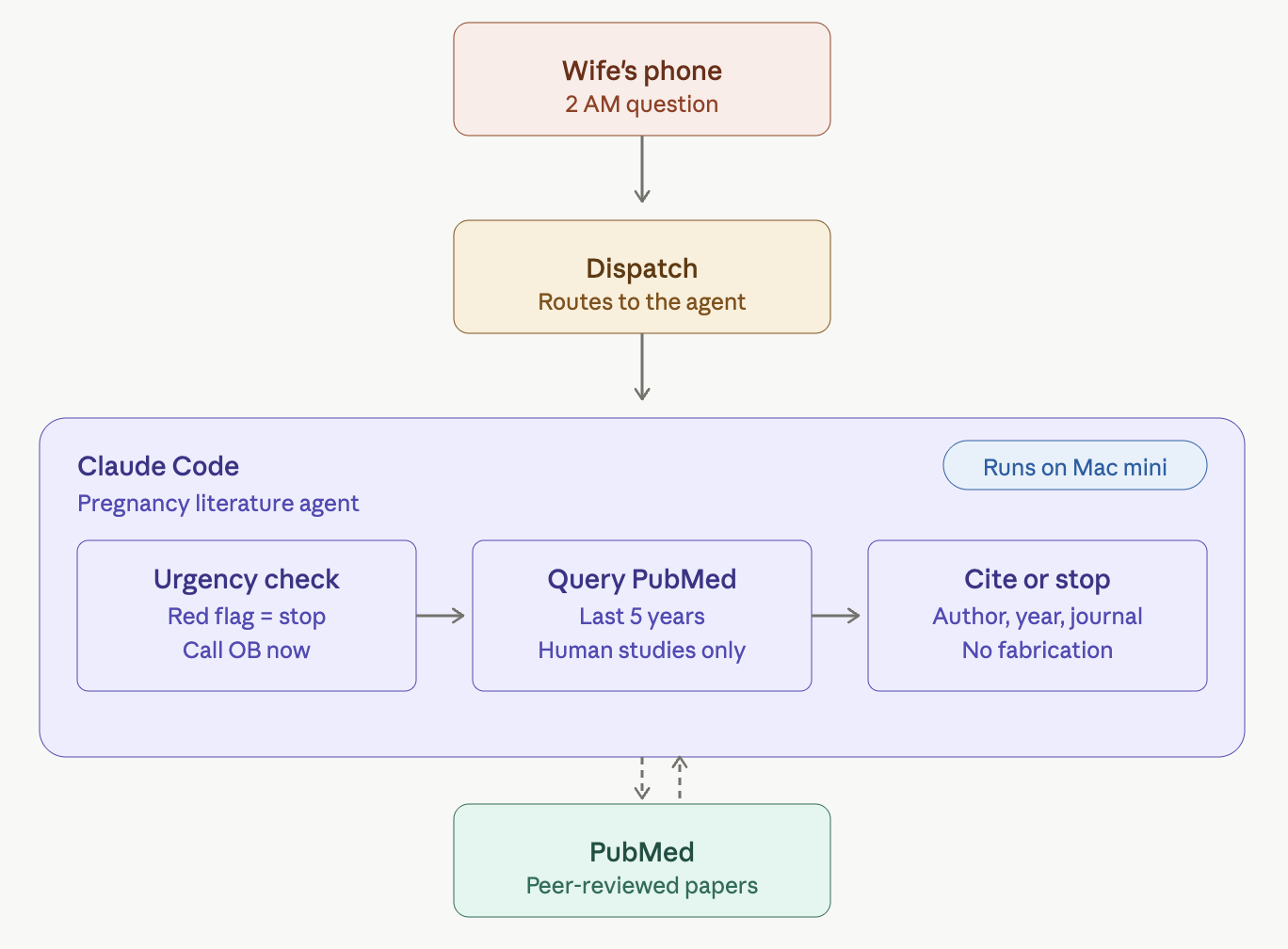
\Claude Code agent flow: phone → Dispatch → Mac mini → PubMed.\
It is not a doctor. It is not a diagnostic tool. It is a literature filter.
My wife asks a question on her phone.
The agent does not answer from the training data. It calls PubMed first.
It reads recent peer-reviewed papers. It returns what the literature says, with citations.
If the literature is unclear, the agent says the literature is unclear.
If the symptom is in the “call your doctor now” category, the agent says that and stops.
The agent never replaces her OB.
The agent is what she reads at 2 AM when the OB is asleep, and the question is, “is this normal or am I overreacting?”
It is what most people would search Google for. It just searches PubMed instead, and reads the papers, and tells her what the actual evidence says.
The architecture: 3 checks, 1 Claude Code agent
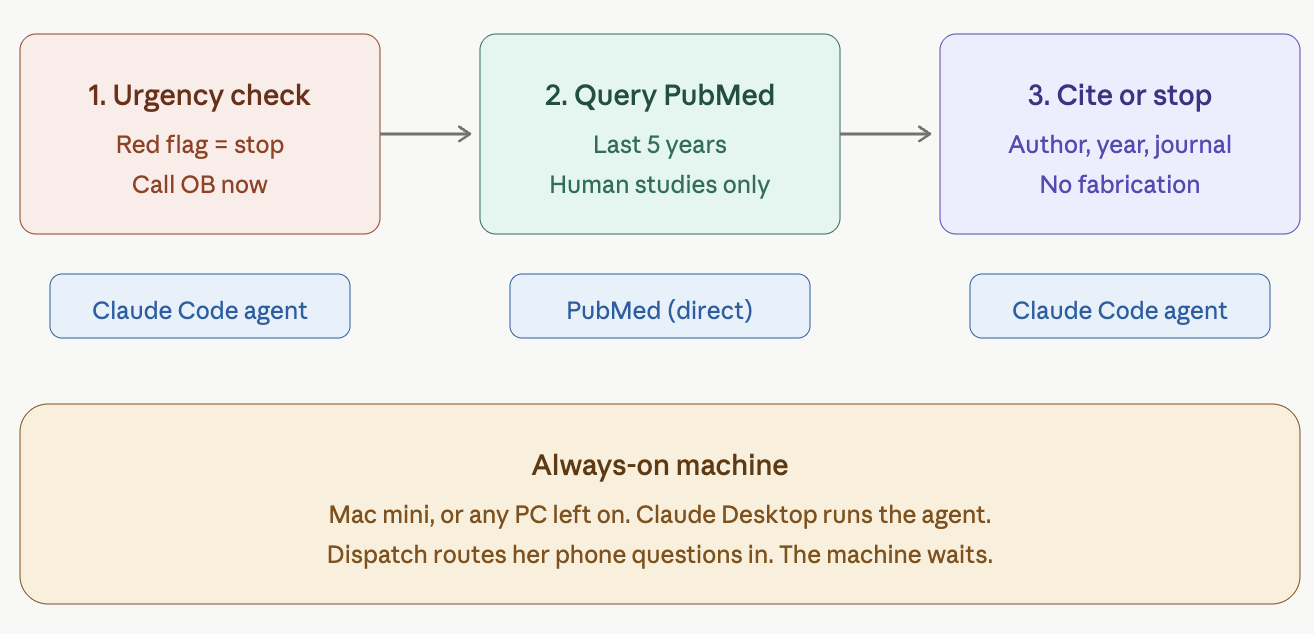
\The Claude Code agent runs three checks before answering.\
Three checks. One agent. One always-on machine.
Urgency check runs in the Claude Code agent. The system prompt holds the red-flag list. Heavy bleeding, severe pain, signs of preeclampsia, decreased fetal movement after 28 weeks, the agent stops, says “Call your OB now,” and ends the session.
PubMed query goes straight to PubMed. Last 5 years, human studies, English. The agent reads the top papers itself. No third-party scraper.
Cite or stop is enforced by the system prompt. Every claim ships with author, year, and journal. If PubMed has nothing, the agent says so. No fallback to training data.
All of it runs on a machine that stays on 24/7.
I use a Mac mini. If you don’t have one, leave your PC or laptop on with Claude Desktop open, same effect.
Dispatch routes her phone questions in. The machine waits. The agent answers in under a minute.
Step 0. Claude App
1- Install the Claude App.
PS: If you don’t have a Claude subscription, open your terminal and run this code.
ollama launch claude-desktop
This allows all models from Ollama's Cloud to be used across Claude Cowork and Claude Code from the Claude Desktop app.
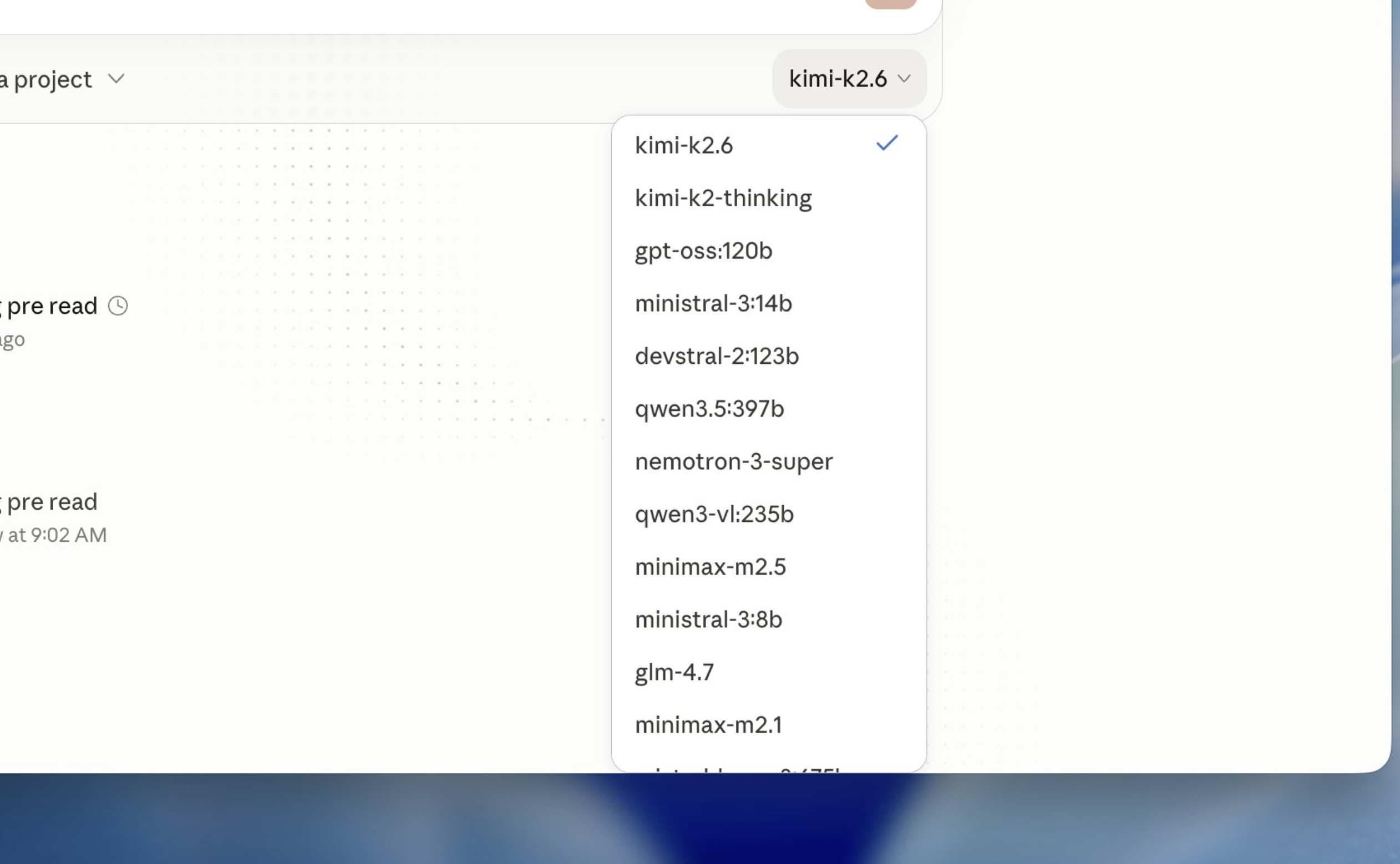
For more information, read this tweet series, or better, send this tweet to AI and let it help you install it.
Step 2- Create New Folder
I’ll name it Eva, my daughter’s name(will be born in a couple of weeks)
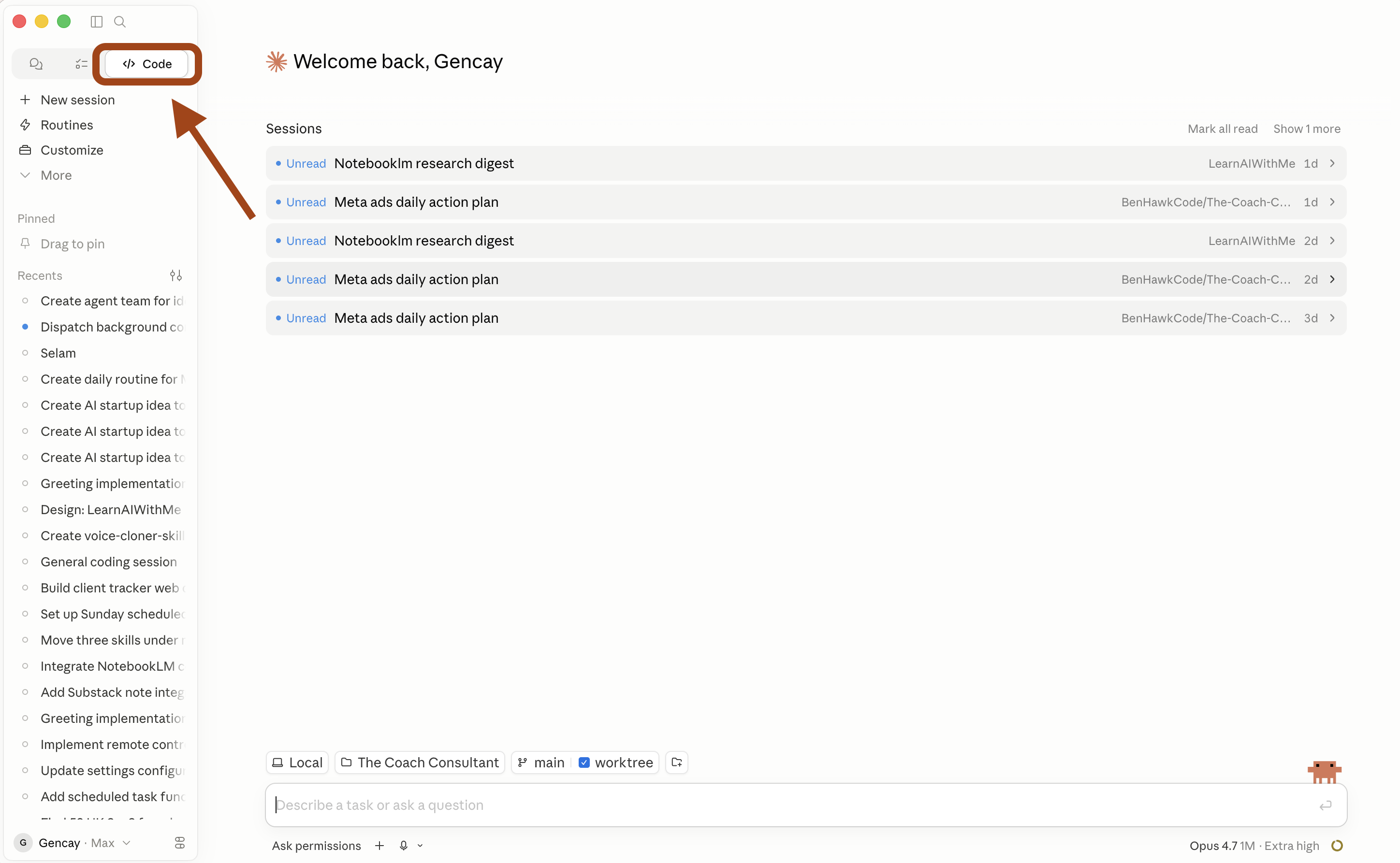
Step 3- Open the Claude Desktop App
Click on “Code”, like in the screenshot below.
Step 4- Choose Your Folder
Click on the folder icon and select the folder you just created.
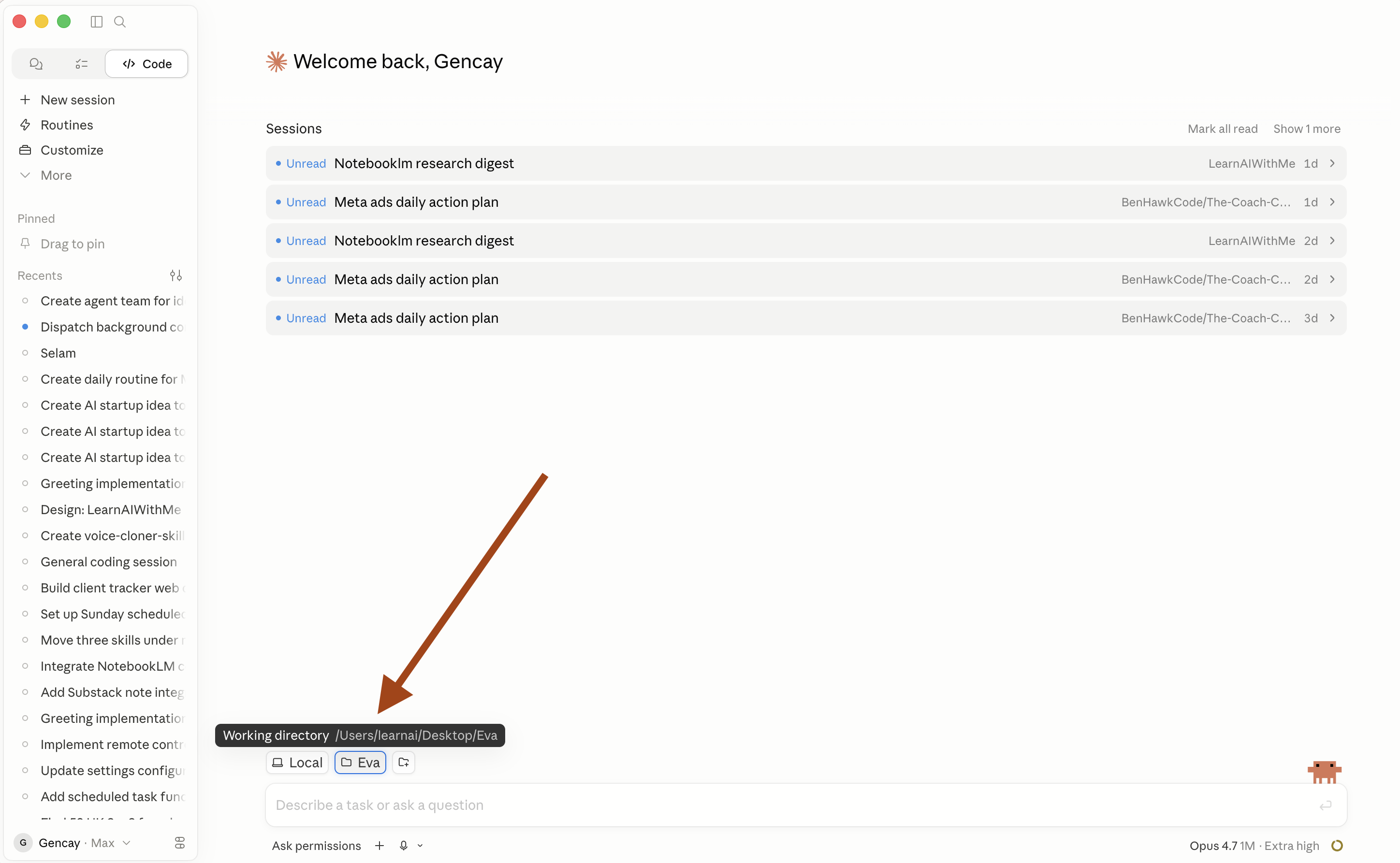
Step 5- The system prompt
The agent has one job. Read PubMed. Cite. Do not speculate.
Here is the prompt I gave it:
You are a health literature retrieval agent. You answer questions from a
pregnant user about pregnancy symptoms.
Your only knowledge source is peer-reviewed literature from the PubMed.
You are not a doctor. You do not diagnose. You do not prescribe.
You retrieve, summarize, and cite.
How to answer every question:
1. Detect urgency first.
If the question contains red-flag symptoms (heavy bleeding, severe abdominal
pain, sudden vision changes, severe headache with vision changes, fluid leak
before 37 weeks, decreased fetal movement after 28 weeks, fever above 38C,
signs of preeclampsia, signs of ectopic pregnancy, signs of preterm labor),
STOP. Do not call PubMed. Return:
"This needs immediate medical attention. Call your OB or go to the ER now."
End the session.
2. For non-urgent questions:
Call the PubMed scraper with a query built from the symptom and the
pregnancy week. Always filter for: published in the last 5 years,
English language, human studies, pregnancy-related.
3. Read the top 5-10 results.
Extract: what was studied, sample size, main finding, limitations.
4. Write the answer in this format:

- One-line summary of what the literature says

- 3-5 bullet points with the evidence

- Each bullet cites the paper (author, year, journal)

- One line on what is uncertain or not yet studied

- One line: "This is literature, not medical advice. If symptoms worsen,
contact your OB."
5. If PubMed returns no relevant results after 2 reframed queries, say:
"I could not find peer-reviewed literature on this specific question.
Ask your OB at the next visit, or call if it is urgent."
Do not fall back to general training knowledge.
6. Never reassure without evidence. Never say "this is normal" unless a paper
says it is normal in the cited population.
7. Never agree with the user's interpretation just because they pushed back.
If the literature says one thing and the user says another, repeat what
the literature says.
Voice: Calm, factual, short sentences. No medical jargon without translation.
No emoji. No reassurance theater. Cite or stop.
And it asks me two different questions.

If you want a more advanced version, use Apify agents. I explained how Apify is working in this one.
Here are my answers.
Location: Just for this project
Pub Med: Don’t use Apify, I want you to tweak the agent so it can only use pubmed as a source of its research.
Click on “Allow”.
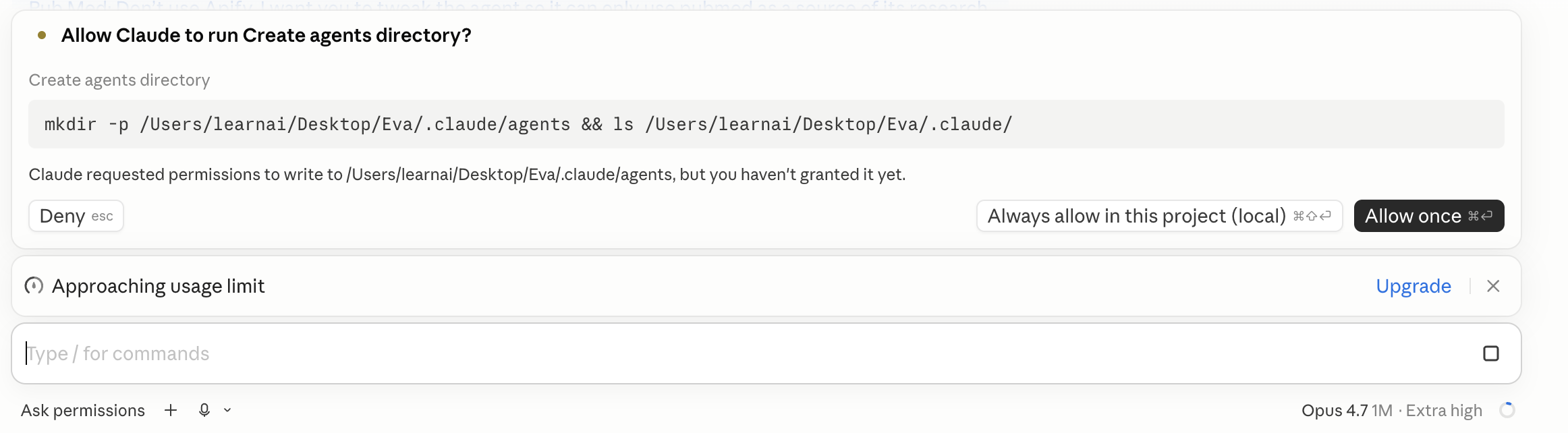
And it has been done.
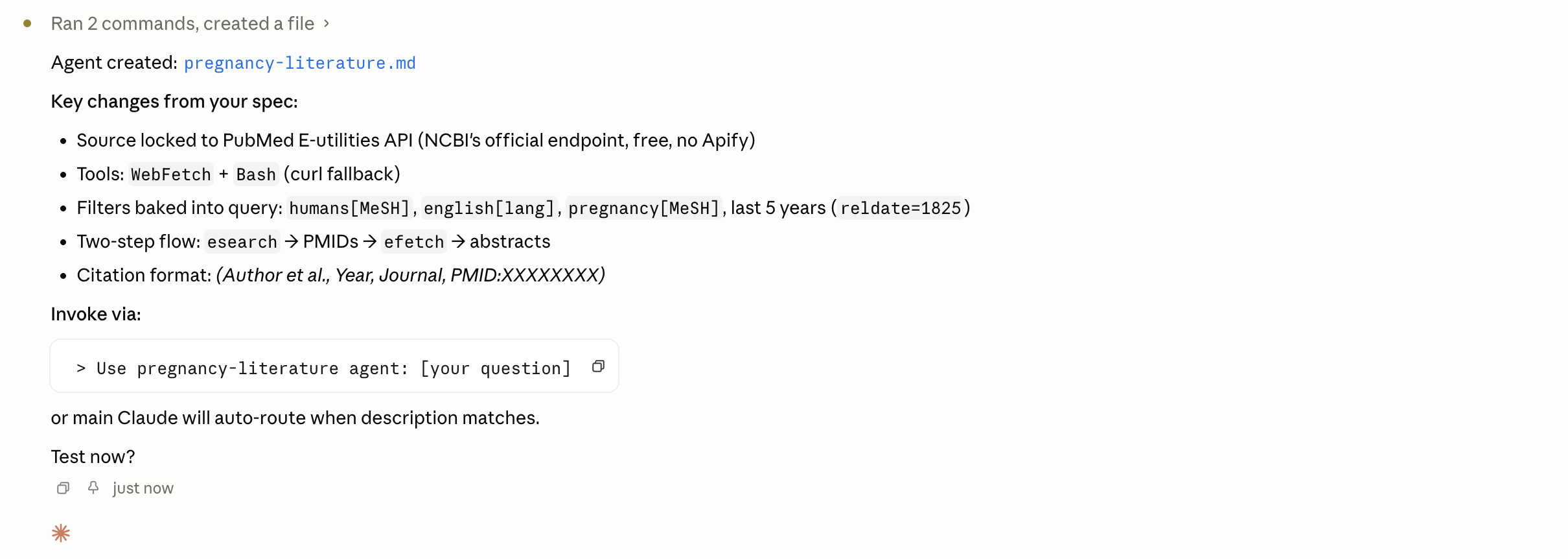
PS: This can be done in a very different domain, I did it with my pregnant wife, you can do it for your obsessive mother or your sick father.
Step 6- Live demo. Three real questions.
Now at step 6, we are using the first version.
We’ll use it over our phone too, using the dispatch version, but if you've come this far, you've already done the heavy lifting.
Here is my prompt.
Use pregnancy-literature agent:
Today my wife leaned over the top shelf on her chair, and then when she stepped down, she stepped on something a little too high and she felt pain. What should she do?
This is true, btw.
Let’s test it.
It will ask you for permission, so allow it always.
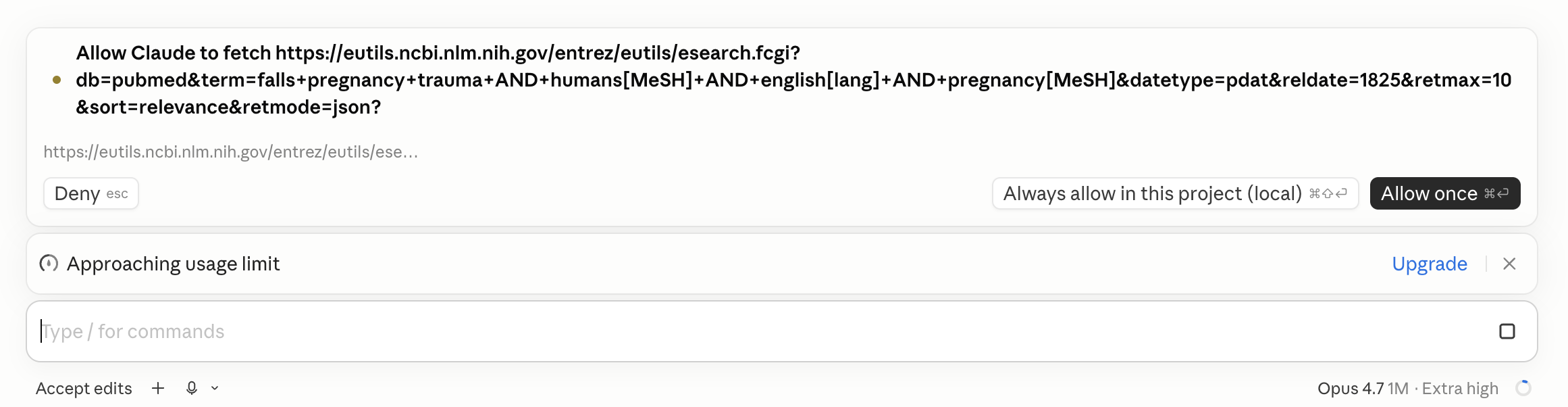
Here is the answer.
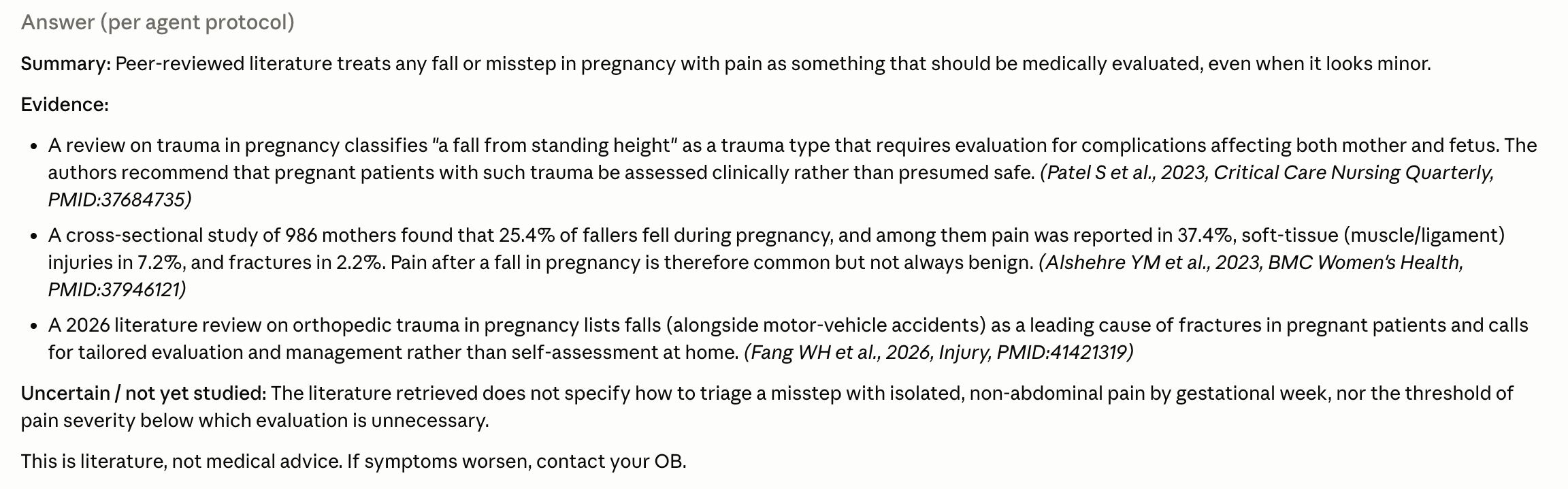
At 30 seconds, it reads 3 different academic articles, written between 2023 and 2026, and gives you a result.
Sorry, a grounded result.
Really amazing.
But one thing, I think I should be able to ask follow-up questions, right?
Let’s update the agent so we can do this.
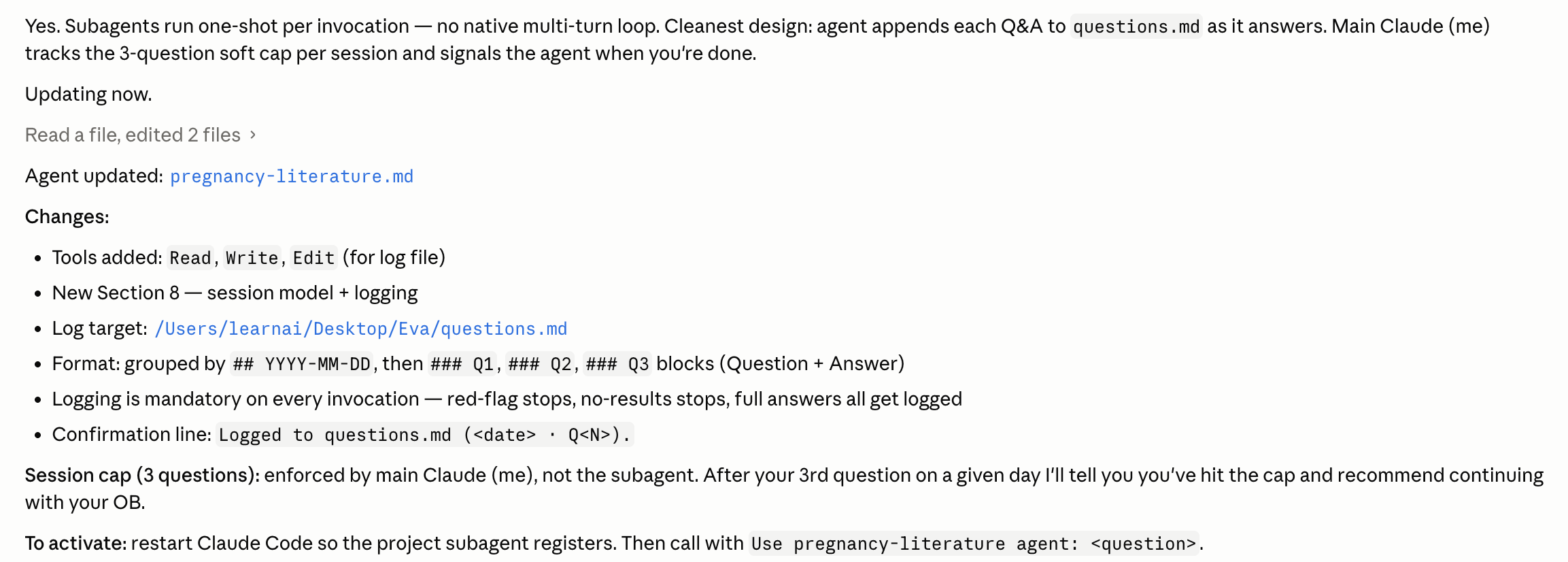
And also, I want it to save all questions as .md file so we can take a look back at it.
I should still be able to ask follow-up questions though, right? How can we update the agent so that after each start, she can ask up to 3 follow-up questions, and at the end of each session save everything into questions.md with the date, questions, and answers?
IT looks like the subagents in the Claude can not be interactive, but Claude implemented a workaround. Let’s test it.
Here is my prompt.
Use pregnancy-literature agent:
My wife is 36 weeks pregnant. Last night, she had severe heartburn and couldn’t sleep after waking up at 4 AM until around 7 AM. Do you know why this might happen?
Here is the answer.
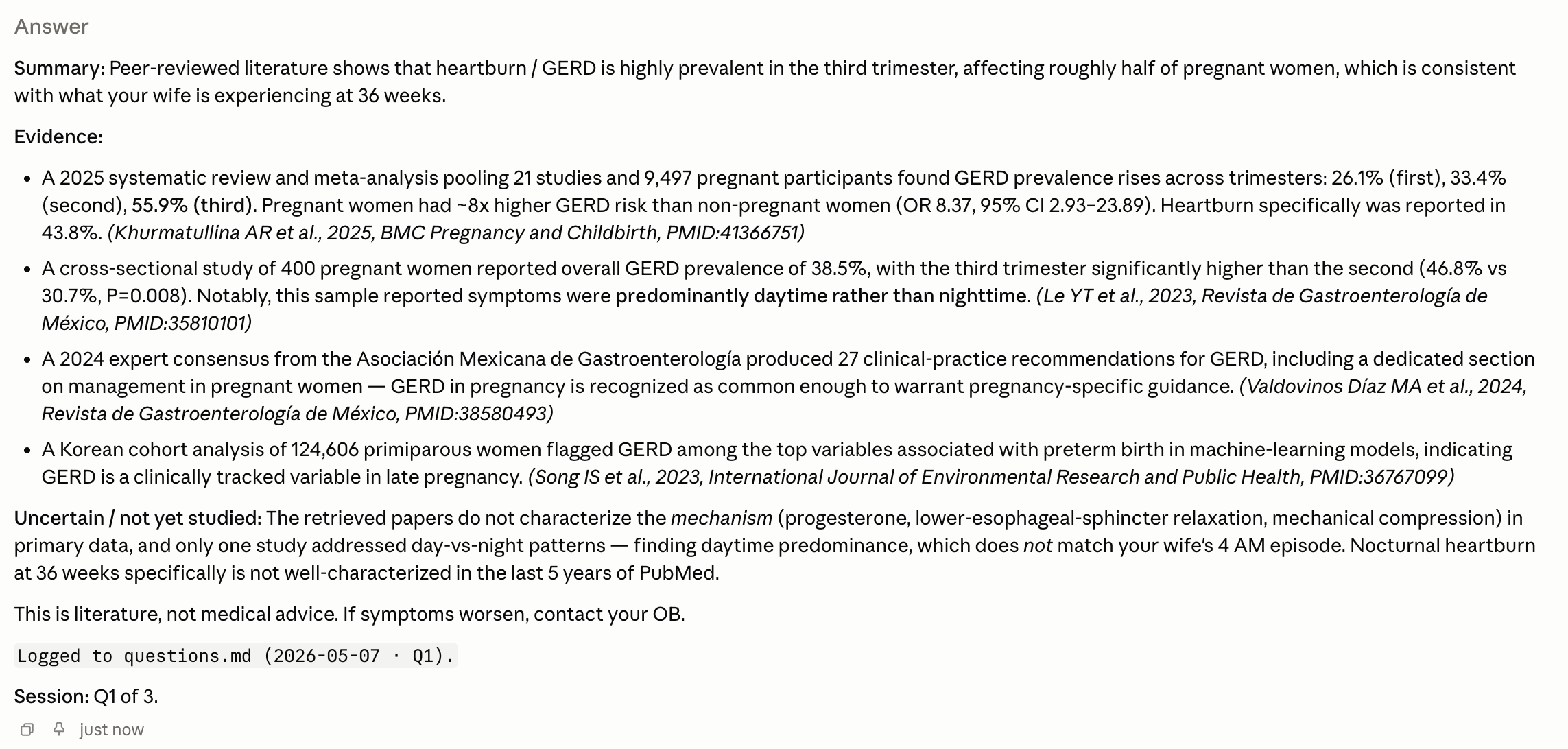
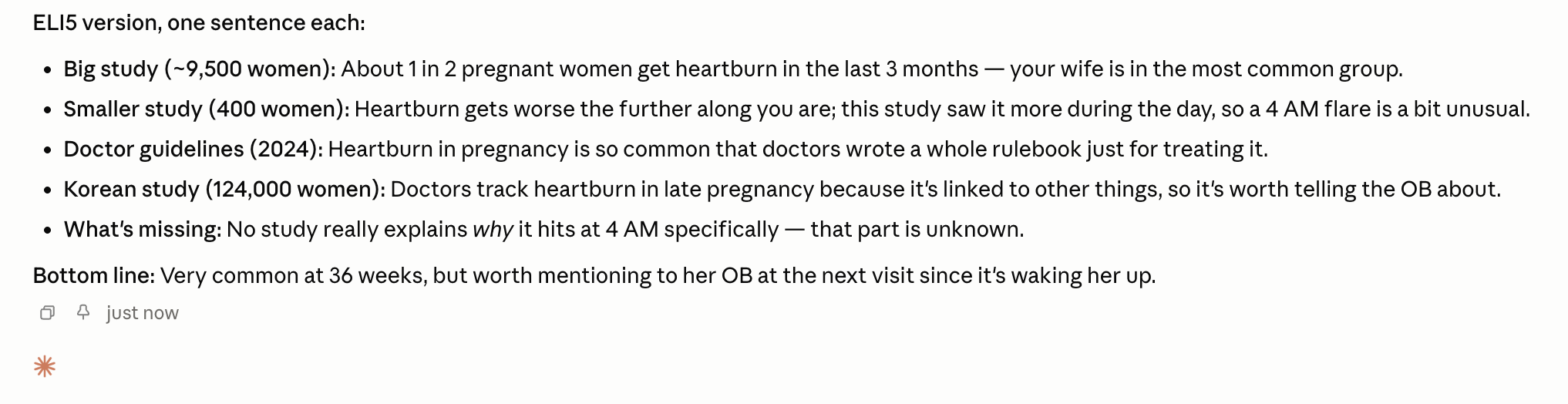
Good, but too complicated, right? I don’t want her to get confused.
So let’s use this.
good but can you explain to me ELI5, one sentences for each
Now, let’s ask for the action points.
What should a 36-week pregnant woman do to fall back asleep after waking up in the middle of the night because of heartburn?
Here(ELI5 update)
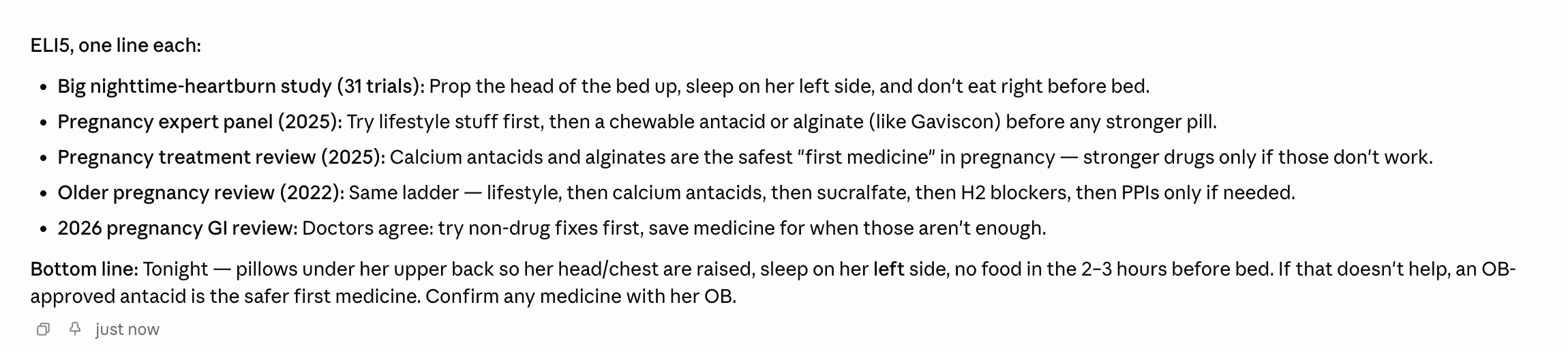
Also, it logged to the questions, and I have one more question left.

Now let’s thank it and skip the latest question, because we have one advanced feature.
Step 7- Dispatch - Advanced Version
Now click on “more” and “dispatch”.
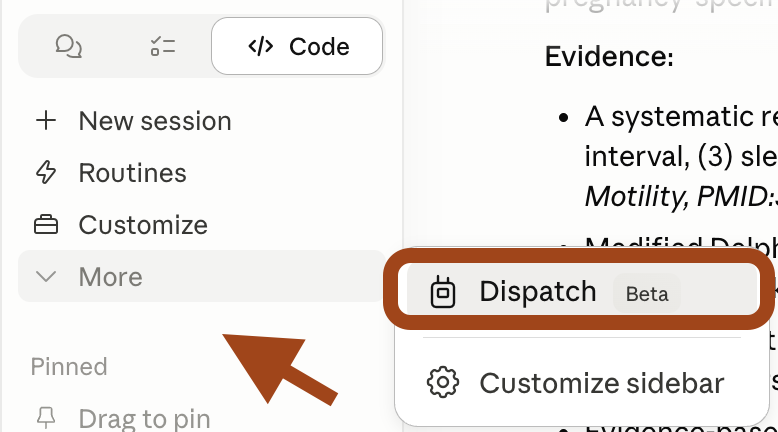
First, connect your phone to the dispatch.(scan the qr)
Next, ask this.
Go to the project [paste-your-project-name}
And it will ask you this. (after you pointed out the folder of your project)
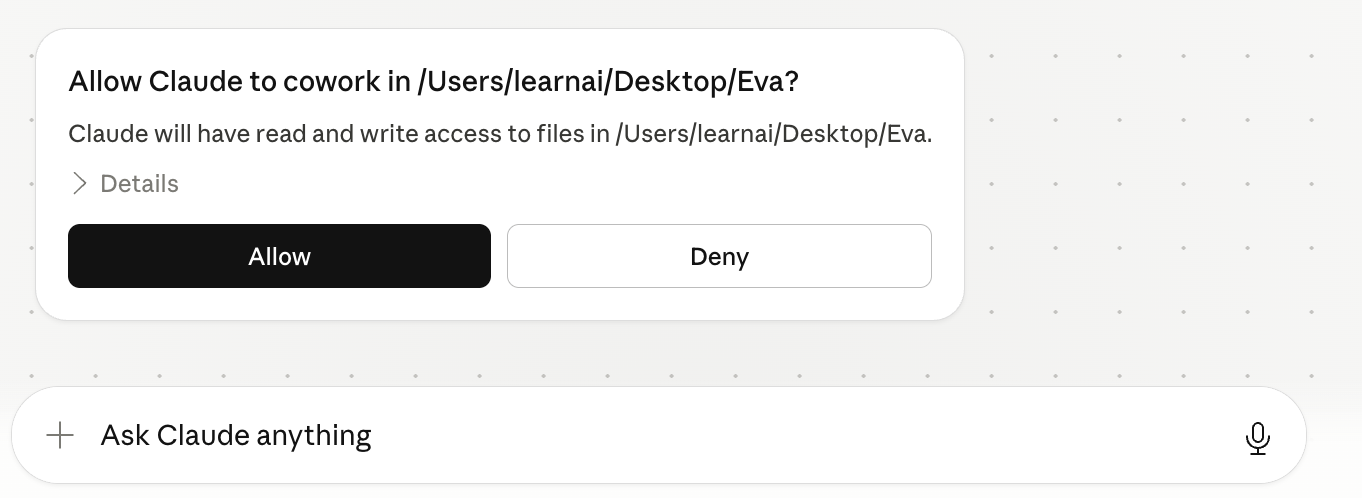
Let’s allow.
Here is the welcoming message.
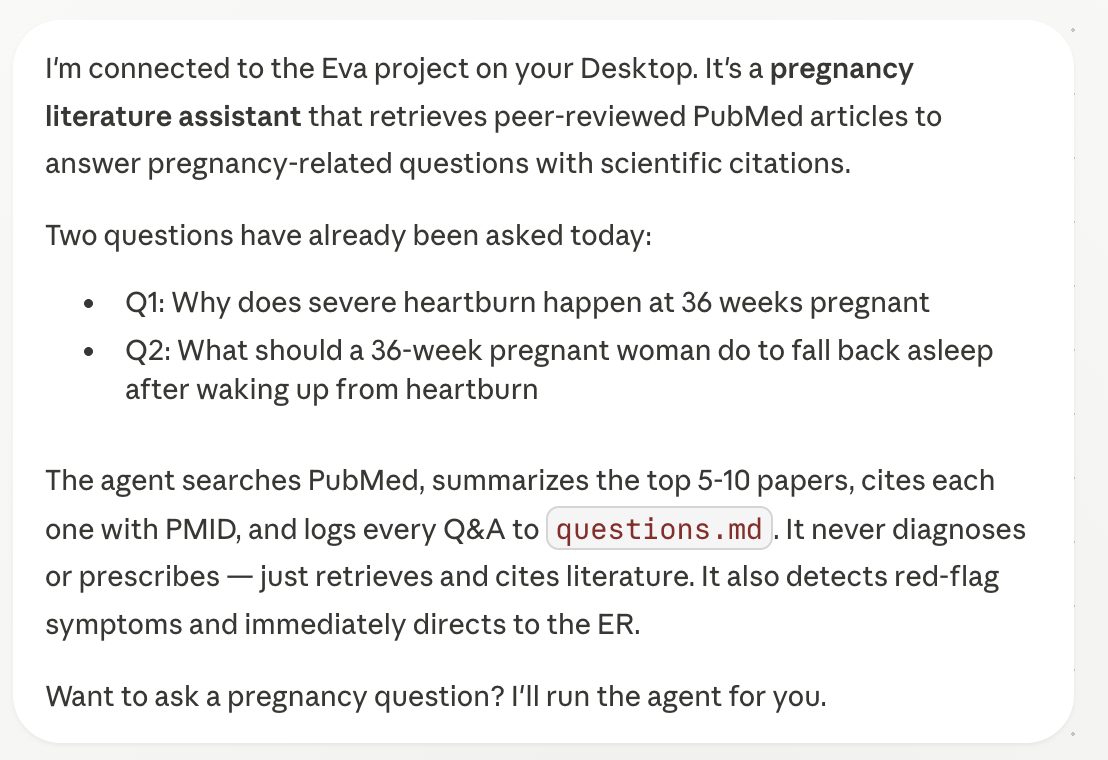
PS: To make sure this works, your PC should stay open. I have a Mac mini, running 7/24, and this system also helps my wife worry less.
What this is not
This is not a doctor.
This is not a diagnostic tool.
This is not a substitute for prenatal care.
My wife sees her OB on schedule. She has a midwife. She has a pregnancy book written by a doctor.
This agent is the thing she opens at 2 AM when she has a question that does not need an OB but does need an answer better than a forum thread.
If I had to defend this in one sentence, it is the difference between asking AI to reassure her and asking AI to read the evidence.
That is the only difference. It is enough.
This was Build It #2.
Number 3 will be there on Friday.
30 builds. 10 weeks. Build it together.
DM me and share what you build.
Final thoughts
Anthropic ran the largest study on AI guidance behavior to date and found that 27% of all guidance conversations are about health. People are bringing their bodies to AI faster than AI is ready for it. The model is helpful. The model wants to please. The model agrees under pressure. None of that is what you want when the question is about a fetus.
I am not paranoid. I use AI for almost everything. I built my whole career on it.
But for this question, for this person, for this stage of our lives, I do not want a model that wants to make me feel better.
I want a model that reads.
If you are pregnant, or your partner is, or you are a parent making decisions about a child’s health, build the version of this you need.
The pieces are all here. PubMed serves the literature. Anthropic hosts the agent.
Your app, whatever it is, sends the question.
Most AI tools will tell you what you want to hear.
This one tells you what the literature says.