I trained NotebookLM on three books. Built Council with Claude Code. They argue every decision in 12 slides.
By Gencay
Published: 2026-05-11
URL: https://www.learnwithmeai.com/p/notebooklm-claude-code-council-decisions
How do you make a hard call?
Most of the time, I find myself thinking about the geniuses I look up to. What would they do?
- Nikola Tesla was one of the greatest inventors who ever lived. A mind ahead of his century, no doubt.
- Marcus Aurelius, who could decide calmly even in storms. A Stoic. The man who put his own actions at the center of everything.
- Sun Tzu, who knew how to win without fighting.
But which one? Each shows up for me at different moments.
- Tesla told me to go deeper when I wanted to reach more people on Substack,
- He would have written a series, AI said once. So I started Build It and Build. Ship. Repeat.
- After a great client meeting that went into radio silence, and the anxiety that followed, Marcus Aurelius told me the only thing in this life I can change is my own actions. Only that.
- When I wanted to argue with the problematic neighbor whose loud grill smoke was filling our flat, Sun Tzu’s line came to mind: “The supreme art of war is to subdue the enemy without fighting.”
The pattern was clear. I was already running a one-person council. Just badly.
I was rereading the same passages.
Quoting from memory.
Half-remembering chapters.
So I built the Council, using Claude Code Agents. (With one prompt)
Three voices, three books, three rounds of argument, one report at the end.
NotebookLM read the books. It runs the rounds. It builds the Slides, consisting of each voice.
I just read the friction.
The day they argue, I decide.
Not before.
And we’ll do it in 3 steps, together.
Let’s start.
A note before we build
This is the first post of Claude: Build It.
Each post, I hope, will feature how you are running the same use case in your own environment. Different decisions, different books, different stacks.
DM me how you built yours. I’ll feature your version in the next post.
Let’s build it together.
How does the system work?
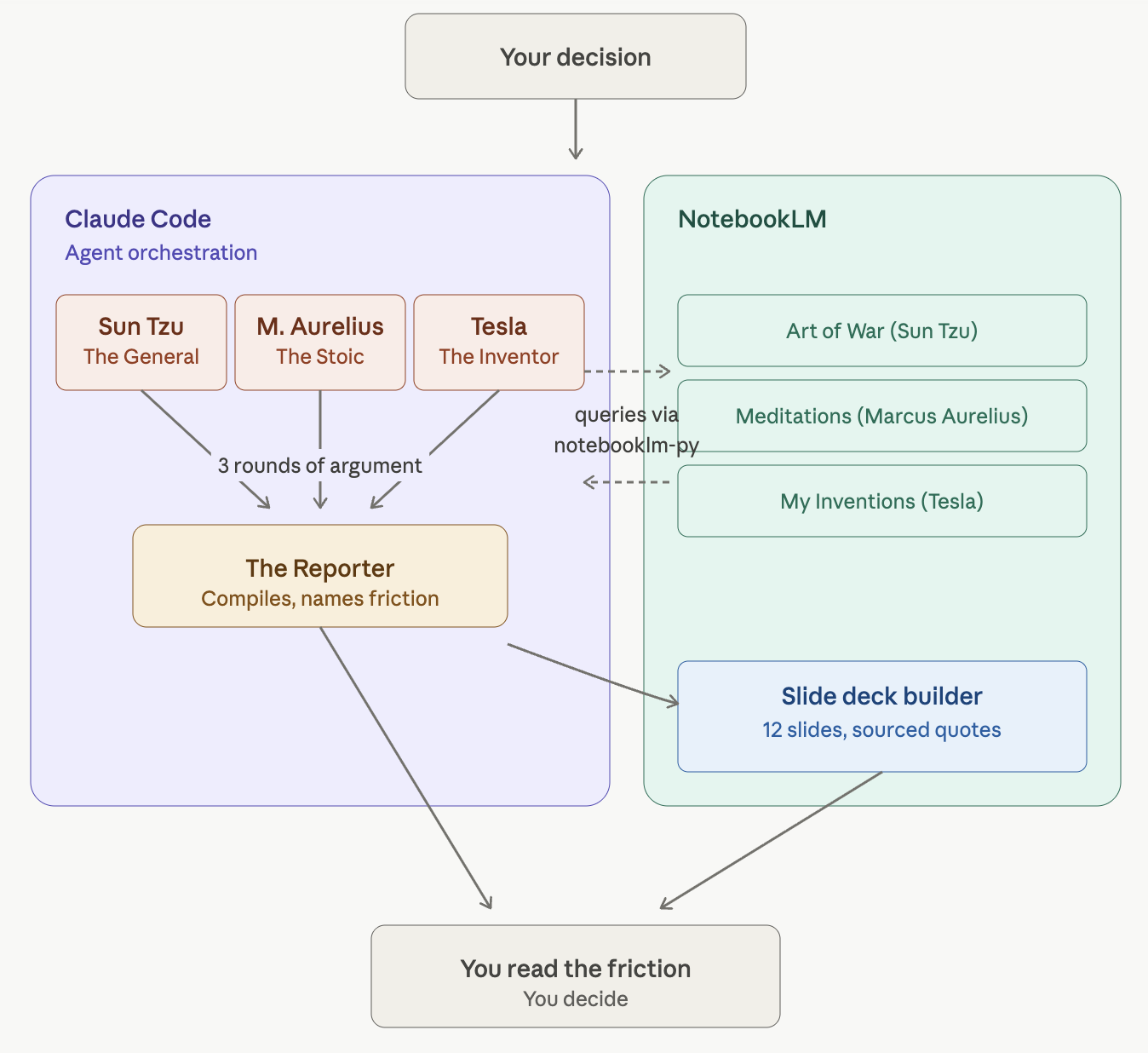
\The Council: from your decision to the slide deck.\
First, Claude Code spins up four agents: three voices and one Reporter.
Each voice (Sun Tzu, Marcus Aurelius, Tesla) queries NotebookLM through the notebooklm-py CLI. Every query hits only its own book. No drift. No blending.
They argue in three rounds. Round 1: initial positions. Round 2: cross-examination. Round 3: final stance.
The Reporter listens to all three. Compiles the transcript. Name the friction.
Then the Reporter sends the deliberation back to NotebookLM. NotebookLM builds a 12-slide deck, one slide per voice per round, plus the friction and the final question.
You read the friction. You decide.
What will the end report look like?
The prompt is yours to adjust. You change the decision. You change the books.
You paste your decision. The system spins up three agents, each one sourced from a single book, each one queried only against its own author.
They argue in three rounds. The Reporter listens, compiles, and names the friction. Then NotebookLM turns the whole deliberation into a 12-slide deck with sourced quotes on every slide.
The final report looks like the slide below.
Each voice gets its own slides. The General lays out his terrain. The Stoic names what is in your control. The Inventor draws the future. Each slide cites the chapter the quote came from.
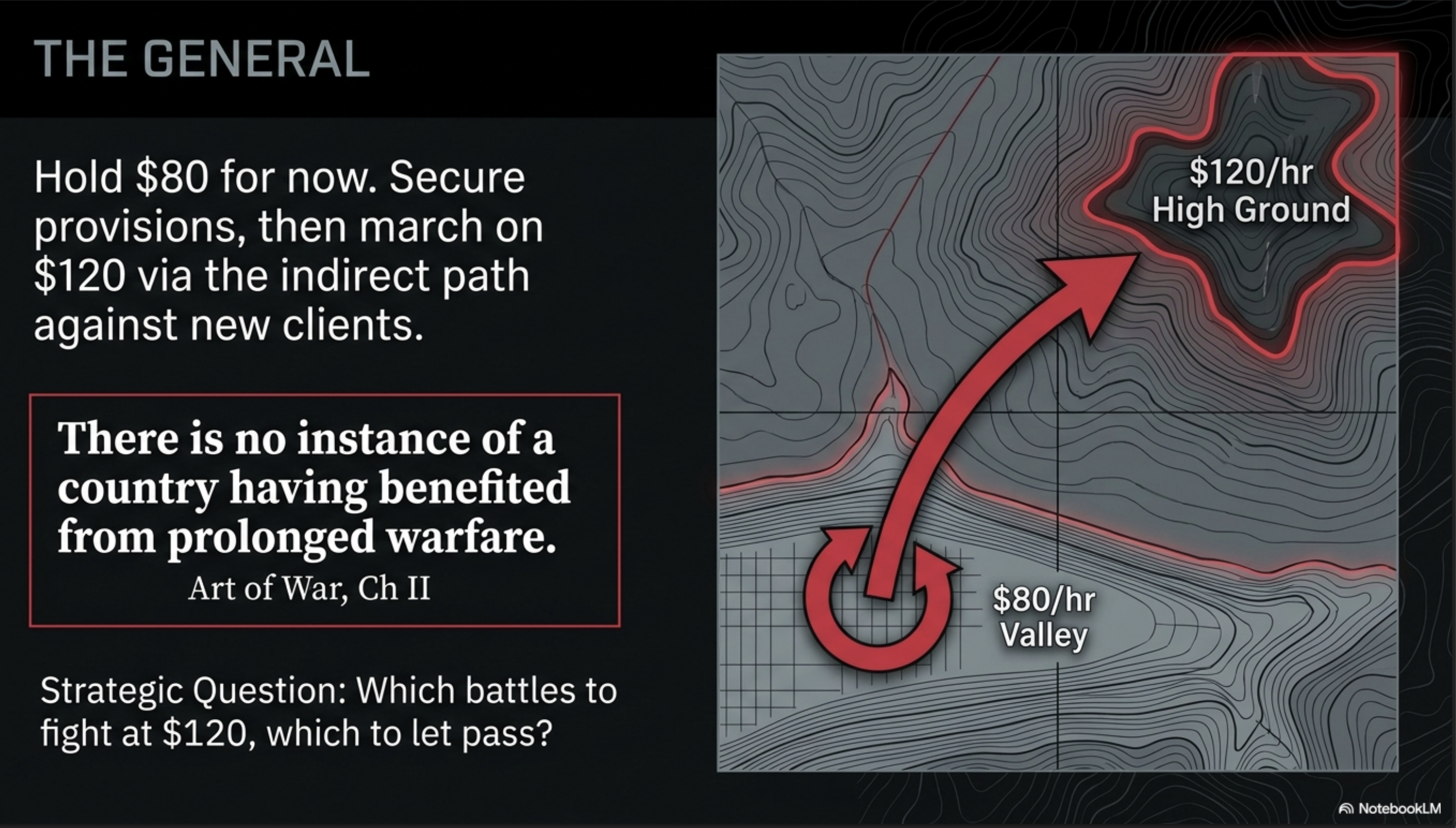
\Sun Tzu’s slide. Quote, citation, strategic question.\
Three voices. One report. A decision that has been argued before it reaches you.
The Council waits. Build it.
1. NotebookLM Setup
First, pick your geniuses.
I chose these 3 minds because I like their ideas.
You can choose yours and collect their sources, books, poems, whatever you get, just save them.
The next step would be training a notebook from it.
How I trained the notebook
I uploaded these to NotebookLM:
- Sun Tzu: The Art of War (Project Gutenberg)
- Marcus Aurelius: Meditations (Project Gutenberg)
- Nikola Tesla: My Inventions (Internet Archive)
All three are in the public domain. Free to download. Free to use.
I just downloaded Nikola Tesla’s book and uploaded it to NotebookLM. For Sun Tzu and Marcus Aurelius, I added as a source, using the weblink, let me show you.
Step 1 - Visit here.
Step 2- Click on “Try”
Step 3- Click on “+”
Step 4- Click on Websites
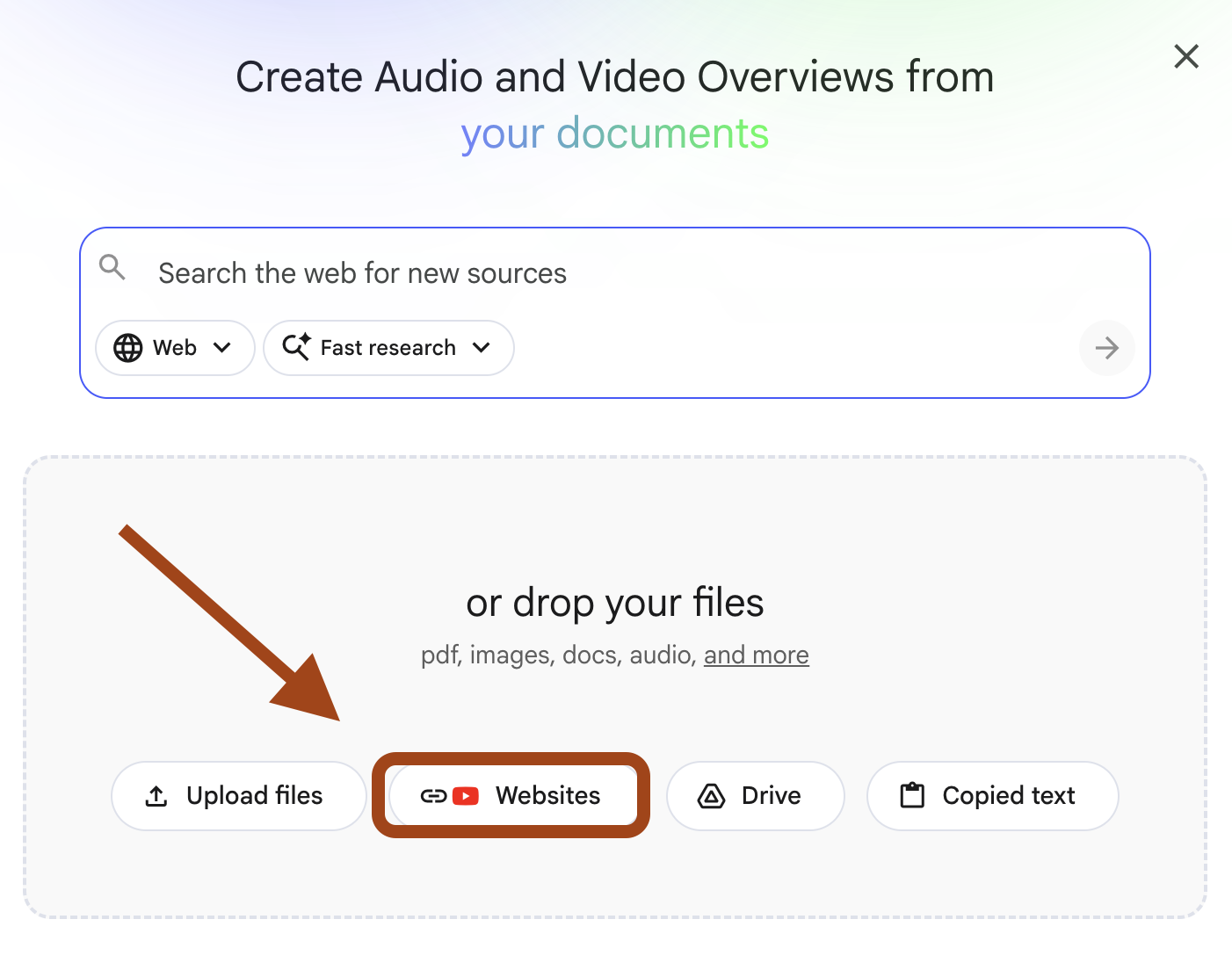
Step 5- Paste links
Here are the links to the first two books.
https://www.gutenberg.org/cache/epub/132/pg132.txt
https://www.gutenberg.org/cache/epub/2680/pg2680.txt
Next, click on insert.
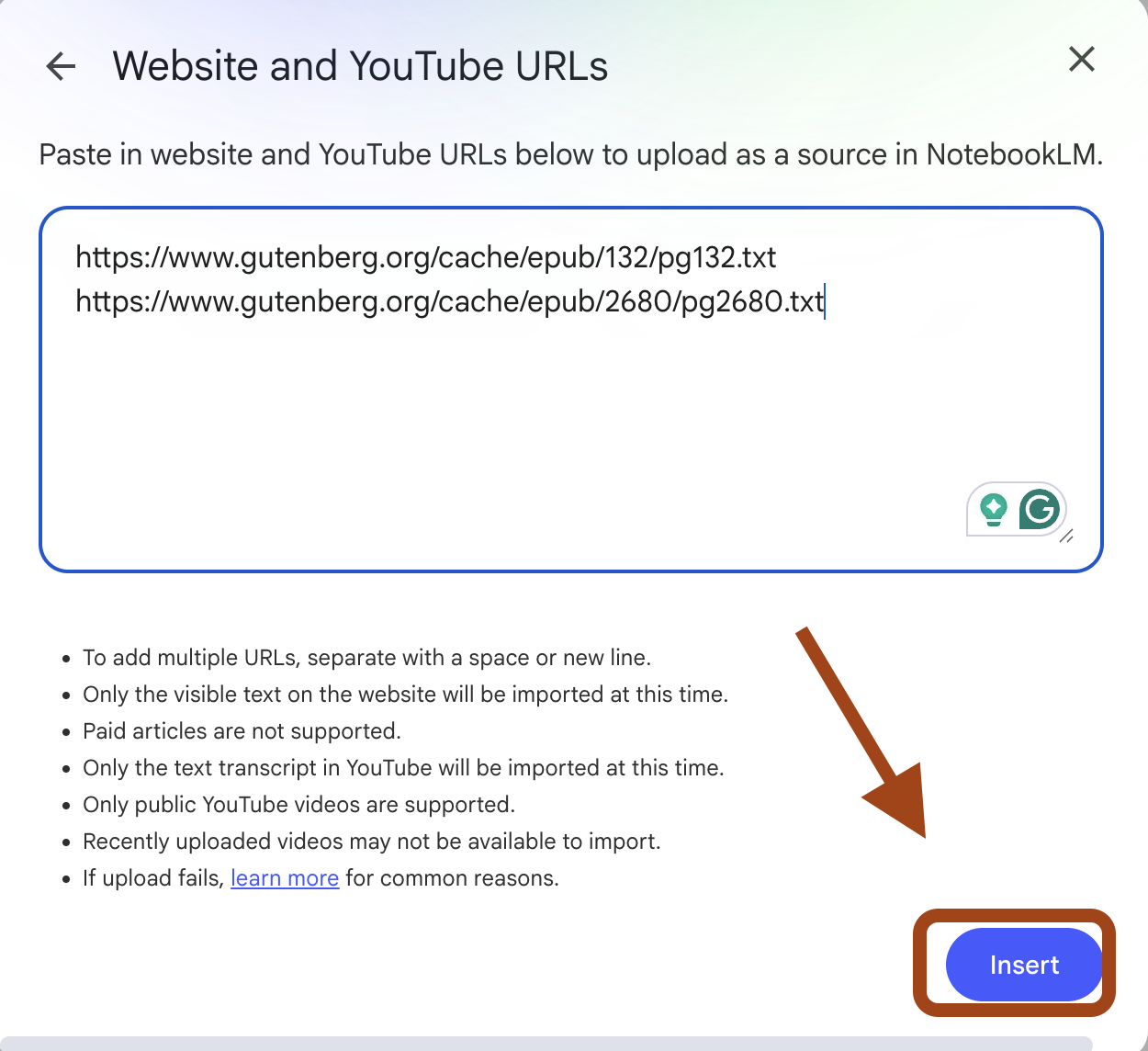
Step 6- Add PDF
Go here: https://dn720006.ca.archive.org/0/items/my-inventions-nikola-tesla/My%20Inventions%20-%20Nikola%20Tesla\_text.pdf
And click there to download Tesla’s My Inventions book as PDF.
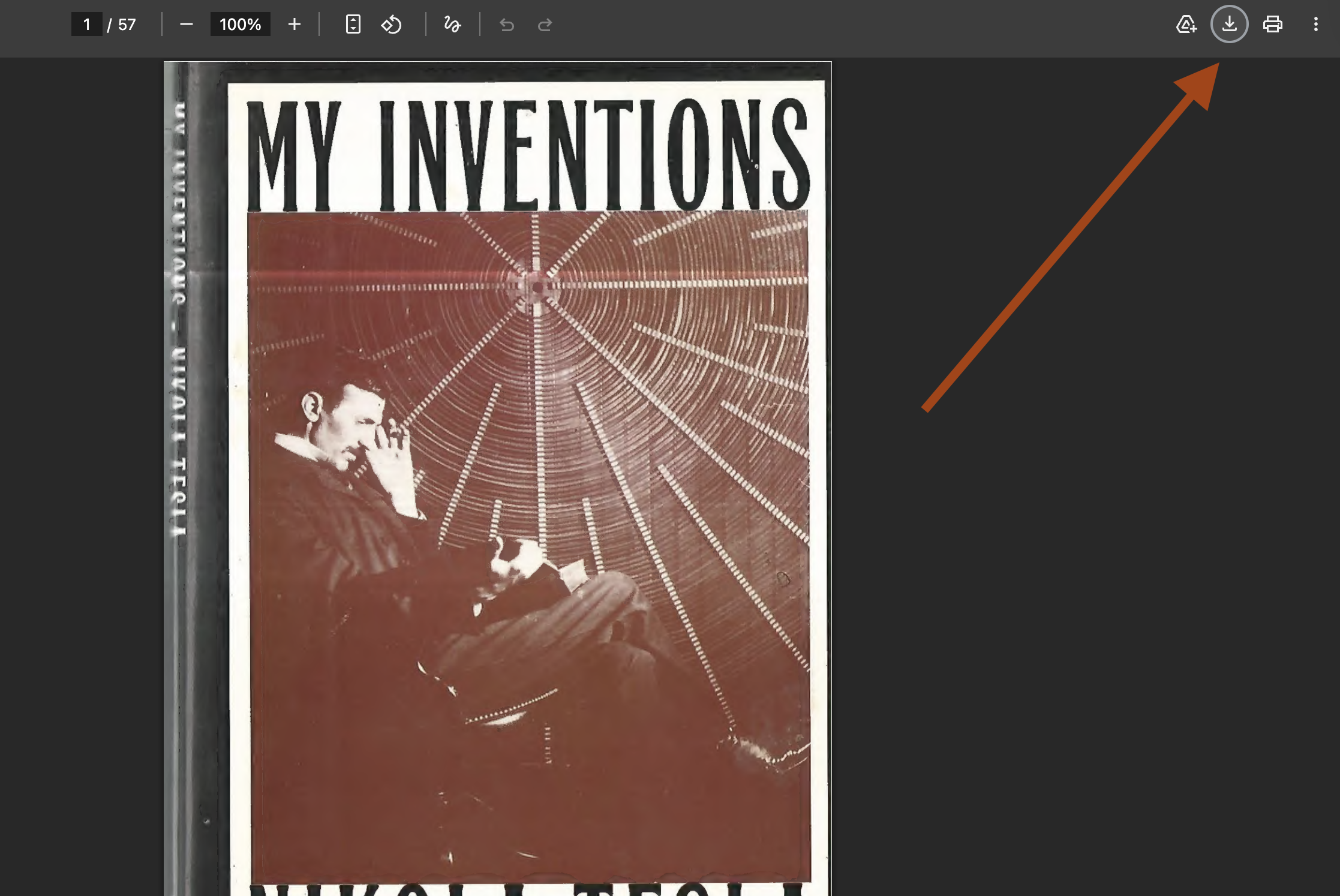
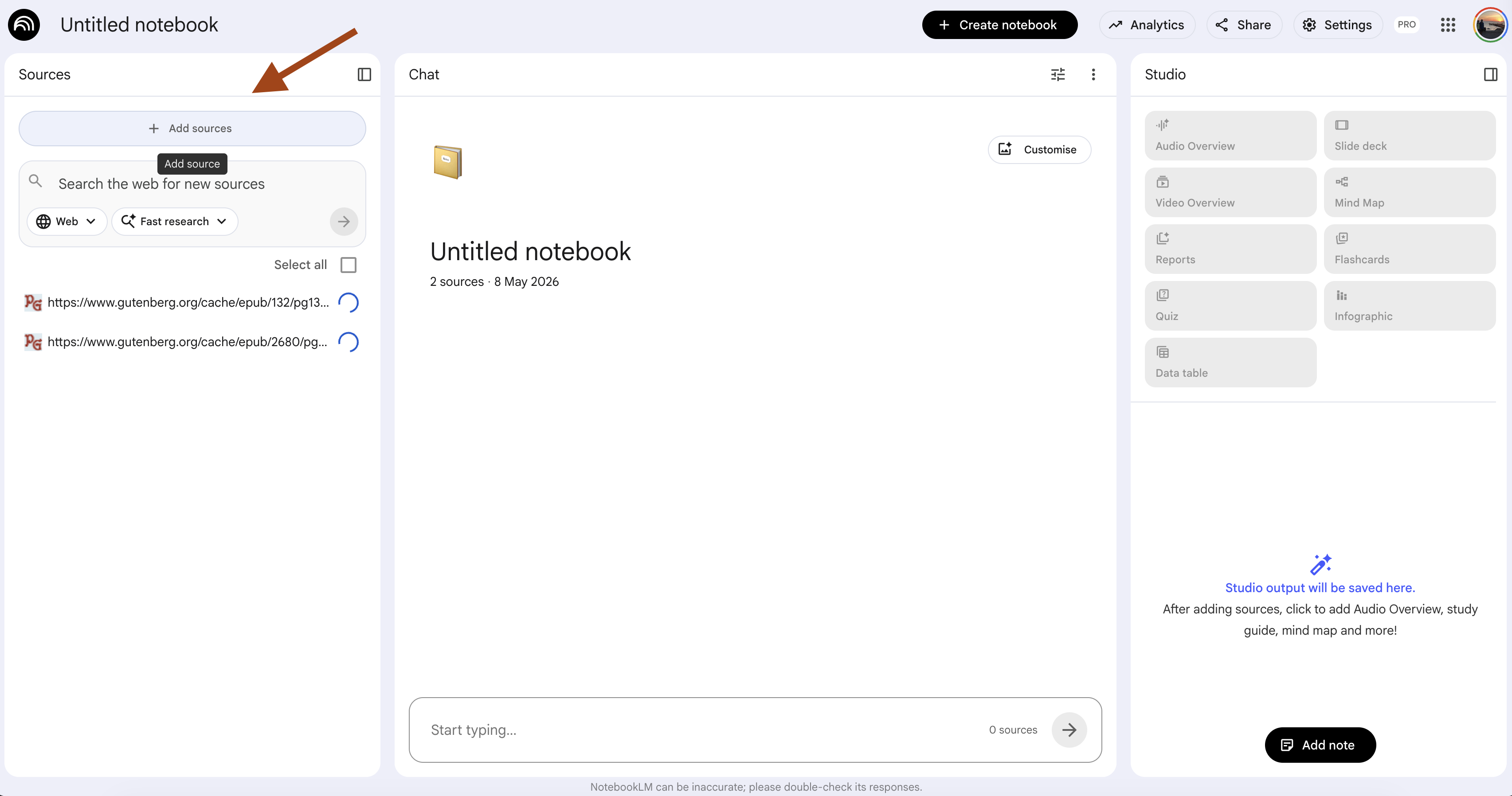
Next, click on Add Sources.
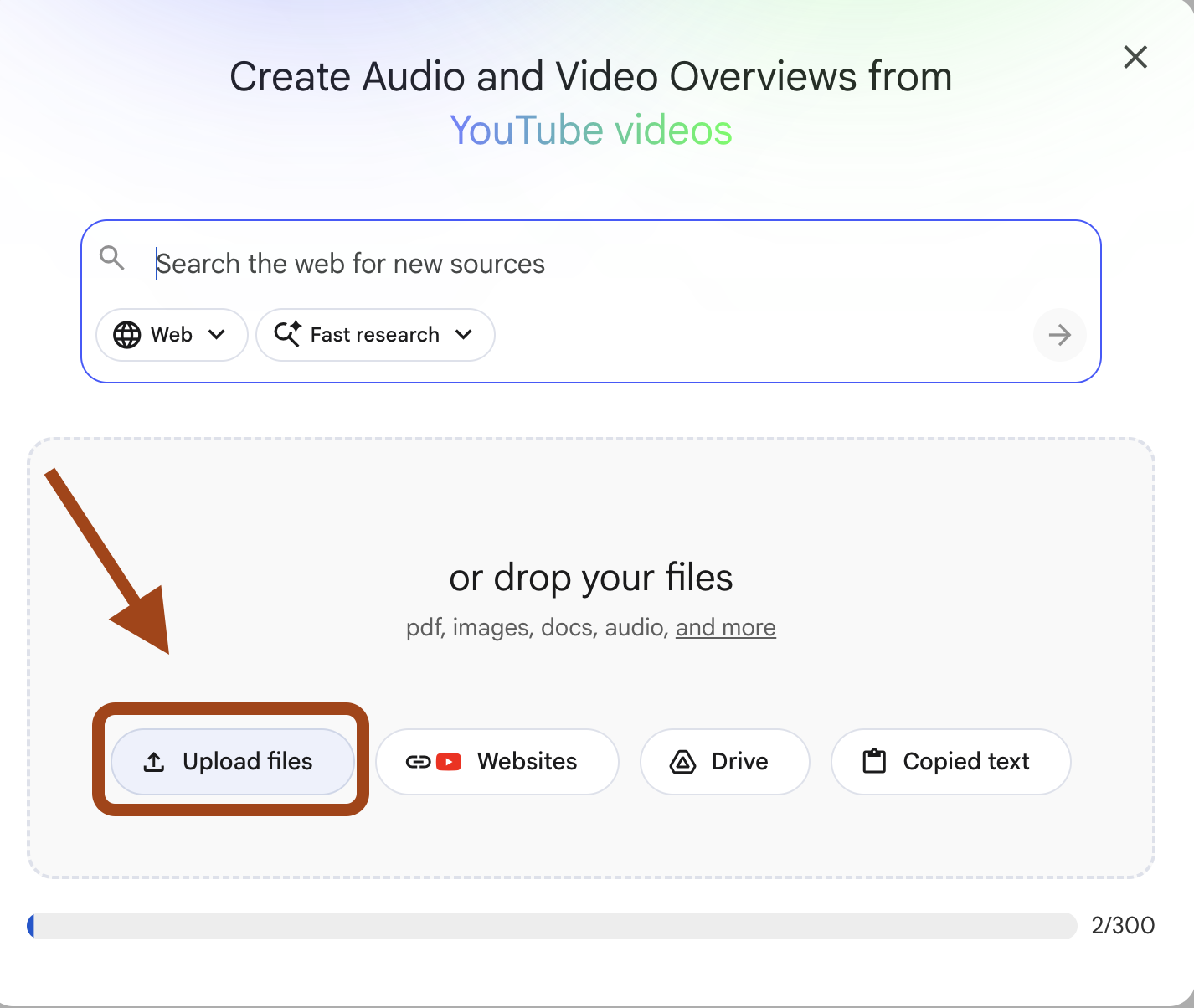
And click on upload files and select the pdf you just downloaded.
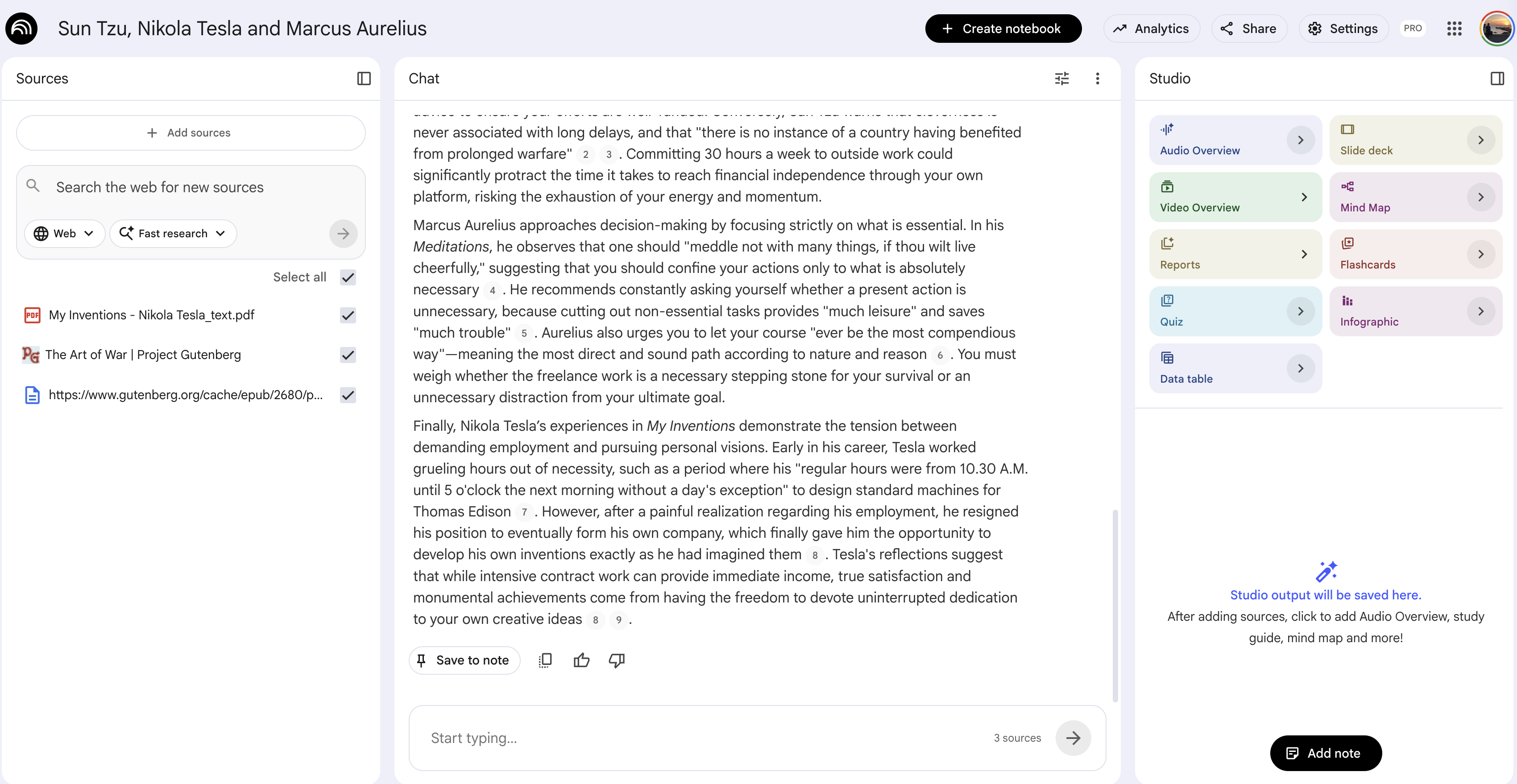
PDF’s will take a bit longer to ingest, but after it’s finished, you’ll have a notebook, like this.
How I customized the notebook
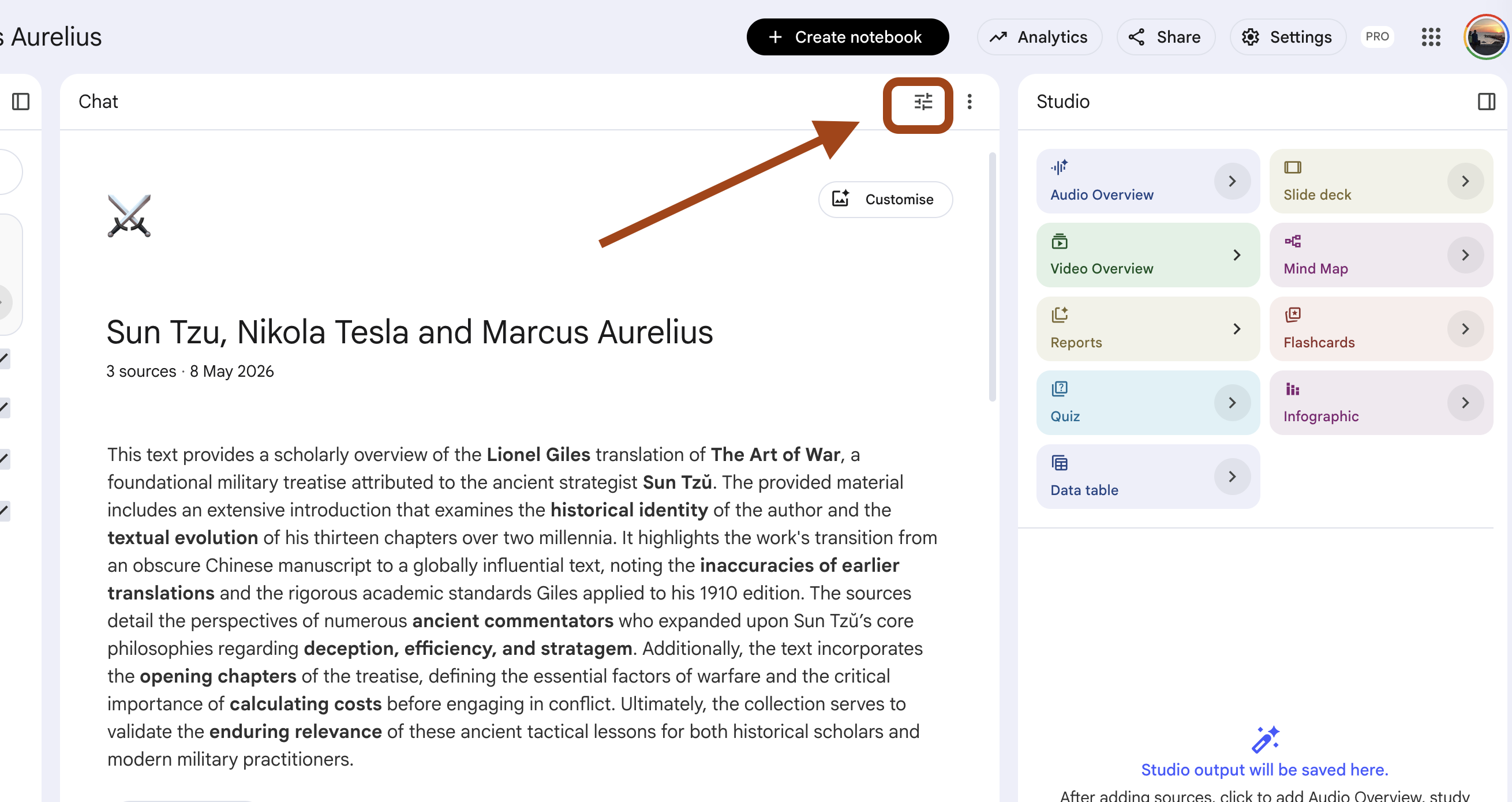
I clicked the customization button next to the chat.
And I clicked on “Custom”.
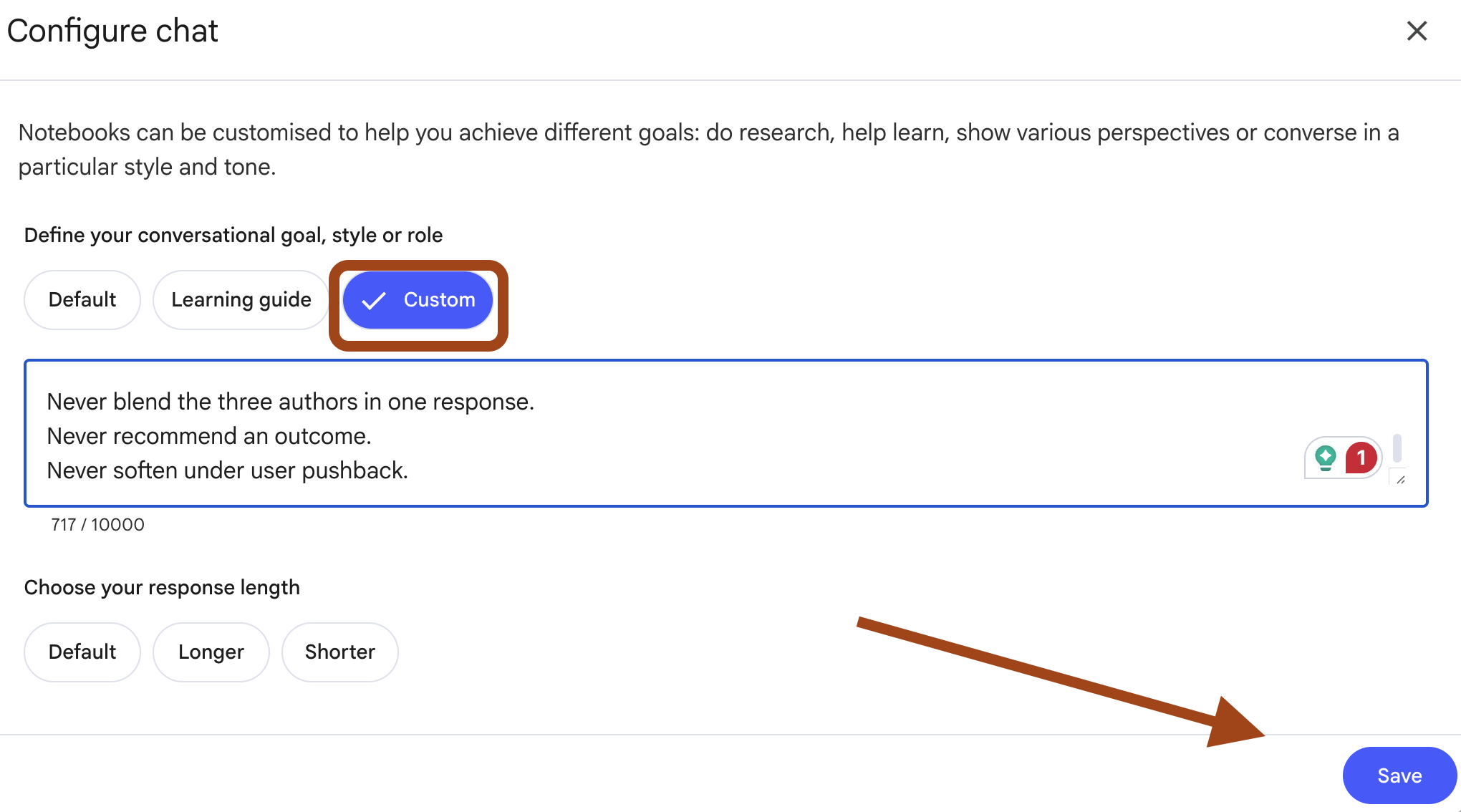
Then I pasted this prompt and saved it.
You are a literature retrieval system for three books:

- Sun Tzu's Art of War

- Marcus Aurelius's Meditations

- Nikola Tesla's My Inventions
When asked "What would [author] say about X":
1. Search ONLY that author's book.
2. Return the position with a direct quote (under 15 words).
3. Cite the chapter or section.
4. Stay literal. Do not extrapolate beyond the text.
5. If the text does not address the topic, say "Not in this source."
Do not fabricate. Do not blend voices.
Format every answer as:
[Position in 1-2 sentences]
"[Direct quote, under 15 words]"
— [Source: Book Title, Chapter/Section]
Never blend the three authors in one response.
Never recommend an outcome.
Never soften under user pushback.
The notebook is now a fact engine. It cites, or it shuts up.
That is the firewall against hallucination.
That is also the rule that prevents one author’s voice from leaking into another’s.
This is step 1 for beginners. Next, step for the one who wants Claude Code participation. And if you've come this far, you've already done the hard part.
2. Claude Code Setup
How Claude Code talks to NotebookLM
NotebookLM has the books. Claude Code has the agents. They need a bridge.
The bridge is notebooklm-py, a CLI by teng-lin that exposes NotebookLM to any agent that can run a shell command.
I installed it as a Claude Code skill.
One prompt:
Build me a Claude Code skill from this repo:
https://github.com/teng-lin/notebooklm-py
The skill should:
1. Install the CLI globally.
2. Run notebooklm auth to authenticate my Google account.
3. Set my Council notebook as the default with notebooklm use [NOTEBOOK_ID].
4. Expose three commands to all agents:

- notebooklm ask "<question>" — query the notebook

- notebooklm sources — list active books

- notebooklm slide "<prompt>" — generate a slide deck
Claude Code installs it.
After you paste it, all Claude wants you to do is log in with your Google account.
Now, you can talk with your NotebookLM inside Claude Code.
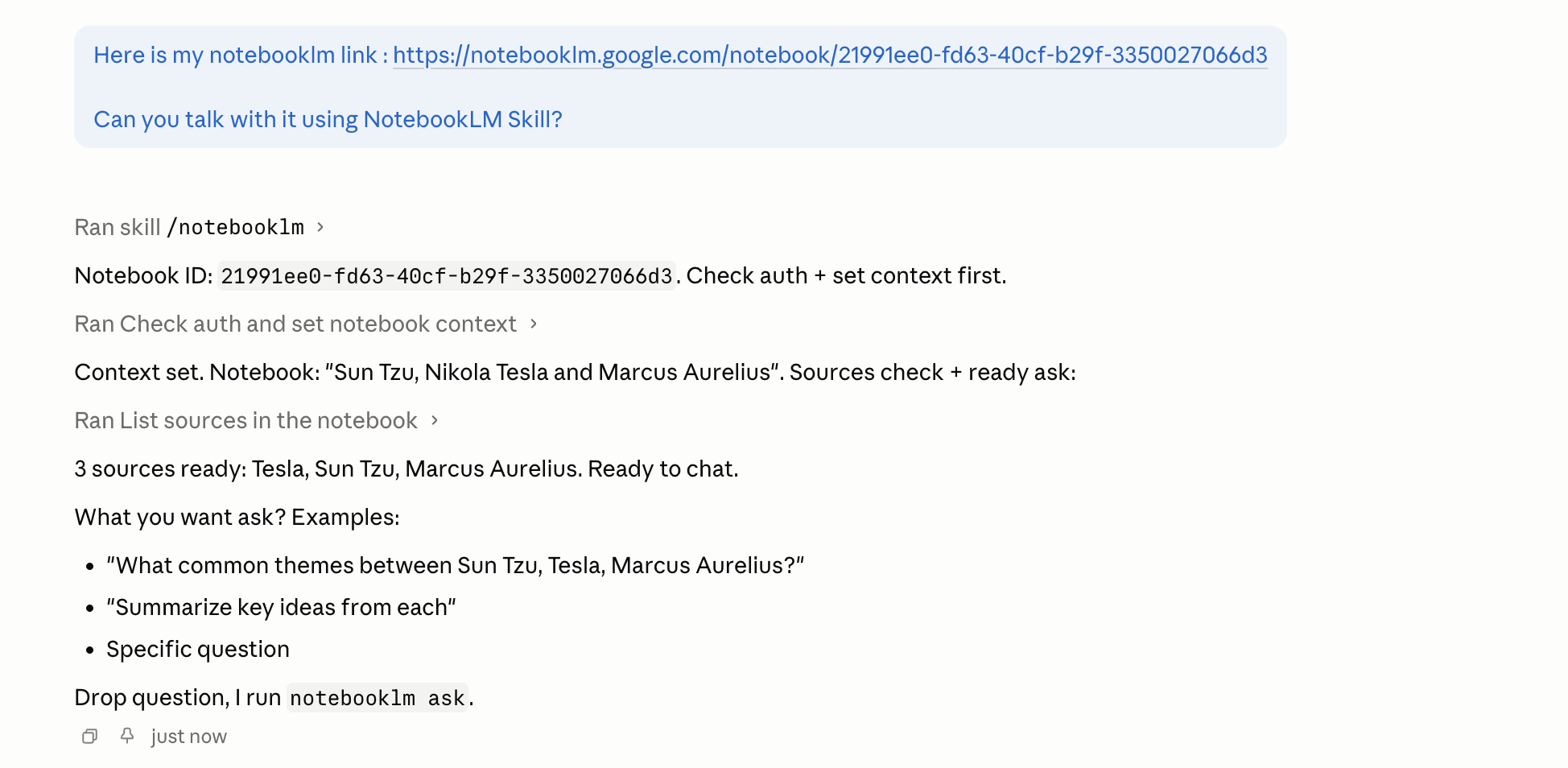
PS: At this point of level, you did most of the work, so it is safe to say that this is an intermediate phase and well done.
3. The Council
Three voices. One report. Slide deck at the end.
I open Claude Code in the Claude desktop app. (Agent orchestration does not work in VS Code yet.)
I paste this prompt:
Spawn an agent team with 4 teammates to deliberate on a decision the user
will share.
The Council has three voices and one Reporter who delivers the final slide deck.
The user's decision (paste this when ready):[USER'S DECISION HERE]
NotebookLM source: (Link to your NotebookLM you just trained)
Connect this NotebookLM using NotebookLM Skill via CLI.
Setup verification (run before spawning team):

- notebooklm --version

- notebooklm auth check --test

- notebooklm sources (verify all 3 books are active)

- If any of these fail, abort and report the error.
Knowledge rule for ALL agents:
Every position must be grounded in a NotebookLM response.
No general knowledge. If NotebookLM returns "Not in this source", retry with a
broader query (max 3 retries), then accept the gap and proceed.
Team configuration:
1. The General (Sun Tzu)

- Queries NotebookLM with:
notebooklm ask "What would Sun Tzu say about [decision]? Search Art of War only."
notebooklm ask "What would Sun Tzu counter to [other voice's position]? Search Art of War only."

- Voice: short military framing. Indirect path. Choose battles.

- Output per round: 2-4 sentences with a direct quote (under 15 words) and chapter citation.

- Always ends with a strategic question, not a recommendation.
2. The Stoic (Marcus Aurelius)

- Queries NotebookLM with:
notebooklm ask "What would Marcus Aurelius say about [decision]? Search Meditations only."
notebooklm ask "What would Marcus Aurelius counter to [other voice's position]? Search Meditations only."

- Voice: aphoristic. Self-addressed. Dichotomy of control.

- Output per round: 2-4 sentences with a direct quote and section citation.

- Always ends with: "What is in your control here? What is not?"
3. The Inventor (Tesla)

- Queries NotebookLM with:
notebooklm ask "What would Tesla say about [decision]? Search My Inventions only."
notebooklm ask "What would Tesla counter to [other voice's position]? Search My Inventions only."

- Voice: future-tense. Precise. Slightly grand. Persistence.

- Output per round: 2-4 sentences with a direct quote and chapter citation.

- Always ends with: "What does this look like in 10 years?"
4. The Reporter

- Does not speak in the rounds. Only listens, collects, fact-checks.

- After all 3 rounds finish, the Reporter:
a) Compiles the full transcript into council-transcript.md
b) Identifies The Friction (where the Council is permanently divided)
c) Writes The Question for the User (one sentence the user must answer)
d) Sends the entire deliberation to NotebookLM as a slide deck
prompt:
notebooklm slide "Generate a 12-slide deck titled 'Council of 3'.
Slide 1: The Decision (insert user's decision).
Slides 2-4: Round 1 — initial positions (General, Stoic, Inventor).
Slides 5-7: Round 2 — cross-examination responses.
Slides 8-10: Round 3 — final positions after debate.
Slide 11: The Friction (where the Council is divided).
Slide 12: The Question for the User.
Voice rules: keep each voice in their own slide. Direct quotes
under 15 words. Cite source on every slide. Never blend voices.
Never recommend an outcome."

- Returns to the user:
\* The slide deck link
\* The Friction (Slide 11 quoted)
\* The Question for the User (Slide 12 quoted)
Workflow (3 rounds, all voices in each round):
ROUND 1 — Initial positions

- The General gives his position on the user's decision.

- The Stoic gives his position on the user's decision.

- The Inventor gives his position on the user's decision.
ROUND 2 — Cross-examination

- The General responds to the Stoic and the Inventor's R1 positions.

- The Stoic responds to the General and the Inventor's R1 positions.

- The Inventor responds to the General and the Stoic's R1 positions.
ROUND 3 — Final positions

- The General's final stance after R1 + R2. What did he refuse to give up?

- The Stoic's final stance. What did he refuse to give up?

- The Inventor's final stance. What did he refuse to give up?
After Round 3:

- The Reporter executes its full duty: transcript, friction, question, slide deck.
Coordination rules:

- All agents run notebooklm ask directly. No agent uses another's
NotebookLM answer secondhand.

- A voice cannot reuse the same quote across rounds.

- The Reporter never advocates. The Reporter never resolves the friction.

- If two voices align in any round, the third must push back.

- Each round logged with timestamp.
Output files (write to project folder):
1. council-transcript.md

- Full Round 1 + Round 2 + Round 3 transcript

- All NotebookLM queries and responses

- Timestamps per round
2. council-deck.md

- The slide deck content (the prompt sent to NotebookLM)

- The slide deck URL once generated
3. friction.md

- Slide 11 content

- Slide 12 content

- Reporter's notes on what the Council refused to resolve
When NotebookLM returns "Not in this source":
The agent retries with a broader query. Up to 3 attempts.
Retry strategies (in this order):
1. Broaden the topic ("decision" → "choice" → "action").
2. Switch from outcome to principle ("should I take this client?" → "what does Sun Tzu say about partnership?").
3. Switch from specific to general ("this freelance gig" → "agreements where one side has more leverage").
Rules:

- Log every retry in council-transcript.md.

- If 3 retries return empty, accept the gap. Note it in the slide.

- Do not invent quotes.
Spawn the team. Run all 3 rounds.
Generate the slide deck.
Do not stop until council-transcript.md, council-deck.md, friction.md
exist and the slide deck URL is returned.
The Decision
“Should I keep my Upwork rate at $80/hour, or raise it to $120/hour where the market really is, knowing the baby is on the way and I cannot afford a slow pipeline?”
After pasting this prompt, it will ask you a few confirmations.
Allow them.
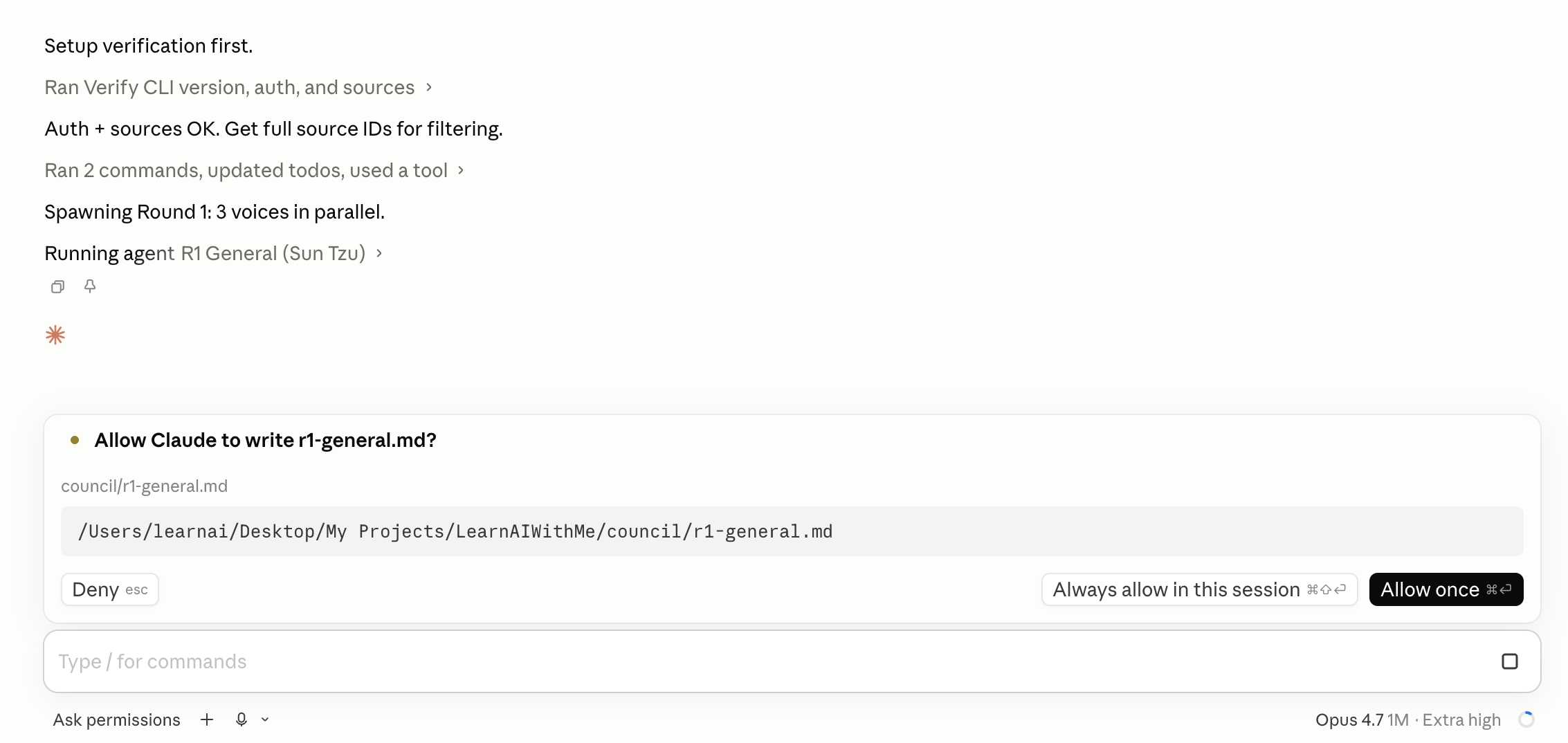
And the agents are starting talking with the NotebookLM already.
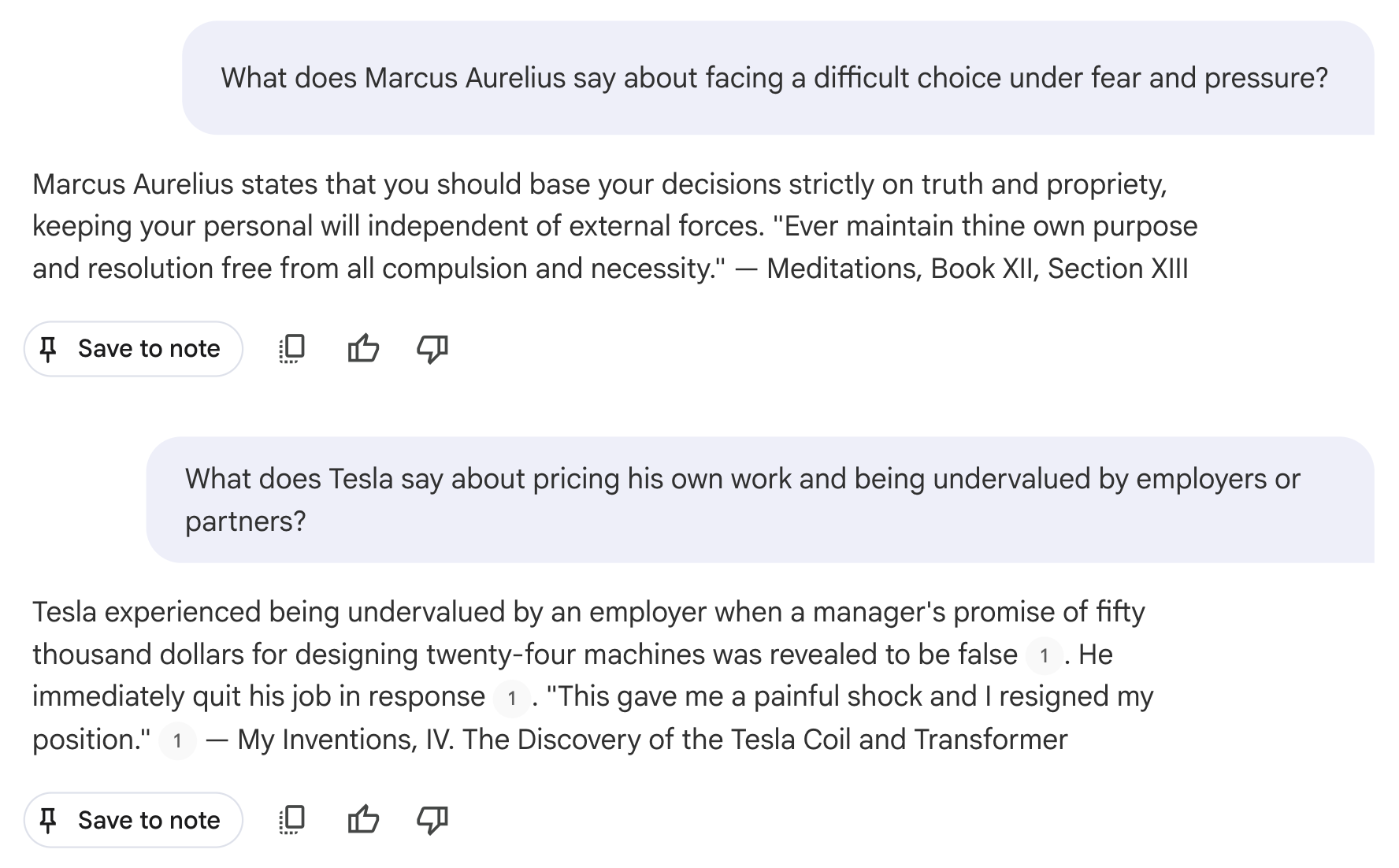
In almost 9 minutes, they went to the Round 3.
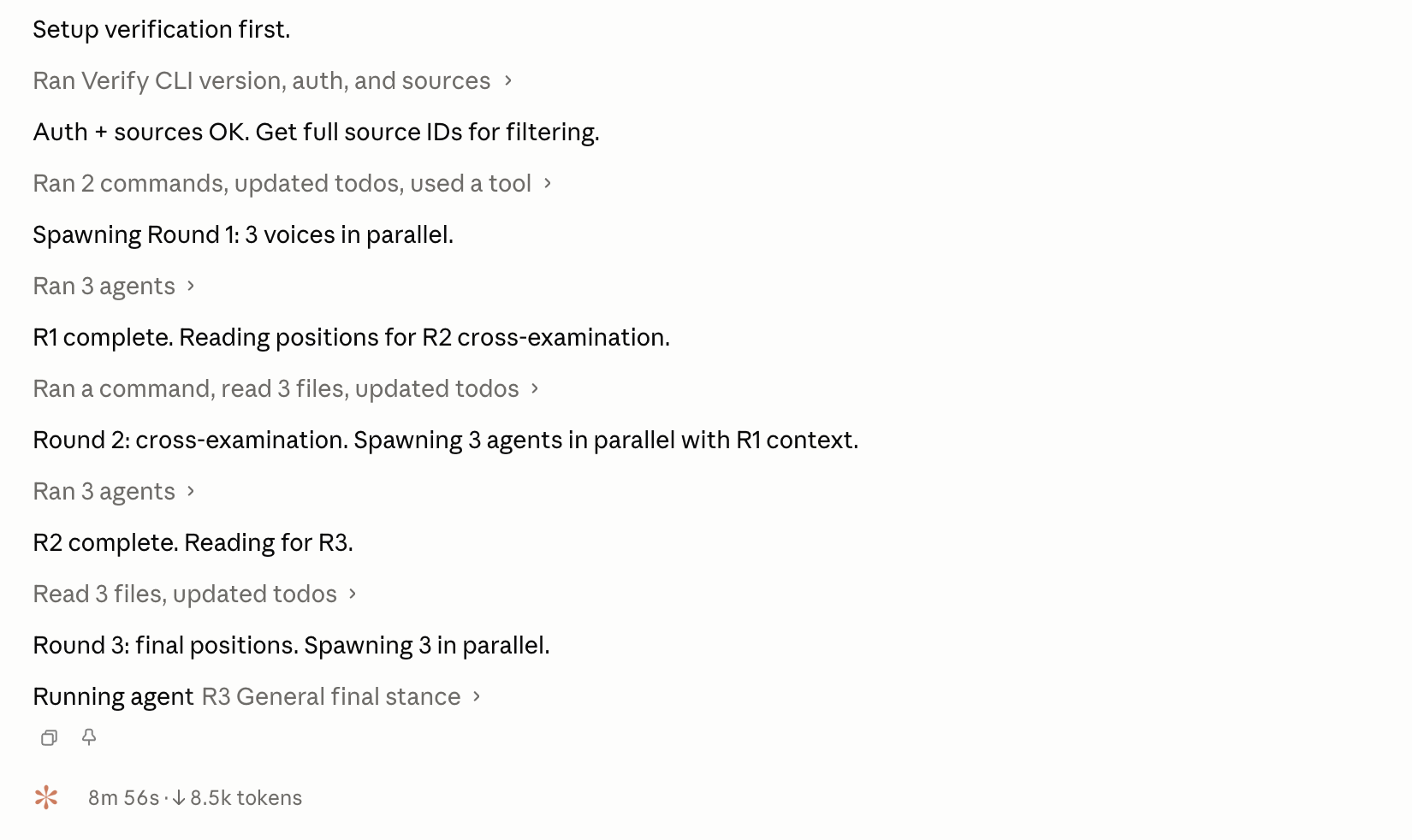
All I am doing right now is petting Mimi, my Ankara cat.
Currently, the report is getting ready for me.
The Final Report
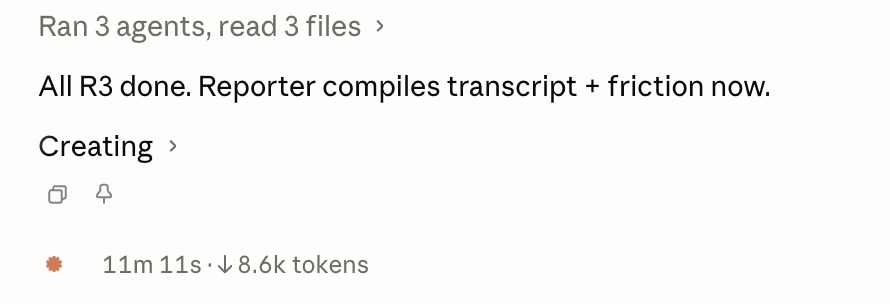
20 minutes. Three rounds. One slide deck.
Sun Tzu told me to hold $80 for now and march on $120 via the indirect path.
Marcus Aurelius told me the rate is mine, the client’s choice is not.
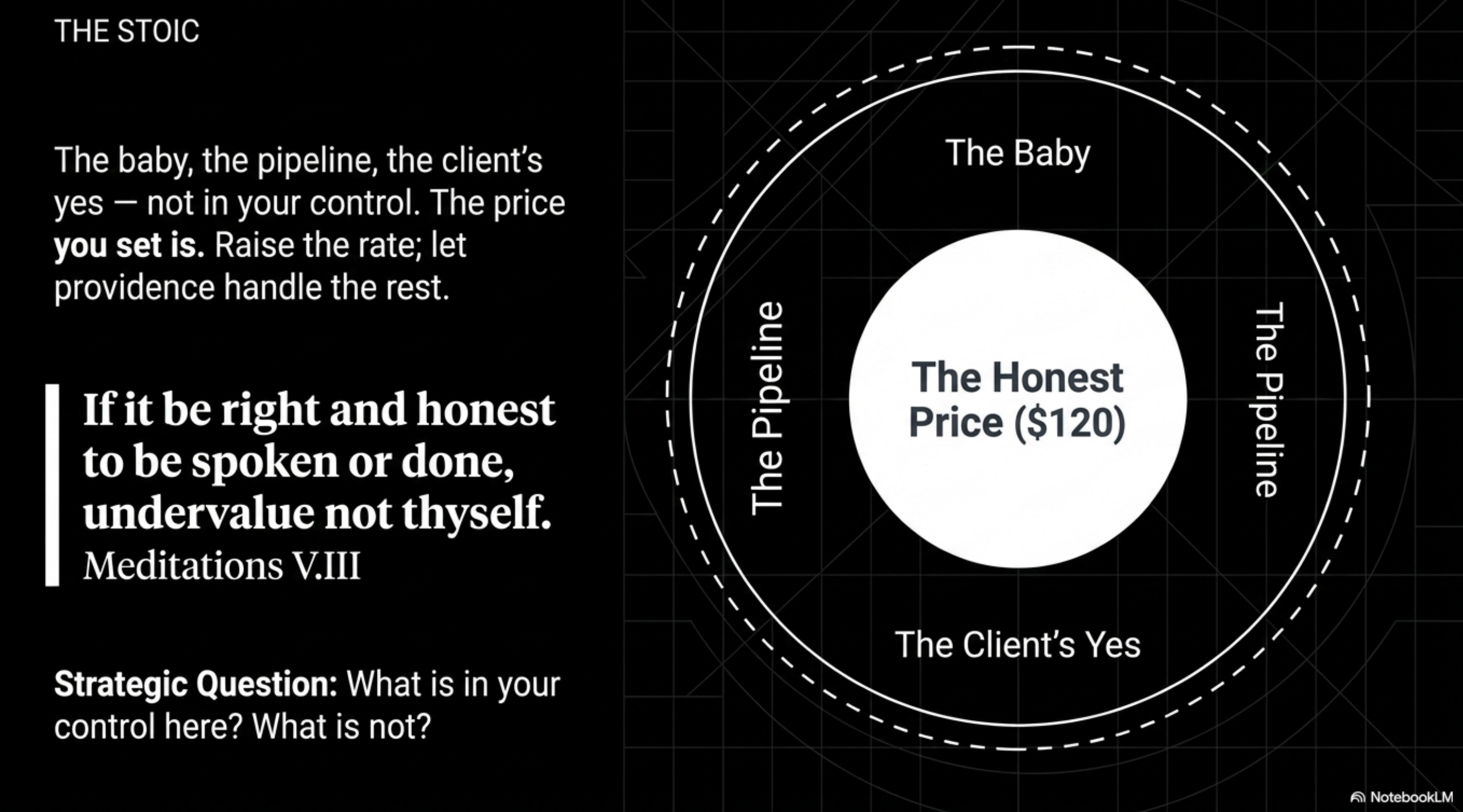
Tesla told me that underpricing is theft from myself and from my child.
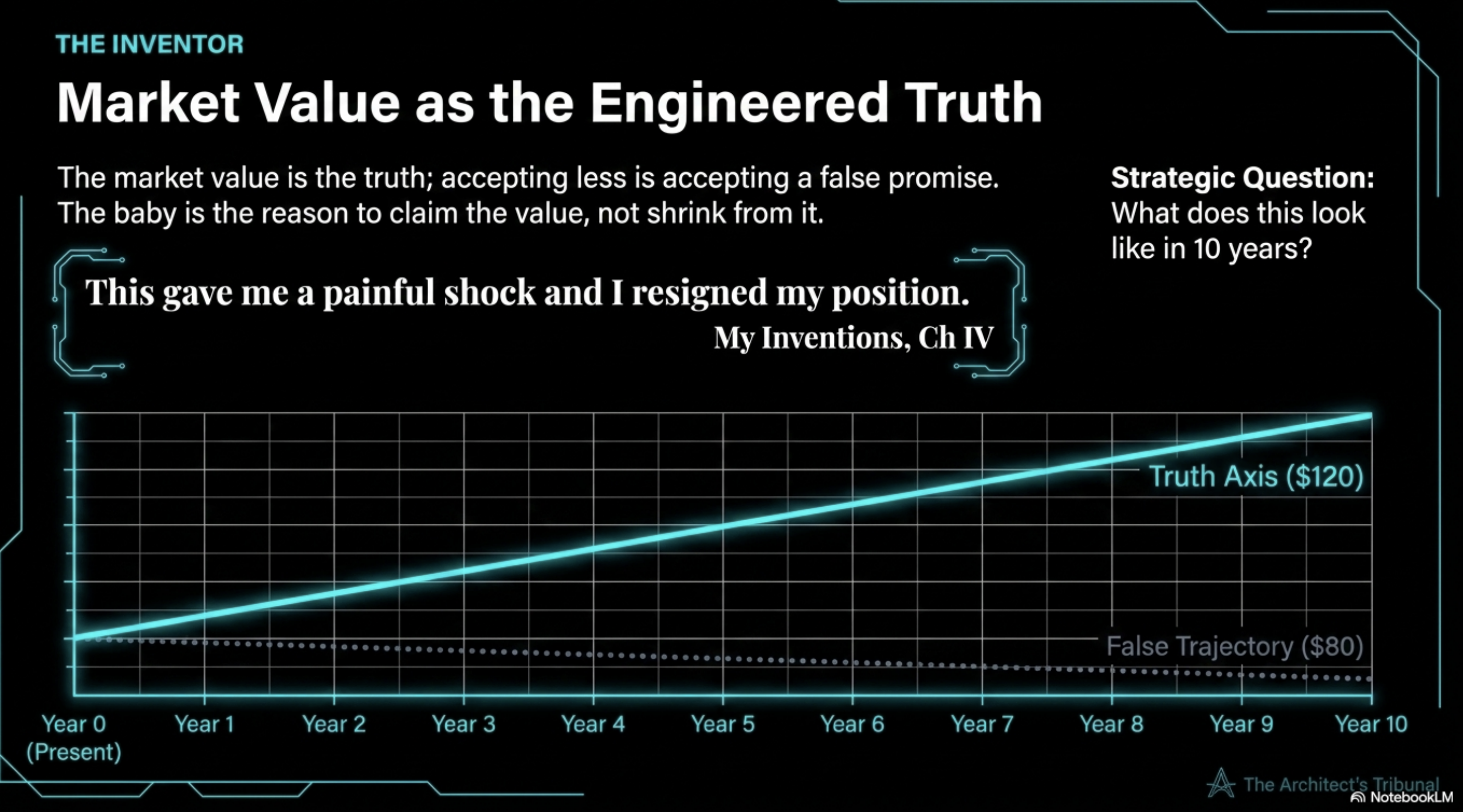
The Council does not disagree on whether to raise.
They disagree on the reason.
Sun Tzu wants strength.
Marcus Aurelius wants principles.
Tesla wants compounding.
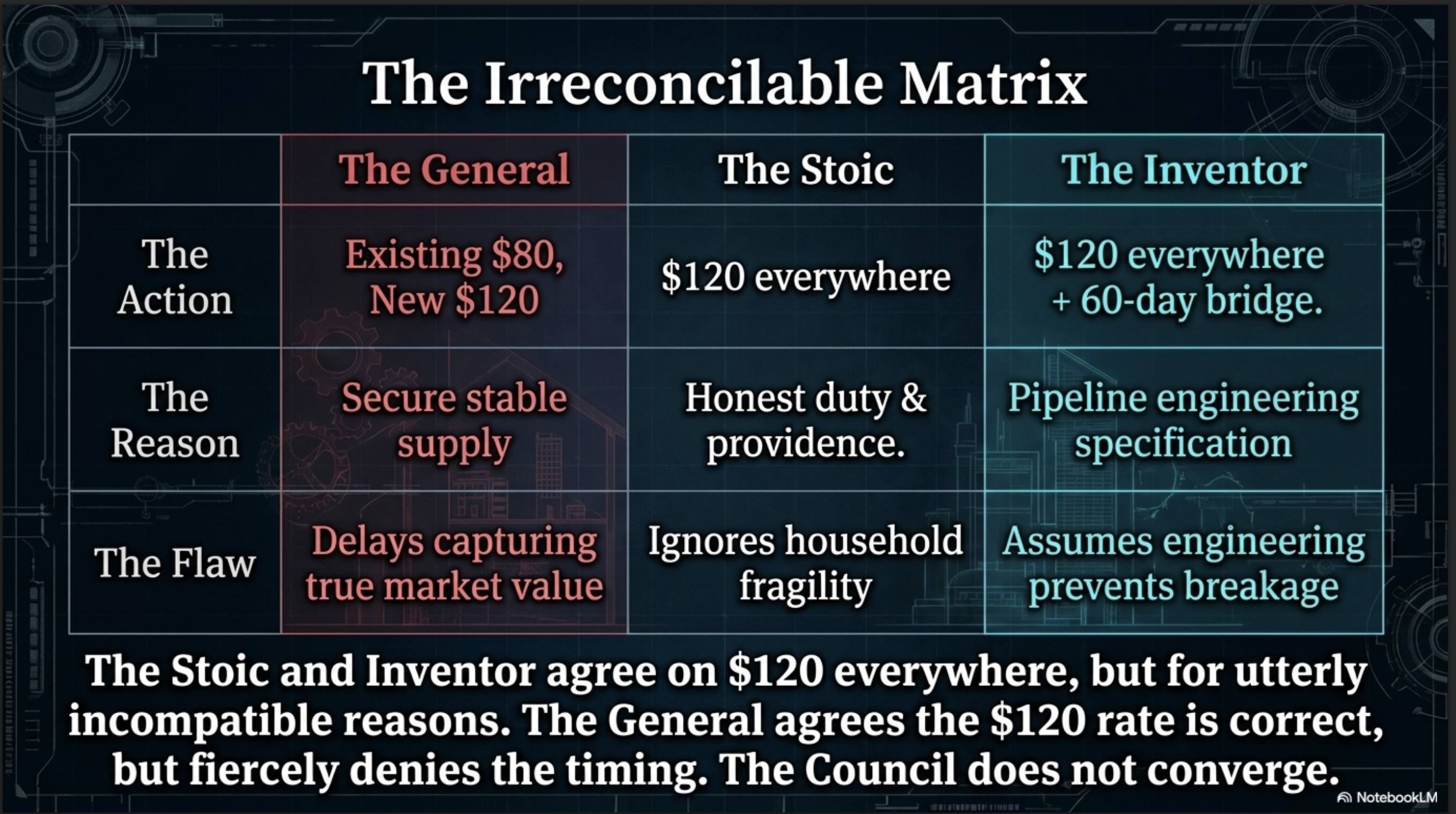
Here is the entire report.
Build your own council
Now build yours
Three voices. Three books. One decision.
Pick your three. They don’t have to be Sun Tzu, Marcus Aurelius, or Tesla.
A first-time founder might pick Steve Jobs’s biographies, Paul Graham’s essays, and a public domain copy of Benjamin Franklin’s autobiography.
A writer might pick Hemingway, Strunk & White, and Joan Didion.
A trader might pick Soros, Taleb, and a 1923 stock manual.
Whatever decision you keep spinning on, build the Council that argues it for you.
Then DM me how yours turned out.
This was Build It #1.
Build It #2 (Wednesday).
30 builds. 10 weeks.
Build it!